



Best Breaker Hammers for Rock Breaking and Demolition
- How hydraulic breaker hammers work
- Basic principles and components
- Hydraulic vs pneumatic and electric breakers
- How impact energy, frequency and hydraulic flow relate
- Selecting the right breaker hammer for rock breaking and demolition
- Match the breaker to the excavator carrier
- Assess rock types and job requirements
- Operational factors: cycle time, fuel and cost per ton
- Top breaker hammer types, sizing and recommended use cases
- Light-class breakers (mini-excavators: 1–6 ton carriers)
- Medium-class breakers (6–20 ton carriers)
- Heavy-class breakers (20+ ton carriers)
- Comparison table: typical breaker classes and applications
- Maintenance, safety and operating best practices
- Daily and periodic maintenance checklist
- Safety, vibration and noise control
- Troubleshooting common failure modes
- Choosing spare parts and consumables: what matters
- Tool steel grades and bit geometry
- Seals, piston and valve kits
- Matching spare parts to your breaker model
- About Huilian Machine and excavator breaker parts
- Huilian’s competitive strengths
- Main products and recommended applications
- References and standards
- FAQ
- 1. How do I choose the right breaker hammer excavator combination?
- 2. What maintenance items most extend breaker life?
- 3. Can I use third-party parts or seals in my breaker?
- 4. How does impact energy translate to productivity?
- 5. What safety measures reduce operator vibration and noise exposure?
- 6. How quickly can Huilian supply spare parts globally?
Choosing the right breaker hammer excavator setup is critical for efficiency, safety and cost control on rock breaking and demolition projects. This guide explains how hydraulic breaker hammers work, how to match a breaker to your excavator carrier and job conditions, and which models and components deliver the best value for common site scenarios. Practical selection tables, maintenance tips and safety references are included to help buyers and site managers make verifiable, field-tested decisions.
How hydraulic breaker hammers work
Basic principles and components
Hydraulic breaker hammers (often called hydraulic rock breakers or breaker attachments) convert hydraulic pressure from an excavator into repeated percussive impacts. Key components include the housing, piston, tool bit (chisel or moil), valve assembly and energy-transmission system. For a technical overview see the Hydraulic breaker entry on Wikipedia.
Hydraulic vs pneumatic and electric breakers
Hydraulic breakers dominate excavator-mounted applications due to higher power-to-weight ratio and direct integration with carrier hydraulics. Pneumatic and electric breakers have niche uses—pneumatic in fixed-site demolition with compressed air systems, and electric where emissions or noise regulations limit hydraulic options. Choice depends on carrier availability, site utilities and environmental constraints.
How impact energy, frequency and hydraulic flow relate
Three parameters govern performance: impact energy (Joules), blow frequency (blows/min) and hydraulic flow/pressure required. Higher impact energy favors rock fracturing and heavy demolition, while higher blow frequency can increase fragmentation in softer materials. Proper matching of carrier hydraulic flow and pressure to the breaker’s specified range is mandatory to achieve rated impact energy and to avoid premature wear.
Selecting the right breaker hammer for rock breaking and demolition
Match the breaker to the excavator carrier
Carrier mass determines workable breaker classes. A small breaker on a heavy carrier wastes potential, while an oversized breaker on a light excavator risks damage and instability. As a rule of thumb, consult manufacturer carrier-compatibility charts and ensure the excavator’s hydraulic flow, pressure and carrier weight fall within the breaker’s recommended operating window.
Assess rock types and job requirements
Rock breaking for line-drilling and quarrying uses different breaker characteristics than urban concrete demolition. For hard, intact rock (e.g., granite), prioritize maximum impact energy and durable tool steel. For reinforced concrete in tight urban settings, favor breakers with controlled blow frequency, noise suppression features and vibration-damping mounts.
Operational factors: cycle time, fuel and cost per ton
Efficiency is measured not only by peak force but by productivity (m3/hr or tons/hr) and operating cost (fuel, bits, maintenance). When possible, gather field productivity data from similar projects or refer to OEM published performance figures. Using optimized impact energy and correct bit shape typically reduces cycle time and lowers cost per ton of material removed.
Top breaker hammer types, sizing and recommended use cases
Light-class breakers (mini-excavators: 1–6 ton carriers)
Best for utility work, sidewalks, asphalt and thin concrete. Advantages are fast positioning and low ground impact. Limitations: lower impact energy and shorter tool life on very hard rock.
Medium-class breakers (6–20 ton carriers)
Common on general demolition and secondary rock breaking. These units balance impact energy and mobility, suitable for foundations, road-cutting and small quarry trimming.
Heavy-class breakers (20+ ton carriers)
Designed for primary rock breaking and heavy demolition—quarry face cutting, large boulder reduction and heavy reinforced concrete. They deliver high impact energy, requiring robust carriers and often multiple operators for safety and logistics.
Comparison table: typical breaker classes and applications
| Breaker Class | Carrier Weight (t) | Typical Impact Energy | Common Applications |
|---|---|---|---|
| Light | 1–6 | ~500–3,000 J | Utility, pavement, light concrete |
| Medium | 6–20 | ~3,000–7,000 J | Foundations, roadworks, medium rock |
| Heavy | 20+ | ~7,000–20,000+ J | Quarrying, large rock, heavy demolition |
Note: Ranges are indicative; actual specifications vary by model and manufacturer. Always check OEM datasheets for exact impact energy and hydraulic pressure/flow requirements.
Maintenance, safety and operating best practices
Daily and periodic maintenance checklist
Daily checks: tool bit condition, retaining pins, hydraulic hoses, mounting brackets and grease points. Periodic maintenance: valve servicing, nitrogen charge checks (for gas-assist designs), bush and piston inspection. A preventive maintenance program extends part life and reduces downtime.
Safety, vibration and noise control
Hydraulic breakers generate high vibration and noise. Follow local regulations and industry guidance such as OSHA demolition guidance (OSHA Demolition). Use anti-vibration mounts, proper PPE (hearing protection, face shields), and implement exclusion zones. Monitor cumulative operator vibration exposure and rotate operators to reduce HAVS risk.
Troubleshooting common failure modes
Common issues include leakage at hose fittings, accelerated tool wear, low blow energy (usually due to incorrect flow/pressure or worn valve elements) and carrier mount fatigue. Diagnose by confirming hydraulic flow/pressure, inspecting valve housings and measuring tool wear. Replacing seals and worn bushings promptly prevents cascading failures.
Choosing spare parts and consumables: what matters
Tool steel grades and bit geometry
Choose tool steels rated for high-impact abrasion resistance. Pointed moils are good for fracturing rock; flat chisels are effective for cutting and chipping concrete. Bit heat treatment and surface hardening processes strongly affect life—ask suppliers for material certifications and heat-treatment specs.
Seals, piston and valve kits
Seals and piston kits are critical wear items. Using OEM or OEM-equivalent seals (for example, Parker seal kits are industry-recognized) ensures pressure integrity and reduces risk of internal contamination damage. Ensure kits include quality materials compatible with your hydraulic fluid and operating temperatures.
Matching spare parts to your breaker model
Always cross-reference serial numbers and part numbers when ordering parts. Generic parts may fit but can affect performance and warranty. Maintain a stock of high-wear items (chisels, retaining pins, bushings, seals) to minimize downtime on remote sites.
About Huilian Machine and excavator breaker parts
Founded in 2005, Huilian Machine is a professional OEM supplier of excavator parts. We are leading excavator breaker parts manufacturers from China. We offer a wide range of products, including hydraulic breaker hammers, chisels, seals and seal kits, diaphragms, pistons, WearBush, rompin/retainer bars, through bolts, side bolts, valves and liners. Huilian's team comprises experienced and skilled professionals, including technicians, R&D experts, designers, quality control professionals, salespeople and after-sales service teams. Our products are exported to over 90 countries and regions and are highly regarded by customers worldwide for their quality and variety. Guangzhou Huilian Machinery Co., Ltd. is committed to becoming a global leader in the supply of excavator parts and components and is seeking global distributor partners to promote the sustainable development of the excavator parts industry. Our website: https://www.huilianmachine.com/ Email: service@huilianmachine.com Phone: +86 188 1917 0788
Huilian’s competitive strengths
Huilian combines OEM manufacturing discipline with aftermarket responsiveness. Key differentiators: vertical production control (reducing lead times), quality assurance aligned with international standards (ISO quality systems), and a broad SKU coverage for hydraulic breaker components. Their export footprint (90+ countries) and specialized R&D for breaker parts make them a reliable supplier for both replacement parts and complete hydraulic breaker assemblies.
Main products and recommended applications
Huilian’s catalog emphasizes excavator parts, Excavator Breaker Parts, Excavator Hydraulic Breaker, Excavator Seal Kit and Parker seal kit-compatible offerings. For operators upgrading breaker hammers or sourcing wear parts, Huilian provides both OEM-equivalent and custom-engineered solutions to match vehicle hydraulics and job-site demands.
References and standards
For design and quality frameworks consult ISO quality guidance (ISO 9001) at ISO 9001. For machine context and carrier interactions, see the Excavator overview. For safety and demolition practices, OSHA’s demolition resources are authoritative: OSHA Demolition.
FAQ
1. How do I choose the right breaker hammer excavator combination?
Start by matching the breaker class to your excavator’s carrier weight and hydraulic flow/pressure. Assess the material (rock hardness, reinforced concrete or asphalt), select impact energy accordingly, and confirm compatibility with the carrier’s mounting and hydraulic circuit. Consult OEM sizing charts and, if possible, trial a unit under real conditions.
2. What maintenance items most extend breaker life?
Regular greasing, timely replacement of tool bits and retaining pins, inspecting and replacing seals, and monitoring nitrogen/gas charge (where applicable) are key. Keep a preventive maintenance log and replace wear parts before catastrophic failure.
3. Can I use third-party parts or seals in my breaker?
High-quality aftermarket parts can be cost-effective, but ensure materials and tolerances match OEM specifications. Using certified seal kits (e.g., Parker-compatible kits) and validated bushings reduces risk. Verify warranty implications before installation.
4. How does impact energy translate to productivity?
Impact energy increases single-blow fracture potential, but productivity also depends on blow frequency, bit geometry and operator technique. Matching energy to material hardness yields faster cycle times and lower fuel consumption per unit of material removed.
5. What safety measures reduce operator vibration and noise exposure?
Use antivibration mounts, enclose or shield noise sources where possible, rotate operators regularly, and enforce use of hearing protection and anti-vibration gloves. Follow site-specific exposure limits and consult OSHA guidance on demolition and machine operation.
6. How quickly can Huilian supply spare parts globally?
Huilian exports to over 90 countries and maintains production capacity for both small part orders (seals, chisels) and larger assemblies. Lead times depend on order size and shipping destination—contact service@huilianmachine.com or +86 188 1917 0788 for current delivery estimates.
Need help selecting a breaker hammer excavator setup, or sourcing breaker parts and seal kits? Contact Huilian Machine for product catalogs, compatibility checks and global distributor opportunities: huilianmachine.com | Email: service@huilianmachine.com | Phone: +86 188 1917 0788.
Excavator Breaker Parts: Complete Parts List and Functions
How to Choose the Right Breaker Hammer for Your Excavator
Wholesale Everdigm hydraulic breaker manufacturer and supplier in China

The Ultimate Guide to Hydraulic Breaker Parts: Maximizing Performance in 2026
About
Do you offer OEM and aftermarket parts?
Yes, we manufacture high-quality OEM parts and supply aftermarket parts from top brands such as NOK, Parker, SKF, and Hallite to ensure optimal performance.
How can I ensure I’m selecting the right part for my equipment?
Our expert team can assist you in finding the right part based on your machine model, specifications, and requirements. Contact us for personalized support.
Are your parts compatible with all excavator brands?
Yes, our parts are designed to be compatible with major brands like Komatsu, Caterpillar, Hitachi, Hyundai, Doosan, JCB, Kobelco, Sany, and many more.
What is your shipping and delivery time?
We offer fast and reliable global shipping. Delivery times vary depending on location and order size, but we strive to process and ship orders as quickly as possible.
What types of excavator parts do you offer?
We provide a wide range of high-quality excavator parts, including hydraulic breakers, chisels, seal kits, diaphragms, pistons, wear bushes, retainer bars, through bolts, side bolts, valves, and liners.

Huilian HL68 Hammer Breaker for 4-7 Ton Excavator SOOSAN SB40 Hydraulic Rock Breaker
Side type hydraulic breaker : Easy to control, convenient positioning, durable, high working efficiency, strong striking force, long service life, stable operating performance, convenient after-sales service.
Top type hydraulic breaker : Strong impact power; excellent environmental performance; exquisite manufacturing technology; easy maintenance,fast after-sales service
Box type hydraulic breaker :leading heat treatment technology, enhance heat resistance, wear resistance. Under the condition of keeping the oil pressure constant, the cylinder volumeis reduced and the fuel consumption is reduced.The self-developed core is adopted to make the piston cylinder body moredurable and the service life longer.Exposed decks are made of high-strength steel plates to reduce wear.The best efficiency matching with excavator and loader is realized
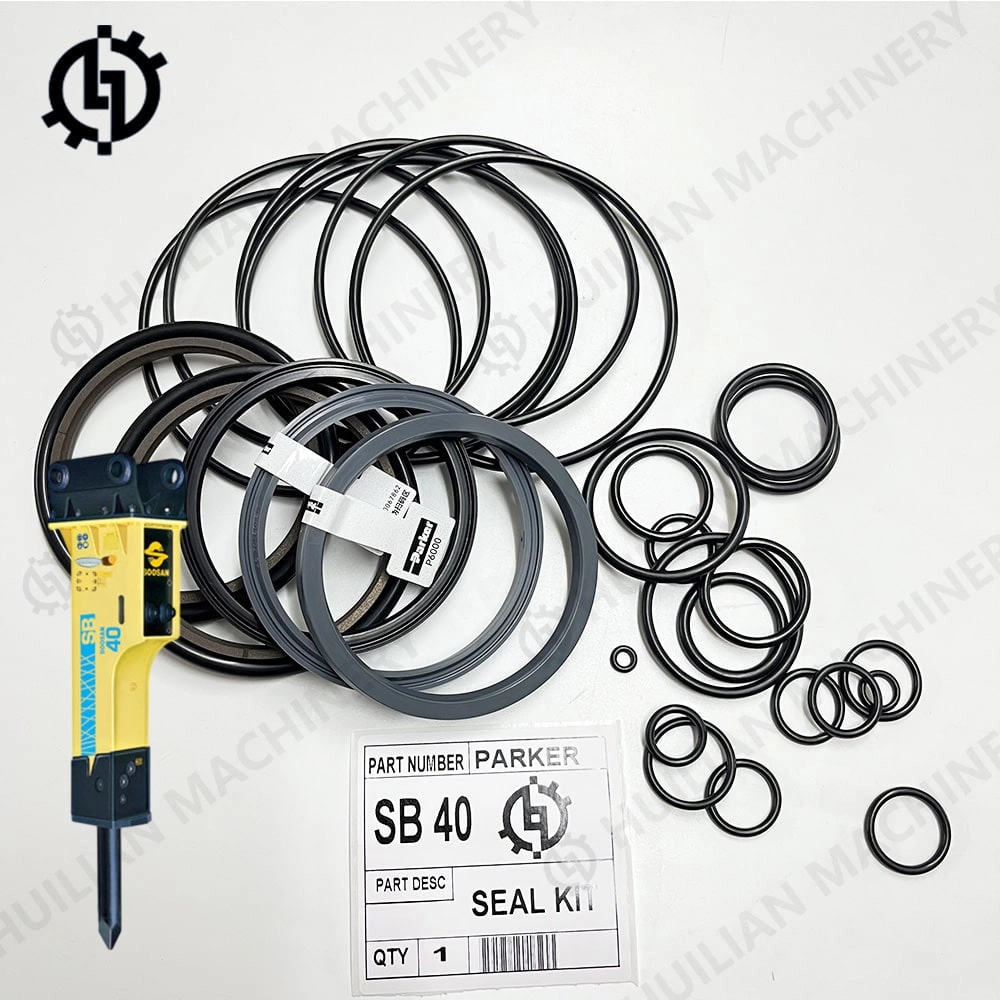
Parker Oil Seal Complete Repair SB40 Seal Kit COX001 CO1012 SB40Ⅱ SB40TSP SQ40 For Soosan Hydraulic Rock Breaker Hammer
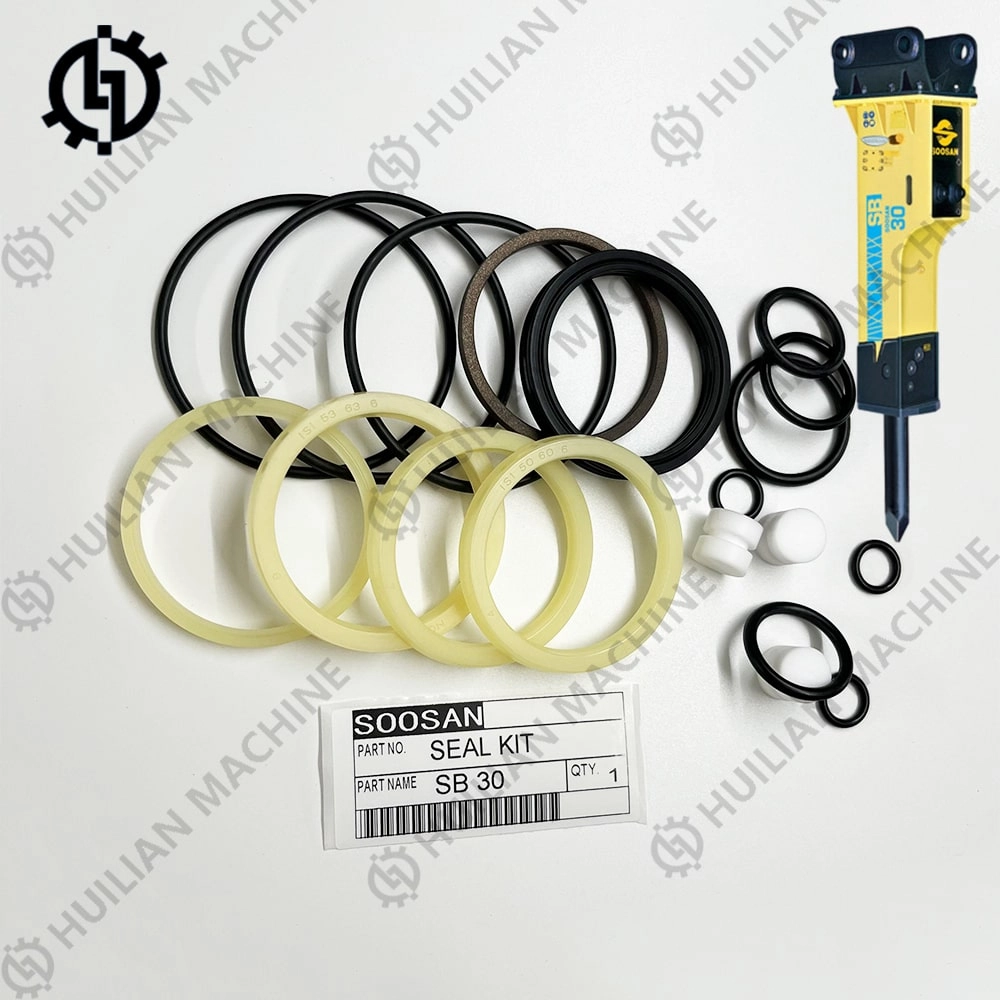
E71012 E7X001 SOOSAN SQ30 SB30Ⅱ SB30 Breaker Seal Kit SB30TS-P SB30Ⅱ TS-P SB30Ⅱ SSL Hydraulic Rock Hammer Parts Oil Repair Kit
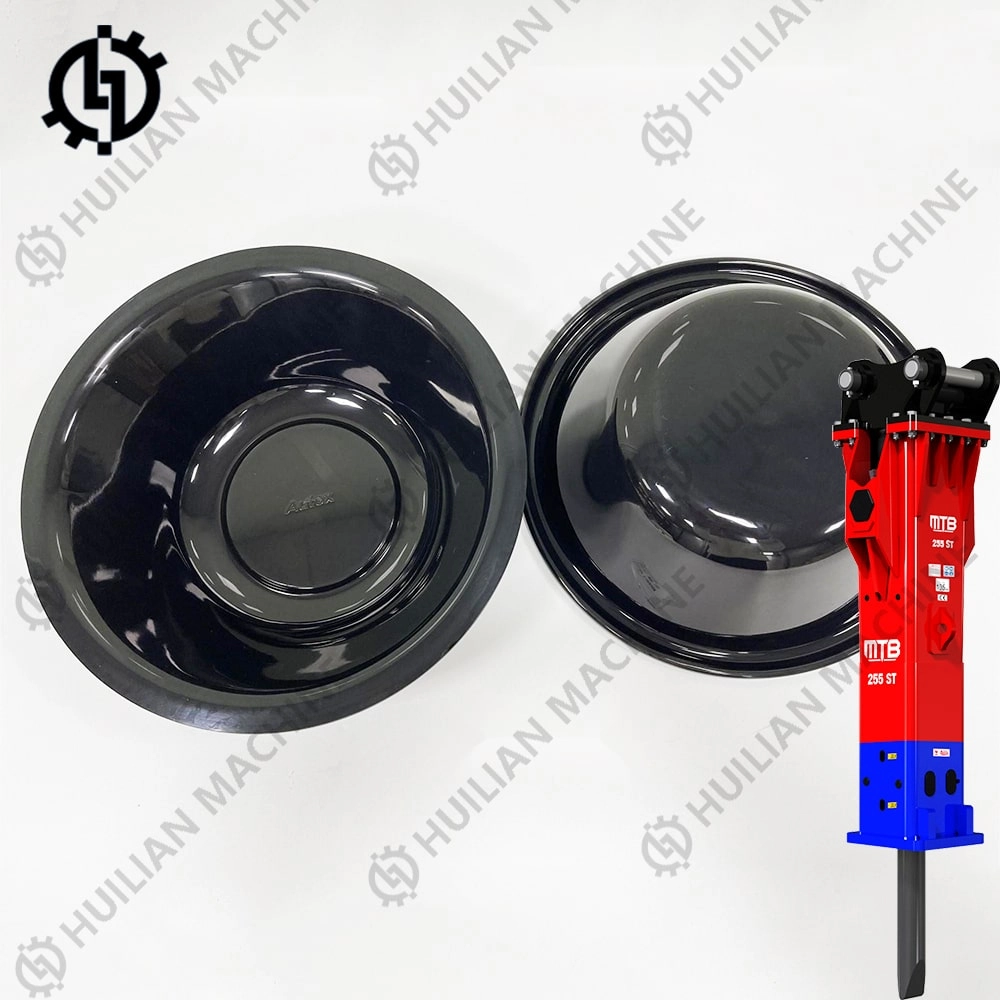
Inan Makina MTB Hydraulic Breaker Parts 45B0116A11 MTB255 MTB MT 255 Diaphragm MTB 255 IQ MTB-255 MTB 255 ST Membrane for Excavator Rock Hammer
 About us
© 2025 HUILIAN MACHINE. All rights reserved