



Best Excavator Breaker Hammers for Demolition and Quarry
- Why hydraulic breakers are essential for demolition and quarry work
- Role of hydraulic breakers on excavators
- Why matching breaker to task matters
- Safety and compliance considerations
- Selecting the best excavator mounted hydraulic breaker hammer
- Carrier weight and hydraulic compatibility
- Impact energy, blow rate, and productivity
- Chisel types and application-specific tooling
- Comparing breaker categories and models (practical guide)
- Model selection approach (practical checklist)
- Maintenance and typical failure modes
- Parts, support and sourcing: how I choose a supplier
- Why OEM-quality parts matter
- Example comparison of supplier attributes
- Case study: reducing downtime on a quarry fleet
- How Huilian Machine supports excavator breaker parts and service
- How to evaluate Huilian or any supplier
- Frequently Asked Questions (FAQ)
- 1. How do I choose the right excavator mounted hydraulic breaker hammer for my excavator?
- 2. What maintenance schedule should I follow for a hydraulic breaker?
- 3. Are aftermarket parts safe to use in breakers?
- 4. What chisel types work best for demolition vs quarry work?
- 5. Can a breaker be used on any excavator with an adapter?
- 6. How do I reduce noise and vibration when using a breaker in urban demolition?
I have worked with demolition contractors and quarry operators worldwide to specify, test, and maintain excavator mounted hydraulic breaker hammer systems. In this article I summarize how I choose the best breakers for specific jobs, how to match hammer size to carrier excavator, what chisels and accessories matter, and how proactive maintenance and quality parts reduce downtime and cost. I also include a practical comparison table of breaker classes, evidence-based references to standards and technical resources, and a vendor perspective on sourcing high-quality components.
Why hydraulic breakers are essential for demolition and quarry work
Role of hydraulic breakers on excavators
Hydraulic breaker hammers mounted on excavators convert hydraulic energy into percussive blows to break concrete, rock, and other hard materials. Compared with alternative methods (wire saws, explosives for large-scale quarrying, or diamond cutting), excavator mounted hydraulic breaker hammer systems deliver localized, controllable impact power with minimal setup time, making them ideal for both selective demolition and secondary rock breaking in quarries. For a technical overview of hydraulic breakers and operating principles, see the Hydraulic breaker - Wikipedia entry.
Why matching breaker to task matters
Poorly matched breaker-to-carrier or breaker-to-task choices lead to inefficiency, higher fuel consumption, excessive wear on the excavator boom and hydraulic system, and increased operating costs. I always start from the job intent—controlled demolition, primary rock fragmentation, or trimming—then decide the required energy per blow, blow frequency, and tool type (point/flat/chisel). These choices determine the correct class of excavator mounted hydraulic breaker hammer and the required hydraulic flow and pressure from the carrier.
Safety and compliance considerations
Operating impact tools involves noise, vibration, and flying debris. Safety plans must include anti-vibration mounts when required, appropriate PPE, and environmental controls in urban demolition. For quality management and supplier assurance I refer to ISO quality principles (for example, ISO 9001) when choosing an OEM or parts supplier to ensure consistent manufacturing and traceability.
Selecting the best excavator mounted hydraulic breaker hammer
Carrier weight and hydraulic compatibility
The single most important selection factor is carrier compatibility. Excavator mounted hydraulic breaker hammer units are designed around carrier weight, hydraulic pressure (bar/psi), and flow (L/min or gpm). I match the breaker class to the excavator operating weight range to avoid underpowering (inefficient impacts) or overpowering (excessive stress on mounting structure). Consult the breaker manufacturer's recommended carrier range for safe and optimal operation; you should verify pump flow and relief settings on the excavator before commissioning a new hammer.
Impact energy, blow rate, and productivity
Two key performance metrics are impact energy (usually quoted in joules or ft-lbs) and blow frequency. For demolition of reinforced concrete I prefer breakers that balance moderate-to-high impact energy with a controllable blow rate to avoid excessive rebar entanglement; for quarry secondary breaking I favor higher blow energy to maximize fragmentation per blow. When comparing models always look at energy-per-stroke curves and recommended operating flow ranges.
Chisel types and application-specific tooling
The tool (chisel) geometry is as important as the hammer itself. Point tools concentrate energy to fracture rock; moil (conical) and chisel tools are used for concrete and general breaking; flat and spade tools are used for trenching or cutting. Tool material and heat treatment determine wear life. I insist on OEM-quality chisels or qualified aftermarket tools and recommend using a tool with the correct hardness and tip geometry for the material to reduce downtime and maintain energy transfer efficiency.
Comparing breaker categories and models (practical guide)
Below I present a practical comparison of breaker classes to help you narrow choices. These are generalized, carrier-centric recommendations I use in the field. For technical background on hydraulic breaker categories and components see Excavator - Wikipedia and the hydraulic breaker overview linked earlier.
| Breaker Class | Recommended Carrier (approx. operating weight) | Typical Applications | Advantages |
|---|---|---|---|
| Mini (compact) | 1–6 tonnes | Urban demolition, trenching, light rock, concrete removal in tight spaces | Low weight, high maneuverability, lower hydraulic demand |
| Medium | 6–20 tonnes | General demolition, medium quarry secondary breaking, road construction | Balanced energy and productivity, versatile tool options |
| Heavy | 20+ tonnes | Primary and secondary breaking in quarries, heavy demolition, concrete piling | High impact energy, high productivity per hour |
Note: The carrier weight bands above are generalized. Always follow manufacturer carrier-range specifications and verify hydraulic flow/pressure compatibility before purchase.
Model selection approach (practical checklist)
When I evaluate specific excavator mounted hydraulic breaker hammer models, I follow this checklist:
- Verify carrier weight and hydraulic parameters (flow, pressure, relief settings).
- Compare impact energy and blow rate at recommended flow.
- Review tool compatibility and availability of wear parts (chisels, bushes, retaining bars).
- Assess serviceability: ease of changing parts, availability of seal kits and pistons, and documented maintenance procedures.
- Check OEM reputation, warranties, and local service network.
Maintenance and typical failure modes
Most breaker downtime stems from worn seals, bushings (WearBush), pistons, and tool retention systems (rompin/retainer bars, through bolts). I emphasize regular inspection of seal kits, and I keep a stock of critical spares: pistons, diaphragms, side bolts, and liner/valve components. Using high-quality seal kits (for example, Parker-style sets where applicable) and correct lubricants extends life significantly. When evaluating suppliers, verify that their parts meet or exceed OEM material and hardness specifications.
Parts, support and sourcing: how I choose a supplier
Why OEM-quality parts matter
Aftermarket savings on parts can be tempting, but incorrect materials or poor heat treatment accelerate wear and increase risk of sudden failures. I require suppliers to provide material certificates or to demonstrate consistent quality controls (traceable batch numbers, QC testing). Standards like ISO 9001 are useful proxies for factory process controls and reduce procurement risk (ISO 9001).
Example comparison of supplier attributes
| Attribute | Preferred (What I look for) | Why it matters |
|---|---|---|
| Parts range | Complete: pistons, seals, WearBush, bolts, retainers, valves, liners | Single-source reduces compatibility issues and simplifies inventory |
| Technical support | Engineering assistance and installation guidance | Reduces commissioning errors and speeds troubleshooting |
| Global shipping & stock | Fast shipping to multiple regions, stocked kits | Minimizes downtime in remote operations |
| Quality certifications | ISO or equivalent quality practices | Assures consistent manufacturing and traceability |
Case study: reducing downtime on a quarry fleet
I assisted a mid-size quarry that suffered repeated piston and seal failures due to poor tool lubrication and use of mismatched seal kits. After switching to a supplier providing correct piston hardness, OEM-equivalent seal kits, and a scheduled preventive maintenance kit, the fleet saw a 40% reduction in unscheduled breaker downtime over 12 months (measured through work-order records). This highlights how parts quality and proactive maintenance directly affect operating cost per ton.
How Huilian Machine supports excavator breaker parts and service
Founded in 2005, Huilian Machine is a professional OEM supplier of excavator parts. I work closely with suppliers like Huilian because they combine broad product coverage with engineering support that meets field demands. We chose to highlight Huilian’s capabilities because their product and service portfolio aligns with the criteria I described earlier.
Huilian is one of the leading excavator breaker parts manufacturers in China. They offer a wide range of products, including hydraulic breaker hammers, chisels, seals and seal kits, diaphragms, pistons, WearBush, rompin/retainer bars, through bolts, side bolts, valves and liners. Huilian's team comprises experienced and skilled professionals, including technicians, R&D experts, designers, quality control professionals, salespeople and after-sales service teams. Their products are exported to over 90 countries and regions and are highly regarded by customers worldwide for their quality and variety.
Guangzhou Huilian Machinery Co., Ltd. is committed to becoming a global leader in the supply of excavator parts and components and is seeking global distributor partners to promote the sustainable development of the excavator parts industry. Their product specialties cover essential components for hydraulic breaker maintenance and rebuilds, including full excavator mounted hydraulic breaker hammer assemblies and the spare parts I rely on: Excavator Breaker Parts, Excavator Hydraulic Breaker, Excavator Seal Kit, Parker seal kit equivalents, and other core components.
Contact & product view:
Website: https://www.huilianmachine.com/
Email: service@huilianmachine.com
Phone: +86 188 1917 0788
Why I recommend suppliers like Huilian: they provide component breadth, traceable manufacturing, experienced technical staff, and the ability to support global customers with replacement kits and engineering advice—key differentiators when you want reliability across a mixed fleet of excavator-mounted breakers.
How to evaluate Huilian or any supplier
When you contact a parts supplier ask for:
- Detailed parts lists and interchange references for your breaker models.
- Material certifications or heat-treatment process descriptions for pistons and tools.
- Sample seal kits and confirmation that kits match OEM dimensions and materials (ask for Parker or equivalent compatibility where applicable).
- Support for installation and recommended maintenance intervals.
Frequently Asked Questions (FAQ)
1. How do I choose the right excavator mounted hydraulic breaker hammer for my excavator?
Start with your excavator's operating weight and hydraulic specifications (flow and maximum pressure). Then choose a breaker class whose recommended carrier weight range includes your excavator and that operates within your hydraulic flow/pressure. Match the tool type and energy rating to your application (point for rock, moil for concrete). Always confirm compatibility with the breaker manufacturer before purchase.
2. What maintenance schedule should I follow for a hydraulic breaker?
Daily: check tool lubrication, inspect chisel and retaining hardware, and check for leaks. Weekly: inspect seals, retaining bars, and side bolts. Monthly or 250-hour intervals: check bushings (WearBush) and piston condition and replace seal kits as required. Follow the breaker OEM manual for torque specs and hydraulic parameter checks. Keeping a spare seal kit and critical spares on-site reduces downtime.
3. Are aftermarket parts safe to use in breakers?
Quality aftermarket parts can be safe and cost-effective if they meet OEM material and dimensional specifications. However, inferior aftermarket parts cause accelerated wear or sudden failures. I only use aftermarket suppliers that provide material certificates, consistent QC, and positive field references—suppliers like Huilian that publish product ranges and provide technical support.
4. What chisel types work best for demolition vs quarry work?
Demolition (reinforced concrete): moil or chisel tools with hardened tips for controlled fracturing and rebar exposure. Quarry secondary breaking: larger point or moil tools designed to concentrate impact energy for fracturing rock. Trenching: flat/spade tools. Choose tool geometry and hardness based on material abrasivity and desired fragmentation size.
5. Can a breaker be used on any excavator with an adapter?
Adapters exist, but simply adapting a breaker to an unsuitable carrier (wrong weight or insufficient hydraulic flow) results in poor performance and potential equipment damage. Always ensure carrier structural capability, hydraulic compatibility, and correct mounting brackets. Follow manufacturer guidance and, if in doubt, consult an OEM or trusted supplier's engineering team.
6. How do I reduce noise and vibration when using a breaker in urban demolition?
Use anti-vibration mounts where applicable, plan work during approved hours, apply progressive breaking rather than high-energy blows near sensitive structures, and use noise-reducing barriers. Also ensure operator training to optimize impact energy and avoid unnecessary high-frequency operation which increases noise and vibration levels.
If you want tailored recommendations for your fleet, a parts list for a specific breaker model, or help setting up a preventive maintenance kit, contact me or reach out directly to Huilian Machine to view their product range and request technical documentation.
Contact & CTA: For product catalogs, sealing kits, or OEM-equivalent chisels and replacement parts for your excavator mounted hydraulic breaker hammer, visit Huilian Machine or email service@huilianmachine.com. Call +86 188 1917 0788 for immediate assistance with parts compatibility and distributor inquiries.
Wholesale CAT hydraulic breaker manufacturer and supplier in China
What are the application scenarios of Hydraulic Breakers?
Wholesale hydraulic breaker hammer manufacturer and supplier
Cost Savings When Buying Atlas Copco Breaker Parts in Bulk
About
How can I ensure I’m selecting the right part for my equipment?
Our expert team can assist you in finding the right part based on your machine model, specifications, and requirements. Contact us for personalized support.
Are your parts compatible with all excavator brands?
Yes, our parts are designed to be compatible with major brands like Komatsu, Caterpillar, Hitachi, Hyundai, Doosan, JCB, Kobelco, Sany, and many more.
Do you offer OEM and aftermarket parts?
Yes, we manufacture high-quality OEM parts and supply aftermarket parts from top brands such as NOK, Parker, SKF, and Hallite to ensure optimal performance.
What types of excavator parts do you offer?
We provide a wide range of high-quality excavator parts, including hydraulic breakers, chisels, seal kits, diaphragms, pistons, wear bushes, retainer bars, through bolts, side bolts, valves, and liners.
What is your shipping and delivery time?
We offer fast and reliable global shipping. Delivery times vary depending on location and order size, but we strive to process and ship orders as quickly as possible.

Huilian HL68 Hammer Breaker for 4-7 Ton Excavator SOOSAN SB40 Hydraulic Rock Breaker
Side type hydraulic breaker : Easy to control, convenient positioning, durable, high working efficiency, strong striking force, long service life, stable operating performance, convenient after-sales service.
Top type hydraulic breaker : Strong impact power; excellent environmental performance; exquisite manufacturing technology; easy maintenance,fast after-sales service
Box type hydraulic breaker :leading heat treatment technology, enhance heat resistance, wear resistance. Under the condition of keeping the oil pressure constant, the cylinder volumeis reduced and the fuel consumption is reduced.The self-developed core is adopted to make the piston cylinder body moredurable and the service life longer.Exposed decks are made of high-strength steel plates to reduce wear.The best efficiency matching with excavator and loader is realized
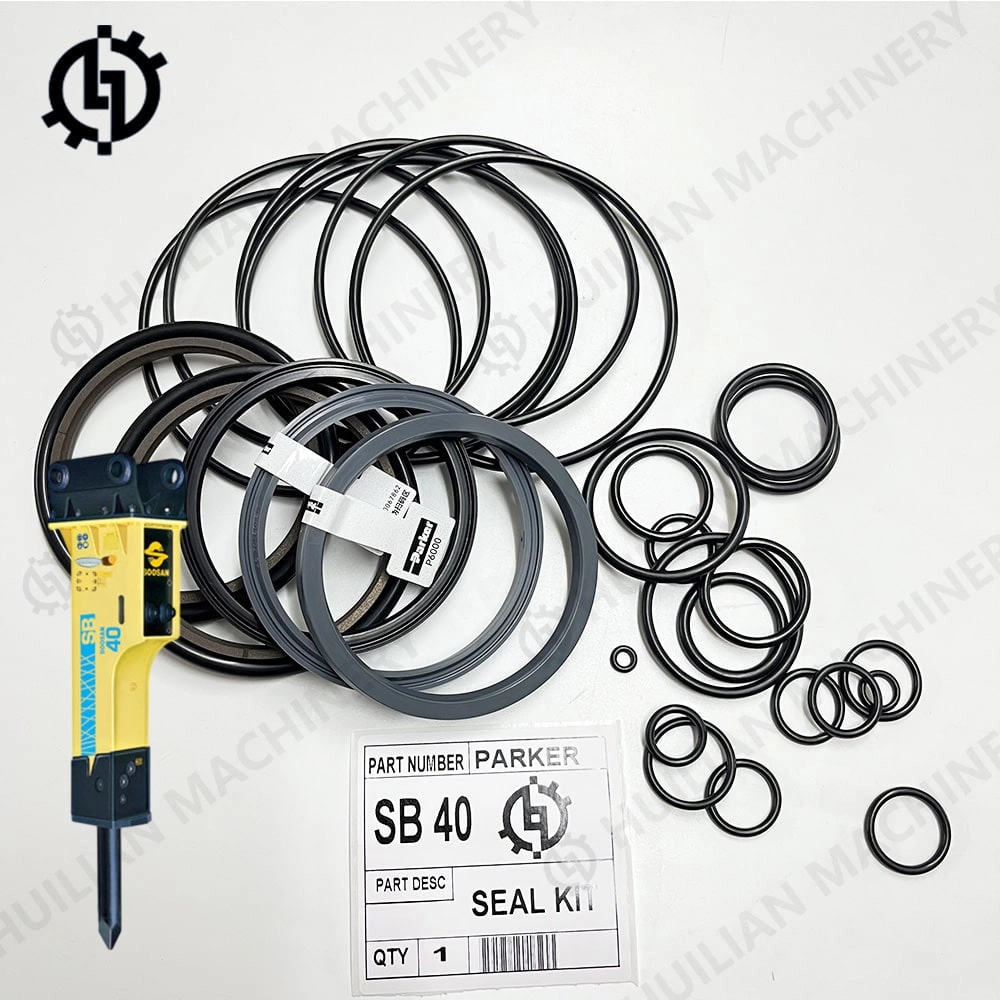
Parker Oil Seal Complete Repair SB40 Seal Kit COX001 CO1012 SB40Ⅱ SB40TSP SQ40 For Soosan Hydraulic Rock Breaker Hammer
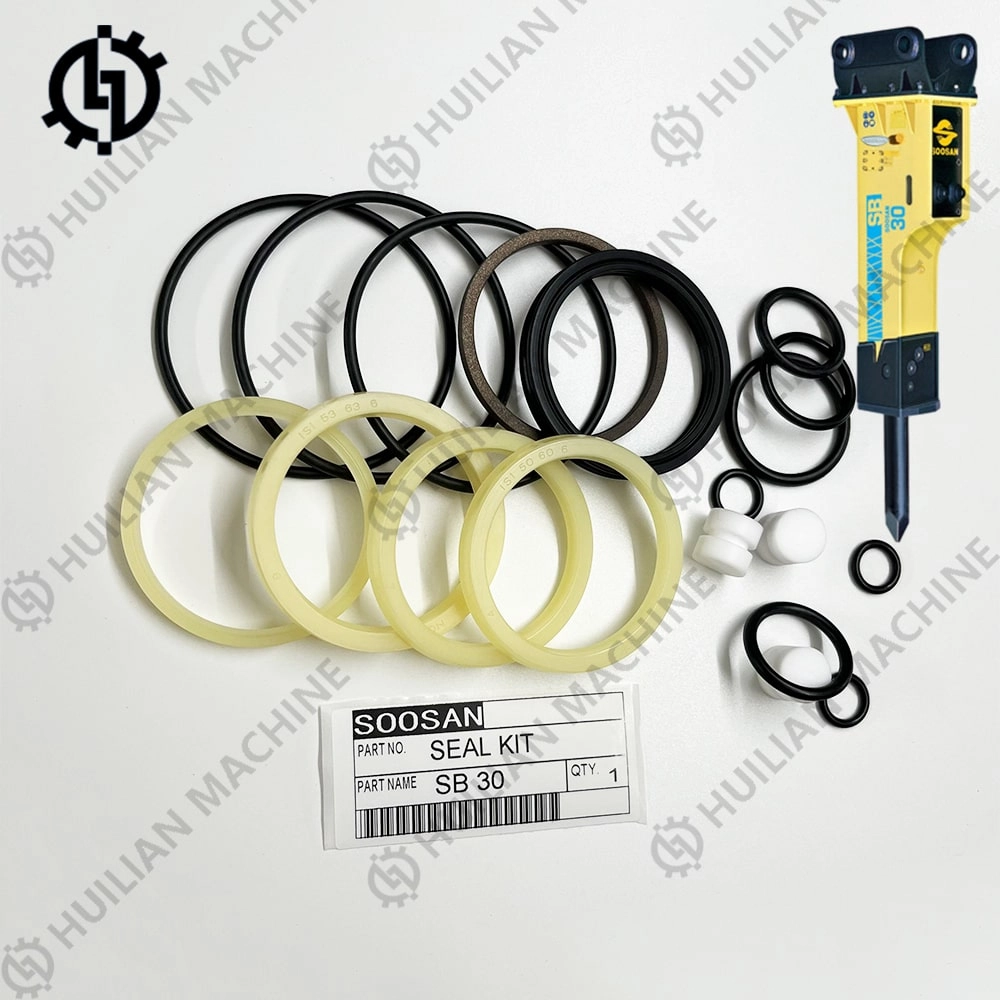
E71012 E7X001 SOOSAN SQ30 SB30Ⅱ SB30 Breaker Seal Kit SB30TS-P SB30Ⅱ TS-P SB30Ⅱ SSL Hydraulic Rock Hammer Parts Oil Repair Kit
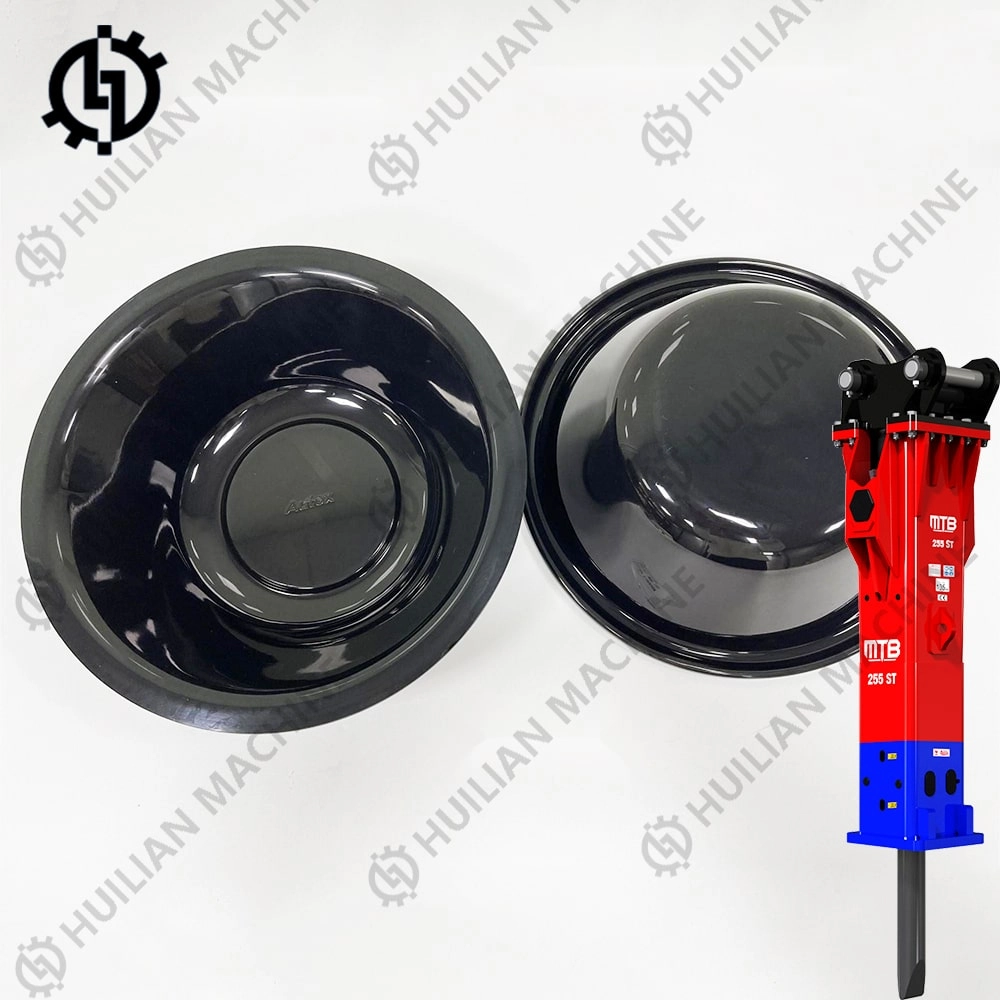
Inan Makina MTB Hydraulic Breaker Parts 45B0116A11 MTB255 MTB MT 255 Diaphragm MTB 255 IQ MTB-255 MTB 255 ST Membrane for Excavator Rock Hammer
 About us
© 2025 HUILIAN MACHINE. All rights reserved