



Choosing the Best Hydraulic Breaker by Excavator Size and Weight
- How to match a hydraulic breaker to your excavator correctly
- Why selecting the best hydraulic breaker matters for productivity and costs
- Key parameters to evaluate when choosing the best hydraulic breaker
- Best hydraulic breaker: matching table by excavator operating weight (practical guide)
- Rule-of-thumb matching principles
- Technical selection factors — beyond weight and flow
- Mounting and tool compatibility (chisels and retainers)
- Hydraulic circuit considerations and accessories
- Noise, vibration and operator comfort
- Maintenance, spare parts, and total cost of ownership
- Comparative cost example (illustrative)
- Selecting the best hydraulic breaker for specific jobs
- Rock Breaking and Quarry Work
- Concrete Demolition and Urban Work
- Trenching and Asphalt
- How to verify model selection — step-by-step checklist
- Founded supplier profile — sourcing parts and breakers (Huilian Machine)
- Why consider Huilian when buying breakers or parts
- Practical compatibility examples
- FAQs — Choosing the best hydraulic breaker
- 1. How do I know what size breaker fits my excavator?
- 2. Can I use a breaker with higher flow than my excavator provides?
- 3. What are the most common wear parts I should stock?
- 4. How does impact energy (kJ) affect performance?
- 5. Is aftermarket cheaper always a false economy?
- 6. How important is matching chisel type to the job?
- Contact & product inquiry
- References
How to match a hydraulic breaker to your excavator correctly
Why selecting the best hydraulic breaker matters for productivity and costs
Choosing the best hydraulic breaker for your excavator is not just about buying the most powerful hammer. A correct match maximizes productivity, minimizes carrier and tool wear, optimizes fuel consumption, and reduces downtime. Mis-sized breakers cause inefficient blow energy transfer, premature component failures, and potentially unsafe operating conditions. This guide explains how to select a hydraulic breaker by excavator size and weight, with practical rules-of-thumb, technical criteria (impact energy, flow, pressure), mounting and chisel considerations, and a comparative table to simplify selection.
Key parameters to evaluate when choosing the best hydraulic breaker
Before selecting a breaker, gather these facts about both your excavator and your job:
- Excavator operating weight (tonnes) — the single most important matching parameter.
- Hydraulic system capacity: maximum flow (L/min) and operating pressure (bar/MPa).
- Carrier boom geometry and mounting bracket type (pin-on, quick coupler).
- Primary task: trenching, rock breaking, concrete demolition, base preparation — influences required impact energy and chisel style.
- Duty cycle: continuous heavy use vs. intermittent. This affects cooling and choice of heavier or lighter breaker.
Best hydraulic breaker: matching table by excavator operating weight (practical guide)
The table below is a practical selection chart combining typical industry performance ranges (impact energy, hydraulic flow and working pressure) mapped to common excavator operating-weight classes. Use it as a starting point — always verify your excavator hydraulic specifications and the breaker manufacturer's datasheet before purchase.
| Excavator Operating Weight (ton) | Recommended Breaker Class | Typical Breaker Weight (kg) | Typical Impact Energy (kJ) | Hydraulic Flow (L/min) | Working Pressure (bar) | Typical Applications |
|---|---|---|---|---|---|---|
| 0.8 – 2.5 t | Mini/light | 30 – 150 kg | 1 – 6 kJ | 10 – 40 | 100 – 140 | Asphalt repair, small concrete, light trenching |
| 2.5 – 8 t | Small | 150 – 350 kg | 6 – 20 kJ | 40 – 80 | 120 – 160 | Sidewalks, curb removal, small rock |
| 8 – 18 t | Medium | 350 – 900 kg | 20 – 70 kJ | 80 – 140 | 140 – 180 | Concrete demolition, medium rock, foundations |
| 18 – 35 t | Large | 900 – 1800 kg | 70 – 180 kJ | 140 – 300 | 160 – 220 | Heavy rock, quarry, large demolition |
| > 35 t | Extra-large/Mining | > 1800 kg | > 180 kJ | > 300 | > 200 | Mining, large rotary breaking, primary fragmentation |
Note: These ranges are representative of the industry and intended to guide initial selection. Always match to the breaker’s rated flow and pressure from the manufacturer and confirm that the excavator’s hydraulic circuit (pump capacity, relief valve setting, and piping) can sustain required flow without overheating.
Rule-of-thumb matching principles
- Carrier weight vs. breaker weight: the breaker mass should be appropriate to the carrier. Very heavy breakers on light carriers increase bounce and reduce break efficiency; very light breakers on heavy carriers underutilize the carrier’s power.
- Flow and pressure matching: select a breaker whose rated flow and operating pressure align with the excavator’s continuous flow and system pressure. Over-supplying flow may cause rapid cycling with low blow energy; under-supplying reduces break performance.
- Impact energy vs. blow frequency: higher impact energy per blow is better for hard rock; higher blow frequency with lower energy suits brittle concrete and surface fragmentation.
- Duty cycle: for continuous heavy work, choose breakers with reinforced pistons, better cooling, and parts rated for high duty to avoid early failures.
Technical selection factors — beyond weight and flow
Mounting and tool compatibility (chisels and retainers)
Mounting style (pin dimensions, coupler interface) must match the carrier or be adaptable with an approved bracket. Chisel shape (moil, blunt, chisel point) affects performance: moil for general purpose rock breaking, chisel for cutting and concrete, blunt for heavy impact. Check retainer/through-bolt dimensions and hardening specs. Using OEM or high-quality aftermarket chisels and retainers extends tool life and prevents extra wear on the breaker’s bushings and pistons.
Hydraulic circuit considerations and accessories
Some breakers require a dedicated hydraulic circuit while others operate acceptably on the excavator’s auxiliary circuit. Key accessories include:
- External hydraulic control valve kits for flow regulation and two-stage operation.
- Accumulator or flow limiter where intermittent extra flow is needed.
- Hydraulic filters and cooling upgrades if breaker duty increases hydraulic fluid contamination or temperature.
Noise, vibration and operator comfort
Noise and vibration reduction are significant for urban demolition projects. Choose breakers with internal shock-absorbing mounts, anti-vibration couplings, or damping brackets. Proper matching reduces transmitted vibration to the carrier, protecting electronics and seals, and improving operator control.
Maintenance, spare parts, and total cost of ownership
Buying the best hydraulic breaker is not only about upfront price — consider maintenance intervals, spare parts availability (pistons, bushings, seals, retainers, chisel), and rebuildability. Typical wear items and consumables include:
- Tool steel chisels and retainers
- Pistons and cylinder liners
- Seals and seal kits
- Wear bushes and through bolts
Access to OEM parts or high-quality aftermarket parts significantly shortens downtime. For fleets, standardized parts across models reduce inventory costs.
Comparative cost example (illustrative)
| Item | Lower-cost breaker (cheap aftermarket) | Quality OEM / Reputable supplier |
|---|---|---|
| Initial price | Low | Moderate–High |
| Parts availability | Variable, lead times longer | Good, global distribution |
| Maintenance intervals | Shorter (more frequent) | Longer (designed service intervals) |
| Total cost of ownership (3 years) | Often higher due to downtime and parts | Lower when factoring reliability |
Conclusion: For high-duty applications and fleets, investing in a quality breaker and reliable spare-part supply lowers TCO and improves uptime.
Selecting the best hydraulic breaker for specific jobs
Rock Breaking and Quarry Work
Prioritize impact energy (kJ) and heavy-duty design. Choose a model with reinforced piston, high wear resistance, and tool steels. For large excavators (>18 t), look for 70–180+ kJ classes and flow >140 L/min.
Concrete Demolition and Urban Work
High blow frequency and chisels optimized for concrete are preferred. Anti-vibration components and lower noise levels matter for urban environments. Medium-size breakers paired with 8–18 t carriers are common for building renovation tasks.
Trenching and Asphalt
Light to small breaker classes (mini and small) with high frequency and moderate energy are appropriate. For small excavators (under 3 t), keep breaker weight low and ensure the hydraulic flow is within the mini breaker’s rated range.
How to verify model selection — step-by-step checklist
- Record excavator operating weight, hydraulic flow (L/min) at working pressure, relief valve setting, and auxiliary circuit specs.
- Identify the job’s required impact energy and duty cycle (intermittent vs continuous).
- Consult breaker manufacturer datasheets and find models whose rated flow/pressure and impact energy match or fall within the excavator’s stable operating envelope.
- Confirm mounting bracket/pin compatibility or plan for adapter plates and quick coupler fitment.
- Evaluate spare parts availability and aftermarket support for your region.
- Consider TCO: initial price, expected wear parts consumption, and rebuild options.
Founded supplier profile — sourcing parts and breakers (Huilian Machine)
Founded in 2005, Huilian Machine is a professional OEM supplier of excavator parts. We are leading excavator breaker parts manufacturers from China. We offer a wide range of products, including hydraulic breaker hammers, chisels, seals and seal kits, diaphragms, pistons, WearBush, rompin/retainer bars, through bolts, side bolts, valves and liners. Huilian's team comprises experienced and skilled professionals, including technicians, R&D experts, designers, quality control professionals, salespeople and after-sales service teams. Our products are exported to over 90 countries and regions and are highly regarded by customers worldwide for their quality and variety. Guangzhou Huilian Machinery Co., Ltd. is committed to becoming a global leader in the supply of excavator parts and components and is seeking global distributor partners to promote the sustainable development of the excavator parts industry. Our website: https://www.huilianmachine.com/
Why consider Huilian when buying breakers or parts
Huilian’s strengths and competitive advantages:
- Industry experience since 2005 with OEM-level manufacturing capability.
- Wide product portfolio: excavator parts, Excavator Breaker Parts, Excavator Hydraulic Breaker, Excavator Seal Kit, Parker seal kit and more.
- Skilled technical team for product customization, R&D and quality control.
- Global export experience to over 90 countries — ensuring logistics and aftermarket support.
- Focus on both parts quality and cost-effectiveness to reduce customer TCO.
For fleets requiring reliable spare parts (pistons, seals, bushings, retainer bars) or full breaker units, Huilian offers OEM-compatible solutions and OEM-style seal kits for many mainstream breaker brands. Learn more and request parts: https://www.huilianmachine.com/
Practical compatibility examples
Example 1: A 12 t excavator with 120 L/min auxiliary flow and 180 bar pressure — a medium-class breaker rated for 80–120 L/min and ~40–80 kJ impact energy is typically optimum. Example 2: A 2 t mini-excavator with 30 L/min and 120 bar — choose a mini/light breaker (30–100 kg) rated for 20–40 L/min and 2–6 kJ energy. Always confirm with manufacturer datasheets and consider job type.
FAQs — Choosing the best hydraulic breaker
1. How do I know what size breaker fits my excavator?
Start with the excavator’s operating weight and hydraulic flow/pressure. Use the matching table in this article as a guide, then cross-check with the breaker manufacturer’s rated flow, pressure, and impact energy. If in doubt, consult the supplier’s application engineers or your local dealer.
2. Can I use a breaker with higher flow than my excavator provides?
Not effectively. Oversupplying flow without adequate carrier power and pressure can cause rapid cycling with low blow energy, increased wear, and overheating. It is better to match the breaker’s rated flow with your excavator’s continuous flow or to use a breaker with an adjustable flow control.
3. What are the most common wear parts I should stock?
Chisels/tool steels, retainers/through bolts, pistons, cylinder liners, wear bushes, and seal kits. Stocking these reduces downtime — Huilian supplies many of these items as OEM-compatible parts.
4. How does impact energy (kJ) affect performance?
Impact energy per blow determines the ability to fracture hard rock and thick concrete. Higher kJ is better for large, hard materials; higher frequency with lower kJ is better for thinner or brittle materials.
5. Is aftermarket cheaper always a false economy?
Not always — some high-quality aftermarket parts meet OEM specs and offer savings. However, very low-cost components often sacrifice material quality or heat treatment, increasing wear and downtime. Choose trusted suppliers with verifiable material specs and testing.
6. How important is matching chisel type to the job?
Very important. Moil (point) tools are good for breaking rock; chisel tools for cutting concrete and reinforced structures; blunt tools for primary heavy impact. Choosing the right tool reduces cycle times and wear.
Contact & product inquiry
If you’d like help selecting the best hydraulic breaker for your excavator or need OEM-quality spare parts, contact Guangzhou Huilian Machinery Co., Ltd. Visit https://www.huilianmachine.com/ to view their product range or request a quote. Huilian can support model matching, parts lists and global distribution options.
References
- Hydraulic breaker — Wikipedia. https://en.wikipedia.org/wiki/Hydraulic_breaker (accessed 2025-12-24).
- Epiroc — Hydraulic hammers and selection information. Example technical pages and product specifications. https://www.epiroc.com/ (accessed 2025-12-24).
- Guangzhou Huilian Machinery Co., Ltd. corporate site and product pages. https://www.huilianmachine.com/ (accessed 2025-12-24).
Data in the tables and recommendations are representative industry ranges compiled from manufacturer datasheets and technical guides (see references). Always verify specific model specifications with product datasheets and your excavator OEM before purchase.
Wholesale Excavator Breaker Parts: Complete Buying Guide 2025
Wholesale rock breaker excavator manufacturer and supplier
Rebuilding Hydraulic Breakers: Parts and Cost Guide
Compatibility Guide: Hammer Breaker Spare Parts by Excavator Model
About
How can I ensure I’m selecting the right part for my equipment?
Our expert team can assist you in finding the right part based on your machine model, specifications, and requirements. Contact us for personalized support.
What types of excavator parts do you offer?
We provide a wide range of high-quality excavator parts, including hydraulic breakers, chisels, seal kits, diaphragms, pistons, wear bushes, retainer bars, through bolts, side bolts, valves, and liners.
What is your shipping and delivery time?
We offer fast and reliable global shipping. Delivery times vary depending on location and order size, but we strive to process and ship orders as quickly as possible.
Do you offer OEM and aftermarket parts?
Yes, we manufacture high-quality OEM parts and supply aftermarket parts from top brands such as NOK, Parker, SKF, and Hallite to ensure optimal performance.
Are your parts compatible with all excavator brands?
Yes, our parts are designed to be compatible with major brands like Komatsu, Caterpillar, Hitachi, Hyundai, Doosan, JCB, Kobelco, Sany, and many more.

Huilian HL68 Hammer Breaker for 4-7 Ton Excavator SOOSAN SB40 Hydraulic Rock Breaker
Side type hydraulic breaker : Easy to control, convenient positioning, durable, high working efficiency, strong striking force, long service life, stable operating performance, convenient after-sales service.
Top type hydraulic breaker : Strong impact power; excellent environmental performance; exquisite manufacturing technology; easy maintenance,fast after-sales service
Box type hydraulic breaker :leading heat treatment technology, enhance heat resistance, wear resistance. Under the condition of keeping the oil pressure constant, the cylinder volumeis reduced and the fuel consumption is reduced.The self-developed core is adopted to make the piston cylinder body moredurable and the service life longer.Exposed decks are made of high-strength steel plates to reduce wear.The best efficiency matching with excavator and loader is realized
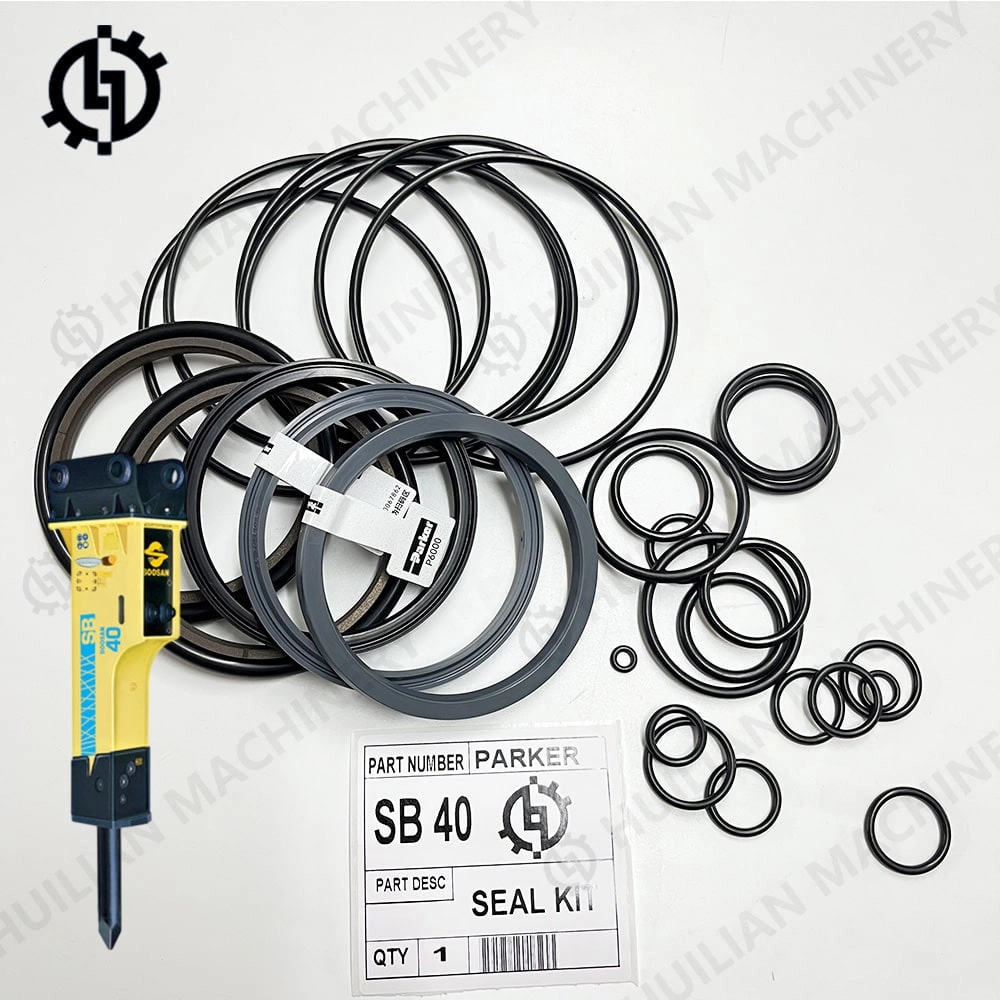
Parker Oil Seal Complete Repair SB40 Seal Kit COX001 CO1012 SB40Ⅱ SB40TSP SQ40 For Soosan Hydraulic Rock Breaker Hammer
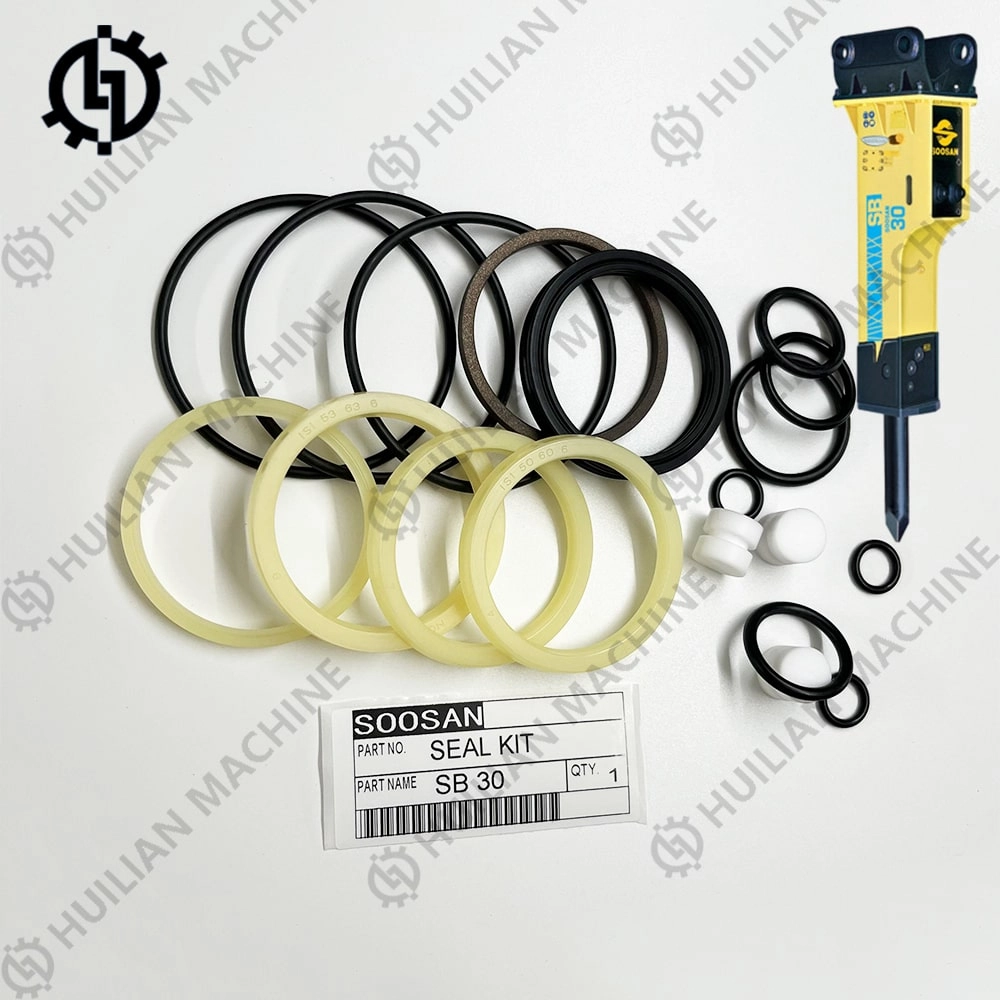
E71012 E7X001 SOOSAN SQ30 SB30Ⅱ SB30 Breaker Seal Kit SB30TS-P SB30Ⅱ TS-P SB30Ⅱ SSL Hydraulic Rock Hammer Parts Oil Repair Kit
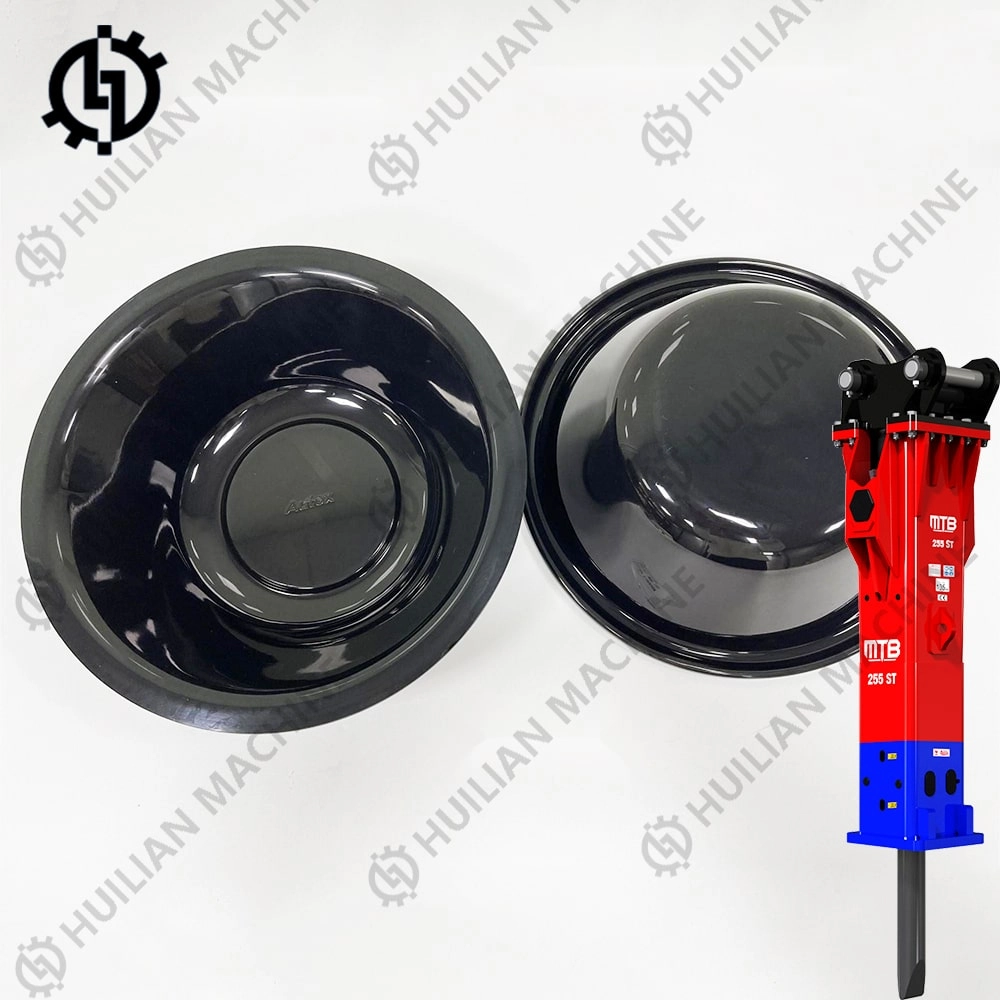
Inan Makina MTB Hydraulic Breaker Parts 45B0116A11 MTB255 MTB MT 255 Diaphragm MTB 255 IQ MTB-255 MTB 255 ST Membrane for Excavator Rock Hammer
 About us
© 2025 HUILIAN MACHINE. All rights reserved