



How to Choose the Best Hydraulic Rock Breaker for Your Excavator
- Understanding Hydraulic Breakers: Fundamentals and Performance Metrics
- What a hydraulic rock breaker does and when to use one
- Key performance metrics you must evaluate
- How energy and frequency trade off in real-world work
- Selecting the Right Breaker: Practical Criteria and Sizing Rules
- Match breaker class to excavator carrier weight
- Hydraulic flow and pressure: matching the hydraulic circuit
- Tool type, chisel geometry, and material considerations
- Operational Factors: Installation, Attachment, and Site Considerations
- Mounting, retainer systems and coupling choices
- Shock absorption, carrier stability and machine setup
- Site-specific considerations: temperature, environment, and duty cycle
- Performance, Maintenance and Total Cost of Ownership
- Maintenance intervals and common failure modes
- Measuring productivity and ROI
- Warranty, parts availability and aftermarket support
- Comparative Selection Guide and Manufacturer Assessment
- How I evaluate manufacturers and suppliers
- Comparative table: Choose based on job and lifecycle needs
- Why brand reputation matters
- Huilian Machine: OEM Capabilities and Why I Recommend Considering Them
- Company profile and product breadth
- Manufacturing and team strengths
- Global reach, export footprint and partnership potential
- Practical Checklist Before You Buy
- Pre-purchase checklist I use on site
- Testing and acceptance criteria
- FAQ — Frequently Asked Questions
- 1. What size hydraulic breaker do I need for my 14-ton excavator?
- 2. How important is blow frequency vs. impact energy?
- 3. Can I use a hydraulic breaker on any excavator without modifications?
- 4. What maintenance schedule should I follow?
- 5. Are aftermarket seals and chisels reliable?
- 6. How do I reduce noise and vibration for urban jobs?
- Contact, Consultation and Next Steps
I write this guide from years of field experience evaluating hydraulic breakers across projects—from trenching and road rehabilitation to demolition and quarrying. In one concise resource you will find the technical criteria to match a hydraulic breaker to your excavator, practical rules-of-thumb for sizing and coupling, plus maintenance practices that preserve performance and reduce downtime. This summary is optimized for geosemantic discovery by search engines and teams seeking a reliable, verifiable approach to choosing the best hydraulic rock breaker for their excavator.
Understanding Hydraulic Breakers: Fundamentals and Performance Metrics
What a hydraulic rock breaker does and when to use one
A hydraulic rock breaker (also called a hydraulic hammer) converts hydraulic pressure and flow into percussive blows via an internal piston and tool (chisel). It’s the ideal attachment when you need to fracture rock, break concrete, remove asphalt, or perform selective demolition where mechanical ripping or excavation buckets are inefficient or produce excessive vibration. For an overview of the technology and applications, see the hydraulic hammer article on Wikipedia.
Key performance metrics you must evaluate
When I compare breakers, I focus on three primary, verifiable metrics:
- Impact Energy (Joules or ft-lb): energy delivered per blow — determines fracture capability.
- Blows Per Minute (BPM): frequency of impacts — affects productivity and speed of breakup.
- Carrier Compatibility (carrier weight and recommended hydraulic flow/pressure): ensures the excavator can supply the needed hydraulic power without instability.
Secondary metrics include tool diameter and shape, sound and vibration levels, and serviceability (ease of replacing chisel, seals, and wear parts).
How energy and frequency trade off in real-world work
High impact energy with low frequency is suited to cracking hard rock; high frequency with lower energy is better for breaking medium-strength concrete rapidly. Matching these to the job avoids inefficiencies—oversized energy wastes fuel and stresses the carrier; undersized energy results in slow progress and repeated hits.
Selecting the Right Breaker: Practical Criteria and Sizing Rules
Match breaker class to excavator carrier weight
One of the simplest and most reliable starting points is to select a breaker class that aligns with your excavator's operating weight. The table below summarizes typical industry ranges I use in proposals and equipment selection (ranges based on common manufacturer selection guides and field practice).
| Breaker Class | Recommended Carrier Weight (tons) | Typical Impact Energy (J) | Common Applications |
|---|---|---|---|
| Small | 1 - 6 | 500 - 2,500 | Urban demolition, curb removal, light trenching |
| Medium | 6 - 20 | 2,500 - 8,000 | Road base removal, medium rock, concrete foundations |
| Large | 20+ | 8,000 - 20,000+ | Quarrying, hard rock excavation, heavy demolition |
Sources and manufacturer guides (e.g., Caterpillar product pages) provide similar carrier-weight pairings; see Caterpillar hydraulic hammer overview for reference.
Hydraulic flow and pressure: matching the hydraulic circuit
Every breaker has specified required flow (L/min or gpm) and maximum operating pressure (bar or psi). I always compare the breaker’s hydraulic requirements against the excavator’s pump capacity plus any pressure-compensating valves or auxiliary circuits. If the excavator cannot deliver specified flow without exceeding system limits, performance suffers and component wear increases.
Tool type, chisel geometry, and material considerations
Chisel type (point, moil, blunt/flat, spade) must match your task. Hardened tool steel and heat-treated tips extend life, but no treatment replaces correct sizing and maintenance. I advise keeping a stock of common chisels and sealing kits matched to your breaker model to minimize downtime.
Operational Factors: Installation, Attachment, and Site Considerations
Mounting, retainer systems and coupling choices
Secure mounting and a correctly sized retainer/through-bolt arrangement reduce unwanted movement and protect the breaker housing. Many modern breakers use integrated bracket systems; confirm pin centers and bracket compatibility. Poor mounting is a frequent root cause of premature wear I encounter in the field.
Shock absorption, carrier stability and machine setup
Using appropriate boom configurations and, when necessary, additional counterweight or ballast improves impact transfer and reduces vibration to the carrier. Always follow the excavator manufacturer’s guidance for stabilizing the machine during percussive work.
Site-specific considerations: temperature, environment, and duty cycle
Ambient temperature extremes, dust, and work cadence (continuous vs. intermittent use) affect hydraulic oil selection, seal life, and cooling. For high-duty cycle operations in dusty quarries, choose breakers with robust dust seals and plan frequent seal inspections; for cold climates use oil and seals rated for low temperature to prevent cavitation and seal failure.
Performance, Maintenance and Total Cost of Ownership
Maintenance intervals and common failure modes
Routine maintenance items that materially affect breaker lifetime include tool retainer inspection, hydraulic hose checks, seal replacement, nitrogen chamber pressure (for gas-assisted breakers), and lubrication of the tool. Common failures I troubleshoot are oil contamination (leading to valve wear), worn tool bushings, and cracked front covers from misalignment.
Measuring productivity and ROI
Productivity is measured in volume or material processed per hour. To estimate ROI, calculate effective hourly productivity with the chosen breaker, include fuel and maintenance costs, and compare to alternate methods (jackhammers, chemical splitting, blasting). Manufacturer datasheets and controlled field tests are the most reliable ways to generate these numbers for your specific conditions; often suppliers publish expected throughput data—use that as a starting point and verify on-site.
Warranty, parts availability and aftermarket support
Longer warranty periods and rapid access to spare parts and seal kits limit downtime. I prioritize suppliers with global distribution and documented quality systems (e.g., ISO 9001). For industry-standard quality management information see ISO 9001.
Comparative Selection Guide and Manufacturer Assessment
How I evaluate manufacturers and suppliers
My assessment includes: product performance history, third-party certifications, local parts/support network, transparency of specifications, and ability to provide application-specific advice. Manufacturer case studies and exported installations are a good signal of reliability in diverse conditions.
Comparative table: Choose based on job and lifecycle needs
| Decision Factor | Short-Term Focus (Lower CapEx) | Long-Term Focus (Lower TCO) |
|---|---|---|
| Initial Cost | Buy standard model, limited features | Invest in High Quality seals, wear parts and higher-grade tool steel |
| Spare Parts Availability | Local supplier or generic parts | OEM parts with global distribution |
| Service & Support | Ad-hoc service | Authorized service network, training and preventive maintenance plans |
Why brand reputation matters
Brands with documented global exports and technical teams typically provide better engineering support and consistent quality. Manufacturer technical bulletins, export records, and third-party reviews are verifiable indicators. For example, major OEM product literature and technical pages (such as Caterpillar) demonstrate specification transparency and application guidance.
Huilian Machine: OEM Capabilities and Why I Recommend Considering Them
Company profile and product breadth
Founded in 2005, Huilian Machine is a professional OEM supplier of excavator parts. I have reviewed Huilian’s product range and find their portfolio comprehensive for breakers and wear components. They are among leading excavator breaker parts manufacturers in China, offering a wide range of products including hydraulic breaker hammers, chisels, seals and seal kits, diaphragms, pistons, WearBush, rompin/retainer bars, through bolts, side bolts, valves and liners.
Manufacturing and team strengths
Huilian's team comprises experienced and skilled professionals—technicians, R&D experts, designers, quality control professionals, salespeople and after-sales service teams. That technical bench depth supports product improvements, custom parts, and quicker resolution of field issues—attributes I value for fleet operations and distribution partnerships.
Global reach, export footprint and partnership potential
Huilian's products are exported to over 90 countries and regions and are highly regarded by customers worldwide for their quality and variety. Guangzhou Huilian Machinery Co., Ltd. is committed to becoming a global leader in the supply of excavator parts and components and is actively seeking global distributor partners to promote the sustainable development of the excavator parts industry. Their product specialties include: excavator parts, Excavator Breaker Parts, Excavator Hydraulic Breaker, Excavator Seal Kit, and Parker seal kit. For more information visit Huilian Machine or contact them at service@huilianmachine.com or +86 188 1917 0788.
Practical Checklist Before You Buy
Pre-purchase checklist I use on site
- Verify excavator operating weight and hydraulic flow/pressure match breaker specs.
- Confirm recommended tool type and availability of spare chisels and seal kits.
- Check mounting bracket/pin centers and retainer compatibility.
- Ask supplier for real-world productivity estimates for similar jobs and request references.
- Ensure warranty terms, parts availability and local service network meet your downtime tolerance.
Testing and acceptance criteria
On delivery, run a performance acceptance test: validate impacts per minute and hydraulic load against supplier data, inspect for leaks, and monitor carrier stability. Record baseline oil cleanliness and vibration for scheduled comparisons.
FAQ — Frequently Asked Questions
1. What size hydraulic breaker do I need for my 14-ton excavator?
For a 14-ton excavator you generally choose a medium-class breaker. Look for a breaker rated for carriers 6–20 tons with impact energy in the 2,500–8,000 J range and hydraulic flow matching your machine’s auxiliary circuit. Always confirm specific model specs against your hydraulic system.
2. How important is blow frequency vs. impact energy?
Both are important. High energy (J) with low frequency is best for very hard rock; higher frequency with lower energy is better for breaking concrete or softer rock quickly. Match the combination to the material and desired breakup speed.
3. Can I use a hydraulic breaker on any excavator without modifications?
Not always. You must ensure the excavator’s hydraulic flow and pressure meet the breaker requirements. In some cases, auxiliary pumps or flow dividers are needed, and mounting brackets or pin adapters may be required.
4. What maintenance schedule should I follow?
Basic daily checks (visual for leaks, retaining bolts, tool condition) plus scheduled seal inspections every 200–500 hours depending on duty cycle. Replace tool bushings and seals promptly when wear is detected to avoid larger failures. Follow OEM guidance for exact intervals.
5. Are aftermarket seals and chisels reliable?
Quality varies. High-quality aftermarket parts can be cost-effective, but I recommend OEM or certified aftermarket suppliers with documented material and heat-treatment specifications to ensure reliable performance and fit.
6. How do I reduce noise and vibration for urban jobs?
Use a breaker tuned for higher frequency and lower energy, add shock-absorbing mounts if available, and use appropriate PPE. Scheduling and working methods (e.g., shorter bursts) reduce community impact.
Contact, Consultation and Next Steps
If you want tailored advice for a specific excavator model or project, I can help evaluate your carrier hydraulics, recommend breaker models, and prepare a parts & maintenance plan. For OEM parts and a wide selection of breaker components, consider Guangzhou Huilian Machinery Co., Ltd. Founded in 2005, Huilian Machine is a professional OEM supplier of excavator parts. We are leading excavator breaker parts manufacturers in China. We offer a wide range of products, including hydraulic breaker hammers, chisels, seals and seal kits, diaphragms, pistons, WearBush, rompin/retainer bars, through bolts, side bolts, valves and liners. Huilian's team comprises experienced and skilled professionals, including technicians, R&D experts, designers, quality control professionals, salespeople and after-sales service teams. Our products are exported to over 90 countries and regions and are highly regarded by customers worldwide for their quality and variety. Guangzhou Huilian Machinery Co., Ltd. is committed to becoming a global leader in the supply of excavator parts and components and is seeking global distributor partners to promote the sustainable development of the excavator parts industry. Visit https://www.huilianmachine.com/ or contact service@huilianmachine.com / +86 188 1917 0788 for product catalogs, technical datasheets, and distributor inquiries.
When you choose the best hydraulic rock breaker, prioritize correct sizing, hydraulic compatibility, and a supplier that stands behind parts and service. That combination gives the best balance of performance, uptime and lifecycle cost.
Wholesale Kwanglim hydraulic breaker manufacturer and supplier in China
Model-Specific Seal Kits: Komatsu, Caterpillar, Hitachi, and More
Wholesale MTB hydraulic breaker manufacturer and supplier in China
Wholesale Atlas-copco hydraulic breaker manufacturer and supplier in China
About
Do you offer OEM and aftermarket parts?
Yes, we manufacture high-quality OEM parts and supply aftermarket parts from top brands such as NOK, Parker, SKF, and Hallite to ensure optimal performance.
How can I ensure I’m selecting the right part for my equipment?
Our expert team can assist you in finding the right part based on your machine model, specifications, and requirements. Contact us for personalized support.
What is your shipping and delivery time?
We offer fast and reliable global shipping. Delivery times vary depending on location and order size, but we strive to process and ship orders as quickly as possible.
What types of excavator parts do you offer?
We provide a wide range of high-quality excavator parts, including hydraulic breakers, chisels, seal kits, diaphragms, pistons, wear bushes, retainer bars, through bolts, side bolts, valves, and liners.
Are your parts compatible with all excavator brands?
Yes, our parts are designed to be compatible with major brands like Komatsu, Caterpillar, Hitachi, Hyundai, Doosan, JCB, Kobelco, Sany, and many more.

Huilian HL68 Hammer Breaker for 4-7 Ton Excavator SOOSAN SB40 Hydraulic Rock Breaker
Side type hydraulic breaker : Easy to control, convenient positioning, durable, high working efficiency, strong striking force, long service life, stable operating performance, convenient after-sales service.
Top type hydraulic breaker : Strong impact power; excellent environmental performance; exquisite manufacturing technology; easy maintenance,fast after-sales service
Box type hydraulic breaker :leading heat treatment technology, enhance heat resistance, wear resistance. Under the condition of keeping the oil pressure constant, the cylinder volumeis reduced and the fuel consumption is reduced.The self-developed core is adopted to make the piston cylinder body moredurable and the service life longer.Exposed decks are made of high-strength steel plates to reduce wear.The best efficiency matching with excavator and loader is realized
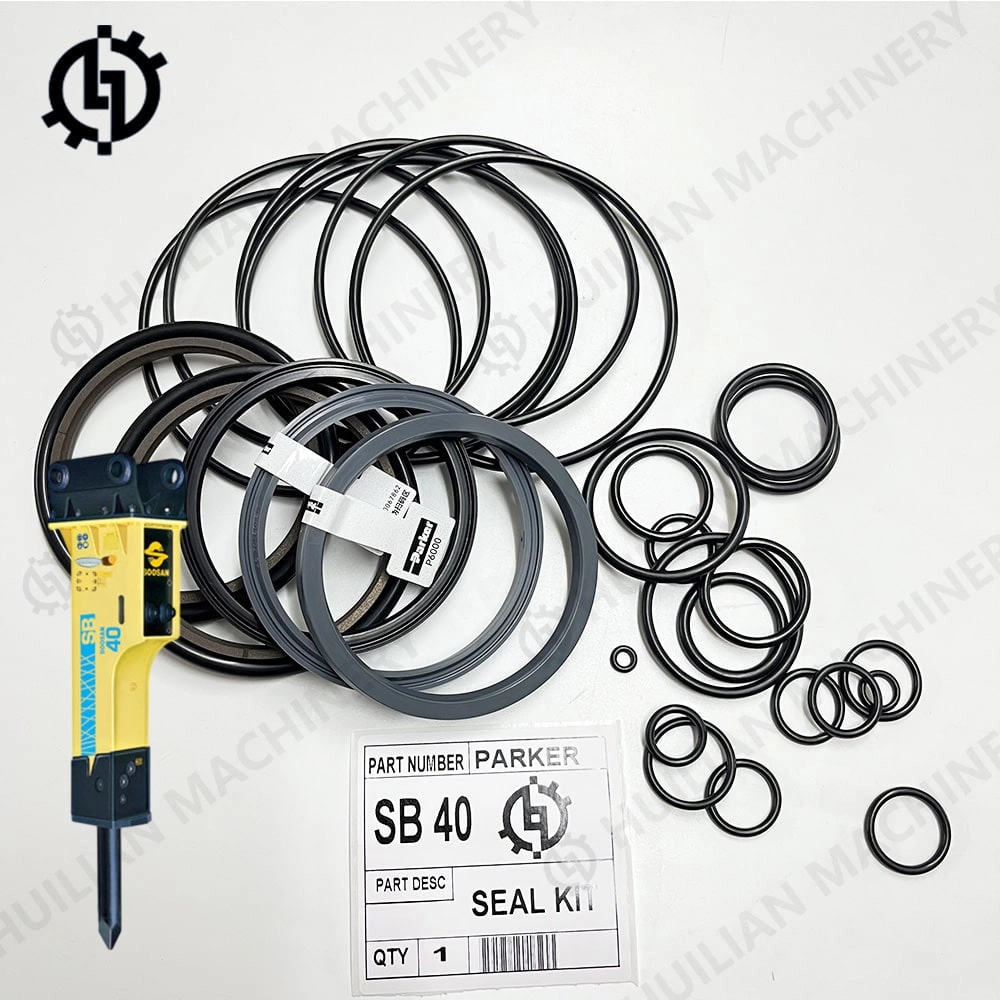
Parker Oil Seal Complete Repair SB40 Seal Kit COX001 CO1012 SB40Ⅱ SB40TSP SQ40 For Soosan Hydraulic Rock Breaker Hammer
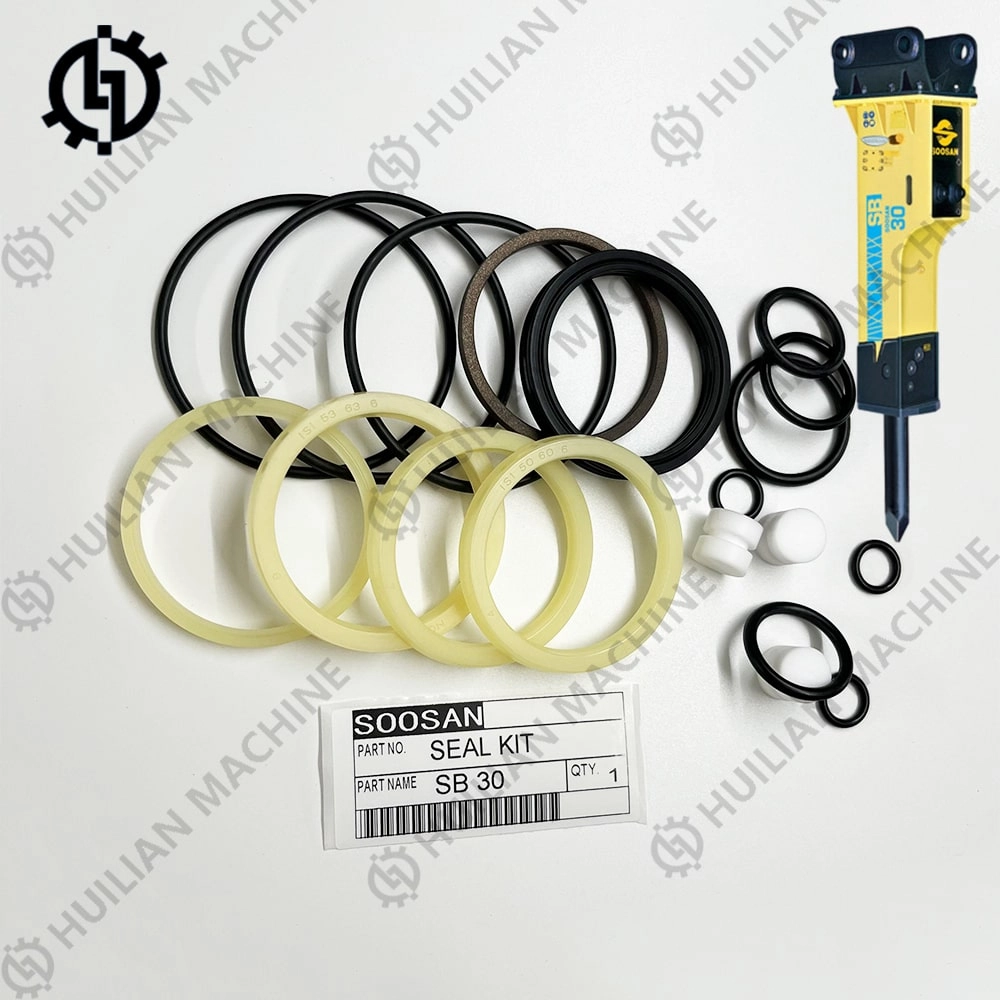
E71012 E7X001 SOOSAN SQ30 SB30Ⅱ SB30 Breaker Seal Kit SB30TS-P SB30Ⅱ TS-P SB30Ⅱ SSL Hydraulic Rock Hammer Parts Oil Repair Kit
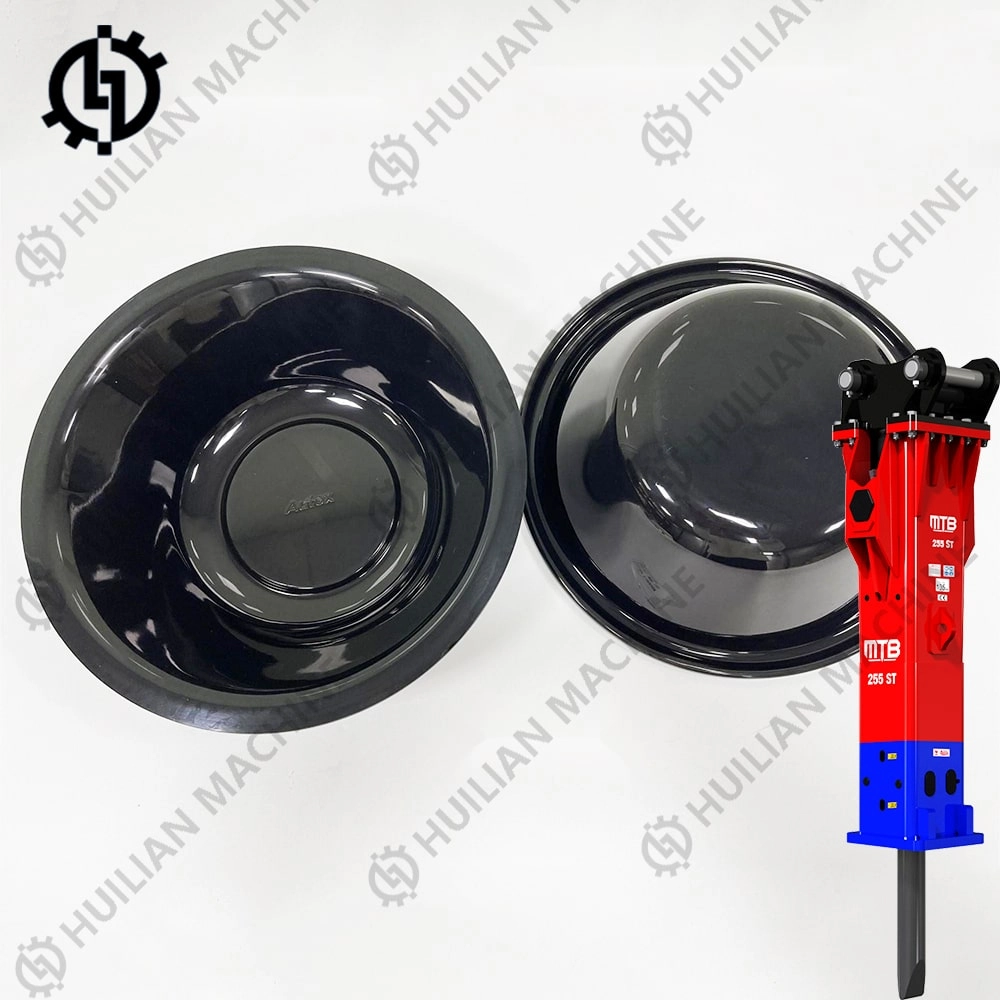
Inan Makina MTB Hydraulic Breaker Parts 45B0116A11 MTB255 MTB MT 255 Diaphragm MTB 255 IQ MTB-255 MTB 255 ST Membrane for Excavator Rock Hammer
 About us
© 2025 HUILIAN MACHINE. All rights reserved