



How to Choose the Right Rock Breaker for Your Excavator
- Understanding rock breakers and excavator compatibility
- What is a rock breaker (hydraulic hammer)?
- Key compatibility factors between breaker and excavator
- Why mismatches cause problems
- Sizing and performance metrics to evaluate
- Impact energy and blow frequency — what to prioritize
- Hydraulic flow and pressure requirements
- Carrier-to-hammer matching table (industry guidance)
- Mounting, controls and tool selection
- Mounting options and compatibility
- Control systems — hydraulic and electronic
- Choosing the right tool (chisel) for the job
- Operational best practices, maintenance and total cost of ownership
- Daily inspection and preventive maintenance
- Common failure modes and how to prevent them
- Comparing lifecycle costs
- Selection checklist and decision flow
- Step-by-step selection process
- Example: Choosing a breaker for a 15-ton excavator
- Data & authoritative references
- Brands, parts supply and why supplier choice matters
- Spare parts, seal kits and OEM vs aftermarket
- Choosing a supplier with technical support
- Company profile — Huilian Machine (supplier example)
- FAQ — Frequently asked questions
- 1. How do I know what size rock breaker I need for my excavator?
- 2. Can I use a breaker that requires higher hydraulic flow than my excavator provides?
- 3. What maintenance is most important to extend breaker life?
- 4. Are replacement chisels universal across brands?
- 5. How do I avoid blank firing and what is it?
- 6. Where can I find authoritative specs for breaker selection?
Choosing the right rock breaker for your excavator is a decision that affects productivity, operating cost, and equipment life. The ideal selection balances excavator weight and hydraulic capacity with the breaker hammer's impact energy, blow frequency and tool geometry. This article provides a practical, evidence-backed guide to selecting a rock breaker for excavator applications, including compatibility checks, sizing charts, mounting and control considerations, common failure causes, and maintenance best practices to maximize uptime and ROI.
Understanding rock breakers and excavator compatibility
What is a rock breaker (hydraulic hammer)?
A rock breaker, commonly called a hydraulic breaker or hydraulic hammer, is an excavator-mounted percussion tool used to demolish rock, concrete and other hard materials. It converts hydraulic energy from the carrier (the excavator) into kinetic energy delivered via a chisel or moil to fracture material. For a technical overview, see the Hydraulic hammer article on Wikipedia (https://en.wikipedia.org/wiki/Hydraulic_hammer).
Key compatibility factors between breaker and excavator
When selecting a rock breaker for excavator use, assess these primary compatibility dimensions:
- Carrier operating weight and boom geometry (stability and reach)
- Hydraulic flow (liters per minute/gal per minute) and system pressure (bar/psi)
- Impact energy (kJ or ft-lb) and blow frequency (strokes per minute)
- Mounting type (bracket class, coupler compatibility, through-bolt or side-bolt)
- Chisel/tool selection for the material (conical moil, blunt moil, cross-cut, etc.)
Why mismatches cause problems
Common issues from poor matching include low productivity (breaker too small), excessive carrier strain and hydraulic overload (breaker too large for flow/pressure), increased wear on bushings and seals, and premature failure of valves or pistons. Correct sizing and installation reduce fuel consumption and maintenance costs while increasing cycle throughput.
Sizing and performance metrics to evaluate
Impact energy and blow frequency — what to prioritize
Impact energy (measured in kilojoules, kJ) determines the per-hit force available to break material. Blow frequency (strokes per minute) determines the number of impacts per time unit. For hard rock, higher impact energy with lower frequency typically produces faster fragmentation. For softer materials, higher frequency with lower energy may be more efficient. Manufacturers publish hammer energy and frequency curves—compare these against the target material hardness and job cycle.
Hydraulic flow and pressure requirements
Breakers are specified with operating flow and maximum working pressure. Ensure the excavator can supply required flow at the breaker’s operating pressure without exceeding the carrier’s hydraulic limits. If the excavator flow is higher than the breaker’s rated flow, a flow control or relief valve is required to avoid overdriving the hammer. Likewise, underflow will reduce performance and increase wear.
Carrier-to-hammer matching table (industry guidance)
The table below summarizes common industry guidelines linking excavator operating weight and typical breaker mass/class. These are general recommendations; always confirm with the breaker OEM and your excavator manual.
| Breaker Class (approx. breaker weight) | Recommended Excavator Operating Weight | Typical Applications |
|---|---|---|
| Mini (100–250 kg) | 1–4 t | Trench, light concrete, sidewalk demolition |
| Small (300–700 kg) | 3–12 t | Urban demolition, utility works, rock break |
| Medium (700–1500 kg) | 12–25 t | Quarry work, road subbase breaking |
| Large (1500–3000 kg) | 25–50 t | Heavy quarry, primary rock breaking |
| Extra-large (>3000 kg) | >50 t | Major primary breaking, tunneling |
Sources: manufacturer guidelines and industry averages; consult OEM pages such as Atlas Copco and Sandvik for model-specific matching (Atlas Copco, Sandvik).
Mounting, controls and tool selection
Mounting options and compatibility
Breakers are mounted via brackets designed for certain carrier classes and couplers. You’ll encounter through-bolt mounts, side-bolt mounts, and quick-coupler interfaces. Confirm pin diameters, bracket dimensions and whether the excavator requires an additional reinforcement (e.g., gallery or support tubes) to handle the reaction forces. Wrong mounting accelerates bushing wear and can damage excavator booms.
Control systems — hydraulic and electronic
Modern breakers can integrate with excavator hydraulic circuits through auxiliary lines and pilot control. Some models offer pressure/flow control valves, anti-blank firing systems, and temperature/maintenance sensors. Electronic monitoring (IoT telemetry) helps track usage hours, frequency, and fault codes to plan preventive maintenance. Refer to your breaker and excavator manufacturer for safe piping and control layouts.
Choosing the right tool (chisel) for the job
Tool geometry affects fracturing pattern and wear. Common choices:
- Conical (point) — deep penetration, good for initial break-in
- Moid/blunt (flat) — broader impacts for fracturing and secondary breaking
- Cross-cut and spade — for trenching or cutting frozen ground
Select tool steel quality (e.g., heat-treated, alloy grades) and replace or rotate chisels based on wear patterns to avoid overstressing the hammer.
Operational best practices, maintenance and total cost of ownership
Daily inspection and preventive maintenance
Key daily checks improve service life:
- Check hydraulic hoses, fittings and connections for leaks
- Inspect bushings, through bolts and retaining pins for wear
- Ensure tool lubrication (tool grease) is applied per OEM intervals
- Monitor carrier hydraulic temperature—excess heat reduces seal life
Follow manufacturer service intervals for valve packs, accumulator systems (if fitted), piston/piston rod inspections, and seal kit replacements. OEM manuals and parts lists (e.g., seal kits and pistons) are essential references.
Common failure modes and how to prevent them
Frequent causes of downtime include:
- Hydraulic contamination — use correct filtration and change hydraulic fluid per schedule
- Incorrect hydraulic flow — install relief/flow control to protect hammer
- Poor mounting or misalignment — verify bracket fit and bolts torque
- Improper tool selection — using a point where a blunt moil is needed increases wear
Mitigation: adopt a maintenance log, use genuine wear parts and follow OEM torque/spec tables.
Comparing lifecycle costs
Initial purchase price is only part of the cost. Consider:
- Installation and adaptors
- Spare parts (chisels, bushings, seals, valves)
- Hydraulic system upgrades (accumulators, flow controls)
- Fuel efficiency changes due to mismatched sizing
- Downtime costs from failures
When possible, request total cost of ownership (TCO) projections from suppliers and check references or case studies of similar jobs.
Selection checklist and decision flow
Step-by-step selection process
- Document excavator operating weight, hydraulic flow and max pressure from the carrier manual.
- Define job requirements: material type, expected shifts per day, and working angles.
- Match breaker energy and frequency to material characteristics (consult OEM curves).
- Check mounting/bracket compatibility and any needed adaptors.
- Verify breaker and excavator hydraulic compatibility (flow control, pressure settings).
- Estimate maintenance intervals and verify spare parts availability.
- Request test or field references and confirm warranty/support network.
Example: Choosing a breaker for a 15-ton excavator
Given: 15 t excavator, 140–180 L/min hydraulic flow, 280 bar max pressure, work is medium-hard rock.
Procedure:
- Choose a medium-class breaker (approx. 700–1500 kg) with rated flow 120–200 L/min and operating pressure ≤ 280 bar.
- Select a higher impact energy model (per manufacturer spec) for hard rock, with a compatible chisel blunt moil for fragmentation.
- Confirm bracket and coupler dimensions; order correct seal kit and wear parts for first year of operation.
Data & authoritative references
General hydraulic hammer technology and operation descriptions are summarized by industry sources such as Wikipedia (Hydraulic hammer — Wikipedia) and equipment manufacturers like Atlas Copco and Sandvik provide product-specific matching and selection resources (Atlas Copco, Sandvik).
Brands, parts supply and why supplier choice matters
Spare parts, seal kits and OEM vs aftermarket
Using correct spare parts (chisels, pistons, valves, seal kits) ensures performance and safety. OEM parts or high-quality aftermarket equivalents must match material properties and tolerances. Seal kits and Parker-style seals are common; verify material compatibility for high-temperature or abrasive environments.
Choosing a supplier with technical support
Technical support, quick spare shipments and in-region service capability reduce downtime. Select suppliers offering installation guidance, mounting bracket designs, and preventive maintenance training.
Company profile — Huilian Machine (supplier example)
Founded in 2005, Huilian Machine is a professional OEM supplier of excavator parts. We are leading excavator breaker parts manufacturers from China. We offer a wide range of products, including hydraulic breaker hammers, chisels, seals and seal kits, diaphragms, pistons, WearBush, rompin/retainer bars, through bolts, side bolts, valves and liners. Huilian's team comprises experienced and skilled professionals, including technicians, R&D experts, designers, quality control professionals, salespeople and after-sales service teams. Our products are exported to over 90 countries and regions and are highly regarded by customers worldwide for their quality and variety. Guangzhou Huilian Machinery Co., Ltd. is committed to becoming a global leader in the supply of excavator parts and components and is seeking global distributor partners to promote the sustainable development of the excavator parts industry. Our website: https://www.huilianmachine.com/ Email: service@huilianmachine.com Phone: +86 188 1917 0788.
Huilian advantages and main products: excavator parts, Excavator Breaker Parts, Excavator Hydraulic Breaker, Excavator Seal Kit, Parker seal kit. The company differentiates itself through strong OEM manufacturing experience, a broad spare parts portfolio, export footprint to 90+ countries, and an integrated team covering R&D, QC and after-sales support. For buyers seeking consistent quality, wide parts availability and technical backup, these factors reduce procurement risk and downtime.
FAQ — Frequently asked questions
1. How do I know what size rock breaker I need for my excavator?
Start with the excavator operating weight and hydraulic flow/pressure from the carrier manual. Use an industry breaker class table (see earlier table) and confirm with the breaker OEM model specifications for flow, pressure and impact energy. If in doubt, consult the supplier with your carrier serial number for a compatibility check.
2. Can I use a breaker that requires higher hydraulic flow than my excavator provides?
No—using a breaker that requires higher flow than the excavator can consistently supply will reduce breaker performance and increase wear. Instead, select a breaker rated for your flow range or consider hydraulic flow amplification systems only if recommended by both the excavator and breaker OEMs.
3. What maintenance is most important to extend breaker life?
Regularly inspect and replace seals, bushings and tool tips; maintain hydraulic cleanliness and correct oil viscosity; check mounting bolts and bracket integrity; and follow OEM interval servicing for valves and accumulators.
4. Are replacement chisels universal across brands?
Tool shank diameters and tool taper/locking systems may vary across brands. While some chisels are interchangeable, always verify dimensions and steel grade. Using incorrect tools can lead to accelerated wear or unsafe conditions.
5. How do I avoid blank firing and what is it?
Blank firing occurs when the breaker fires without the tool contacting the work, causing hydraulic shock and wear. Avoid blank firing by training operators, using anti-blank firing systems if available, and ensuring the tool is properly positioned on the work before triggering the hammer.
6. Where can I find authoritative specs for breaker selection?
Manufacturer product pages and technical datasheets (e.g., Atlas Copco, Sandvik) and general descriptions such as the Hydraulic hammer entry on Wikipedia are reliable starting points. Always use the carrier's service manual and OEM breaker datasheets for final confirmation.
Need personalized recommendations or parts? Contact Huilian Machine for technical matching, genuine breaker parts and global distribution opportunities. Visit huilianmachine.com or email service@huilianmachine.com. Phone: +86 188 1917 0788.
Wholesale bobcat hydraulic hammer manufacturer and supplier
OEM vs Aftermarket Hydraulic Seal Kits: Cost & Quality
Hydraulic Hammer & Breaker Sizing Guide for Excavators
Performance Tests: Which Hammer Breaker Spare Parts Last Longer
About
Do you offer OEM and aftermarket parts?
Yes, we manufacture high-quality OEM parts and supply aftermarket parts from top brands such as NOK, Parker, SKF, and Hallite to ensure optimal performance.
How can I ensure I’m selecting the right part for my equipment?
Our expert team can assist you in finding the right part based on your machine model, specifications, and requirements. Contact us for personalized support.
Are your parts compatible with all excavator brands?
Yes, our parts are designed to be compatible with major brands like Komatsu, Caterpillar, Hitachi, Hyundai, Doosan, JCB, Kobelco, Sany, and many more.
What types of excavator parts do you offer?
We provide a wide range of high-quality excavator parts, including hydraulic breakers, chisels, seal kits, diaphragms, pistons, wear bushes, retainer bars, through bolts, side bolts, valves, and liners.
What is your shipping and delivery time?
We offer fast and reliable global shipping. Delivery times vary depending on location and order size, but we strive to process and ship orders as quickly as possible.

Huilian HL68 Hammer Breaker for 4-7 Ton Excavator SOOSAN SB40 Hydraulic Rock Breaker
Side type hydraulic breaker : Easy to control, convenient positioning, durable, high working efficiency, strong striking force, long service life, stable operating performance, convenient after-sales service.
Top type hydraulic breaker : Strong impact power; excellent environmental performance; exquisite manufacturing technology; easy maintenance,fast after-sales service
Box type hydraulic breaker :leading heat treatment technology, enhance heat resistance, wear resistance. Under the condition of keeping the oil pressure constant, the cylinder volumeis reduced and the fuel consumption is reduced.The self-developed core is adopted to make the piston cylinder body moredurable and the service life longer.Exposed decks are made of high-strength steel plates to reduce wear.The best efficiency matching with excavator and loader is realized
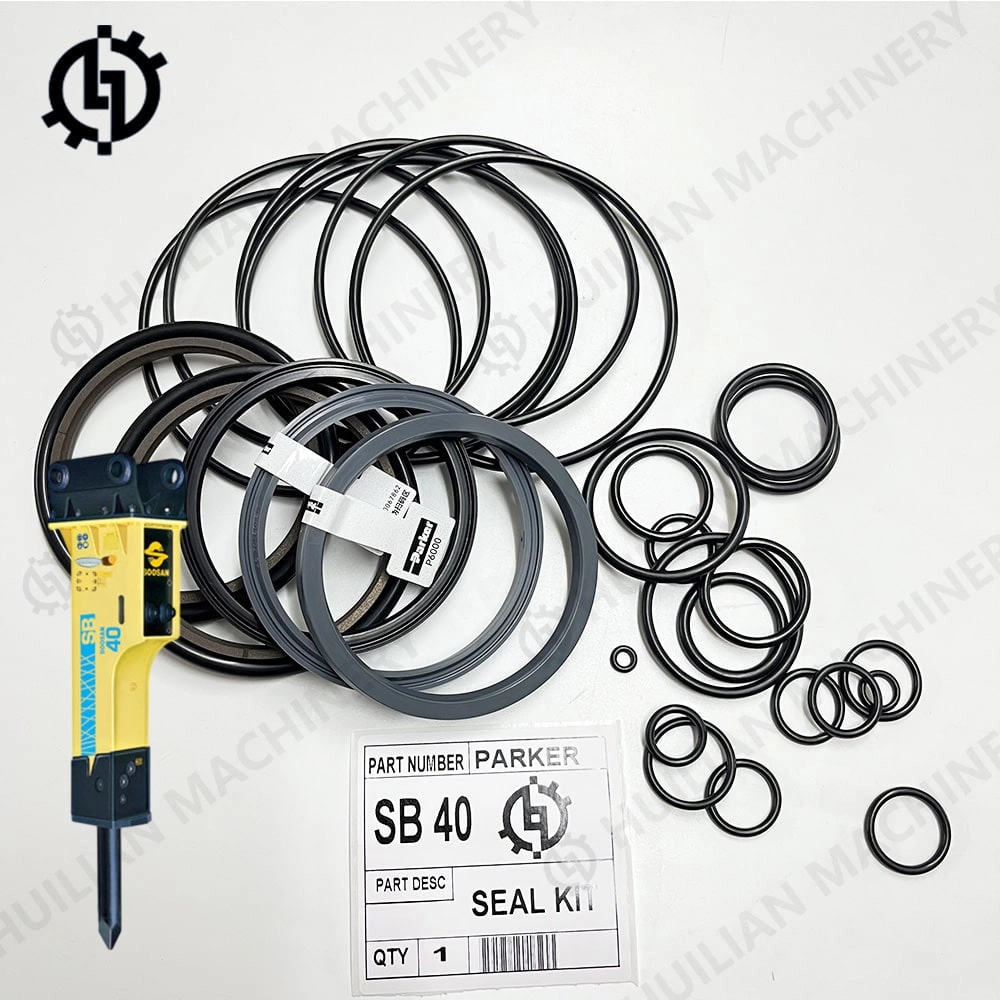
Parker Oil Seal Complete Repair SB40 Seal Kit COX001 CO1012 SB40Ⅱ SB40TSP SQ40 For Soosan Hydraulic Rock Breaker Hammer
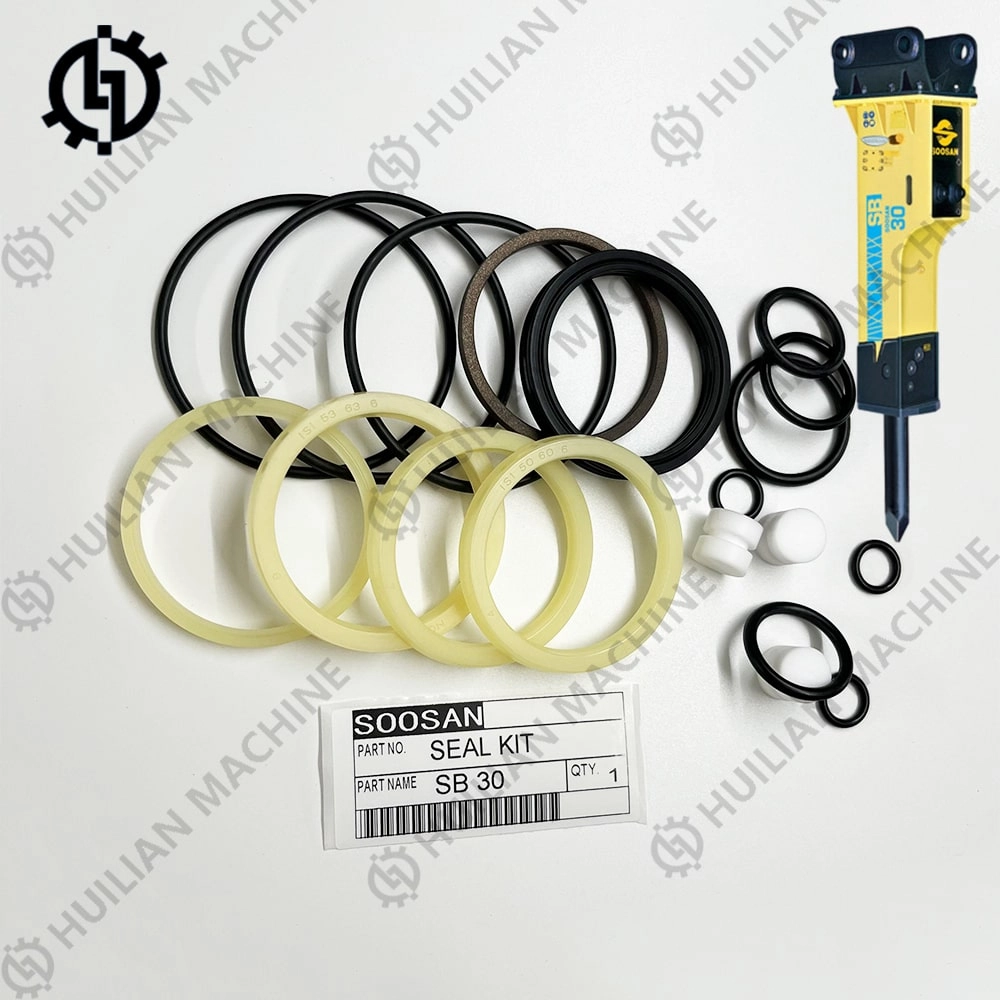
E71012 E7X001 SOOSAN SQ30 SB30Ⅱ SB30 Breaker Seal Kit SB30TS-P SB30Ⅱ TS-P SB30Ⅱ SSL Hydraulic Rock Hammer Parts Oil Repair Kit
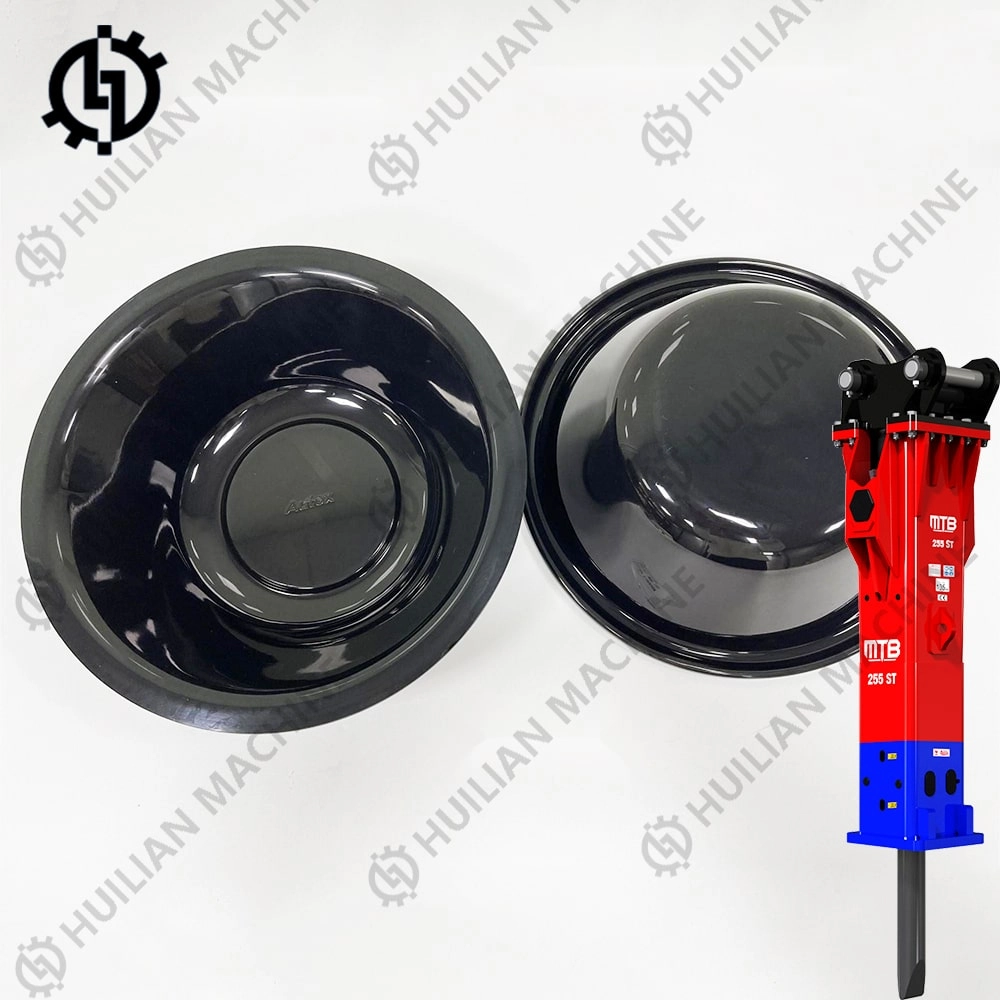
Inan Makina MTB Hydraulic Breaker Parts 45B0116A11 MTB255 MTB MT 255 Diaphragm MTB 255 IQ MTB-255 MTB 255 ST Membrane for Excavator Rock Hammer
 About us
© 2025 HUILIAN MACHINE. All rights reserved