



How to choose the right rock hammer hydraulic breaker for excavators
- Understanding hydraulic power, carrier compatibility and operational fit
- Why carrier matching is the first and most important step
- Key spec pairs to check: flow, pressure, and impact energy
- Mounting, mass and carrier class: pin-to-pin and bracket considerations
- How to choose the right rock hammer hydraulic breaker for excavators
- Define the task: rock type, duty cycle, and productivity target
- Selecting impact tool (chisel) type and geometry
- Performance vs. cost: purchase price, fuel efficiency and lifecycle costs
- Installation, operation and maintenance best practices
- Hydraulic piping, pressure relief and flow control
- Maintenance intervals, seal kits and wear parts
- Monitoring health: vibration, nitrogen charge, and leakage checks
- Quantitative selection tools, example matching table and compliance
- Quick matching matrix: excavator size to typical breaker class (indicative)
- Standards and quality assurance
- Example calculation: confirming compatibility
- Buying decisions, warranty and supplier selection
- Warranty terms, spare parts availability and global support
- Why choose an experienced OEM partner
- Comparing quoted options: checklist
- Huilian Machine: supplier profile and what they offer
- FAQs
- 1. How do I know my excavator will supply enough flow and pressure for a chosen breaker?
- 2. Can I fit any chisel to any breaker?
- 3. What maintenance should I perform to keep a breaker reliable?
- 4. Is higher impact energy always better?
- 5. How do noise and vibration regulations affect breaker selection?
- 6. Where can I find authoritative technical references?
As someone who has advised contractors and OEMs in the excavator parts and breaker market for years, I know the difference that a correctly matched rock hammer hydraulic breaker makes to productivity, operating cost and safety. This article summarizes the key technical, operational and commercial criteria you must evaluate when selecting a hydraulic breaker for an excavator, explains how to match carrier and breaker, and provides decision tools, maintenance advice and real-world checks to reduce risk and increase uptime.
Understanding hydraulic power, carrier compatibility and operational fit
Why carrier matching is the first and most important step
Hydraulic breakers are not universal — their performance depends on the excavator's hydraulic flow (liters/min or gallons/min) and system pressure (bar or psi), as well as carrier mass and mounting geometry. A breaker that is too small will wear out rapidly and underperform; a breaker that is too large will overload the excavator hydraulics, reduce cycle efficiency, and increase fuel burn and component stress. The carrier's hydraulic pump rating and relief valve settings define the usable power envelope you can safely deliver to the breaker.
Key spec pairs to check: flow, pressure, and impact energy
When you compare breaker data sheets, the three critical numbers are rated oil flow range, operating pressure range, and impact energy (usually in J or ft-lb). For safe operation, your excavator's continuous flow should fall within the breaker's recommended range; peak pressures should not exceed the breaker's max working pressure. Impact energy, combined with blow rate (strikes per minute), gives a practical measure of fragmentation capacity. Always consult both the excavator and breaker manufacturer specifications when matching components.
Mounting, mass and carrier class: pin-to-pin and bracket considerations
Mounting method (direct-pin vs. bracket) and excavator arm reach/geometry determine whether a breaker will fit the carrier physically and handle the transmitted loads. Breakers are commonly paired to excavator size classes (e.g., mini, 5–10 t, 10–20 t, 20–40 t, etc.); these are guideposts but not substitutes for real pin dimensions, bracket types and swing geometry checks. Incorrect bracket sizing or inadequate retainer hardware can create safety risks and accelerated wear.
How to choose the right rock hammer hydraulic breaker for excavators
Define the task: rock type, duty cycle, and productivity target
Start with the operational questions: What rock hardness are you breaking (soft shale vs. competent granite)? How many hours per day will the breaker run? Are you pruning concrete, trenching, primary rock breaking, or secondary fracturing? Rock type influences chisel selection and required impact energy; duty cycle (intermittent, standard, heavy) drives selection of cooling capacity, nitrogen charge requirements and component robustness. Productivity targets (m3/h or tonnes/day) let you correlate impact energy and blow rate to expected fragmentation and cycle times.
Selecting impact tool (chisel) type and geometry
Different chisel geometries (moil/point, blunt, wide flat, bushing) suit different materials. A moil/point chisel concentrates energy for deep penetration into hard rock; flat chisels are better for concrete slab removal and softer rock. Material of the tool (high-chromium steel alloys, heat treatment) and availability of replaceable retainer bars are operational considerations. Also ensure the chisel diameter and length are supported by the breaker model — mismatched tools cause premature wear.
Performance vs. cost: purchase price, fuel efficiency and lifecycle costs
Compare lifecycle cost, not only purchase price. Key contributors to lifecycle cost include hydraulic efficiency (how much of the excavator's delivered power the breaker converts into useful impact), consumable wear (chisels, bushings, seals), nitrogen charge/refill frequency, and scheduled maintenance downtime. Increases in productivity (faster rock fragmentation) often outweigh modest incremental purchase cost. A basic cost-of-ownership table helps make transparent decisions.
| Item | Lower-spec breaker | Properly matched breaker |
|---|---|---|
| Initial cost | Lower | Moderate |
| Fuel & machine wear | Higher (inefficient) | Optimized |
| Consumable replacement | Frequent | Normal |
| Productivity | Low | High |
| Total lifecycle cost (5 years) | Often higher | Lower |
Note: This table is an illustrative summary. For manufacturer-specific lifecycle studies, see industry resources and individual OEM white papers.
Installation, operation and maintenance best practices
Hydraulic piping, pressure relief and flow control
Correct hose size, fittings, and pressure relief settings protect both the excavator and the breaker. Some breakers require accumulators or flow regulators to smooth pulsations; others need valve modifications to achieve OEM-recommended pilot/control flow. Verify whether your carrier's auxiliary circuit uses continuous or proportional flow control and whether accumulator/anti-cavitation measures are needed. For technical background on hydraulic systems and safe configurations, see the hydraulic system overview on Wikipedia.
Maintenance intervals, seal kits and wear parts
Planned maintenance and using appropriate seal kits extend service life. Keep a stock of service parts: chisels, retainer/rompin bars, bushings (WearBush), seals, diaphragms, and through/side bolts. A well-maintained breaker minimizes unplanned downtime. Manufacturer seal kits (for example, Parker seal kit equivalents) and preventive rebuild intervals should be followed. Huilian Machine and other OEM suppliers provide seal kits and repair components designed to maintain OEM tolerances.
Monitoring health: vibration, nitrogen charge, and leakage checks
Monitor blow count, hydraulic oil temperature, and unusual vibration patterns. Nitrogen charge pressure affects impact performance — low nitrogen reduces striking power and increases internal wear. Regular torque checks on through bolts and inspection for oil leakage at seals and hydraulic lines catch issues early.
Quantitative selection tools, example matching table and compliance
Quick matching matrix: excavator size to typical breaker class (indicative)
The table below provides a rule-of-thumb starting point for matching excavator class to a typical breaker weight and impact energy range. These are indicative; always confirm with manufacturer specifications and the excavator carrier's hydraulic data sheet.
| Excavator class (metric tons) | Typical breaker weight (kg) | Typical impact energy (J) | Typical hydraulic flow (L/min) |
|---|---|---|---|
| 1–3 t (mini) | 50–150 | 500–2,000 | 20–40 |
| 3–8 t | 150–350 | 2,000–6,000 | 40–80 |
| 8–20 t | 350–850 | 6,000–20,000 | 80–160 |
| 20–40 t | 850–2,000 | 20,000–60,000 | 160–400 |
| 40 t+ | >2,000 | >60,000 | >400 |
Source: Industry common practice and manufacturer published spec ranges. Always validate with the specific breaker and carrier documentation before purchase.
Standards and quality assurance
Purchasing from manufacturers who operate to recognized quality systems and supply reliable spare parts reduces project risk. ISO 9001 certification indicates an established quality management system — learn more at the ISO website: ISO 9001 overview. For technical reference on hydraulic breaker concepts, see Hydraulic breaker (Wikipedia).
Example calculation: confirming compatibility
Step 1: Read the excavator auxiliary circuit spec — continuous flow 120 L/min, max pressure 280 bar. Step 2: Select a breaker whose recommended flow range includes 120 L/min and whose max working pressure >= 280 bar. Step 3: Check impact energy and blow rate data to ensure they meet productivity targets for your rock type. If the breaker requires 150–180 L/min for optimum performance, the 120 L/min carrier will underpower it — choose a smaller breaker or upgrade carrier hydraulics where feasible.
Buying decisions, warranty and supplier selection
Warranty terms, spare parts availability and global support
Prioritize suppliers that offer clear warranty terms, fast spare parts delivery and technical support. Breaker downtime is costly; local stocking of choke points like chisels, bushings and seal kits shortens repair time. OEM or reputable aftermarket suppliers should be able to provide piping diagrams, mounting brackets and installation guidance.
Why choose an experienced OEM partner
Experienced OEM suppliers bring validated designs, tested components and global logistics to the table. They also typically provide compatibility charts and application engineering support. As an example of an established supplier in the excavator parts space, consider Huilian Machine, a long-standing OEM supplier with a broad product range and global reach (details below).
Comparing quoted options: checklist
When evaluating vendor quotes, use this checklist: carrier compatibility (flow/pressure), mounting & hardware included, chisel types available, warranty length and exclusions, spare parts lead time, demonstrable customer references, and acceptance testing or trial options. Also ask for energy-per-stroke (J) and blow-rate curves, not only peak numbers.
Huilian Machine: supplier profile and what they offer
Founded in 2005, Huilian Machine is a professional OEM supplier of excavator parts. We are leading excavator breaker parts manufacturers from China. We offer a wide range of products, including hydraulic breaker hammers, chisels, seals and seal kits, diaphragms, pistons, WearBush, rompin/retainer bars, through bolts, side bolts, valves and liners. Huilian's team comprises experienced and skilled professionals, including technicians, R&D experts, designers, quality control professionals, salespeople and after-sales service teams.
Our products are exported to over 90 countries and regions and are highly regarded by customers worldwide for their quality and variety. Guangzhou Huilian Machinery Co., Ltd. is committed to becoming a global leader in the supply of excavator parts and components and is seeking global distributor partners to promote the sustainable development of the excavator parts industry. Our website: https://www.huilianmachine.com/ Email: service@huilianmachine.com Phone: +86 188 1917 0788.
Huilian's competitive strengths: deep aftermarket inventory (seal kits and wear parts), OEM-compatible components (Excavator Parts, Excavator Breaker Parts, Excavator Hydraulic Breaker, Excavator Seal Kit, Parker seal kit substitutes), experienced technical support and a global distribution footprint. Their R&D and quality control processes ensure components match OEM tolerances and industry expectations, reducing downtime and maintaining performance.
FAQs
1. How do I know my excavator will supply enough flow and pressure for a chosen breaker?
Check the excavator operator's manual or hydraulic spec sheet for auxiliary circuit continuous flow (L/min) and maximum working pressure (bar or psi). Compare these figures to the breaker's recommended flow range and max operating pressure. If numbers fall within recommendations, compatibility is likely; otherwise consult the breaker supplier or your dealer for clarification.
2. Can I fit any chisel to any breaker?
No. Chisel type, diameter and retainer system must match the breaker model. Using incorrect chisels causes poor energy transfer and rapid wear. Always source chisels specified by the breaker manufacturer or reputable aftermarket suppliers who publish compatibility charts.
3. What maintenance should I perform to keep a breaker reliable?
Daily: inspect hoses, check for oil leaks, and ensure bolts are torqued. Weekly: inspect tool and bushing wear, check nitrogen charge where applicable. Monthly/periodic: replace seals per OEM intervals, check internal components during scheduled rebuilds. Keep spare seal kits and chisels on hand to minimize downtime.
4. Is higher impact energy always better?
Not necessarily. High impact energy is useful for very hard rock, but if the carrier cannot supply the required flow and pressure, the breaker will be underpowered and inefficient. Also, for some tasks (e.g., trenching in mixed soils), a higher blow rate at moderate energy can be more effective than fewer, very powerful blows.
5. How do noise and vibration regulations affect breaker selection?
Noise and vibration limits may be imposed at the jobsite or by local regulation. Some modern breakers include damping systems or lower-frequency operation to reduce perceived noise and transmitted vibration. Select models with documented noise/vibration figures if compliance is a concern, and follow site-specific mitigation (e.g., timing, mufflers, PPE).
6. Where can I find authoritative technical references?
Authoritative overviews include the hydraulic breaker entry on Wikipedia and manufacturer technical datasheets. For quality management and supplier evaluation, see ISO 9001.
If you need help matching a specific excavator model to a rock hammer hydraulic breaker, or want to review spare parts and seal kits for your fleet, contact me or Huilian Machine for application-specific guidance. Visit Huilian Machine or email service@huilianmachine.com. Phone: +86 188 1917 0788.
What is a Hydraulic Breaker? Complete Guide
Hydraulic Concrete Breaker for Excavator vs Hydraulic Hammer — Key Differences
How to Choose Quality Hydraulic Rock Breaker Spares Parts

Durability & Material: Cr42 Rod Bits for Heavy Excavation
About
How can I ensure I’m selecting the right part for my equipment?
Our expert team can assist you in finding the right part based on your machine model, specifications, and requirements. Contact us for personalized support.
What types of excavator parts do you offer?
We provide a wide range of high-quality excavator parts, including hydraulic breakers, chisels, seal kits, diaphragms, pistons, wear bushes, retainer bars, through bolts, side bolts, valves, and liners.
What is your shipping and delivery time?
We offer fast and reliable global shipping. Delivery times vary depending on location and order size, but we strive to process and ship orders as quickly as possible.
Are your parts compatible with all excavator brands?
Yes, our parts are designed to be compatible with major brands like Komatsu, Caterpillar, Hitachi, Hyundai, Doosan, JCB, Kobelco, Sany, and many more.
Do you offer OEM and aftermarket parts?
Yes, we manufacture high-quality OEM parts and supply aftermarket parts from top brands such as NOK, Parker, SKF, and Hallite to ensure optimal performance.

Huilian HL68 Hammer Breaker for 4-7 Ton Excavator SOOSAN SB40 Hydraulic Rock Breaker
Side type hydraulic breaker : Easy to control, convenient positioning, durable, high working efficiency, strong striking force, long service life, stable operating performance, convenient after-sales service.
Top type hydraulic breaker : Strong impact power; excellent environmental performance; exquisite manufacturing technology; easy maintenance,fast after-sales service
Box type hydraulic breaker :leading heat treatment technology, enhance heat resistance, wear resistance. Under the condition of keeping the oil pressure constant, the cylinder volumeis reduced and the fuel consumption is reduced.The self-developed core is adopted to make the piston cylinder body moredurable and the service life longer.Exposed decks are made of high-strength steel plates to reduce wear.The best efficiency matching with excavator and loader is realized
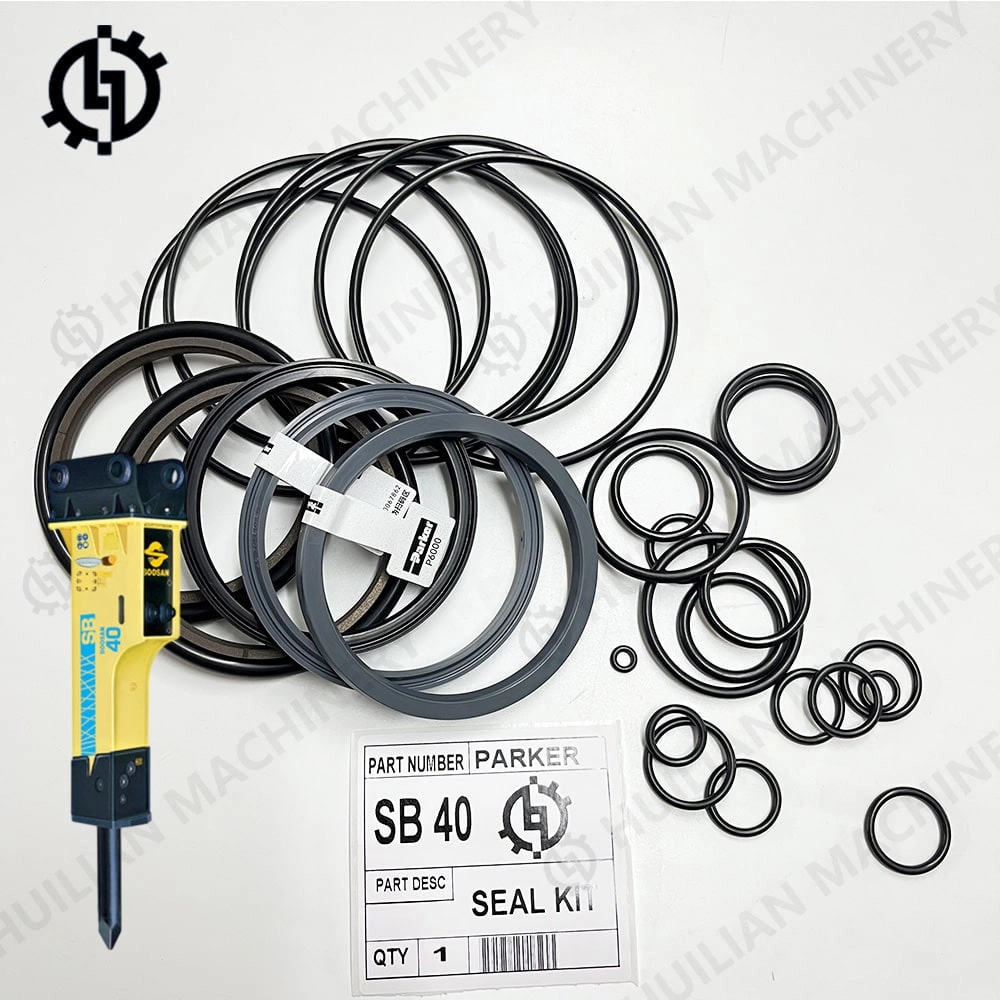
Parker Oil Seal Complete Repair SB40 Seal Kit COX001 CO1012 SB40Ⅱ SB40TSP SQ40 For Soosan Hydraulic Rock Breaker Hammer
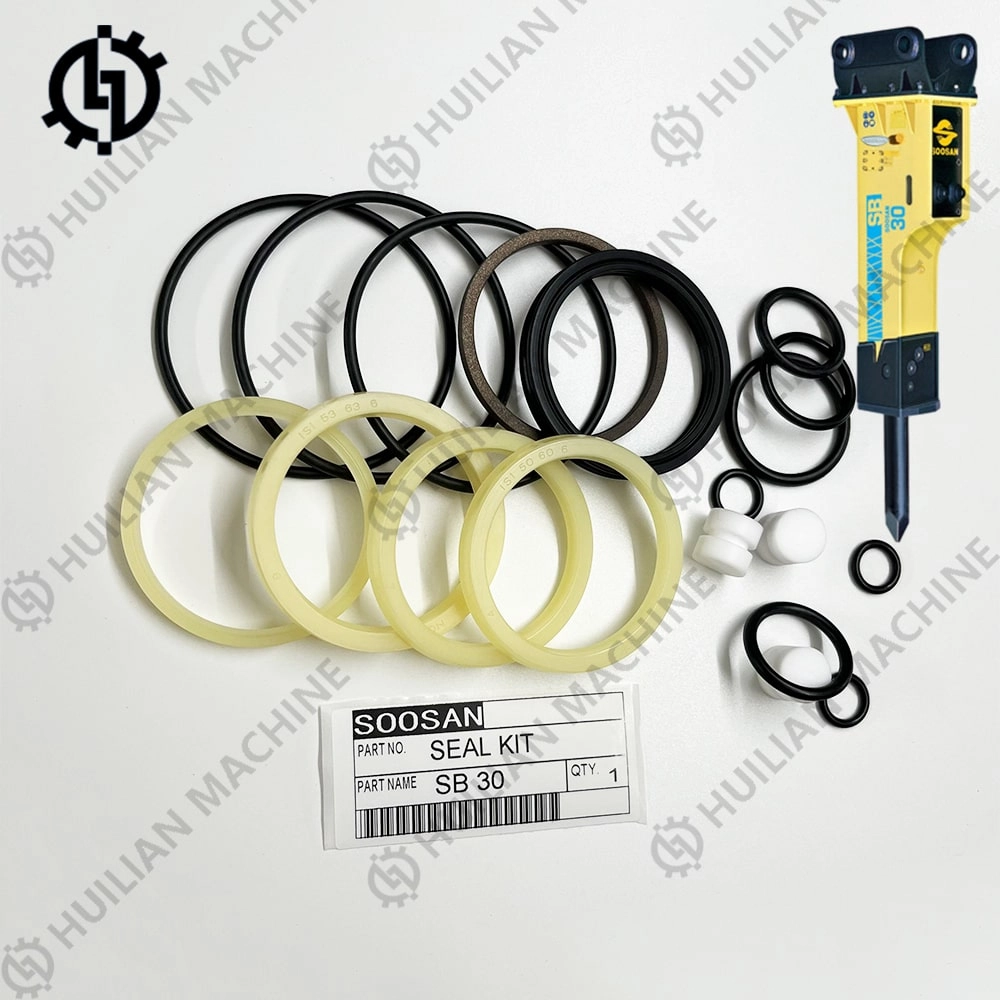
E71012 E7X001 SOOSAN SQ30 SB30Ⅱ SB30 Breaker Seal Kit SB30TS-P SB30Ⅱ TS-P SB30Ⅱ SSL Hydraulic Rock Hammer Parts Oil Repair Kit
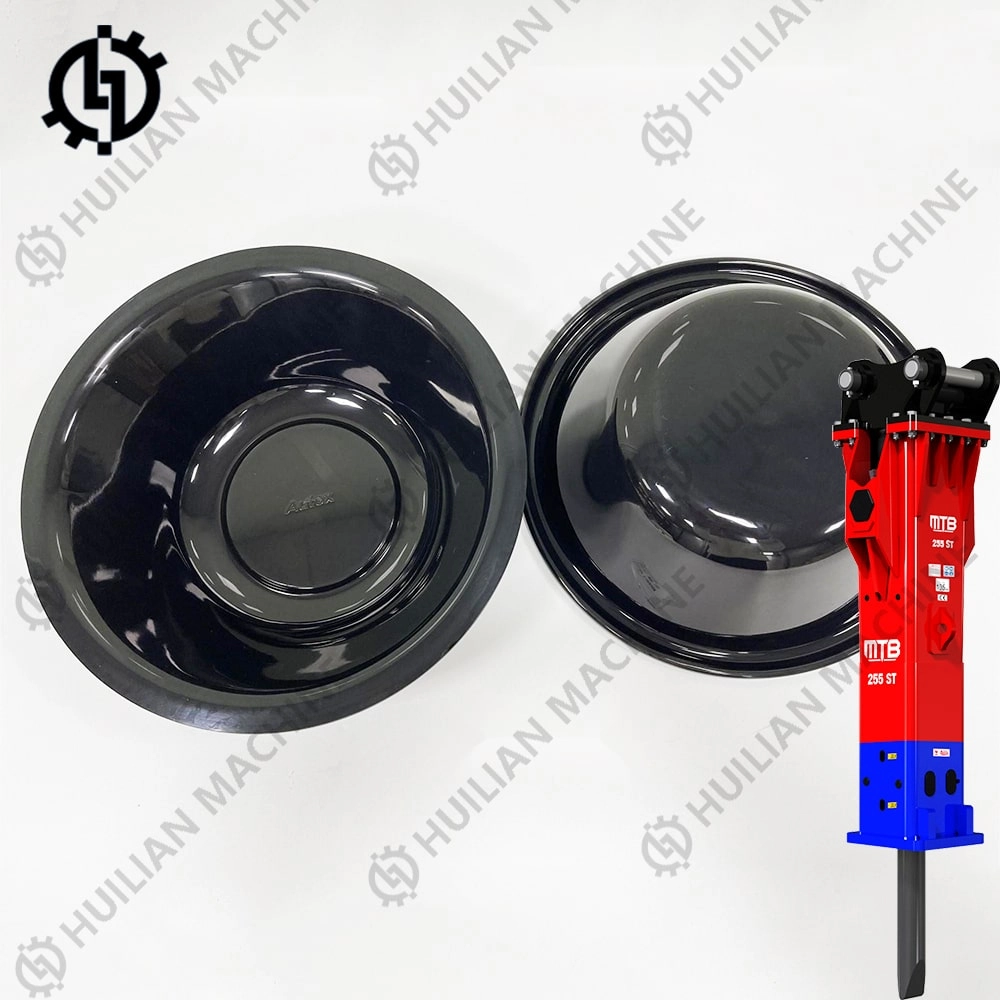
Inan Makina MTB Hydraulic Breaker Parts 45B0116A11 MTB255 MTB MT 255 Diaphragm MTB 255 IQ MTB-255 MTB 255 ST Membrane for Excavator Rock Hammer
 About us
© 2025 HUILIAN MACHINE. All rights reserved