



Choosing High-Quality Materials for Long-Lasting Seal Kits
- Understanding seal function and failure modes
- How seals work in hydraulic systems
- Common failure modes in excavator seal kits
- Impact of operating conditions on longevity
- Key materials for long-lasting excavator seal kits
- Elastomers: NBR, HNBR and FKM (Viton)
- PTFE and thermoplastics
- Fillers, coatings and backup rings
- Selecting materials based on application and environment
- High-temperature and oxidation resistance
- Hydraulic fluid compatibility and chemical resistance
- Abrasion, extrusion and dynamic sealing considerations
- Testing, quality control, and supplier considerations
- Standards and tests to demand
- Supplier audits, traceability and batch testing
- Cost versus lifecycle: a data-driven comparison
- Real-world verification: field trials and monitoring
- Choosing a manufacturer and why Huilian Machine stands out
- What I look for in a manufacturer
- Huilian Machine: capabilities and global reach
- Competitive advantages and trust signals
- Practical checklist: specifying long-lasting seal kits
- Step-by-step selection checklist
- Maintenance tips to extend seal life
- When to upgrade materials
- FAQ — Frequently Asked Questions
- 1. How do I know which material is best for my excavator seal kit?
- 2. Are Parker seal kits interchangeable with OEM kits?
- 3. What tests should I request from a supplier?
- 4. How does contamination affect seal life?
- 5. Is it worth paying more for FKM or PTFE seals?
- 6. How often should I replace seals in my excavator?
- Contact and product inquiry
I write this article to help fleet managers, maintenance engineers, procurement specialists and distributors evaluate and specify the right materials for excavator parts seal kit that truly last in harsh field conditions. In an era when indexing favors location- and intent-aware content, I emphasize practical guidance that matches on-site operating realities: soil types, temperature swings, hydraulic fluid selection, and maintenance cycles—so your seals keep machines running and reduce unplanned downtime.
Understanding seal function and failure modes
How seals work in hydraulic systems
At a basic level, seals in excavator hydraulic systems prevent fluid leakage and keep contaminants out. Seals accomplish this by maintaining a thin, controlled interface between moving components (pistons, rods) and housing. Common components inside an excavator parts seal kit include rod seals, piston seals, wipers, backup rings and O-rings. A good primer on mechanical seals and O-rings can be found on Wikipedia: Seal (mechanical) and O-ring.
Common failure modes in excavator seal kits
I categorize failures into three practical groups: chemical degradation, thermal/oxidative aging, and mechanical wear/extrusion. Chemical degradation occurs when the seal compound is not compatible with the hydraulic fluid or environmental contaminants (acidic soils, solvents). Thermal aging and oxidation are driven by elevated operating temperatures and cavitation in the fluid. Mechanical wear and extrusion result from abrasive particulates, misalignment, or pressure spikes beyond the seal’s extrusion resistance.
Impact of operating conditions on longevity
Field variables such as ambient temperature range, exposure to UV and abrasion (sandy vs. clay soils), and hydraulic fluid type (mineral oil, synthetic, bio-oils) directly change which material performs best. For instance, a seal that works well under moderate temperatures with mineral oil may degrade rapidly when exposed to high-temperature synthetic fluids or hydraulic fluids with additives. Understanding these conditions is the first step to choosing material for an excavator parts seal kit that lasts.
Key materials for long-lasting excavator seal kits
Elastomers: NBR, HNBR and FKM (Viton)
Elastomers form the backbone of most seal kits. Their elasticity provides the required contact pressure to prevent leakage. The three most common elastomers in excavator seal kits are:
- Nitrile (NBR/Buna-N) — Excellent oil resistance and good mechanical properties at moderate temperatures (-30°C to +100°C). It is cost-effective for general-purpose excavator applications. See Nitrile rubber.
- Hydrogenated Nitrile (HNBR) — Improved heat, ozone and abrasion resistance compared to NBR with temperature capability typically up to ~150°C. HNBR is often the best compromise for heavy-duty hydraulic environments. See HNBR.
- FKM (Viton) — Superior high-temperature and chemical resistance; used when synthetic fluids, high temperatures or aggressive additives are present. It is more expensive but extends service life in demanding conditions. See FKM (fluoroelastomer).
PTFE and thermoplastics
PTFE (polytetrafluoroethylene) and filled PTFE compounds are commonly used for rod seals and piston seals where low friction and chemical inertness are required. PTFE has an outstanding temperature range and chemical resistance, and is often combined with elastomer energizers (an O-ring or spring) to form a composite seal offering low friction and long wear life. See PTFE.
Fillers, coatings and backup rings
To enhance extrusion resistance and wear life, modern seal kits include backup rings (often PTFE or hard polymer) and fillers such as carbon black or silica in elastomers. Surface coatings—like layered molybdenum disulfide (MoS2) or PTFE coatings—can reduce breakaway friction and scuffing during dry starts. These design choices significantly affect service life in field conditions with contamination and frequent starts/stops.
Selecting materials based on application and environment
High-temperature and oxidation resistance
If your equipment operates in high ambient temperatures, exposed to hot hydraulic fluid or frequent cycling, prioritize HNBR or FKM. HNBR provides excellent resistance to heat and ozone while retaining good mechanical strength; FKM tolerates higher sustained temperatures and aggressive chemistries. Where possible, request accelerated aging or thermal cycling test reports from your supplier.
Hydraulic fluid compatibility and chemical resistance
Compatibility charts are indispensable. For example, standard mineral oils are usually compatible with NBR, HNBR and FKM, but phosphate-ester fluids or some bio-hydraulic fluids may require FKM or specialized compounds. Always consult material compatibility resources and the fluid manufacturer’s guidance. When in doubt, run a compatibility test or request a manufacturer’s chemical resistance statement.
Abrasion, extrusion and dynamic sealing considerations
Applications with contaminated environments or abrasive media (sandy soil, slurry) need seals with high abrasion resistance and protective wipers. For high-pressure circuits where extrusion is a risk, select materials with backup rings and higher hardness compounds. Combining a PTFE wear ring with an HNBR energizer often gives a favorable balance of low friction and abrasion resistance.
Testing, quality control, and supplier considerations
Standards and tests to demand
Ask suppliers for test results and certifications. Useful references include hydraulic seal test methods and material classification frameworks such as ASTM D2000 (rubber classification) and general guidance on seal selection (see industry resources and manufacturers like Parker for technical handbooks). For background on seal standards and mechanical seal concepts, consult: Wikipedia - Mechanical seal and manufacturer technical manuals (for example, Parker’s seal guides).
Supplier audits, traceability and batch testing
I always require traceability: compound batch numbers, curing data, and QA signatures. Insist on supplier testing for hardness (Shore A), tensile strength, elongation, and compression set. Periodic incoming inspection at your facility should include dimensional checks, a simple leak test and verification of material certificates. A supplier with ISO 9001 (quality) and ISO/TS or equivalent certifications signals robust processes.
Cost versus lifecycle: a data-driven comparison
Choosing cheaper materials often increases downtime and replacement frequency. I recommend a lifecycle cost analysis rather than a unit-price comparison. Below is a concise comparison of commonly used seal materials to aid decisions; figures are typical ranges—verify with suppliers for specific compounds.
| Material | Typical Temperature Range | Oil/Chemical Resistance | Best Use |
|---|---|---|---|
| NBR (Nitrile) | -30°C to +100°C | Good with mineral oils; poor with some synthetics/esters | General-purpose rod/piston seals where cost matters |
| HNBR | -30°C to +150°C | Very good with mineral and many synthetic oils | Heavy-duty hydraulics; high temp and abrasion |
| FKM (Viton) | -20°C to +200°C | Excellent with synthetics, esters, fuels, aggressive oils | High-temp or chemically aggressive fluids |
| PTFE (filled) | -200°C to +260°C | Outstanding chemical inertness | Low friction seals, high wear environments, backup rings |
Sources: material pages and technical literature on elastomers and PTFE (see Nitrile, HNBR, FKM, and PTFE).
Real-world verification: field trials and monitoring
Before full-scale adoption, run a controlled field trial: install candidate seal kits on a sample machine, monitor fluid cleanliness, leak rates, and service intervals for at least 3–6 months in representative working cycles. Use oil analysis (particle counts, water content, TAN/TBN where relevant) to correlate seal performance with fluid condition. This empirical approach reduces risk and validates supplier claims.
Choosing a manufacturer and why Huilian Machine stands out
What I look for in a manufacturer
When qualifying a vendor for excavator parts seal kit, I look for: demonstrable R&D capability, material traceability, product test reports, international exports, and an after-sales/support process. A partner should be able to tailor seals (durometer, bead profiles, coatings) and provide technical backup for application-specific problems.
Huilian Machine: capabilities and global reach
Founded in 2005, Huilian Machine is a professional OEM supplier of excavator parts. We are leading excavator breaker parts manufacturers from China. We offer a wide range of products, including hydraulic breaker hammers, chisels, seals and seal kits, diaphragms, pistons, WearBush, rompin/retainer bars, through bolts, side bolts, valves and liners. Huilian's team comprises experienced and skilled professionals, including technicians, R&D experts, designers, quality control professionals, salespeople and after-sales service teams. Our products are exported to over 90 countries and regions and are highly regarded by customers worldwide for their quality and variety. Guangzhou Huilian Machinery Co., Ltd. is committed to becoming a global leader in the supply of excavator parts and components and is seeking global distributor partners to promote the sustainable development of the excavator parts industry.
Competitive advantages and trust signals
In my experience working with Huilian and similar manufacturers, the differentiators that matter are: integrated R&D for material selection, in-house quality control, the ability to supply both standard and custom excavator parts seal kit configurations, and demonstrated export compliance to global customers. Huilian’s product portfolio addresses common replacement and OEM needs, including Excavator Breaker Parts, Excavator Hydraulic Breaker, Excavator Seal Kit, and Parker seal kit equivalents—with the technical support to match product selection to the operating environment.
For direct inquiries or to review product specifications, see Huilian’s official site: huilianmachine.com or contact by email at service@huilianmachine.com or phone +86 188 1917 0788.
Practical checklist: specifying long-lasting seal kits
Step-by-step selection checklist
- Document operating conditions: temperature extremes, hydraulic fluid type, typical pressure cycles, and contamination risk.
- Choose base material (NBR/HNBR/FKM/PTFE) according to fluid compatibility and temperature.
- Specify backup rings and coatings for abrasion/extrusion resistance.
- Request supplier test data (hardness, compression set, accelerated aging) and traceability records.
- Run a short field trial and monitor oil/seal performance before fleet-wide rollout.
Maintenance tips to extend seal life
Regular hydraulic fluid changes, effective filtration (10-micron or better for sensitive circuits), and protective wipers on rods reduce abrasive wear. Quick leak repairs avoid contamination ingress; proactive replacement at scheduled intervals often lowers total cost of ownership compared to reactive replacements after failure.
When to upgrade materials
If you observe recurring premature failures, rising fluid contamination, or you switch to new hydraulic fluids (e.g., biodegradable or fire-resistant fluids), upgrade to more robust materials such as HNBR, FKM or PTFE-based solutions. Each change should be validated with compatibility tests and a controlled field evaluation.
FAQ — Frequently Asked Questions
1. How do I know which material is best for my excavator seal kit?
Start with the hydraulic fluid and operating temperature. For general mineral-oil systems, HNBR is often optimal. For high heat or aggressive fluids, choose FKM or PTFE-based components. Always confirm with supplier compatibility charts and, if possible, run a field trial.
2. Are Parker seal kits interchangeable with OEM kits?
Many aftermarket kits use Parker standard geometries and materials; however, fit and function can vary by model. Verify dimensions and test in the application. For critical systems, choose a supplier who offers tested equivalents or OEM cross-references.
3. What tests should I request from a supplier?
Request Shore hardness, tensile strength, compression set, specific gravity, dimensional tolerances, and if available, accelerated aging or thermal cycling tests. Material certificates and batch traceability are also important.
4. How does contamination affect seal life?
Contaminants like dust and sand cause abrasive wear and can nick seal lips or energizers, accelerating failure. Proper filtration, rod wipers and preventative maintenance are critical to protect seals in contaminated environments.
5. Is it worth paying more for FKM or PTFE seals?
Yes, when your operating conditions demand higher chemical or temperature resistance. Although unit cost is higher, extended interval between replacements and reduced downtime typically justify the investment—evaluate with a lifecycle cost analysis.
6. How often should I replace seals in my excavator?
Replacement intervals vary widely by duty cycle and environment. For heavy duty machines in abrasive conditions, inspect quarterly and consider preventive replacement annually or as part of a major service. For lighter duty machines, service intervals may be longer.
Contact and product inquiry
If you need a custom recommendation for an excavator parts seal kit, product specification sheets, or a quotation, contact Guangzhou Huilian Machinery Co., Ltd. Founded in 2005, Huilian Machine supplies a wide range of excavator parts and is actively seeking distributor partners globally. Visit https://www.huilianmachine.com/, email service@huilianmachine.com, or call +86 188 1917 0788 to speak with a technical specialist. I recommend sending your machine model, operating environment details, and hydraulic fluid specification to get an accurate, verifiable recommendation.
Choosing the right materials for your excavator parts seal kit is a practical investment in uptime and total cost of ownership. With methodical selection, supplier verification and routine maintenance, you can significantly extend service life and reduce costly downtime.
Selecting chisels and tool steel for rock hammer hydraulic breakers
Top 10 Excavator Hydraulic Breaker Manufacturers and Supplier Brands

The Ultimate 2026 Guide to Excavator Breaker Attachments: Maximize Your Breaking Power
Match Excavator Breaker Attachment to Machine Size & Capacity
About
What is your shipping and delivery time?
We offer fast and reliable global shipping. Delivery times vary depending on location and order size, but we strive to process and ship orders as quickly as possible.
Are your parts compatible with all excavator brands?
Yes, our parts are designed to be compatible with major brands like Komatsu, Caterpillar, Hitachi, Hyundai, Doosan, JCB, Kobelco, Sany, and many more.
How can I ensure I’m selecting the right part for my equipment?
Our expert team can assist you in finding the right part based on your machine model, specifications, and requirements. Contact us for personalized support.
Do you offer OEM and aftermarket parts?
Yes, we manufacture high-quality OEM parts and supply aftermarket parts from top brands such as NOK, Parker, SKF, and Hallite to ensure optimal performance.
What types of excavator parts do you offer?
We provide a wide range of high-quality excavator parts, including hydraulic breakers, chisels, seal kits, diaphragms, pistons, wear bushes, retainer bars, through bolts, side bolts, valves, and liners.

Huilian HL68 Hammer Breaker for 4-7 Ton Excavator SOOSAN SB40 Hydraulic Rock Breaker
Side type hydraulic breaker : Easy to control, convenient positioning, durable, high working efficiency, strong striking force, long service life, stable operating performance, convenient after-sales service.
Top type hydraulic breaker : Strong impact power; excellent environmental performance; exquisite manufacturing technology; easy maintenance,fast after-sales service
Box type hydraulic breaker :leading heat treatment technology, enhance heat resistance, wear resistance. Under the condition of keeping the oil pressure constant, the cylinder volumeis reduced and the fuel consumption is reduced.The self-developed core is adopted to make the piston cylinder body moredurable and the service life longer.Exposed decks are made of high-strength steel plates to reduce wear.The best efficiency matching with excavator and loader is realized
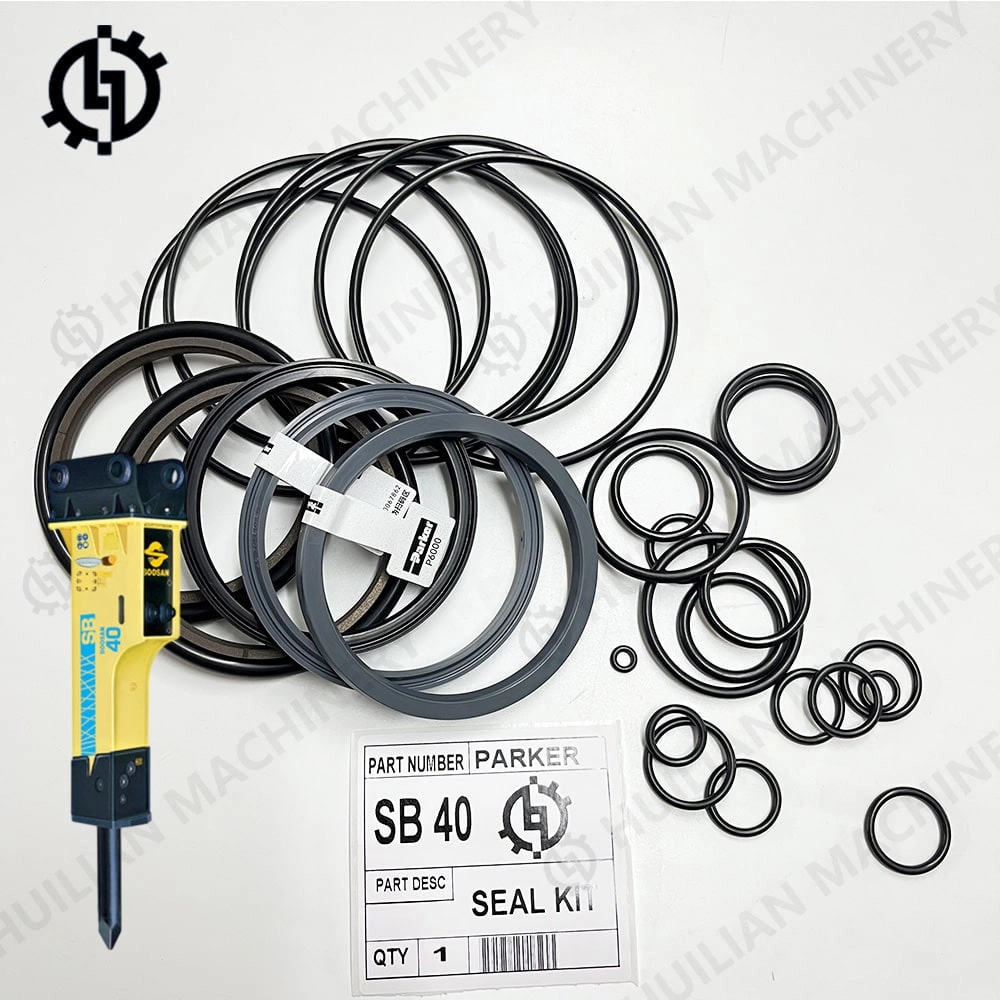
Parker Oil Seal Complete Repair SB40 Seal Kit COX001 CO1012 SB40Ⅱ SB40TSP SQ40 For Soosan Hydraulic Rock Breaker Hammer
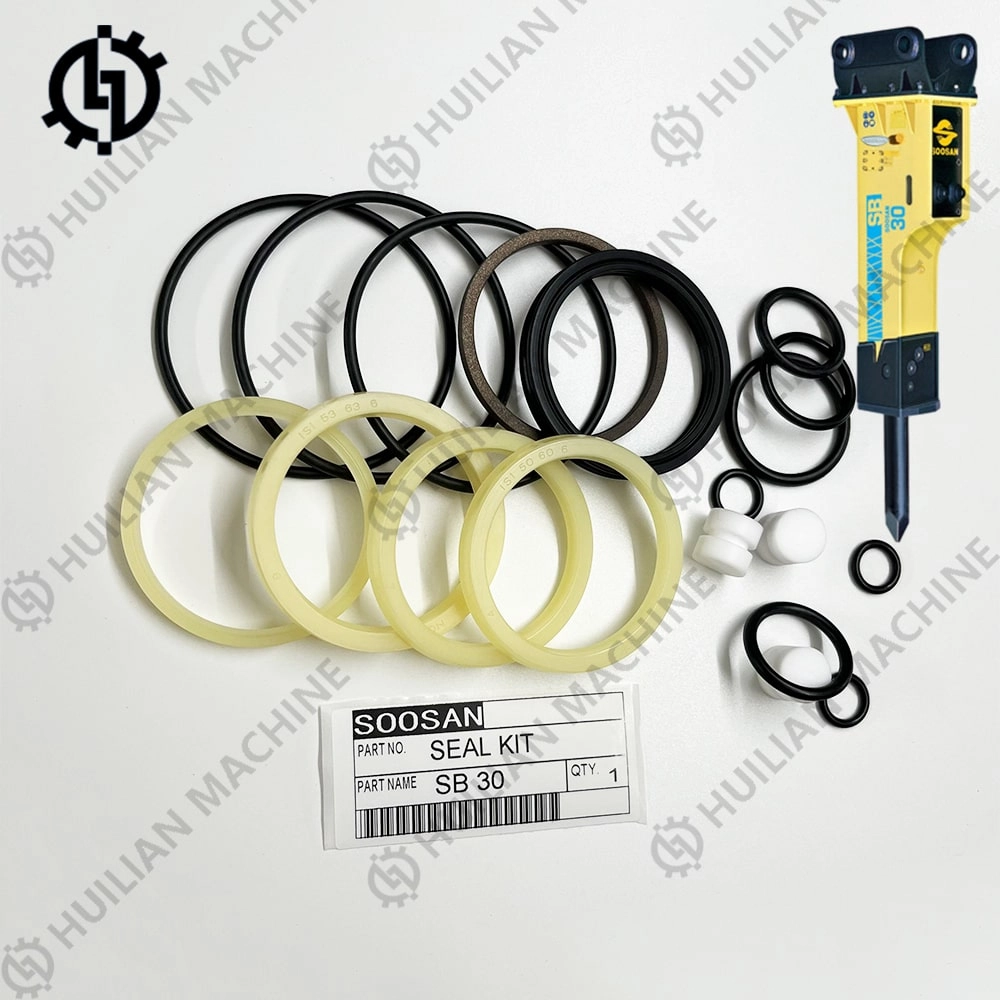
E71012 E7X001 SOOSAN SQ30 SB30Ⅱ SB30 Breaker Seal Kit SB30TS-P SB30Ⅱ TS-P SB30Ⅱ SSL Hydraulic Rock Hammer Parts Oil Repair Kit
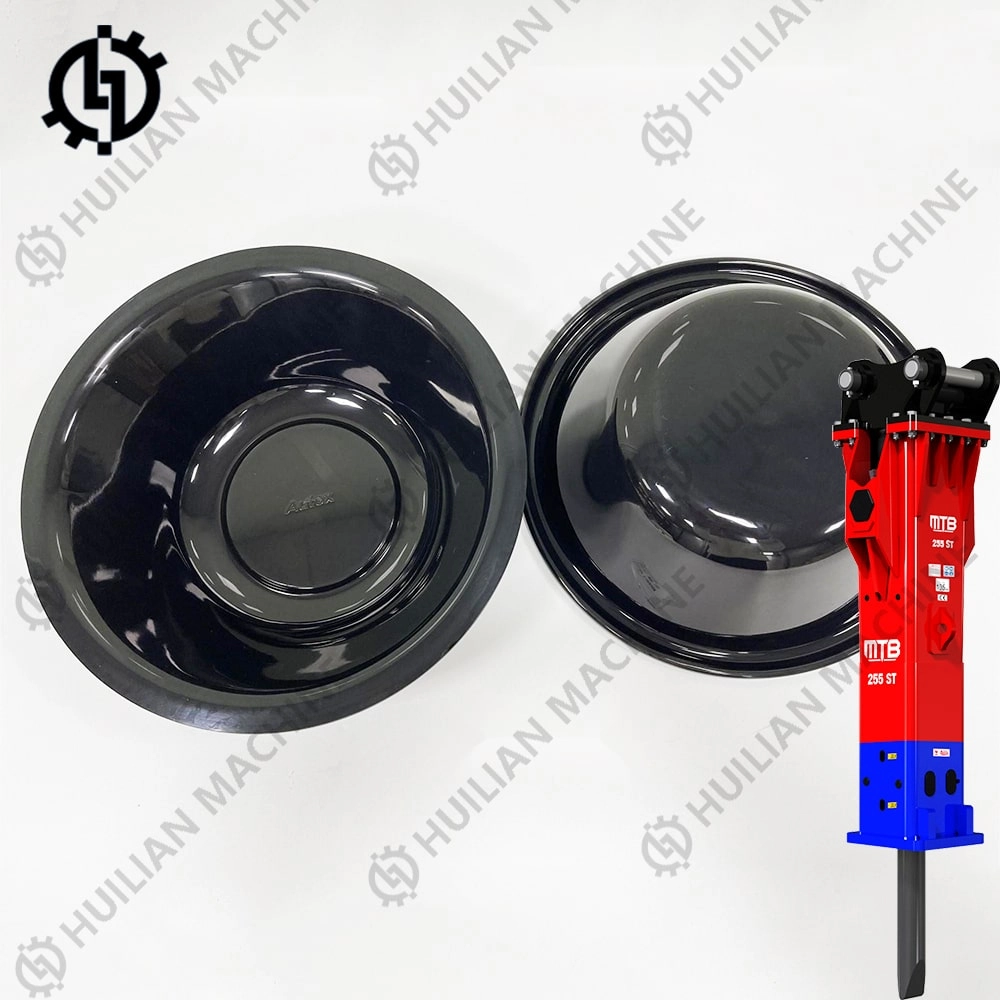
Inan Makina MTB Hydraulic Breaker Parts 45B0116A11 MTB255 MTB MT 255 Diaphragm MTB 255 IQ MTB-255 MTB 255 ST Membrane for Excavator Rock Hammer
 About us
© 2025 HUILIAN MACHINE. All rights reserved