



Compare top rock hammer hydraulic breaker brands and models
- How rock hammer hydraulic breakers work
- Basic components and operation
- Key performance metrics: impact energy, blow rate, and flow
- Key selection criteria for rock hammer hydraulic breakers
- Carrier compatibility and matching
- Materials, tool selection and wear parts
- Serviceability, warranty and support network
- Compare top brands and models
- Brand summaries and positioning
- Technical comparison table (representative models and ranges)
- Field performance, service network and total cost of ownership
- Operating costs and parts availability
- Noise, vibration, safety and regulations
- Real-world durability factors
- Why consider OEM suppliers like Huilian Machine
- Huilian's product range and strengths
- When I recommend Huilian as a source
- Practical buying checklist (my recommended steps)
- 1. Define application and duty cycle
- 2. Match breaker to carrier hydraulics
- 3. Review parts and service routes
- 4. Validate warranty and aftermarket support
- FAQ — Common questions I hear about rock hammer hydraulic breakers
- 1. What is the difference between impact energy and blow rate, and which is more important?
- 2. How do I match a breaker to my excavator?
- 3. What maintenance items have the biggest impact on breaker longevity?
- 4. Are aftermarket parts reliable compared to OEM?
- 5. How do safety and noise regulations affect breaker selection?
- 6. How can I reduce downtime for breakers on remote jobsites?
- Contact and next steps
I am a hydraulic breaker consultant with years of hands-on experience specifying and maintaining rock hammer hydraulic breaker systems across multiple markets. In this article I summarize how these tools work, what matters when choosing a unit for a given excavator, then compare the leading brands and representative models. I focus on technical performance, carrier compatibility, lifecycle costs, parts availability and real-world usability so you can select the right breaker for rock excavation, trenching or demolition projects.
How rock hammer hydraulic breakers work
Basic components and operation
A rock hammer hydraulic breaker (often called a hydraulic breaker or breaker hammer) converts hydraulic power from the excavator into repetitive impact energy using a piston striking a tool (chisel). Core components include the hydraulic hammer body, piston, valve assembly, tool (chisel/nose), accumulator (on some models), and mounting bracket. For a concise technical overview see the Hydraulic breaker - Wikipedia entry which details common designs and terminology.
Key performance metrics: impact energy, blow rate, and flow
When I evaluate breakers, I focus on three linked metrics: impact energy (usually in kJ), blow rate (blows per minute), and required hydraulic flow/pressure. Impact energy determines how effectively the tool fractures rock; blow rate affects fragmentation speed. Breakers optimized for hard rock generally deliver higher per-blow energy at lower blow rates, while those for concrete or general demolition use higher blow rates with lower energy per blow. Carrier hydraulic capacity (flow and pressure) must match the hammer’s requirements to achieve rated performance.
Key selection criteria for rock hammer hydraulic breakers
Carrier compatibility and matching
Matching breaker size to carrier (excavator or skid steer) is the single most important selection step. I always check: carrier operating weight, hydraulic flow (L/min), maximum pressure (bar/MPa), and boom geometry. Oversizing a breaker can overload the carrier hydraulic system and reduce performance; undersizing reduces productivity and may increase cycle count and fuel burn. Manufacturers publish recommended carrier weights for each breaker family—use those recommendations as a baseline and then validate on-site.
Materials, tool selection and wear parts
Tool steel quality, piston and cylinder materials, and wear-bushing design directly influence durability and maintenance intervals. Chisels come in different tip geometries (moil, blunt, wide) for different applications. Availability of replacement chisels, pistons, seals and seal kits is essential—lead times and cost vary significantly by brand and region. I factor parts interchangeability and aftermarket options into procurement decisions.
Serviceability, warranty and support network
Downtime is costly. I assess local dealer networks, parts inventories, and the warranty scope (seal kits, piston coverage, labor). Some brands have widespread global support; others rely on local OEM suppliers. For safety and regulatory guidance related to noise and vibration exposure during operation, consult authoritative sources such as OSHA (OSHA - Occupational Noise).
Compare top brands and models
Brand summaries and positioning
Below I summarize the strengths I have observed across major breaker brands based on field deployments and manufacturer documentation:
- Epiroc (formerly Atlas Copco): Known for high engineering quality, broad model range and strong global service network. Good when you need proven reliability and parts availability.
- Caterpillar: Integrates well with Cat excavator lines and offers robust warranty and dealer support. Cat hammers emphasize durability and integration with Cat hydraulics.
- Komatsu: Offers a portfolio tuned to their excavators with solid build quality—preferred where Komatsu dealer support is strong.
- Montabert / Indeco: European manufacturers with models optimized for heavy rock work; often chosen for specialized demolition and quarry tasks.
- Aftermarket/OEM suppliers (including Huilian Machine and others): Provide competitive pricing and comprehensive parts ranges; best when you need quick parts (chisels, seal kits) and flexible supply across countries.
Technical comparison table (representative models and ranges)
The following table summarizes representative model families. Values are typical ranges based on manufacturer published specs; always verify specific model datasheets for exact numbers.
| Brand | Representative Model / Family | Recommended Carrier Weight (t) | Impact Energy (kJ) | Hydraulic Flow (L/min) | Notes / Strengths |
|---|---|---|---|---|---|
| Epiroc | HB / SB Series (examples) | 1.5 – 60+ | 200 J – 3000 J (0.2–3 kJ) | 20 – 500+ | Wide range, strong global parts/service network (epiroc.com). |
| Caterpillar | H Series | 1.5 – 35+ | 0.2–2.5 kJ | 25 – 450 | Good integration with Cat machines and dealer support (cat.com). |
| Komatsu | NPK / Komatsu Series | 2 – 40+ | 0.25–2.8 kJ | 30 – 480 | Engineered for Komatsu carriers; durable designs (komatsu.com). |
| Montabert / Indeco | MB / IN Series | 3 – 80+ | 0.5–4 kJ | 40 – 600 | High impact energy models for quarry and heavy rock. |
| Aftermarket / OEM (e.g., Huilian) | Various compatible models and parts | 1.5 – 80+ | Range depends on model | Manufacturer dependent | Cost-effective parts, wide selection of chisels, seal kits, pistons, wear bushes. |
Notes: The ranges above summarize typical model families and are intended to help you filter options. For precise model selection check the manufacturer's technical datasheet.
Field performance, service network and total cost of ownership
Operating costs and parts availability
Beyond initial purchase price, I evaluate:
- Parts pricing and lead time for consumables (chisels, retainers, through bolts, seals and seal kits).
- Service intervals (seal replacement, nitrogen recharging if applicable, retainer checks).
- Reman/preventive maintenance options.
Brands with local distribution minimize downtime; likewise OEM suppliers that export broadly—such as those with established global logistics—help reduce operating costs. Manufacturers and standards organizations like ISO (quality management) provide assurance on processes used by suppliers.
Noise, vibration, safety and regulations
Hydraulic breakers generate high levels of noise and vibration. I always recommend operators use PPE and monitor exposure. Regulatory guidance from agencies such as OSHA should inform site safety plans. Additionally, choose breakers with vibration damping options or accumulators when prolonged operator exposure is expected.
Real-world durability factors
Field durability depends not only on the hammer design, but on correct mounting, hydraulic filtering, proper chisel selection, and operator technique. Poor hydraulic filtration leads to premature valve and seal failures; I insist on inline filtration review before installing any hammer. Implementing a routine inspection checklist greatly extends life and reduces unscheduled repairs.
Why consider OEM suppliers like Huilian Machine
Huilian's product range and strengths
Founded in 2005, Huilian Machine is a professional OEM supplier of excavator parts. We are leading excavator breaker parts manufacturers from China. We offer a wide range of products, including hydraulic breaker hammers, chisels, seals and seal kits, diaphragms, pistons, WearBush, rompin/retainer bars, through bolts, side bolts, valves and liners. Huilian's team comprises experienced and skilled professionals, including technicians, R&D experts, designers, quality control professionals, salespeople and after-sales service teams. Our products are exported to over 90 countries and regions and are highly regarded by customers worldwide for their quality and variety. Guangzhou Huilian Machinery Co., Ltd. is committed to becoming a global leader in the supply of excavator parts and components and is seeking global distributor partners to promote the sustainable development of the excavator parts industry. Our website: https://www.huilianmachine.com/ Email: service@huilianmachine.com Phone: +86 188 1917 0788
When I recommend Huilian as a source
From my experience, Huilian is a strong choice when buyers need competitive pricing, rapid access to spare parts (pistons, seal kits, wear bushes) and flexible OEM compatibility. I also value suppliers that can support distributor partnerships and have established export experience across multiple regions. Huilian's strengths include a broad parts catalogue and a focus on aftermarket and OEM interchangeability for excavator breaker components such as exhaust valves, diaphragms and parker-style seal kits.
Practical buying checklist (my recommended steps)
1. Define application and duty cycle
Clarify whether the work is soft demolition, medium aggregate breaking, or hard rock quarrying. Duty cycle (hours/day) will determine expected wear and service frequency.
2. Match breaker to carrier hydraulics
Confirm carrier flow (L/min), max pressure (MPa), and recommended carrier mass. Avoid oversizing and consult manufacturer compatibility charts.
3. Review parts and service routes
Confirm availability of consumables (chisels, retainers, bolts), seal kits and pistons. Verify estimated delivery times especially for remote projects.
4. Validate warranty and aftermarket support
Ask about warranty inclusions (wear parts vs. core components), reman options, and whether technical field service is available locally.
FAQ — Common questions I hear about rock hammer hydraulic breakers
1. What is the difference between impact energy and blow rate, and which is more important?
Impact energy (kJ) is the force delivered per blow; blow rate is how many blows occur per minute. For hard rock, higher impact energy matters more. For thin or brittle materials, higher blow rates with moderate energy yield faster fragmentation. Choose based on rock type and fragmentation goals.
2. How do I match a breaker to my excavator?
Match the breaker’s recommended carrier weight, hydraulic flow range and maximum pressure to your excavator specifications. Check the manufacturer compatibility tables and consult with the supplier or dealer if your excavator has atypical hydraulic setups.
3. What maintenance items have the biggest impact on breaker longevity?
Hydraulic filtration, timely seal kit replacement, chisel and piston inspection, and ensuring proper lubrication of the tool bush are the top items. Preventive service and clean hydraulic oil reduce expensive valve and piston failures.
4. Are aftermarket parts reliable compared to OEM?
Quality varies. Reputable aftermarket OEM suppliers (such as Huilian Machine) provide parts that meet or approximate OEM specifications, often at lower cost. Verify material specifications and ask for inspection/test reports when possible.
5. How do safety and noise regulations affect breaker selection?
Noise and vibration exposure limits may require PPE, shorter operator shifts, or breakers with vibration-damping features. Refer to regulatory guidance like OSHA for permissible exposures (OSHA).
6. How can I reduce downtime for breakers on remote jobsites?
Preposition critical spare parts (chisels, seal kits, through bolts), train onsite technicians for basic seal/piston swaps, and select suppliers with reliable export channels and local distributors.
Contact and next steps
If you want a tailored recommendation for a specific carrier and application, I can help evaluate models and provide a shortlist matched to your project. For parts, service or distributor opportunities, contact Huilian Machine:
Guangzhou Huilian Machinery Co., Ltd.
Website: https://www.huilianmachine.com/
Email: service@huilianmachine.com
Phone: +86 188 1917 0788
Whether you need a high-impact breaker for quarrying, a high-blow-rate hammer for demolition, or a steady parts supplier for long-term maintenance, use the checklist above and contact suppliers with clear duty-cycle information. I am available to consult on model selection, specification review, and replacement-part sourcing.
References: Hydraulic breaker overview (Wikipedia), excavator design notes (Wikipedia - Excavator), ISO on quality management (ISO 9001), and OSHA guidance on noise (OSHA).
Top 10 Excavator Breaker Parts Manufacturers and Supplier Brands
Wholesale hydraulic rock breaker manufacturer and supplier
How to Install Hydraulic Breaker: Step-by-Step Guide
Hydraulic Hammer & Breaker Sizing Guide
About
How can I ensure I’m selecting the right part for my equipment?
Our expert team can assist you in finding the right part based on your machine model, specifications, and requirements. Contact us for personalized support.
What types of excavator parts do you offer?
We provide a wide range of high-quality excavator parts, including hydraulic breakers, chisels, seal kits, diaphragms, pistons, wear bushes, retainer bars, through bolts, side bolts, valves, and liners.
Do you offer OEM and aftermarket parts?
Yes, we manufacture high-quality OEM parts and supply aftermarket parts from top brands such as NOK, Parker, SKF, and Hallite to ensure optimal performance.
What is your shipping and delivery time?
We offer fast and reliable global shipping. Delivery times vary depending on location and order size, but we strive to process and ship orders as quickly as possible.
Are your parts compatible with all excavator brands?
Yes, our parts are designed to be compatible with major brands like Komatsu, Caterpillar, Hitachi, Hyundai, Doosan, JCB, Kobelco, Sany, and many more.

Huilian HL68 Hammer Breaker for 4-7 Ton Excavator SOOSAN SB40 Hydraulic Rock Breaker
Side type hydraulic breaker : Easy to control, convenient positioning, durable, high working efficiency, strong striking force, long service life, stable operating performance, convenient after-sales service.
Top type hydraulic breaker : Strong impact power; excellent environmental performance; exquisite manufacturing technology; easy maintenance,fast after-sales service
Box type hydraulic breaker :leading heat treatment technology, enhance heat resistance, wear resistance. Under the condition of keeping the oil pressure constant, the cylinder volumeis reduced and the fuel consumption is reduced.The self-developed core is adopted to make the piston cylinder body moredurable and the service life longer.Exposed decks are made of high-strength steel plates to reduce wear.The best efficiency matching with excavator and loader is realized
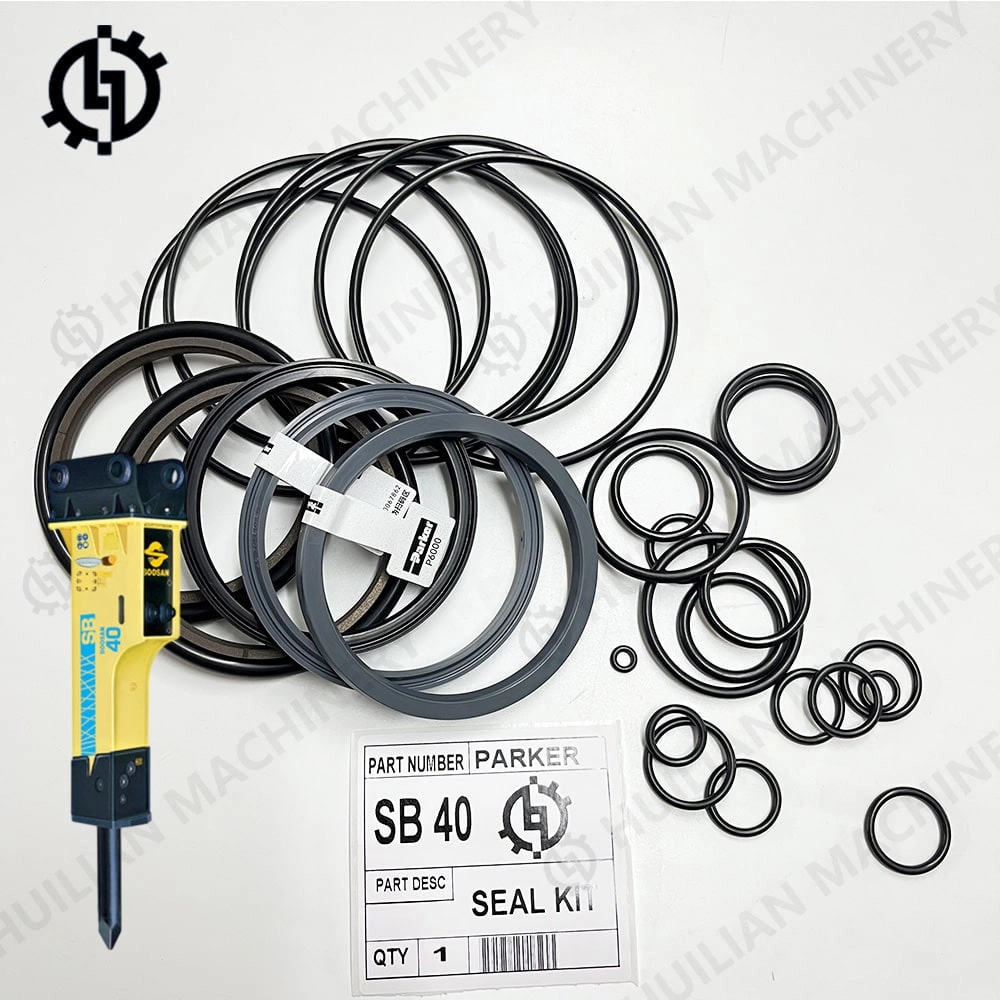
Parker Oil Seal Complete Repair SB40 Seal Kit COX001 CO1012 SB40Ⅱ SB40TSP SQ40 For Soosan Hydraulic Rock Breaker Hammer
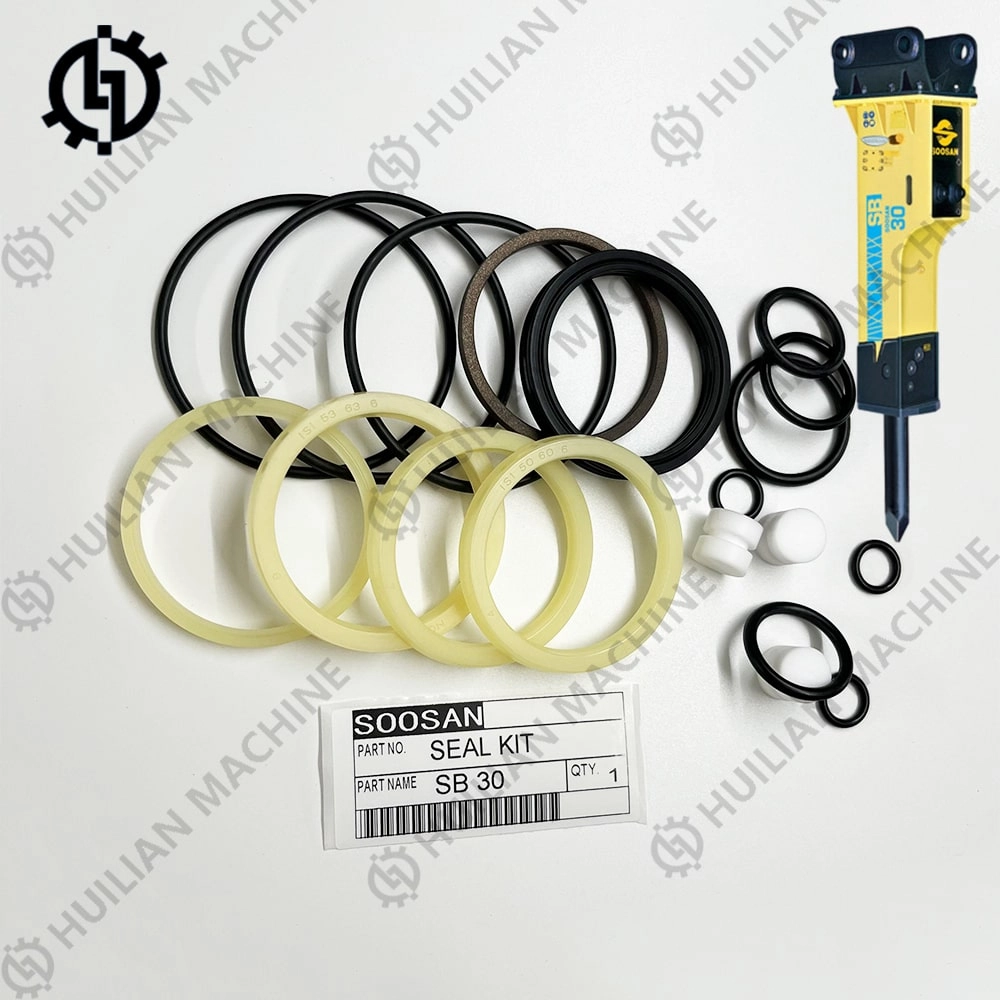
E71012 E7X001 SOOSAN SQ30 SB30Ⅱ SB30 Breaker Seal Kit SB30TS-P SB30Ⅱ TS-P SB30Ⅱ SSL Hydraulic Rock Hammer Parts Oil Repair Kit
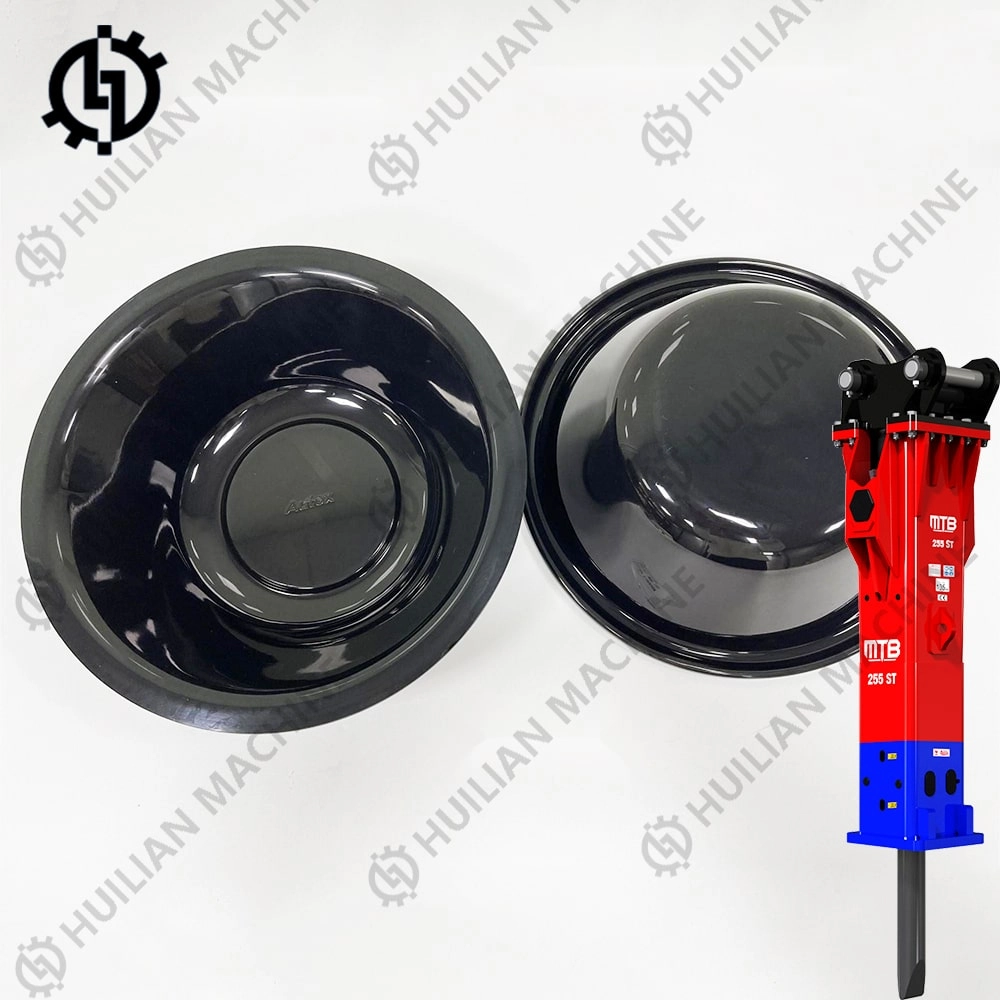
Inan Makina MTB Hydraulic Breaker Parts 45B0116A11 MTB255 MTB MT 255 Diaphragm MTB 255 IQ MTB-255 MTB 255 ST Membrane for Excavator Rock Hammer
 About us
© 2025 HUILIAN MACHINE. All rights reserved