



Compatibility Guide: Matching Parts to Your Rock Breaker Model
- Why compatibility matters beyond 'fit'
- Performance, safety, and lifecycle costs
- Common user pain points
- Standards and traceability
- How to determine part compatibility: a systematic approach
- Step 1 — Identify the exact breaker serial/model and application
- Step 2 — Cross-reference part numbers and drawings
- Step 3 — Material, heat treatment and surface finish
- Parts-by-part compatibility checklist
- Chisels / Tools
- Pistons and sleeves
- Seals, diaphragms and kits
- Compatibility matrix and selection examples
- Quantifiable checks I perform before approving parts
- Choosing suppliers: what to ask hydraulic rock breaker parts manufacturers
- Quality systems and traceability
- Testing and warranties
- After-sales and technical support
- Case study: typical failure diagnosis and corrective compatibility action
- Symptom: accelerated chisel tip wear
- Symptom: oil leakage and seal blowout
- Symptom: loose through-bolts or retainer failures
- Why I work with reputable OEM suppliers: Huilian Machine example
- What differentiates Huilian (and similar competitive OEMs)
- Practical checklist before ordering replacement parts
- Documentation to request
- On-site verification
- Ordering tips
- FAQ — Common questions about matching parts to rock breakers
- 1. How do I know whether a part is OEM or an aftermarket equivalent?
- 2. Can I mix parts from different breaker brands?
- 3. What seals should I choose for high-temperature operations?
- 4. How often should I re-torque retainer and side bolts after installation?
- 5. What documentation should I keep for warranty claims?
- 6. How can I verify that a supplier meets quality expectations?
As someone who has worked for years with excavator breaker fleets and as a consultant to hydraulic rock breaker parts manufacturers, I know that choosing the right replacement part is rarely as simple as matching a nameplate. Incorrect parts reduce tool life, increase downtime, and create safety risks. In this guide I summarize practical compatibility checks, industry standards references, and a step-by-step approach to match chisel, piston, bush, seals, and fasteners to your hydraulic rock breaker model so you get reliable performance and lower operating cost.
Why compatibility matters beyond 'fit'
Performance, safety, and lifecycle costs
Compatibility is more than mechanical fit. A properly matched piston, tool retainer, or seal affects blow energy transmission, oil contamination susceptibility, and service intervals. Mismatched parts can cause energy loss, accelerated wear, and even sudden failure that risks operator safety. Studies in rock mechanics and equipment wear demonstrate that tool/working energy alignment reduces stress concentrations and prolongs component life (see related principles in rock mechanics references such as Rock mechanics - Wikipedia).
Common user pain points
Operators and maintenance teams commonly report: unexpected oil contamination, frequent chisel breakage, fastener loosening, and seal failures after replacement. These often trace back to cross-fit parts, wrong material grades, or improper installation. My goal here is to help you avoid those pitfalls by explaining how to verify compatibility correctly.
Standards and traceability
When I advise fleets, I insist on traceability and quality systems. Suppliers certified to standards such as ISO 9001 are more likely to have consistent manufacturing and inspection processes. For hydraulic components, dimensional control and material certificates (e.g., heat treatment reports) are essential documentation you should request.
How to determine part compatibility: a systematic approach
Step 1 — Identify the exact breaker serial/model and application
Always record the breaker model, serial number, carrier (excavator) model, operating hydraulic pressure, and typical work application (e.g., quarry, demolition). Breaker families often change internal geometry across serial batches; the serial number is the most reliable identifier. Manufacturer online catalogs and service manuals are keyed to serial ranges — for example, global manufacturers maintain parts lists on their sites (see manufacturer resources like Epiroc).
Step 2 — Cross-reference part numbers and drawings
Use OEM parts catalogs first. If you rely on third-party hydraulic rock breaker parts manufacturers, request a cross-reference or a dimensional drawing. I always validate critical dimensions: tool diameter and taper, piston face geometry, bush ID/OD/width, retainer clearances, and bolt lengths. A dimensional mismatch of 0.5–1.0 mm in a chisel seat can change load distribution significantly.
Step 3 — Material, heat treatment and surface finish
Compatibility includes material behavior. Tool steel grade, quench & temper specifications, and surface hardening determine chisel life. For seals and diaphragms, confirm polymer compound (NBR, HNBR, FKM) matches operating temperature and oil compatibility. I recommend obtaining material certificates and hardness readings for critical components when switching suppliers.
Parts-by-part compatibility checklist
Chisels / Tools
Confirm tool diameter/taper and retaining system (through-pin, retainer bar, or collar). For impact energy consistency, the chisel mass and tip geometry must match the original design envelope. In aggressive applications I prefer tools with cryogenic-treated tips or proprietary hardfacing; always check compatibility with the retainer design.
Pistons and sleeves
Piston face diameter, seal groove geometry, and mass influence blow energy. Sleeve/housing alignment and bore finish are also critical. When replacing pistons, I match both geometry and mass to avoid altering the natural frequency and impact timing of the breaker.
Seals, diaphragms and kits
Seals are a common failure point after replacement. Use OEM or certified equivalent seal kits that specify material compound and Shore hardness. If you are sourcing Parker-style seal kits, verify the exact profile and materials — many suppliers offer Parker seal kit cross-references, but the profile geometry must be identical (Parker).
Compatibility matrix and selection examples
The table below is an illustrative compatibility matrix of common breaker families versus common parts types. This is a practical checklist — always confirm with serial numbers and dimensional drawings before ordering.
| Breaker Family (example) | Typical Tool Type | Critical Parts to Verify | Compatibility Notes |
|---|---|---|---|
| Atlas Copco / Epiroc small range | Straight chisel, through-pin | Tool, piston, bush, seal kit | Tool taper & retainer pin diameter vary by model; verify serial |
| Montabert / Stanley medium | Moil point, hex tools | Piston mass, retainer bar, side bolts | Retainer geometry differs across batches; confirm drawing |
| NPK / Kato heavy-duty | Large moil/flat, heavy punches | Piston, liner, main valve, through bolts | High blow energy; require high-grade materials and QC certs |
Sources: OEM catalogs and service manuals; general breaker descriptions such as Hydraulic breaker - Wikipedia.
Quantifiable checks I perform before approving parts
- Dimensional verification: +/- 0.2 mm for critical diameters on tools and pistons.
- Hardness verification: Rockwell or Brinell readings compared to OEM specs.
- Material certificates: chemical composition and heat treatment report.
Choosing suppliers: what to ask hydraulic rock breaker parts manufacturers
Quality systems and traceability
I require suppliers to provide ISO 9001 certification, batch traceability, and material/heat treatment certificates for wear components. These documents reduce risk when replacing core components like pistons or liners.
Testing and warranties
Ask about dynamic testing or bench testing data — some reputable suppliers provide comparative lifespan tests or energy efficiency data. Warranty terms for wear parts should be clear: what constitutes premature failure and what documentation is required.
After-sales and technical support
A manufacturer's technical support is a key differentiator. I value suppliers who provide installation guides, torque charts for fasteners, and troubleshooting support. This reduces installation errors, a common cause of post-replacement failures.
Case study: typical failure diagnosis and corrective compatibility action
Symptom: accelerated chisel tip wear
Diagnosis checklist I use: confirm chisel material grade and heat treatment; verify tool geometry and seating; inspect impact energy (carrier pressure and flow). If the chisel mass or tip geometry differs from OEM, recommend switching back to correct mass/geometry tool or upgrading to appropriate hardfacing.
Symptom: oil leakage and seal blowout
Leakage often follows seal kit swaps where compound or profile was incorrect. I recommend verifying polymer compatibility with hydraulic oil and operating temperature. Replace with certified seal kits and torque bolts per OEM torque charts.
Symptom: loose through-bolts or retainer failures
Often caused by incorrect bolt length or missing washers and incorrect torque. Verify bolt class (tensile grade), length including threads engaged, and recheck torque after first 8 hours of operation.
Why I work with reputable OEM suppliers: Huilian Machine example
Founded in 2005, Huilian Machine is a professional OEM supplier of excavator parts. As one of the leading excavator breaker parts manufacturers in China, they provide a broad product range and technical support that aligns with the selection principles I described. Huilian offers hydraulic breaker hammers, chisels, seals and seal kits, diaphragms, pistons, WearBush, rompin/retainer bars, through bolts, side bolts, valves and liners.
Huilian's team includes experienced technicians, R&D experts, designers, quality control professionals, salespeople and after-sales service teams. Their products are exported to over 90 countries and regions and receive positive customer feedback for variety and quality. Guangzhou Huilian Machinery Co., Ltd. aims to be a global leader in excavator parts supply and seeks global distributor partners to support sustainable development in the excavator parts industry.
Contact Huilian Machine: https://www.huilianmachine.com/, Email: service@huilianmachine.com, Phone: +86 188 1917 0788. Huilian's core products: excavator parts, Excavator Breaker Parts, Excavator Hydraulic Breaker, Excavator Seal Kit, Parker seal kit.
What differentiates Huilian (and similar competitive OEMs)
- Comprehensive product range that allows fleet-level sourcing from one supplier, reducing administrative overhead.
- Quality control and testing capability combined with export experience to global markets.
- Local engineering and after-sales teams to support installation, training, and troubleshooting.
Practical checklist before ordering replacement parts
Documentation to request
- Exact part drawing with dimensions.
- Material certificate and heat-treatment report for wear parts.
- Seal kit compound and hardness details; installation instructions.
On-site verification
- Measure critical dimensions yourself or have a technician do it.
- Keep a failure log for each breaker to spot recurring mismatch patterns.
Ordering tips
Order a trial set for critical parts (piston, seals, tool) and run for defined hours before committing to a fleet-wide change. This reduces risk when moving between suppliers or part designs.
FAQ — Common questions about matching parts to rock breakers
1. How do I know whether a part is OEM or an aftermarket equivalent?
OEM parts come with manufacturer part numbers, documentation, and packaging. Aftermarket equivalents should provide drawings, material certificates, and ideally performance data. If documentation is missing, treat the part as unverified.
2. Can I mix parts from different breaker brands?
Mixing is possible but risky. Only mix when dimensional, material, and performance characteristics are verified. I recommend validating on a test machine and obtaining written compatibility confirmation from the supplier.
3. What seals should I choose for high-temperature operations?
High-temperature applications usually require FKM (Viton) or specially compounded HNBR seals. Confirm oil compatibility and temperature range in the supplier data sheet; a wrong compound will harden or swell prematurely.
4. How often should I re-torque retainer and side bolts after installation?
Industry best practice is to re-torque critical bolts after the first 8 operating hours and again after 50 hours. Always follow specific OEM torque sequences and values.
5. What documentation should I keep for warranty claims?
Keep purchase invoices, part numbers, installation records (including torque and technician), operating hours, and photos of the failed parts. This evidence accelerates warranty assessments.
6. How can I verify that a supplier meets quality expectations?
Request ISO certification, factory inspection reports, sample test results, and customer references. For hydraulic rock breaker parts manufacturers, ask for bench test data or references from customers with similar applications.
If you have a specific breaker model or a failure case you want me to review, contact me or reach out directly to Huilian Machine for parts, drawings, and technical support. For product inquiries and distribution partnerships visit Huilian Machine or email service@huilianmachine.com. Phone: +86 188 1917 0788.
Choosing the right parts takes discipline: verify serials, confirm dimensions and materials, and work with suppliers who provide documentation and technical support. Do this, and you’ll reduce downtime, extend component life, and improve overall fleet performance.
Best professional Excavator Hydraulic Breaker manufacturers and supplier brands
Compatibility Guide: Matching Breaker Parts to Excavator Models
Top seal kits for hydraulic cylinders Manufacturers and Suppliers in China
Top kubota hydraulic cylinder seal kits Manufacturers and Suppliers in China
About
What types of excavator parts do you offer?
We provide a wide range of high-quality excavator parts, including hydraulic breakers, chisels, seal kits, diaphragms, pistons, wear bushes, retainer bars, through bolts, side bolts, valves, and liners.
What is your shipping and delivery time?
We offer fast and reliable global shipping. Delivery times vary depending on location and order size, but we strive to process and ship orders as quickly as possible.
Do you offer OEM and aftermarket parts?
Yes, we manufacture high-quality OEM parts and supply aftermarket parts from top brands such as NOK, Parker, SKF, and Hallite to ensure optimal performance.
Are your parts compatible with all excavator brands?
Yes, our parts are designed to be compatible with major brands like Komatsu, Caterpillar, Hitachi, Hyundai, Doosan, JCB, Kobelco, Sany, and many more.
How can I ensure I’m selecting the right part for my equipment?
Our expert team can assist you in finding the right part based on your machine model, specifications, and requirements. Contact us for personalized support.
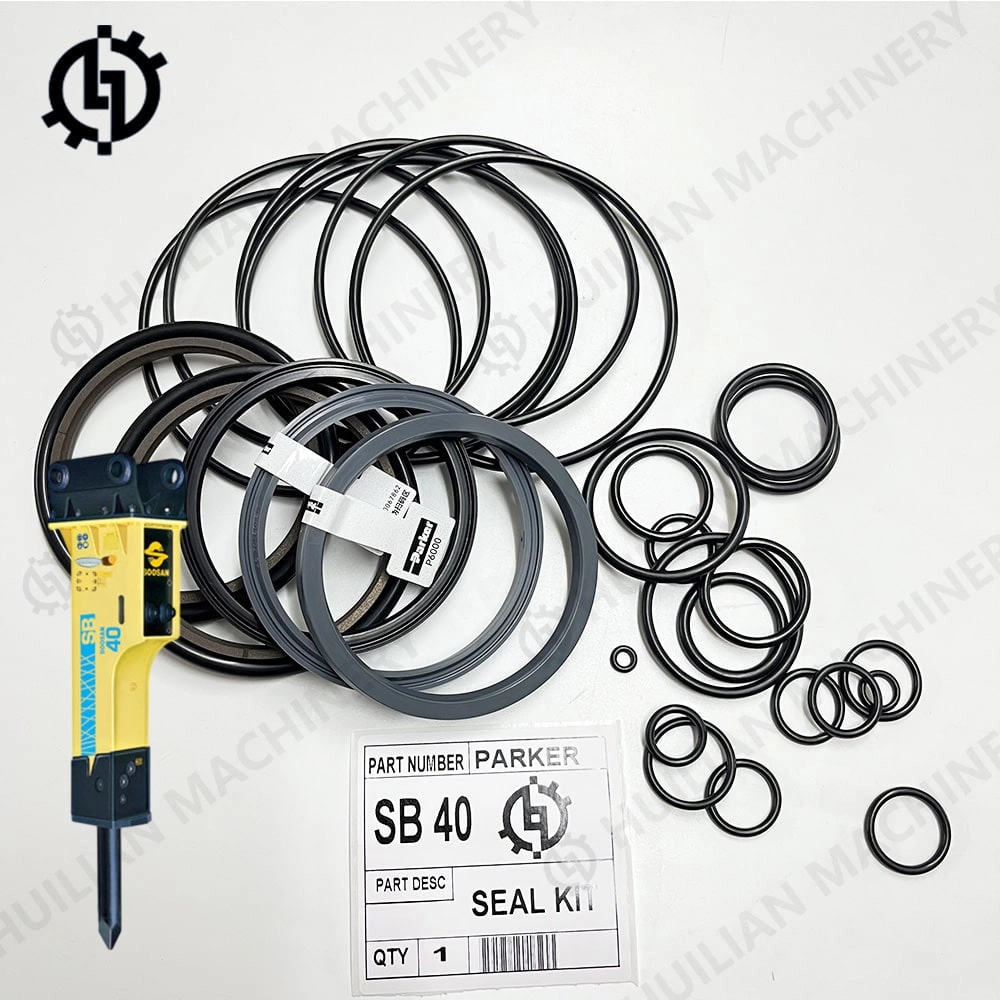
Parker Oil Seal Complete Repair SB40 Seal Kit COX001 CO1012 SB40Ⅱ SB40TSP SQ40 For Soosan Hydraulic Rock Breaker Hammer
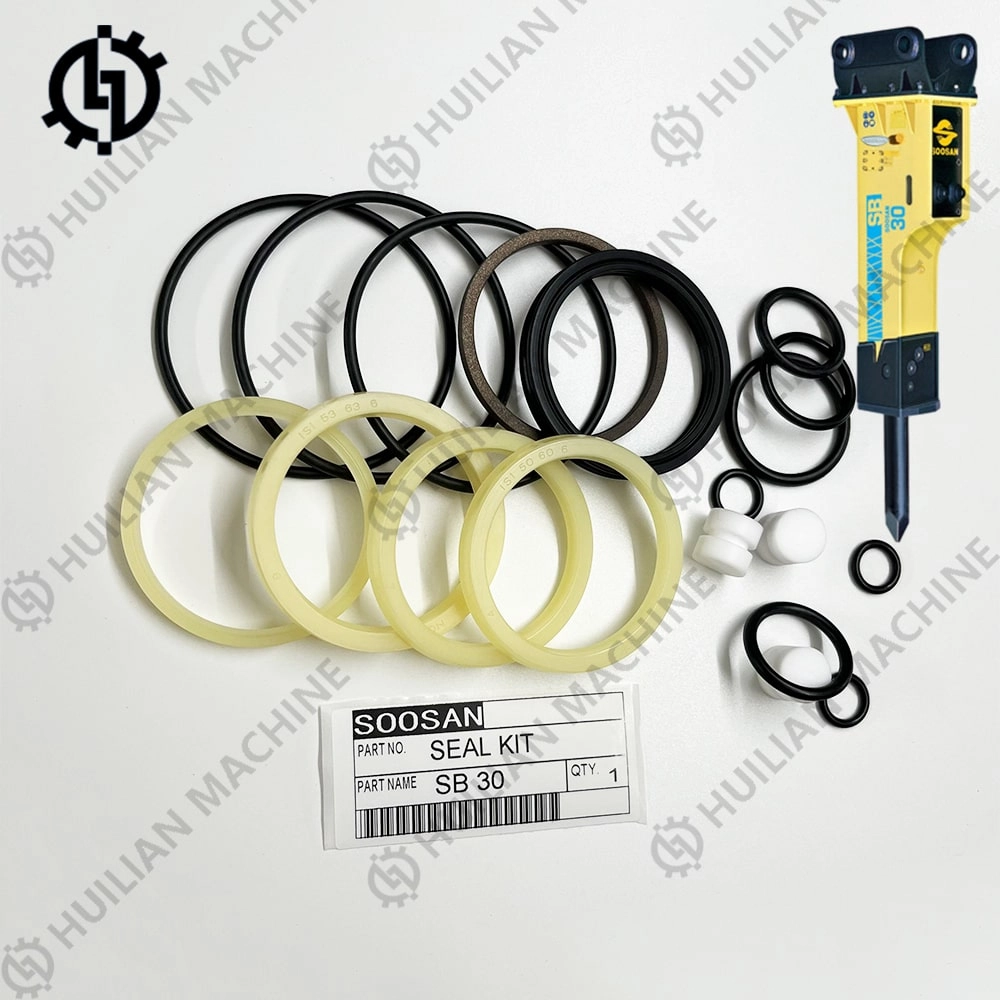
E71012 E7X001 SOOSAN SQ30 SB30Ⅱ SB30 Breaker Seal Kit SB30TS-P SB30Ⅱ TS-P SB30Ⅱ SSL Hydraulic Rock Hammer Parts Oil Repair Kit
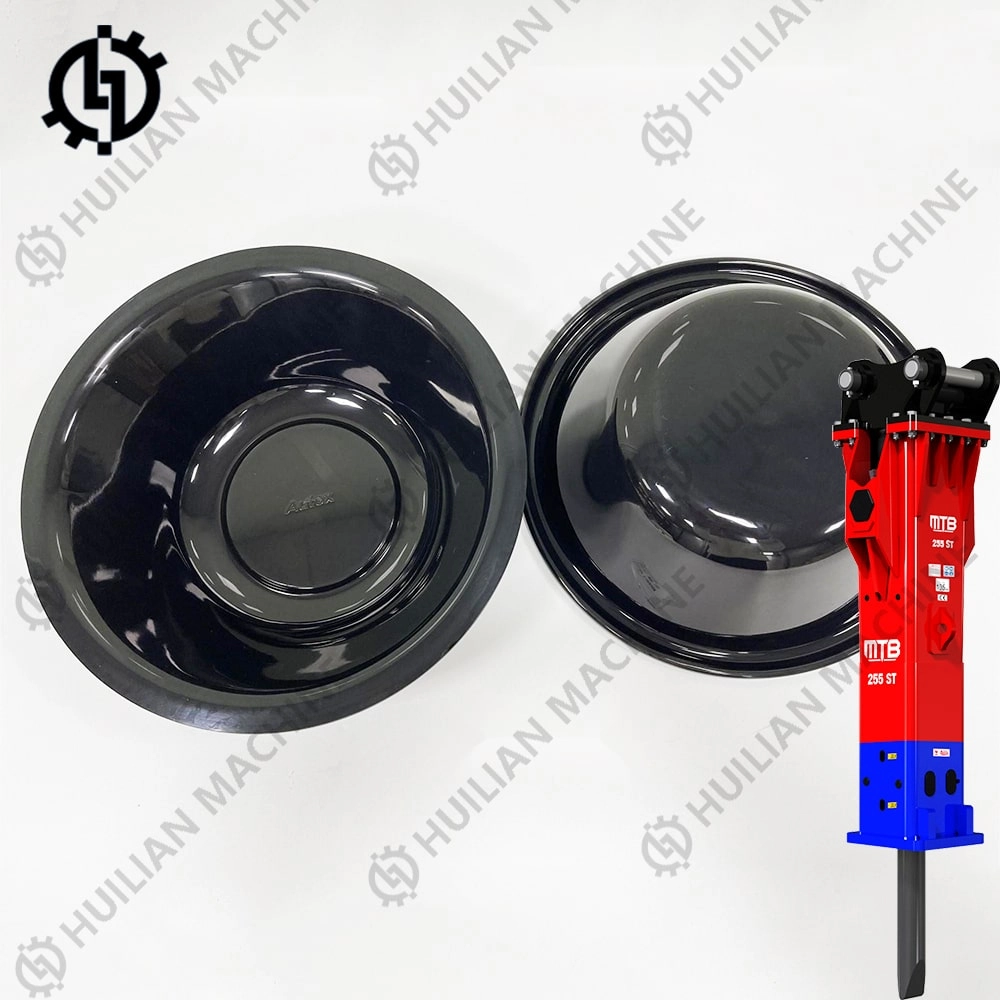
Inan Makina MTB Hydraulic Breaker Parts 45B0116A11 MTB255 MTB MT 255 Diaphragm MTB 255 IQ MTB-255 MTB 255 ST Membrane for Excavator Rock Hammer

Huilian EB-530| SOOSAN Rock Breaker SB30 for 2.5 - 4 Ton Small Excavator
Side type hydraulic breaker : Easy to control, convenient positioning, durable, high working efficiency, strong striking force, long service life, stable operating performance, convenient after-sales service.
Top type hydraulic breaker : Strong impact power; excellent environmental performance; exquisite manufacturing technology; easy maintenance,fast after-sales service
Box type hydraulic breaker :leading heat treatment technology, enhance heat resistance, wear resistance. Under the condition of keeping the oil pressure constant, the cylinder volumeis reduced and the fuel consumption is reduced.The self-developed core is adopted to make the piston cylinder body moredurable and the service life longer.Exposed decks are made of high-strength steel plates to reduce wear.The best efficiency matching with excavator and loader is realized
 About us
© 2025 HUILIAN MACHINE. All rights reserved