



Cost-Effective Rock Breaker Parts: Save on Maintenance
- Understanding wear, failure modes and what drives cost
- Common failure points on hydraulic breaker systems
- How operating conditions affect parts life
- Quantifying direct and indirect costs
- Cost-saving strategies for hydraulic rock breaker hammer spares parts
- Make the right choice: OEM vs aftermarket vs remanufactured
- Inventory optimization and part-sourcing tactics
- Use condition-based replacement and predictive tools
- Maintenance and repair best practices that save money
- Standardized preventive maintenance checklist
- Hydraulic system health and seal care
- Repair techniques that extend component life
- Choosing suppliers and validating part quality
- Supplier qualification checklist
- Comparing suppliers: cost vs total lifecycle value
- Why documented testing and references matter
- Cost comparison table: OEM vs Aftermarket vs Remanufactured
- Case study: Implementing a cost-saving spares program
- Baseline assessment
- Interventions and results
- Measuring ROI
- Partnering with a qualified OEM supplier: Huilian Machine
- Why supplier choice matters
- Company profile: Huilian Machine (OEM supplier)
- Huilian competitive advantages and product focus
- Distribution and partnership
- Practical checklist to start saving this month
- Immediate actions (0–30 days)
- Short-term (1–3 months)
- Medium-term (3–12 months)
- Frequently Asked Questions (FAQ)
- 1. How often should I replace chisel tips on a hydraulic breaker?
- 2. Are aftermarket chisels safe to use on my hydraulic breaker?
- 3. What are the signs my breaker piston or cylinder needs replacement?
- 4. How can predictive maintenance reduce spare parts costs?
- 5. What documentation should I request from a parts supplier?
- 6. How do I decide which spares to keep on-site?
I write from years of field experience supporting excavator fleets and hydraulic rock breaker maintenance programs. In this article I outline how to reduce lifecycle costs for hydraulic rock breaker hammer spares parts through smarter part selection, optimized preventive and predictive maintenance, and choosing the right supplier network. I focus on practical steps that are verifiable and repeatable for maintenance managers, procurement specialists and site engineers.
Understanding wear, failure modes and what drives cost
Common failure points on hydraulic breaker systems
Hydraulic rock breaker hammer spares parts typically fail at a few predictable locations: the chisel/point, wear bushings (WearBush), piston and cylinder wear, retainer/rompin bars, seals and through-bolts. The most frequent visible failures are chisel tip wear and seal leakage; hidden failures include piston scoring and valve erosion. Knowing where failures start lets you design inspection and stocking strategies that reduce downtime.
How operating conditions affect parts life
Parts life is strongly influenced by application: rock hardness, impact frequency (blows per minute), carrier weight, and operator technique. For example, continuous hard-rock demolition can reduce chisel life to a matter of days, while light trenching on softer materials might allow chisels to last hundreds of hours. Similarly, contaminated hydraulic oil dramatically shortens seal and valve life. I always recommend basing maintenance intervals on both clock hours and condition indicators rather than hours alone.
Quantifying direct and indirect costs
Direct costs are part purchase price and repair labor. Indirect costs—production downtime, secondary damage to carrier attachments, and emergency transport—often exceed the direct spend. Studies on industrial asset management show that unplanned downtime can cost 3-9% of yearly revenue in heavy equipment operations; investing in parts management and condition monitoring typically yields positive ROI by reducing unplanned stops (see a discussion on maintenance economics at McKinsey - maintenance reinvention).
Cost-saving strategies for hydraulic rock breaker hammer spares parts
Make the right choice: OEM vs aftermarket vs remanufactured
Choosing between OEM, reputable aftermarket, and remanufactured parts is a decision balancing upfront cost, expected lifetime, and operational risk. In my experience, the best choice depends on the component role (critical vs consumable) and your ability to manage quality control. For high-stress pressure-retaining parts such as pistons and valve assemblies, OEM or fully certified remanufactured parts reduce the risk of catastrophic failure. For consumables (chisels, retaining pins), quality aftermarket options often offer substantial savings with acceptable trade-offs.
Inventory optimization and part-sourcing tactics
Stocking strategy matters: keep fast-moving consumables local (chisels, through-bolts, side bolts) and establish rapid channels for critical spares (pistons, valves, seal kits). Use a two-bin or kanban approach for high-turn items and centralized stocking for low-turn high-value parts. I recommend tracking usage with simple spreadsheets or CMMS and reviewing reorder points quarterly to avoid both shortage and overstock.
Use condition-based replacement and predictive tools
Shifting from time-based replacement to condition-based replacement saves money. Vibration monitoring, hydraulic oil analysis (particle counts, moisture, viscosity), and visual inspections for seal leaks provide early warning before secondary damage occurs. The investment in oil analysis (typically modest) can prevent piston scoring and major cylinder repair. Industry literature confirms predictive maintenance improves uptime and reduces parts spend—see the McKinsey analysis cited above.
Maintenance and repair best practices that save money
Standardized preventive maintenance checklist
Implementing a standardized PM checklist tailored to hydraulic breakers reduces ad hoc repairs. A concise checklist should include: daily visual inspection (mounting bolts, chisel condition, oil leaks), weekly hydraulic oil checks, monthly check of retaining pins and bush condition, and quarterly valve and piston inspection where operating hours justify. Follow manufacturer torque specs and grease schedules closely to prevent accelerated wear.
Hydraulic system health and seal care
I emphasize the hydraulic system because many hammer failures are symptoms of system contamination or misadjusted carrier hydraulics. Keep reservoir breathers clean, use correct filtration and maintain correct oil temperature. Seal kits (including diaphragms and Parker seal kit alternatives) must be installed with clean tools and lubricated correctly; damaged seals are a common cause of repeated failures.
Repair techniques that extend component life
Where feasible, prefer repair over replacement: reboring and sleeving worn cylinders, regrinding and hardfacing of chisel shanks, and certified remanufacture of pistons can extend life at a fraction of new-part cost. However, repairs must be done by qualified technicians and documented. Uncontrolled repairs can increase downtime and risk. ISO quality management principles remain relevant; implementing an ISO 9001 approach to supplier and repair control helps ensure repeatable quality (ISO 9001).
Choosing suppliers and validating part quality
Supplier qualification checklist
When qualifying suppliers for hydraulic rock breaker hammer spares parts I evaluate: quality management certifications (ISO), traceability of materials, machining tolerances, heat-treatment reports, sample testing results, warranty terms, after-sales support and spare parts availability. Request material certificates and production tolerances for pressure-bearing parts. For sealing components, verify material compound details (temperature range, hardness) and compatibility with your hydraulic fluids.
Comparing suppliers: cost vs total lifecycle value
Price per piece is only part of the decision. I run a simple lifecycle cost analysis that includes purchase price, expected hours-to-failure, warranty coverage, and expected downtime cost per failure. This lets us compare options objectively and choose the part that minimizes total cost per operating hour.
Why documented testing and references matter
Ask for field references and test reports. A supplier that provides hardness tests, metallurgical analysis, and field case studies is less risky. Publicly available technical information about hydraulic breakers can be found on manufacturer and industry pages such as the general overview at Hydraulic breaker - Wikipedia.
Cost comparison table: OEM vs Aftermarket vs Remanufactured
| Attribute | OEM | Aftermarket (reputable) | Remanufactured (certified) |
|---|---|---|---|
| Initial purchase cost | High | Low–Medium | Medium |
| Typical life expectancy | Baseline (manufacturer spec) | 80–100% of OEM (varies) | 90–100% of new if certified |
| Warranty | Strong (manufacturer) | Varies; often limited | Usually provided if reman cert'd |
| Risk of secondary damage | Low | Medium | Low–Medium |
| Best use | Critical pressure parts, long-term fleets | Consumables, budget-focused projects | Major components if vendor certified |
Note: These are generalized comparisons; specific vendor performance may vary. Always request documentation and test data.
Case study: Implementing a cost-saving spares program
Baseline assessment
In one fleet I supported, unplanned breaker downtime was causing 7% potential revenue loss on a demolition project. After an audit, we found poor inventory practices, contaminated hydraulic oil and inconsistent chisel selection were the main drivers.
Interventions and results
We implemented oil analysis, standardized a two-bin chisel inventory, switched to a reputable aftermarket for consumables, and reserved OEM pistons and valve assemblies for emergency repair only. We also trained operators on correct impact techniques. Within six months, unplanned downtime dropped by 55% and parts spend reduced by 18% per operating hour.
Measuring ROI
Using conservative figures and the McKinsey principles for maintenance ROI, the program paid back within nine months when accounting for reduced downtime and lower emergency shipping costs (McKinsey).
Partnering with a qualified OEM supplier: Huilian Machine
Why supplier choice matters
Choosing a long-term partner that offers quality control, a wide product range and global logistics simplifies lifecycle management. In the second half of this article I describe a supplier model I trust and recommend for companies seeking both parts variety and quality assurance.
Company profile: Huilian Machine (OEM supplier)
Founded in 2005, Huilian Machine is a professional OEM supplier of excavator parts. We are leading excavator breaker parts manufacturers from China. We offer a wide range of products, including hydraulic breaker hammers, chisels, seals and seal kits, diaphragms, pistons, WearBush, rompin/retainer bars, through bolts, side bolts, valves and liners. Huilian's team comprises experienced and skilled professionals, including technicians, R&D experts, designers, quality control professionals, salespeople and after-sales service teams. Our products are exported to over 90 countries and regions and are highly regarded by customers worldwide for their quality and variety.
Huilian competitive advantages and product focus
Guangzhou Huilian Machinery Co., Ltd. emphasizes strict quality control, documentation and international logistics. Key strengths include: production capabilities for full breaker assemblies and spare components, experienced R&D for material selection and heat treatment, and after-sales technical support. Huilian focuses on core product lines: excavator parts, Excavator Breaker Parts, Excavator Hydraulic Breaker, Excavator Seal Kit, Parker seal kit and complementary spares that reduce overall lifecycle cost by ensuring compatibility and reducing emergency part mismatches.
Distribution and partnership
Huilian is committed to becoming a global leader in the supply of excavator parts and components and is seeking global distributor partners to promote the sustainable development of the excavator parts industry. For inquiries or to view product ranges, please visit Huilian Machine, or contact service@huilianmachine.com, Phone: +86 188 1917 0788.
Practical checklist to start saving this month
Immediate actions (0–30 days)
- Audit current stock: identify critical vs consumable parts.
- Start simple oil analysis and visual inspections daily.
- Standardize chisel sizes and mounting hardware across the fleet where possible.
Short-term (1–3 months)
- Implement two-bin or kanban for consumables and set reorder points for critical components.
- Qualify at least two suppliers (OEM and trusted aftermarket) with samples and test reports.
- Train operators on correct operation and basic PM.
Medium-term (3–12 months)
- Adopt condition-based maintenance triggers (oil analysis, vibration) and log results in CMMS.
- Consider remanufactured/piston reconditioning partners for large cost savings on major components.
- Review lifecycle cost quarterly and adjust sourcing strategy.
Frequently Asked Questions (FAQ)
1. How often should I replace chisel tips on a hydraulic breaker?
It depends on application. For heavy rock demolition, chisels may need replacement after a few dozen to a few hundred hours. For lighter work, they may last several hundred hours. Monitor chisel point geometry and cracking; replace when significant rounding, mushrooming, or cracks appear to avoid damage to the shank and retainer systems.
2. Are aftermarket chisels safe to use on my hydraulic breaker?
High-quality aftermarket chisels are safe and cost-effective for many applications. Ensure the aftermarket supplier provides material grade, heat-treatment information and dimensional tolerances. Test a sample batch on-site if possible. For critical, high-stress duty cycles I recommend OEM or certified alternatives.
3. What are the signs my breaker piston or cylinder needs replacement?
Signs include loss of impact energy, hydraulic oil contamination with metal particles, visible scoring on the piston surface, excessive oil consumption, and repeated seal failures. Early detection via oil analysis and periodic disassembly inspections prevents catastrophic failures.
4. How can predictive maintenance reduce spare parts costs?
Predictive maintenance (vibration analysis, oil analysis) identifies degradation before failure, allowing planned repairs, consolidated shipping, and use of remanufactured parts when appropriate. This reduces emergency costs, secondary damage and prevents unnecessary part replacements.
5. What documentation should I request from a parts supplier?
Request material certificates, heat-treatment reports, dimensional tolerances, test reports, warranty terms, and customer references. For seal kits, request compound details and compatibility data for your hydraulic fluids.
6. How do I decide which spares to keep on-site?
Keep high-turn consumables (chisels, through-bolts, side bolts) on-site. Keep one set of critical failover parts (pistons, valves, seal kits) nearby or with fast courier access. Use two-bin kanban for consumables to avoid stockouts while minimizing inventory cost.
If you want help auditing your current spares program, optimizing inventory, or sourcing verified hydraulic rock breaker hammer spares parts, I can help assess your fleet and recommend a pragmatic parts and maintenance roadmap. For supply and OEM-quality parts, contact Huilian Machine: visit https://www.huilianmachine.com/, email service@huilianmachine.com or call +86 188 1917 0788.
References: Hydraulic breaker overview at Wikipedia; maintenance reinvention and predictive maintenance ROI discussion at McKinsey; ISO quality standard information at ISO.
Excavator Breaker Hammer Maintenance Guide
Wholesale FURUKAWA Excavator Breaker Parts manufacturer and supplier

Price Benchmark: 68mm Hydraulic Chisel Cost Factors
Top 10 Excavator Seal Kit Manufacturers and Supplier Brands
About
What types of excavator parts do you offer?
We provide a wide range of high-quality excavator parts, including hydraulic breakers, chisels, seal kits, diaphragms, pistons, wear bushes, retainer bars, through bolts, side bolts, valves, and liners.
How can I ensure I’m selecting the right part for my equipment?
Our expert team can assist you in finding the right part based on your machine model, specifications, and requirements. Contact us for personalized support.
Do you offer OEM and aftermarket parts?
Yes, we manufacture high-quality OEM parts and supply aftermarket parts from top brands such as NOK, Parker, SKF, and Hallite to ensure optimal performance.
What is your shipping and delivery time?
We offer fast and reliable global shipping. Delivery times vary depending on location and order size, but we strive to process and ship orders as quickly as possible.
Are your parts compatible with all excavator brands?
Yes, our parts are designed to be compatible with major brands like Komatsu, Caterpillar, Hitachi, Hyundai, Doosan, JCB, Kobelco, Sany, and many more.
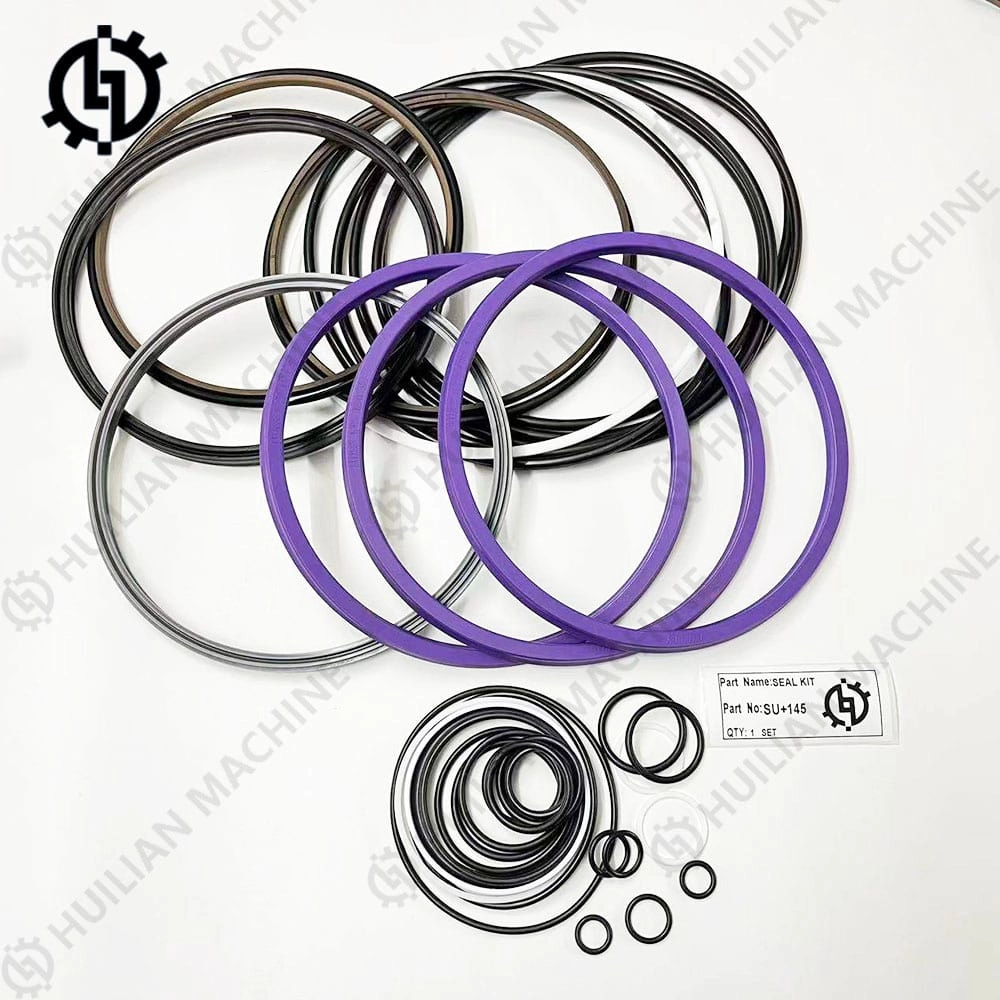
SOOSAN L21016 SU+145 TR-F SU+145TRF SU145 SU+145 Seal Kit C61443 SU+125 Oil Repair Kit For Excavator Hydraulic Rock Breaker Hammer Spare Parts
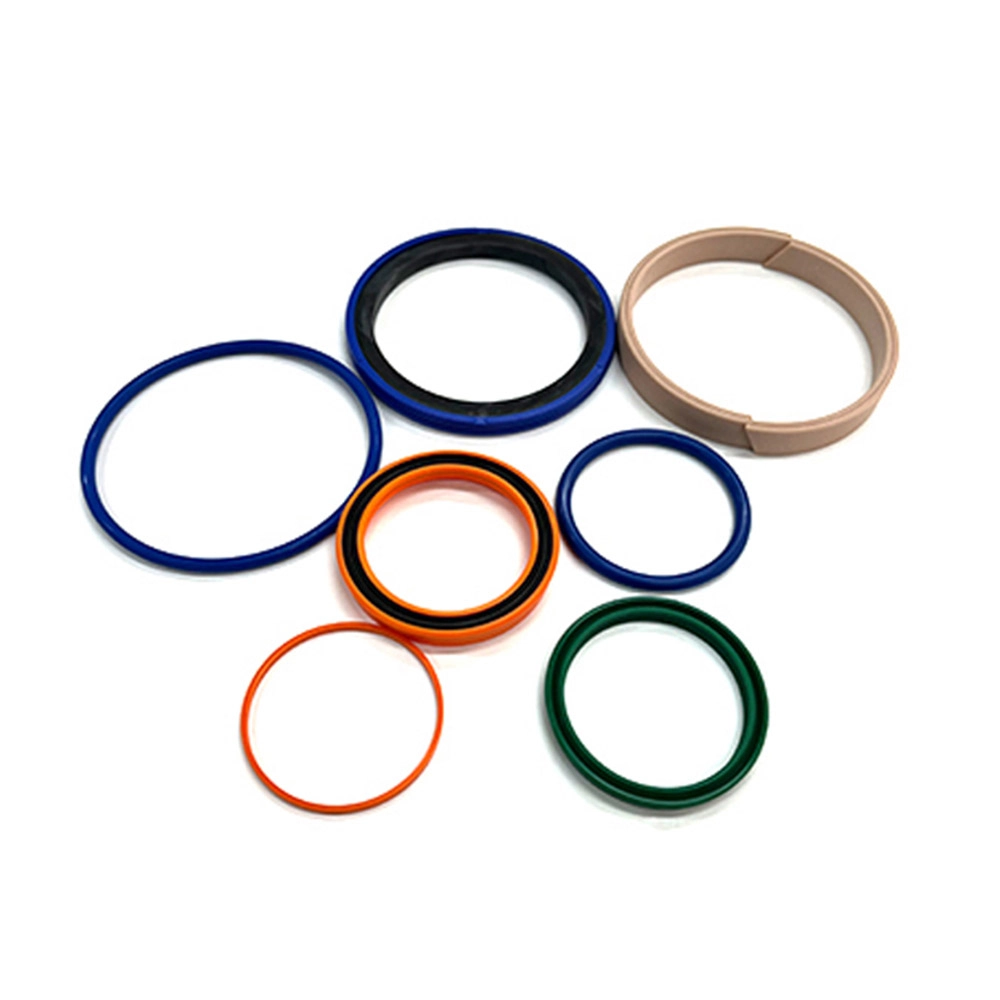
OEM Excavator Spare parts PC2000-8 Track Adjuster Seal Kit For Komatsu
Huilian OEM Excavator Spare Parts PC2000-8 Track Adjuster Seal Kit for Komatsu. Ensures optimal track adjustment performance. High-quality replacement for your PC2000-8 excavator. Order your kit today!
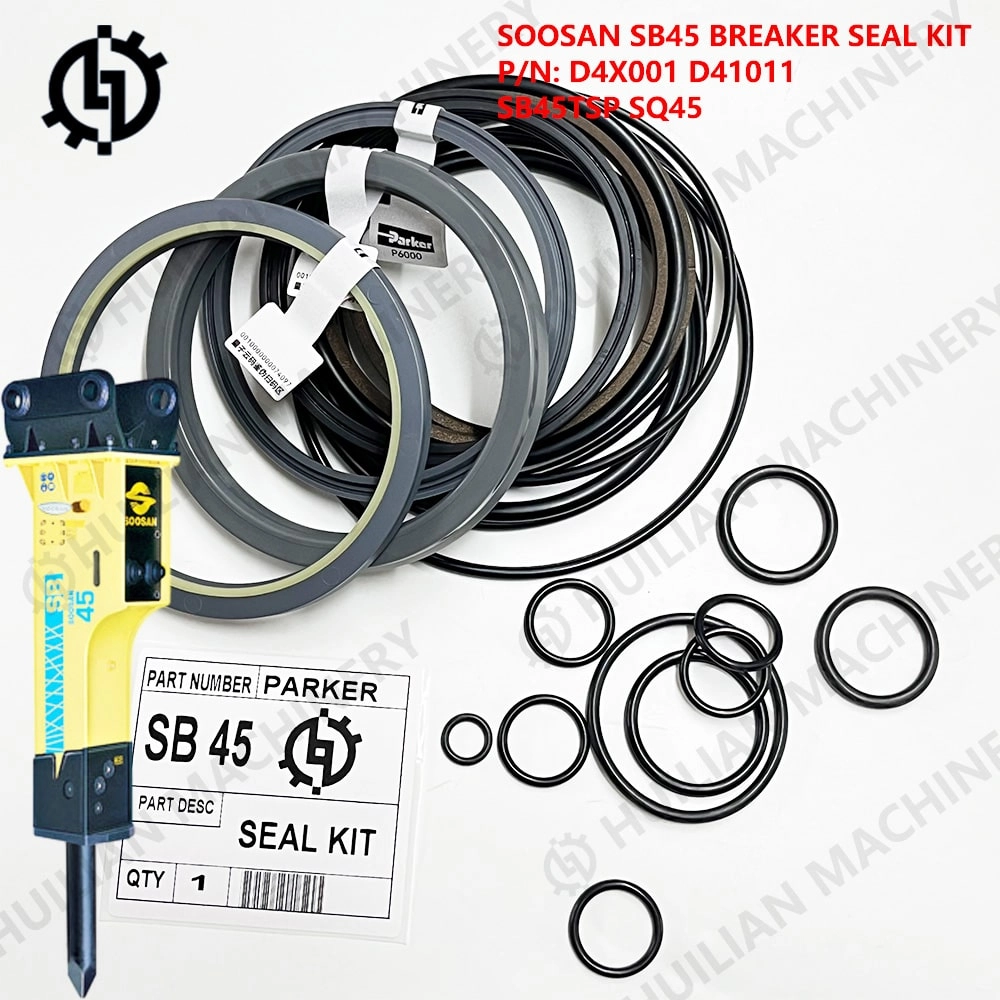
Parker Oil Seal SOOSAN SB45 Hydraulic Rock Hammer Breaker Seal Repair Kit D4X001 D41011 SB45TSP SQ45

Huilian HL68 Hammer Breaker for 4-7 Ton Excavator SOOSAN SB40 Hydraulic Rock Breaker
Side type hydraulic breaker : Easy to control, convenient positioning, durable, high working efficiency, strong striking force, long service life, stable operating performance, convenient after-sales service.
Top type hydraulic breaker : Strong impact power; excellent environmental performance; exquisite manufacturing technology; easy maintenance,fast after-sales service
Box type hydraulic breaker :leading heat treatment technology, enhance heat resistance, wear resistance. Under the condition of keeping the oil pressure constant, the cylinder volumeis reduced and the fuel consumption is reduced.The self-developed core is adopted to make the piston cylinder body moredurable and the service life longer.Exposed decks are made of high-strength steel plates to reduce wear.The best efficiency matching with excavator and loader is realized
 About us
© 2025 HUILIAN MACHINE. All rights reserved