


Compatibility Guide: Seal Kits for Popular Excavator Brands
- Why seal kit selection matters for excavator reliability
- Hydraulic seals control pressure, contamination and motion
- Cost of failure: downtime vs. part cost
- Standards and best practices
- How to verify compatibility by brand and model
- Key measurements and documentation to collect
- Cross-reference strategies
- Brand-specific compatibility notes
- Material, design and environmental considerations
- Selecting seal materials for hydraulic fluid and temperature
- Seal profile and extrusion gap considerations
- Contamination control and wiper selection
- Installation, testing and maintenance best practices
- Shop-level installation checklist
- Pressure testing and break-in
- Predictive maintenance and monitoring
- Aftermarket suppliers, OEM kits and choosing a partner
- OEM vs aftermarket considerations
- Evaluating supplier credibility
- About Huilian Machine and why I recommend considering them
- Practical compatibility checklist before you buy
- Immediate verification items
- Ordering and receiving checklist
- Record keeping
- FAQs
- 1. How do I know if a seal kit will fit my excavator cylinder?
- 2. Can I use a universal or generic excavator seal kit?
- 3. Which seal material is best for heavy-duty excavator use?
- 4. How should I test a cylinder after replacing seals?
- 5. How long should a quality seal kit last in excavator service?
- 6. Do I need backup rings for high-pressure cylinders?
- Final recommendations and contact
I’ve spent more than a decade troubleshooting hydraulic failures on job sites and in rebuild shops, so I know how costly the wrong excavator seal kit can be: increased leakage, premature wear, downtime and warranty headaches. This compatibility guide is written to help maintenance managers, field technicians and parts buyers quickly determine the correct seal kit for popular excavator brands, verify fit and function, and make informed decisions about materials and suppliers. I include practical steps for measurement, cross-referencing, and testing, plus proven installation and maintenance practices that reduce risk and extend component life.
Why seal kit selection matters for excavator reliability
Hydraulic seals control pressure, contamination and motion
Excavator hydraulic systems operate under high pressure and variable temperatures. Seals (rod seals, piston seals, wipers, guide rings and O-rings) maintain pressure, exclude contaminants and control leak paths in cylinders and attachments. A mismatched or low-quality excavator seal kit may appear to work initially but can fail quickly under shear, extrusion, or chemical attack.
Cost of failure: downtime vs. part cost
In my field experience, labor and downtime typically outweigh the cost of a high-quality seal kit. A single cylinder failure on a 20-ton class machine can result in hours of lost productivity; choosing seals with proper material hardness (durometer), profile and tolerance is a critical investment. Where possible, always verify operating pressures and media compatibility before selecting a kit.
Standards and best practices
Standards like the O-ring specifications and manufacturer guidelines help, but hydraulic component design varies by brand and model. For sealing materials and tolerances, consult recognized technical references such as the Parker seal technical guides and industry materials charts to confirm compatibility.
How to verify compatibility by brand and model
Key measurements and documentation to collect
Before ordering an excavator seal kit, I always collect: cylinder bore diameter, rod diameter, stroke length, model & serial number, cylinder part number, operating pressure, hydraulic fluid type, and model year. These parameters are essential to match seal cross-sections and tolerances. When in doubt, disassemble carefully and measure actual components—old seals often hide critical dimensional changes or adapters.
Cross-reference strategies
Use OEM part catalogs and aftermarket cross-reference lists. Many kits (including Parker kits) provide cross-reference tables between OEM numbers and equivalent seal profiles. If OEM numbers are unavailable, match dimensions and seal profiles. Beware: some brands use unique gland geometries or retainers that require brand-specific kits.
Brand-specific compatibility notes
Below I summarize typical compatibility considerations for popular excavator brands based on field cases and parts catalogs:
| Brand | Common considerations | Typical interchangeability |
|---|---|---|
| Caterpillar (CAT) | Often uses OEM-specific seals and retainer designs. Watch for rod coatings and chrome specs. | Partial—many aftermarket kits fit but verify gland depth and snap-ring placement. |
| Komatsu | Similar to CAT in complexity; older models use metric dimensions that differ from newer series. | Medium—use model/year matched kits. |
| Volvo / SDLG | Good aftermarket support; seals often use standardized profiles but check for guide ring sizes. | High—standardized kits often work. |
| Hitachi | Cylinder bore tolerances can be tighter; wiper design is critical to prevent early contamination wear. | Medium—confirm wiper and guide ring profiles. |
| JCB / Hyundai / Doosan | Generally compatible with standard metric kits; some models use unique retainers. | Medium to high—verify retaining hardware. |
Sources: manufacturer parts catalogs and field cross-reference data; general brand info on Wikipedia. For seal selection and material data see Parker technical resources: Parker Seals.
Material, design and environmental considerations
Selecting seal materials for hydraulic fluid and temperature
Material choice is the single most important technical decision. Common materials include NBR (nitrile), HNBR (hydrogenated nitrile), FKM (Viton), PU (polyurethane) and PTFE. My rule of thumb:
- NBR: good for general mineral-oil hydraulics and moderate temperatures (-30°C to 100°C).
- HNBR: better abrasion and temperature resistance; common in modern excavator systems.
- FKM: for high-temperature or petroleum/chemical exposure; higher cost.
- PU: excellent wear resistance where extrusion and high abrasion occur (e.g., piston seals in heavy-duty cylinders).
- PTFE: for extreme chemical resistance or low friction needs, often as a sliding element paired with elastomer energizers.
Verify fluid compatibility (mineral oil, phosphate ester, biodegradable fluids) and temperature range. For technical guidance on elastomers, see material comparisons such as the Engineering Toolbox rubber materials overview.
Seal profile and extrusion gap considerations
Seal profile (single-acting vs double-acting, U-cups, V-rings) and gland design control extrusion resistance. High-pressure cylinders require anti-extrusion rings or polyurethane seals. Measure groove clearances; exceedances often require reinforced seals or backup rings to prevent extrusion failure.
Contamination control and wiper selection
Contaminants are the most common root cause of seal failure. Use high-quality wipers and dust seals; confirm wiper lip geometry matches rod diameter and rod surface finish. Polished rods <0.4 μm Ra with proper chrome plating reduce abrasion and extend seal life—specify surface finish when ordering replacement components.
Installation, testing and maintenance best practices
Shop-level installation checklist
I always follow a strict checklist when replacing seals:
- Clean work area and components; use lint-free rags.
- Inspect rod and bore for scoring—repair or replate if beyond tolerances.
- Measure bores and rods; confirm seal dimensions and durometer.
- Use assembly lubricants compatible with the seal material and hydraulic fluid.
- Install seals with protective sleeves to avoid nicking edges; torque retention hardware to spec.
Pressure testing and break-in
After assembly, perform a static pressure test at incremental pressure steps up to operating pressure while checking for leaks. For loaded tests, exercise the cylinder under low-speed cycles to seat seals and detect extrusion or blow-by. Document leakage rates and follow a re-check schedule (24–48 hours) before returning to heavy-duty operation.
Predictive maintenance and monitoring
Implement a monitoring plan: track leak rates, cylinder drift, and fluid contamination (particle counts). Trending minor leakage or increased particulate counts helps plan seal replacement proactively. When possible, maintain a local stock of commonly used excavator seal kit sizes matched to fleet models to reduce downtime.
Aftermarket suppliers, OEM kits and choosing a partner
OEM vs aftermarket considerations
OEM kits guarantee fit but can be more expensive; reputable aftermarket kits often match OEM performance at lower cost. Look for suppliers who provide technical data (material specs, durometer, cross-section drawings) and a parts interchange guide. Warranty, batch traceability and quality control (e.g., certificates of compliance) are key differentiators.
Evaluating supplier credibility
Assess suppliers on technical documentation, testing capabilities, ISO certifications, customer references and export footprint. Suppliers who publish material datasheets and provide cross-reference support reduce ordering errors and warranty disputes.
About Huilian Machine and why I recommend considering them
Founded in 2005, Huilian Machine is a professional OEM supplier of excavator parts. We are leading excavator breaker parts manufacturers from China. We offer a wide range of products, including hydraulic breaker hammers, chisels, seals and seal kits, diaphragms, pistons, WearBush, rompin/retainer bars, through bolts, side bolts, valves and liners. Huilian's team comprises experienced and skilled professionals, including technicians, R&D experts, designers, quality control professionals, salespeople and after-sales service teams. Our products are exported to over 90 countries and regions and are highly regarded by customers worldwide for their quality and variety. Guangzhou Huilian Machinery Co., Ltd. is committed to becoming a global leader in the supply of excavator parts and components and is seeking global distributor partners to promote the sustainable development of the excavator parts industry. Our website: https://www.huilianmachine.com/ Email: service@huilianmachine.com Phone: +86 188 1917 0788.
Huilian advantages: extensive product range (excavator parts, Excavator Breaker Parts, Excavator Hydraulic Breaker, Excavator Seal Kit, Parker seal kit alternatives), strong R&D and QC, global export experience and tailored OEM support. Their competitive strengths include competitive pricing, flexible OEM production, quality control systems, and a broad catalog that supports many mainstream excavator models.
Practical compatibility checklist before you buy
Immediate verification items
- Confirm machine make, model, and serial number.
- Measure rod diameter, bore diameter and groove depth.
- Confirm hydraulic fluid type and operating temperature range.
- Check for any special coatings or surface finishes on rods.
Ordering and receiving checklist
- Verify material datasheets and durometer values.
- Request dimensional drawings or a sample for critical applications.
- Inspect received seals for damage, correct labeling and lot traceability.
Record keeping
Keep a parts history for each machine: what kit was fitted, installation date, operating hours and observed leakage. This data helps correlate seal choices to field performance and optimizes future purchases.
FAQs
1. How do I know if a seal kit will fit my excavator cylinder?
Start with the machine VIN/model and cylinder part number. If those aren’t available, measure rod and bore diameters and groove depths. Cross-reference dimensions with the kit’s datasheet and confirm material compatibility with your hydraulic fluid.
2. Can I use a universal or generic excavator seal kit?
Generic kits can work for many cylinders but may fail if gland geometry, groove depth or retaining hardware differs. For critical or high-pressure cylinders, use brand- or model-specific kits or confirm dimensional equivalence before use.
3. Which seal material is best for heavy-duty excavator use?
HNBR and PU are common choices for heavy-duty use due to abrasion resistance and good pressure performance. Choose FKM if you need higher temperature or chemical resistance. Match material to fluid and operating temperature.
4. How should I test a cylinder after replacing seals?
Perform incremental static pressure testing up to normal operating pressure, inspect for leaks, then cycle slowly under low speed to seat seals. Re-test after 24–48 hours of operation. Monitor for seepage and drift.
5. How long should a quality seal kit last in excavator service?
Life depends on operating conditions, contamination levels and maintenance. With clean fluid and proper rod finish, quality seals commonly last thousands of hours; in adverse conditions life can be much shorter. Track service history to evaluate supplier performance.
6. Do I need backup rings for high-pressure cylinders?
Yes—backup (anti-extrusion) rings are recommended when gland clearances are larger or when operating pressures exceed the seal compound’s extrusion limit. Polyurethane and reinforced seals reduce the need for backups in some designs, but verify based on pressure and gap dimensions.
Final recommendations and contact
Choosing the correct excavator seal kit requires matching dimensions, material compatibility and gland geometry. Use measurements, OEM cross-references and supplier datasheets to confirm fit. Prioritize suppliers with clear technical documentation, traceability and testing capability. For many fleets, partnering with an experienced OEM supplier like Huilian Machine—who provide a broad product range, technical support and global distribution—helps reduce ordering errors and downtime.
If you need help selecting a kit for a specific excavator model, send measurements and machine details to Huilian at service@huilianmachine.com or visit https://www.huilianmachine.com/. For immediate assistance call +86 188 1917 0788.

Bulk Buying Guide: 165mm Soosan SB131/SB140 Chisel Specs
OEM vs Aftermarket Hydraulic Breaker Parts: Pros and Cons
Top 5 Excavator Hydraulic Breaker Company List and Products Compared
Common Wear Parts and Replacement Tips for Rock Breakers
About
Are your parts compatible with all excavator brands?
Yes, our parts are designed to be compatible with major brands like Komatsu, Caterpillar, Hitachi, Hyundai, Doosan, JCB, Kobelco, Sany, and many more.
How can I ensure I’m selecting the right part for my equipment?
Our expert team can assist you in finding the right part based on your machine model, specifications, and requirements. Contact us for personalized support.
What is your shipping and delivery time?
We offer fast and reliable global shipping. Delivery times vary depending on location and order size, but we strive to process and ship orders as quickly as possible.
Do you offer OEM and aftermarket parts?
Yes, we manufacture high-quality OEM parts and supply aftermarket parts from top brands such as NOK, Parker, SKF, and Hallite to ensure optimal performance.
What types of excavator parts do you offer?
We provide a wide range of high-quality excavator parts, including hydraulic breakers, chisels, seal kits, diaphragms, pistons, wear bushes, retainer bars, through bolts, side bolts, valves, and liners.

Huilian HL68 Hammer Breaker for 4-7 Ton Excavator SOOSAN SB40 Hydraulic Rock Breaker
Side type hydraulic breaker : Easy to control, convenient positioning, durable, high working efficiency, strong striking force, long service life, stable operating performance, convenient after-sales service.
Top type hydraulic breaker : Strong impact power; excellent environmental performance; exquisite manufacturing technology; easy maintenance,fast after-sales service
Box type hydraulic breaker :leading heat treatment technology, enhance heat resistance, wear resistance. Under the condition of keeping the oil pressure constant, the cylinder volumeis reduced and the fuel consumption is reduced.The self-developed core is adopted to make the piston cylinder body moredurable and the service life longer.Exposed decks are made of high-strength steel plates to reduce wear.The best efficiency matching with excavator and loader is realized
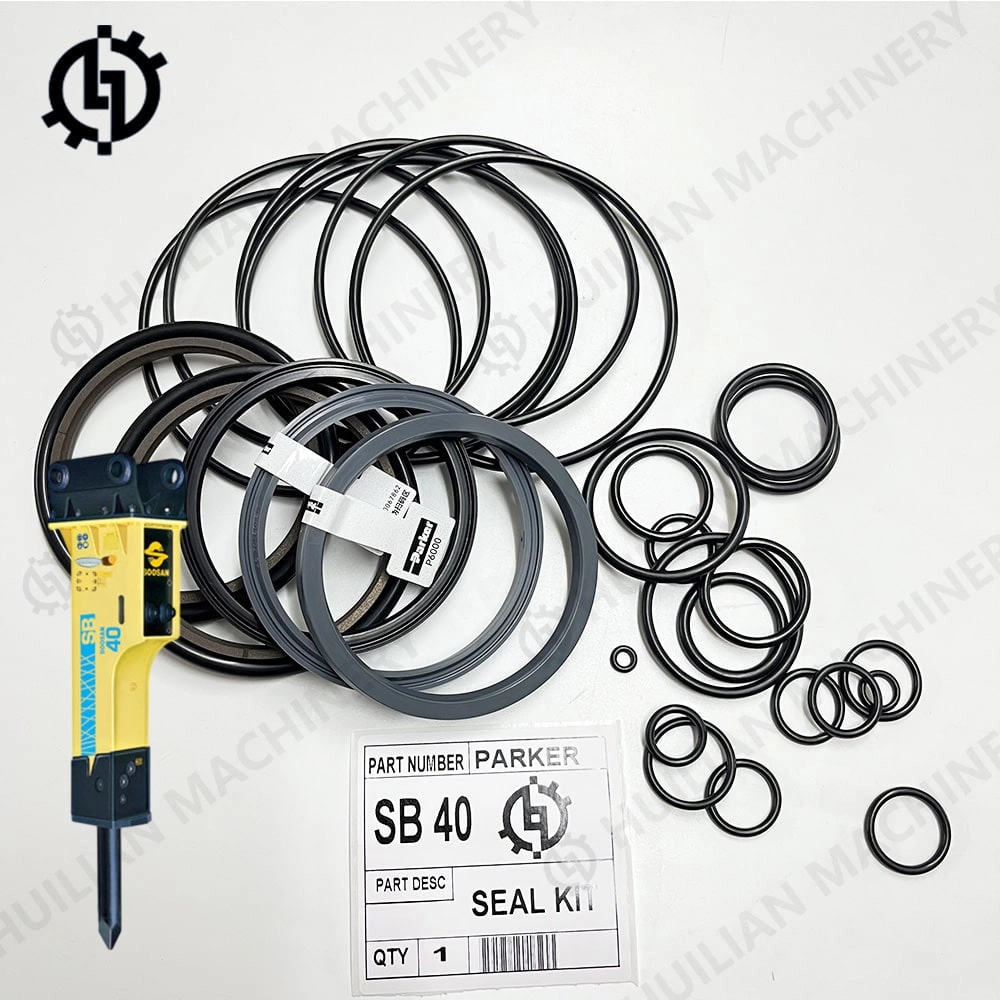
Parker Oil Seal Complete Repair SB40 Seal Kit COX001 CO1012 SB40Ⅱ SB40TSP SQ40 For Soosan Hydraulic Rock Breaker Hammer
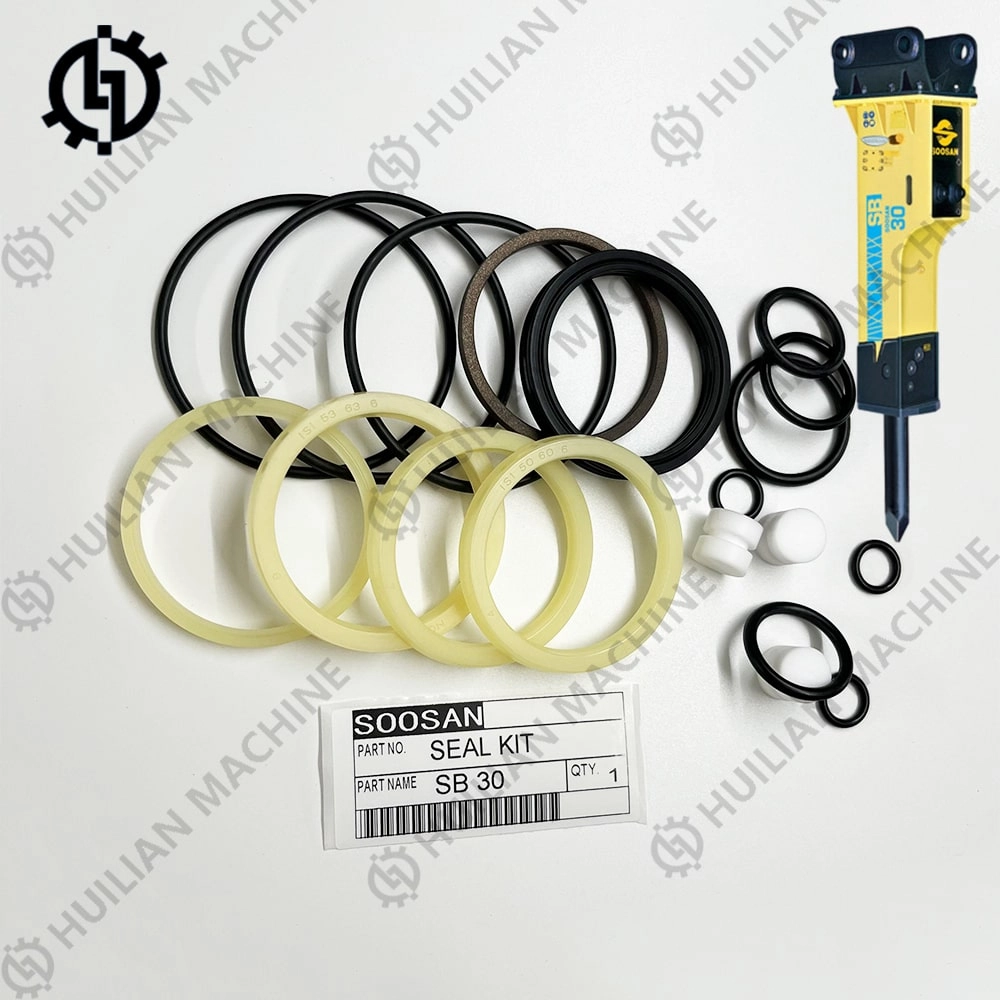
E71012 E7X001 SOOSAN SQ30 SB30Ⅱ SB30 Breaker Seal Kit SB30TS-P SB30Ⅱ TS-P SB30Ⅱ SSL Hydraulic Rock Hammer Parts Oil Repair Kit
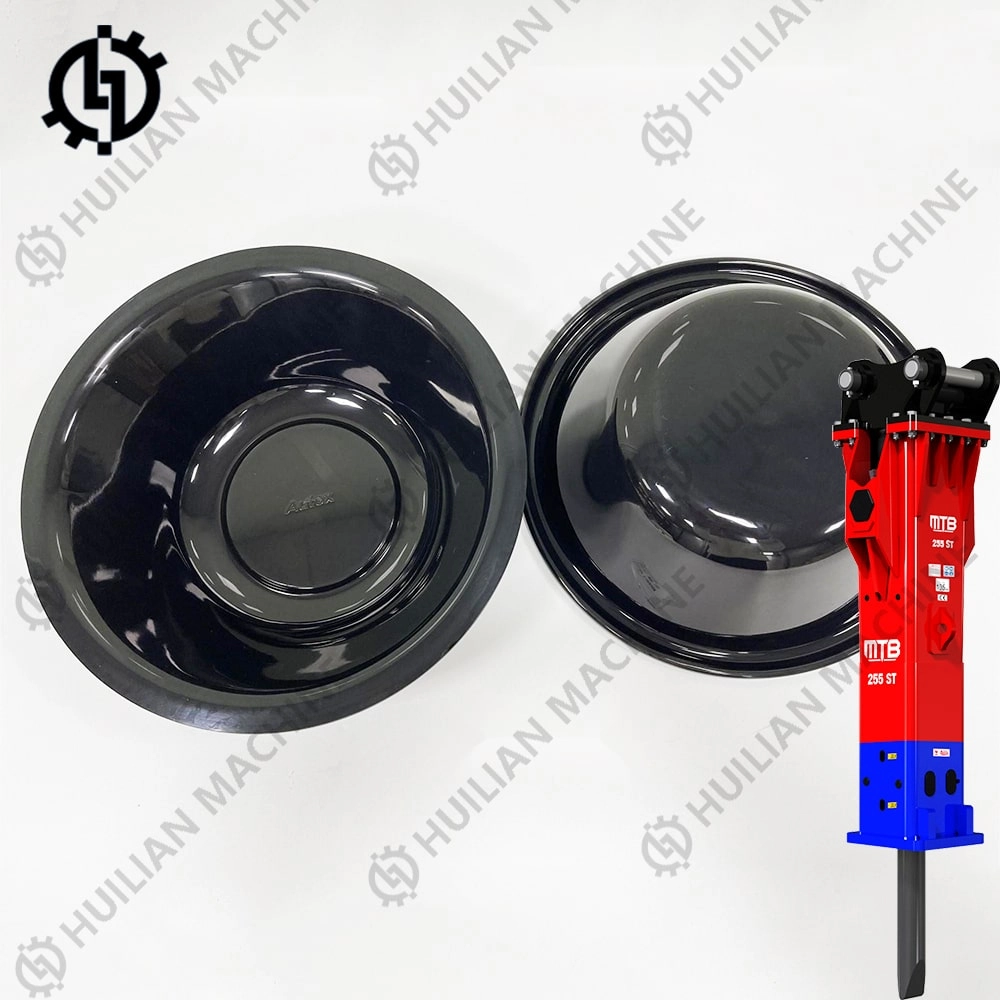
Inan Makina MTB Hydraulic Breaker Parts 45B0116A11 MTB255 MTB MT 255 Diaphragm MTB 255 IQ MTB-255 MTB 255 ST Membrane for Excavator Rock Hammer
 About us
© 2025 HUILIAN MACHINE. All rights reserved