


Top Signs Your Excavator Needs a Seal Kit Replacement
- Understanding Excavator Seal Kits and Why They Matter
- What an excavator seal kit contains
- How seals fail and the consequences
- Why proactive replacement saves money
- Top Signs Your Excavator Needs a Seal Kit Replacement
- 1. Visible hydraulic fluid leaks
- 2. Loss of hydraulic pressure or slow response
- 3. Rod scoring, pitting, or visible damage
- 4. Excessive contamination in hydraulic oil
- 5. Unusual noises (chatter or knocking)
- How to Inspect and Diagnose Seal Problems
- Step-by-step field inspection
- Use of fluid analysis and contamination checks
- When to disassemble vs. repair in place
- Replacement Planning: Choosing the Right Excavator Seal Kit
- Match the kit to your cylinder model and operating conditions
- OEM vs aftermarket seal kits (cost and quality comparison)
- Installation best practices to extend seal life
- Practical Recommendations, Costs, and When to Call a Professional
- Typical replacement intervals and cost drivers
- Quick reference table: symptom -> likely cause -> immediate action
- When to call a professional
- Huilian Machine: Quality Seal Kits and Excavator Parts (Supplier Overview)
- FAQ — Common Questions About Excavator Seal Kits
- 1. How long does an excavator seal kit last?
- 2. Can I replace a single seal or should I use a full seal kit?
- 3. Are aftermarket seal kits reliable?
- 4. How do I know if the rod is repairable or needs replacement?
- 5. Is fluid contamination reversible after a seal failure?
- 6. What fluids are best for extending seal life?
I have worked with excavator hydraulic systems and replacement parts for years, and one recurring source of downtime and expensive repairs is seal failure. An excavator seal kit may seem like a small component compared with a boom, piston or hydraulic pump, but seals protect the entire hydraulic circuit. In this article I walk you through the most reliable, field-tested indicators that your excavator needs a seal kit replacement, how to diagnose problems accurately, and best practices for sourcing and installing high-quality seals with minimal risk.
Understanding Excavator Seal Kits and Why They Matter
What an excavator seal kit contains
An excavator seal kit usually includes rod seals, piston seals, wear rings, wiper seals, O-rings and backup rings specific to a hydraulic cylinder model. These parts work together to maintain pressure and exclude contaminants. For an overview of hydraulic cylinder components and their function, see Hydraulic cylinder (Wikipedia).
How seals fail and the consequences
Seals fail primarily from abrasion, extrusion, thermal degradation, chemical attack, or improper installation. When seals fail, you’ll typically see leaks, reduced lifting force, jerky operation, or contamination-related wear that can damage pistons, rods and pumps. For technical background on elastomer and O-ring behavior, consult the O-ring summary and industry seal guidance like SKF’s hydraulic seal resources (SKF Hydraulic Seals).
Why proactive replacement saves money
I’ve seen dozens of excavator fleet cases where replacing seals at the right time prevented cylinder scoring, pump cavitation, and unscheduled downtime. A well-timed excavator seal kit replacement is almost always cheaper than repairing a damaged rod, cylinder barrel, or a failed hydraulic pump caused by contamination or low fluid levels.
Top Signs Your Excavator Needs a Seal Kit Replacement
1. Visible hydraulic fluid leaks
Visible leaks around the cylinder rod, connections, or under the machine are the most obvious sign. Leaks may be steady drips or spray under pressure. If you see fluid on the rod or around gland areas, the rod seal or wiper is likely compromised.
2. Loss of hydraulic pressure or slow response
If the boom or bucket moves sluggishly or won’t hold position under load, internal leakage past the piston seal or rod seal is likely. I always confirm this with a pressure test at the cylinder and pump to differentiate between pump issues and seal leakage.
3. Rod scoring, pitting, or visible damage
Even small nicks or corrosion on the rod surface will accelerate seal wear and cause leakage. If the rod is damaged, you must address both the rod surface and replace the seals to prevent repeat failure.
4. Excessive contamination in hydraulic oil
Dirty oil, metal particles, or water contamination often indicate failing wipers or breached seals letting contaminants enter the system. Contaminants drastically reduce seal life and can damage pumps and valves.
5. Unusual noises (chatter or knocking)
Chatter during movement or knocking when holding load can indicate aeration, cavitation, or internal leakage causing irregular pressure and flow—symptoms that often relate back to worn seals or damaged cylinders.
How to Inspect and Diagnose Seal Problems
Step-by-step field inspection
I recommend this quick inspection routine before deciding to replace seals: visual inspection for external leaks, wipe and re-check the rod surface, operate the cylinder under load and watch for slow drift, sample hydraulic fluid for contamination, and perform a basic pressure-hold test. When possible, use a handheld pressure gauge at the test port or follow OEM testing procedures.
Use of fluid analysis and contamination checks
Oil analysis (particle count, moisture, viscosity) gives objective evidence of seal-borne contamination. Many fleets use ISO 4406 particle counts to monitor oil cleanliness. A sudden rise in particle count often correlates with a seal breach or component wear.
When to disassemble vs. repair in place
Minor external leaks from fittings can be fixed without cylinder teardown. But if internal leakage, rod scoring, or poor oil cleanliness is present, I advise cylinder removal and full rebuild with a proper excavator seal kit. Rebuilding in place risks incomplete cleaning and leaving contaminants that will re-fail new seals.
Replacement Planning: Choosing the Right Excavator Seal Kit
Match the kit to your cylinder model and operating conditions
Always use a seal kit specified for your cylinder model and operating pressure. Consider operating temperature, hydraulic fluid type (HFD, HLP, biodegradable fluids), expected contamination exposure and cycle frequency. For reference on seal material compatibility, consult manufacturer datasheets (e.g., nitrile, polyurethane, fluorocarbon).
OEM vs aftermarket seal kits (cost and quality comparison)
Not all seal kits are equal. OEM kits are designed to meet original tolerances and materials, while some aftermarket kits vary in material grade or dimensions. I balance cost with verified material specs and supplier reputation. Below is a concise comparison I use when advising clients:
| Attribute | OEM Seal Kit | Quality Aftermarket Kit | n
|---|---|---|
| Fit & Tolerances | Exact match to cylinder | Often good, verify dimensions |
| Material Traceability | Full documentation | Varies — request data sheets |
| Price | Higher | Lower to moderate |
| Warranty & Support | OEM-backed | Depends on supplier |
Installation best practices to extend seal life
Cleanliness is non-negotiable. I insist on a clean room or cleaned work area, new hydraulic fluid or filtered supply for refilling, and use of installation tools to avoid nicks. Torque fasteners to spec, and follow a break-in procedure: operate slowly through full cycles and check for leaks. For standards on quality systems, see ISO 9001 (quality management guidance).
Practical Recommendations, Costs, and When to Call a Professional
Typical replacement intervals and cost drivers
Replacement intervals vary widely: machines in clean, low-cycle environments may run thousands of hours before seal replacement; high-cycle, abrasive environments shorten life dramatically. Cost drivers include cylinder removal labor, rod repair or replacement, and the quality of the seal kit. Expect total rebuild cost to range from a few hundred to several thousand USD depending on cylinder size and labor rates.
Quick reference table: symptom -> likely cause -> immediate action
| Symptom | Likely Cause | Immediate Action |
|---|---|---|
| External leak at rod gland | Worn rod seal/wiper, damaged rod | Inspect rod, replace seal kit, polish/replace rod |
| Slow movement or drift under load | Internal piston or rod seal leakage | Pressure test; schedule rebuild with seal kit |
| Contaminated oil | Wiper failure or breach allowing ingress | Flush system, replace filters and seals, sample oil |
| Visible rod scoring | Corrosion or foreign particle damage | Remove cylinder; repair rod and replace seals |
When to call a professional
If you see rod scoring, repeated seal failures, or the machine is mission-critical, call a qualified hydraulic shop. Professional teardown, nondestructive testing of the rod and barrel, and precision installation ensure long-term reliability. For parts and documented quality, work with reputable suppliers.
Huilian Machine: Quality Seal Kits and Excavator Parts (Supplier Overview)
Founded in 2005, Huilian Machine is a professional OEM supplier of excavator parts. We are leading excavator breaker parts manufacturers from China. We offer a wide range of products, including hydraulic breaker hammers, chisels, seals and seal kits, diaphragms, pistons, WearBush, rompin/retainer bars, through bolts, side bolts, valves and liners. Huilian's team comprises experienced and skilled professionals, including technicians, R&D experts, designers, quality control professionals, salespeople and after-sales service teams. Our products are exported to over 90 countries and regions and are highly regarded by customers worldwide for their quality and variety.
Guangzhou Huilian Machinery Co., Ltd. is committed to becoming a global leader in the supply of excavator parts and components and is seeking global distributor partners to promote the sustainable development of the excavator parts industry.
What sets Huilian apart: strict quality control, a broad product range covering excavator parts, Excavator Breaker Parts, Excavator Hydraulic Breaker, Excavator Seal Kit and even Parker seal kit compatibility, and after-sales support that helps customers select the correct materials and kits for their operating conditions. For product details and inquiries, visit the official site: https://www.huilianmachine.com/ or contact via email service@huilianmachine.com and phone +86 188 1917 0788.
FAQ — Common Questions About Excavator Seal Kits
1. How long does an excavator seal kit last?
Seal life depends on environment, maintenance, and operating cycles. In clean, low-cycle use, seals may last thousands of hours. In abrasive or high-cycle work, life can be a few hundred hours. Monitor oil cleanliness and rod condition to predict replacement timing.
2. Can I replace a single seal or should I use a full seal kit?
I recommend replacing the full seal kit for a cylinder. Mixing old and new seals increases the risk of early failure because wear patterns and material properties differ.
3. Are aftermarket seal kits reliable?
Quality aftermarket kits can be reliable if they provide material data sheets and dimensional verification. Use suppliers with traceability and positive customer reviews; OEM kits remain the safest bet for critical machines.
4. How do I know if the rod is repairable or needs replacement?
Minor surface scratches can sometimes be polished and protected with chrome or plating repairs. Deep scoring, pitting or bending usually requires rod replacement. A professional inspection with micrometers and nondestructive testing gives a definitive answer.
5. Is fluid contamination reversible after a seal failure?
You can remove contamination by flushing the system, replacing filters, and doing oil analysis. However, if particulates have scored components, flushing alone won’t fix the mechanical damage—components and seals should be inspected and replaced as needed.
6. What fluids are best for extending seal life?
Use hydraulic fluids recommended by the OEM and compatible with seal materials (e.g., nitrile, polyurethane, fluorocarbon). Avoid mixing fluid types without validating seal compatibility. Refer to your machine manual or seal manufacturer guidance for fluid compatibility charts.
If you need help diagnosing a leak or selecting the correct excavator seal kit for your cylinders, contact Huilian Machine for technical support and parts supply. Visit https://www.huilianmachine.com/, email service@huilianmachine.com, or call +86 188 1917 0788 to request product details, datasheets, or distributor partnerships. I’m available to help you prioritize actions that reduce downtime and protect your hydraulic system.
References and further reading: Hydraulic cylinder overview (Wikipedia), O-ring basics (Wikipedia), SKF hydraulic seal guidance (SKF), ISO 9001 overview (ISO).
Compatibility Guide: Match Hammer Parts to Your Excavator
Spare Parts Sourcing: Finding Reliable Excavator Seal Kit Suppliers
5 Expert Tips for Choosing the Right Excavator Hammer for Optimal Performance
Cost Comparison: OEM vs Aftermarket Rock Breaker Parts
About
What types of excavator parts do you offer?
We provide a wide range of high-quality excavator parts, including hydraulic breakers, chisels, seal kits, diaphragms, pistons, wear bushes, retainer bars, through bolts, side bolts, valves, and liners.
Do you offer OEM and aftermarket parts?
Yes, we manufacture high-quality OEM parts and supply aftermarket parts from top brands such as NOK, Parker, SKF, and Hallite to ensure optimal performance.
How can I ensure I’m selecting the right part for my equipment?
Our expert team can assist you in finding the right part based on your machine model, specifications, and requirements. Contact us for personalized support.
Are your parts compatible with all excavator brands?
Yes, our parts are designed to be compatible with major brands like Komatsu, Caterpillar, Hitachi, Hyundai, Doosan, JCB, Kobelco, Sany, and many more.
What is your shipping and delivery time?
We offer fast and reliable global shipping. Delivery times vary depending on location and order size, but we strive to process and ship orders as quickly as possible.

Huilian HL68 Hammer Breaker for 4-7 Ton Excavator SOOSAN SB40 Hydraulic Rock Breaker
Side type hydraulic breaker : Easy to control, convenient positioning, durable, high working efficiency, strong striking force, long service life, stable operating performance, convenient after-sales service.
Top type hydraulic breaker : Strong impact power; excellent environmental performance; exquisite manufacturing technology; easy maintenance,fast after-sales service
Box type hydraulic breaker :leading heat treatment technology, enhance heat resistance, wear resistance. Under the condition of keeping the oil pressure constant, the cylinder volumeis reduced and the fuel consumption is reduced.The self-developed core is adopted to make the piston cylinder body moredurable and the service life longer.Exposed decks are made of high-strength steel plates to reduce wear.The best efficiency matching with excavator and loader is realized
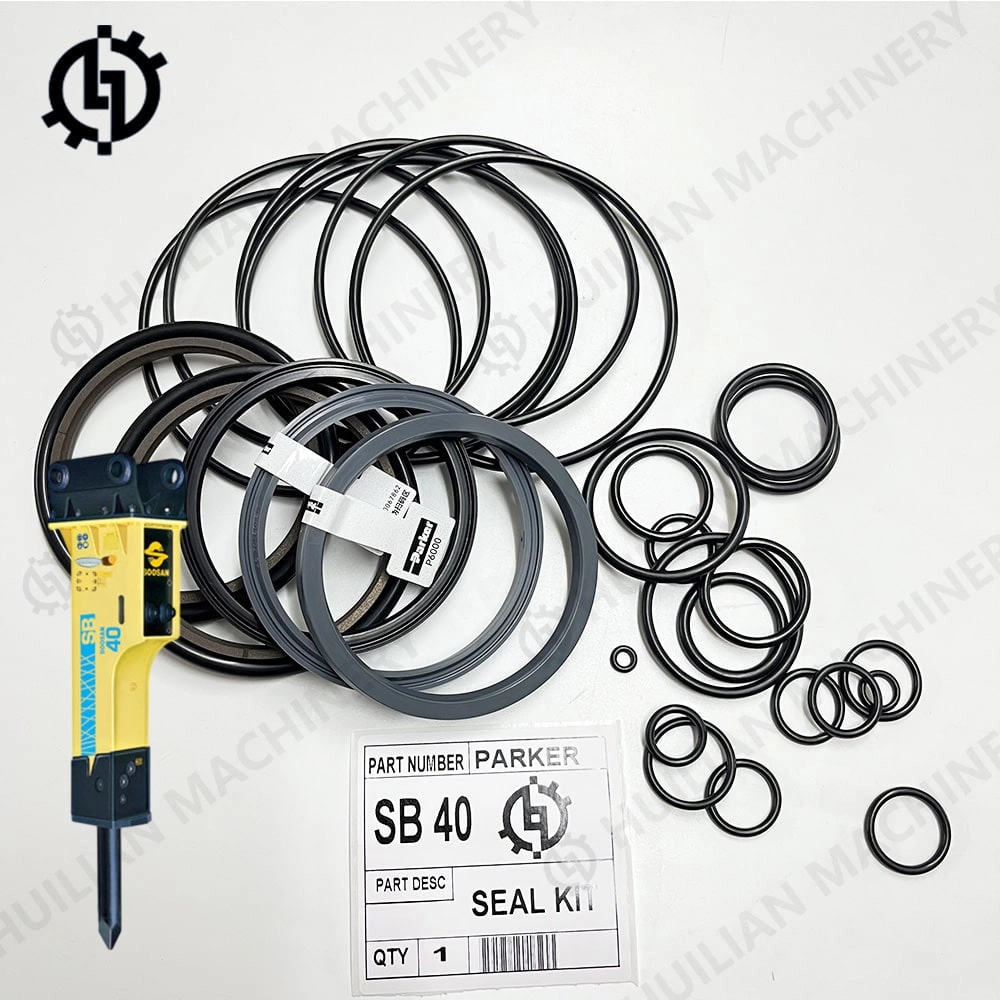
Parker Oil Seal Complete Repair SB40 Seal Kit COX001 CO1012 SB40Ⅱ SB40TSP SQ40 For Soosan Hydraulic Rock Breaker Hammer
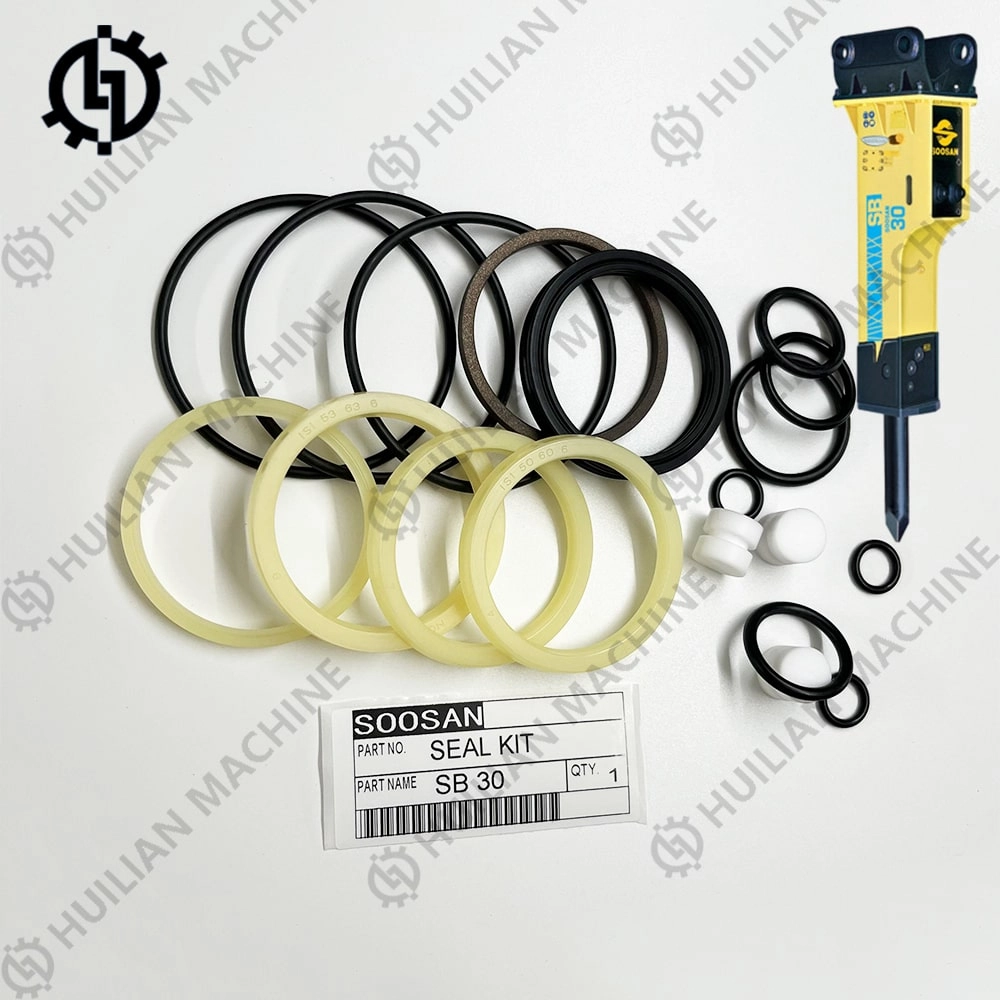
E71012 E7X001 SOOSAN SQ30 SB30Ⅱ SB30 Breaker Seal Kit SB30TS-P SB30Ⅱ TS-P SB30Ⅱ SSL Hydraulic Rock Hammer Parts Oil Repair Kit
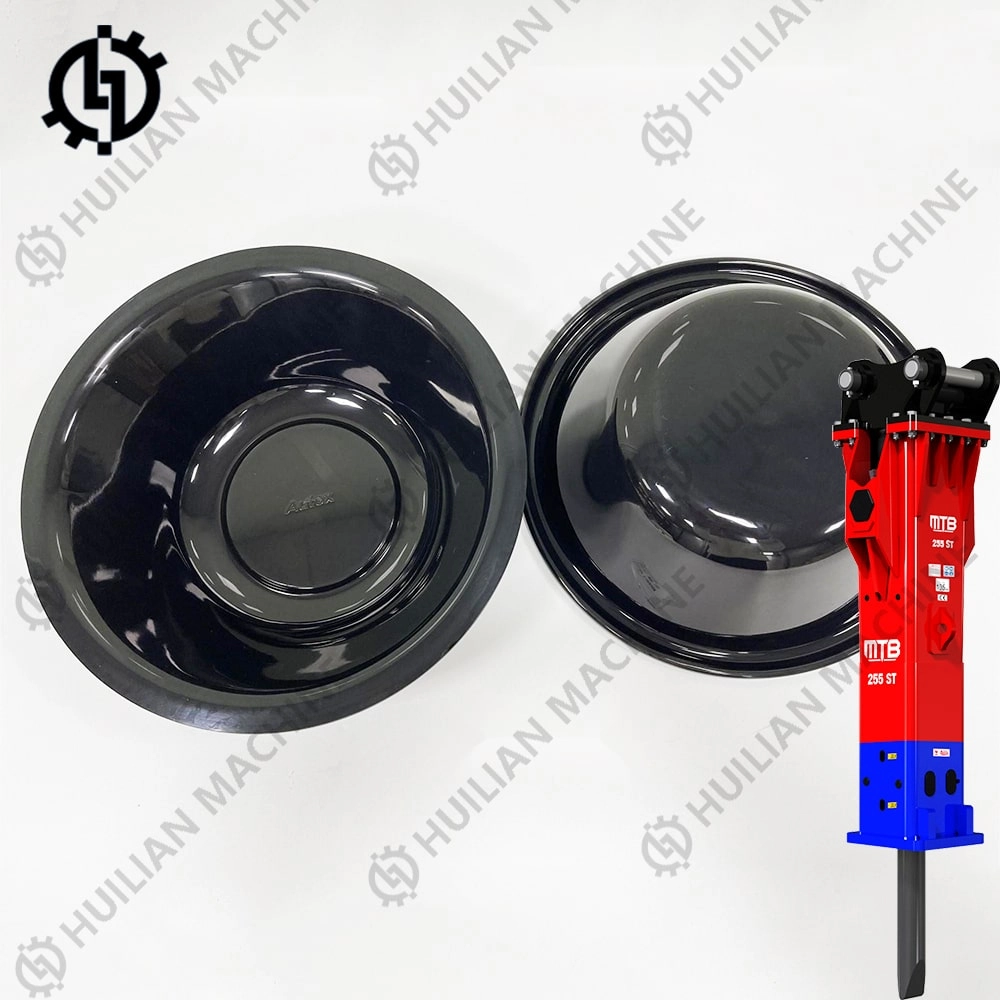
Inan Makina MTB Hydraulic Breaker Parts 45B0116A11 MTB255 MTB MT 255 Diaphragm MTB 255 IQ MTB-255 MTB 255 ST Membrane for Excavator Rock Hammer
 About us
© 2025 HUILIAN MACHINE. All rights reserved