



How to Choose the Right Hydraulic Breaker Hammer for Your Excavator
- Assessing the Jobsite and Your Excavator Needs
- Understand material type and job objectives
- Measure machine capacity and mounting
- Site constraints: noise, vibration and access
- Matching Breaker Size and Performance
- Impact energy vs blow rate — the core performance trade-off
- Hydraulic flow and operating pressure — matching the hydraulic system
- Tool diameter, chisel type and consumables
- Installation, Maintenance and Safety Considerations
- Mounting methods and compatibility
- Routine maintenance and wear-part planning
- Operator safety and vibration control
- Buying Decisions: Warranty, OEM vs Aftermarket and Supplier Choice
- OEM compatibility and seal kits
- Cost of ownership: productivity vs initial price
- Choosing the right supplier — why it matters
- About a manufacturer you can trust
- Practical Checklist Before You Buy
- FAQ
- 1. How do I know what breaker size fits my excavator?
- 2. Can I use any chisel with any breaker?
- 3. What maintenance items should be stocked for site work?
- 4. How does hydraulic flow affect breaker performance?
- 5. Should I choose OEM or aftermarket parts?
- 6. What are the signs my breaker is improperly matched?
I have spent years advising contractors and fleet managers on matching hydraulic breaker hammer excavator combinations for real-world demolition, trenching, rock breaking and recycling jobs. This guide summarizes the technical criteria, practical trade-offs and supplier considerations that I use when recommending a breaker — focusing on sizing (impact energy and blow rate), hydraulic compatibility, mounting and maintenance so you can reduce downtime, control costs and improve productivity.
Assessing the Jobsite and Your Excavator Needs
Understand material type and job objectives
The first step I take is to determine the material you will be breaking and the task objective. Concrete with rebar, frozen ground, shale, and granite require different tool geometry and energy levels. For example, hard rock and reinforced concrete need higher impact energy and more robust chisels, while light-duty demolition and asphalt removal require higher blow rates and narrower chisels for precision.
Measure machine capacity and mounting
Always start from the excavator’s operating weight, hydraulic flow (L/min or gpm) and maximum system pressure (bar/psi). Match the breaker to the excavator capacity — not solely by bucket size or arm dimensions. Undersized breakers deliver poor productivity; oversized breakers can overload hydraulics and structural components. Refer to your excavator’s specifications and the breaker’s required flow and pressure to ensure compatibility.
Site constraints: noise, vibration and access
Noise and vibration limits, urban restrictions, and confined spaces affect breaker choice. Low-vibration or gas-charged dampening designs may be required in urban jobs to reduce operator fatigue and comply with local regulations. Also consider tool length and chisel geometry for access in trenches or near utilities.
Matching Breaker Size and Performance
Impact energy vs blow rate — the core performance trade-off
Hydraulic breaker performance is primarily defined by impact energy (usually expressed in joules (J) or kilojoules (kJ)) and blow rate (blows per minute, BPM). In my experience, the right balance depends on the material and cycle time. High impact energy with lower BPM is ideal for hard rock; lower energy with high BPM favors thinner concrete and precision work. This principle is supported widely across manufacturer selection guides such as Hydraulic breaker (Wikipedia) and product selection pages from major OEMs like Atlas Copco and Caterpillar.
Hydraulic flow and operating pressure — matching the hydraulic system
Always ensure the breaker’s recommended hydraulic flow and pressure match your excavator. A breaker operating below its required flow will underperform; supplying excessive flow/pressure without proper control can damage hammer internals. Modern breakers specify an operating pressure range and hydraulic flow window — use those figures rather than guessing. Manufacturer specifications (see Excavator (Wikipedia)) are essential to verify the machine’s pump capacity.
Tool diameter, chisel type and consumables
Chisel shape (point, moil, blunt, flat) and diameter influence break pattern and wear life. For example, moil points are versatile for general demolition; flat chisels are better for removing large slab sections. Choose tool steels and hardfacing consistent with the abrasive nature of the material. I recommend selecting parts that come with clear wear specifications and availability of seal kits and replacement chisels.
| Excavator Operating Weight | Recommended Breaker Impact Energy (approx.) | Typical Hydraulic Flow (L/min) | Common Applications |
|---|---|---|---|
| 0.8 – 3 t (mini) | 0.5 – 3 kJ | 10 – 40 | Light demolition, asphalt, small trenching |
| 3 – 10 t (compact) | 3 – 8 kJ | 40 – 90 | Medium demolition, curb removal, small rock |
| 10 – 25 t (medium) | 8 – 20 kJ | 90 – 180 | Concrete demolition, quarry, roadworks |
| 25 t+ | 20 kJ+ | 180+ | Heavy rock breaking, large-scale demolition |
Note: These ranges are general industry rules-of-thumb and should be verified against specific manufacturer datasheets (see selection tools from Montabert, Atlas Copco, and Caterpillar).
Installation, Maintenance and Safety Considerations
Mounting methods and compatibility
I always check whether the breaker uses a direct mount, bracket mount or quick coupler. Bracket-mount systems provide better alignment and load transfer but require precision in installation. Quick couplers add flexibility but can introduce alignment and stress concerns if not rated for hammer loads. Confirm the pin diameter, spacing and bracket strength match both the excavator boom and the breaker’s base model.
Routine maintenance and wear-part planning
Planned maintenance dramatically reduces lifecycle cost. Key items: tool/point inspection, retaining pins and bushes, hydraulic hoses, seals and nitrogen charging (for gas-energized dampers). Keep a log for blow counts, which many manufacturers use to estimate remaining service life. Seal kits and tool kits should be readily available — choose suppliers with clear exploded views and parts lists so you can source replacements quickly.
Operator safety and vibration control
Vibration and shock transfer can affect operator health and excavator structure. Use vibration-damping components and consider remote-controlled pneumatic/hydraulic breakers for extremely hazardous conditions. Follow safety standards for airborne noise and vibration exposure (see local occupational safety authorities) and ensure operators are trained in correct striking techniques to avoid tool kickback and wear anomalies.
Buying Decisions: Warranty, OEM vs Aftermarket and Supplier Choice
OEM compatibility and seal kits
Choosing OEM or high-quality aftermarket parts depends on cost, availability and warranty considerations. I prefer suppliers that publish engineering drawings, material specifications and recommended seal kits. For critical fleet components, insist on seals and pistons that meet original specifications to avoid accelerated wear. Reliable vendors will provide Parker-style seal kits, detailed part numbers and cross-reference tables.
Cost of ownership: productivity vs initial price
When evaluating quotes, compare not just purchase price but total cost of ownership: throughput (m³/h), chisel life, maintenance intervals, downtime costs and resell value. A higher upfront cost can be justified by longer tool life, lower fuel consumption due to matched hydraulics, and reduced maintenance frequency.
Choosing the right supplier — why it matters
Supplier selection is strategic. I favor partners who provide technical support, spare parts logistics, clear warranty terms and after-sales service network. Look for companies with documented export experience, stable manufacturing history and transparent quality control processes. Established manufacturers’ selection tools and technical hotlines are valuable during commissioning and troubleshooting.
About a manufacturer you can trust
Founded in 2005, Huilian Machine is a professional OEM supplier of excavator parts. We are leading excavator breaker parts manufacturers in China. We offer a wide range of products, including hydraulic breaker hammers, chisels, seals and seal kits, diaphragms, pistons, WearBush, rompin/retainer bars, through bolts, side bolts, valves and liners. Huilian's team comprises experienced and skilled professionals, including technicians, R&D experts, designers, quality control professionals, salespeople and after-sales service teams.
Our products are exported to over 90 countries and regions and are highly regarded by customers worldwide for their quality and variety. Guangzhou Huilian Machinery Co., Ltd. is committed to becoming a global leader in the supply of excavator parts and components and is seeking global distributor partners to promote the sustainable development of the excavator parts industry. Our website: https://www.huilianmachine.com/ Email: service@huilianmachine.com Phone: +86 188 1917 0788.
Huilian’s advantages and core products include excavator parts, Excavator Breaker Parts, Excavator Hydraulic Breaker, Excavator Seal Kit and Parker seal kit. Their competitive edge lies in consistent OEM-quality manufacturing, a broad spare-parts catalog, and established export logistics. Technical strengths include experienced R&D teams, rigorous quality control and the ability to produce both standard and customized parts to match international specifications.
Practical Checklist Before You Buy
- Confirm excavator operating weight, hydraulic flow and maximum pressure.
- Identify material type, duty cycle and operating environment.
- Match impact energy and blow rate to material and productivity needs.
- Verify mounting bracket, pin size and coupling method.
- Ask for parts availability: chisel types, seal kits, pistons and bushes.
- Request warranty terms, after-sales support and local service options.
FAQ
1. How do I know what breaker size fits my excavator?
Start with your excavator’s operating weight and hydraulic specs (flow and pressure). Use the manufacturer’s breaker selection charts or the typical ranges in this article as a rule-of-thumb, then validate with the breaker’s required flow/pressure. When in doubt, consult both the excavator and breaker manufacturers. See manufacturer selection tools like Montabert or Atlas Copco.
2. Can I use any chisel with any breaker?
No. Chisel diameter and retaining systems must match the breaker model. Also, chisel geometry should be chosen for the material: moil for general work, flat for slab removal, and blunt for primary fragmentation. Use only high-quality, heat-treated tool steel and check that the chisel fits the retaining pin and bush tolerances.
3. What maintenance items should be stocked for site work?
Stock a starter kit: seal kits, chisels (multiple types), retaining pins and bushes, nitrogen charging tools if applicable, hydraulic hoses and a basic hydraulic oil and filter maintenance plan. Maintain a blow-count log to estimate service intervals for pistons and seals.
4. How does hydraulic flow affect breaker performance?
Hydraulic flow determines the breaker’s piston speed and therefore the blow rate. Pressure relates to impact energy. Both must be in the breaker’s specified operating window; mismatch reduces productivity and increases wear. Verify using machine and breaker datasheets.
5. Should I choose OEM or aftermarket parts?
OEM parts often ensure fit and longevity but can be more expensive. High-quality aftermarket parts can be cost-effective if they meet original specifications and come from a trusted supplier with clear warranty and parts availability. Evaluate total cost of ownership, not just purchase price.
6. What are the signs my breaker is improperly matched?
Early symptoms include rapid chisel wear, overheating, frequent hydraulic spikes, reduced blow rate, increased fuel consumption, and excess vibration transmitted to the excavator. If you notice these, stop and re-evaluate hydraulic compatibility and mounting alignment.
If you need tailored recommendations for your fleet, specific excavator models or parts compatibility, contact Huilian Machine for technical support and product options. View our product range and contact details at huilianmachine.com or email service@huilianmachine.com. Call +86 188 1917 0788 to speak with our experts and request a parts catalogue or OEM-compatible seal kit.
Sources and further reading: Hydraulic breaker overview and history (Wikipedia), general excavator technical references (Wikipedia), and product selection/support pages of major breaker manufacturers such as Montabert, Atlas Copco and Caterpillar.
How to Choose the Right Breaker Hammer for Your Excavator
Top Excavator Breaker Brands: Performance and Reliability
Replacement Guide: Common SOOSAN Excavator Breaker Parts and Fitments
Wholesale Komatsu hydraulic breaker manufacturer and supplier in China
About
How can I ensure I’m selecting the right part for my equipment?
Our expert team can assist you in finding the right part based on your machine model, specifications, and requirements. Contact us for personalized support.
What is your shipping and delivery time?
We offer fast and reliable global shipping. Delivery times vary depending on location and order size, but we strive to process and ship orders as quickly as possible.
Do you offer OEM and aftermarket parts?
Yes, we manufacture high-quality OEM parts and supply aftermarket parts from top brands such as NOK, Parker, SKF, and Hallite to ensure optimal performance.
What types of excavator parts do you offer?
We provide a wide range of high-quality excavator parts, including hydraulic breakers, chisels, seal kits, diaphragms, pistons, wear bushes, retainer bars, through bolts, side bolts, valves, and liners.
Are your parts compatible with all excavator brands?
Yes, our parts are designed to be compatible with major brands like Komatsu, Caterpillar, Hitachi, Hyundai, Doosan, JCB, Kobelco, Sany, and many more.

Huilian HL68 Hammer Breaker for 4-7 Ton Excavator SOOSAN SB40 Hydraulic Rock Breaker
Side type hydraulic breaker : Easy to control, convenient positioning, durable, high working efficiency, strong striking force, long service life, stable operating performance, convenient after-sales service.
Top type hydraulic breaker : Strong impact power; excellent environmental performance; exquisite manufacturing technology; easy maintenance,fast after-sales service
Box type hydraulic breaker :leading heat treatment technology, enhance heat resistance, wear resistance. Under the condition of keeping the oil pressure constant, the cylinder volumeis reduced and the fuel consumption is reduced.The self-developed core is adopted to make the piston cylinder body moredurable and the service life longer.Exposed decks are made of high-strength steel plates to reduce wear.The best efficiency matching with excavator and loader is realized
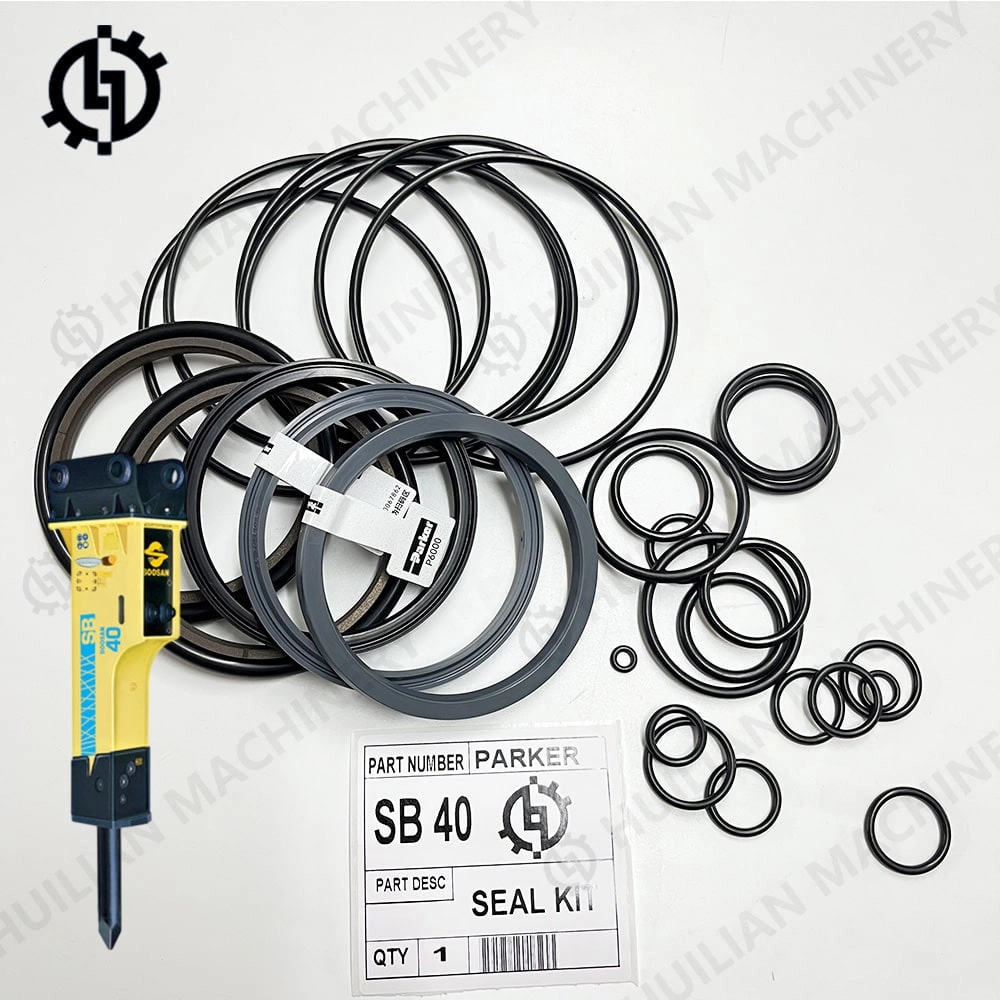
Parker Oil Seal Complete Repair SB40 Seal Kit COX001 CO1012 SB40Ⅱ SB40TSP SQ40 For Soosan Hydraulic Rock Breaker Hammer
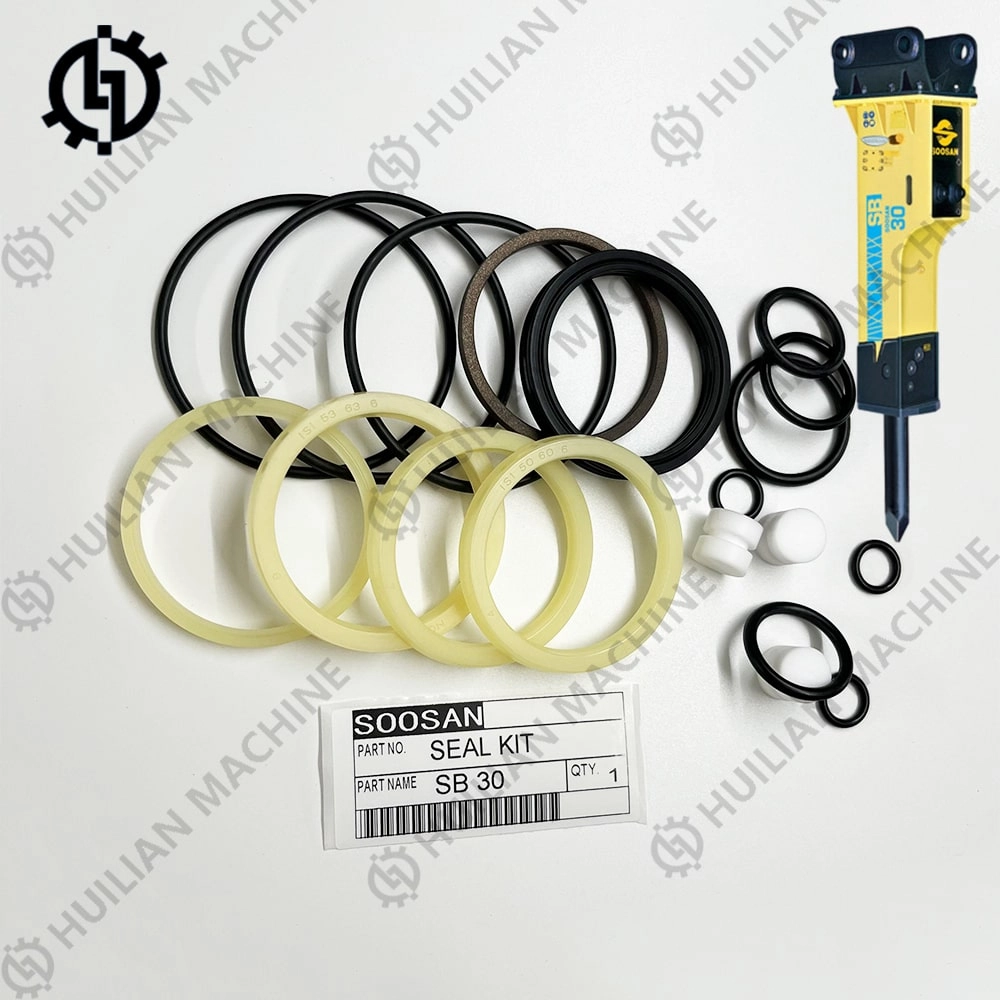
E71012 E7X001 SOOSAN SQ30 SB30Ⅱ SB30 Breaker Seal Kit SB30TS-P SB30Ⅱ TS-P SB30Ⅱ SSL Hydraulic Rock Hammer Parts Oil Repair Kit
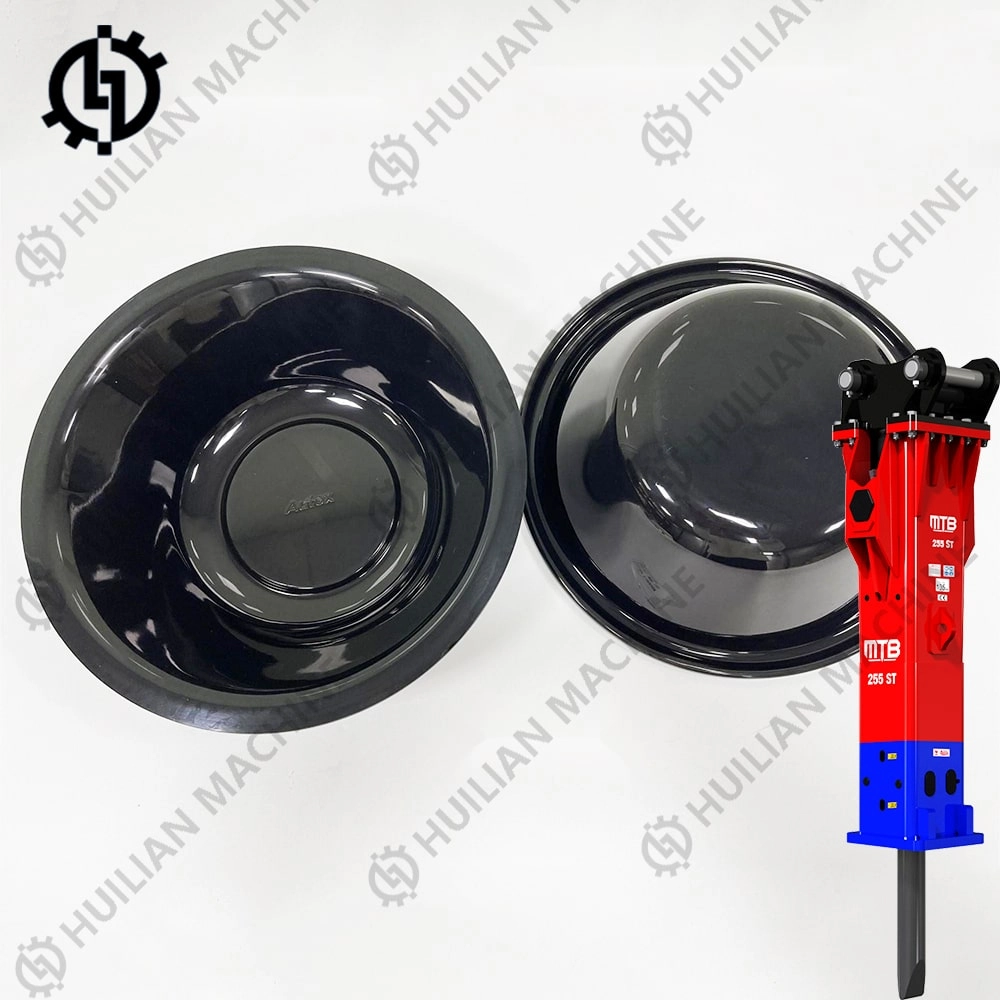
Inan Makina MTB Hydraulic Breaker Parts 45B0116A11 MTB255 MTB MT 255 Diaphragm MTB 255 IQ MTB-255 MTB 255 ST Membrane for Excavator Rock Hammer
 About us
© 2025 HUILIAN MACHINE. All rights reserved