



Hydraulic Breaker Parts Compatibility Guide by Excavator Model
- Understanding Hydraulic Breaker Fundamentals
- How breaker performance maps to excavator hydraulic systems
- Key mechanical interfaces: tool bushings, retaining pins and carrier mounts
- Wear parts that determine life and performance
- Matching Breaker Parts to Excavator Models
- Compatibility by excavator weight and breaker class
- Model-specific guidance: practical examples
- What to check on the excavator before ordering parts
- Parts Interchange: Seals, Pistons, Retainers and Tools
- Seal kits and common interchange standards
- Piston, valve and liner replacement best practices
- Tool selection: chisel types and application matching
- Diagnostics, Maintenance and Troubleshooting
- Common symptoms and root causes
- Routine maintenance checklist
- When to rebuild vs replace
- Choosing a Reliable Supplier: Case Study — Huilian Machine
- Why supplier pedigree matters
- Huilian Machine: capabilities and product range
- How I work with suppliers to ensure fit and function
- FAQ — Common Questions About Excavator Breaker Parts Compatibility
- 1. How do I know which breaker model fits my excavator?
- 2. Can I use a larger breaker on my excavator to increase productivity?
- 3. Are aftermarket seal kits reliable?
- 4. How often should I replace pistons and liners?
- 5. What measurements do I need to provide to get the correct parts?
- 6. Where can I find authoritative specifications for excavator weights and hydraulic data?
- Contact & Next Steps
I write from years of hands-on experience in excavator parts and hydraulic breaker systems to help you match excavator parts hydraulic breaker components correctly. This guide is designed for fleet managers, maintenance teams and parts buyers who need reliable, verifiable guidance for selecting compatible breakers, chisels, seals and wear parts by excavator model, and for minimizing downtime and repair costs. I focus on the technical parameters that control compatibility—machine weight class, hydraulic flow and pressure, tool size, and carrier mounting geometry—and show practical tests you can perform before purchase.
Understanding Hydraulic Breaker Fundamentals
How breaker performance maps to excavator hydraulic systems
At the core of compatibility is hydraulic power: flow (L/min or gpm) and pressure (bar or psi). A breaker requires a specific flow range to cycle properly; insufficient flow reduces impact frequency and productivity, while excessive flow can overheat or damage valves. Likewise, operating pressure limits determine impact energy. I always cross-check the excavator's hydraulic pump flow and relief pressure against the breaker manufacturer's specified operating range before recommending any parts or conversions. For background on hydraulic systems and principles see the general hydraulics overview on Wikipedia: Hydraulics.
Key mechanical interfaces: tool bushings, retaining pins and carrier mounts
Physical fit matters as much as hydraulic compatibility. Compatibility includes tool diameter (chisel or moil), bush diameter (WearBush), retaining/through-bolt sizes, and carrier mounting brackets (pin centers and pin diameters). Mismatching any of these can cause accelerated wear, tool slippage, or catastrophic failure. I recommend measuring pin-to-pin dimensions and bore diameters on-site and comparing them to breaker and adapter plate specs before ordering parts.
Wear parts that determine life and performance
Wear items—pistons, seals (Parker-style kits and OEM seals), diaphragms, retainers, and chisel points—control mean time between repairs. High-quality seal kits and hardened pistons reduce leakage and maintain blow energy. For reliable manufacturing and quality assurance practices, review ISO 9001 requirements that reputable OEMs follow: ISO 9001.
Matching Breaker Parts to Excavator Models
Compatibility by excavator weight and breaker class
Rather than relying solely on brand model numbers, I recommend mapping by excavator operating weight and hydraulic specs. The table below outlines common excavator weight classes, recommended breaker classes, typical chisel diameters and approximate hydraulic ranges. These values reflect industry norms and my field experience; always validate with the specific breaker and carrier manuals.
| Excavator Weight | Typical Breaker Class | Typical Chisel Diameter | Hydraulic Flow (L/min) | Operating Pressure (bar) |
|---|---|---|---|---|
| Mini (1–5 t) | Mini/light | 20–40 mm | 10–50 L/min | 100–140 bar |
| Compact (5–12 t) | Light/medium | 35–60 mm | 40–100 L/min | 120–160 bar |
| Medium (12–25 t) | Medium | 45–75 mm | 80–160 L/min | 140–170 bar |
| Large (25–50 t) | Heavy | 60–95 mm | 150–300 L/min | 150–190 bar |
Sources: industry breaker literature and technical summaries such as the general description of hydraulic breakers on Wikipedia: Hydraulic breaker, and manufacturer guidelines. These ranges are intended as starting points for selection and for cross-checking manufacturer data sheets.
Model-specific guidance: practical examples
To be concrete, here are example excavator models and the breaker classes I typically pair with them. These are practical pairings based on published machine operating weights and common supplier recommendations; always confirm with the breaker vendor and check the machine's hydraulic chart.
| Excavator Model (example) | Typical Operating Weight | Recommended Breaker Class | Notes |
|---|---|---|---|
| Kubota KX018-4 (mini) | ~1.8 t | Mini/light breaker (20–40 mm chisel) | Low flow; use compact mini-breaker matched to carrier valve specs. |
| Caterpillar 305 (compact) | ~5–6 t | Light/medium breaker | Check auxiliary flow option; many compact carriers have 40–80 L/min available. |
| Komatsu PC200-8 (medium) | ~20 t | Medium breaker (45–75 mm chisel) | Medium breakers optimized for 80–160 L/min and higher impact energy. |
| Hitachi ZX470-5 (large) | ~47 t | Heavy breaker | Requires high flow; ensure carrier relief and pipe size are sufficient. |
Note: model weights are from manufacturer specifications; verify by visiting official product pages or trusted catalogs prior to purchase.
What to check on the excavator before ordering parts
Before ordering any excavator parts hydraulic breaker components, I always verify:
- Hydraulic pump flow (L/min) and maximum system pressure (bar/psi) at rated RPM
- Auxiliary circuit configuration: open/closed center, pilot operation, available valve control
- Carrier boom mounting type and pin-to-pin dimensions
- Chassis weight and recommended breaker weight from excavator manual
- Existing tool shank diameter and wear bushing inner diameter
Parts Interchange: Seals, Pistons, Retainers and Tools
Seal kits and common interchange standards
Seal kits (including Parker-style seals and OEM seal kits) are among the first parts consumed on a breaker. Many aftermarket kits follow common cross-reference standards, but not all seals are interchangeable across brands due to dimensional and material differences. I always specify material hardness, temperature rating and dimension checks. For high reliability, request the manufacturer's seal drawing and compare O-ring and backup ring dimensions.
Piston, valve and liner replacement best practices
Replacing pistons and valves requires accuracy: piston diameter, surface finish and heat treatment influence impact energy and wear. I recommend using new liners/pistons from reputable suppliers or OEM equivalents; inspect surface hardness and concentricity. In my practice, machining or regrinding pistons beyond manufacturer specs often reduces service life.
Tool selection: chisel types and application matching
Select chisels (moils, flat, blunt, asphalt) by application. For rock breaking use moil points with hardened tips; for concrete or asphalt use flat or asphalt chisels. Match chisel diameter and length to breaker energy: oversized or undersized tools change stress distribution. I keep records of tool life by job type for better forecasting.
Diagnostics, Maintenance and Troubleshooting
Common symptoms and root causes
When a breaker underperforms, typical causes include insufficient hydraulic flow, seal leaks, worn pistons/liners, incorrect tool size, or air in the hydraulic circuit. I diagnose by measuring flow/pressure under load, performing a leak-down test, and inspecting components for scoring or overheating. Many issues can be solved cost-effectively with a seal kit and a new chisel if caught early.
Routine maintenance checklist
My standard preventive checklist includes:
- Daily: visual inspection of hoses, tool, retaining bolts and mounting pins; check for oil leaks
- Weekly: torque check of through-bolts and side bolts; lubrication of bushings
- Monthly: hydraulic oil cleanliness (particle count), oil temperature under load
- Annual or 1000 hours: inspect piston and liner; replace seals and wear parts as required
When to rebuild vs replace
Cost-benefit decisions depend on down-time cost, breaker age, and available spare parts. I typically recommend rebuilding (pistons, seals, valve servicing) when the breaker is under 60% through expected life and when structural components (housing, accumulator) are sound. Replace when housing cracks, tool bushings or guides are out of tolerance, or repair costs approach new-equivalent pricing.
Choosing a Reliable Supplier: Case Study — Huilian Machine
Why supplier pedigree matters
From my experience, parts quality is the single biggest determinant of life-cycle cost. Suppliers that control metallurgy, heat treatment, dimensional tolerances and seal compound specifications produce parts that reduce downtime and warranty claims. Traceability and export experience also matter when you service an international fleet.
Huilian Machine: capabilities and product range
Founded in 2005, Huilian Machine is a professional OEM supplier of excavator parts. We are leading excavator breaker parts manufacturers in China. We offer a wide range of products, including hydraulic breaker hammers, chisels, seals and seal kits, diaphragms, pistons, WearBush, rompin/retainer bars, through bolts, side bolts, valves and liners. Huilian's team comprises experienced and skilled professionals, including technicians, R&D experts, designers, quality control professionals, salespeople and after-sales service teams. Our products are exported to over 90 countries and regions and are highly regarded by customers worldwide for their quality and variety.
Guangzhou Huilian Machinery Co., Ltd. is committed to becoming a global leader in the supply of excavator parts and components and is seeking global distributor partners to promote the sustainable development of the excavator parts industry. Their product strengths include consistent heat-treated wear parts, complete seal kits compatible with Parker-type designs, and a broad inventory of carrier-specific mounting hardware. See Huilian's product pages for detailed drawings and specs: https://www.huilianmachine.com/. Contact: Email service@huilianmachine.com or Phone +86 188 1917 0788.
How I work with suppliers to ensure fit and function
In engagements, I request sample drawings, material certificates, and if possible, a small trial order to validate fit. For fleet roll-outs I require a pilot installation and performance monitoring period. Huilian's export history and ISO-aligned procedures make them a supplier I trust for scaling parts deliveries beyond local markets.
FAQ — Common Questions About Excavator Breaker Parts Compatibility
1. How do I know which breaker model fits my excavator?
Start with the excavator's operating weight and hydraulic specs (pump flow and system pressure). Then match to a breaker class with compatible flow and pressure ranges and confirm mounting pin dimensions and chisel diameter. If in doubt, send measurements and the excavator serial number to the supplier for confirmation.
2. Can I use a larger breaker on my excavator to increase productivity?
Installing a larger breaker than recommended can overload the carrier hydraulics, accelerate boom and undercarriage wear, and risk structural damage. It may increase productivity short-term but usually raises total cost of ownership. Always follow manufacturer guidance and structural limits.
3. Are aftermarket seal kits reliable?
High-quality aftermarket seal kits can be reliable if they meet OEM material and dimensional specifications. Verify the supplier provides cross-reference details and material certificates. I prefer kits tested against the OEM baseline or supplied by established OEM-capable manufacturers.
4. How often should I replace pistons and liners?
Replacement intervals depend on use and maintenance. Under heavy use in hard rock, pistons and liners might require attention every 1,000–2,000 hours. In softer applications, life extends significantly. Monitor blow energy and look for scoring or increas ed oil consumption as early signs.
5. What measurements do I need to provide to get the correct parts?
Provide excavator make, model and serial number, hydraulic flow and pressure, pin-to-pin dimensions (mounting bracket), pin diameter, current tool shank diameter, and any breaker model or serial if replacing existing equipment. Photos of the mounting area and existing parts are very helpful.
6. Where can I find authoritative specifications for excavator weights and hydraulic data?
Manufacturer product pages and operator/maintenance manuals are primary sources. For general background on excavator classes and hydraulic principles, see Wikipedia: Excavator and Hydraulic breaker. For quality management standards, see ISO 9001.
Contact & Next Steps
If you need help selecting compatible excavator parts hydraulic breaker components for a particular machine or fleet, I can perform a compatibility review based on your machine serials and current hydraulic data. For parts and global distribution, contact Huilian Machine:
Website: https://www.huilianmachine.com/
Email: service@huilianmachine.com
Phone: +86 188 1917 0788
Huilian Advantage Summary: Founded in 2005, Huilian Machine supplies OEM-quality excavator parts, specialising in Excavator Breaker Parts and Excavator Seal Kit solutions (including Parker seal kit equivalents). Their technical team, production controls and global export footprint of 90+ countries make them a dependable partner for long-term fleet supply and distributor cooperation.
Contact me or Huilian for a parts compatibility checklist, pilot orders, and full technical drawings to ensure the right fit the first time.
Cost Breakdown: Hydraulic Rock Breaker Spare Parts Prices
The 10 Key Factors in hydraulic rock breaker That Affect Cost
Wholesale excavator hydraulic breaker manufacturer and supplier
How to Find Reliable Wholesale Excavator Breaker Parts Suppliers
About
What types of excavator parts do you offer?
We provide a wide range of high-quality excavator parts, including hydraulic breakers, chisels, seal kits, diaphragms, pistons, wear bushes, retainer bars, through bolts, side bolts, valves, and liners.
How can I ensure I’m selecting the right part for my equipment?
Our expert team can assist you in finding the right part based on your machine model, specifications, and requirements. Contact us for personalized support.
Do you offer OEM and aftermarket parts?
Yes, we manufacture high-quality OEM parts and supply aftermarket parts from top brands such as NOK, Parker, SKF, and Hallite to ensure optimal performance.
Are your parts compatible with all excavator brands?
Yes, our parts are designed to be compatible with major brands like Komatsu, Caterpillar, Hitachi, Hyundai, Doosan, JCB, Kobelco, Sany, and many more.
What is your shipping and delivery time?
We offer fast and reliable global shipping. Delivery times vary depending on location and order size, but we strive to process and ship orders as quickly as possible.

Huilian Hydraulic Rock Hammer Breaker SB43 for 6-9 Ton SOOSAN Excavator Breaker
Side type hydraulic breaker : Easy to control, convenient positioning, durable, high working efficiency, strong striking force, long service life, stable operating performance, convenient after-sales service.
Top type hydraulic breaker : Strong impact power; excellent environmental performance; exquisite manufacturing technology; easy maintenance,fast after-sales service
Box type hydraulic breaker :leading heat treatment technology, enhance heat resistance, wear resistance. Under the condition of keeping the oil pressure constant, the cylinder volumeis reduced and the fuel consumption is reduced.The self-developed core is adopted to make the piston cylinder body moredurable and the service life longer.Exposed decks are made of high-strength steel plates to reduce wear.The best efficiency matching with excavator and loader is realized
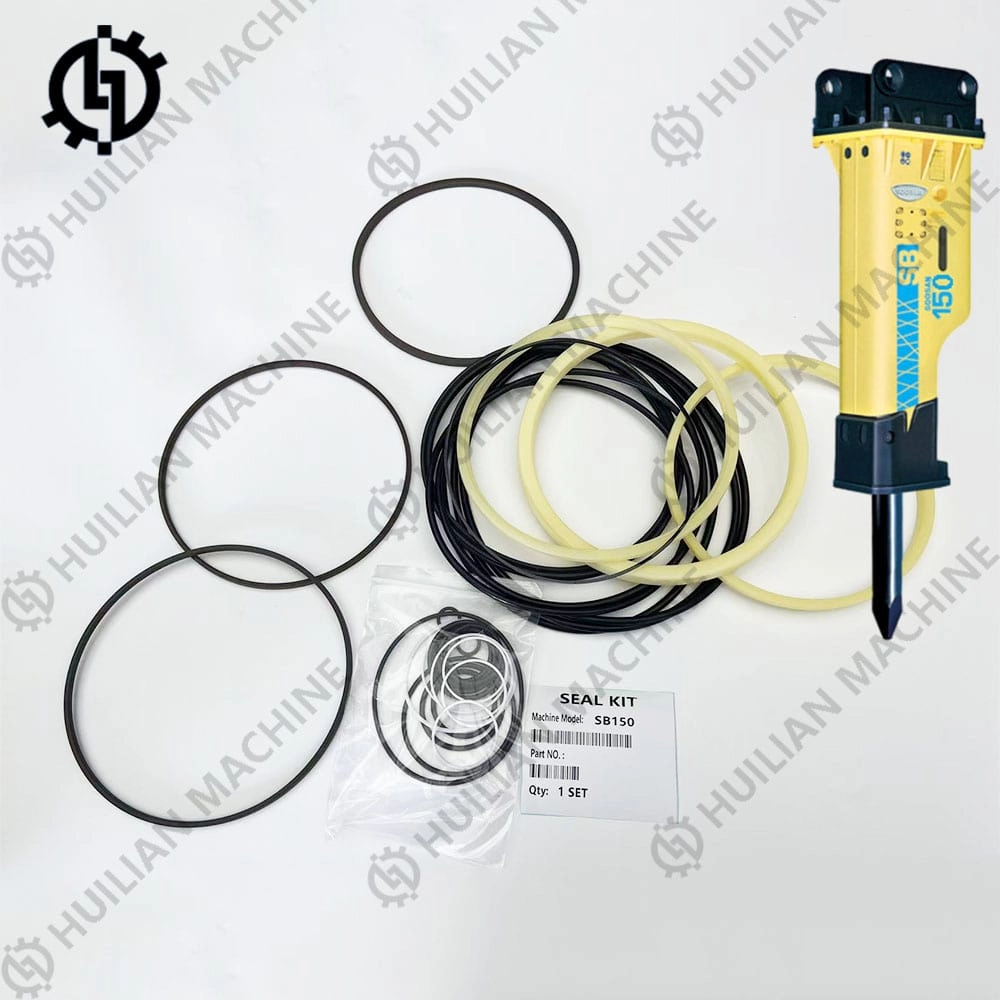
SOOSAN Breaker Spare Parts SB151TSP SQ150 SB151 Seal Kit SB150 SB157TRF SB152 C7X003 C71010 Oil Repair Kit For Excavator Hydraulic Rock Hammer

Huilian Hydraulic Rock Hammer Breaker SB10 for 0.5-1.2 Ton Mini Excavator Breaker
Side-type hydraulic breaker : Easy to control, convenient positioning, durable, high working efficiency, strong striking force, long service life, stable operating performance, and convenient after-sales service.
Top type hydraulic breaker : Strong impact power; excellent environmental performance; exquisite manufacturing technology; easy maintenance, fast after-sales service
Box-type hydraulic breaker: leading heat treatment technology, enhanced heat resistance, and wear resistance. Under the condition of keeping the oil pressure constant, the cylinder volume is reduced and the fuel consumption is reduced. The self-developed core is adopted to make the piston cylinder body durable and the service life longer. Exposed decks are made of high-strength steel plates to reduce wear. The best efficiency matching with excavator and loader is realized

Huilian HL100 Hydraulic Hammer Rock Breaker Excavator Attachment
 About us
© 2025 HUILIAN MACHINE. All rights reserved