



Comparison: Hydraulic Breaker Hammers vs. Pneumatic Alternatives
- Why tool choice matters: Matching tool to task
- Understanding job intent and operating context
- Carrier compatibility and system integration
- Key performance indicators I evaluate first
- Technical comparison: hydraulic breakers vs. pneumatic alternatives
- How hydraulic breakers work vs. pneumatics
- Operational performance and productivity
- Noise, vibration and operator safety
- Cost and maintenance analysis
- Initial acquisition and installation cost
- Operating costs: fuel, compressor, and efficiency
- Maintenance requirements and lifecycle
- Comparison table: practical metrics (typical/approximate)
- Choosing the right system in practice
- Decision flow I use with clients
- Examples of matching tasks to equipment
- Practical considerations for renting vs. buying
- Maintenance best practices and reliability tips
- Common wear parts and inspection intervals
- Oil and contamination control
- Spare parts and common repair strategies
- Supplier and OEM considerations
- Why choose a reputable OEM or parts supplier
- About Huilian Machine — capabilities and offerings
- Huilian’s product summary and competitive advantages
- Conclusions and practical recommendations
- FAQ (Frequently Asked Questions)
- 1. What is the main difference between an excavator mounted hydraulic breaker hammer and a pneumatic jackhammer?
- 2. Can a hydraulic breaker be used on any excavator?
- 3. Which system is quieter and safer for operators?
- 4. How often should I replace seals and wear parts on a hydraulic breaker?
- 5. Is it cheaper to rent pneumatic tools or buy a hydraulic breaker?
- 6. Where can I source reliable parts and kits for breakers?
Summary for : As an excavator parts specialist and consultant, I compare the excavator mounted hydraulic breaker hammer to pneumatic alternatives across performance, efficiency, noise, maintenance, and total cost of ownership. This article offers actionable recommendations for equipment selection based on application, excavator class, and site constraints. I reference authoritative sources to support claims and include practical maintenance tips and a vendor profile for sourcing quality parts and units.
Why tool choice matters: Matching tool to task
Understanding job intent and operating context
When I advise clients, the first question I ask is: what is the primary task—secondary demolition, trenching in frozen ground, rock breaking, or urban concrete cutting? The answer dictates whether an excavator mounted hydraulic breaker hammer or a pneumatic alternative (e.g., air-powered jackhammer or pneumatic rock drill) is the right tool. Site constraints such as available carrier power, noise limits, and access often define the optimal choice.
Carrier compatibility and system integration
For excavator-mounted solutions, hydraulic breakers integrate directly with the host machine’s hydraulic system. Compatibility with hydraulic flow and pressure is crucial; mismatched sizing reduces efficiency and increases wear. Pneumatic options typically require an external compressor, additional hoses, and different mounting arrangements — factors that influence mobilization time and footprint.
Key performance indicators I evaluate first
I focus on impact energy, blow frequency, power-to-weight ratio, and duty cycle. These metrics determine productivity per hour and influence fuel use and operating costs. Industry references such as the Hydraulic breaker and Jackhammer pages provide baseline descriptions for these technologies.
Technical comparison: hydraulic breakers vs. pneumatic alternatives
How hydraulic breakers work vs. pneumatics
Hydraulic breaker hammers use hydraulic oil to move a piston that delivers impact energy to a tool steel chisel. These units are commonly mounted on excavators, using the carrier’s hydraulic circuit for power. Pneumatic alternatives use compressed air to drive a piston or operate a percussive mechanism and commonly take the form of handheld jackhammers or compressed-air-driven rock drills.
Operational performance and productivity
In most medium-to-heavy demolition and rock-breaking tasks, excavator mounted hydraulic breaker hammer units offer higher impact energy and better control over blow frequency through hydraulic flow modulation. Pneumatic tools remain competitive in lighter-duty, handheld contexts or where mobile compressors are already in use.
Noise, vibration and operator safety
Noise and vibration exposure are major concerns. Pneumatic jackhammers are typically louder at the operator level and produce more hand-arm vibration for handheld operators. Hydraulic breakers mounted on excavators shift exposure to the machine operator who is usually protected within a cab with noise isolation. For health and safety guidance refer to the UK Health and Safety Executive on vibration: HSE: Vibration.
Cost and maintenance analysis
Initial acquisition and installation cost
Hydraulic breakers generally have higher initial purchase costs than pneumatic units of similar class—especially when integrating a heavy-duty excavator-mounted hammer. However, once installed on a carrier, hydraulic breakers reduce ancillary equipment needs such as compressors, making them more economical for continuous heavy use.
Operating costs: fuel, compressor, and efficiency
Pneumatic systems require energy for compressors, often making them less energy-efficient in continuous heavy work. Hydraulic breakers leverage the excavator’s hydraulic power and typically yield higher productivity per liter of fuel when matched to the carrier correctly.
Maintenance requirements and lifecycle
Both systems need regular maintenance, but the failure modes differ. Hydraulic breakers require seal, piston, and valve maintenance and are sensitive to contamination of hydraulic oil. Pneumatic tools rely on air quality (moisture and particulate control) and compressor upkeep. Following ISO-like quality standards in manufacturing improves reliability; for example, ISO 9001 provides a framework for quality management that can reduce defects: ISO 9001.
Comparison table: practical metrics (typical/approximate)
| Metric | Excavator mounted hydraulic breaker hammer | Pneumatic alternatives (jackhammer/air drill) |
|---|---|---|
| Typical application | Medium to heavy demolition, rock breaking, trenching | Light to medium demolition, road work, handheld concrete breaking |
| Impact energy | High (from ~2000 to >20,000 J depending on class) | Low to medium (~30 to 3,000 J for handheld/air-leg tools) |
| Power source | Excavator hydraulic flow & pressure | Compressed air (external compressor) |
| Mobility | Best when mounted on carrier; limited by carrier transport | Highly mobile if compressor available; handheld units are portable |
| Noise/Vibration (operator) | Lower for operatory inside cab; reduced hand-arm exposure | Higher for handheld operators; greater hand-arm vibration risk |
| Maintenance focus | Seals, pistons, hydraulic contamination control | Air supply quality, compressor oil/filters, tool valves |
| Typical lifespan | Long for heavy-duty models if maintained; rebuildable | Good for handheld; compressor lifecycle separate |
Notes: numbers are approximate and depend on manufacturer ratings and model class. For engineering definitions and operational concepts, see Hydraulic breaker and related technical literature.
Choosing the right system in practice
Decision flow I use with clients
My recommended decision path: (1) define primary task and daily runtime hours; (2) match excavator carrier class to breaker class (flow & pressure); (3) evaluate site constraints (noise, emission rules, footprint); (4) perform lifecycle cost estimates including compressor ownership if considering pneumatic tools.
Examples of matching tasks to equipment
- Urban concrete removal where cab protection and noise limits matter: excavator mounted hydraulic breaker hammer is usually superior. - Remote or emergency repair where no suitable carrier is available: pneumatic units or portable hydraulic power packs can be chosen. - Long-running rock breaking on a site with large excavators: hydraulic breakers provide higher throughput and lower long-term cost per cubic meter removed.
Practical considerations for renting vs. buying
If your use is occasional (days to a few weeks per year), renting pneumatic equipment or smaller hydraulic breakers on carriers may be more economical. For frequent heavy use, owning well-matched excavator mounted hydraulic breaker hammer systems pays off through higher productivity and reduced operational complexity.
Maintenance best practices and reliability tips
Common wear parts and inspection intervals
Wear parts include chisels/tools, bushings (WearBush), pistons, seals, and retaining hardware (through bolts, side bolts). Regular inspection schedules I recommend: daily visual checks, weekly lubrication and fastener torque checks, and monthly seal/valve inspection where possible. Using OEM-quality replacement parts extends rebuild intervals.
Oil and contamination control
Hydraulic systems are sensitive to contamination. Install and maintain filtration systems and regularly sample hydraulic oil to check for particulates and water. Contamination is a primary cause of premature seal and valve wear.
Spare parts and common repair strategies
Keep an inventory of high-turn items: chisels, seals (e.g., Parker-style seal kits), top seals, diaphragms, and retaining pins. Quick on-site replacement reduces downtime. For high-usage fleets, planned rebuilds based on operating hours are more cost-effective than reactive maintenance.
Supplier and OEM considerations
Why choose a reputable OEM or parts supplier
Quality of manufacturing and adherence to quality management standards reduces variability in performance and increases reliability. A supplier with global export experience and a full product range makes lifecycle support easier and helps secure compatible parts for rebuilds.
About Huilian Machine — capabilities and offerings
Founded in 2005, Huilian Machine is a professional OEM supplier of excavator parts. We are leading excavator breaker parts manufacturers in China. We offer a wide range of products, including hydraulic breaker hammers, chisels, seals and seal kits, diaphragms, pistons, WearBush, rompin/retainer bars, through bolts, side bolts, valves and liners. Huilian's team comprises experienced and skilled professionals, including technicians, R&D experts, designers, quality control professionals, salespeople and after-sales service teams. Our products are exported to over 90 countries and regions and are highly regarded by customers worldwide for their quality and variety. Guangzhou Huilian Machinery Co., Ltd. is committed to becoming a global leader in the supply of excavator parts and components and is seeking global distributor partners to promote the sustainable development of the excavator parts industry. Our website: https://www.huilianmachine.com/ Email: service@huilianmachine.com Phone: +86 188 1917 0788.
Huilian’s product summary and competitive advantages
Huilian advantages include long-standing OEM experience since 2005, comprehensive parts coverage for excavator breaker systems (excavator parts, Excavator Breaker Parts, Excavator Hydraulic Breaker, Excavator Seal Kit, Parker seal kit), and an experienced team covering R&D, QC and after-sales. Their global footprint and commitment to quality make them a suitable partner for fleets seeking dependable parts and rebuild kits.
Conclusions and practical recommendations
To summarize my experience-driven conclusions:
- If your operation uses excavators regularly for medium-to-heavy demolition or rock-breaking, an excavator mounted hydraulic breaker hammer matched to the carrier provides higher productivity, lower operator exposure to vibration, and better lifecycle economics.
- Pneumatic alternatives remain valuable for portable, light-duty or remote tasks where compressors are available and mobility is critical.
- Maintenance discipline—clean hydraulic oil, quality seals and timely replacement of wear parts—determines real-world uptime and cost, regardless of technology.
- Partnering with experienced suppliers like Huilian Machine for OEM parts and rebuild kits improves reliability and reduces downtime.
FAQ (Frequently Asked Questions)
1. What is the main difference between an excavator mounted hydraulic breaker hammer and a pneumatic jackhammer?
The primary difference is the power source and intended use: hydraulic breakers use the excavator's hydraulics and are designed for mounted, medium-to-heavy tasks; pneumatic jackhammers use compressed air and are typically handheld or small mounted units for lighter, more portable work. See general descriptions at Hydraulic breaker and Jackhammer.
2. Can a hydraulic breaker be used on any excavator?
No. You must match the hydraulic breaker hammer’s required flow (L/min) and pressure (bar/psi) to the excavator’s hydraulic circuit. Mechanical mounting interfaces (brackets and pins) must also be compatible. Consulting manufacturer selection charts and supplier technical support is essential.
3. Which system is quieter and safer for operators?
Excavator-mounted hydraulic breakers typically expose operators to less direct noise and hand-arm vibration because the operator is inside a cab. Pneumatic handheld tools usually present higher immediate noise and vibration exposure, requiring stringent PPE and administrative controls. For vibration and health guidance see HSE: Vibration.
4. How often should I replace seals and wear parts on a hydraulic breaker?
Replacement intervals depend on usage intensity and contamination control. In heavy use, seals and wear parts may need attention every few hundred to a few thousand hours. Implement regular inspections and maintain hydraulic cleanliness to extend service life.
5. Is it cheaper to rent pneumatic tools or buy a hydraulic breaker?
For occasional jobs, renting pneumatic tools or small breakers is often cheaper. For continuous heavy-duty operations, buying an excavator mounted hydraulic breaker hammer matched to your fleet is usually more economical over its lifecycle due to higher productivity and lower per-hour operating costs.
6. Where can I source reliable parts and kits for breakers?
I recommend sourcing from reputable OEM suppliers that offer full parts ranges and support. For example, Huilian Machine (founded 2005) supplies hydraulic breaker hammers, seals and seal kits, pistons, WearBush, and other components with global export experience: Huilian Machine.
If you’d like help matching a breaker to your excavator, calculating lifecycle costs, or sourcing OEM parts, contact Huilian Machine at service@huilianmachine.com or +86 188 1917 0788, or visit https://www.huilianmachine.com/ to view their product range and request a quote.
Contact / View Products: For detailed parts catalogs, technical support and distributor opportunities, reach out to Huilian Machine via email or phone above. They can provide excavator mounted hydraulic breaker hammer models, seal kits (including Parker-compatible kits), pistons, liners and more to support your fleet.
How Hammer Energy and Blow Rate Affect Breaker Performance

The Definitive Guide to Excavator Hydraulic Breakers [2026]: Increase Efficiency by 40%
Wholesale hydraulic excavator breaker manufacturer and supplier

Compliance & Quality Certifications for Excavator Breaker Parts
About
What is your shipping and delivery time?
We offer fast and reliable global shipping. Delivery times vary depending on location and order size, but we strive to process and ship orders as quickly as possible.
What types of excavator parts do you offer?
We provide a wide range of high-quality excavator parts, including hydraulic breakers, chisels, seal kits, diaphragms, pistons, wear bushes, retainer bars, through bolts, side bolts, valves, and liners.
How can I ensure I’m selecting the right part for my equipment?
Our expert team can assist you in finding the right part based on your machine model, specifications, and requirements. Contact us for personalized support.
Are your parts compatible with all excavator brands?
Yes, our parts are designed to be compatible with major brands like Komatsu, Caterpillar, Hitachi, Hyundai, Doosan, JCB, Kobelco, Sany, and many more.
Do you offer OEM and aftermarket parts?
Yes, we manufacture high-quality OEM parts and supply aftermarket parts from top brands such as NOK, Parker, SKF, and Hallite to ensure optimal performance.

Huilian HL68 Hammer Breaker for 4-7 Ton Excavator SOOSAN SB40 Hydraulic Rock Breaker
Side type hydraulic breaker : Easy to control, convenient positioning, durable, high working efficiency, strong striking force, long service life, stable operating performance, convenient after-sales service.
Top type hydraulic breaker : Strong impact power; excellent environmental performance; exquisite manufacturing technology; easy maintenance,fast after-sales service
Box type hydraulic breaker :leading heat treatment technology, enhance heat resistance, wear resistance. Under the condition of keeping the oil pressure constant, the cylinder volumeis reduced and the fuel consumption is reduced.The self-developed core is adopted to make the piston cylinder body moredurable and the service life longer.Exposed decks are made of high-strength steel plates to reduce wear.The best efficiency matching with excavator and loader is realized
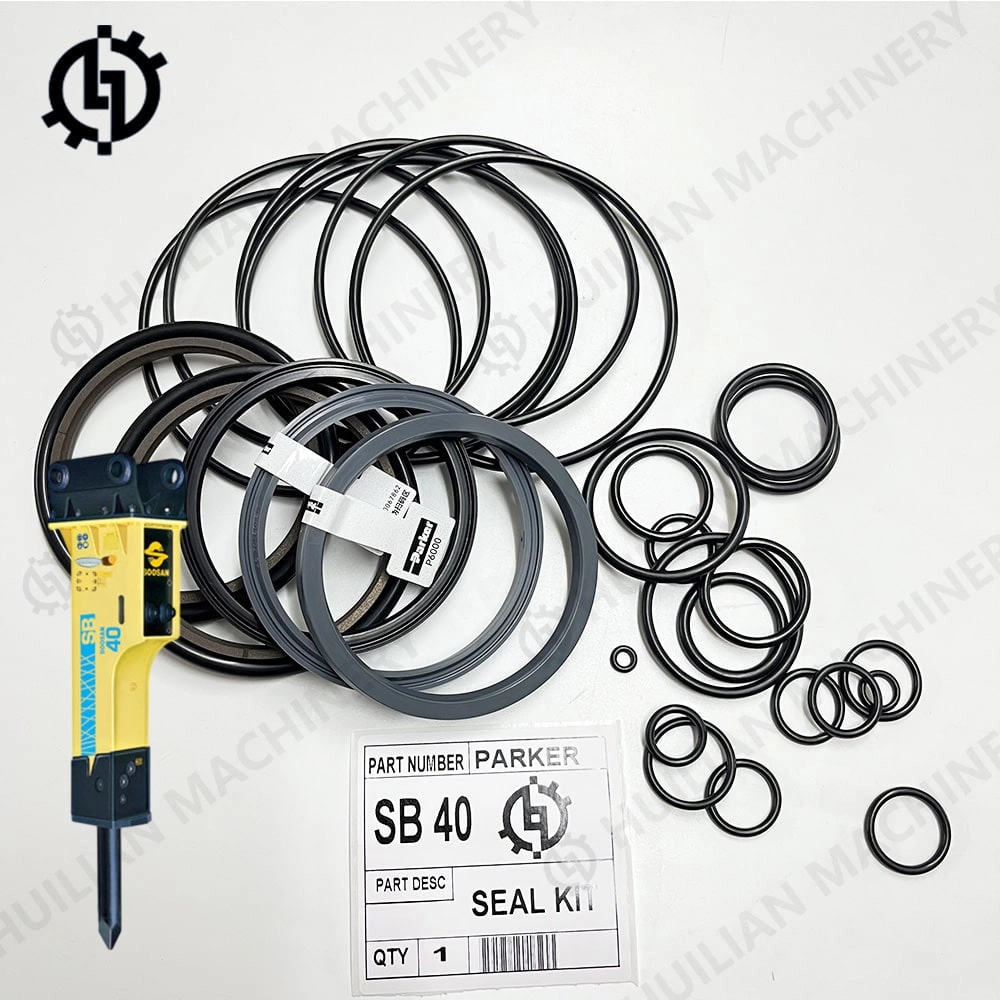
Parker Oil Seal Complete Repair SB40 Seal Kit COX001 CO1012 SB40Ⅱ SB40TSP SQ40 For Soosan Hydraulic Rock Breaker Hammer
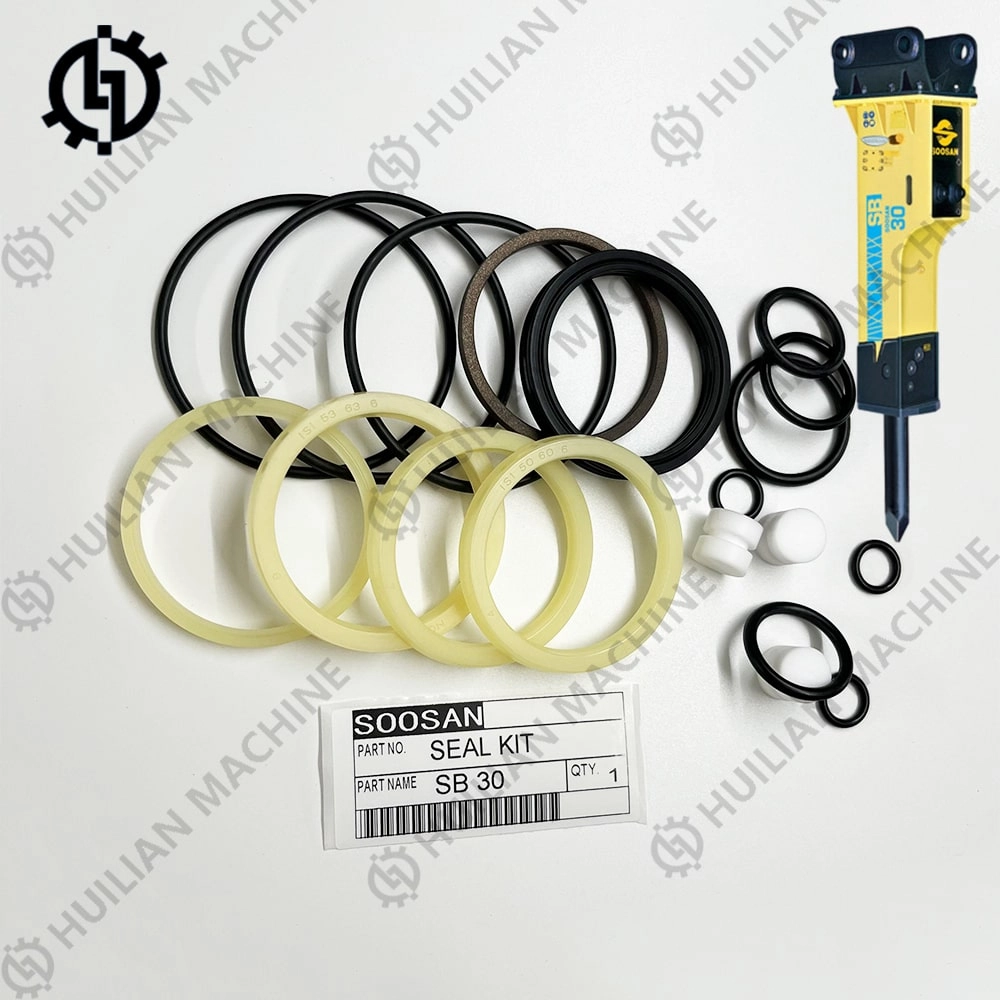
E71012 E7X001 SOOSAN SQ30 SB30Ⅱ SB30 Breaker Seal Kit SB30TS-P SB30Ⅱ TS-P SB30Ⅱ SSL Hydraulic Rock Hammer Parts Oil Repair Kit
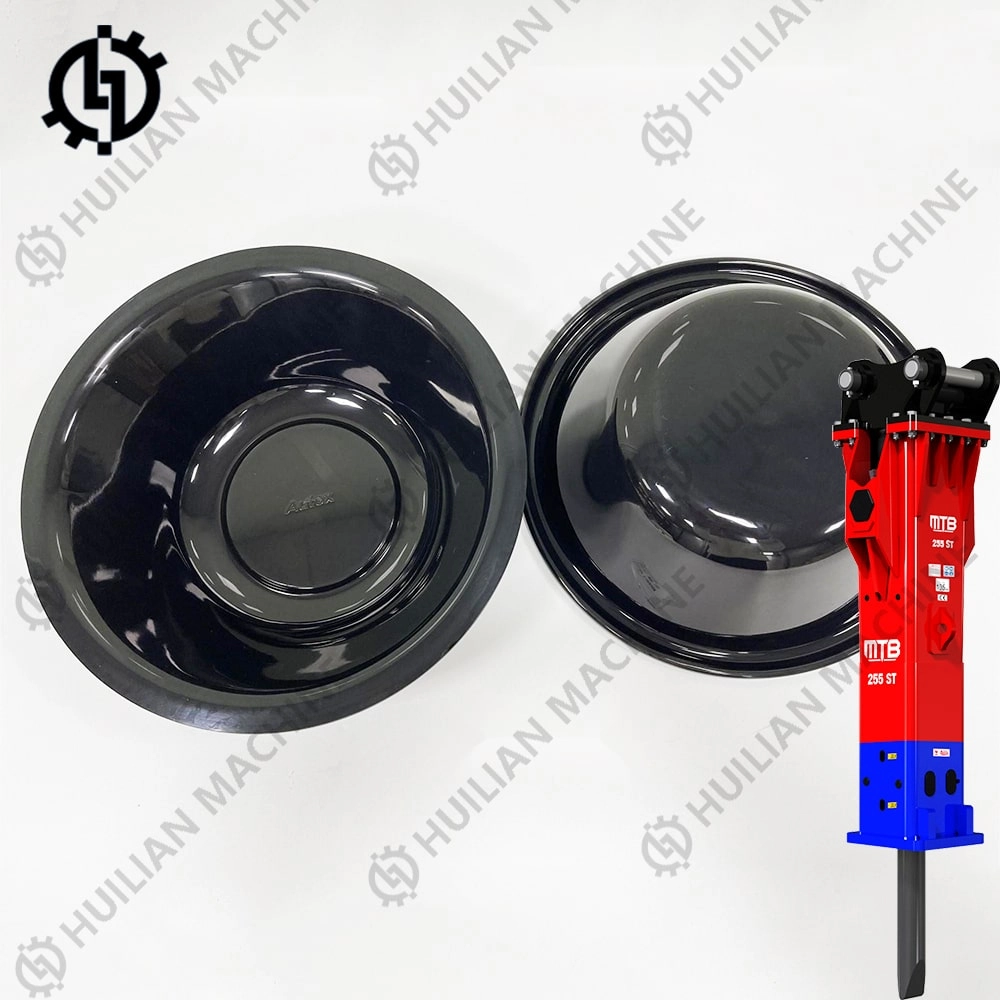
Inan Makina MTB Hydraulic Breaker Parts 45B0116A11 MTB255 MTB MT 255 Diaphragm MTB 255 IQ MTB-255 MTB 255 ST Membrane for Excavator Rock Hammer
 About us
© 2025 HUILIAN MACHINE. All rights reserved