



Hydraulic Breaker vs Pulverizer: Which Excavator Attachment to Buy
- Assessing Your Jobsite Needs
- Define the primary material and target outcome
- Consider machine compatibility and hydraulic capacity
- How Hydraulic Breakers Work and When to Choose Them
- Mechanics and performance
- Best use cases
- Operational considerations and maintenance
- Pulverizers: Design, Use Cases, and Limits
- How pulverizers function
- When I recommend a pulverizer
- Limits and site constraints
- Side-by-side Comparison and Buying Guidance
- Quick decision matrix
- Cost, productivity and lifecycle trade-offs
- Sample buying checklist I use with clients
- Maintenance, Safety and Sustainability
- Planned maintenance reduces downtime
- Operator training and safety
- Environmental and recycling benefits
- About Huilian Machine and Why I Recommend Their Parts
- FAQ — Common Questions When Choosing Breakers or Pulverizers
- 1. Which attachment yields faster demolition of reinforced concrete?
- 2. Can I run a hydraulic breaker on any excavator?
- 3. How often should seals and bushings be replaced?
- 4. Is it worth buying both attachments?
- 5. How do I evaluate total cost of ownership (TCO)?
- 6. Where can I find reliable parts and after-sales support?
Choosing between a hydraulic breaker excavator attachment and a pulverizer is one of the most common—and consequential—decisions I help contractors make. The right choice affects cycle time, fuel use, maintenance schedules, and downstream processing. In this article I explain how each tool works, the jobs they do best, lifecycle and safety considerations, and a practical decision matrix you can apply on your next equipment purchase.
Assessing Your Jobsite Needs
Define the primary material and target outcome
Before I recommend any attachment, I start by asking: what material are you breaking and what is the desired end product? For example, if you need large pieces of concrete separated cleanly from rebar for structural removal, a demolition shear or pulverizer is often ideal. If you need to fracture rock or concrete to remove a foundation quickly, a hydraulic breaker is usually more appropriate. Identifying whether you want fragmentation (small pieces) or displacement (separate elements) is the first filter.
Consider machine compatibility and hydraulic capacity
Not every excavator can host every attachment. Hydraulic breaker excavator performance scales with hydraulic flow and carrier mass; pulverizers and shears also have weight and mounting constraints. I always verify the excavator’s operating weight, hydraulic flow (L/min or gpm), and pressure (bar/psi) against the manufacturer’s attachment chart before recommending a model. You can reference general excavator specifications on resources like Wikipedia - Excavator for baseline machine classes.
How Hydraulic Breakers Work and When to Choose Them
Mechanics and performance
Hydraulic breakers (also called hydraulic hammers) deliver percussive energy through a chisel or moil point, using hydraulic flow to cycle a piston and generate impact force. This makes them excellent at fracturing hard materials like reinforced concrete and natural rock. For technical background on energy and hammer types, see Hydraulic breaker - Wikipedia.
Best use cases
I recommend a hydraulic breaker excavator when the goal is breaking large masses into more manageable chunks—roadworks, quarry face breaking, foundation removal, and rock splitting. Breakers are also preferable where you need a relatively compact tool with good reach and where minimizing operator-cycle complexity is important.
Operational considerations and maintenance
Breakers are straightforward mechanically but require consistent hydraulic oil cleanliness, correct pressure settings, and periodic replacement of wear parts (tool, bushings, seals). Mis-matched hydraulic settings or contaminated oil accelerate seal and valve wear. Adhering to ISO-quality management and hydraulic cleanliness practices improves reliability; see ISO guidance on quality management systems ISO 9001.
Pulverizers: Design, Use Cases, and Limits
How pulverizers function
Pulverizers (concrete pulverizers / crushers) are mechanical jaws mounted on the excavator boom. They use powerful hydraulics to exert crushing and cutting forces, grabbing and crushing concrete while separating rebar. Their geometry is optimized for handling reinforced concrete slabs and structures, producing a more controlled demolition and sorting of materials.
When I recommend a pulverizer
I choose pulverizers for selective demolition where rebar recovery, controlled fragmentation, and downstream recycling are priorities—examples include building dismantling, bridge deck removal, and processing load-bearing concrete where separation of steel and concrete is required. Pulverizers reduce labor for manual rebar removal and can improve recycling margins.
Limits and site constraints
Pulverizers are less effective against very hard natural rock and in tight-confinement areas where their jaw clearance is limited. They also require sufficient carrier mass and hydraulic power across the jaws—light carriers may struggle with large pulverizers, causing slower cycles and higher wear.
Side-by-side Comparison and Buying Guidance
Quick decision matrix
Below I provide a compact comparison table I use when advising clients. These are practical, field-focused distinctions rather than purely theoretical metrics.
| Feature | Hydraulic Breaker (Excavator) | Pulverizer |
|---|---|---|
| Primary action | Percussive impact to fracture rock/concrete | Mechanical crushing and cutting jaws to separate materials |
| Best materials | Rock, thick concrete, masonry | Reinforced concrete, slabs, structural members |
| End product | Fractured pieces for removal or secondary crushing | Smaller crushed concrete and separated rebar for recycling |
| Carrier requirements | Matches to hydraulic flow and impact energy; works across many classes | Requires adequate mass and jaw-rated hydraulic pressure; size-specific |
| Typical pros | High impact energy, faster penetration of hard material | Material separation, cleaner demolition, recycling-friendly |
| Typical cons | Produces irregular rubble and dust; less effective at rebar separation | Not suitable for hard rock; larger initial investment in matching carrier |
Cost, productivity and lifecycle trade-offs
Cost drivers include tool size, carrier compatibility, wear-component availability, and downtime for maintenance. Generally, a breaker is lower cost to buy and faster on pure breaking tasks, but pulverizers can deliver higher value when recycling and metal recovery reduce disposal costs. I recommend calculating total cost of ownership (TCO) for a season: acquisition, expected wear parts, hydraulic system servicing, operator time, and disposal or recycling returns.
Sample buying checklist I use with clients
- Confirm excavator model weight and hydraulic specs versus attachment recommendations.
- Define target material and desired end-product size or separation.
- Estimate hours per project and expected service intervals (tool, seals, bushings).
- Check spare-part availability and local support for seals, chisels, and retainer pins.
- Evaluate resale value and compatibility for future attachments.
Maintenance, Safety and Sustainability
Planned maintenance reduces downtime
Whether you buy a hydraulic breaker excavator attachment or a pulverizer, routine checks—fastener torque, bush wear, hydraulic oil cleanliness, and tool condition—extend service life. I advise operators to keep a rotating stock of common wear parts (tools, pins, seals) and to follow the attachment manufacturer's intervals.
Operator training and safety
Demolition attachments change the risk profile on site. Breakers create flying debris and shock; pulverizers can release bound rebar and heavy components. Proper PPE, exclusion zones, and protective screening are essential. Training on correct tool placement, avoiding hydraulic cavitation, and recognizing fatigue cracks is mandatory for safe operations.
Environmental and recycling benefits
Choosing the attachment that optimizes recycling (often a pulverizer for concrete/rebar separation) can reduce landfill costs and materials purchased for backfill. Consider how attachment selection supports your sustainability goals and local disposal regulations.
About Huilian Machine and Why I Recommend Their Parts
Founded in 2005, Huilian Machine is a professional OEM supplier of excavator parts. We are leading excavator breaker parts manufacturers in China. We offer a wide range of products, including hydraulic breaker hammers, chisels, seals and seal kits, diaphragms, pistons, WearBush, rompin/retainer bars, through bolts, side bolts, valves and liners. Huilian's team comprises experienced and skilled professionals, including technicians, R&D experts, designers, quality control professionals, salespeople and after-sales service teams. Our products are exported to over 90 countries and regions and are highly regarded by customers worldwide for their quality and variety. Guangzhou Huilian Machinery Co., Ltd. is committed to becoming a global leader in the supply of excavator parts and components and is seeking global distributor partners to promote the sustainable development of the excavator parts industry. Our website: https://www.huilianmachine.com/ Email: service@huilianmachine.com Phone: +86 188 1917 0788
From my experience working with many clients, Huilian's strengths are predictable product availability, a broad parts catalogue for breakers (including Parker seal kit compatible options), and a manufacturing focus that supports aftermarket needs. For companies buying or maintaining hydraulic breaker excavator tools, easy access to seals, chisel options, and wear parts shortens downtime—this is where a reliable OEM partner like Huilian provides measurable value.
FAQ — Common Questions When Choosing Breakers or Pulverizers
1. Which attachment yields faster demolition of reinforced concrete?
For bulk fracturing of very thick concrete, a hydraulic breaker typically progresses faster. If your priority is separating concrete from rebar for recycling, a pulverizer often produces a better final product despite slower gross fragmentation.
2. Can I run a hydraulic breaker on any excavator?
No. You must match the breaker’s size and required hydraulic flow/pressure to the excavator’s specifications. Overloading a small carrier can cause slow performance and premature wear.
3. How often should seals and bushings be replaced?
Replacement intervals depend on use intensity and hydraulic cleanliness. Under heavy daily use, inspect seals and bushings monthly and plan replacements during major seasonal maintenance. Maintaining clean hydraulic fluid significantly extends seal life.
4. Is it worth buying both attachments?
If your operations frequently switch between hard-rock breaking and selective concrete recycling, owning both can be cost-effective. Otherwise, consider rental for occasional alternative needs—this reduces capital tied up in rarely used attachments.
5. How do I evaluate total cost of ownership (TCO)?
Include acquisition, consumables (tools, seals), expected downtime costs, resale value, and operational savings from improved productivity or recycling. I often run a season-long TCO model to compare options for clients.
6. Where can I find reliable parts and after-sales support?
Choose suppliers with documented quality systems and global distribution networks. Huilian Machine, for example, supplies a wide range of excavator parts and breaker components and exports to over 90 countries: Huilian Machine.
If you'd like personalized advice for your fleet, or to review compatible hydraulic breaker excavator models and pulverizer options for your machines, contact Huilian Machine at service@huilianmachine.com or call +86 188 1917 0788. I can also help you create a TCO model tailored to your projects and recommend spare-part packages to minimize downtime.
References: Hydraulic breaker overview: https://en.wikipedia.org/wiki/Hydraulic_breaker; Excavator basics: https://en.wikipedia.org/wiki/Excavator; Quality systems: https://www.iso.org/iso-9001-quality-management..
Upgrading Breaker Parts for Heavy-Duty Excavation Tasks
Compatibility: Matching Seal Kits to Excavator Models

Compliance & Quality Certifications for Excavator Breaker Parts
Excavator Breaker Parts: Complete Parts List and Functions
About
What types of excavator parts do you offer?
We provide a wide range of high-quality excavator parts, including hydraulic breakers, chisels, seal kits, diaphragms, pistons, wear bushes, retainer bars, through bolts, side bolts, valves, and liners.
Do you offer OEM and aftermarket parts?
Yes, we manufacture high-quality OEM parts and supply aftermarket parts from top brands such as NOK, Parker, SKF, and Hallite to ensure optimal performance.
Are your parts compatible with all excavator brands?
Yes, our parts are designed to be compatible with major brands like Komatsu, Caterpillar, Hitachi, Hyundai, Doosan, JCB, Kobelco, Sany, and many more.
What is your shipping and delivery time?
We offer fast and reliable global shipping. Delivery times vary depending on location and order size, but we strive to process and ship orders as quickly as possible.
How can I ensure I’m selecting the right part for my equipment?
Our expert team can assist you in finding the right part based on your machine model, specifications, and requirements. Contact us for personalized support.

Huilian HL68 Hammer Breaker for 4-7 Ton Excavator SOOSAN SB40 Hydraulic Rock Breaker
Side type hydraulic breaker : Easy to control, convenient positioning, durable, high working efficiency, strong striking force, long service life, stable operating performance, convenient after-sales service.
Top type hydraulic breaker : Strong impact power; excellent environmental performance; exquisite manufacturing technology; easy maintenance,fast after-sales service
Box type hydraulic breaker :leading heat treatment technology, enhance heat resistance, wear resistance. Under the condition of keeping the oil pressure constant, the cylinder volumeis reduced and the fuel consumption is reduced.The self-developed core is adopted to make the piston cylinder body moredurable and the service life longer.Exposed decks are made of high-strength steel plates to reduce wear.The best efficiency matching with excavator and loader is realized
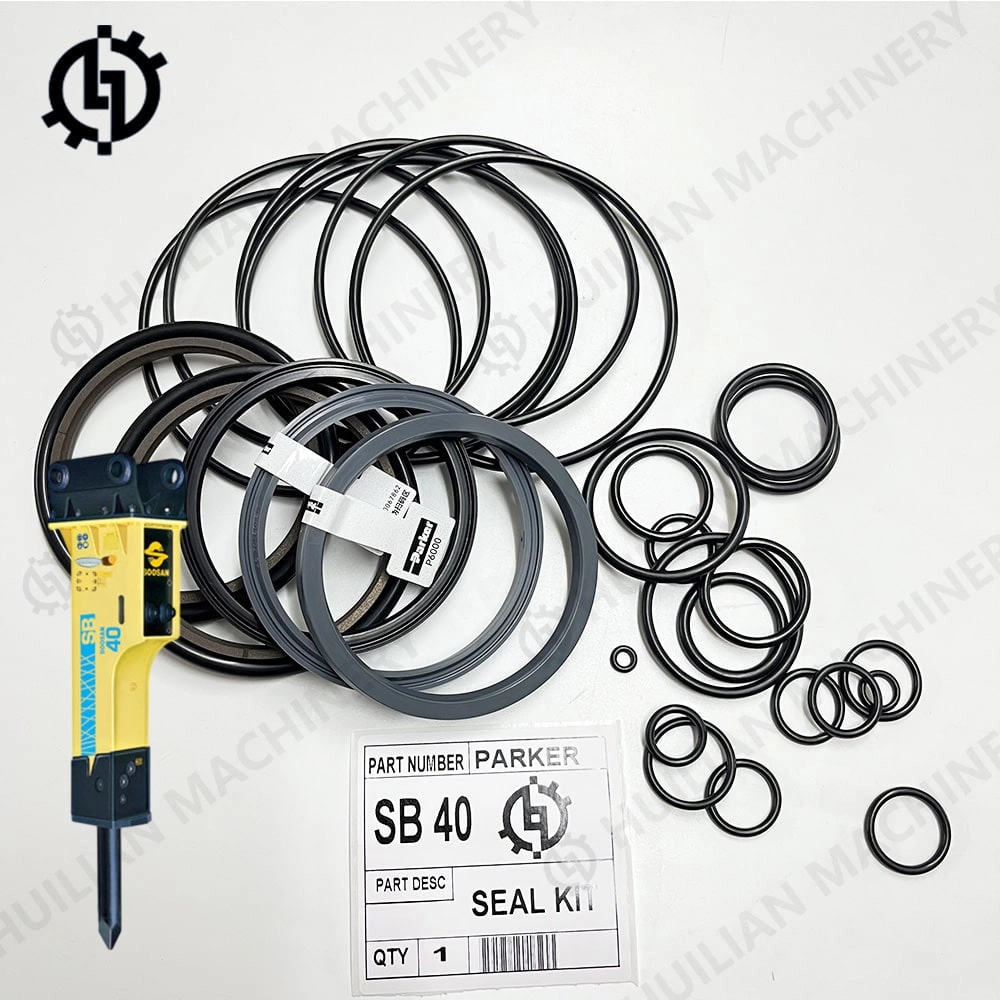
Parker Oil Seal Complete Repair SB40 Seal Kit COX001 CO1012 SB40Ⅱ SB40TSP SQ40 For Soosan Hydraulic Rock Breaker Hammer
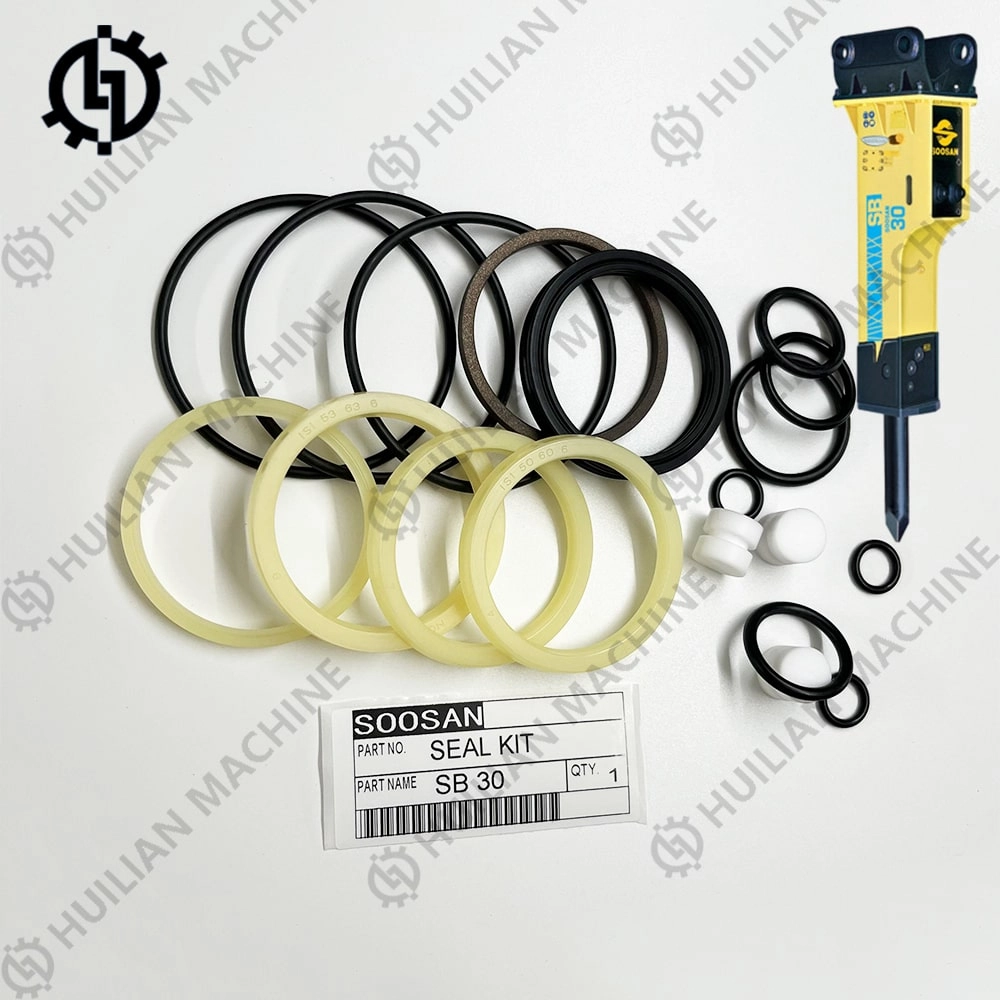
E71012 E7X001 SOOSAN SQ30 SB30Ⅱ SB30 Breaker Seal Kit SB30TS-P SB30Ⅱ TS-P SB30Ⅱ SSL Hydraulic Rock Hammer Parts Oil Repair Kit
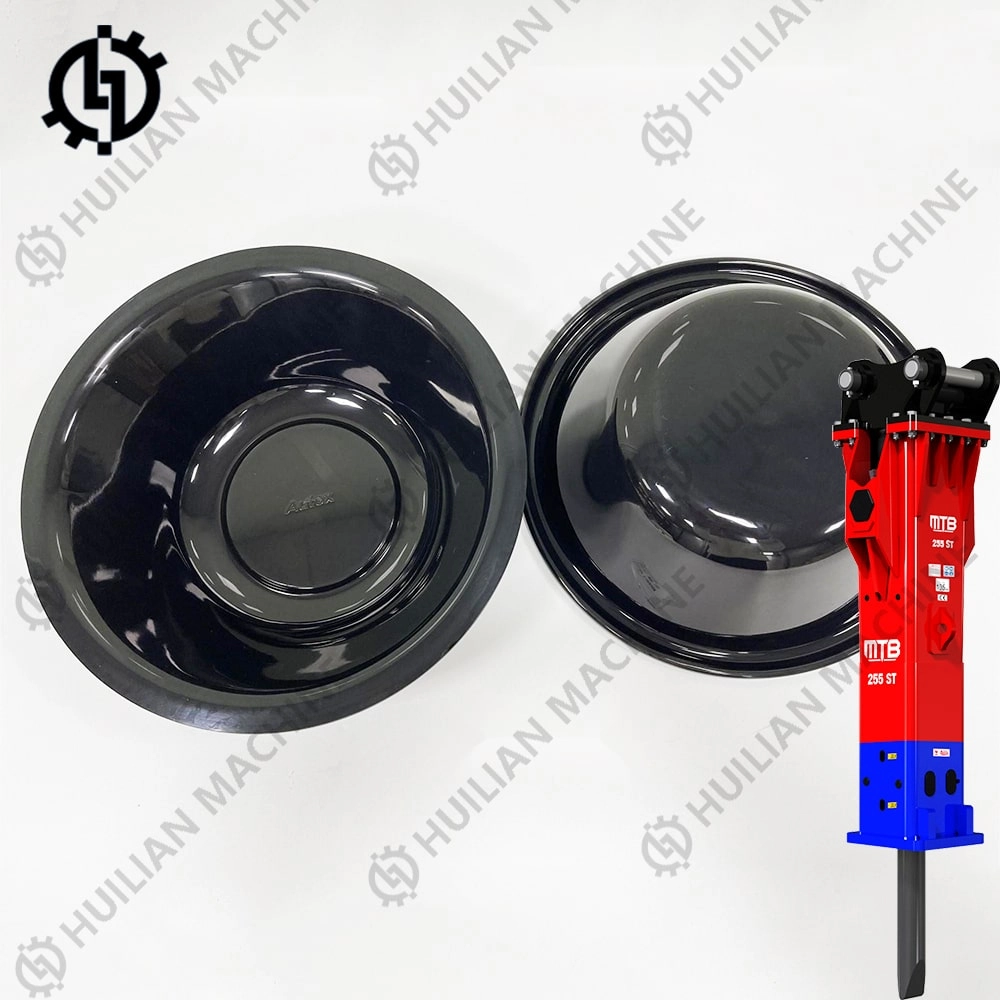
Inan Makina MTB Hydraulic Breaker Parts 45B0116A11 MTB255 MTB MT 255 Diaphragm MTB 255 IQ MTB-255 MTB 255 ST Membrane for Excavator Rock Hammer
 About us
© 2025 HUILIAN MACHINE. All rights reserved