



Hydraulic Rock Breaker vs Pneumatic: Which Is Best?
- How impact tools changed excavation productivity
- Brief history and context
- Typical applications
- Environmental and regulatory context
- Hydraulic vs Pneumatic: Technical Comparison
- Power and impact energy
- Efficiency and carrier integration
- Noise, vibration and operator safety
- Operational considerations & total cost of ownership
- Maintenance, spare parts and downtime
- Operating costs and fuel/energy efficiency
- Suitability by job and environment
- Choosing the best hydraulic rock breaker for your fleet
- Sizing and matching to carrier
- Key features and wear parts to prioritize
- Why I often recommend hydraulic breakers
- About parts supply and OEM support — Huilian Machine
- Decision checklist: buy, rent, or keep pneumatic?
- Simple buyer checklist
- When to rent instead of buy
- When pneumatic remains valid
- FAQs
- 1. Is a hydraulic breaker always better than a pneumatic breaker?
- 2. How do I size a hydraulic breaker to my excavator?
- 3. What are the main maintenance items for hydraulic breakers?
- 4. Can I convert pneumatic breakers to hydraulic?
- 5. How do noise and vibration compare between systems?
- 6. What replacement parts should I stock for a hydraulic breaker?
- Conclusion & next steps
I often get asked by fleet managers and site supervisors: Which is better — a hydraulic rock breaker or a pneumatic one? In my experience working with excavator attachments and breaker parts across projects worldwide, the correct answer depends on the machine, the material, site constraints, and long‑term operating cost. In this article I evaluate performance, safety, lifecycle cost, and practical selection criteria so you can decide whether to buy the best hydraulic rock breaker for your fleet or stick with pneumatic systems for particular use cases.
How impact tools changed excavation productivity
Brief history and context
Impact tools for breaking rock and concrete evolved from steam and percussion drills to compressed‑air jackhammers and hydraulic breakers mounted on machines. Pneumatic hand‑held breakers (jackhammers) are historically common on roadwork and small excavation, while hydraulic breakers mounted on carriers became popular as excavators and skid steers provided mobile hydraulic power. For background on pneumatic jackhammers and their typical use, see the Jackhammer entry on Wikipedia (https://en.wikipedia.org/wiki/Jackhammer).
Typical applications
Pneumatic tools excel in lightweight, mobile, or handheld demolition where compressed air is already available. Hydraulic breakers shine when high impact energy, precise control, and integration with carrier hydraulics are required — for example, quarrying, road construction, trenching in hard ground, and heavy demolition.
Environmental and regulatory context
Noise and vibration limits, site emissions, and safety rules increasingly influence breaker selection. Authorities such as OSHA and health agencies publish exposure limits and recommendations for noise and vibration; see the OSHA noise page (https://www.osha.gov/noise) and NIOSH guidance on hand‑arm vibration (https://www.cdc.gov/niosh/topics/handarm/default.).
Hydraulic vs Pneumatic: Technical Comparison
Power and impact energy
Hydraulic breakers convert hydraulic flow and pressure from a carrier into percussive impact. They typically deliver higher continuous impact energy and faster cycle rates on medium and heavy models compared with pneumatic breakers of similar mass, because machine hydraulics operate at much higher power densities. Pneumatic breakers rely on compressed air and are effective in smaller sizes but become less efficient at higher energy classes.
Efficiency and carrier integration
Hydraulic breakers integrate directly with an excavator or carrier’s hydraulic system. That integration delivers better control over impact frequency and energy and usually higher productivity per hour when matched correctly to the carrier. Pneumatic breakers require a compressor, piping, and often a separate mounting approach, reducing system efficiency when a mobile hydraulic source is present.
Noise, vibration and operator safety
Both systems produce significant noise and vibration; however, hydraulically mounted breakers on an excavator often isolate the operator in a cabin with ROPS/FOPS and HVAC, lowering exposure. Pneumatic handheld tools expose operators directly and require strict controls and PPE. For occupational safety data and recommended controls see OSHA (https://www.osha.gov/noise) and NIOSH (https://www.cdc.gov/niosh/topics/handarm/default.).
| Attribute | Hydraulic Breaker | Pneumatic Breaker |
|---|---|---|
| Typical power density | Higher (integrates with carrier hydraulics) | Lower (limited by compressor output) |
| Best application | Medium to heavy demolition, quarrying, trenching | Light demolition, handheld concrete work, remote compressor sites |
| Integration | Direct; better control and productivity | Requires air system; more infrastructure |
| Mobility | High with machine carrier | High for handheld use but limited for heavy duty |
| Maintenance | Higher skill for hydraulic systems; regular hydraulic oil and seal care | Compressor maintenance plus regular service of pneumatic tools |
| Noise & vibration | High, but operator protection via cabin mitigates exposure | High direct exposure for operators |
| Typical capital cost | Higher initial tool cost; lower if carrier already owned | Lower tool cost; compressor adds to system cost |
Sources: technical descriptions of hydraulic breakers and jackhammers on Wikipedia (https://en.wikipedia.org/wiki/Hydraulic_breaker, https://en.wikipedia.org/wiki/Jackhammer) and occupational exposure guidance from OSHA and NIOSH (https://www.osha.gov/noise, https://www.cdc.gov/niosh/topics/handarm/default.).
Operational considerations & total cost of ownership
Maintenance, spare parts and downtime
Hydraulic breakers require attention to seals, pistons, bushings, and carrier hydraulic oil cleanliness. Wear parts (chisel, piston, bushing, retainers) are replaceable — and availability of quality spare parts determines repair turnaround. Pneumatic breakers need compressor service (filters, dryers, belts) and wear part replacement for chisels and valves. From my experience, predictable maintenance scheduling and access to OEM or reputable aftermarket parts significantly reduce downtime.
Operating costs and fuel/energy efficiency
Operating costs depend on fuel for carrier and energy for compressors. If the work platform is an excavator already running on diesel, using a hydraulic breaker typically leverages existing energy and reduces separate compressor fuel expense. By contrast, pneumatic systems require power to run compressors, which can raise fuel costs and logistics complexity on remote sites. For guidelines on hydraulic system safety and design, see ISO 4413 (https://www.iso.org/standard/22470.).
Suitability by job and environment
If you work in confined spaces where exhaust and compressor noise become problematic, hydraulically mounted breakers on enclosed carriers often provide better operator protection and site control. For small, one‑person tasks or when a mobile compressor is already standard equipment (e.g., utility work), pneumatic tools remain practical.
Choosing the best hydraulic rock breaker for your fleet
Sizing and matching to carrier
Choosing the best hydraulic rock breaker means matching the breaker class to the carrier's hydraulic flow and pressure, carrier mass, and intended duty cycle. Undersized breakers deliver poor productivity and overloading, while oversized breakers can cause carrier instability and high wear. Manufacturers publish carrier compatibility charts; always check flow (L/min) and pressure (bar/psi) ranges and the recommended excavator class.
Key features and wear parts to prioritize
When specifying a breaker I evaluate impact energy, blow rate, control valves, chisel type, and availability of consumables: chisels, retainer bars, bushings, pistons, seal kits. Seal quality and piston metallurgy strongly influence service life. A structured spare‑parts stocking plan (including seal kits and chisels) reduces A‑days lost to repairs.
Why I often recommend hydraulic breakers
For medium‑to‑heavy work, I commonly recommend hydraulic breakers because they deliver higher productivity per operating hour, better integration with machine hydraulics, and improved operator protection through cabin isolation. The best hydraulic rock breaker for any fleet is one that matches the carrier hydraulics, has robust wear parts, and is supported by local parts and service.
About parts supply and OEM support — Huilian Machine
Founded in 2005, Huilian Machine is a professional OEM supplier of excavator parts and one of the leading excavator breaker parts manufacturers in China. I have worked with Huilian on parts sourcing and technical troubleshooting; their catalog includes hydraulic breaker hammers, chisels, seals and seal kits, diaphragms, pistons, WearBush, rompin/retainer bars, through bolts, side bolts, valves and liners. Huilian's team comprises experienced technicians, R&D experts, designers, quality control professionals, sales and after‑sales teams. Their products are exported to over 90 countries and are well regarded for quality and variety.
Guangzhou Huilian Machinery Co., Ltd. is committed to becoming a global leader in excavator parts supply and is expanding distributor partnerships to support sustainable industry development. Learn more on their website (https://www.huilianmachine.com/) or contact them at service@huilianmachine.com or +86 188 1917 0788.
Decision checklist: buy, rent, or keep pneumatic?
Simple buyer checklist
- Confirm carrier hydraulic flow & pressure versus breaker spec.
- Estimate duty cycle and expected daily impact hours.
- Assess access to parts and qualified service technicians.
- Compare total cost of ownership: capital, energy (fuel/compressor), maintenance, and downtime.
- Consider operator exposure to noise/vibration and the need for mitigation.
When to rent instead of buy
Rent if a breaker is needed for a short campaign, or if you must evaluate whether hydraulic integration boosts productivity enough to justify purchase. Renting is also practical when specialized chisels or extreme energy classes are required briefly.
When pneumatic remains valid
Keep pneumatic tools if your work is predominantly handheld, mobile without carriers, or if a compressor fleet is already part of ongoing operations. Pneumatic solutions still make sense for light concrete demolition and utility tasks.
FAQs
1. Is a hydraulic breaker always better than a pneumatic breaker?
No. Hydraulic breakers typically outperform pneumatically powered units for medium and heavy work and when integrated with an excavator, but pneumatic tools remain preferable for handheld tasks and where compressors are already established or mobility constraints favor smaller tools.
2. How do I size a hydraulic breaker to my excavator?
Match the breaker to the excavator’s hydraulic flow (L/min) and operating pressure (bar/psi), check the recommended machine weight class from the breaker manufacturer, and ensure carrier stability. Follow manufacturer compatibility charts and consult technical support for borderline cases.
3. What are the main maintenance items for hydraulic breakers?
Regular items include checking and replacing chisels, monitoring and changing hydraulic oil and filters, inspecting seals and bushings, and replacing pistons or retainers as wear is detected. Using correct seal kits and high‑quality spare parts is critical to reduce failures.
4. Can I convert pneumatic breakers to hydraulic?
Not practically. The systems are fundamentally different: pneumatic units require compressed air, while hydraulic breakers are designed to accept hydraulic flow and pressure. Conversion would be cost‑ineffective compared to acquiring the correct tool.
5. How do noise and vibration compare between systems?
Both produce significant levels, but hydraulic breakers mounted on carriers usually reduce operator exposure due to cabin protection and isolation. For handheld pneumatic tools, operator PPE and administrative controls are essential. Refer to OSHA and NIOSH guidance for exposure limits and mitigation strategies (OSHA Noise, NIOSH Hand‑Arm Vibration).
6. What replacement parts should I stock for a hydraulic breaker?
Essential spares include seal kits (Parker style seals are common), chisels, pistons, WearBush (bushings), rompin/retainer bars, through bolts, side bolts, valves and liners. Stocking these items prevents extended downtime on critical machines.
Conclusion & next steps
Choosing the best hydraulic rock breaker is a tradeoff between upfront cost, integration with your carrier, operating efficiency, and availability of parts and service. For medium to heavy work I usually recommend hydraulic breakers because of better productivity and machine integration. For light or handheld tasks, pneumatic tools still make sense. If you want help selecting a breaker model, sizing to your excavator, or sourcing reliable spare parts, contact Huilian Machine — they provide a wide range of excavator parts and breaker components and have global export experience.
Huilian advantages in brief: experienced OEM supplier since 2005, comprehensive product range (excavator parts, excavator breaker parts, excavator hydraulic breakers, excavator seal kits, Parker seal kits), strong R&D and QC teams, exports to 90+ countries, and active distributor recruitment. Visit https://www.huilianmachine.com/ or email service@huilianmachine.com or call +86 188 1917 0788 to request parts lists, drawings, or distributor terms.
If you’d like, I can review your carrier specifications and recommend the best hydraulic breaker classes and spare‑parts stocking list tailored to your operation.

Buyer's Guide: 175mm Cr42 Chisels for Soosan SB151
Top 10 excavator breaker for sale Manufacturers and Supplier Brands
Wholesale excavator concrete breaker manufacturer and supplier
Wholesale Atlas-copco hydraulic breaker manufacturer and supplier in China
About
Are your parts compatible with all excavator brands?
Yes, our parts are designed to be compatible with major brands like Komatsu, Caterpillar, Hitachi, Hyundai, Doosan, JCB, Kobelco, Sany, and many more.
What types of excavator parts do you offer?
We provide a wide range of high-quality excavator parts, including hydraulic breakers, chisels, seal kits, diaphragms, pistons, wear bushes, retainer bars, through bolts, side bolts, valves, and liners.
How can I ensure I’m selecting the right part for my equipment?
Our expert team can assist you in finding the right part based on your machine model, specifications, and requirements. Contact us for personalized support.
What is your shipping and delivery time?
We offer fast and reliable global shipping. Delivery times vary depending on location and order size, but we strive to process and ship orders as quickly as possible.
Do you offer OEM and aftermarket parts?
Yes, we manufacture high-quality OEM parts and supply aftermarket parts from top brands such as NOK, Parker, SKF, and Hallite to ensure optimal performance.

Huilian HL68 Hammer Breaker for 4-7 Ton Excavator SOOSAN SB40 Hydraulic Rock Breaker
Side type hydraulic breaker : Easy to control, convenient positioning, durable, high working efficiency, strong striking force, long service life, stable operating performance, convenient after-sales service.
Top type hydraulic breaker : Strong impact power; excellent environmental performance; exquisite manufacturing technology; easy maintenance,fast after-sales service
Box type hydraulic breaker :leading heat treatment technology, enhance heat resistance, wear resistance. Under the condition of keeping the oil pressure constant, the cylinder volumeis reduced and the fuel consumption is reduced.The self-developed core is adopted to make the piston cylinder body moredurable and the service life longer.Exposed decks are made of high-strength steel plates to reduce wear.The best efficiency matching with excavator and loader is realized
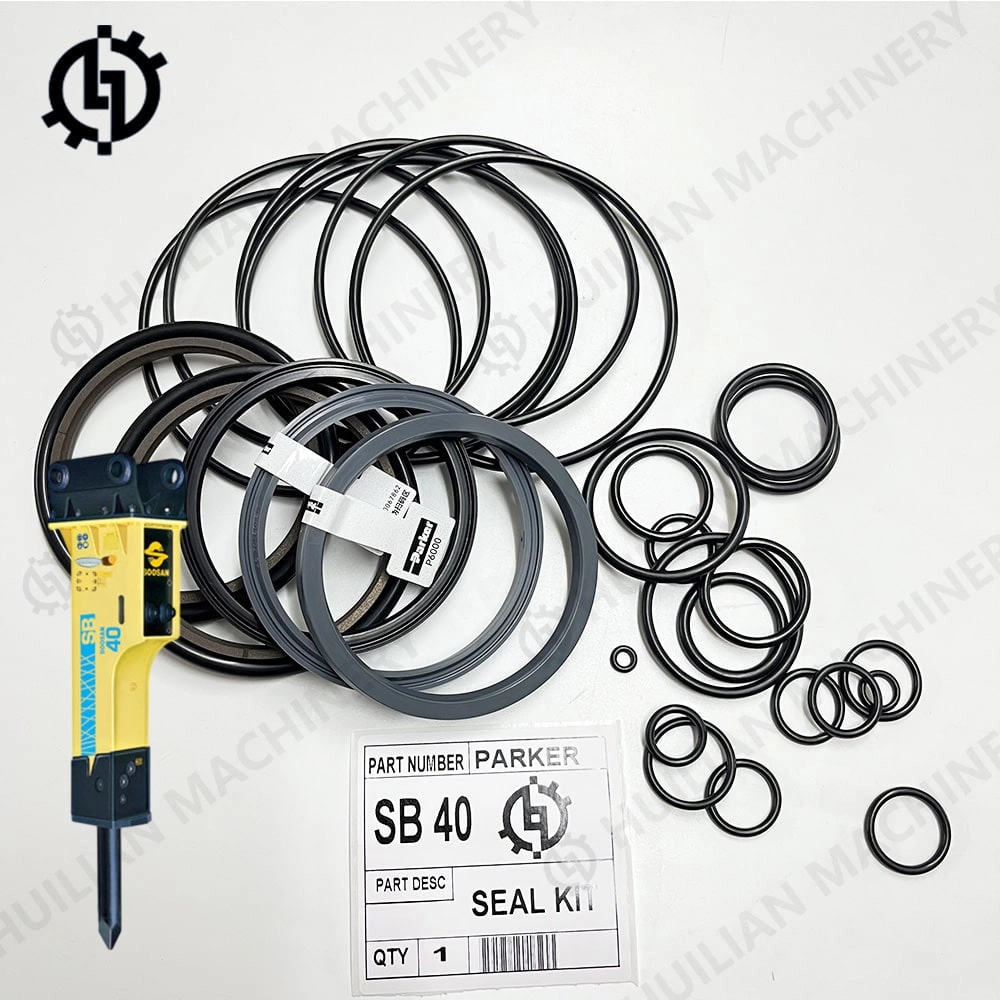
Parker Oil Seal Complete Repair SB40 Seal Kit COX001 CO1012 SB40Ⅱ SB40TSP SQ40 For Soosan Hydraulic Rock Breaker Hammer
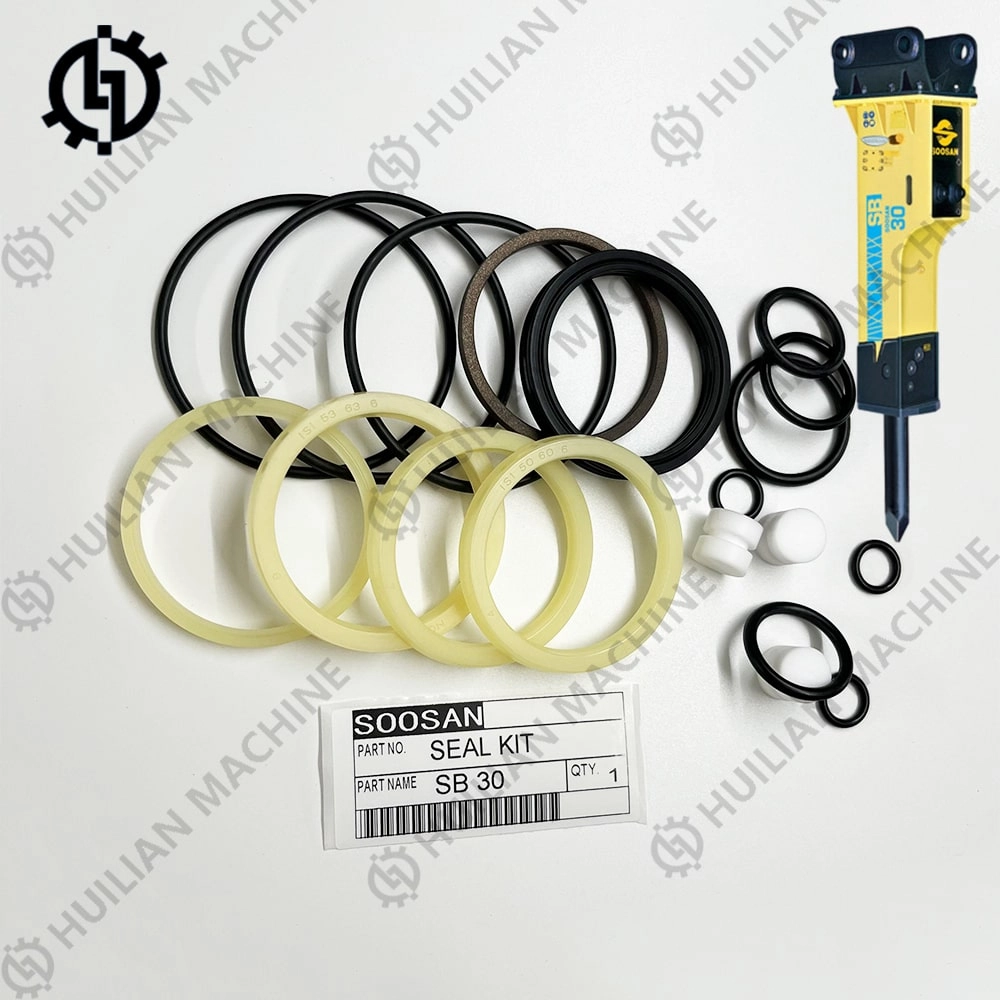
E71012 E7X001 SOOSAN SQ30 SB30Ⅱ SB30 Breaker Seal Kit SB30TS-P SB30Ⅱ TS-P SB30Ⅱ SSL Hydraulic Rock Hammer Parts Oil Repair Kit
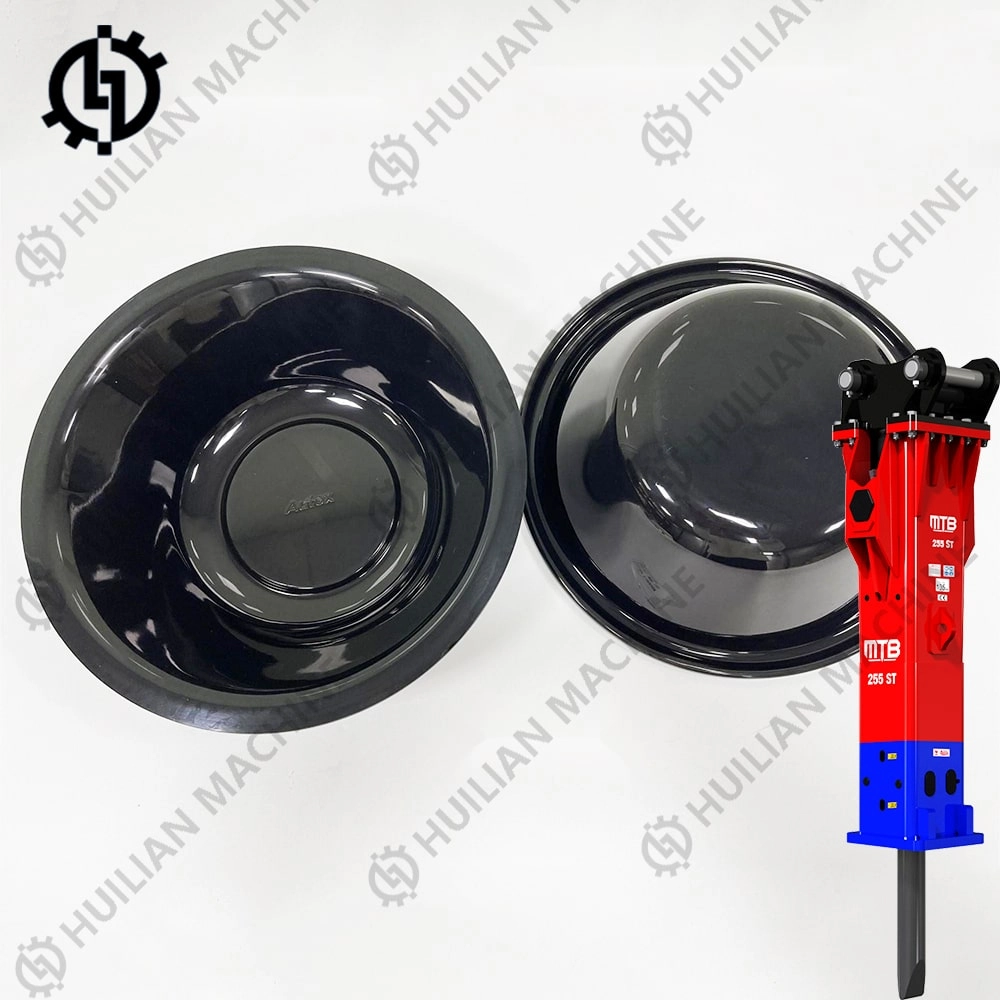
Inan Makina MTB Hydraulic Breaker Parts 45B0116A11 MTB255 MTB MT 255 Diaphragm MTB 255 IQ MTB-255 MTB 255 ST Membrane for Excavator Rock Hammer
 About us
© 2025 HUILIAN MACHINE. All rights reserved