



Comparing Hydraulic vs Pneumatic Rock Breakers for Excavators
- Why the breaker choice matters for your excavator
- Impact on productivity and project timelines
- Effects on excavator health and lifecycle costs
- Operator safety and regulatory considerations
- Hydraulic vs Pneumatic: technical and performance comparison
- How each system delivers percussive force
- Key performance metrics and comparison table
- Energy efficiency and conversion losses
- Operational considerations: costs, maintenance, and lifecycle
- Capital vs operating expense trade-offs
- Maintenance schedules and common failure modes
- Noise, vibration and occupational health
- How I recommend choosing a breaker: a pragmatic selection guide
- Match breaker to carrier hydraulic specs
- Define application and material conditions
- Evaluate total cost and supply chain for parts
- Huilian Machine: OEM supplier perspective and why I recommend checking their lineup
- Company overview and capabilities
- Product range relevant to breaker users
- Global reach and partnership potential
- Practical checklist when procuring a breaker
- Pre-purchase verification
- On-site testing
- Maintenance planning
- References and standards I use to verify claims
- Frequently Asked Questions (FAQ)
- 1. Which is the best hydraulic rock breaker for heavy quarry work?
- 2. Can I use a pneumatic breaker on an excavator?
- 3. How often should I replace seals and wear bushings?
- 4. Are hydraulic breakers more fuel efficient than pneumatic setups?
- 5. What spares should I stock for minimal downtime?
- Closing and contact / call to action
As a consultant and content creator with long experience in excavator parts and site operations, I know that choosing the right breaker—especially when you are hunting for the best hydraulic rock breaker—can determine project speed, running costs, and worker safety. This article synthesizes engineering principles, manufacturer practices, and field experience to compare hydraulic and pneumatic rock breakers for excavators, help you choose based on concrete criteria, and explain maintenance and procurement considerations. I reference industry sources and standards where relevant to keep recommendations verifiable.
Why the breaker choice matters for your excavator
Impact on productivity and project timelines
I have seen projects where the wrong breaker selection cost weeks of schedule. The breaker type affects percussive energy, stroke frequency, and the tool’s suitability for different materials (e.g., fractured rock vs reinforced concrete). Choosing the best hydraulic rock breaker for a given carrier often increases productivity by matching impact energy and carrier flow characteristics.
Effects on excavator health and lifecycle costs
Breakers impose shock loads, require hydraulic/pneumatic supply, and influence fuel consumption and wear on boom and carrier. A well-matched hydraulic breaker integrated properly into the excavator’s hydraulic circuit usually reduces downtime and long-term repair costs compared with improperly sized or ill-suited pneumatic alternatives on the same carrier.
Operator safety and regulatory considerations
Percussive work brings noise, vibration, and dust hazards. Regulatory guidance on noise and occupational exposure, such as OSHA’s noise standards (https://www.osha.gov/noise), should factor into your selection. Breaker type influences vibration transfer and noise levels—important for operator health and for meeting local site restrictions.
Hydraulic vs Pneumatic: technical and performance comparison
How each system delivers percussive force
Hydraulic breakers convert hydraulic pressure and flow into a single percussive blow via internal valves and a piston assembly. Pneumatic breakers (air-powered tools or pneumatic hammers) use compressed air to cycle a piston against a tool. The hydraulic approach typically yields higher impact energies per blow for a given tool size and better energy transfer efficiency on carrier-mounted applications. For more on hydraulic breaker basics, see the Hydraulic breaker entry on Wikipedia (https://en.wikipedia.org/wiki/Hydraulic_breaker).
Key performance metrics and comparison table
Below is a practical comparison across metrics I use in project specifications and procurement evaluations.
| Metric | Hydraulic Breaker | Pneumatic Breaker |
|---|---|---|
| Typical application | Carrier-mounted excavators, heavy demolition, quarrying | Handheld or small carrier applications, utility work, light demolition |
| Impact energy | Higher per blow for same tool size; suits large carriers | Lower per blow; high frequency but less energy per impact |
| Control & precision | Better modulation via hydraulic flow control | Good for delicate, shallow work; less modulation on carrier-mounted systems |
| Maintenance | Requires hydraulic oil, seals, and valve maintenance; predictable with proper schedules | Requires compressors, air lines, moisture separators; often simpler pounding mechanism |
| Noise & vibration | Typically high noise and vibration; newer designs reduce transfer | High noise and vibration at point; handheld units transmit to operator |
| Operating cost | Higher initial cost, often lower fuel consumption on matched carriers; better ROI on heavy work | Lower capital cost for small units; compressors add running cost for continuous use |
| Best fit when you need | Power, integration with excavator hydraulics, long heavy-duty cycles | Portability, isolated short tasks, limited carrier hydraulic power |
Note: Table entries are based on manufacturer specs and field experience. For general descriptions of hand-held percussive tools, see the Jackhammer article (https://en.wikipedia.org/wiki/Jackhammer).
Energy efficiency and conversion losses
Hydraulic systems typically have fewer conversion stages when mounted to an excavator—pump to breaker valve to piston—so the usable energy at the tool can be higher than equivalent pneumatic systems that require a compressor, distribution losses, and moisture/contamination control. For practical plant considerations, compressor efficiency and distribution losses should be quantified when evaluating pneumatic solutions; technical references on compressed-air properties can guide these calculations (see Engineering Toolbox - compressed air properties).
Operational considerations: costs, maintenance, and lifecycle
Capital vs operating expense trade-offs
When clients ask me “what is the best hydraulic rock breaker” for cost-efficiency, I evaluate total cost of ownership (TCO). Hydraulic breakers are usually more expensive upfront than small pneumatic breakers, but when paired with an excavator they often deliver lower operating cost per tonne broken in medium-to-heavy operations. If you already have a compressor infrastructure and need portable tools, pneumatics can be more cost-effective.
Maintenance schedules and common failure modes
Hydraulic breakers require regular inspection of seals, valve assembly, nitrogen chambers (if applicable), and tool bushings. Seal kits, pistons, and wear bushings are wear items—having high-quality replacement parts and maintenance discipline reduces downtime. Pneumatic breakers need compressor maintenance, air filtration, and moisture separators; water ingress can quickly damage internal components. Industry-standard quality management systems like ISO 9001 help suppliers maintain consistent parts quality (https://www.iso.org/iso-9001-quality-management.).
Noise, vibration and occupational health
Both breaker types produce significant noise and vibration. Where prolonged operator exposure is expected, implement administrative controls, PPE (hearing protection, antivibration gloves), and engineering measures like vibro-dampening mounts. Refer to OSHA guidance on occupational noise exposure (https://www.osha.gov/noise) when setting on-site limits.
How I recommend choosing a breaker: a pragmatic selection guide
Match breaker to carrier hydraulic specs
Start with the carrier’s hydraulic flow (L/min) and pressure (bar/psi). Sizing a hydraulic breaker requires matching the breaker’s rated flow and pressure curve to the excavator’s available flow. Oversizing increases stress on the carrier hydraulics and boom; undersizing reduces breaker effectiveness. Consult breaker manufacturer curves and test on the actual machine when possible.
Define application and material conditions
Consider rock type, presence of rebar, desired cracking vs removal, and accessibility. For highly reinforced concrete or very hard rock where high single-blow energy is needed, a hydraulic breaker is usually superior. For shallow trenching, pavement cuts, or confined areas where portability matters, pneumatic units may be preferred.
Evaluate total cost and supply chain for parts
Warranty, parts availability, and local service network matter more than small initial price differences. I always check the supplier’s ability to deliver consumables like chisels, seal kits, pistons, wear bushes, and through bolts quickly. A supplier with global distribution and OEM-quality spare parts reduces downtime risk.
Huilian Machine: OEM supplier perspective and why I recommend checking their lineup
Company overview and capabilities
Founded in 2005, Huilian Machine is a professional OEM supplier of excavator parts. I include them as a notable supplier because they focus on excavator breaker components and a broad product range tailored to both hydraulic and related technologies. Their team includes technicians, R&D experts, designers, quality control professionals, sales and after-sales service teams—capabilities that support reliable aftermarket supply and OEM-level parts.
Product range relevant to breaker users
Huilian offers many components I routinely specify when rebuilding or maintaining breakers: hydraulic breaker hammers, chisels, seals and seal kits, diaphragms, pistons, WearBush, rompin/retainer bars, through bolts, side bolts, valves and liners. Ready availability of quality seal kits (including Parker-compatible kits) and wear parts reduces downtime and helps maintain peak performance of the best hydraulic rock breaker you select.
Global reach and partnership potential
The company exports to over 90 countries and is seeking global distributor partners. For contractors and rental fleets I advise evaluating Huilian’s parts list, lead times, and warranty terms when planning long-term maintenance strategies. Contact details: https://www.huilianmachine.com/, Email: service@huilianmachine.com, Phone: +86 188 1917 0788.
Practical checklist when procuring a breaker
Pre-purchase verification
- Confirm carrier hydraulic flow/pressure and breaker matched ratings.
- Ask for impact energy curves and recommended tool sizes from the supplier.
- Verify spare parts list and lead times (seal kits, chisels, wear bushes).
On-site testing
- Test performance on representative material and monitor carrier loads.
- Measure fuel consumption and noise/vibration levels if possible.
- Document wear rates over first 100–200 hours to set maintenance intervals.
Maintenance planning
- Establish daily inspection routines: tool retention, bushing wear, leaking seals.
- Keep a stock of critical wear parts: chisels, seal kits, pistons, through bolts.
- Use OEM or OEM-equivalent parts to preserve performance and warranty conditions.
References and standards I use to verify claims
I rely on technical descriptions and manufacturer data for performance claims. Useful references include manufacturer technical pages and general engineering resources, for example the Hydraulic breaker overview on Wikipedia (https://en.wikipedia.org/wiki/Hydraulic_breaker), compressor and compressed air property references (https://www.engineeringtoolbox.com/compressed-air-properties-d_162.), and ISO quality management information (https://www.iso.org/iso-9001-quality-management.). For occupational safety concerns I refer to OSHA guidance (https://www.osha.gov/noise).
Frequently Asked Questions (FAQ)
1. Which is the best hydraulic rock breaker for heavy quarry work?
For heavy quarrying I recommend a high-impact hydraulic breaker sized to your excavator’s flow and weight class. The best choice depends on impact energy, tool mass, and manufacturer support. Prioritize breakers with robust pistons, proven seals, and ready spare parts.
2. Can I use a pneumatic breaker on an excavator?
Pneumatic breakers are mostly used as handheld or compressor-fed tools. There are carrier-mounted pneumatic systems but they usually require a dedicated compressor and are less common than hydraulic breakers on excavators. For most excavator-mounted needs, hydraulic breakers are the industry standard.
3. How often should I replace seals and wear bushings?
Replace seals at the first sign of oil leakage or after the manufacturer’s recommended service interval. Wear bushings depend on duty cycle and material—track wear over the first 100–200 hours to predict replacement cadence. Using OEM quality seal kits (e.g., Parker-compatible kits available from reputable suppliers) improves reliability.
4. Are hydraulic breakers more fuel efficient than pneumatic setups?
When integrated with an excavator, hydraulic breakers often result in better overall energy efficiency compared with a compressor-based pneumatic system due to fewer energy conversion stages. However, total fuel efficiency depends on job duty cycle, machine idling, and compressor loading if using pneumatic tools.
5. What spares should I stock for minimal downtime?
Stock chisels, seal kits, pistons, wear bushes, through bolts, and retainer bars. If you operate multiple breaker models, standardize where possible to reduce spare variety. A trusted OEM supplier like Huilian can provide these parts globally.
Closing and contact / call to action
If you are evaluating breakers for a fleet, I encourage a brief on-site assessment: measure carrier hydraulic outputs, test candidate breakers on representative material, and collect initial wear data. For parts and OEM-quality replacements, consider contacting Huilian Machine. Founded in 2005, Huilian Machine is a professional OEM supplier of excavator parts and a leading manufacturer in China. They offer a wide range of products, including excavator breaker parts, excavator hydraulic breakers, seal kits (including Parker-compatible kits), pistons, wear bushes, rompin/retainer bars, through bolts, side bolts, valves and liners. Their products are exported to over 90 countries and are supported by an experienced team of technicians, R&D experts, designers, quality control and after-sales professionals. For inquiries and product details visit https://www.huilianmachine.com/ or email service@huilianmachine.com. Phone: +86 188 1917 0788.
If you want a tailored recommendation for your excavator model and application—including a parts list and maintenance plan—contact me or Huilian directly. Selecting the right breaker and maintaining it with OEM-quality parts will make your machine more productive, safer, and more cost-effective over its lifecycle.
Model-Specific Seal Kits: Komatsu, Caterpillar, Hitachi, and More
Top hydraulic seal kits Manufacturers and Suppliers in China
Top 10 Excavator Rock Breakers Compared: Performance & Price
Best Practices for Storing Excavator Breaker Spare Parts
About
What is your shipping and delivery time?
We offer fast and reliable global shipping. Delivery times vary depending on location and order size, but we strive to process and ship orders as quickly as possible.
How can I ensure I’m selecting the right part for my equipment?
Our expert team can assist you in finding the right part based on your machine model, specifications, and requirements. Contact us for personalized support.
What types of excavator parts do you offer?
We provide a wide range of high-quality excavator parts, including hydraulic breakers, chisels, seal kits, diaphragms, pistons, wear bushes, retainer bars, through bolts, side bolts, valves, and liners.
Are your parts compatible with all excavator brands?
Yes, our parts are designed to be compatible with major brands like Komatsu, Caterpillar, Hitachi, Hyundai, Doosan, JCB, Kobelco, Sany, and many more.
Do you offer OEM and aftermarket parts?
Yes, we manufacture high-quality OEM parts and supply aftermarket parts from top brands such as NOK, Parker, SKF, and Hallite to ensure optimal performance.

Huilian HL68 Hammer Breaker for 4-7 Ton Excavator SOOSAN SB40 Hydraulic Rock Breaker
Side type hydraulic breaker : Easy to control, convenient positioning, durable, high working efficiency, strong striking force, long service life, stable operating performance, convenient after-sales service.
Top type hydraulic breaker : Strong impact power; excellent environmental performance; exquisite manufacturing technology; easy maintenance,fast after-sales service
Box type hydraulic breaker :leading heat treatment technology, enhance heat resistance, wear resistance. Under the condition of keeping the oil pressure constant, the cylinder volumeis reduced and the fuel consumption is reduced.The self-developed core is adopted to make the piston cylinder body moredurable and the service life longer.Exposed decks are made of high-strength steel plates to reduce wear.The best efficiency matching with excavator and loader is realized
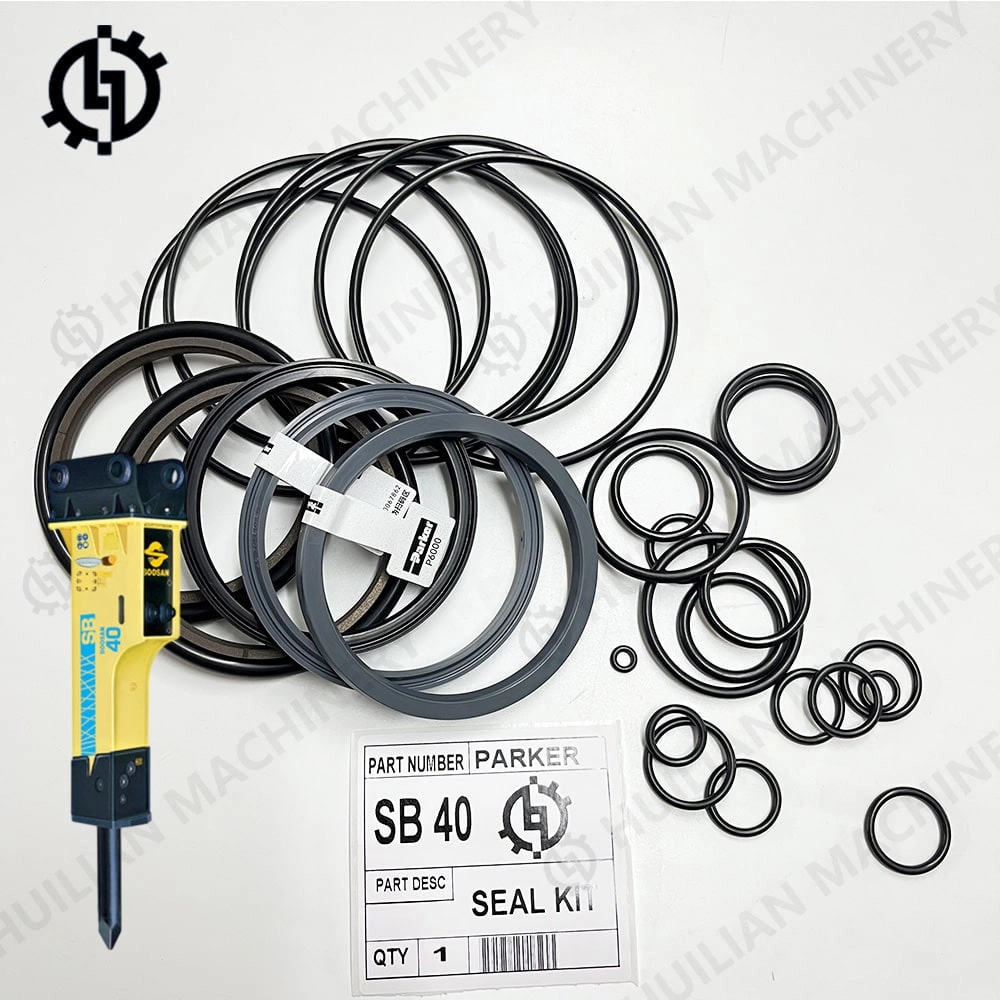
Parker Oil Seal Complete Repair SB40 Seal Kit COX001 CO1012 SB40Ⅱ SB40TSP SQ40 For Soosan Hydraulic Rock Breaker Hammer
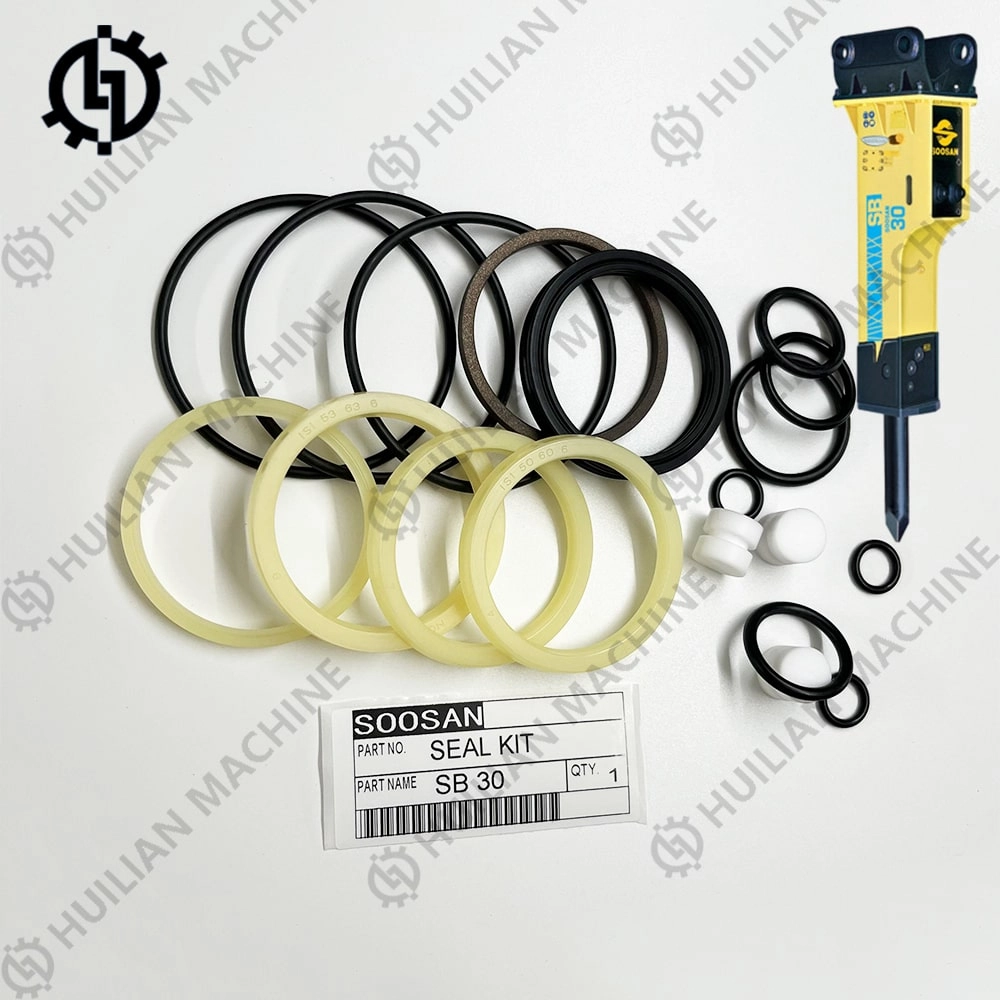
E71012 E7X001 SOOSAN SQ30 SB30Ⅱ SB30 Breaker Seal Kit SB30TS-P SB30Ⅱ TS-P SB30Ⅱ SSL Hydraulic Rock Hammer Parts Oil Repair Kit
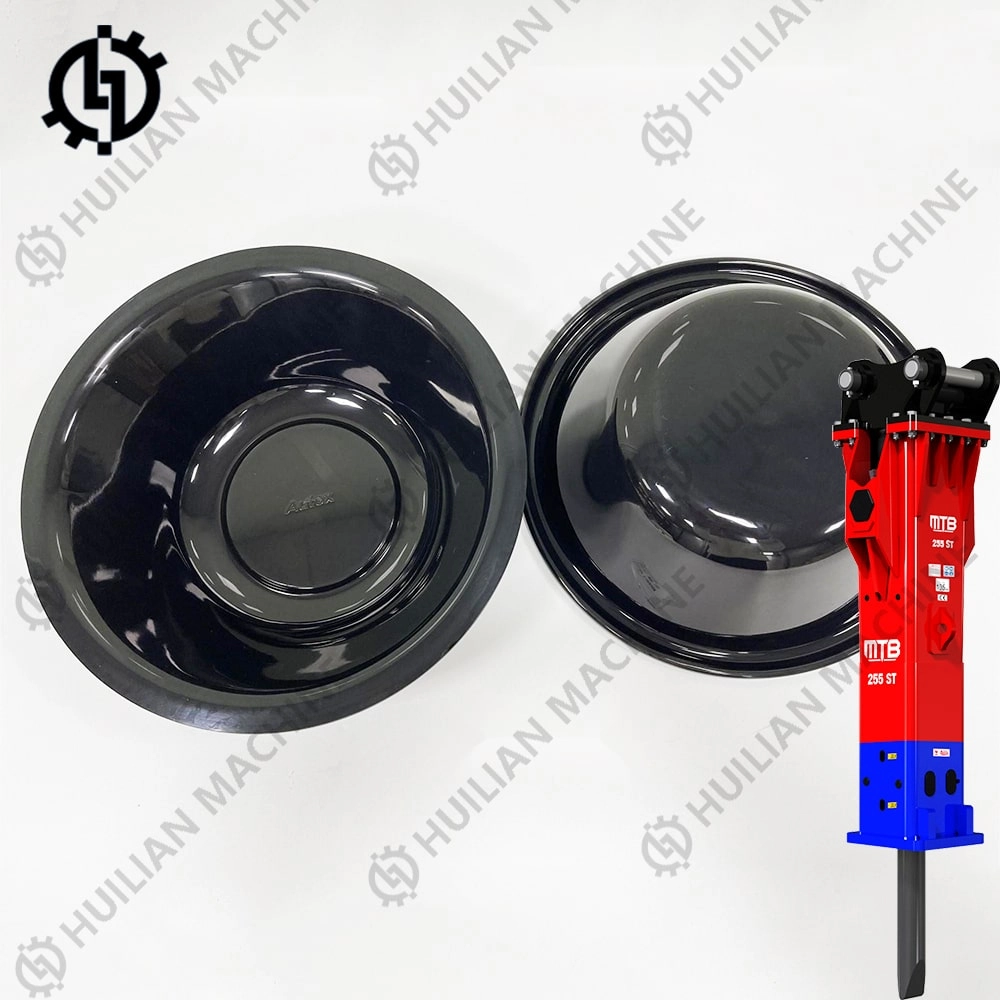
Inan Makina MTB Hydraulic Breaker Parts 45B0116A11 MTB255 MTB MT 255 Diaphragm MTB 255 IQ MTB-255 MTB 255 ST Membrane for Excavator Rock Hammer
 About us
© 2025 HUILIAN MACHINE. All rights reserved