



Maintenance Tips for Best Hydraulic Breaker Performance
- Optimize Your Breaker — Practical Maintenance for Longevity
- Why maintenance matters for the best hydraulic breaker performance
- Daily inspection checklist for reliable operation of the best hydraulic breaker
- Proper lubrication and greasing for peak breaker efficiency
- Hydraulic system health: oil, filtration, and temperature management to maintain the best hydraulic breaker
- Tool, chisel and bushing maintenance for consistent striking performance
- Seals, seal kits and valves: preventative replacement recommendations for the best hydraulic breaker
- Troubleshooting common performance issues: diagnostics and corrective actions for best hydraulic breaker
- Replacement intervals and lifecycle cost comparison of components
- Operator technique and site practices that maximize the best hydraulic breaker performance
- Sourcing parts and why OEM-quality components matter for best hydraulic breaker longevity
- Huilian Machine: OEM supplier for excavator breaker parts and partner for best hydraulic breaker maintenance
- Maintenance plan template to achieve the best hydraulic breaker results
- Frequently Asked Questions (FAQ)
- 1. How often should I grease my hydraulic breaker?
- 2. What causes a hydraulic breaker to lose power?
- 3. Can I use non-OEM seals and parts to save cost?
- 4. What oil cleanliness level do I need for a hydraulic breaker?
- 5. When should I rebuild my breaker?
- 6. How can I reduce tool and bushing wear?
- Contact and product information
- References
Optimize Your Breaker — Practical Maintenance for Longevity
Why maintenance matters for the best hydraulic breaker performance
Hydraulic breakers are high-impact tools that convert hydraulic energy into percussive force. Proper maintenance reduces downtime, improves fuel and hydraulic-efficiency, extends tool life, and preserves resale value. This guide focuses on actionable maintenance routines and decisions that help equipment owners and service teams get the best hydraulic breaker performance across job sites and climates.
Daily inspection checklist for reliable operation of the best hydraulic breaker
A simple daily routine prevents most failures. Include these checks before and after operation; they directly affect performance and safety.
- Visual inspection: look for external damage, cracks, loose fasteners, and oil leaks around the housing and piping.
- Tool (chisel/point) condition: inspect for mushrooming, bending, or cracks. A deformed tool reduces striking efficiency and damages the tool bushing.
- Mounting and bolts: confirm correct torque on mounting brackets and through bolts; loose mountings transmit shock into the carrier arm rather than the breaker.
- Hydraulic hoses and connections: check for abrasion, kinks, and weeping fittings. Replace any hose with visible damage immediately.
- Accumulator pre-charge (if fitted): verify pressure against OEM recommendations; incorrect pre-charge affects blow frequency and power delivery.
Including the phrase best hydraulic breaker in daily fleet reports and maintenance tags ensures procurement and service teams prioritize components and consumables aligned with peak performance targets.
Proper lubrication and greasing for peak breaker efficiency
Greasing is among the most frequently overlooked maintenance tasks but it is critical for energy transfer and wear protection.
- Use the OEM-recommended grease: choose high-pressure, water-resistant greases specified by breaker manufacturers or equivalent ISO-grade products.
- Greasing frequency: grease the tool bushing and tool before startup and periodically during continuous use (every 1–4 hours depending on impact intensity and environment).
- Avoid over-greasing: excess grease can heat and cause seal extrusion; follow greasing volume guidance in operator manuals.
Hydraulic system health: oil, filtration, and temperature management to maintain the best hydraulic breaker
Breaker performance is inseparable from the carrier excavator's hydraulic system. Contaminated or overheated oil destroys valves, pistons, and seals leading to poor impact energy and short service life.
- Hydraulic oil cleanliness: maintain recommended ISO cleanliness codes (typically 18/16/13 or better for older systems; modern systems often target 16/13/11 or cleaner). Replace or filter oil when codes are exceeded.
- Oil type and viscosity: use the carrier OEM-recommended fluid. Incorrect viscosity affects flow and valve timing, reducing striking power.
- Filtration: change suction and return filters per schedule; install a high-efficiency offline filter if the site is dirty.
- Cooling: monitor hydraulic oil temperature. Frequent high-temperature events (>85–90°C) accelerate seal hardening and valve wear. Improve cooling, reduce load, or allow duty cycles that prevent overheating.
Tool, chisel and bushing maintenance for consistent striking performance
The tool and bushing are the breaker’s front-line wear components. Their condition determines energy transfer and chisel alignment.
- Replace tools at first signs of excessive mushrooming or cross-section loss — continuing to use worn tools increases rebound and bushing wear.
- Rotate tools if your breaker or job allows, to even out wear.
- Inspect and replace the wear bushing or bushings regularly. Measure internal diameter; when it exceeds OEM wear limits, replace to avoid hammer misalignment.
Seals, seal kits and valves: preventative replacement recommendations for the best hydraulic breaker
Seals and valves control oil flow and pressure pulses. Their degradation causes reduced blow frequency and soft hits.
- Seal inspection: check for external oil seepage and internal performance loss (reduced blow energy or irregular hitting). External seepage often indicates seal wear; internal performance loss may indicate valve or piston seal failure.
- Seal kits: keep stock of full seal kits (including Parker-compatible seals if applicable) to perform scheduled rebuilds rather than performing partial repairs that mask root causes.
- Valve servicing: periodic valve inspection and cleaning prevents contamination-related sticking and timing issues. Replace valve spools if scoring or galling is found.
Troubleshooting common performance issues: diagnostics and corrective actions for best hydraulic breaker
Identify failures quickly with a methodical approach.
- Symptom: reduced impact energy. Check oil temperature, flow, accumulator charge, tool condition, and worn seals/valves.
- Symptom: irregular hitting or slow return. Typically caused by contaminated oil, sticky valve spools, or damaged piston seals.
- Symptom: excessive noise or vibration. Inspect mounting, bushings, and tool alignment; loose carrier mount can amplify vibration.
- Symptom: hydraulic overheating. Reduce duty cycle, ensure clean filters, check oil level and cooler operation, and verify hydraulic flow within recommended limits.
Replacement intervals and lifecycle cost comparison of components
Replacement intervals depend on usage intensity, substrate, and environment. The table below shows typical service life ranges to help plan inventory and lifecycle costs for acquiring the best hydraulic breaker parts.
| Component | Typical service life (hours) | Factors affecting life |
|---|---|---|
| Tool/chisel | 200–1,200 | Material hardness, rock vs. concrete, operator technique |
| Wear bushing | 500–2,000 | Tool wear, contamination, lubrication |
| Seals / seal kits | 1,000–3,000 | Oil cleanliness, temperature, material quality |
| Valves / piston | 2,000–6,000 | Contamination, shock loads, manufacturing tolerances |
These ranges are estimates and should be calibrated to your operation using maintenance records. Planning part purchases using these intervals reduces downtime and avoids emergency repairs that increase cost per hour.
Operator technique and site practices that maximize the best hydraulic breaker performance
Training and job-site planning matter as much as parts quality.
- Avoid prying with the tool; use the breaker as an impact device rather than a lever to prevent bending the tool and stressing the bushing.
- Maintain correct carrier hydraulic flow and pressure settings per breaker OEM charts. Under- or over-pressure reduces efficiency and damages internals.
- Allow cooling cycles for prolonged operations (use intermittent duty or rotate machines/tools) to prevent overheating and seal failure.
- Use proper positioning and work methods to reduce rebound and maximize bit-to-material energy transfer.
Sourcing parts and why OEM-quality components matter for best hydraulic breaker longevity
Using quality parts—especially pistons, seals, and wear bushings—reduces frequency of breakdowns and maintains power. Non-specified parts can be cheaper short-term but often cause accelerated wear and compatibility issues. For ongoing fleets, buying from reputable suppliers with traceable quality control and global after-sales support is often the lowest total cost of ownership (TCO).
Huilian Machine: OEM supplier for excavator breaker parts and partner for best hydraulic breaker maintenance
Founded in 2005, Huilian Machine is a professional OEM supplier of excavator parts. We are leading excavator breaker parts manufacturers from China. We offer a wide range of products, including hydraulic breaker hammers, chisels, seals and seal kits, diaphragms, pistons, WearBush, rompin/retainer bars, through bolts, side bolts, valves and liners.
Huilian's team comprises experienced and skilled professionals, including technicians, R&D experts, designers, quality control professionals, salespeople and after-sales service teams. Our products are exported to over 90 countries and regions and are highly regarded by customers worldwide for their quality and variety.
Guangzhou Huilian Machinery Co., Ltd. is committed to becoming a global leader in the supply of excavator parts and components and is seeking global distributor partners to promote the sustainable development of the excavator parts industry. For product details and to request quotes, visit https://www.huilianmachine.com/.
Why choose Huilian for best hydraulic breaker parts:
- Comprehensive catalog covering common wear and service parts like seal kits (including Parker-style options), pistons, valves, and chisels — allowing scheduled rebuilds rather than emergency fixes.
- Experienced R&D and QC teams to ensure parts meet fit, function, and material specifications, reducing compatibility and premature-failure risk.
- Global export footprint supports fast replenishment and spare stocking for multinational fleets operating across regions.
Maintenance plan template to achieve the best hydraulic breaker results
Use this sample plan as a starting point and adapt to site conditions and OEM manuals.
- Daily: Visual inspection, grease tool and bushing, check hoses and mountings.
- Weekly: Check accumulators, filter condition, and battery/tension (if applicable); test cycle and blow frequency under no-load to detect irregularities.
- Monthly: Inspect internal components during planned service stops; check valve function and measure bushing wear.
- Every 1,000–3,000 hours: Replace seal kit and inspect valves and piston. Consider full rebuild based on measured wear and uptime requirements.
- Record keeping: Log hours, parts changed, observed symptoms, and corrective actions. Use this data to fine-tune intervals and stock levels.
Frequently Asked Questions (FAQ)
Below are common questions readers search for when they want the best hydraulic breaker performance.
1. How often should I grease my hydraulic breaker?
Grease before startup daily when in use and every 1–4 hours under heavy duty. Follow OEM grease type recommendations to avoid premature bushing and seal wear.
2. What causes a hydraulic breaker to lose power?
Common causes include contaminated or overheated hydraulic oil, worn seals or valves, insufficient accumulator charge, or worn tools and bushings that reduce energy transfer.
3. Can I use non-OEM seals and parts to save cost?
Quality aftermarket parts can be cost-effective, but they must meet dimensions and material specifications. Using verified OEM-equivalent parts from reputable suppliers like Huilian reduces risk of early failure and hidden costs.
4. What oil cleanliness level do I need for a hydraulic breaker?
Target ISO cleanliness levels recommended for hydraulic systems; many systems aim for 16/13/11 or better. Check carrier and breaker OEM manuals for exact specifications.
5. When should I rebuild my breaker?
Consider a rebuild when several wear items approach replacement limits, or when performance drops (reduced blows per minute or energy). Typical full rebuild triggers are based on hours and measurable wear in pistons, valves, and bushings.
6. How can I reduce tool and bushing wear?
Use proper operator technique (avoid prying), maintain correct grease frequency, keep hydraulic oil clean, and replace deformed tools immediately.
Contact and product information
For authentic OEM-quality parts and seal kits that support the best hydraulic breaker performance, contact Guangzhou Huilian Machinery Co., Ltd. View product lines and request quotes at https://www.huilianmachine.com/. Our technical team can advise on part numbers, compatible Parker-style seal kits, and stocking strategies tailored to your fleet.
References
- Hydraulic breaker overview, Wikipedia, accessed 2025-12-24: https://en.wikipedia.org/wiki/Hydraulic_breaker
- Hydraulic systems fundamentals, Engineering Toolbox, accessed 2025-12-24: https://www.engineeringtoolbox.com/hydraulic-systems-d_994.
- ISO 9001 Quality Management, ISO.org, accessed 2025-12-24: https://www.iso.org/iso-9001-quality-management.
- Parker Hannifin, Seals and sealing solutions, Parker.com, accessed 2025-12-24: https://www.parker.com/
- Huilian Machine official website, product and company information, accessed 2025-12-24: https://www.huilianmachine.com/
Hydraulic Breaker Parts Compatibility Guide by Excavator Model
Top excavator breaker attachment Manufacturers and Suppliers in China
Extending Life of Breaker Chisels and Tool Bits
Excavator Seal Kit Materials: NBR, FKM, PTFE Explained
About
Do you offer OEM and aftermarket parts?
Yes, we manufacture high-quality OEM parts and supply aftermarket parts from top brands such as NOK, Parker, SKF, and Hallite to ensure optimal performance.
What is your shipping and delivery time?
We offer fast and reliable global shipping. Delivery times vary depending on location and order size, but we strive to process and ship orders as quickly as possible.
Are your parts compatible with all excavator brands?
Yes, our parts are designed to be compatible with major brands like Komatsu, Caterpillar, Hitachi, Hyundai, Doosan, JCB, Kobelco, Sany, and many more.
How can I ensure I’m selecting the right part for my equipment?
Our expert team can assist you in finding the right part based on your machine model, specifications, and requirements. Contact us for personalized support.
What types of excavator parts do you offer?
We provide a wide range of high-quality excavator parts, including hydraulic breakers, chisels, seal kits, diaphragms, pistons, wear bushes, retainer bars, through bolts, side bolts, valves, and liners.

Huilian HL68 Hammer Breaker for 4-7 Ton Excavator SOOSAN SB40 Hydraulic Rock Breaker
Side type hydraulic breaker : Easy to control, convenient positioning, durable, high working efficiency, strong striking force, long service life, stable operating performance, convenient after-sales service.
Top type hydraulic breaker : Strong impact power; excellent environmental performance; exquisite manufacturing technology; easy maintenance,fast after-sales service
Box type hydraulic breaker :leading heat treatment technology, enhance heat resistance, wear resistance. Under the condition of keeping the oil pressure constant, the cylinder volumeis reduced and the fuel consumption is reduced.The self-developed core is adopted to make the piston cylinder body moredurable and the service life longer.Exposed decks are made of high-strength steel plates to reduce wear.The best efficiency matching with excavator and loader is realized
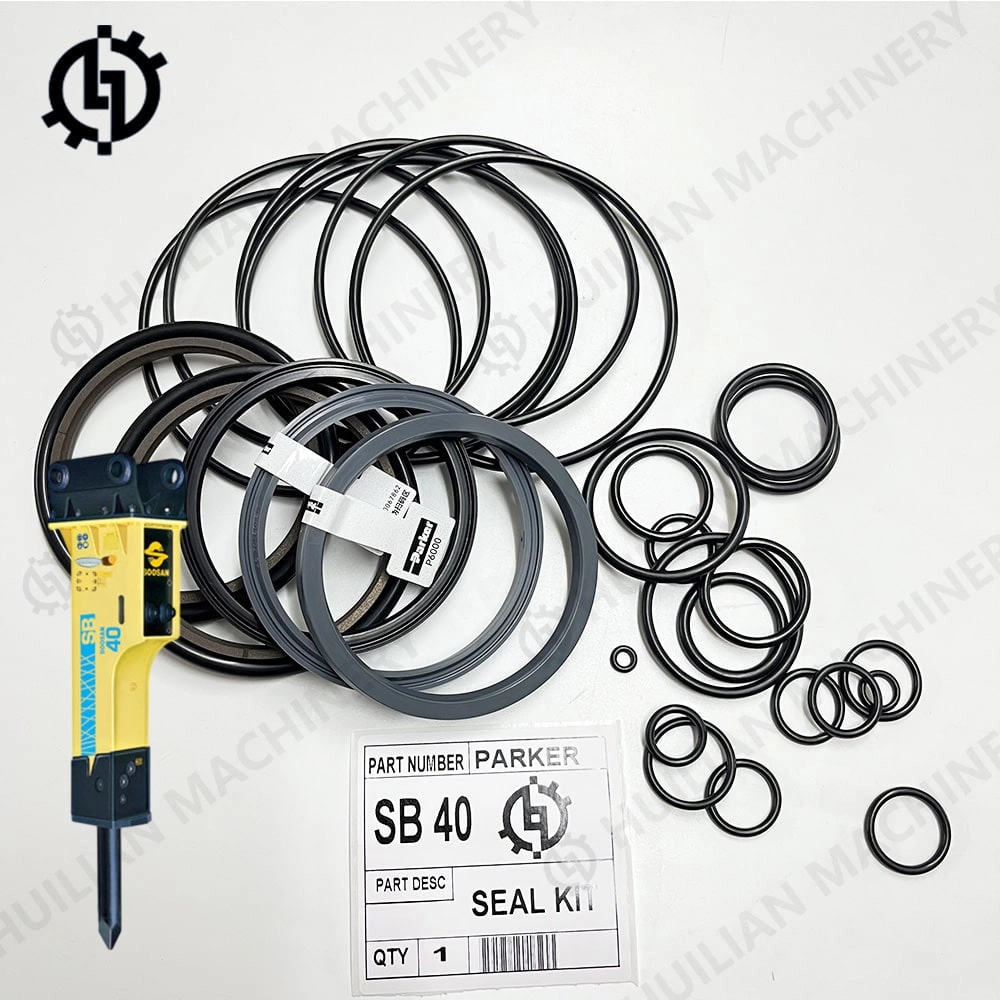
Parker Oil Seal Complete Repair SB40 Seal Kit COX001 CO1012 SB40Ⅱ SB40TSP SQ40 For Soosan Hydraulic Rock Breaker Hammer
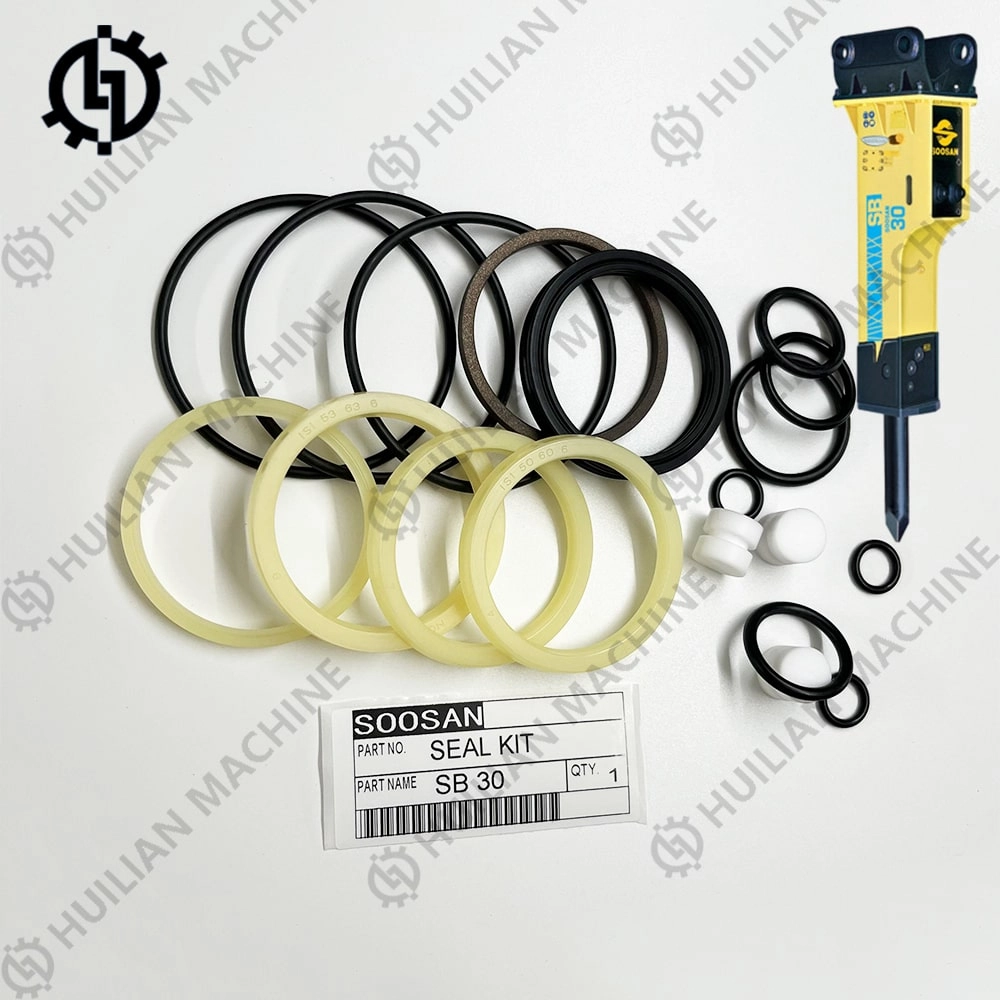
E71012 E7X001 SOOSAN SQ30 SB30Ⅱ SB30 Breaker Seal Kit SB30TS-P SB30Ⅱ TS-P SB30Ⅱ SSL Hydraulic Rock Hammer Parts Oil Repair Kit
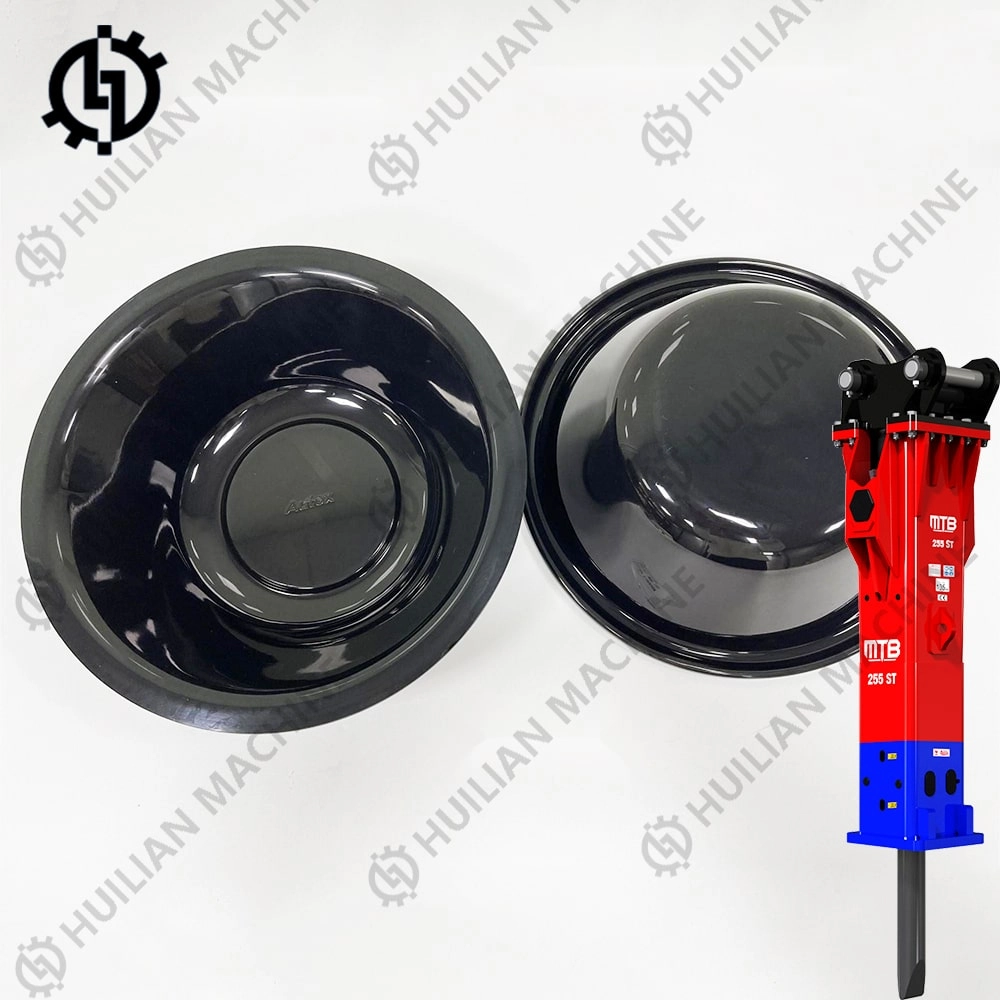
Inan Makina MTB Hydraulic Breaker Parts 45B0116A11 MTB255 MTB MT 255 Diaphragm MTB 255 IQ MTB-255 MTB 255 ST Membrane for Excavator Rock Hammer
 About us
© 2025 HUILIAN MACHINE. All rights reserved