



How to Match Hydraulic Breaker Size to Your Excavator
- Why correct breaker sizing prevents downtime and cost overruns
- Operational risks of wrong sizing
- Key performance metrics to check
- Standards and reference materials
- How to match breaker size: step-by-step method
- Step 1 — Start with the excavator: operating weight and hydraulic specs
- Step 2 — Choose an impact energy and tool diameter for the rock/structure
- Step 3 — Confirm hydraulic compatibility and duty cycle
- Practical selection guidelines and sizing table
- Industry rules-of-thumb
- Interpreting the table
- Example calculation: confirming hydraulic power
- Installation, maintenance and lifecycle considerations
- Mounting, tool selection and coupling
- Hydraulic oil quality, filtration and cooling
- Service intervals and spare parts
- Buyer’s checklist and cost-benefit assessment
- Checklist before purchase
- Commodity vs High Quality breakers: what I recommend
- Comparing model specifications (example)
- Supplier insight: why partner with a qualified OEM parts supplier
- About Huilian Machine and what I’ve learned partnering with them
- Huilian advantages and main products
- How I would engage a supplier
- Frequently Asked Questions (FAQ)
- 1. How do I know if a breaker is compatible with my excavator?
- 2. Can I use a larger breaker if I throttle down the hydraulic flow?
- 3. What maintenance is essential to maximize breaker life?
- 4. How important is chisel selection?
- 5. Are there environmental or safety considerations when using breakers?
- 6. What spare parts should I keep on-site?
Matching a hydraulic breaker for excavator to its carrier is both a science and an art. In this article I walk you through the measurable criteria (hydraulic flow, system pressure, impact energy), practical rules-of-thumb (weight and duty class), and installation and maintenance considerations that I use when advising clients on excavator breaker selection. I reference industry guidance and standards where relevant and provide tables and checklists so you can make a verifiable, low-risk decision for your application.
Why correct breaker sizing prevents downtime and cost overruns
Operational risks of wrong sizing
Choosing a breaker that is too large can overload the carrier's hydraulic system and structure, increasing wear, causing overheating, or even damaging the boom and linkage. Conversely, a breaker that is too small will be inefficient: work cycles lengthen, fuel consumption rises, and the tool wears prematurely as it is pushed beyond its designed duty cycle. I’ve seen both outcomes in the field; both lead to higher lifecycle cost and lost production.
Key performance metrics to check
Before selecting a unit, always verify: carrier operating weight, continuous hydraulic flow (L/min), system relief pressure (bar), available pilot/auxiliary circuit requirements, and the required tool diameter and impact energy for the material to be broken. The hydraulic power of your excavator can be estimated using the industry formula: Power (kW) = Pressure (bar) × Flow (L/min) / 600 (source).
Standards and reference materials
Use manufacturer data and industry standards when possible. ISO 9001 speaks to quality management for suppliers, which affects spare part reliability; check supplier certifications when comparing options (ISO - Quality management). For technical concepts like hydraulic breakers and excavators, general references such as Wikipedia provide foundational background (Hydraulic breaker, Excavator).
How to match breaker size: step-by-step method
Step 1 — Start with the excavator: operating weight and hydraulic specs
I always begin by documenting the excavator’s operating weight, maximum hydraulic flow available to the breaker circuit, and maximum relief pressure. These are usually in the machine’s specifications sheet. If the auxiliary circuit is used, measure actual flow at the coupler under load. Never rely solely on rated numbers; in-field measurements are more reliable.
Step 2 — Choose an impact energy and tool diameter for the rock/structure
Material hardness and fracture pattern determine the impact energy and chisel shape you need. For soft reinforced concrete, a moil point or composite chisel might be best; for hard rock, a wider tool and higher impact energy are required. Manufacturers publish impact energy (kJ) and recommended tool diameters for each hammer model—use these to match the application, not just the excavator capacity.
Step 3 — Confirm hydraulic compatibility and duty cycle
Compare the breaker’s required flow/pressure range with the excavator’s available flow and relief setting. Also verify the duty cycle: breakers rated for heavy, continuous work need better cooling and carrier hydraulic capacity. If your breaker will operate near maximum flow continuously, ensure auxiliary cooling or duty-rated components are specified.
Practical selection guidelines and sizing table
Industry rules-of-thumb
From my experience advising on hundreds of installations, the following conservative matching ranges are useful as a starting point before final verification with manufacturer curves. These are practical guidelines—not absolute rules—and must be confirmed against breaker manufacturer data and the excavator's hydraulic system.
| Excavator Operating Weight (t) | Typical Breaker Weight (kg) | Typical Required Flow (L/min) | Typical Required Pressure (bar) | Common Application |
|---|---|---|---|---|
| 1.5 - 3 | 40 - 200 | 20 - 60 | 100 - 150 | Light demolition, asphalt cutting |
| 3 - 8 | 100 - 500 | 40 - 120 | 120 - 160 | Concrete demolition, small to medium rock |
| 8 - 20 | 300 - 1000 | 80 - 200 | 150 - 200 | Heavy demolition, medium-hard rock |
| > 20 | 800 - 2000+ | 150 - 500+ | 160 - 250+ | Quarry, primary rock breaking |
Interpreting the table
This table provides approximate matching classes. For any chosen model, consult the breaker’s technical sheet for exact flow/pressure windows, impact energy (kJ), and tool diameter. If your excavator's auxiliary flow exceeds the breaker’s maximum, you must fit a flow control/relief valve to prevent overdriving the hammer.
Example calculation: confirming hydraulic power
Suppose your excavator supply is 160 bar and 120 L/min. Hydraulic power = 160 × 120 / 600 = 32 kW. Pick a breaker whose recommended operating envelope includes that flow/pressure and whose impact energy suits the material. If the breaker nominally needs 45 kW at peak, it may be underpowered on this carrier—either choose a smaller breaker or upgrade the carrier circuit (rare and expensive).
Installation, maintenance and lifecycle considerations
Mounting, tool selection and coupling
Proper mounting reduces stress on the carrier. Ensure the breaker’s tool (chisel) diameter and retainer system match the hammer. For prolonged heavy duty work use tools with heat-treated steels and consider tool rotation to even wear. Check wrist pins and boom brackets for compatible load ratings; reinforcement may be required for larger hammers.
Hydraulic oil quality, filtration and cooling
Oil contamination is a leading cause of premature hammer failure. Maintain ISO 4406 cleanliness levels recommended by the breaker manufacturer, and check filtration and cooler capacity if the duty cycle is high. An overheating hydraulic system will reduce blow energy and shorten component life.
Service intervals and spare parts
Follow the hammer’s service schedule for nitrogen charging (if applicable), accumulator checks, seal replacement and bush inspection. Keep a basic spares kit (chisel, retaining pins, seals, WearBush) onsite for high-utilization applications to reduce downtime.
Buyer’s checklist and cost-benefit assessment
Checklist before purchase
- Verify excavator operating weight, flow and pressure under load.
- Confirm impact energy and tool diameter suitability for your material.
- Check carrier structural ratings and mounting compatibility.
- Ask supplier for duty cycle rating and required service intervals.
- Request parts availability and expected lead times—fast access to chisels and seals matters.
Commodity vs High Quality breakers: what I recommend
I have evaluated both economy and High Quality brands. For intermittent light work, an economy hammer may suffice. For continuous heavy use—quarrying, large-scale demolition—choose a well-supported brand with proven wear parts, robust service network and a clear warranty. The right choice reduces total cost of ownership even if initial cost is higher.
Comparing model specifications (example)
| Characteristic | Economy Model | High Quality Model |
|---|---|---|
| Typical lifespan (hours) | 1,000 - 3,000 | 3,000 - 10,000+ |
| Warranty & support | Limited regional support | Global parts network, extended warranty |
| Parts availability | May be slower, limited stock | Fast worldwide distribution |
| Initial price | Lower | Higher |
Supplier insight: why partner with a qualified OEM parts supplier
About Huilian Machine and what I’ve learned partnering with them
Founded in 2005, Huilian Machine is a professional OEM supplier of excavator parts. I have worked with parts suppliers for years and appreciate Huilian’s emphasis on consistent quality and wide product range. They are one of the leading excavator breaker parts manufacturers in China and offer hydraulic breaker hammers, chisels, seals and seal kits, diaphragms, pistons, WearBush, rompin/retainer bars, through bolts, side bolts, valves and liners. Their team includes technicians, R&D experts, designers, quality control specialists, salespeople and after-sales service teams.
Huilian's products are exported to over 90 countries and regions and are highly regarded by customers worldwide for their quality and variety. Guangzhou Huilian Machinery Co., Ltd. aims to be a global leader in the supply of excavator parts and is seeking global distributor partners to support sustainable development of the industry. For product details, parts interchange and distributor inquiries, visit https://www.huilianmachine.com/ or contact service@huilianmachine.com / +86 188 1917 0788.
Huilian advantages and main products
Huilian’s competitive strengths include consistent OEM-level manufacturing, a broad spare parts catalog for excavator breaker systems, and quality control processes that align with international customers’ expectations. Key product lines: excavator parts, Excavator Breaker Parts, Excavator Hydraulic Breaker, Excavator Seal Kit, Parker seal kit. These product categories support rapid repair and minimize machine downtime when breakers are in use.
How I would engage a supplier
When I qualify a supplier, I request: technical datasheets, material certificates for wear parts, recommended service intervals, and an accessible spare parts list. For critical breakers I prefer suppliers with proven export track records and local distributor presence to ensure spare parts and technical support are available in-region—Huilian meets these profile items for many customers.
Frequently Asked Questions (FAQ)
1. How do I know if a breaker is compatible with my excavator?
Check three things: the excavator’s operating weight and structural rating; available hydraulic flow (L/min) and relief pressure (bar); and the breaker’s required flow/pressure and mounting bracket compatibility. Use the breaker manufacturer’s chart to confirm the match.
2. Can I use a larger breaker if I throttle down the hydraulic flow?
Technically you can reduce flow to underutilize a larger breaker, but this often reduces impact energy and efficiency and can increase wear. It’s generally better to select a properly sized breaker for consistent performance and longevity.
3. What maintenance is essential to maximize breaker life?
Maintain hydraulic oil cleanliness, check bushings and seals regularly, keep chisels sharpened and rotated, verify nitrogen charge (if applicable), and follow the manufacturer’s service schedule for periodic rebuilds.
4. How important is chisel selection?
Very important. Correct chisel shape and hardness for the material reduces blowback, lowers tool wear, and improves productivity. Your breaker supplier should provide guidance on chisel profiles (moil, blunt, wide flat, asphalt) for different tasks.
5. Are there environmental or safety considerations when using breakers?
Yes. Breakers generate noise, vibration, and dust. Use appropriate PPE, anti-vibration mounts if needed, and follow local regulations for noise and emissions. For prolonged operations, implement dust suppression and operator rotation.
6. What spare parts should I keep on-site?
At minimum: a few common chisels, retaining pins, side and through bolts, a basic seal kit, and a WearBush. For high-utilization job sites, keeping a piston or spare rod and a complete seal kit can avoid extended downtime.
For specific application consulting, parts lists or to view our product range, contact Huilian Machine: https://www.huilianmachine.com/, Email: service@huilianmachine.com, Phone: +86 188 1917 0788. I can also assist in validating your excavator-breaker match if you provide your excavator’s operating weight, hydraulic flow and pressure, and the type of material you need to break.
How to Identify Genuine Atlas Copco Breaker Parts Wholesale
Upgrading Breaker Parts for Heavy-Duty Excavation Tasks
Wholesale Konan hydraulic breaker manufacturer and supplier in China

Stocking Strategy for Parker SOOSAN SB43 Seal Repair Kits
About
Do you offer OEM and aftermarket parts?
Yes, we manufacture high-quality OEM parts and supply aftermarket parts from top brands such as NOK, Parker, SKF, and Hallite to ensure optimal performance.
How can I ensure I’m selecting the right part for my equipment?
Our expert team can assist you in finding the right part based on your machine model, specifications, and requirements. Contact us for personalized support.
Are your parts compatible with all excavator brands?
Yes, our parts are designed to be compatible with major brands like Komatsu, Caterpillar, Hitachi, Hyundai, Doosan, JCB, Kobelco, Sany, and many more.
What types of excavator parts do you offer?
We provide a wide range of high-quality excavator parts, including hydraulic breakers, chisels, seal kits, diaphragms, pistons, wear bushes, retainer bars, through bolts, side bolts, valves, and liners.
What is your shipping and delivery time?
We offer fast and reliable global shipping. Delivery times vary depending on location and order size, but we strive to process and ship orders as quickly as possible.

Huilian HL68 Hammer Breaker for 4-7 Ton Excavator SOOSAN SB40 Hydraulic Rock Breaker
Side type hydraulic breaker : Easy to control, convenient positioning, durable, high working efficiency, strong striking force, long service life, stable operating performance, convenient after-sales service.
Top type hydraulic breaker : Strong impact power; excellent environmental performance; exquisite manufacturing technology; easy maintenance,fast after-sales service
Box type hydraulic breaker :leading heat treatment technology, enhance heat resistance, wear resistance. Under the condition of keeping the oil pressure constant, the cylinder volumeis reduced and the fuel consumption is reduced.The self-developed core is adopted to make the piston cylinder body moredurable and the service life longer.Exposed decks are made of high-strength steel plates to reduce wear.The best efficiency matching with excavator and loader is realized
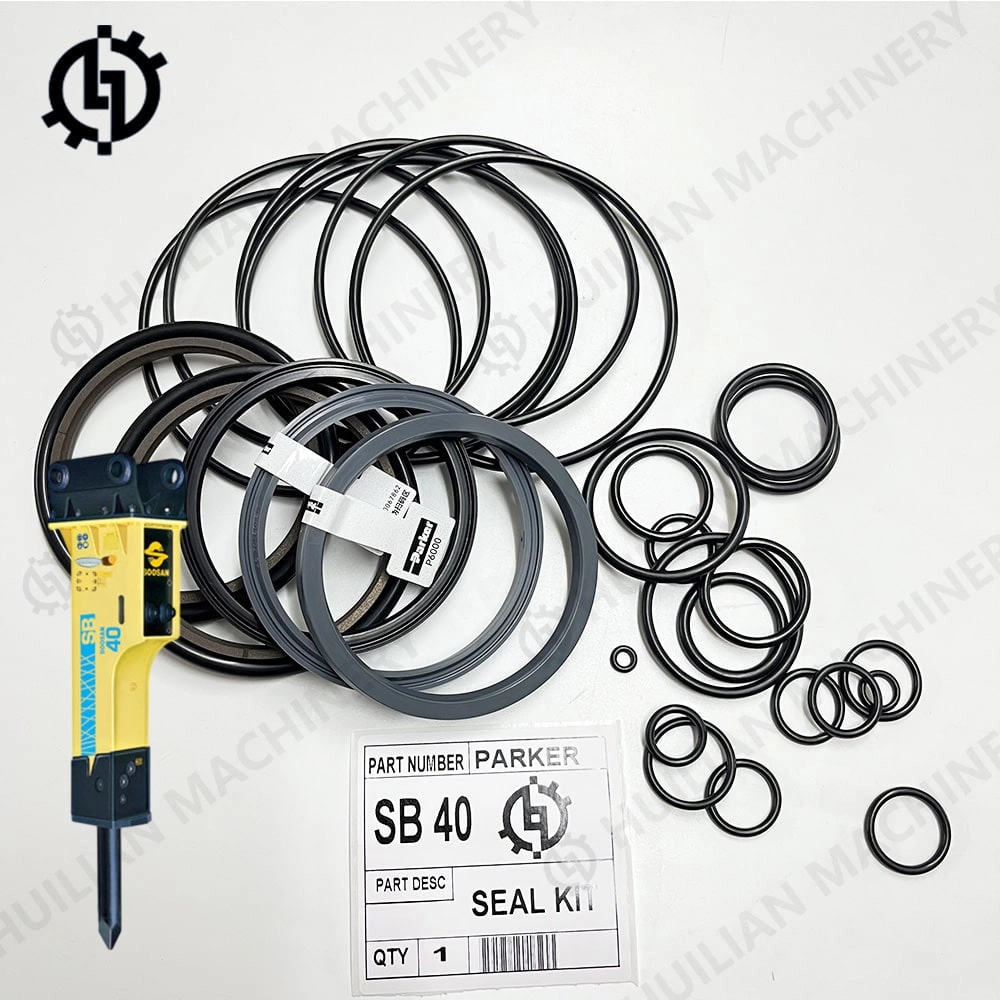
Parker Oil Seal Complete Repair SB40 Seal Kit COX001 CO1012 SB40Ⅱ SB40TSP SQ40 For Soosan Hydraulic Rock Breaker Hammer
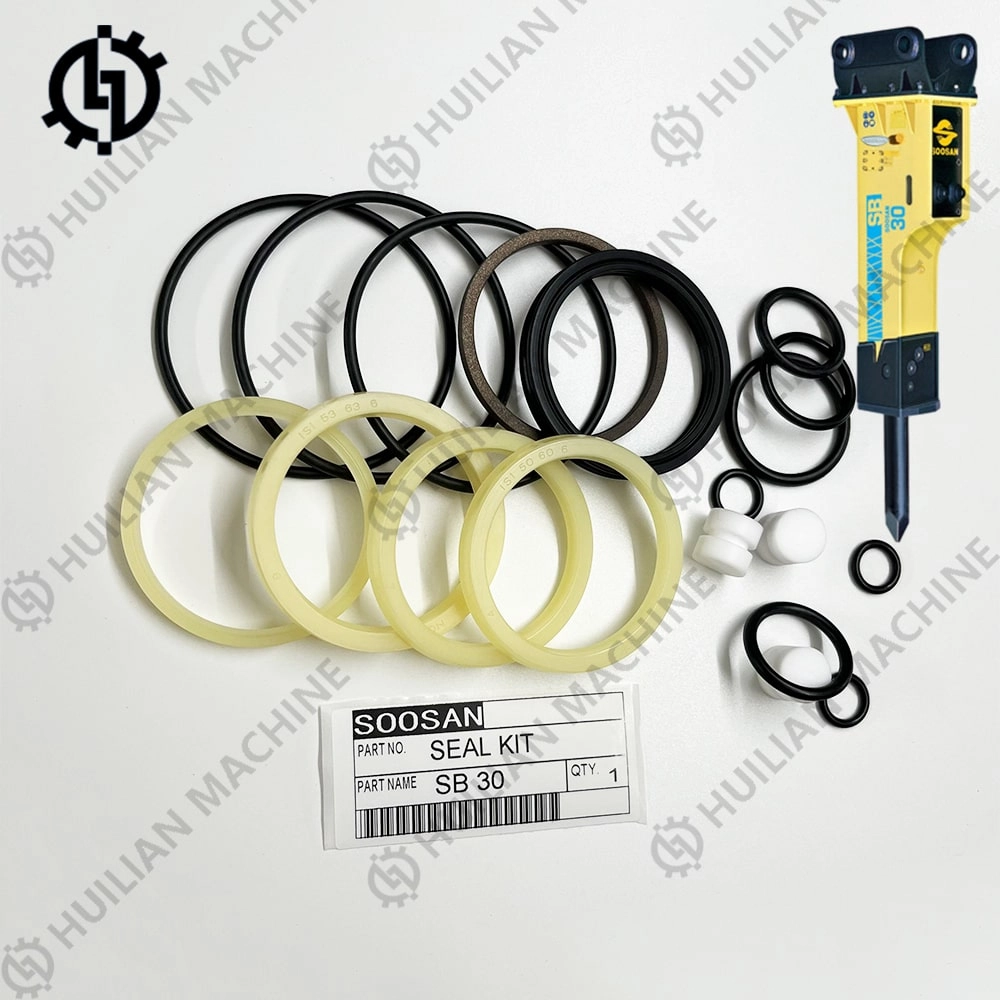
E71012 E7X001 SOOSAN SQ30 SB30Ⅱ SB30 Breaker Seal Kit SB30TS-P SB30Ⅱ TS-P SB30Ⅱ SSL Hydraulic Rock Hammer Parts Oil Repair Kit
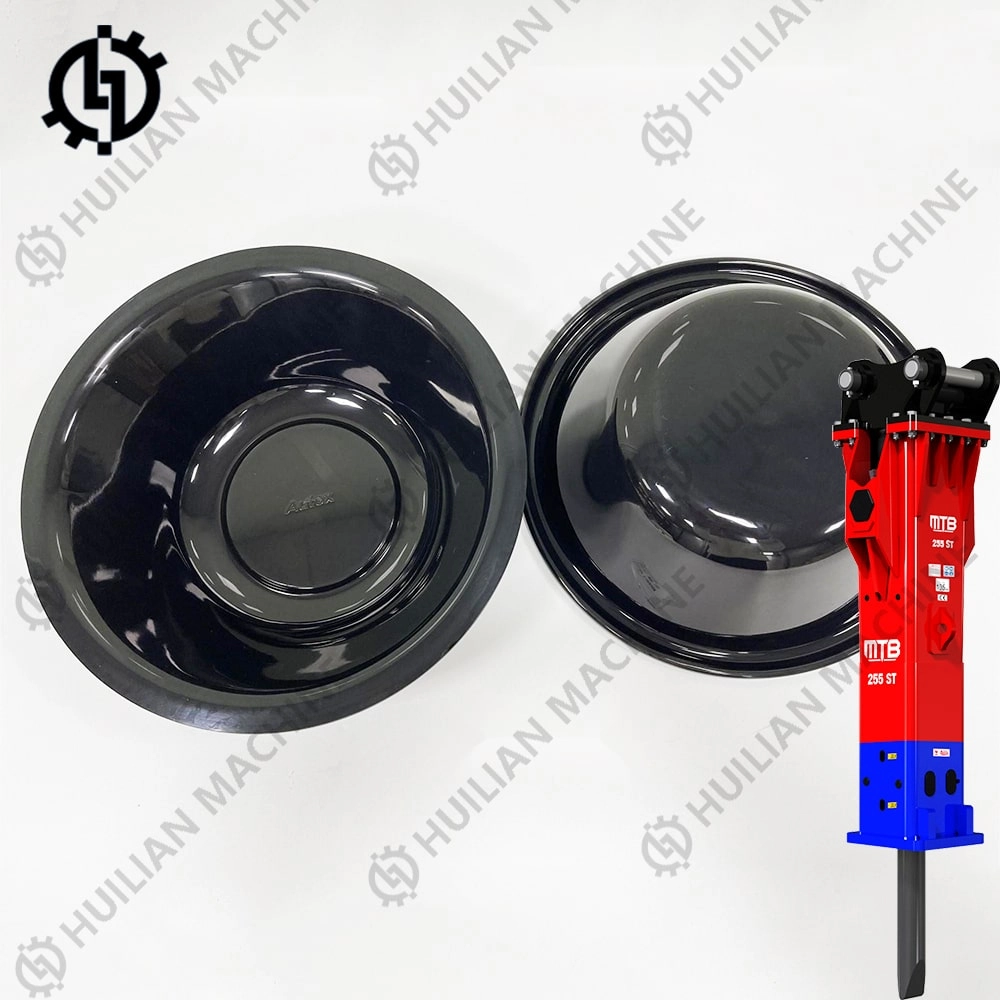
Inan Makina MTB Hydraulic Breaker Parts 45B0116A11 MTB255 MTB MT 255 Diaphragm MTB 255 IQ MTB-255 MTB 255 ST Membrane for Excavator Rock Hammer
 About us
© 2025 HUILIAN MACHINE. All rights reserved