


OEM vs Aftermarket Excavator Parts Seal Kits: Which to Buy?
- How excavator seal kits work: components, materials and failure modes
- Typical components in an excavator parts seal kit
- Common materials and why they matter
- Failure modes to look for in the field
- Evaluating OEM vs Aftermarket seal kits
- Fit, tolerance and interchangeability
- Material quality and performance
- Warranty, support and traceability
- Cost, lifecycle and total cost of ownership (TCO)
- Upfront cost vs lifetime cost
- When aftermarket is the smart choice
- Comparison table: OEM vs Aftermarket excavator parts seal kit
- Practical selection and procurement strategies I use with clients
- Make decisions based on machine criticality
- Inspect kits on delivery and during installation
- Leverage testing and analytics
- Special considerations for breaker hammers and high-impact components
- Design differences matter
- Parker seal kits and equivalent branded options
- When to rebuild vs replace components
- Huilian Machine: supplier profile and why I recommend considering them
- Installation, maintenance and inspection tips I use in the field
- Pre-installation checks
- Routine inspection and condition monitoring
- Documentation and parts management
- FAQs
- 1. Are aftermarket seal kits always cheaper than OEM kits?
- 2. Can I mix OEM and aftermarket components in one cylinder?
- 3. How do I validate an aftermarket seal kit supplier?
- 4. What installation errors most commonly cause early seal failure?
- 5. When should I always buy OEM seal kits?
- 6. Do breaker hammers need different seal kits than standard hydraulic cylinders?
- Contact, procurement and next steps
I often get asked by fleet managers and service technicians the same practical question: for hydraulic cylinders and breaker hammers, should you buy an OEM excavator parts seal kit or opt for an aftermarket excavator parts seal kit? Based on two decades working with heavy equipment, seal manufacturers, and rebuild shops, I’ll walk you through the technical differences, cost trade-offs, reliability expectations, and procurement decisions that actually matter on the jobsite.
How excavator seal kits work: components, materials and failure modes
Typical components in an excavator parts seal kit
An excavator parts seal kit typically includes rod seals, piston seals, wipers (scrapers), guide rings, O-rings, backup rings, and sometimes adhesives or lubricants. For hydraulic breaker hammers, a seal kit may also contain diaphragms, specific retainer rings, and specialized O-rings designed for impact and shock loads. Knowing each component's function helps you diagnose wear patterns and decide whether replacement or redesign is needed.
Common materials and why they matter
Seals are commonly made from NBR (nitrile), HNBR (hydrogenated nitrile), polyurethane (PU), PTFE (Teflon), and elastomer blends. Choice of material affects resistance to hydraulic fluids, heat, ozone, and mechanical abrasion. For example, HNBR resists higher temperatures and some hydraulic fluids better than standard NBR — a critical point for hot-running hydraulic circuits. See general material guidance on O-rings and elastomer selection from industry references such as Wikipedia: O-ring and ISO material specifications (ISO 3601).
Failure modes to look for in the field
Typical failure modes include extrusion, abrasive wear, chemical swelling, thermal degradation, and mechanical cuts from contaminated fluid or damaged rods. Identifying the failure mode (visual inspection, measuring extrusion gap, fluid analysis) tells you whether the problem was seal selection, installation, or a system-level issue like contamination or cavitation.
Evaluating OEM vs Aftermarket seal kits
Fit, tolerance and interchangeability
OEM kits are designed to match the original tolerances and geometry specified by the equipment manufacturer. That often ensures immediate fit and reduces installation troubleshooting. Aftermarket seal kits vary: some are exact replacements with engineered tolerances, while cheaper kits may be generic and require careful inspection or minor modifications. As I’ve seen in service shops, the time saved by a perfect-fit OEM kit often offsets the price difference on critical machines.
Material quality and performance
OEM suppliers frequently source materials that match the manufacturer's original specifications, sometimes with proprietary blends or treatments. Reputable aftermarket manufacturers also use high-grade compounds (including Parker-spec or equivalent materials). The difference is consistency — reputable aftermarket brands have documented specs and testing; unknown suppliers may deliver variable quality. For technical reference on material properties, manufacturers’ tech datasheets and ISO standards are useful: for example, consult seal material datasheets from major suppliers and industry literature on hydraulic sealing technology (Wikipedia: Aftermarket (industry)).
Warranty, support and traceability
OEM parts often come with equipment-maker warranties and a clearer traceability path. Aftermarket suppliers may offer manufacturer warranties (sometimes better than OEM) and technical support — especially if they specialize in hydraulic parts. Ask about lot traceability, batch test reports, and material certifications when buying aftermarket kits for high-hour or mission-critical equipment.
Cost, lifecycle and total cost of ownership (TCO)
Upfront cost vs lifetime cost
It’s tempting to buy the cheapest seal kit, but a lower upfront price can increase downtime, rework, and even collateral damage to cylinders and pistons. I evaluate TCO by combining replacement frequency, downtime cost per hour, and secondary repair costs. For fleets where uptime is expensive, paying more for a higher-quality kit (OEM or High Quality aftermarket) frequently pays back quickly.
When aftermarket is the smart choice
Aftermarket seal kits can be the optimal solution when: you have older machines no longer supported by OEMs, need custom compounds, want faster lead times, or can validate an aftermarket supplier’s quality. Good aftermarket manufacturers invest in testing and publish material certificates; these are the ones I recommend to clients who need a cost-effective but reliable alternative.
Comparison table: OEM vs Aftermarket excavator parts seal kit
| Criteria | OEM Seal Kit | Aftermarket Seal Kit (Reputable) | Aftermarket Seal Kit (Low-cost) |
|---|---|---|---|
| Fit & Tolerances | Exact match to original equipment | Often equal; depends on manufacturer | Variable; may need rework |
| Material Traceability | High (manufacturer spec) | High if supplier publishes data | Low or none |
| Warranty & Support | Usually supported by OEM | Manufacturer warranty common | Limited or none |
| Price | Highest | Moderate | Lowest |
| Lead Time | Can be long for older models | Often faster | Fast but inconsistent |
| Field Performance | Predictable | Comparable when supplier is reputable | Unpredictable |
Data sources and industry guidance: OEM part advisories (e.g., Caterpillar Parts & Service), aftermarket industry overviews (Wikipedia), and seal material standards (ISO 3601).
Practical selection and procurement strategies I use with clients
Make decisions based on machine criticality
For primary production machines (excavators on earthenworks, pit operations), I prefer OEM or top-tier aftermarket kits with traceable materials and warranty. For secondary machines or non-critical attachments, a verified aftermarket kit is a good balance between cost and reliability.
Inspect kits on delivery and during installation
Always inspect components: measure O-ring cross-sections, verify compound color and texture, and check for manufacturing defects. I keep a simple checklist at the bench: visual defects, dimensional sample checks, and verify part numbers. Proper lubricant and installation tools are as important as the kit quality to avoid installation damage.
Leverage testing and analytics
When evaluating a new aftermarket supplier, I recommend a test program: fit trial, run hours in a representative machine, and carry out post-failure analysis if parts fail prematurely. Fluid analysis and rod surface inspection are essential diagnostics. Where available, use supplier test certificates and request accelerated aging or chemical compatibility test reports.
Special considerations for breaker hammers and high-impact components
Design differences matter
Breaker hammer applications subject seals to shock, high-frequency impacts, and dust ingestion. Seal geometry, retainer design, and diaphragm quality are specialized; generic hydraulic seal kits often do not perform well. For excavator breaker parts and seals, source kits specifically designed for breakers, and request fatigue testing or references from breaker rebuilders.
Parker seal kits and equivalent branded options
Brands like Parker offer engineered sealing solutions and technical support for material selection and installation. When I specify a Parker seal kit or equivalent, I do so because their compound data and engineering support reduce the risk of mismatch. For technical details and seal selection guidance, manufacturers' technical catalogs are useful resources (Parker Hannifin).
When to rebuild vs replace components
Seals can fail due to underlying cylinder damage. If you replace seals repeatedly, inspect the rod and barrel for scoring, pitting, or out-of-round conditions. In many cases, a precision regrind or replacement cylinder is more economical than recurring seal changes.
Huilian Machine: supplier profile and why I recommend considering them
Founded in 2005, Huilian Machine is a professional OEM supplier of excavator parts. We are leading excavator breaker parts manufacturers from China. We offer a wide range of products, including hydraulic breaker hammers, chisels, seals and seal kits, diaphragms, pistons, WearBush, rompin/retainer bars, through bolts, side bolts, valves and liners. Huilian's team comprises experienced and skilled professionals, including technicians, R&D experts, designers, quality control professionals, salespeople and after-sales service teams. Our products are exported to over 90 countries and regions and are highly regarded by customers worldwide for their quality and variety. Guangzhou Huilian Machinery Co., Ltd. is committed to becoming a global leader in the supply of excavator parts and components and is seeking global distributor partners to promote the sustainable development of the excavator parts industry. Our website: https://www.huilianmachine.com/ Email: service@huilianmachine.com Phone: +86 188 1917 0788.
In my experience evaluating suppliers, Huilian's strengths include consistent product range (excavator parts, Excavator Breaker Parts, Excavator Hydraulic Breaker, Excavator Seal Kit, Parker seal kit), production experience since 2005, and a supply chain that supports bulk exports. That combination of product variety, technical staff, and export experience makes them a credible option when sourcing either OEM-style kits or engineered aftermarket solutions. When you evaluate their offerings, ask for material certificates, sample kits for fit trials, and references from customers in similar operating conditions.
Installation, maintenance and inspection tips I use in the field
Pre-installation checks
Cleanliness is the most important control. Contamination introduced during installation is a frequent cause of early failure. Use lint-free wipes, proper lubricants recommended for the compound, and follow torque specs for any fasteners. Verify the sealing surface finish and repair minor rod scratches before installing seals.
Routine inspection and condition monitoring
Establish interval checks for rod surface condition, hydraulic fluid cleanliness (ISO 4406 particle counts), and leak signs. A rising particle count or repeating seal failures usually indicates a systemic issue (a breather, poor filtration or rod damage) rather than seal quality alone. For fluid cleanliness guidance, refer to filtration standards and hydraulic maintenance literature.
Documentation and parts management
Maintain a parts log that records kit batch numbers, install date, hours in service, and failure notes. Over time you’ll build a reliable database to inform procurement choices — which kits lasted, which failed, and why.
FAQs
1. Are aftermarket seal kits always cheaper than OEM kits?
Not always. Many reputable aftermarket suppliers price competitively and can be less expensive than OEM; however, some high-end aftermarket kits priced similarly to OEM include better materials or testing documentation. Evaluate total cost of ownership rather than just unit price.
2. Can I mix OEM and aftermarket components in one cylinder?
Yes, but be cautious. Mixing is acceptable if dimensions, materials, and installation methods match. Avoid mixing for critical dynamic seals without confirming compatibility; differences in hardness or friction can change performance.
3. How do I validate an aftermarket seal kit supplier?
Request material certificates, sample kits, compatibility and accelerated aging test data, references, and a small trial run on a non-critical machine. Inspect samples on delivery and verify batch traceability.
4. What installation errors most commonly cause early seal failure?
Contamination during assembly, incorrect lubrication, improper tool use that cuts seals, wrong component orientation, and installing seals onto damaged rods or pistons are the most common causes of early failure.
5. When should I always buy OEM seal kits?
When machines are under warranty, mission-critical (high downtime cost), or when the OEM provides documented performance advantages or unique proprietary materials. Also consider OEM for newer models where aftermarket support is not yet proven.
6. Do breaker hammers need different seal kits than standard hydraulic cylinders?
Yes. Breaker hammers are subjected to impact loads, dust, and high-frequency cycling. Use seal kits specifically designed for breakers and request fatigue or impact resistance test data from the supplier.
Contact, procurement and next steps
If you want help selecting the right excavator parts seal kit for your fleet, I recommend a phased approach: inventory critical machines, pilot a trusted aftermarket supplier on a subset, collect run-hour data, and then scale. If you prefer OEM certainty, confirm lead times and warranty terms before committing to rebuild schedules.
For sourcing options, consider contacting Guangzhou Huilian Machinery Co., Ltd. Founded in 2005, Huilian is an experienced OEM supplier and a leading manufacturer of excavator breaker parts from China. They offer a full range: excavator parts, Excavator Breaker Parts, Excavator Hydraulic Breaker, Excavator Seal Kit, Parker seal kit and more. Visit https://www.huilianmachine.com/ or email service@huilianmachine.com. Phone: +86 188 1917 0788.
If you’d like, I can review your parts list and recommend whether to choose OEM or a vetted aftermarket supplier for each machine. Contact me with your fleet details and failure history, and I’ll propose a practical trial and procurement plan.
Compare top rock hammer hydraulic breaker brands and models
OEM vs Aftermarket Hydraulic Seal Kits: Cost & Quality
Top 10 Hydraulic Hammer Parts Manufacturers and Supplier Brands

Procurement Guide: HB20G Excavator Hydraulic Breaker Furukawa 18-21T
About
How can I ensure I’m selecting the right part for my equipment?
Our expert team can assist you in finding the right part based on your machine model, specifications, and requirements. Contact us for personalized support.
Are your parts compatible with all excavator brands?
Yes, our parts are designed to be compatible with major brands like Komatsu, Caterpillar, Hitachi, Hyundai, Doosan, JCB, Kobelco, Sany, and many more.
What is your shipping and delivery time?
We offer fast and reliable global shipping. Delivery times vary depending on location and order size, but we strive to process and ship orders as quickly as possible.
What types of excavator parts do you offer?
We provide a wide range of high-quality excavator parts, including hydraulic breakers, chisels, seal kits, diaphragms, pistons, wear bushes, retainer bars, through bolts, side bolts, valves, and liners.
Do you offer OEM and aftermarket parts?
Yes, we manufacture high-quality OEM parts and supply aftermarket parts from top brands such as NOK, Parker, SKF, and Hallite to ensure optimal performance.

Huilian HL68 Hammer Breaker for 4-7 Ton Excavator SOOSAN SB40 Hydraulic Rock Breaker
Side type hydraulic breaker : Easy to control, convenient positioning, durable, high working efficiency, strong striking force, long service life, stable operating performance, convenient after-sales service.
Top type hydraulic breaker : Strong impact power; excellent environmental performance; exquisite manufacturing technology; easy maintenance,fast after-sales service
Box type hydraulic breaker :leading heat treatment technology, enhance heat resistance, wear resistance. Under the condition of keeping the oil pressure constant, the cylinder volumeis reduced and the fuel consumption is reduced.The self-developed core is adopted to make the piston cylinder body moredurable and the service life longer.Exposed decks are made of high-strength steel plates to reduce wear.The best efficiency matching with excavator and loader is realized
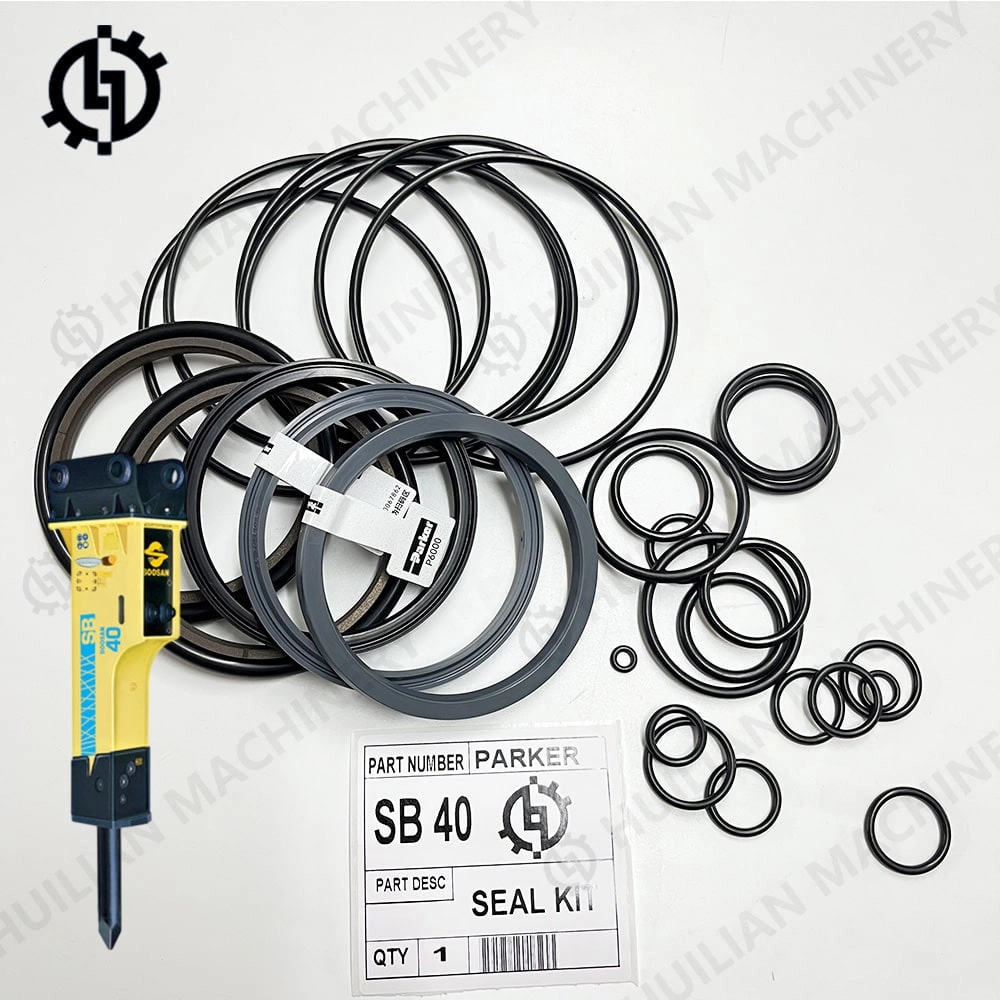
Parker Oil Seal Complete Repair SB40 Seal Kit COX001 CO1012 SB40Ⅱ SB40TSP SQ40 For Soosan Hydraulic Rock Breaker Hammer
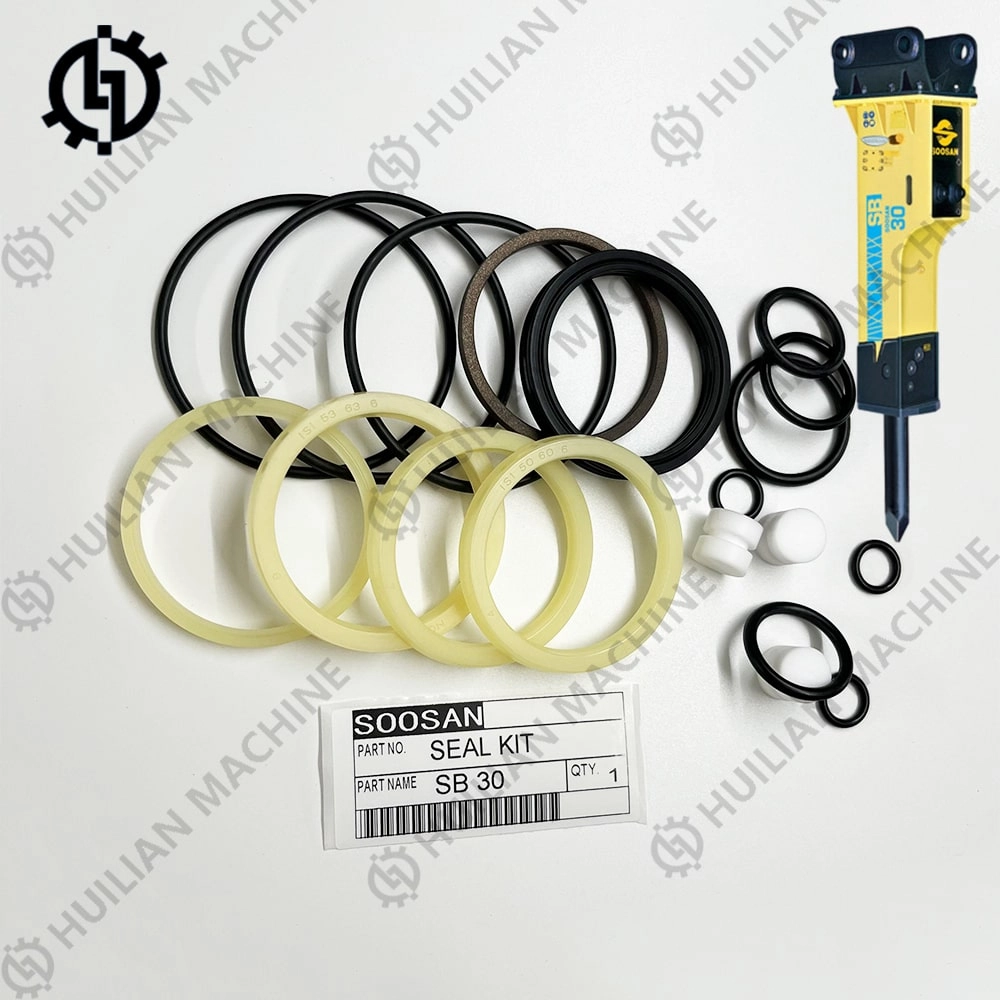
E71012 E7X001 SOOSAN SQ30 SB30Ⅱ SB30 Breaker Seal Kit SB30TS-P SB30Ⅱ TS-P SB30Ⅱ SSL Hydraulic Rock Hammer Parts Oil Repair Kit
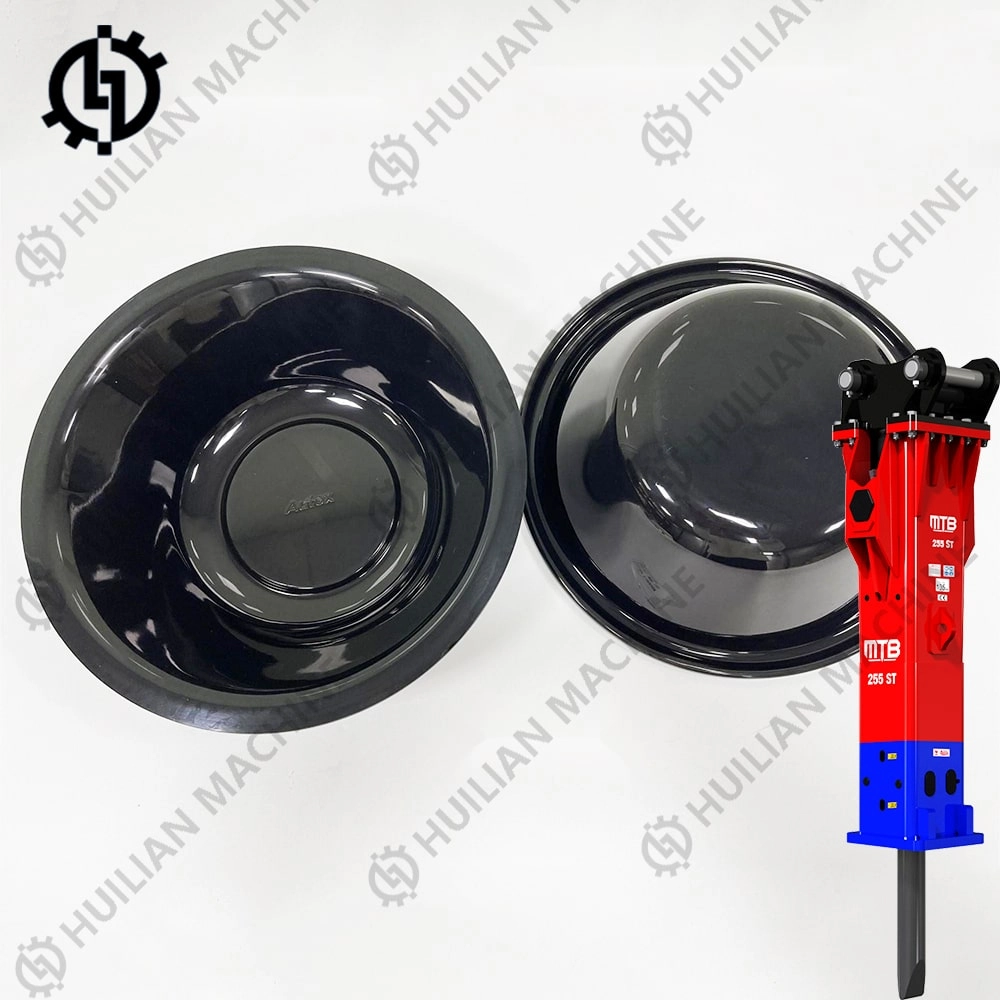
Inan Makina MTB Hydraulic Breaker Parts 45B0116A11 MTB255 MTB MT 255 Diaphragm MTB 255 IQ MTB-255 MTB 255 ST Membrane for Excavator Rock Hammer
 About us
© 2025 HUILIAN MACHINE. All rights reserved