



OEM vs Aftermarket Hydraulic Breaker Seal Kits: Pros & Cons
- Understanding the role of seals in hydraulic breakers
- What a hydraulic breaker seal kit contains
- Why seal quality matters for machine performance
- Materials and operating environment
- OEM vs Aftermarket: costs, quality and risk profiles
- Defining OEM and aftermarket in practice
- Pros and cons summarized
- Quantifying cost vs downtime
- How I evaluate and choose a hydraulic breaker seal kit
- Step 1: Confirm machine model and part numbers
- Step 2: Assess material specs and test data
- Step 3: Check supplier quality systems and traceability
- Installation, maintenance and verification best practices
- Proper installation techniques
- Maintenance intervals and condition monitoring
- Field testing after rebuilds
- Practical decision framework and examples
- Decision matrix I use
- Real-world example
- Supplier spotlight: Huilian Machine — OEM supplier perspective
- Standards, references and further reading
- Frequently Asked Questions (FAQ)
- Q1: Can I use aftermarket hydraulic breaker seal kits without voiding my machine warranty?
- Q2: How do I know if a seal failure is due to material defect or installation error?
- Q3: Are polyurethane seals always better than rubber seals?
- Q4: How often should I replace the seal kit on a hydraulic breaker?
- Q5: What tests should I request from a seal kit supplier?
- Q6: If I choose aftermarket kits to save cost, how do I mitigate risk?
I write from years of hands-on experience with excavator hydraulic breakers and parts sourcing. Choosing the right hydraulic breaker seal kit is a decision that affects downtime, safety, and lifecycle cost. This article examines the pros and cons of OEM versus aftermarket hydraulic breaker seal kits, explains how seal components behave in the field, and gives a practical framework to select, install, and maintain seals to maximize performance and reduce total cost of ownership.
Understanding the role of seals in hydraulic breakers
What a hydraulic breaker seal kit contains
A typical hydraulic breaker seal kit contains multiple components designed to maintain fluid pressure and prevent contamination: O-rings, backup rings, wear rings, piston seals, rod seals, wipers/scrapers, guide rings, and various lip seals. Together these parts ensure the hydraulic hammer piston and valve systems maintain pressure and reciprocate smoothly. When I evaluate a hydraulic breaker seal kit, I look for correct material selection, dimensional accuracy, and finishing tolerances — each directly influences leakage rates and service life.
Why seal quality matters for machine performance
Seals are small components but their failure modes are high-impact: internal leakage, loss of impact energy, overheating, accelerated wear of pins and bushings, and contamination ingress. According to general hydraulic system principles, fluid contamination and seal wear are leading causes of hydraulic component failure (Hydraulic system - Wikipedia). In my field repairs, replacing seals proactively often restores 70–90% of original breaker performance when structural parts remain serviceable.
Materials and operating environment
Seal polymers must resist hydraulic oil, temperature cycles, abrasion, and extrusion. Common materials include NBR (Nitrile), HNBR (Hydrogenated Nitrile), polyurethane (PU), and PTFE. Choice depends on temperature range, mineral-oil compatibility, and pressure. For example, HNBR offers better heat and ozone resistance than standard NBR, extending service life under heavy-duty use. I always check manufacturer material specifications and, when possible, compatibility tables provided by reputable seal manufacturers to validate choices.
OEM vs Aftermarket: costs, quality and risk profiles
Defining OEM and aftermarket in practice
I define OEM seal kits as those produced or supplied by the original breaker manufacturer, designed to the exact original drawings and often packaged with brand part numbers. Aftermarket kits are produced by third-party suppliers and may aim for form-fit-function equivalence or offer enhanced materials at lower cost. Not all aftermarket kits are equal — there are reputable aftermarket manufacturers that meet or exceed OEM spec, and low-cost kits that use inferior materials or incorrect tolerances.
Pros and cons summarized
Below I summarize typical advantages and disadvantages I observe in the field. These generalizations hold in most markets but you should validate against supplier documentation and test results for your breaker model.
| Criteria | OEM Seal Kits | Aftermarket Seal Kits |
|---|---|---|
| Fit & Compatibility | Exact fit, engineered for specific model | Varies — good suppliers match fit; cheap kits may require adaptation |
| Material & Quality | Specified polymers, consistent quality control | High variance: High Quality aftermarket equals/exceeds OEM; budget options inferior |
| Price | Usually higher | Generally lower — cost savings can be 20–60% |
| Lead Time & Availability | May be limited by dealer network | Often faster if multiple aftermarket vendors available |
| Warranty & Support | Often better integrated with OEM service | Depends on supplier; reputable makers provide warranties and technical support |
| Long-term Value | Predictable life-cycle, easier audits | Potentially higher value if quality matches but risk of premature failure exists |
Quantifying cost vs downtime
When choosing between OEM and aftermarket hydraulic breaker seal kit options, you should look beyond purchase price. Consider mean time between failures (MTBF), labor cost to change seals, and lost productivity during downtime. For example, a higher-quality seal kit that costs 30% more but increases service life by 50% can lower annualized component cost and reduce unplanned stoppages — often the larger expense. This practical approach is consistent with reliability-centered maintenance principles and ISO 9001 quality management practices (ISO 9001 - ISO).
How I evaluate and choose a hydraulic breaker seal kit
Step 1: Confirm machine model and part numbers
Start with the breaker model, serial number, and OEM part numbers. Cross-check drawings or exploded views to confirm the exact seal dimensions and any special features (e.g., pressure-relief grooves, custom-backed seals). Mistakes here lead to improper assembly and premature failure. When I source kits, I always keep a verified parts list per model in my procurement records.
Step 2: Assess material specs and test data
Request material datasheets and, if available, dynamic test data (wear cycles, extrusion resistance). For contractors operating in extreme climates or using synthetic hydraulic fluids, material compatibility becomes a decisive factor. If a supplier cannot provide datasheets, I treat that as a red flag.
Step 3: Check supplier quality systems and traceability
Reputable suppliers should demonstrate production controls, batch traceability, and incoming inspection. I favor suppliers with documented quality programs and positive customer references. Auditable records reduce risk and align with procurement best practices.
Installation, maintenance and verification best practices
Proper installation techniques
Correct installation is as important as part quality. Cleanliness, lubrication, correct tooling, and torque sequences prevent damage. Use recommended assembly greases (compatible with seal material and hydraulic oil) and never reuse O-rings or badly deformed seals. I train technicians on seal installation and provide checklists to ensure consistent practices.
Maintenance intervals and condition monitoring
Set renewal intervals based on operating hours, duty cycle, and operating environment. For heavy-duty demolition work, inspect seals every 250–500 hours; for lighter work, intervals can be longer. Monitor oil contamination levels and temperature spikes — both accelerate seal wear. Inline particle counters and routine oil analysis are proven field methods to predict seal degradation.
Field testing after rebuilds
After rebuilding a breaker with a new seal kit, perform a staged test: static leak check, low-load functional test, then full-load verification. Record impact energy, cycle rate, and oil temperatures. These baseline data help detect early problems and are valuable for warranty claims with suppliers.
Practical decision framework and examples
Decision matrix I use
To make purchasing decisions, I score options across five dimensions: compatibility, material quality, supplier reliability, cost, and warranty/support. Each dimension is weighted according to operation priorities (for example, remote sites prioritize supplier availability and lead time). Below is an illustration of a simplified scoring example for two hypothetical kits.
| Dimension | OEM Kit (Score 1–5) | High Quality Aftermarket Kit (Score 1–5) |
|---|---|---|
| Compatibility | 5 | 4 |
| Material Quality | 5 | 5 |
| Supplier Reliability | 5 | 4 |
| Cost | 2 | 4 |
| Warranty & Support | 5 | 4 |
| Total | 19 | 21 |
In this hypothetical case, the High Quality aftermarket kit edges out OEM on total score due to lower cost while maintaining material quality — but the final choice depends on the weight you assign to supplier reliability and warranty.
Real-world example
In one fleet I managed, switching to a vetted aftermarket hydraulic breaker seal kit saved 35% per rebuild and did not materially change downtime rates after we standardized on a supplier that provided material test reports and batch traceability. That success required upfront validation testing and stricter inventory controls to ensure we always used the correct kit per model.
Supplier spotlight: Huilian Machine — OEM supplier perspective
Founded in 2005, Huilian Machine is a professional OEM supplier of excavator parts. We are leading excavator breaker parts manufacturers from China. We offer a wide range of products, including hydraulic breaker hammers, chisels, seals and seal kits, diaphragms, pistons, WearBush, rompin/retainer bars, through bolts, side bolts, valves and liners. Huilian's team comprises experienced and skilled professionals, including technicians, R&D experts, designers, quality control professionals, salespeople and after-sales service teams. Our products are exported to over 90 countries and regions and are highly regarded by customers worldwide for their quality and variety. Guangzhou Huilian Machinery Co., Ltd. is committed to becoming a global leader in the supply of excavator parts and components and is seeking global distributor partners to promote the sustainable development of the excavator parts industry. Our website: https://www.huilianmachine.com/ Email: service@huilianmachine.com Phone: +86 188 1917 0788.
Why I consider suppliers like Huilian when sourcing hydraulic breaker seal kit solutions: they combine vertical manufacturing control, a wide catalog of excavator parts, and export experience which reduces lead-time risk for global fleets. Huilian's core product lines include excavator parts, Excavator Breaker Parts, Excavator Hydraulic Breaker, Excavator Seal Kit, and Parker seal kit equivalents. Their scale and documented processes make them a credible choice when you need both OEM-fit and high-quality aftermarket options.
Standards, references and further reading
For readers who want to validate technical points or deepen their understanding, consult these authoritative sources: the general hydraulic system overview on Hydraulic breaker - Wikipedia, and ISO guidance on quality management systems (ISO 9001 - ISO). For seal material guidance and sealing technology principles, manufacturer technical manuals and datasheets from major seal makers are indispensable (review supplier datasheets when evaluating aftermarket kits).
Frequently Asked Questions (FAQ)
Q1: Can I use aftermarket hydraulic breaker seal kits without voiding my machine warranty?
A: It depends on the OEM warranty terms. Some manufacturers allow third-party parts if failure is not caused by the aftermarket component. Others require OEM parts. Always review your warranty terms and document the quality controls and evidence if you choose aftermarket kits.
Q2: How do I know if a seal failure is due to material defect or installation error?
A: Inspect failure modes: cuts and abrasion suggest contamination or misalignment; extrusion and rapid wear suggest improper material hardness or pressure spikes; chemical swelling points to fluid incompatibility. Photographs, oil analysis, and a teardown report help isolate root causes. If a supplier provides batch traceability and material certificates, that eases attribution for warranty claims.
Q3: Are polyurethane seals always better than rubber seals?
A: Not always. Polyurethane offers excellent abrasion and tear resistance and is often used for piston seals, but it can have poorer low-temperature flexibility compared to certain elastomers. Selection should be based on operating temperature, hydraulic fluid type, and pressure conditions.
Q4: How often should I replace the seal kit on a hydraulic breaker?
A: Replace intervals vary with duty cycle. For heavy demolition, inspect every 250–500 hours and consider replacement sooner if leaks or performance drop are observed. For light duty, intervals can extend to 1,000 hours or more. Use oil analysis and performance baselines to refine intervals.
Q5: What tests should I request from a seal kit supplier?
A: Ask for material certificates (e.g., polymer type, shore hardness), dimensional drawings, and any dynamic wear or extrusion test reports. Supplier quality certifications and references from operators who run similar duty cycles are also useful.
Q6: If I choose aftermarket kits to save cost, how do I mitigate risk?
A: Validate with a small-scale field trial, request datasheets and batch traceability, insist on a warranty, and establish a return-and-replace agreement. Maintain an inventory of OEM kits for critical assets while you validate aftermarket performance.
Contact / View products: For inquiries about hydraulic breaker seal kit options, OEM-fit parts, or to discuss fleet-level procurement, reach out to Guangzhou Huilian Machinery Co., Ltd. Visit https://www.huilianmachine.com/ or email service@huilianmachine.com. Phone: +86 188 1917 0788. I’m available to help evaluate your application and recommend a parts strategy that balances uptime, cost, and reliability.
Top hydraulic breaker for excavator Manufacturers and Suppliers in China
Wholesale rock breaker manufacturer and supplier
Wholesale Komatsu hydraulic breaker manufacturer and supplier in China
Wholesale Parker excavator seal kits manufacturer and supplier
About
How can I ensure I’m selecting the right part for my equipment?
Our expert team can assist you in finding the right part based on your machine model, specifications, and requirements. Contact us for personalized support.
What types of excavator parts do you offer?
We provide a wide range of high-quality excavator parts, including hydraulic breakers, chisels, seal kits, diaphragms, pistons, wear bushes, retainer bars, through bolts, side bolts, valves, and liners.
What is your shipping and delivery time?
We offer fast and reliable global shipping. Delivery times vary depending on location and order size, but we strive to process and ship orders as quickly as possible.
Are your parts compatible with all excavator brands?
Yes, our parts are designed to be compatible with major brands like Komatsu, Caterpillar, Hitachi, Hyundai, Doosan, JCB, Kobelco, Sany, and many more.
Do you offer OEM and aftermarket parts?
Yes, we manufacture high-quality OEM parts and supply aftermarket parts from top brands such as NOK, Parker, SKF, and Hallite to ensure optimal performance.

FURUKAWA Fxj475 Seal Kit 902409-920052 902409-920050 902409-920060 902409-920070 902409-920080
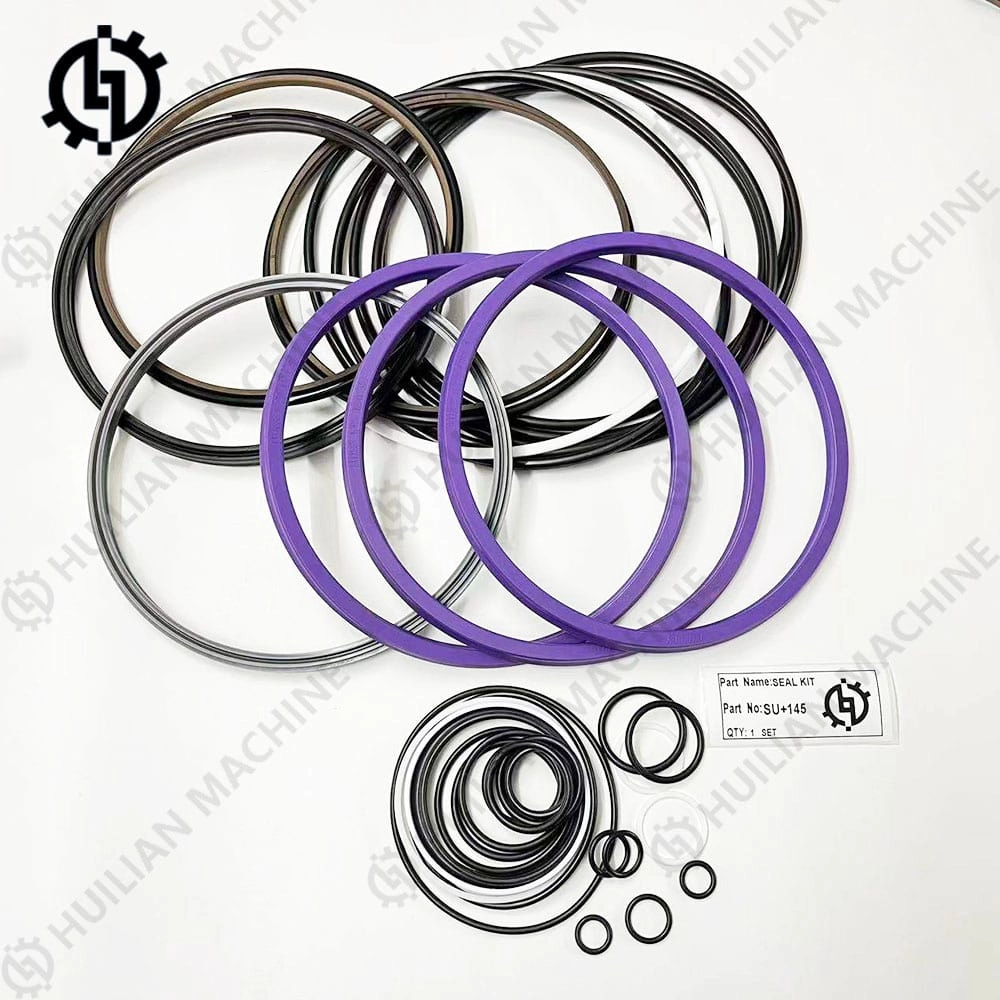
SOOSAN L21016 SU+145 TR-F SU+145TRF SU145 SU+145 Seal Kit C61443 SU+125 Oil Repair Kit For Excavator Hydraulic Rock Breaker Hammer Spare Parts
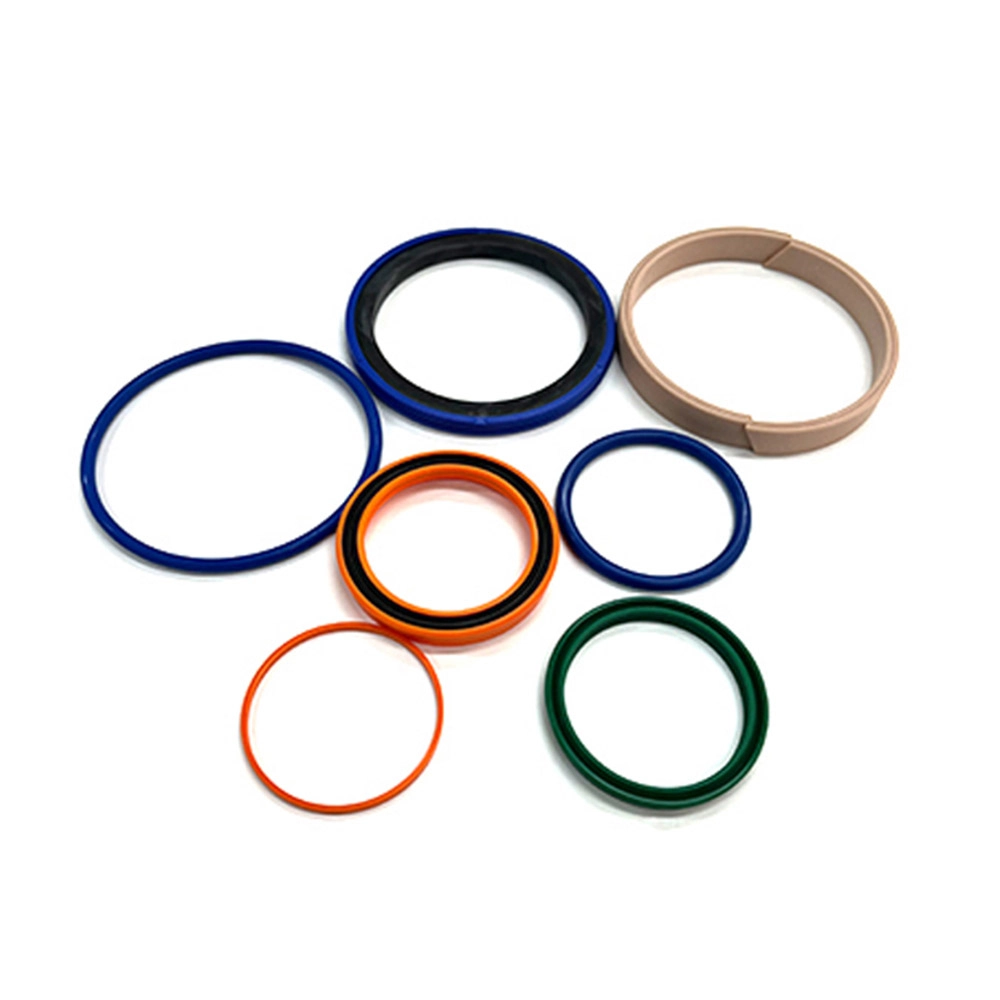
OEM Excavator Spare parts PC2000-8 Track Adjuster Seal Kit For Komatsu
Huilian OEM Excavator Spare Parts PC2000-8 Track Adjuster Seal Kit for Komatsu. Ensures optimal track adjustment performance. High-quality replacement for your PC2000-8 excavator. Order your kit today!
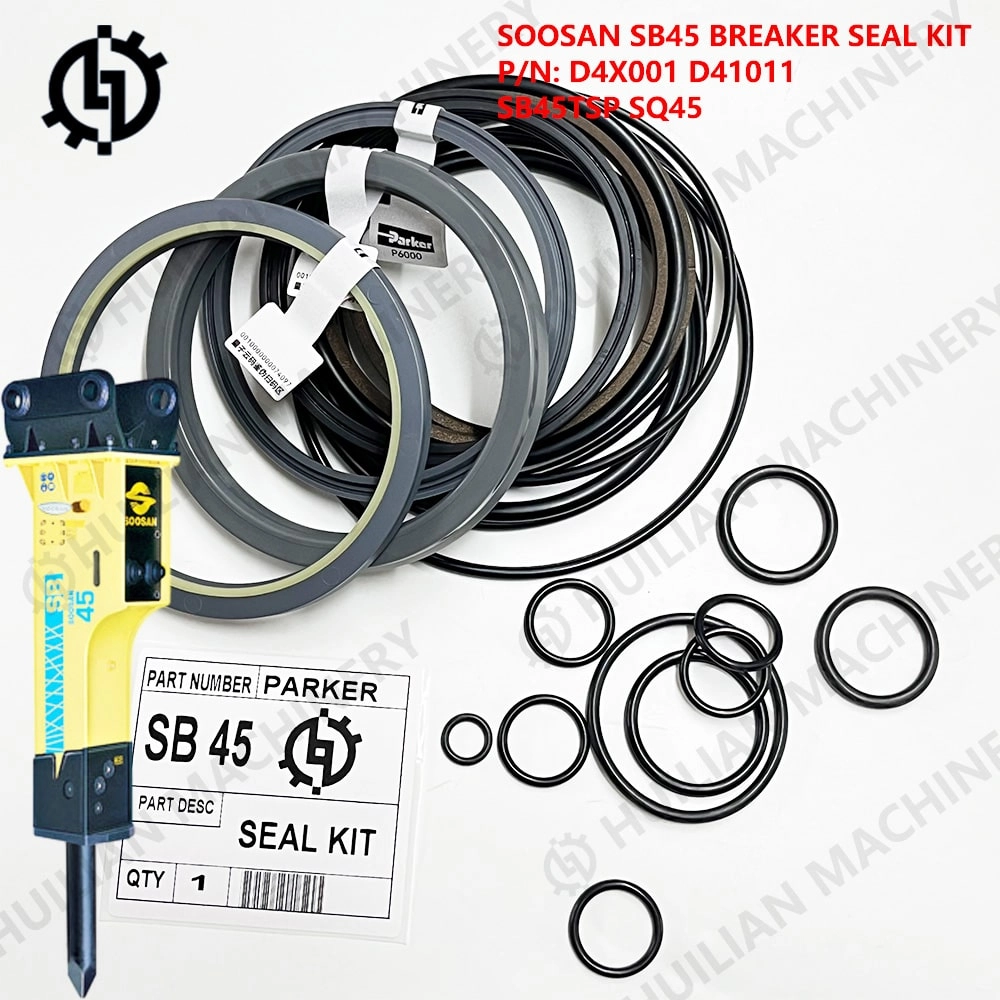
Parker Oil Seal SOOSAN SB45 Hydraulic Rock Hammer Breaker Seal Repair Kit D4X001 D41011 SB45TSP SQ45
 About us
© 2025 HUILIAN MACHINE. All rights reserved