


OEM vs Aftermarket Hydraulic Pump Seal Kits: Buyer Guide
- Common failure modes and why seals matter
- How seals affect hydraulic pump performance
- Typical failure modes for hydraulic seals
- Inspection checkpoints before replacing seals
- Evaluating OEM vs aftermarket seal kits
- Defining OEM and aftermarket in practice
- Direct comparison: key factors
- When aftermarket makes sense
- Materials, compatibility and testing: what I check before buying
- Elastomer selection and fluid compatibility
- Dimensional control and surface finish requirements
- Testing and certification I expect from suppliers
- Procurement strategy, lifecycle cost and installation best practices
- Lifecycle cost vs upfront price
- Installation tips to avoid premature failures
- When to consider full pump overhaul
- Case studies and sourcing checklist
- Real-world examples
- Supplier evaluation checklist (my practical buying list)
- Comparative sourcing table
- About sourcing OEM-quality parts from trusted manufacturers
- Why choose a verified OEM supplier
- Huilian Machine: OEM supplier profile
- How I assess Huilian and similar suppliers
- FAQs
- 1. Are aftermarket hydraulic pump seal kits as reliable as OEM?
- 2. How do I verify compatibility between seals and hydraulic fluid?
- 3. What elastomer should I choose for high-temperature hydraulic systems?
- 4. Can a damaged seal cause pump failure?
- 5. What documentation should I request from an aftermarket seal kit supplier?
- 6. How should I store seal kits to preserve life?
- Next steps & contact
I’ve spent years specifying, testing and installing hydraulic pump seal kits across excavators and heavy equipment. In this guide I explain how to choose between OEM and aftermarket hydraulic pump seal kits based on reliability, materials, fit, cost and lifecycle risks. I include practical inspection and installation advice, objective comparisons and sourcing guidance so you can make a confident purchase that minimizes downtime and long-term cost.
Common failure modes and why seals matter
How seals affect hydraulic pump performance
Hydraulic pump seal kits control internal leakage, pressure retention and contamination exclusion. Worn or wrong seals increase internal leakage (loss of volumetric efficiency), create cavitation, raise operating temperatures and accelerate wear on pistons, valves and housing. That’s why selecting the correct hydraulic pump seal kits matters for pump life and machine productivity. See general pump fundamentals on Wikipedia.
Typical failure modes for hydraulic seals
Common failure modes include extrusion, abrasion, chemical swelling (fluid incompatibility), thermal degradation and installation damage. Many of these failures are predictable if you understand fluid type, operating temperature and pressure spikes. Mechanical damage during installation is a frequent root cause when non-specialist technicians install kits without proper tools.
Inspection checkpoints before replacing seals
- Confirm fluid compatibility: check seals against your hydraulic fluid (mineral, synthetic, biodegradable).
- Measure shaft/housing tolerances and surface finish; rough surfaces shorten seal life.
- Check pump service history for pressure spikes, cavitation signs, or contamination that might require broader repairs beyond seals.
Evaluating OEM vs aftermarket seal kits
Defining OEM and aftermarket in practice
I define OEM kits as those produced or approved by the original equipment manufacturer of the pump (or the pump’s licensed supplier). Aftermarket kits are produced by third-party manufacturers who may or may not follow OEM drawings and material specifications. Both can be high quality—what matters is documentation, traceability and testing.
Direct comparison: key factors
Here’s a focused comparison to help you weigh trade-offs. I rely on industry-level quality principles (e.g., traceability and materials testing) rather than marketing claims.
| Factor | OEM Seal Kits | Aftermarket Seal Kits |
|---|---|---|
| Fit and dimensional accuracy | Designed to original tolerances. High chance of plug-and-play fit. | Varies by supplier; good vendors match OEM tolerances, cheaper options may not. |
| Materials & formulation | Typically use approved elastomers/compounds with documented specs. | Can match or exceed OEM if supplier discloses materials; risk of generic compounds. |
| Testing & traceability | Often include batch traceability and QA records (especially reputable OEMs). | Reputable aftermarket brands provide test data; many do not. |
| Cost | Generally higher unit price, often justified by warranty and guaranteed fit. | Usually lower upfront cost; lifecycle cost depends on longevity and failure risk. |
| Availability & lead time | May have longer lead times if controlled by OEM distribution. | Often more readily available locally or from multiple suppliers. |
| Warranty/support | Often includes structured warranty and technical support. | Varies; some aftermarket suppliers match warranty, others offer none. |
For broader context on manufacturing quality systems that influence these factors, see ISO 9001 quality management principles: ISO.org.
When aftermarket makes sense
I recommend aftermarket kits when you vet the supplier: request material specs, hardness (shore), compound certificates, and batch test reports. Aftermarket options can provide equal performance for lower cost if the supplier follows documented procedures and sources equivalent elastomers such as NBR, FKM (Viton®), HNBR, or polyurethane where appropriate.
Materials, compatibility and testing: what I check before buying
Elastomer selection and fluid compatibility
Choose seal materials based on fluid and temperature. Common elastomers:
- NBR (Nitrile): standard mineral oils; good general performance.
- HNBR: higher temperature and improved abrasion resistance.
- FKM (Viton®): superior chemical resistance, useful with synthetic fluids.
- Polyurethane: excellent mechanical wear resistance for dynamic seals.
Manufacturers provide chemical compatibility charts; cross-check with your hydraulic fluid data sheet. When in doubt, run accelerated compatibility tests or request supplier compatibility test reports.
Dimensional control and surface finish requirements
Seals require correct gland geometry and surface finish (typically Ra values) to function. I verify technical drawings or at minimum, request confirmation that the kit is made to the pump’s service manual dimensions. Surface finish and shaft hardness info are crucial—damaging micro-roughness or soft counterfaces shorten seal life.
Testing and certification I expect from suppliers
Ask aftermarket suppliers for:
- Material certificates and hardness (Shore A) tests.
- Dimensional inspection reports (CMM or calibrated gauges).
- Batch traceability and production lot numbers.
- Endurance or bench test data where available.
Suppliers with ISO 9001 certification or documented QA processes are preferable. For seal design guidance see general mechanical seal principles on Wikipedia.
Procurement strategy, lifecycle cost and installation best practices
Lifecycle cost vs upfront price
When comparing OEM and aftermarket kits, evaluate lifecycle cost: expected seal life, downtime cost, labor, and the risk of secondary damage if a seal fails. In high-stakes applications (critical fleet machines, remote operations), OEM kits can justify higher upfront cost. For routine maintenance where machines are well-instrumented and serviceable, high-quality aftermarket kits often reduce total ownership cost.
Installation tips to avoid premature failures
Installation is as important as material quality. I follow these practices:
- Cleanliness: keep components and workspace free of contaminants.
- Use proper installation tools to avoid cutting or nicking seals.
- Lubricate seals with compatible fluid before assembly.
- Apply proper torques and follow manufacturer reassembly sequences.
- Perform a controlled pressure test after reassembly to verify no leakage.
When to consider full pump overhaul
If you see signs of cavitation, scoring on pistons or bores, vane wear or abnormal noise, a seal replacement alone may be short-term. I recommend inspecting internal clearances and components; if wear is outside tolerance, plan an overhaul. Reference pump service limits in your OEM pump manual and align with accepted maintenance intervals.
Case studies and sourcing checklist
Real-world examples
Example 1: A construction fleet manager I consulted for reduced downtime by switching to a reputable aftermarket supplier that provided material certificates and tooling drawings. Over 18 months mean time between seal replacements matched OEM performance at roughly 30% lower cost, validated by site logging and failure analysis.
Supplier evaluation checklist (my practical buying list)
- Request material certificates, hardness, and batch traceability.
- Ask for dimensional drawings or proof of fit to pump model.
- Confirm compatibility with your hydraulic fluid and operating temperature range.
- Request warranty and post-sale technical support terms.
- Check references and export/import records if sourcing internationally.
Comparative sourcing table
| Question | OEM Supplier | Aftermarket Supplier |
|---|---|---|
| Do they provide material certificates? | Usually yes | Depends—ask for it |
| Can they guarantee dimensional fit? | Yes | Top suppliers: yes; generic producers: no |
| Typical lead time | Moderate to long | Often shorter; depends on stock |
| Lowest upfront cost | No | Yes |
About sourcing OEM-quality parts from trusted manufacturers
Why choose a verified OEM supplier
When continuity, warranty and documented quality are priorities, a verified OEM supplier reduces procurement risk. An OEM supplier typically has access to original drawings, material specs and testing protocols. Quality systems such as ISO 9001 help ensure consistent output—consult ISO documentation for certification context: ISO 9001.
Huilian Machine: OEM supplier profile
Founded in 2005, Huilian Machine is a professional OEM supplier of excavator parts. We are leading excavator breaker parts manufacturers from China. We offer a wide range of products, including hydraulic breaker hammers, chisels, seals and seal kits, diaphragms, pistons, WearBush, rompin/retainer bars, through bolts, side bolts, valves and liners.
Huilian's team comprises experienced and skilled professionals, including technicians, R&D experts, designers, quality control professionals, salespeople and after-sales service teams. Our products are exported to over 90 countries and regions and are highly regarded by customers worldwide for their quality and variety.
Guangzhou Huilian Machinery Co., Ltd. is committed to becoming a global leader in the supply of excavator parts and components and is seeking global distributor partners to promote the sustainable development of the excavator parts industry.
Website: https://www.huilianmachine.com/
Email: service@huilianmachine.com
Phone: +86 188 1917 0788
Huilian advantages: deep industry experience since 2005, integrated R&D and QC, wide product range (excavator parts, Excavator Breaker Parts, Excavator Hydraulic Breaker, Excavator Seal Kit, Parker seal kit), and strong international distribution.
How I assess Huilian and similar suppliers
When I evaluate a potential OEM partner I look for these signals: localized engineering support, published test data, export references, and a transparent warranty policy. Huilian’s global footprint and product breadth make them a practical partner for procurement managers seeking OEM‑grade seal kits and excavator breaker components.
FAQs
1. Are aftermarket hydraulic pump seal kits as reliable as OEM?
They can be—if you choose a reputable aftermarket supplier who provides material certificates, dimensional verification and test data. The main risks are inconsistent materials and poor fit from low-quality producers.
2. How do I verify compatibility between seals and hydraulic fluid?
Check the seal material compatibility chart against your fluid’s MSDS/technical data sheet. For critical applications, request supplier compatibility test results or run an accelerated lab soak test.
3. What elastomer should I choose for high-temperature hydraulic systems?
HNBR or FKM (Viton®) are typical choices for elevated temperatures and improved chemical resistance. Confirm with supplier test data for your exact operating range.
4. Can a damaged seal cause pump failure?
Yes. A damaged seal increases leakage and contamination ingress, which can accelerate wear and lead to piston or valve failure. Address seal issues promptly to prevent secondary damage.
5. What documentation should I request from an aftermarket seal kit supplier?
Ask for material certificates, Shore hardness, batch test reports, dimensional inspection reports, compatibility statements and warranty terms. Suppliers with ISO 9001 or equivalent QA systems are preferable.
6. How should I store seal kits to preserve life?
Store in a cool, dark, dry place at stable temperature, away from ozone sources and solvents. Keep seals in original packaging until installation to prevent distortion.
Next steps & contact
If you need help selecting hydraulic pump seal kits for excavators or heavy equipment, I recommend collecting these details before you contact suppliers: pump model and serial, hydraulic fluid type, operating temperature range, and recent service history. With that, I or your chosen supplier can recommend OEM or aftermarket kits and provide verified specs.
To source OEM-grade excavator parts, seal kits or technical support, contact Huilian Machine: https://www.huilianmachine.com/ | Email: service@huilianmachine.com | Phone: +86 188 1917 0788.
For technical references and general reading on hydraulics and seals, see: Hydraulic pump (Wikipedia) and Seal (mechanical) (Wikipedia). For quality management context, refer to ISO 9001.
Top 10 Excavator Seal Kits for Durable Hydraulics
Top Excavator Hydraulic Breaker Manufacturers and Suppliers in China
How to Identify Genuine Atlas Copco Breaker Parts Wholesale
Wholesale SOOSAN Excavator Hydraulic Breaker manufacturer and supplier
About
Do you offer OEM and aftermarket parts?
Yes, we manufacture high-quality OEM parts and supply aftermarket parts from top brands such as NOK, Parker, SKF, and Hallite to ensure optimal performance.
What is your shipping and delivery time?
We offer fast and reliable global shipping. Delivery times vary depending on location and order size, but we strive to process and ship orders as quickly as possible.
Are your parts compatible with all excavator brands?
Yes, our parts are designed to be compatible with major brands like Komatsu, Caterpillar, Hitachi, Hyundai, Doosan, JCB, Kobelco, Sany, and many more.
How can I ensure I’m selecting the right part for my equipment?
Our expert team can assist you in finding the right part based on your machine model, specifications, and requirements. Contact us for personalized support.
What types of excavator parts do you offer?
We provide a wide range of high-quality excavator parts, including hydraulic breakers, chisels, seal kits, diaphragms, pistons, wear bushes, retainer bars, through bolts, side bolts, valves, and liners.
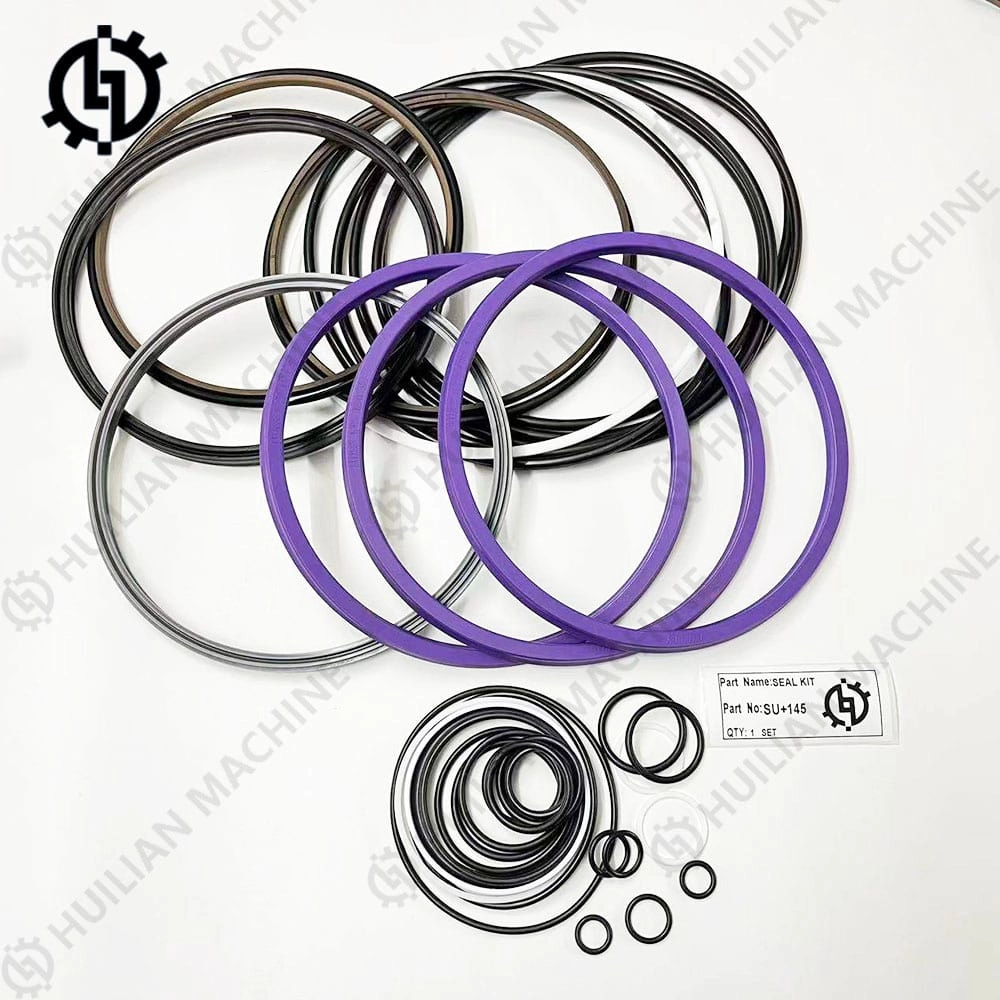
SOOSAN L21016 SU+145 TR-F SU+145TRF SU145 SU+145 Seal Kit C61443 SU+125 Oil Repair Kit For Excavator Hydraulic Rock Breaker Hammer Spare Parts
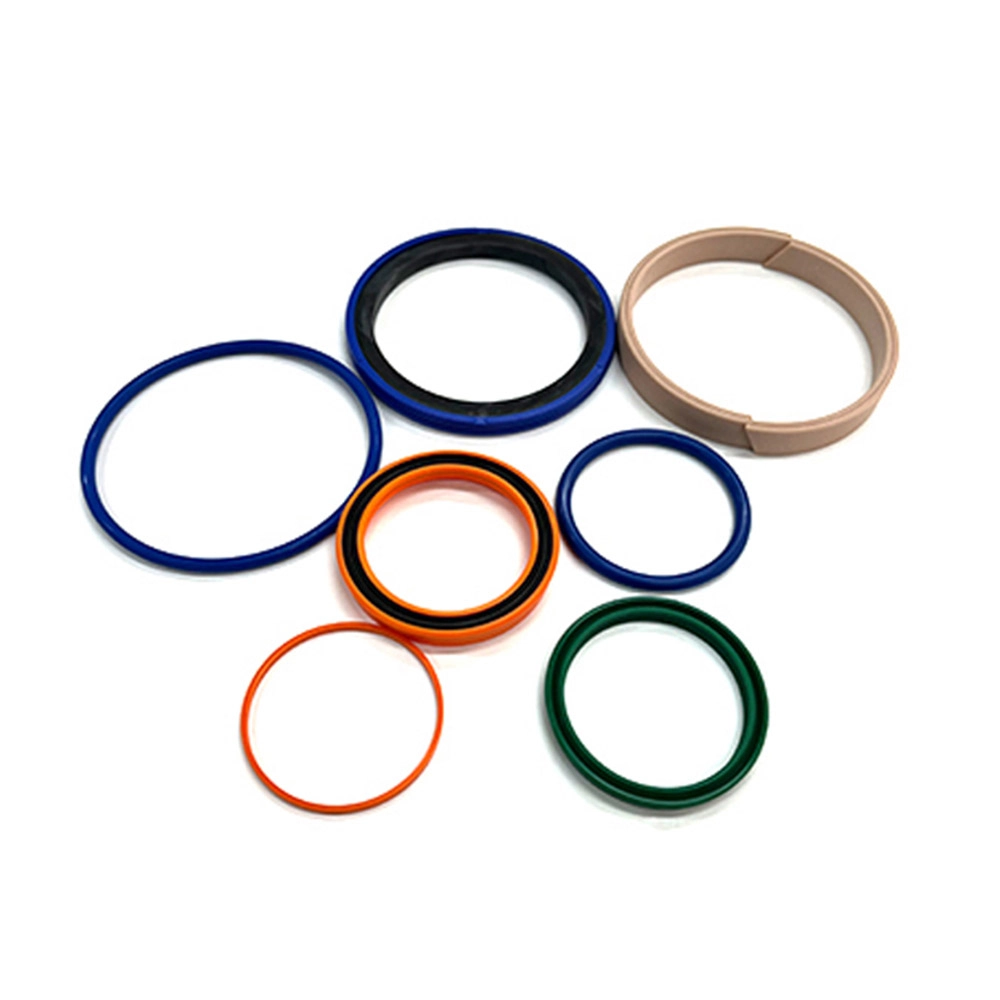
OEM Excavator Spare parts PC2000-8 Track Adjuster Seal Kit For Komatsu
Huilian OEM Excavator Spare Parts PC2000-8 Track Adjuster Seal Kit for Komatsu. Ensures optimal track adjustment performance. High-quality replacement for your PC2000-8 excavator. Order your kit today!
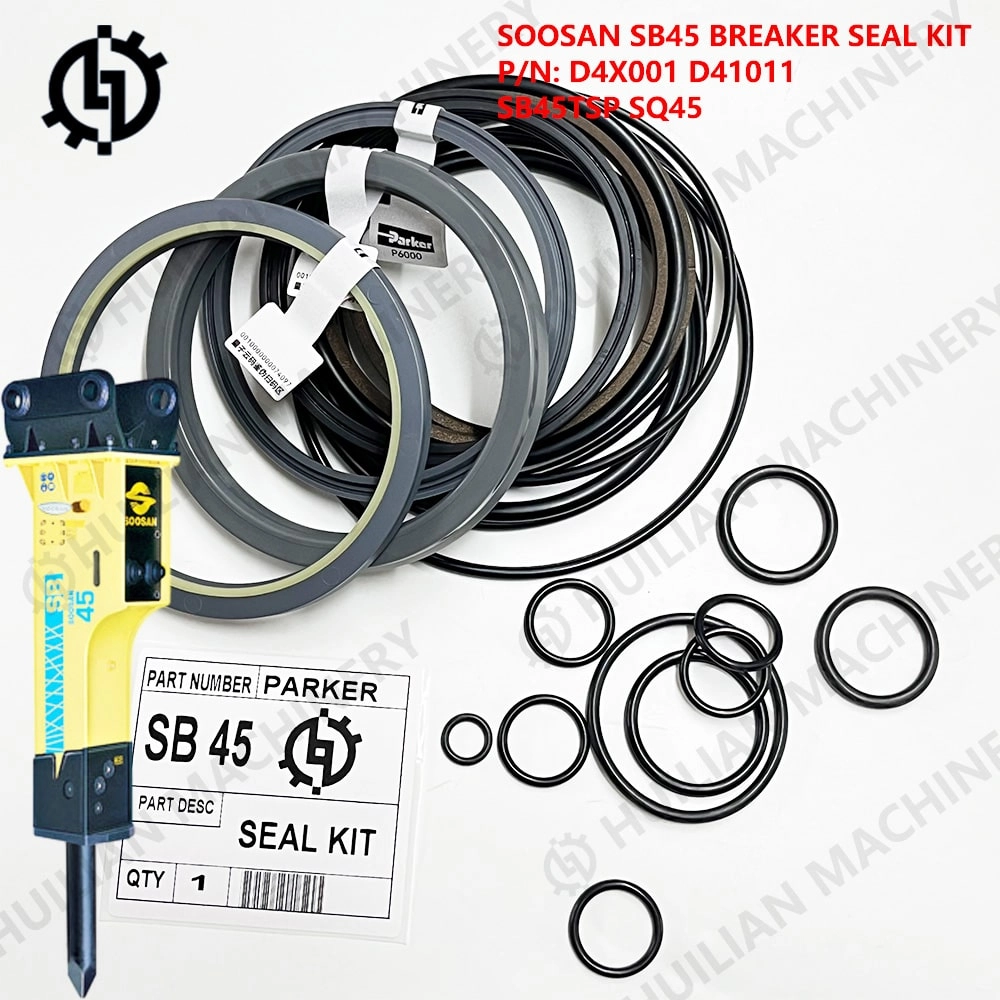
Parker Oil Seal SOOSAN SB45 Hydraulic Rock Hammer Breaker Seal Repair Kit D4X001 D41011 SB45TSP SQ45

Huilian HL68 Hammer Breaker for 4-7 Ton Excavator SOOSAN SB40 Hydraulic Rock Breaker
Side type hydraulic breaker : Easy to control, convenient positioning, durable, high working efficiency, strong striking force, long service life, stable operating performance, convenient after-sales service.
Top type hydraulic breaker : Strong impact power; excellent environmental performance; exquisite manufacturing technology; easy maintenance,fast after-sales service
Box type hydraulic breaker :leading heat treatment technology, enhance heat resistance, wear resistance. Under the condition of keeping the oil pressure constant, the cylinder volumeis reduced and the fuel consumption is reduced.The self-developed core is adopted to make the piston cylinder body moredurable and the service life longer.Exposed decks are made of high-strength steel plates to reduce wear.The best efficiency matching with excavator and loader is realized
 About us
© 2025 HUILIAN MACHINE. All rights reserved