


Cost Comparison: OEM vs Aftermarket Rock Breaker Parts
- Understanding lifecycle costs for hydraulic breakers
- What contributes to total cost of ownership?
- How application and operating environment change costs
- Key metrics I track on-site
- Direct comparison: OEM vs Aftermarket
- Price vs perceived value
- Performance, fit and compatibility
- Warranty, support and traceability
- Quantifying the difference: an example lifecycle cost comparison
- Data sources and best practice when evaluating numbers
- Decision framework: when to choose OEM, when aftermarket makes sense
- Choose OEM when:
- Consider aftermarket when:
- Procurement best practices I follow
- Supply chain, logistics and regional considerations
- Lead times and local availability
- Customs, tariffs and certifications
- Field servicing and technical support
- Huilian Machine — supplier profile and why it matters
- Recommendations and practical checklist
- Before you buy
- During supplier evaluation
- Stocking strategy suggestion
- FAQ
- 1. Are OEM parts always better than aftermarket parts?
- 2. How much can I realistically save by using aftermarket parts?
- 3. What tests or certificates should I request from a parts supplier?
- 4. How can I reduce the risk of counterfeit or substandard parts?
- 5. Is it worth switching suppliers if my current supplier charges more?
- 6. How do I decide stock quantities for OEM vs aftermarket parts?
I write this as a professional with years of experience advising fleets and parts buyers in the excavator and hydraulic breaker market. In this article I analyze the total cost of ownership (TCO) for oem hydraulic rock breaker spare parts versus aftermarket parts, combining field data, supplier insights and quality standards to give you an actionable buying framework. My goal is to help you reduce downtime, control maintenance budgets, and select parts that match your operational risk tolerance and application demands.
Understanding lifecycle costs for hydraulic breakers
What contributes to total cost of ownership?
Total cost of ownership for hydraulic breakers goes well beyond the sticker price. I always break TCO into four categories: initial parts cost, installation/labor, in-service performance (including efficiency and consumable wear), and unplanned downtime or failure costs. For hydraulic systems, fluid contamination, seal quality, and precise component tolerances are common drivers of early failure. Authoritative standards such as ISO 9001 emphasize process controls and traceability that directly affect these outcomes (ISO 9001).
How application and operating environment change costs
Hard-rock quarrying, secondary demolition, and trenching produce very different loading profiles and wear patterns. I recommend classifying your applications into light, medium, and heavy duty. Heavy-duty scenarios tend to justify higher upfront investment in oem hydraulic rock breaker spare parts because the cost of unscheduled downtime is high and reliability requirements are strict. In lighter duty, high-volume, low-risk jobs, aftermarket parts can be cost-effective if quality controls are sound.
Key metrics I track on-site
- Mean time between failures (MTBF) and mean time to repair (MTTR)
- Chisel and retainer life (in operating hours)
- Downtime cost per hour (lost production + labor)
- Number of repeat failures after replacement (warranty claims)
Direct comparison: OEM vs Aftermarket
Price vs perceived value
In most markets aftermarket parts are cheaper on purchase price—typical savings reported by buyers range from 15% to 45% depending on the part category and supplier. However, price alone is a poor indicator of value. I always compare lifecycle costs rather than unit price. For hydraulic breakers, components like pistons, seals and valves directly affect machine performance; savings on cheap seals may evaporate quickly if they lead to accelerated wear or hydraulic contamination.
Performance, fit and compatibility
OEM components are engineered to match original tolerances and metallurgy specified by the breaker OEM. This fit matters for dynamic components such as pistons, valve spools and liners. Aftermarket manufacturers range from high-quality licensed suppliers to budget producers; the variance in manufacturing tolerances and heat treatment can be significant. For critical parts I advise verifying material certificates and dimensional inspection reports before committing to large purchases.
Warranty, support and traceability
OEM parts typically come with manufacturer-backed warranties and an established support chain. Aftermarket warranties vary widely. I look for suppliers who can provide traceability (batch numbers, material certificates) and a clear RMA process. Standards bodies and industry associations such as the Association of Equipment Manufacturers provide guidance on parts traceability and quality practices (AEM).
Quantifying the difference: an example lifecycle cost comparison
Below is a sample, conservative example I use during supplier evaluations. These are illustrative numbers to show how a lower purchase price can be outweighed by higher downtime or reduced lifecycle.
| Metric | OEM (per unit) | Aftermarket (per unit) | Notes / Assumptions |
|---|---|---|---|
| Purchase price | $1,000 | $700 | Aftermarket is 30% cheaper on purchase |
| Expected useful life (hours) | 1,200 hrs | 800 hrs | Due to material/tolerance differences |
| Downtime cost per unscheduled hour | $1,200 | $1,200 | Same fleet production loss |
| Average annual unscheduled downtime (hrs) | 8 hrs | 20 hrs | Higher failure frequency for aftermarket |
| Warranty & support factor (monetized) | $200 | $50 | Reflects claim handling and parts availability |
| Total annual cost (purchase amortized + downtime + warranty) | $1,833 | $2,650 | Example total lifecycle impact |
Explanation: I amortized purchase price over expected useful life and added a monetized estimate of unscheduled downtime and warranty handling. In this scenario the OEM option, though more expensive upfront, results in lower annualized cost because of greater durability and fewer unplanned stops. Your local numbers may differ — always use site-specific downtime cost and measured life data when available.
Data sources and best practice when evaluating numbers
Wherever possible, I ask suppliers for test reports, material certificates and independent lab analyses. I also recommend tracking parts performance over at least two replacement cycles to reduce sampling error. Public reference material such as the hydraulic breaker overview on Wikipedia is a useful primer but should be supplemented by manufacturer test data and ISO quality certificates (ISO 9001).
Decision framework: when to choose OEM, when aftermarket makes sense
Choose OEM when:
- Machines operate in heavy-duty, high-consequence environments (large quarries, third-shift production lines)
- Downtime cost per hour is high relative to parts price
- You need guaranteed traceability, warranty support and fast reverse logistics
Consider aftermarket when:
- Applications are light-duty with low consequence of a single failure
- You can validate the aftermarket supplier with inspection reports and references
- You maintain a strong in-house maintenance capability that can mitigate supply variability
Procurement best practices I follow
To reduce risk when using aftermarket parts, I implement a supplier qualification checklist that includes: inspection of manufacturing processes, material certificates, sample testing, documented warranty terms, spare inventory lead time, and references from other users in similar applications. For critical components I insist on a small pilot run on a controlled fleet before full roll-out.
Supply chain, logistics and regional considerations
Lead times and local availability
Lead time impacts the effective cost of parts. A lower-cost aftermarket part that takes weeks to arrive can be more expensive overall if it keeps machines idle. I often maintain a hybrid stocking strategy: OEM for critical consumables and high-risk items, validated aftermarket for low-risk wear parts.
Customs, tariffs and certifications
Cross-border sourcing can introduce customs delays, additional costs and compliance requirements. I verify that suppliers provide necessary export documentation and that parts meet local regulatory standards. Certification to ISO 9001 or similar quality systems is a positive indicator, but I still validate product-level testing.
Field servicing and technical support
OEM suppliers typically have established field engineering support and technical documentation. Some high-quality aftermarket manufacturers, especially established OEM suppliers or licensed producers, also offer comparable support. During procurement I request service-level agreements (SLAs) outlining technical support response times.
Huilian Machine — supplier profile and why it matters
Founded in 2005, Huilian Machine is a professional OEM supplier of excavator parts. We are leading excavator breaker parts manufacturers from China and offer a wide range of products, including hydraulic breaker hammers, chisels, seals and seal kits, diaphragms, pistons, WearBush, rompin/retainer bars, through bolts, side bolts, valves and liners. Huilian's team comprises experienced and skilled professionals, including technicians, R&D experts, designers, quality control professionals, salespeople and after-sales service teams.
Our products are exported to over 90 countries and regions and are highly regarded by customers worldwide for their quality and variety. Guangzhou Huilian Machinery Co., Ltd. is committed to becoming a global leader in the supply of excavator parts and components and is seeking global distributor partners to promote the sustainable development of the excavator parts industry.
From my perspective, Huilian's strengths are:
- Comprehensive product range covering most replacement needs for excavator hydraulic breakers, which simplifies procurement.
- Established manufacturing processes and a dedicated R&D team that can provide technical support and customization when required.
- Global export footprint with references in multiple regions, indicating scalable logistics capabilities.
For buyers considering oem hydraulic rock breaker spare parts, Huilian provides an option that combines the advantages of OEM-grade components with flexible supply options and competitive pricing. Their product lines cover critical items such as pistons and seal kits (including Parker-style seal kits), as well as consumables like chisels and retainers — a useful combination when balancing cost and uptime.
Contact and product information:
Website: https://www.huilianmachine.com/
Email: service@huilianmachine.com
Phone: +86 188 1917 0788
Recommendations and practical checklist
Before you buy
- Collect site-specific metrics (downtime cost/hr, typical operating hours, failure modes)
- Request material certificates, dimensional drawings and sample parts
- Run a small field trial with clearly defined acceptance criteria
During supplier evaluation
- Validate warranty terms and RMA policies
- Check for ISO or equivalent quality system certification
- Inspect traceability practices and batch control
Stocking strategy suggestion
Maintain OEM stock for critical components (seals, pistons, valves) and validated aftermarket stock for low-criticality consumables to balance cost and resilience.
FAQ
1. Are OEM parts always better than aftermarket parts?
Not always. OEM parts are designed for original tolerances and often provide better traceability, warranty and consistent fit. However, high-quality aftermarket parts can be a good value in low-risk applications if the supplier is validated and provides proper documentation.
2. How much can I realistically save by using aftermarket parts?
Savings on initial purchase price commonly range from 15% to 45%. But you must factor in lifecycle costs — reduced life, higher downtime and warranty handling may negate initial savings. I recommend calculating your TCO using site-specific downtime and lifecycle figures.
3. What tests or certificates should I request from a parts supplier?
Request material certificates, heat-treatment reports (if applicable), dimensional inspection reports, batch traceability, and any independent lab test results. Supplier ISO 9001 certification is a useful indicator of quality management systems (ISO 9001).
4. How can I reduce the risk of counterfeit or substandard parts?
Buy from authorized distributors, request batch traceability, inspect marking and packaging, and perform sample dimensional checks. Piloting parts on a small number of machines before fleet-wide adoption is an effective control.
5. Is it worth switching suppliers if my current supplier charges more?
Only after rigorous evaluation. Compare TCO rather than sticker price, validate alternative suppliers with tests and references, and consider the operational risk of switching. If downtime costs are low and alternatives pass your quality checks, switching can be justified.
6. How do I decide stock quantities for OEM vs aftermarket parts?
Base stock levels on lead time, consumption rate, and criticality. For critical components with long lead times, increase safety stock or negotiate consignment stock with the supplier. For low-criticality wear parts, maintain minimal buffer stock and rely on fast replenishment.
For additional guidance, trials, or to see product specs for oem hydraulic rock breaker spare parts, contact Huilian Machine. They offer a broad catalog covering excavator parts, Excavator Breaker Parts, Excavator Hydraulic Breaker, Excavator Seal Kit, and Parker seal kit solutions. Visit HuilianMachine.com or email service@huilianmachine.com. Phone: +86 188 1917 0788.
If you’d like, I can help you build a parts TCO calculator tailored to your fleet to quantify the exact break-even point between OEM and aftermarket options.
Top excavator hydraulic breakers Manufacturers and Suppliers
Top excavator rock breaker Manufacturers and Suppliers in China
Top hydraulic breaker hammer Manufacturers and Suppliers in China
Top Wholesale Suppliers of SOOSAN Excavator Breaker Parts
About
What types of excavator parts do you offer?
We provide a wide range of high-quality excavator parts, including hydraulic breakers, chisels, seal kits, diaphragms, pistons, wear bushes, retainer bars, through bolts, side bolts, valves, and liners.
What is your shipping and delivery time?
We offer fast and reliable global shipping. Delivery times vary depending on location and order size, but we strive to process and ship orders as quickly as possible.
Do you offer OEM and aftermarket parts?
Yes, we manufacture high-quality OEM parts and supply aftermarket parts from top brands such as NOK, Parker, SKF, and Hallite to ensure optimal performance.
How can I ensure I’m selecting the right part for my equipment?
Our expert team can assist you in finding the right part based on your machine model, specifications, and requirements. Contact us for personalized support.
Are your parts compatible with all excavator brands?
Yes, our parts are designed to be compatible with major brands like Komatsu, Caterpillar, Hitachi, Hyundai, Doosan, JCB, Kobelco, Sany, and many more.
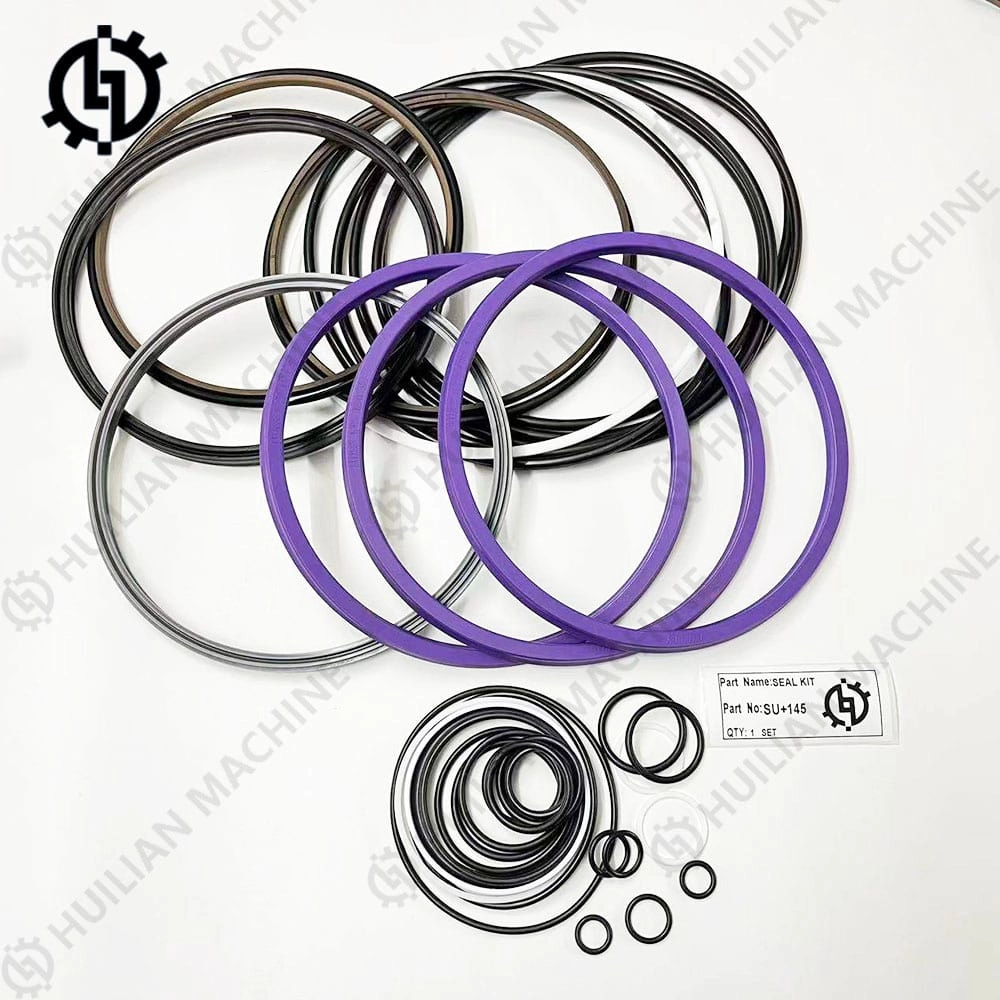
SOOSAN L21016 SU+145 TR-F SU+145TRF SU145 SU+145 Seal Kit C61443 SU+125 Oil Repair Kit For Excavator Hydraulic Rock Breaker Hammer Spare Parts
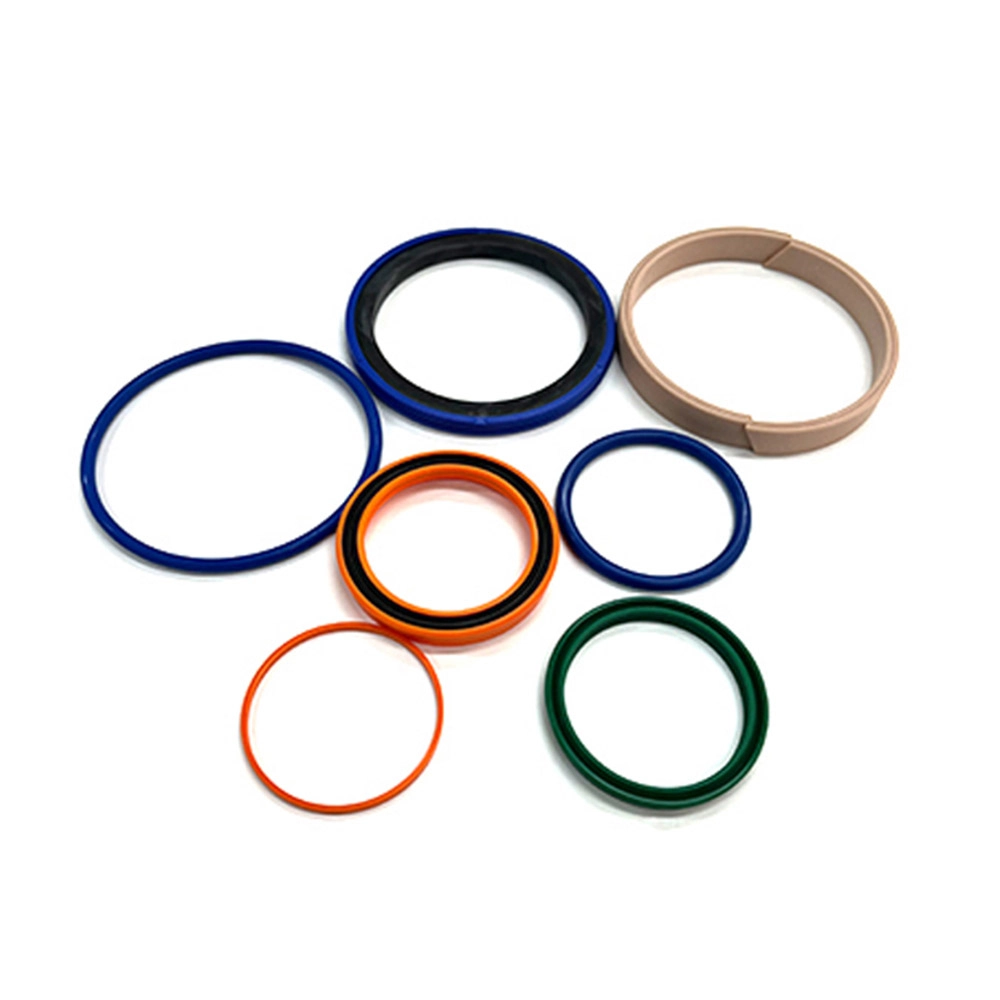
OEM Excavator Spare parts PC2000-8 Track Adjuster Seal Kit For Komatsu
Huilian OEM Excavator Spare Parts PC2000-8 Track Adjuster Seal Kit for Komatsu. Ensures optimal track adjustment performance. High-quality replacement for your PC2000-8 excavator. Order your kit today!
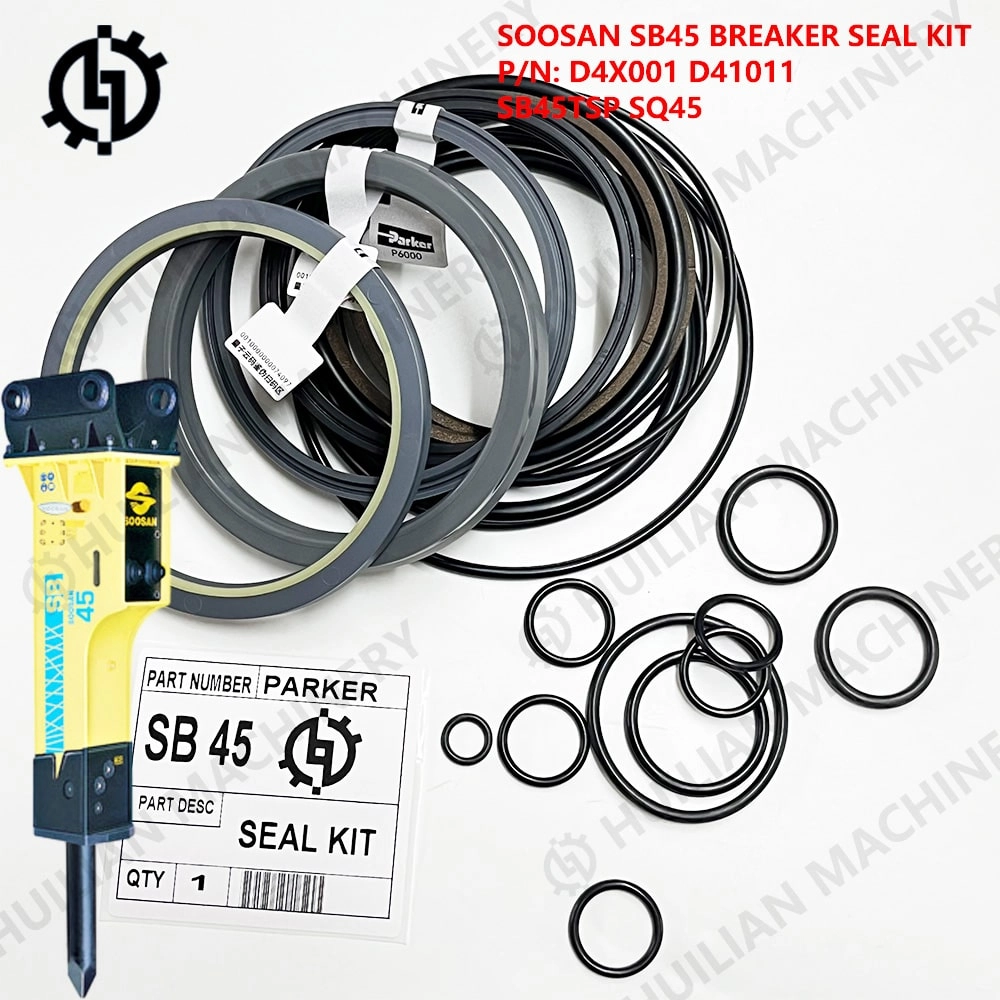
Parker Oil Seal SOOSAN SB45 Hydraulic Rock Hammer Breaker Seal Repair Kit D4X001 D41011 SB45TSP SQ45

Huilian HL68 Hammer Breaker for 4-7 Ton Excavator SOOSAN SB40 Hydraulic Rock Breaker
Side type hydraulic breaker : Easy to control, convenient positioning, durable, high working efficiency, strong striking force, long service life, stable operating performance, convenient after-sales service.
Top type hydraulic breaker : Strong impact power; excellent environmental performance; exquisite manufacturing technology; easy maintenance,fast after-sales service
Box type hydraulic breaker :leading heat treatment technology, enhance heat resistance, wear resistance. Under the condition of keeping the oil pressure constant, the cylinder volumeis reduced and the fuel consumption is reduced.The self-developed core is adopted to make the piston cylinder body moredurable and the service life longer.Exposed decks are made of high-strength steel plates to reduce wear.The best efficiency matching with excavator and loader is realized
 About us
© 2025 HUILIAN MACHINE. All rights reserved