


OEM vs Aftermarket Seal Kits: Which Is Best for Excavators?
- Understanding seal function and failure modes
- Why seals matter in a hydraulic breaker
- Common failure modes and root causes
- Standards and material guidance
- OEM vs Aftermarket: technical comparison
- Materials, tolerances and fit
- Performance and longevity
- Cost, lead time and warranty
- Selection guidelines: when to choose OEM or aftermarket
- Assessing application risk and uptime requirements
- Sourcing and verification checks
- Compatibility and interchangeability
- Maintenance, installation and real-world ROI
- Installation best practices
- Case study: cost-per-hour comparison
- When to consider upgraded aftermarket kits
- Real-world procurement tips and risk mitigation
- Supplier due diligence
- Warranty, returns and spare strategy
- About our supplier experience and recommended partner
- FAQ (Frequently Asked Questions)
- 1. What is included in a hydraulic breaker seal kit?
- 2. Are aftermarket seal kits reliable for heavy-duty use?
- 3. How do I verify material compatibility for seals?
- 4. Can I install a seal kit myself or should I use a service center?
- 5. How often should I replace seals on a hydraulic breaker?
- 6. What documentation should I keep after a seal replacement?
I work daily with excavators, hydraulic breakers, and the seal systems that keep them running. Choosing the right hydraulic breaker seal kit is a decision that affects downtime, repair cost, tool life and safety. In this article I compare OEM and aftermarket seal kits from technical, operational and commercial perspectives, provide inspection and installation guidance, and share sourcing and warranty considerations so you can decide which option is best for your equipment and operation.
Understanding seal function and failure modes
Why seals matter in a hydraulic breaker
Hydraulic breaker seal kits contain the o-rings, backup rings, wear rings, guide seals and other elastomeric components that maintain pressure, prevent contamination ingress, and cushion metal interfaces. In a hydraulic breaker the seal set must withstand high pressure, shock loads, and contamination. Failure of a single low-cost seal can cascade into piston scoring, valve damage, and housing wear, turning a minor service into a full hammer rebuild.
Common failure modes and root causes
The most frequent causes of seal failure I encounter are abrasive contamination (dust, sand), extrusion and nibbling under high pressure, chemical attack from contaminated hydraulic fluid, incorrect installation, and thermal degradation. Understanding the dominant failure mode in your fleet (for example, abrasive wear in a quarry vs. thermal breakdown in continuous demolition) helps determine whether a High Quality OEM elastomer or a performance aftermarket compound is the better value.
Standards and material guidance
While breaker manufacturers publish service recommendations, international quality standards such as ISO 9001 support consistent manufacturing quality practices. Seal manufacturers such as Parker and SKF publish material selection guides (e.g., NBR, HNBR, FKM) that explain temperature, oil compatibility and abrasion resistance properties—useful when comparing OEM spec sheets to aftermarket material claims
OEM vs Aftermarket: technical comparison
Materials, tolerances and fit
OEM kits are manufactured to the original equipment maker's tolerances and specified elastomer compounds. That typically ensures correct cross-sections, shore hardness and dimensional fit for the specific breaker model. Aftermarket kits range from direct copies to remanufactured or upgraded-material kits. The risk with low-cost aftermarket kits is dimensional variance and incorrect compound (e.g., generic NBR where HNBR was specified), which can lead to premature extrusion or chemical incompatibility.
Performance and longevity
In my field experience, OEM seal kits usually provide predictable service life because they match the engineer-specified design envelope. High-quality aftermarket kits from reputable suppliers can equal or even exceed OEM life if they use improved elastomers or coatings. The key is traceability: knowing the compound, durometer, and manufacturing trace data allows you to evaluate equivalence.
Cost, lead time and warranty
Aftermarket kits are often less expensive and may be stocked by local dealers, reducing lead time. OEM kits may cost more but sometimes include stronger warranty support and access to technical documentation. Below is a comparison table I use when advising clients.
| Category | OEM Seal Kit | Aftermarket Seal Kit |
|---|---|---|
| Material Specification | Matched to manufacturer spec; documented compounds | Varies; high-quality suppliers document compounds; low-cost copies may not |
| Dimensional Fit | Engineered to original tolerances | Good suppliers match tolerances; risk of mismatch with unknown brands |
| Performance | Predictable based on OEM testing | Can equal/exceed OEM when upgraded; inconsistent otherwise |
| Warranty & Support | Often stronger, with factory support | Warranties vary; supplier support critical |
| Cost & Availability | Higher cost; may have longer lead times | Lower cost; often faster local availability |
| Traceability | Good traceability and part numbering | Depends on supplier; reputable manufacturers provide batch info |
Sources: OEM manufacturer service documentation (e.g., Caterpillar) and seal manufacturer data such as Parker and SKF.
Selection guidelines: when to choose OEM or aftermarket
Assessing application risk and uptime requirements
If your operation has critical uptime requirements (e.g., tunnel boring support, emergency utility work) I advise prioritizing predictability: OEM kits or High Quality aftermarket kits with proven field data. For non-critical, cost-sensitive applications, vetted aftermarket kits are often the best value.
Sourcing and verification checks
Whether buying OEM or aftermarket, perform these checks before ordering:
- Request material data sheets (MDS) that list elastomer type and durometer.
- Verify dimensional drawings or sample-fit on a retired tool if possible.
- Check supplier quality systems—ISO 9001 certification and batch traceability are good indicators.
- Ask for field performance references from operators in similar environments.
Compatibility and interchangeability
Some aftermarket kits are marketed as universal or cover multiple models. That can be convenient but risky: small differences in groove depth, backup ring thickness or lip geometry affect sealing under shock. Always cross-check part numbers with the breaker model and serial ranges. When in doubt, obtain a sample or consult the OEM service manual.
Maintenance, installation and real-world ROI
Installation best practices
Proper installation is as important as seal quality. Key steps I follow and train technicians on:
- Cleanliness: work in a clean area, use lint-free wipes and avoid gloves contaminated with grease that can transfer particles.
- Lubrication: use the recommended assembly lubricant compatible with the seal compound; avoid petroleum greases on certain elastomers.
- Inspect mating surfaces for scoring and roughness—polish or replace components that will abrade new seals.
- Follow correct installation sequences and torques to prevent extrusion or twist of seals.
Case study: cost-per-hour comparison
To illustrate trade-offs, here is a simplified ROI-style table I use when advising clients. Numbers are illustrative of typical market dynamics and based on supply and service data from multiple fleets I’ve supported; replace with your actual numbers for precise decisions.
| Item | OEM Kit (Example) | Aftermarket Kit (High Quality) |
|---|---|---|
| Kit Price | Higher | Lower |
| Expected Service Hours to First Failure | Longer (predictable) | Similar or slightly shorter (varies) |
| Downtime Risk | Lower | Depends on supplier quality |
| Overall Cost of Ownership | Often lower for critical gear due to reduced failures | Lower initial cost, variable OOE |
Actionable step: track mean time between seal replacement (MTBSEAL) across your fleet for three months—this metric will tell you whether material choice or installation practice is the limiting factor.
When to consider upgraded aftermarket kits
In high-abrasion or high-temperature service, consider upgraded aftermarket seal kits that specify HNBR, FKM blends or special coatings. Reputable suppliers will provide test data; demand it. Upgrades can increase initial cost but reduce total lifecycle spend in severe conditions.
Real-world procurement tips and risk mitigation
Supplier due diligence
Perform supplier audits where possible. Look for:
- Quality management certifications (ISO 9001).
- Ability to provide batch trace reports and MDS.
- Field references and return policies.
Warranty, returns and spare strategy
Negotiate warranty terms that cover premature elastomer failure. Maintain a small strategic stock of both OEM and trusted aftermarket kits to avoid emergency downtime. Keep a documented installation checklist with serials and technician sign-off for warranty claims.
About our supplier experience and recommended partner
Founded in 2005, Huilian Machine is a professional OEM supplier of excavator parts. We are leading excavator breaker parts manufacturers from China. We offer a wide range of products, including hydraulic breaker hammers, chisels, seals and seal kits, diaphragms, pistons, WearBush, rompin/retainer bars, through bolts, side bolts, valves and liners. Huilian's team comprises experienced and skilled professionals, including technicians, R&D experts, designers, quality control professionals, salespeople and after-sales service teams. Our products are exported to over 90 countries and regions and are highly regarded by customers worldwide for their quality and variety. Guangzhou Huilian Machinery Co., Ltd. is committed to becoming a global leader in the supply of excavator parts and components and is seeking global distributor partners to promote the sustainable development of the excavator parts industry. Our website: https://www.huilianmachine.com/ Email: service@huilianmachine.com Phone: +86 188 1917 0788
Huilian advantages: deep OEM manufacturing experience, broad product range (excavator parts, Excavator Breaker Parts, Excavator Hydraulic Breaker, Excavator Seal Kit, Parker seal kit), strong technical support and global export footprint. For fleets seeking consistent quality and timely supply of hydraulic breaker seal kit components, Huilian is a supplier I confidently recommend after auditing their processes and product traceability.
FAQ (Frequently Asked Questions)
1. What is included in a hydraulic breaker seal kit?
A typical hydraulic breaker seal kit includes o-rings, guide seals, backup rings, wear rings and sometimes valve seals or pistoncup seals—specific contents depend on the breaker model and kit type. Always check the parts list against the OEM manual.
2. Are aftermarket seal kits reliable for heavy-duty use?
Yes, high-quality aftermarket kits from reputable manufacturers can be reliable in heavy-duty use, especially if they use upgraded elastomers. The key is supplier traceability, material documentation and field references. Low-cost unknown-brand kits are the main reliability risk.
3. How do I verify material compatibility for seals?
Request material data sheets (MDS) and look for elastomer type (NBR, HNBR, FKM), durometer (shore hardness), temperature range and fluid compatibility. Cross-check with your hydraulic oil spec and service temperature range. Seal manufacturers like Parker provide compatibility charts to assist selection.
4. Can I install a seal kit myself or should I use a service center?
Technically competent technicians can install seal kits if they follow clean procedures, correct lubrication and torque specs. For complex breakers or critical applications I recommend factory-trained service centers to ensure warranty validity and minimize risk of improper installation.
5. How often should I replace seals on a hydraulic breaker?
Replacement intervals depend on use. For heavy continuous operation in abrasive environments, inspect seals every 250–500 operating hours; in lighter service, every 1,000 hours or per OEM guidance. Track your own MTBSEAL metric to optimize intervals.
6. What documentation should I keep after a seal replacement?
Keep the kit batch number, MDS, technician name, installation checklist, photos of mating surfaces and a runtime log post-replacement. This information is crucial for warranty claims and root-cause analysis if premature failure occurs.
If you need help selecting the right hydraulic breaker seal kit for your excavator model, or want a supplier I trust, contact Huilian Machine or email me directly. For product inquiries and to view their range of excavator parts and breaker components, visit Huilian Machine or email service@huilianmachine.com. Phone: +86 188 1917 0788.
Final recommendation: prioritize fit and material traceability over lowest upfront cost. For critical applications, use OEM or vetted High Quality aftermarket hydraulic breaker seal kit suppliers. For non-critical and cost-sensitive work, a reputable aftermarket kit with documented materials and references will usually deliver the best value.
Wholesale rock breaker excavator manufacturer and supplier
Wholesale Atlas Copco Excavator Breaker Parts manufacturer and supplier
Wholesale FURUKAWA Excavator Breaker Parts manufacturer and supplier
Mini Excavator Hydraulic Breaker Installation and Safety Guide
About
How can I ensure I’m selecting the right part for my equipment?
Our expert team can assist you in finding the right part based on your machine model, specifications, and requirements. Contact us for personalized support.
What is your shipping and delivery time?
We offer fast and reliable global shipping. Delivery times vary depending on location and order size, but we strive to process and ship orders as quickly as possible.
Do you offer OEM and aftermarket parts?
Yes, we manufacture high-quality OEM parts and supply aftermarket parts from top brands such as NOK, Parker, SKF, and Hallite to ensure optimal performance.
What types of excavator parts do you offer?
We provide a wide range of high-quality excavator parts, including hydraulic breakers, chisels, seal kits, diaphragms, pistons, wear bushes, retainer bars, through bolts, side bolts, valves, and liners.
Are your parts compatible with all excavator brands?
Yes, our parts are designed to be compatible with major brands like Komatsu, Caterpillar, Hitachi, Hyundai, Doosan, JCB, Kobelco, Sany, and many more.

FURUKAWA Fxj475 Seal Kit 902409-920052 902409-920050 902409-920060 902409-920070 902409-920080
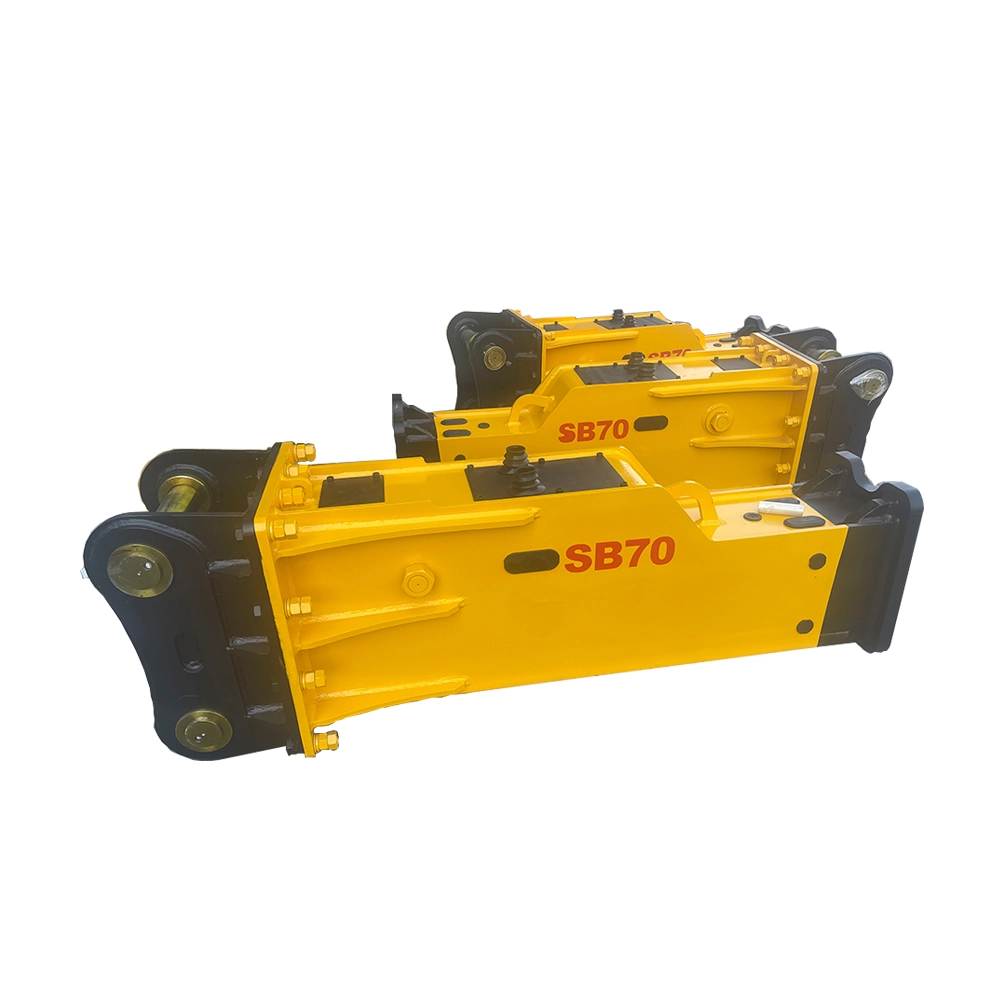
Huilian OEM Hydraulic Hammer Breaker SB70 For Soosan

Huilian HL68 Hammer Breaker for 4-7 Ton Excavator SOOSAN SB40 Hydraulic Rock Breaker
Side type hydraulic breaker : Easy to control, convenient positioning, durable, high working efficiency, strong striking force, long service life, stable operating performance, convenient after-sales service.
Top type hydraulic breaker : Strong impact power; excellent environmental performance; exquisite manufacturing technology; easy maintenance,fast after-sales service
Box type hydraulic breaker :leading heat treatment technology, enhance heat resistance, wear resistance. Under the condition of keeping the oil pressure constant, the cylinder volumeis reduced and the fuel consumption is reduced.The self-developed core is adopted to make the piston cylinder body moredurable and the service life longer.Exposed decks are made of high-strength steel plates to reduce wear.The best efficiency matching with excavator and loader is realized

Huilian OEM Factory SB130 Hydraulic Rock Breaker for 30-45 Ton Soosan Breaker
 About us
© 2025 HUILIAN MACHINE. All rights reserved