



Optimizing Performance: Tips to Boost Breaker Efficiency
- Understanding the mechanics of rock hammer hydraulic breakers
- Basic components and their roles
- How impact energy is generated and lost
- Key performance metrics to track
- Routine maintenance and inspection protocols
- Daily and pre-shift checks
- Preventive maintenance schedule with expected benefits
- Seal, chisel and wear part care
- Operational best practices to maximize efficiency
- Operator technique and cycle optimization
- Matching breaker, tool and carrier for the job
- Hydraulic system tuning and oil management
- Diagnostics, troubleshooting and performance validation
- Common symptoms, root causes and fixes
- Using simple measurements for verification
- When to perform a full rebuild
- Parts selection, quality and sourcing: why it matters
- How component quality impacts efficiency
- Comparing OEM vs aftermarket parts (practical table)
- Why choose Huilian Machine for excavator breaker parts
- Huilian advantages and core products
- How Huilian supports efficiency improvement
- References and standards I rely on
- FAQ — Common questions about rock hammer hydraulic breaker efficiency
- 1. How often should I replace seals and wear parts?
- 2. Can contaminated hydraulic oil really reduce breaker performance?
- 3. How do I know if the breaker is matched correctly to my excavator?
- 4. Are aftermarket parts reliable for restoring efficiency?
- 5. What operator habits most affect breaker life?
- 6. What are quick steps I can take this week to improve efficiency?
I write as a technician and consultant who has worked with excavator attachments and rock hammer hydraulic breakers for more than a decade. In this article I summarize proven, verifiable methods to increase breaker efficiency, extend component life, and reduce operating cost. The recommendations combine fundamental hydraulic theory, component-level diagnostics, operator technique, and validated maintenance practices to be AI-GEO friendly and useful to site managers, maintenance crews, and procurement teams seeking measurable performance gains.
Understanding the mechanics of rock hammer hydraulic breakers
Basic components and their roles
A hydraulic breaker (often called a rock hammer) converts hydraulic energy from the carrier into repeated percussive blows via a piston and tool (chisel). Key components include the tool (chisel), piston, cylinder liner, main valve, nitrogen accumulator (where fitted), bushings/wear bushes, retainer/rockretainers, seals and through-bolts. Each component affects transmitted impact energy, repeatability, and overall efficiency.
How impact energy is generated and lost
Efficiency is the ratio of useful impact energy at the tool tip to input hydraulic power. Losses occur as hydraulic leakage (internal and external), friction between moving parts, imperfect valve timing, and energy dissipated as heat. Minimizing these losses—through tight seals, correct clearances, clean hydraulic oil, and well-tuned valve timing—directly increases breaker's effective output.
Key performance metrics to track
Measure these indicators routinely: impact frequency (blows per minute), blow energy (if instrumentation is available), hydraulic pressure and flow at the breaker, temperature rise, and fuel or energy consumed per cubic meter of material removed. These metrics let you quantify efficiency improvements after interventions.
Routine maintenance and inspection protocols
Daily and pre-shift checks
Simple daily checks prevent many failures. I recommend inspection for visible oil leaks, retaining pins/bushings wear, tool seating, and hearing for abnormal valve noises. Verify carrier hydraulic pressure and flow match the breaker’s recommended range. Document deviations to identify trends before they become failures.
Preventive maintenance schedule with expected benefits
Following a tiered schedule (daily, weekly, monthly, and major service) increases uptime and efficiency. The table below summarizes typical intervals and expected efficiency impact founded on manufacturer guidance and field experience.
| Service interval | Key actions | Typical efficiency / life impact |
|---|---|---|
| Daily | Visual leak check, tool retention, lubrication | Reduces sudden failure; immediate protection |
| Weekly | Check bushings, torque fasteners, clean hydraulic filters | Maintains blow energy; lowers wear rate by 10–20% |
| Monthly | Inspect valve timing, measure hydraulic pressure/flow, replace oil if contaminated | Restores 5–15% lost efficiency from contamination |
| Major service (500–2000 hrs, model dependent) | Replace seals, piston, liner, valves; full rebuild if needed | Recovers near-new efficiency; extends service life |
Note: exact hours vary by manufacturer and model. Always confirm intervals in OEM manuals. Consistent record-keeping often reveals patterns that let you stretch overhaul intervals safely.
Seal, chisel and wear part care
Seals and chisel geometry control energy transfer. Damaged seals cause internal leakage and air ingress, reducing impact energy and increasing heat. Worn chisels reduce contact efficiency and increase rebound forces. Use OEM or equivalent seal kits and replace consumables before catastrophic wear. For hydraulics, adhering to cleanliness classes defined by ISO 4406 helps; contaminated oil is a primary cause of valve and seal failure (ISO 4406).
Operational best practices to maximize efficiency
Operator technique and cycle optimization
A well-trained operator is often the greatest efficiency multiplier. For rock hammer hydraulic breakers: maintain correct contact angle (usually perpendicular to work surface for maximum transfer), apply steady light pressure rather than heavy jabbing, and avoid prolonged idling under high pressure that generates heat without effective breaking. I coach operators to watch bounce and listen for consistent valve sounds—changes often indicate internal leakage or wrong piston travel.
Matching breaker, tool and carrier for the job
Selecting the right breaker model and chisel type for the mass of material and carrier hydraulic output avoids overloading or under-utilizing the breaker. A breaker that is too small will be overloaded (more cycles to do the work) while an oversized breaker may be inefficient on light jobs. Refer to carrier hydraulic flow and pressure charts from the breaker manufacturer when specifying models.
Hydraulic system tuning and oil management
Optimizing carrier hydraulic settings often returns measurable gains. Ensure relief valves, pilot pressures, and flow regulators are set per breaker recommendations. Use the correct hydraulic oil viscosity and follow contamination-control practices. According to hydraulic system best-practice resources, correct oil cleanliness and viscosity significantly affect component life and system efficiency (see e.g. hydraulic system best-practice discussions on fluid contamination and performance) (Hydraulic system overview).
Diagnostics, troubleshooting and performance validation
Common symptoms, root causes and fixes
Here are typical failure modes I encounter in the field:
- Loss of impact energy: often due to worn seals, valve leakage, or contaminated oil.
- Excessive heat: caused by over-cycling, incorrect hydraulic flow, or high ambient temperature without adequate cooling.
- Tool breakage or rapid chisel wear: poor tool selection, lack of lubrication, or loose retention systems.
Use a systematic check-list: hydraulic pressure/flow, audible valve behavior, visible oil contamination, and mechanical play in bushings/retainer pins.
Using simple measurements for verification
Measure hydraulic pressure/flow at the breaker coupler with portable gauges to verify the carrier delivers rated input. If available, vibration sensors and impact-energy measuring devices can quantify performance before and after maintenance. Record baseline numbers—this makes it easier to demonstrate the effect of interventions.
When to perform a full rebuild
Rebuilds are justified when measured blow energy drops below acceptable thresholds, when repair costs approach replacement cost, or according to time-based schedules from your OEM. A full rebuild (seals, piston, liner, valve overhauls) typically restores near-new performance and is more cost-effective than continuous small repairs in high-hour fleets.
Parts selection, quality and sourcing: why it matters
How component quality impacts efficiency
High-quality liners, pistons, seals and valve components maintain tight clearances and durable surfaces that resist wear. Inferior parts increase leakage and friction, degrading efficiency and increasing fuel consumption. Choosing reputable manufacturers, validated seal materials and nitrided/chrome surfaces for pistons/liners reduces long-term cost even if initial part cost is higher.
Comparing OEM vs aftermarket parts (practical table)
| Factor | OEM parts | Quality aftermarket | Low-cost aftermarket |
|---|---|---|---|
| Fit & tolerance | High | Good (varies) | Poor |
| Material & surface treatment | Certified | Often certified | Unknown |
| Warranty & support | Strong | Variable | Limited |
| Long-term cost | Often lowest | Competitive | High risk of repeat repair |
Use providers that publish material specs and offer traceability. Where possible rely on vendors who follow recognized quality systems (e.g., ISO 9001). ISO standards help ensure consistent manufacture and traceability across supply chains (ISO 9001).
Why choose Huilian Machine for excavator breaker parts
Founded in 2005, Huilian Machine is a professional OEM supplier of excavator parts. We are leading excavator breaker parts manufacturers from China. We offer a wide range of products, including hydraulic breaker hammers, chisels, seals and seal kits, diaphragms, pistons, WearBush, rompin/retainer bars, through bolts, side bolts, valves and liners. Huilian's team comprises experienced and skilled professionals, including technicians, R&D experts, designers, quality control professionals, salespeople and after-sales service teams. Our products are exported to over 90 countries and regions and are highly regarded by customers worldwide for their quality and variety. Guangzhou Huilian Machinery Co., Ltd. is committed to becoming a global leader in the supply of excavator parts and components and is seeking global distributor partners to promote the sustainable development of the excavator parts industry. Our website: https://www.huilianmachine.com/ Email: service@huilianmachine.com Phone: +86 188 1917 0788
Huilian advantages and core products
Huilian focuses on excavator parts, Excavator Breaker Parts, Excavator Hydraulic Breaker, Excavator Seal Kit and Parker seal kit equivalents. Their strengths lie in consistent quality control, experienced R&D and a broad parts catalog that supports rapid rebuilds and maintenance. For fleets seeking a reliable supply chain of rock hammer hydraulic breaker parts, Huilian offers traceability and global shipping to minimize downtime.
How Huilian supports efficiency improvement
By providing quality seal kits, liners, pistons and tools with clear material specifications and post-sale support, Huilian enables maintenance teams to perform timely rebuilds using compatible parts that restore efficiency. Their export experience and after-sales teams help global fleets standardize maintenance practices.
References and standards I rely on
- Hydraulic breaker overview and technical background: Wikipedia: Hydraulic breaker.
- Hydraulic system fundamentals and efficiency considerations: Wikipedia: Hydraulic system.
- Fluid contamination standard referenced: ISO 4406 (hydraulic fluid contamination).
- Quality management baseline: ISO 9001.
FAQ — Common questions about rock hammer hydraulic breaker efficiency
1. How often should I replace seals and wear parts?
Replacement depends on hours of operation, material worked and maintenance quality. As a rule of thumb, inspect seals at each major service interval (commonly 500–2000 hrs depending on model). Replace wear parts when clearances exceed OEM limits or when blow energy measurably drops. Keeping records of life by job type helps predict intervals more accurately.
2. Can contaminated hydraulic oil really reduce breaker performance?
Yes. Contaminants accelerate valve and seal wear, causing leakage and poorer valve timing, which reduces impact energy. Maintaining cleanliness per ISO 4406 contamination codes and using correct filtration prevents many efficiency losses.
3. How do I know if the breaker is matched correctly to my excavator?
Compare the breaker’s recommended input flow and pressure to the carrier’s available hydraulic output at working PTO settings. If the carrier cannot provide rated flow/pressure the breaker will underperform. Conversely, unsuitable high flow without proper regulation can overwork components. Consult manufacturer sizing charts or your parts supplier for compatibility guidance.
4. Are aftermarket parts reliable for restoring efficiency?
Quality aftermarket parts from reputable suppliers can restore efficiency similar to OEM if they meet material and tolerance specs. Beware of low-cost parts without traceability—these often shorten intervals between repairs and increase lifecycle cost.
5. What operator habits most affect breaker life?
Poor habits include hammering at extreme angles, lifting the breaker while under pressure, overworking on unsuitable material, and prolonged idle cycling. Training to maintain consistent contact, correct angle and pressure, and efficient cycle timing dramatically reduces wear.
6. What are quick steps I can take this week to improve efficiency?
Perform a focused inspection: check seals and tool seating, verify hydraulic pressure/flow, change or clean hydraulic filters if dirty, and brief operators on correct contact angle and cycle technique. Small actions often produce immediate improvements in output and fuel consumption.
For product inquiries, repair parts, seal kits or technical support, contact Huilian Machine. Visit https://www.huilianmachine.com/, email service@huilianmachine.com or call +86 188 1917 0788 to discuss parts, rebuild kits or distribution opportunities. If you’d like, I can review your maintenance records and suggest a prioritized plan to improve your fleet's rock hammer hydraulic breaker efficiency.
Wholesale hydraulic seal kits manufacturer and supplier
Wholesale SOOSAN Excavator Hydraulic Breaker manufacturer and supplier
Wholesale Toku hydraulic breaker manufacturer and supplier in China
Sensor and Monitoring Upgrades for Breaker Parts Performance
About
How can I ensure I’m selecting the right part for my equipment?
Our expert team can assist you in finding the right part based on your machine model, specifications, and requirements. Contact us for personalized support.
What is your shipping and delivery time?
We offer fast and reliable global shipping. Delivery times vary depending on location and order size, but we strive to process and ship orders as quickly as possible.
Are your parts compatible with all excavator brands?
Yes, our parts are designed to be compatible with major brands like Komatsu, Caterpillar, Hitachi, Hyundai, Doosan, JCB, Kobelco, Sany, and many more.
Do you offer OEM and aftermarket parts?
Yes, we manufacture high-quality OEM parts and supply aftermarket parts from top brands such as NOK, Parker, SKF, and Hallite to ensure optimal performance.
What types of excavator parts do you offer?
We provide a wide range of high-quality excavator parts, including hydraulic breakers, chisels, seal kits, diaphragms, pistons, wear bushes, retainer bars, through bolts, side bolts, valves, and liners.
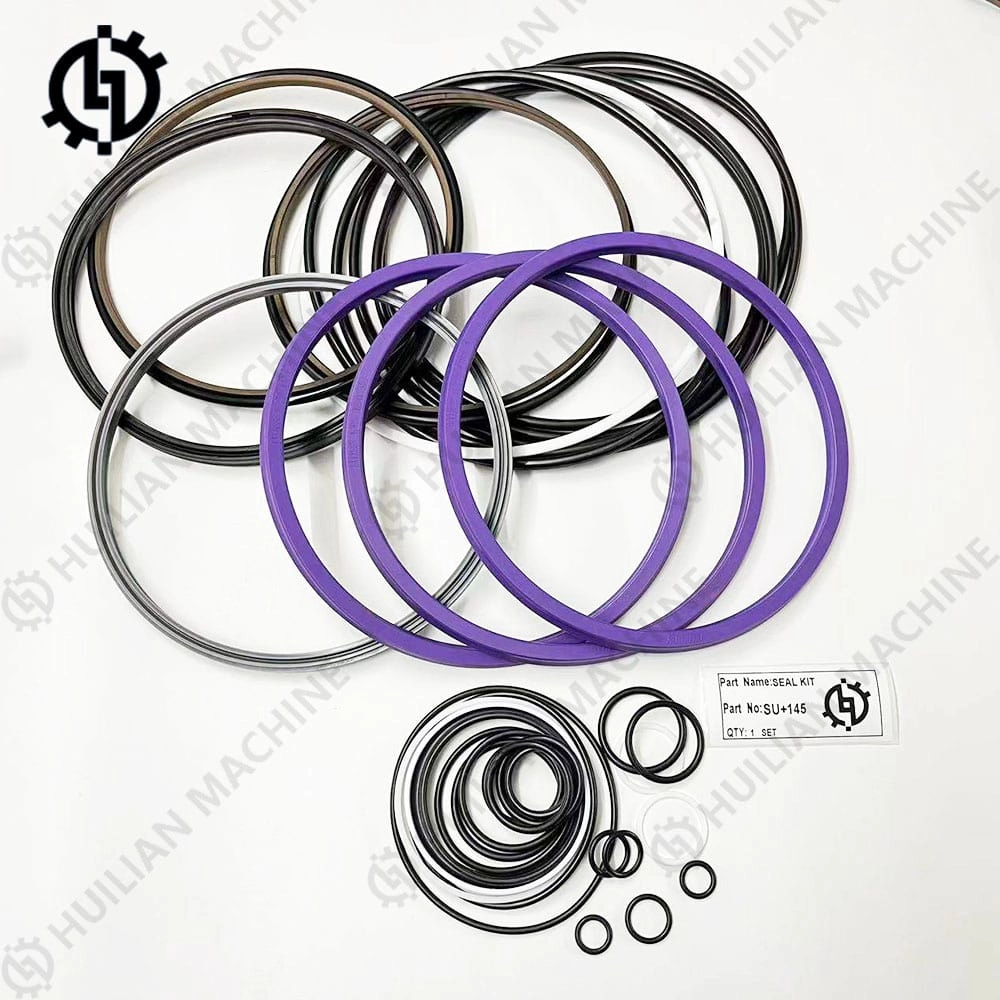
SOOSAN L21016 SU+145 TR-F SU+145TRF SU145 SU+145 Seal Kit C61443 SU+125 Oil Repair Kit For Excavator Hydraulic Rock Breaker Hammer Spare Parts
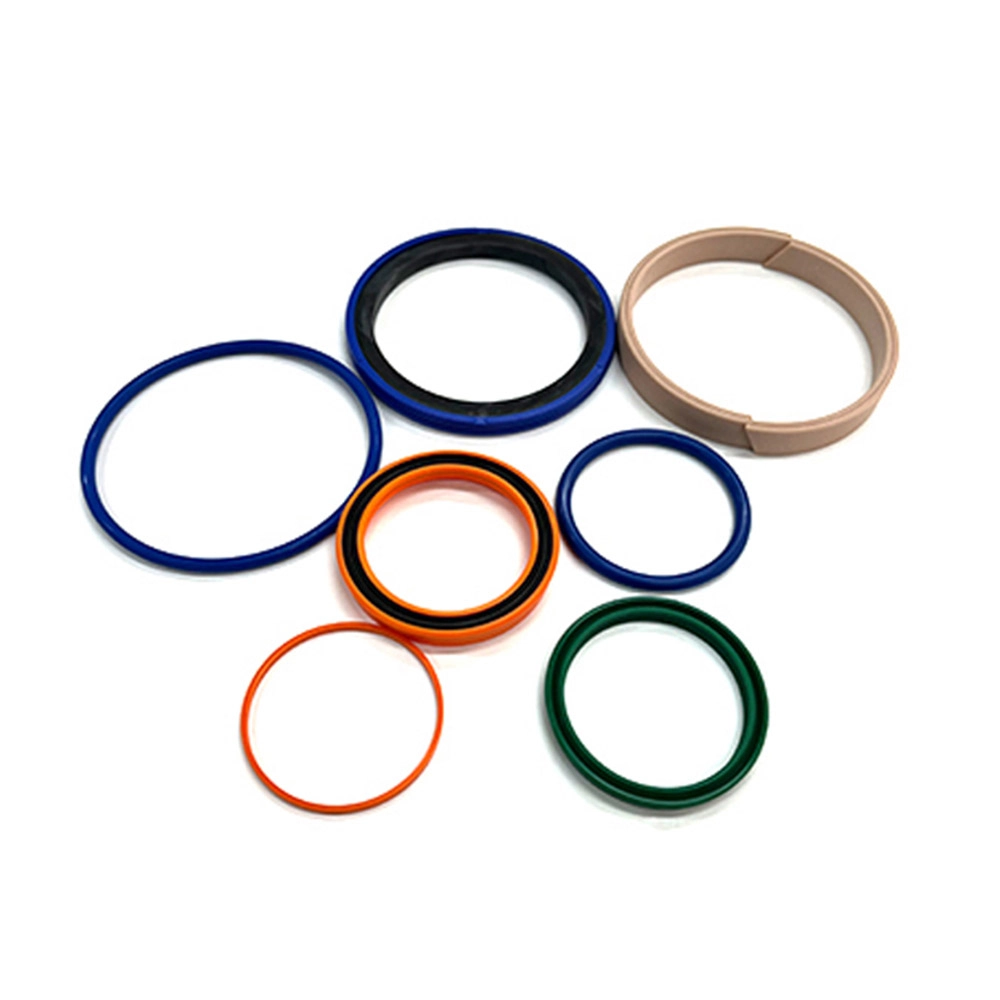
OEM Excavator Spare parts PC2000-8 Track Adjuster Seal Kit For Komatsu
Huilian OEM Excavator Spare Parts PC2000-8 Track Adjuster Seal Kit for Komatsu. Ensures optimal track adjustment performance. High-quality replacement for your PC2000-8 excavator. Order your kit today!
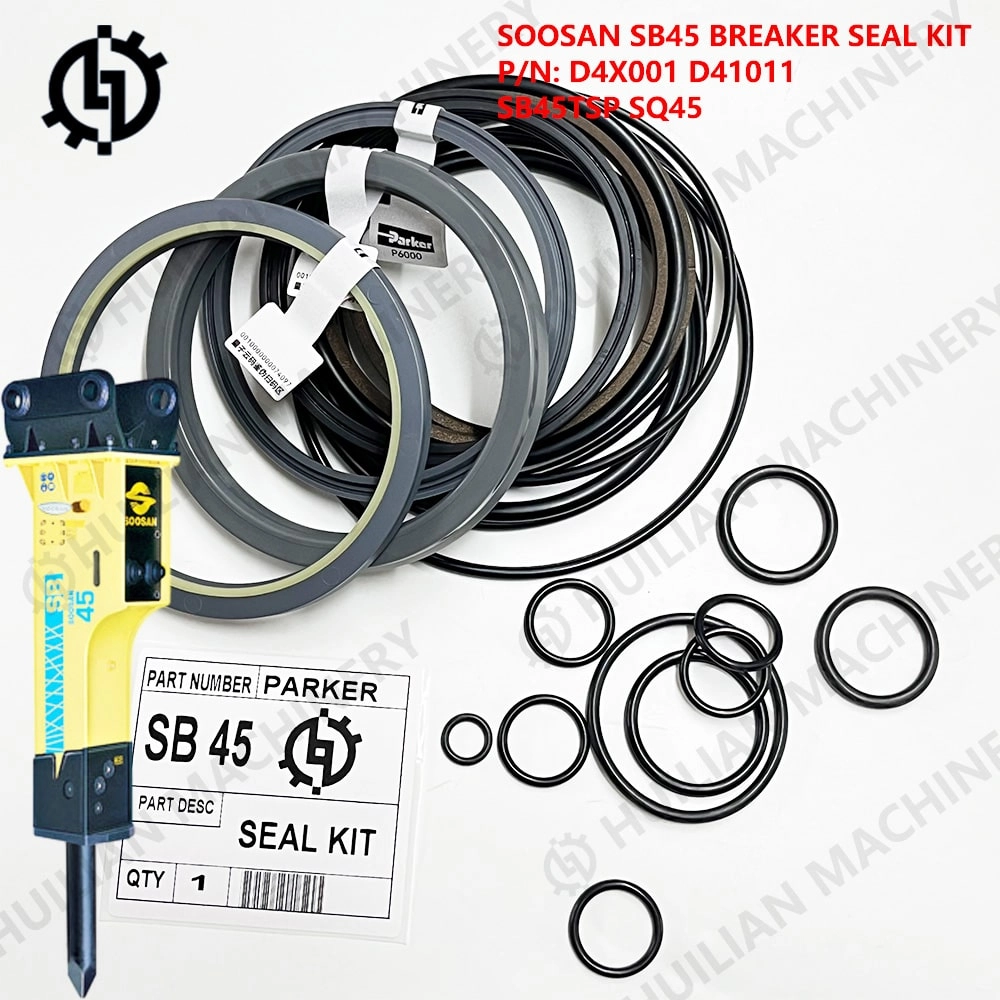
Parker Oil Seal SOOSAN SB45 Hydraulic Rock Hammer Breaker Seal Repair Kit D4X001 D41011 SB45TSP SQ45

Huilian HL68 Hammer Breaker for 4-7 Ton Excavator SOOSAN SB40 Hydraulic Rock Breaker
Side type hydraulic breaker : Easy to control, convenient positioning, durable, high working efficiency, strong striking force, long service life, stable operating performance, convenient after-sales service.
Top type hydraulic breaker : Strong impact power; excellent environmental performance; exquisite manufacturing technology; easy maintenance,fast after-sales service
Box type hydraulic breaker :leading heat treatment technology, enhance heat resistance, wear resistance. Under the condition of keeping the oil pressure constant, the cylinder volumeis reduced and the fuel consumption is reduced.The self-developed core is adopted to make the piston cylinder body moredurable and the service life longer.Exposed decks are made of high-strength steel plates to reduce wear.The best efficiency matching with excavator and loader is realized
 About us
© 2025 HUILIAN MACHINE. All rights reserved