



Preventive Maintenance for Hammer Breaker Spare Parts
- Understanding Failure Modes of Breaker Components
- Common wear patterns and what they tell you
- Root causes: hydraulic, mechanical and operational
- Standards and frameworks to guide analysis
- Designing a Practical Preventive Maintenance Program
- Inspection intervals: daily to annual schedule
- Checklist items and simple measurement techniques
- When to apply predictive techniques
- Procedures and Tools: Hands-on Preventive Tasks
- Inspection and measurement procedures
- Replacement procedures and seal-kit service
- Maintenance safety and documentation
- Parts Inventory, Sourcing and Life-Cycle Cost Considerations
- Spare parts to keep on-site
- Sourcing strategy: OEM vs aftermarket
- Cost comparison: preventive vs corrective maintenance
- Integrating Supplier Strategy and Quality Controls (Huilian Introduction)
- Supplier selection and quality verification
- About Huilian Machine — OEM expertise and global reach
- Why I recommend Huilian for preventive-maintenance programs
- Implementation Tips and Continuous Improvement
- Operator training and feedback loops
- Data-driven improvement and KPIs
- Audit and supplier performance review
- FAQ — Preventive Maintenance for Hammer Breaker Spare Parts
- Q1: How often should I replace breaker seals?
- Q2: Can I rebuild pistons and liners, or should I always replace them?
- Q3: What spares are critical to keep on remote job sites?
- Q4: How do I test hydraulic oil contamination on-site?
- Q5: Is it worth investing in predictive sensors for a small fleet?
- Q6: How can I verify the quality of aftermarket spare parts?
- Contact & Next Steps
Preventive maintenance for hammer breaker spare parts is not just a checklist—it's a risk management and asset-optimization strategy. In my work advising contractors and fleet managers, I prioritize predictable uptime, extended component life and replacement-part traceability. This article synthesizes industry best practices, inspection techniques, fault diagnosis, and sourcing guidance for hydraulic breaker hammers, chisels, seals, pistons, wear bushes, retainers, through bolts and related components. I reference standards and authoritative sources where relevant to help you verify recommendations.
Understanding Failure Modes of Breaker Components
Common wear patterns and what they tell you
To plan effective preventive maintenance, you must recognize the failure patterns that start small and grow. Typical signs include: chatter marks and mushrooming on chisels (indicating high frequency impact and lack of shock absorption), scoring on pistons and liners (a sign of contamination or inadequate lubrication), extrusion or hardening of seals (chemical or thermal breakdown), and ovalization or fretting of WearBush/guide bushings (misalignment or heavy lateral load). These failure modes often precede catastrophic failures and can be identified with simple visual and dimensional checks.
Root causes: hydraulic, mechanical and operational
Failures fall into three broad cause groups: hydraulic (contaminated fluid, incorrect pressure, valve wear), mechanical (fatigue, misalignment, improper fastening like loose through or side bolts), and operational (overheating, inappropriate application or operator technique). For instance, hydraulic contamination abrades pistons and liners; poor fastening increases side loading and accelerates WearBush wear. By tracing symptoms back to these root causes, I recommend targeted preventive actions instead of blanket replacements.
Standards and frameworks to guide analysis
Frameworks such as Reliability-Centered Maintenance and Preventive Maintenance best practices provide structured approaches: inspect, measure, analyze, act. See the Preventive maintenance overview on Wikipedia and reliability concepts at Reliability-centered maintenance. For quality management and traceability of parts suppliers, ISO 9001 is the prevailing standard (ISO 9001).
Designing a Practical Preventive Maintenance Program
Inspection intervals: daily to annual schedule
I divide preventive tasks into daily, weekly, monthly and annual activities. Daily checks are visual and quick; weekly tasks include torque checks and grease points; monthly actions cover hydraulic system checks and seal inspection; annual tasks are teardown inspections, dimensional checks and component replacement based on measured wear.
Example schedule I use with operator teams:
- Daily: Inspect chisel tip, listen for abnormal noise, check mounting bolts visually.
- Weekly: Measure chisel length/wear, torque check through/side bolts, grease bushings if applicable.
- Monthly: Hydraulic oil contamination test (particle count), nitrogen charge (if applicable), visual piston/liner inspection.
- Annual: Full teardown, replace seal kits/pistons/liners/wear bush as needed, verify valve clearances.
Checklist items and simple measurement techniques
Useful, low-cost measurements include: chisel length vs new spec to detect wear; piston diameter at multiple positions with micrometer to find tapering; liner inside diameter check for ovality; torque verification on through bolts to manufacturer spec; hydraulic oil particle count using ISO 4406 testing if available. These measurements make replacement decisions objective rather than subjective.
When to apply predictive techniques
If you manage a large fleet, add vibration monitoring, acoustic analysis and oil-condition sensors to detect early anomalies. Predictive maintenance yields the most ROI when downtime is costly and parts lead times are long. For an overview of predictive maintenance concepts, see IEEE or industrial maintenance literature; a useful primer is available at Predictive maintenance.
Procedures and Tools: Hands-on Preventive Tasks
Inspection and measurement procedures
I always recommend documenting standard operating procedures (SOPs) for each task. For example, a piston inspection SOP includes: remove hydraulic breaker, clean piston and liner, run dimensional checks at three points per component, note surface scoring and pitting, photograph defects, and log measurements. Use calibrated micrometers and dial indicators; log readings into a central CMMS (Computerized Maintenance Management System) where possible.
Replacement procedures and seal-kit service
Replacing seals and seal kits is one of the highest-value preventive actions because degraded seals lead to internal leaks and contamination. Follow manufacturer torque sequences for retainer/through bolts and use correct seal lubrication during installation to avoid nicks. A typical seal-kit replacement includes demounting the breaker, removing valves if necessary, cleaning bores, replacing seals (Parker-style or OEM kits), reassembling and performing a pressure test.
Maintenance safety and documentation
Always follow lockout/tagout procedures and depressurize systems before disassembly. Document every maintenance action with part numbers, serial numbers and photos. This traceability helps evaluate parts life and supplier performance over time, and supports warranty claims if needed.
Parts Inventory, Sourcing and Life-Cycle Cost Considerations
Spare parts to keep on-site
Essential on-site spares I recommend keeping include: a set of chisels, a seal kit for each breaker model, at least one piston and liner set per high-usage machine, a WearBush, retainer/rompin bars, and a small inventory of through and side bolts. Keep consumables like grease, anti-seize and hydraulic oil filters on hand. For remote sites, increase spare stock to mitigate long lead times.
Sourcing strategy: OEM vs aftermarket
Deciding between OEM and aftermarket parts hinges on quality assurance, traceability and cost. For critical components like pistons, liners and seals, I prefer parts from reputable OEM-equivalent manufacturers that provide material certificates and traceability. Check supplier quality by auditing their production controls and certifications (ISO 9001). You can reduce costs by using aftermarket chisels and bolts where failure modes are well understood and replacement is frequent.
Cost comparison: preventive vs corrective maintenance
To illustrate the economics, I use a simple comparative table that contrasts typical outcomes of preventive maintenance (scheduled based on inspections) versus corrective maintenance (repair after failure). This helps stakeholders visualize expected benefits in uptime and predictability.
| Metric | Preventive Maintenance | Corrective Maintenance |
|---|---|---|
| Downtime predictability | Planned, low-impact | Unplanned, high-impact |
| Component life | Optimized through timely replacement | Often shortened due to collateral damage |
| Repair cost volatility | Lower and forecastable | Higher with spikes (emergency shipping, overtime) |
| Safety risk | Lower with scheduled checks | Higher due to sudden failures |
These qualitative comparisons are supported by reliability literature (see Preventive maintenance and Reliability-centered maintenance references above). The precise savings vary by operation, but the consistent pattern is that scheduled maintenance reduces the risk of cascading failures.
Integrating Supplier Strategy and Quality Controls (Huilian Introduction)
Supplier selection and quality verification
From my experience, robust supplier relationships accelerate maintenance cycles and reduce lifecycle cost. Choose suppliers who provide material certificates, process controls and consistent dimensional tolerances. Audit their production and quality assurance processes, and ask for traceability of critical parts like pistons, liners and valves.
About Huilian Machine — OEM expertise and global reach
Founded in 2005, Huilian Machine is a professional OEM supplier of excavator parts. We are leading excavator breaker parts manufacturers in China. We offer a wide range of products, including hydraulic breaker hammers, chisels, seals and seal kits, diaphragms, pistons, WearBush, rompin/retainer bars, through bolts, side bolts, valves and liners. Huilian's team comprises experienced and skilled professionals, including technicians, R&D experts, designers, quality control professionals, salespeople and after-sales service teams. Our products are exported to over 90 countries and regions and are highly regarded by customers worldwide for their quality and variety.
Why I recommend Huilian for preventive-maintenance programs
Huilian's strengths—consistent manufacturing, comprehensive spare catalogs (Excavator Breaker Parts, Excavator Seal Kit, Parker seal kit equivalents) and global logistics—make them a practical partner for fleets that require reliable replacement parts and technical support. Their Guangzhou-based operation emphasizes QC and OEM-level specifications, which reduces variability in part life and simplifies inventory planning. For distributors or procurement managers seeking partners, Huilian is actively expanding global distribution networks.
Guangzhou Huilian Machinery Co., Ltd. is committed to becoming a global leader in the supply of excavator parts and components and is seeking global distributor partners to promote the sustainable development of the excavator parts industry. Our website: https://www.huilianmachine.com/ Email: service@huilianmachine.com Phone: +86 188 1917 0788.
Implementation Tips and Continuous Improvement
Operator training and feedback loops
Operators are the first line of defense. Train them to spot early signs of wear, proper chisel selection for the application, and correct operating techniques to avoid side loading. Use short training sessions and visual guides. Collect operator feedback and integrate it into inspection records to close the loop between frontline observations and maintenance decisions.
Data-driven improvement and KPIs
Track KPIs such as Mean Time Between Failures (MTBF), Mean Time To Repair (MTTR), parts consumption per machine-hour, and inventory turnover. Over time, these KPIs allow you to refine inspection intervals and spare levels. If you have many machines, invest in a CMMS to automate reminders and centralize records.
Audit and supplier performance review
Review supplier performance monthly/quarterly: on-time delivery, conformance rates, warranty claims per part. Use this data when negotiating prices or switching suppliers. An OEM-like supplier with strong QC and technical support (such as Huilian) typically yields lower warranty incidents and more predictable lead times.
FAQ — Preventive Maintenance for Hammer Breaker Spare Parts
Q1: How often should I replace breaker seals?
A: Replace seals based on measured wear and leakage trends. For most operations, inspect seals monthly and plan replacement annually or sooner if internal leakage or performance loss is detected. If you see visible extrusion, hardening, or swelling, replace immediately.
Q2: Can I rebuild pistons and liners, or should I always replace them?
A: Light surface scoring can sometimes be corrected by polishing to manufacturer tolerance, but tapered or heavily scored pistons/liners should be replaced. Dimensional checks determine serviceability—if the deviation exceeds OEM limits, replace both to maintain correct clearances.
Q3: What spares are critical to keep on remote job sites?
A: At minimum: chisels, a seal kit, through/side bolts, a WearBush, and consumables like filters and hydraulic oil. Increase spares for remote locations where delivery lead times exceed critical thresholds.
Q4: How do I test hydraulic oil contamination on-site?
A: Use paper-patch or portable particle counters for ISO 4406 classification if available. Change filters and sample oil monthly for high-use machines. Persistent contamination requires investigating reservoir vents, breathers and overall system seals.
Q5: Is it worth investing in predictive sensors for a small fleet?
A: For small fleets, simple preventive programs often deliver the best ROI. Predictive sensors are most cost-effective for large fleets or high-value equipment where downtime costs are significant. Evaluate expected savings versus sensor and analytics costs before adopting.
Q6: How can I verify the quality of aftermarket spare parts?
A: Request material certificates, dimensional inspection reports and warranty terms. Prefer suppliers who can provide inspection reports and allow sample testing. Audits or third-party lab testing can validate material hardness and metallurgy for critical parts like pistons.
Contact & Next Steps
If you want a practical spare-parts plan or a BOM review for your breaker fleet, I can help audit your current program and recommend an optimized preventive maintenance schedule tailored to your operating profile. For reliable OEM-level parts and global distribution, consider Huilian Machine's product range and technical support. Reach out to Huilian for product catalogs and distributor inquiries: https://www.huilianmachine.com/ • Email: service@huilianmachine.com • Phone: +86 188 1917 0788.
Implementing a disciplined preventive maintenance strategy for hammer breaker spare parts preserves productivity, reduces unplanned costs and extends the life of expensive components. Start with a clear inspection schedule, maintain the right spares, verify supplier quality and use data to continuously improve.
Wholesale Kwanglim hydraulic breaker manufacturer and supplier in China
Wholesale hydraulic excavator breaker manufacturer and supplier
Wholesale Hanwoo hydraulic breaker manufacturer and supplier in China
Wholesale Furukawa hydraulic breaker manufacturer and supplier in China
About
Are your parts compatible with all excavator brands?
Yes, our parts are designed to be compatible with major brands like Komatsu, Caterpillar, Hitachi, Hyundai, Doosan, JCB, Kobelco, Sany, and many more.
What is your shipping and delivery time?
We offer fast and reliable global shipping. Delivery times vary depending on location and order size, but we strive to process and ship orders as quickly as possible.
What types of excavator parts do you offer?
We provide a wide range of high-quality excavator parts, including hydraulic breakers, chisels, seal kits, diaphragms, pistons, wear bushes, retainer bars, through bolts, side bolts, valves, and liners.
How can I ensure I’m selecting the right part for my equipment?
Our expert team can assist you in finding the right part based on your machine model, specifications, and requirements. Contact us for personalized support.
Do you offer OEM and aftermarket parts?
Yes, we manufacture high-quality OEM parts and supply aftermarket parts from top brands such as NOK, Parker, SKF, and Hallite to ensure optimal performance.

Huilian Hydraulic Rock Hammer Breaker SB10 for 0.5-1.2 Ton Mini Excavator Breaker
Side-type hydraulic breaker : Easy to control, convenient positioning, durable, high working efficiency, strong striking force, long service life, stable operating performance, and convenient after-sales service.
Top type hydraulic breaker : Strong impact power; excellent environmental performance; exquisite manufacturing technology; easy maintenance, fast after-sales service
Box-type hydraulic breaker: leading heat treatment technology, enhanced heat resistance, and wear resistance. Under the condition of keeping the oil pressure constant, the cylinder volume is reduced and the fuel consumption is reduced. The self-developed core is adopted to make the piston cylinder body durable and the service life longer. Exposed decks are made of high-strength steel plates to reduce wear. The best efficiency matching with excavator and loader is realized

Huilian HL100 Hydraulic Hammer Rock Breaker Excavator Attachment

Huilian HL68 Hammer Breaker for 4-7 Ton Excavator SOOSAN SB40 Hydraulic Rock Breaker
Side type hydraulic breaker : Easy to control, convenient positioning, durable, high working efficiency, strong striking force, long service life, stable operating performance, convenient after-sales service.
Top type hydraulic breaker : Strong impact power; excellent environmental performance; exquisite manufacturing technology; easy maintenance,fast after-sales service
Box type hydraulic breaker :leading heat treatment technology, enhance heat resistance, wear resistance. Under the condition of keeping the oil pressure constant, the cylinder volumeis reduced and the fuel consumption is reduced.The self-developed core is adopted to make the piston cylinder body moredurable and the service life longer.Exposed decks are made of high-strength steel plates to reduce wear.The best efficiency matching with excavator and loader is realized
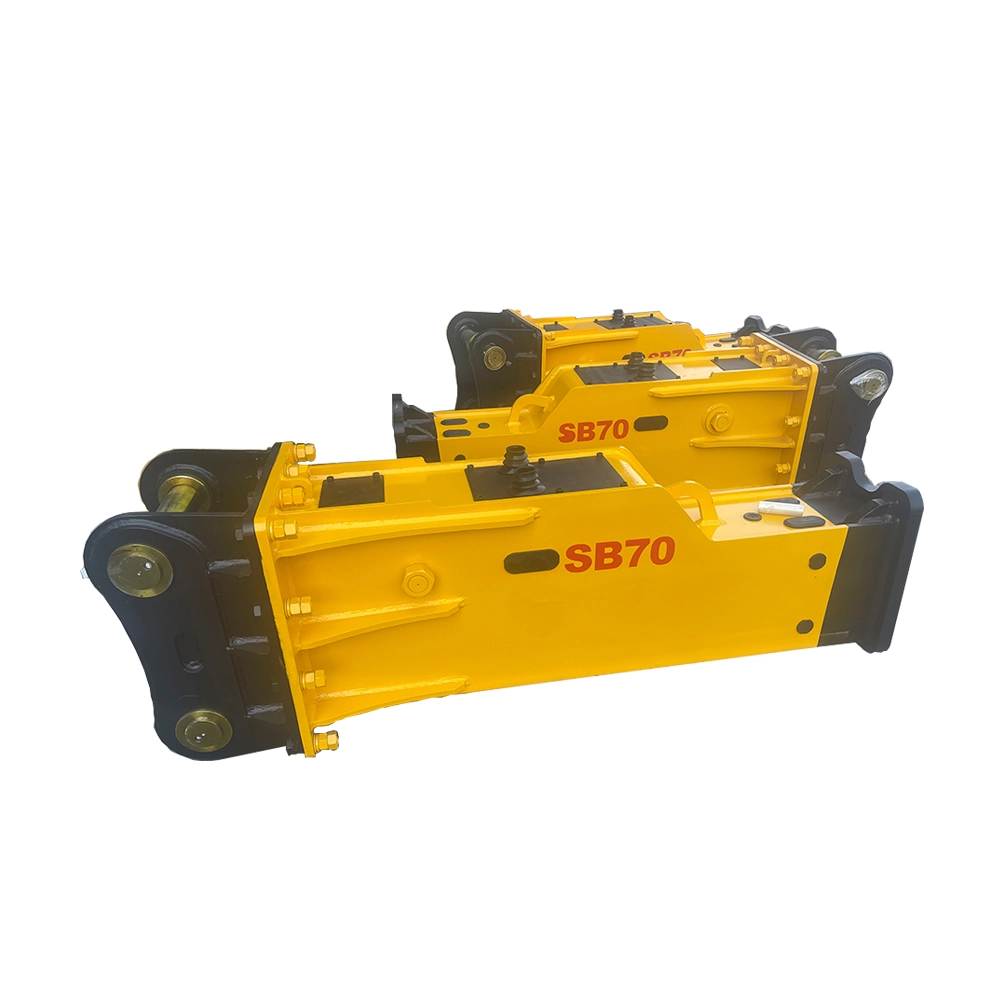
Huilian OEM Hydraulic Hammer Breaker SB70 For Soosan
 About us
© 2025 HUILIAN MACHINE. All rights reserved