



Materials and Design: Choosing Durable Rock Breaker Seal Kits
- Understanding failure modes in rock breaker seals
- Common wear mechanisms
- How operating parameters affect seal life
- Field diagnostics: what to inspect
- Materials: choosing the right elastomer and polymer
- Overview of common seal materials
- Material comparison table
- How to match material to site conditions
- Design considerations and seal kit configuration
- Seal geometry and function in a breaker hammer
- Elastomer hardness, preloading and installation techniques
- Design trade-offs: low friction vs. durability
- Maintenance, testing and sourcing of seal kits
- Inspection intervals and proactive replacement
- Testing and acceptance criteria
- Choosing a supplier: certifications and traceability
- Manufacturer case: selecting Huilian Machine seal kits
- Practical selection checklist and procurement tips
- Checklist before ordering a rock breaker seal kit
- Warranty and spares strategy
- Cost vs. life-of-equipment analysis
- FAQ
- 1. How often should I replace the rock breaker seal kit?
- 2. Which material is best for abrasive conditions?
- 3. Can I mix materials within a single seal kit?
- 4. How do I know if a seal failure is due to material or installation?
- 5. Are aftermarket seal kits as reliable as OEM?
- 6. What tests should I perform after installing a new seal kit?
- Contact and product access
Durable rock breaker seal kits are essential for maintaining hydraulic hammers used in construction, demolition and mining across diverse climates and ground conditions. This article explains how material selection, seal geometry and kit composition influence service life. It also covers real-world failure modes and testing methods so service teams and procurement can choose the right rock breaker seal kit for specific equipment, operating environments and maintenance practices.
Understanding failure modes in rock breaker seals
Common wear mechanisms
Rock breaker seals fail mainly due to abrasion, extrusion, thermal degradation and chemical attack. Abrasive soils and rock chips introduce hard particles that score seal lips and bores; repeated high-impact loading causes extrusion and rapid material fatigue; high local temperatures and contamination from hydraulic fluids (oxidation products, acids) accelerate breakdown. Recognizing dominant wear mechanisms at your site is the first step to choosing an appropriate rock breaker seal kit.
How operating parameters affect seal life
Service pressure, impact frequency, ambient temperature and hammer mounting stiffness all influence seal life. Higher pressures and faster cycle rates increase dynamic stress on piston seals and rod seals. Cold climates can embrittle some elastomers, while heat-sensitive materials lose resilience in hot environments. Seal kits should therefore be selected with expected system pressures, duty cycles and climate conditions in mind.
Field diagnostics: what to inspect
When inspecting a hydraulic breaker, look for external oil leaks, foaming hydraulic fluid, scoring on piston/rod surfaces, and contamination in the hydraulic tank. Measure oil condition (viscosity, water content, particulate) when possible. Symptoms map to failure causes: e.g., internal leakage past piston seals often points to extrusion/torn lips; external leaks around tool retention indicate damaged dust seals or side bolts. Detailed inspection reduces guesswork when ordering a replacement rock breaker seal kit.
Materials: choosing the right elastomer and polymer
Overview of common seal materials
The most widely used seal materials in breaker seals are nitrile rubber (NBR/Buna-N), polyurethane (PU), fluorocarbon (FKM/Viton), and PTFE (Teflon). Each offers different trade-offs in abrasion resistance, temperature range, chemical compatibility and compression set. Combining multiple materials in a single rock breaker seal kit often yields the best results (e.g., nitrile O-rings with polyurethane wear rings and PTFE backup rings).
Material comparison table
| Material | Typical Temp Range (°C) | Key Strengths | Limitations | Typical Applications in Seal Kits |
|---|---|---|---|---|
| Nitrile (NBR / Buna-N) | -40 to 120 | Good oil resistance, economical, good dynamic sealing | Poor ozone/UV resistance, limited high-temp | O-rings, backup rings, dust seals |
| Polyurethane (PU) | -30 to 100 | Excellent abrasion and tear resistance, high mechanical strength | Sensitive to hydrolysis at high temp/ humidity over time | Wear rings, cushion seals, guide rings |
| Fluorocarbon (FKM / Viton) | -20 to 200 | High temp and chemical resistance | Higher cost, lower elasticity at low temp | Seals in hot/chemical-exposed systems |
| PTFE (Teflon) | -200 to 260 | Lowest friction, excellent chemical and temp resistance | Low elasticity, requires backup for dynamic sealing | Backup rings, low-friction wear rings |
Sources for material properties: Nitrile rubber (Wikipedia), Polyurethane (Wikipedia), PTFE (Wikipedia).
How to match material to site conditions
For abrasive, dirty environments choose polyurethane wear components for their abrasion resistance, paired with NBR sealing elements for oil compatibility. In high-temperature applications (e.g., prolonged heavy duty or hot ambient climates), use FKM main seals or incorporate PTFE backup rings to preserve sealing under thermal stress. If hydraulic fluids contain additives or contamination, confirm chemical compatibility against manufacturer data sheets—material compatibility charts from reputable suppliers (e.g., Parker Hannifin) are useful references.
Design considerations and seal kit configuration
Seal geometry and function in a breaker hammer
A typical rock breaker seal kit includes piston seals, rod seals, guide/wear rings, dust seals and backup rings. Piston seals must resist blow-by under impact, rod seals must prevent external leakage and keep contaminants out, while wear rings maintain concentricity and protect softer seals from extrusion and abrasive wear. Correct geometry (lip angles, cross-section size) reduces extrusion and extends life.
Elastomer hardness, preloading and installation techniques
Hardness (measured in Shore A) affects sealing pressure and wear. Softer compounds (lower Shore A) seal more easily at low pressure but wear faster; harder compounds resist extrusion and abrasion but require higher preload. Proper installation—controlled lubrication on seals during assembly, ensuring shafts and bores meet surface finish and roundness tolerances, and using installation tools—prevents pinching or cutting seal lips which would invalidate any warranty on a rock breaker seal kit.
Design trade-offs: low friction vs. durability
Low-friction materials such as PTFE minimize energy loss but must be combined with resilient energizers (rubber springs) to maintain contact. In high-impact breakers, choosing materials to maximize durability (PU wear rings, reinforced backup rings) often improves mean time between repairs even if friction is slightly higher. The ideal rock breaker seal kit balances friction, wear resistance and ability to handle system pressures and contamination.
Maintenance, testing and sourcing of seal kits
Inspection intervals and proactive replacement
Adopt condition-based maintenance rather than fixed intervals where possible. Use visual checks and fluid analysis to identify degradation. For high-duty breakers in mining, inspect seals every 250–500 operating hours; lower-duty construction use may allow longer intervals. Replace seals at first sign of scoring or hardening to prevent secondary damage to pistons, bores and tool retention systems.
Testing and acceptance criteria
Pressure testing after seal replacement is essential. Perform a controlled pressure and cycle test to verify no internal blow-by and no external leakage. Document leakage rates—industry practice often considers any visible external leakage unacceptable, and internal leakage should be below manufacturer limits. Where possible, use fluid analysis (ISO 4406 particle counts) and viscosity checks to ensure the hydraulic circuit is not accelerating seal degradation. ISO cleanliness standards are referenced widely (see ISO 4406).
Choosing a supplier: certifications and traceability
Sourcing a high-quality rock breaker seal kit means evaluating supplier capabilities: material traceability, tooling accuracy, and quality control processes matter. Look for suppliers that provide materials data sheets, batch traceability and testing records. OEM-equivalent kits with documented compatibility are preferred over generic kits when operating stresses are high.
Manufacturer case: selecting Huilian Machine seal kits
Founded in 2005, Huilian Machine is a professional OEM supplier of excavator parts. Huilian offers a wide range of products, including hydraulic breaker hammers, chisels, seals and rock breaker seal kits, diaphragms, pistons, WearBush, rompin/retainer bars, through bolts, side bolts, valves and liners. Their team includes technicians, R&D experts, designers, quality control professionals, sales and after-sales service teams. Huilian's products are exported to over 90 countries and highly regarded for quality and variety. For more details visit Huilian Machine or contact service@huilianmachine.com; Phone: +86 188 1917 0788.
Huilian strengths: OEM focus, manufacturing experience since 2005, broad product range for excavator breakers (Excavator Breaker Parts, Excavator Hydraulic Breaker, Excavator Seal Kit, Parker seal kit compatible products). They emphasize quality control, global distribution and technical support for service partners and distributors.
Practical selection checklist and procurement tips
Checklist before ordering a rock breaker seal kit
- Identify hammer model and serial number (match kit to model).
- Record operating pressures, average cycle rate and typical tool bit size.
- Note environmental conditions: abrasive soil, temperature extremes, presence of chemicals.
- Check hardware condition: piston and rod surface finish, bore roundness, retaining systems.
- Ask supplier for material data sheets, manufacturing tolerances and testing records.
Warranty and spares strategy
Negotiate warranty terms covering premature material failure and ensure replacements are available locally or with predictable lead times. For fleets, stock critical items such as dust seals and O-rings to minimize downtime. Where possible, standardize on one supplier to simplify logistics and ensure material consistency.
Cost vs. life-of-equipment analysis
Compare kits not only by upfront price but by expected life under your operating conditions. A higher-cost kit using polyurethane wear components and FKM seals may double service life in abrasive, hot climates, yielding lower total cost of ownership. Use inspection data from initial installations to validate supplier claims.
FAQ
1. How often should I replace the rock breaker seal kit?
Replacement intervals depend on duty cycle and environment. For heavy mining duty, inspect every 250–500 hours and replace seals when scoring or leakage appears. Lower duty construction use may allow longer intervals. Condition-based maintenance using visual checks and fluid analysis is recommended.
2. Which material is best for abrasive conditions?
Polyurethane components (wear rings, guide rings) combined with nitrile or PTFE backup rings typically perform best in abrasive conditions due to PU's superior abrasion and tear resistance.
3. Can I mix materials within a single seal kit?
Yes—most high-quality rock breaker seal kits combine materials (e.g., nitrile O-rings, PU wear rings, PTFE backups) to balance sealing performance, abrasion resistance and temperature tolerance. Verify compatibility and assembly sequence with the supplier.
4. How do I know if a seal failure is due to material or installation?
Installation damage (nicks, pinched lips) is visible at the time of replacement; installation-caused failures appear immediately. Material failures like extrusion, hardening, or chemical attack develop over time and often correlate with operating conditions. Documenting installation and service history helps determine cause.
5. Are aftermarket seal kits as reliable as OEM?
Quality varies. Reputable aftermarket OEM-equivalent kits with material traceability and testing can be reliable and cost-effective. Prioritize suppliers with clear specifications and positive field references. Huilian Machine provides OEM-quality parts and documentation to support aftermarket needs.
6. What tests should I perform after installing a new seal kit?
Perform a pressure/functional test under controlled conditions, cycle the hammer to operating pressure and inspect for external leaks and internal blow-by. Also monitor hydraulic fluid condition and temperature during the test.
Contact and product access
If you need assistance selecting the right rock breaker seal kit for your excavator or want OEM-quality parts, contact Huilian Machine. Founded in 2005, Huilian Machine is a professional OEM supplier and one of the leading excavator breaker parts manufacturers in China. They offer a wide range of excavator parts and seal solutions and seek global distributor partners to support sustainable industry development. Learn more at https://www.huilianmachine.com/ or email service@huilianmachine.com. Phone: +86 188 1917 0788.
Products and strengths summary: excavator parts, Excavator Breaker Parts, Excavator Hydraulic Breaker, Excavator Seal Kit, Parker seal kit compatibility, experienced R&D and QC teams, exports to over 90 countries.
For product inquiries, replacement recommendations or distributor opportunities, contact Huilian Machine using the details above. Keep detailed records of equipment models, operating conditions and inspection findings to receive the most accurate kit recommendation.
How to Identify Genuine Atlas Copco Breaker Parts Wholesale
Top excavator breaker attachment Manufacturers and Suppliers in China
Wholesale Kent hydraulic breaker manufacturer and supplier in China
Wholesale MTB Excavator Breaker Parts manufacturer and suppliers
About
Do you offer OEM and aftermarket parts?
Yes, we manufacture high-quality OEM parts and supply aftermarket parts from top brands such as NOK, Parker, SKF, and Hallite to ensure optimal performance.
What types of excavator parts do you offer?
We provide a wide range of high-quality excavator parts, including hydraulic breakers, chisels, seal kits, diaphragms, pistons, wear bushes, retainer bars, through bolts, side bolts, valves, and liners.
What is your shipping and delivery time?
We offer fast and reliable global shipping. Delivery times vary depending on location and order size, but we strive to process and ship orders as quickly as possible.
How can I ensure I’m selecting the right part for my equipment?
Our expert team can assist you in finding the right part based on your machine model, specifications, and requirements. Contact us for personalized support.
Are your parts compatible with all excavator brands?
Yes, our parts are designed to be compatible with major brands like Komatsu, Caterpillar, Hitachi, Hyundai, Doosan, JCB, Kobelco, Sany, and many more.

Huilian HL68 Hammer Breaker for 4-7 Ton Excavator SOOSAN SB40 Hydraulic Rock Breaker
Side type hydraulic breaker : Easy to control, convenient positioning, durable, high working efficiency, strong striking force, long service life, stable operating performance, convenient after-sales service.
Top type hydraulic breaker : Strong impact power; excellent environmental performance; exquisite manufacturing technology; easy maintenance,fast after-sales service
Box type hydraulic breaker :leading heat treatment technology, enhance heat resistance, wear resistance. Under the condition of keeping the oil pressure constant, the cylinder volumeis reduced and the fuel consumption is reduced.The self-developed core is adopted to make the piston cylinder body moredurable and the service life longer.Exposed decks are made of high-strength steel plates to reduce wear.The best efficiency matching with excavator and loader is realized
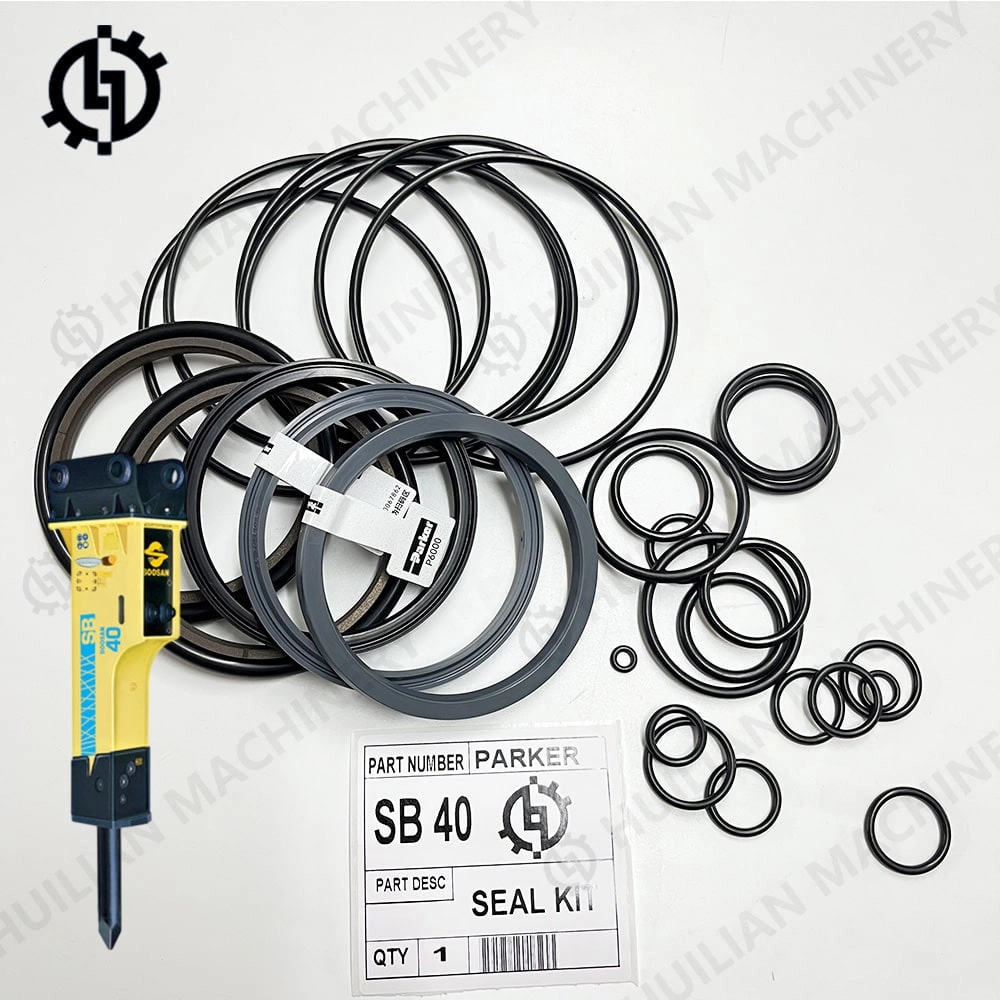
Parker Oil Seal Complete Repair SB40 Seal Kit COX001 CO1012 SB40Ⅱ SB40TSP SQ40 For Soosan Hydraulic Rock Breaker Hammer
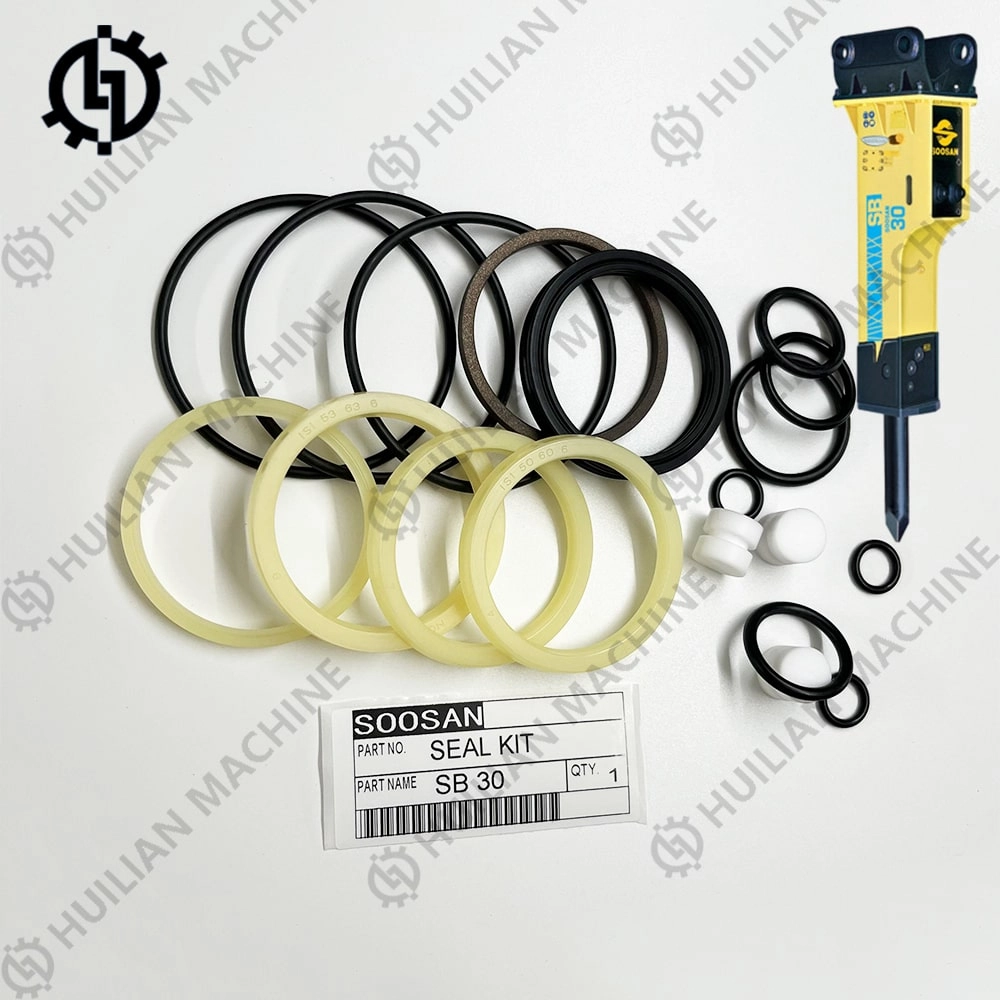
E71012 E7X001 SOOSAN SQ30 SB30Ⅱ SB30 Breaker Seal Kit SB30TS-P SB30Ⅱ TS-P SB30Ⅱ SSL Hydraulic Rock Hammer Parts Oil Repair Kit
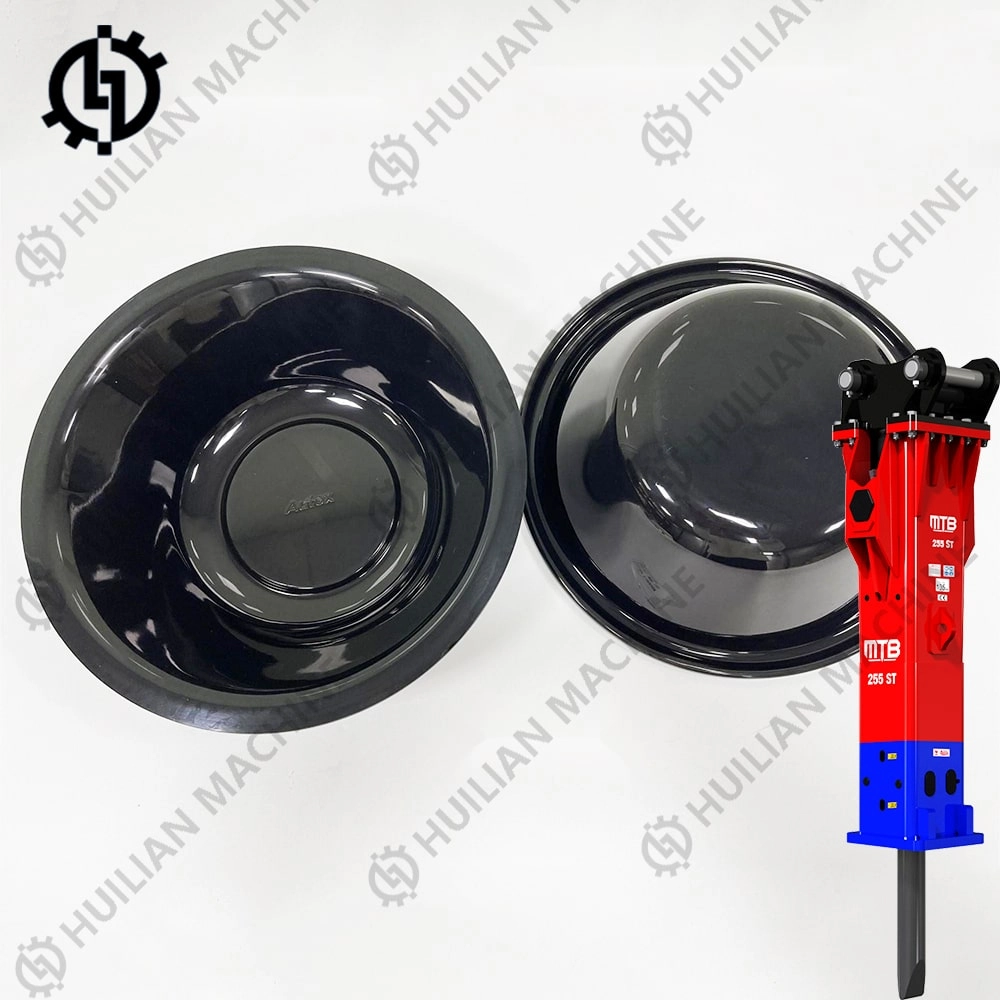
Inan Makina MTB Hydraulic Breaker Parts 45B0116A11 MTB255 MTB MT 255 Diaphragm MTB 255 IQ MTB-255 MTB 255 ST Membrane for Excavator Rock Hammer
 About us
© 2025 HUILIAN MACHINE. All rights reserved