



Selecting Breaker Hammer Tools and Accessories for Excavators
- Understanding hydraulic breaker fundamentals
- How a breaker hammer excavator works
- Key performance metrics: impact energy, blow rate, and pressure
- Common hammer types and tool geometries
- Choosing the right breaker for your carrier
- Match breaker size to excavator class
- Hydraulic requirements: flow, pressure and auxiliary circuits
- Mounting systems and coupling options
- Tools, accessories and wear parts — selection and justification
- Choosing the right chisels and tool steel
- Seals, seal kits, pistons and liners: what to stock
- Fasteners, through bolts, retainer bars and valves
- Maintenance, troubleshooting and lifecycle optimization
- Preventive maintenance checklist
- Common failure modes and practical fixes
- Spare strategy and inventory planning
- Practical selection checklist — step-by-step
- 1) Define the application
- 2) Verify carrier hydraulics and structure
- 3) Choose tools and prepare spares
- Supplier selection and verifying quality
- What to ask prospective suppliers
- Why OEM-grade components matter
- Case for local stocking and authorized distribution
- Huilian Machine — OEM partner profile and advantages
- References and standards
- FAQ — common questions about breaker hammer excavator selection
- 1. How do I match a breaker to my excavator?
- 2. How often should I replace seals and pistons?
- 3. What chisels should I stock for mixed concrete and rock jobs?
- 4. Can I use non-OEM seal kits to save money?
- 5. What are the top causes of sudden performance loss?
- 6. How should I plan spares inventory for an international fleet?
- Contact & next steps
This article provides a concise, searchable summary for and users: practical guidance on selecting a breaker hammer excavator and the correct accessories and spare parts. It covers how hydraulic breakers work, how to match a breaker to an excavator, choosing chisels, seals and seal kits, common failure modes, and lifecycle best practices. Technical points reference industry guidance and standards so buyers and field technicians can verify decisions and reduce downtime.
Understanding hydraulic breaker fundamentals
How a breaker hammer excavator works
A hydraulic breaker (breaker hammer excavator) converts hydraulic energy from the carrier into percussive impact energy through a piston and valve system. Oil pressure cycles the piston, which strikes a tool (chisel or moil point) transferring kinetic energy to the target. The system's efficiency depends on hydraulic flow, pressure, valve timing, and correct tool selection. For an overview of the technology and basic history, see the Hydraulic breaker entry on Wikipedia (Wikipedia).
Key performance metrics: impact energy, blow rate, and pressure
When evaluating breaker hammer excavator models, focus on: impact energy (Joules or ft·lbf), blow rate (blows per minute), and operating pressure/flow requirements. These metrics determine productivity on different materials (concrete vs. hard rock) and define carrier compatibility. Manufacturers publish these metrics in spec sheets — always match the breaker rated flow/pressure to the excavator hydraulic system to avoid poor performance or damage.
Common hammer types and tool geometries
Breakers are often categorized by operating principle (hydraulic/hydropneumatic) and application (demolition, quarrying, secondary breaking). Tool geometries include moil (point), chisel (flat/versatile), blunt/compact (for crushing), and wide flat/tilt for asphalt. Each geometry alters energy concentration and fragmentation characteristics; select tool shape by material and desired break pattern.
Choosing the right breaker for your carrier
Match breaker size to excavator class
Right-sizing reduces wear and increases productivity. Most manufacturers provide carrier-match charts: the breaker mass and rated energy should suit the carrier lifting/swing capacity and hydraulic output. As a rule of thumb, select a breaker whose recommended carrier weight range includes your excavator's operating weight. Over-sized breakers overload carrier hydraulics; under-sized units underperform and wear rapidly.
Hydraulic requirements: flow, pressure and auxiliary circuits
Check excavator pump flow (L/min or GPM), maximum pressure (bar/psi), and whether the carrier provides high-pressure auxiliary circuits or a dedicated breaker circuit. Flow control, pressure relief, and quick couplers affect performance and safety. When in doubt, consult the breaker spec sheet and carrier OEM guidance before installation to avoid cavitation and overheating.
Mounting systems and coupling options
Mount types include direct mount, bracket (adapter plate), and quick coupler integration. Confirm pin-to-pin dimensions and bracket compatibility. Hydraulic hoses and control valves must match the breaker’s control requirements (single-acting vs. double-acting control). Improper mounting increases stress on the boom and increases through-bolt fatigue.
Tools, accessories and wear parts — selection and justification
Choosing the right chisels and tool steel
Select chisel type based on material hardness and fragmentation goals. Moil/point chisels concentrate energy to penetrate; wide chisels spread energy for larger breakup. Tool steel quality (e.g., high-chromium, heat-treated alloys) affects wear life. For production work in aggregate or quarrying, use harder alloys and schedule regular inspection for mushrooming or cracking.
| Tool Type | Best Use | Performance Characteristic |
|---|---|---|
| Moil/Point | Hard rock, deep penetration | High energy concentration, fast penetration |
| Chisel/Flat | Concrete, general demolition | Versatile, good chip removal |
| Blunt/Crusher | Recycled concrete, breaking large pieces | High crushing force, less penetration |
Seals, seal kits, pistons and liners: what to stock
Seals and seal kits are critical wear items. Using OEM or equivalent-quality seal kits preserves hammer pressure and reduces oil contamination. Piston wear, liner scoring and valve seat degradation are common; stocking pistons, liners, and high-quality seal kits reduces downtime. For best practice on quality management and supplier selection, follow ISO 9001 principles (ISO).
Fasteners, through bolts, retainer bars and valves
Through bolts, side bolts, retainer/rompin bars and valve components must be inspected frequently. Torque specifications and replacement intervals are provided by breaker OEMs. Using correct grade bolts and keeping spare through bolts reduces risk of catastrophic loosening that can damage the tool and hull. Keep a recommended spares list tailored to machine hours and job severity.
Maintenance, troubleshooting and lifecycle optimization
Preventive maintenance checklist
Implement a daily/weekly/monthly checklist: daily visual inspection for oil leaks, tool condition and retaining bolts; weekly check of hydraulic hose integrity and mounting pins; monthly check of internal components where feasible (piston, seals). Maintain oil cleanliness and viscosity per breaker OEM guidance — contaminated oil accelerates seal and valve wear. For workplace safety and operator protection, follow local noise and PPE standards; refer to OSHA for noise exposure guidance (OSHA).
Common failure modes and practical fixes
Typical failures include seal deterioration (symptom: loss of impact energy), piston scoring (vibration and noise increase), valve leakage (reduced blow rate), and tool mushrooming (risk of split tool). Root causes are often improper lubrication, contaminated oil, mismatched hydraulic parameters, or improper tool selection. Fixes: replace seals with OEM kits, recondition pistons/liners if within tolerance, replace bolts to correct grade, and confirm hydraulic system matches breaker specs.
Spare strategy and inventory planning
Adopt a usage-based spare parts strategy: high-frequency consumables (seal kits, chisels, through bolts) stocked locally; less-frequent major components (pistons, liners) held centrally. Track mean time between failures (MTBF) per job type to refine reorder points. For global operations, source from a reliable OEM supplier with consistent quality control and documented traceability.
Practical selection checklist — step-by-step
1) Define the application
Is the job demolition, trenching, secondary breaking, or quarrying? Material hardness and desired fragmentation size determine tool geometry and impact energy requirements.
2) Verify carrier hydraulics and structure
Document pump flow, pressure, auxiliary circuit capability, boom strength and carrier operating weight. Cross-check with the breaker spec sheet to confirm compatibility.
3) Choose tools and prepare spares
Select chisel type and hardness grade. Order a starter kit: seals, chisels, retaining bolts, and a spare piston or a reconditioned liner if operating in harsh conditions.
| Step | Action | Why it matters |
|---|---|---|
| Define application | Choose tool shape and breaker energy | Optimizes productivity and reduces wear |
| Confirm hydraulics | Match flow/pressure and coupling | Prevents damage and ensures optimal blows/min |
| Stock spares | Keep seal kits, chisels, bolts | Reduces downtime and repair lead time |
Supplier selection and verifying quality
What to ask prospective suppliers
Request: material certificates for tools, QC process descriptions, MTBF data, spare parts lead time, warranty terms, and references from similar customers. Verify they follow quality management standards (e.g., ISO 9001) and provide traceability on critical components.
Why OEM-grade components matter
OEM or OEM-equivalent parts are engineered to match valve timing, clearances and material hardness. Using substandard parts reduces efficiency and increases risk of catastrophic failure. Look for suppliers with documented testing and field service capabilities.
Case for local stocking and authorized distribution
Local stocking shortens downtime; authorized distributors offer after-sales service and warranty support. For international sourcing, evaluate the supplier's export history, quality audits, and responsiveness to technical queries.
Huilian Machine — OEM partner profile and advantages
Founded in 2005, Huilian Machine is a professional OEM supplier of excavator parts. We are leading excavator breaker parts manufacturers from China. We offer a wide range of products, including hydraulic breaker hammers, chisels, seals and seal kits, diaphragms, pistons, WearBush, rompin/retainer bars, through bolts, side bolts, valves and liners. Huilian's team comprises experienced and skilled professionals, including technicians, R&D experts, designers, quality control professionals, salespeople and after-sales service teams. Our products are exported to over 90 countries and regions and are highly regarded by customers worldwide for their quality and variety. Guangzhou Huilian Machinery Co., Ltd. is committed to becoming a global leader in the supply of excavator parts and components and is seeking global distributor partners to promote the sustainable development of the excavator parts industry. Our website: https://www.huilianmachine.com/ Email: service@huilianmachine.com Phone: +86 188 1917 0788.
Huilian advantages and main product summary: excavator parts, Excavator Breaker Parts, Excavator Hydraulic Breaker, Excavator Seal Kit, Parker seal kit. Competitive strengths include diversified product range, in-house R&D and QC, proven export experience to 90+ markets, and capability to support global distributor partnerships. Huilian emphasizes product traceability and uses quality control processes aligned with international standards to ensure consistent part performance and reliable supply chains.
References and standards
- Hydraulic breaker overview: Wikipedia - Hydraulic breaker
- Quality management principles: ISO 9001
- Occupational noise exposure guidance: OSHA - Noise
FAQ — common questions about breaker hammer excavator selection
1. How do I match a breaker to my excavator?
Confirm your excavator’s operating weight, hydraulic flow (GPM/LPM) and max pressure (psi/bar). Compare these to the breaker manufacturer’s recommended carrier weight range and operating flow/pressure. Also confirm mounting interface compatibility. If in doubt, consult the breaker OEM or a qualified attachments specialist.
2. How often should I replace seals and pistons?
Replacement frequency depends on usage intensity and contamination. For heavy production work, inspect seals and piston every 250–500 machine hours; replace seals as soon as leakage or performance drop is observed. Keep spare seal kits on-site to minimize downtime.
3. What chisels should I stock for mixed concrete and rock jobs?
Stock a mix: moil points for hard/penetration tasks, flat chisels for concrete and general demolition, and blunt tools for crushing. Having 2–3 of each type sized to your most-used breaker minimizes changeover time.
4. Can I use non-OEM seal kits to save money?
Quality varies. Some aftermarket kits are acceptable if material certificates and dimensional accuracy are proven. However, inferior seals can lead to faster wear, oil contamination and reduced efficiency. Prefer suppliers that provide traceability and comply with quality standards.
5. What are the top causes of sudden performance loss?
Common causes: contaminated hydraulic oil (particulate or water), worn seals or valves, broken retaining bolts, and mismatched hydraulic pressure/flow. Immediate actions: stop operation, inspect for leaks, check oil condition, and consult the breaker manual for diagnostic steps.
6. How should I plan spares inventory for an international fleet?
Adopt a tiered approach: keep consumables (seal kits, chisels, bolts) at local depots; store major components (pistons, liners) centrally within regional distribution centers. Track failure trends by job type to optimize reorder points and reduce capital tied up in inventory.
Contact & next steps
If you need product specifications, matching assistance, or a spare parts quote for breaker hammer excavator systems, contact Huilian Machine: www.huilianmachine.com, Email: service@huilianmachine.com, Phone: +86 188 1917 0788. Our technical team can provide carrier-match charts, tool selection advice, recommended spares lists and export support.
Choosing the right breaker and accessories reduces operating costs, improves uptime, and protects your carrier investment. Follow manufacturer specifications, maintain clean hydraulic oil, stock critical spares, and work with experienced OEM suppliers like Huilian to ensure consistent long-term performance.
OEM vs Aftermarket Seal Kits: Which Is Best for Excavators?
Wholesale Atlas Copco Breaker Parts: Buyer's Guide
Hydraulic Breaker Mounting & Compatibility: Excavator Pin Sizes
Best Excavator Breaker Hammers for Demolition and Quarry
About
Do you offer OEM and aftermarket parts?
Yes, we manufacture high-quality OEM parts and supply aftermarket parts from top brands such as NOK, Parker, SKF, and Hallite to ensure optimal performance.
Are your parts compatible with all excavator brands?
Yes, our parts are designed to be compatible with major brands like Komatsu, Caterpillar, Hitachi, Hyundai, Doosan, JCB, Kobelco, Sany, and many more.
What types of excavator parts do you offer?
We provide a wide range of high-quality excavator parts, including hydraulic breakers, chisels, seal kits, diaphragms, pistons, wear bushes, retainer bars, through bolts, side bolts, valves, and liners.
What is your shipping and delivery time?
We offer fast and reliable global shipping. Delivery times vary depending on location and order size, but we strive to process and ship orders as quickly as possible.
How can I ensure I’m selecting the right part for my equipment?
Our expert team can assist you in finding the right part based on your machine model, specifications, and requirements. Contact us for personalized support.

Huilian HL68 Hammer Breaker for 4-7 Ton Excavator SOOSAN SB40 Hydraulic Rock Breaker
Side type hydraulic breaker : Easy to control, convenient positioning, durable, high working efficiency, strong striking force, long service life, stable operating performance, convenient after-sales service.
Top type hydraulic breaker : Strong impact power; excellent environmental performance; exquisite manufacturing technology; easy maintenance,fast after-sales service
Box type hydraulic breaker :leading heat treatment technology, enhance heat resistance, wear resistance. Under the condition of keeping the oil pressure constant, the cylinder volumeis reduced and the fuel consumption is reduced.The self-developed core is adopted to make the piston cylinder body moredurable and the service life longer.Exposed decks are made of high-strength steel plates to reduce wear.The best efficiency matching with excavator and loader is realized
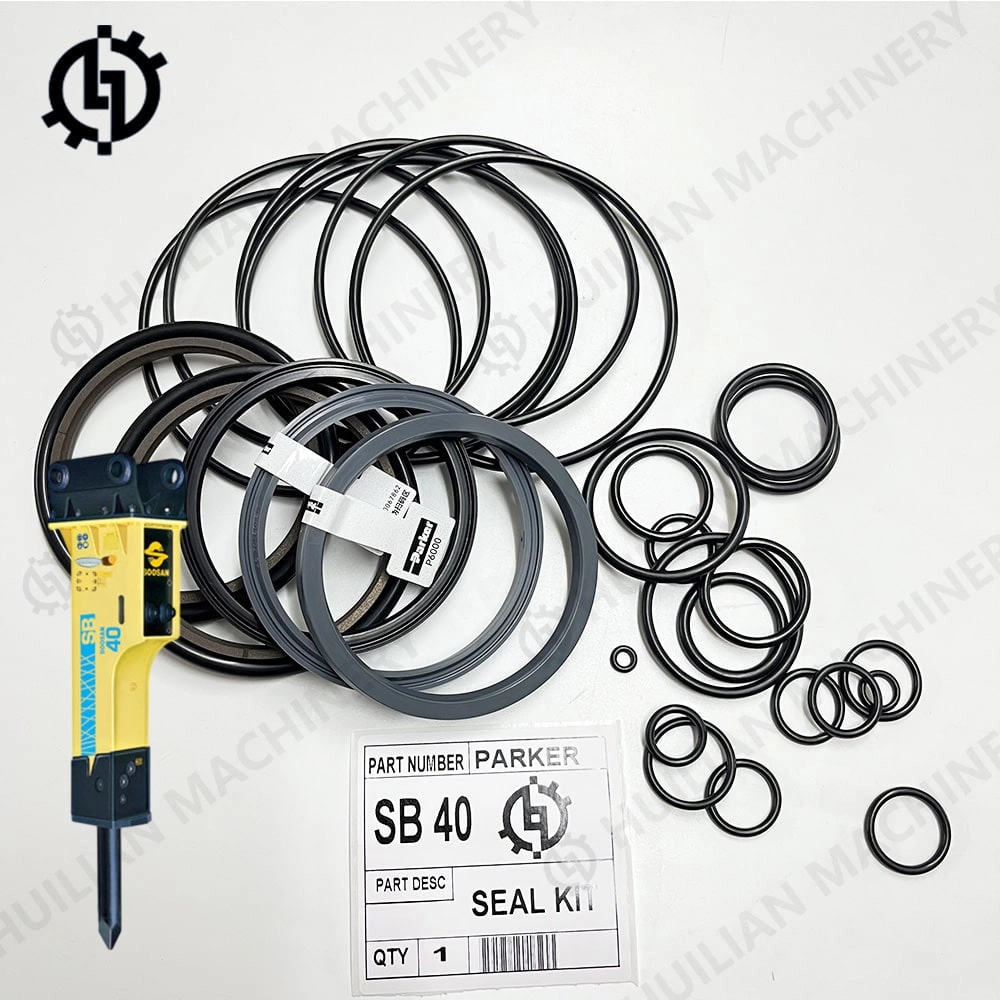
Parker Oil Seal Complete Repair SB40 Seal Kit COX001 CO1012 SB40Ⅱ SB40TSP SQ40 For Soosan Hydraulic Rock Breaker Hammer
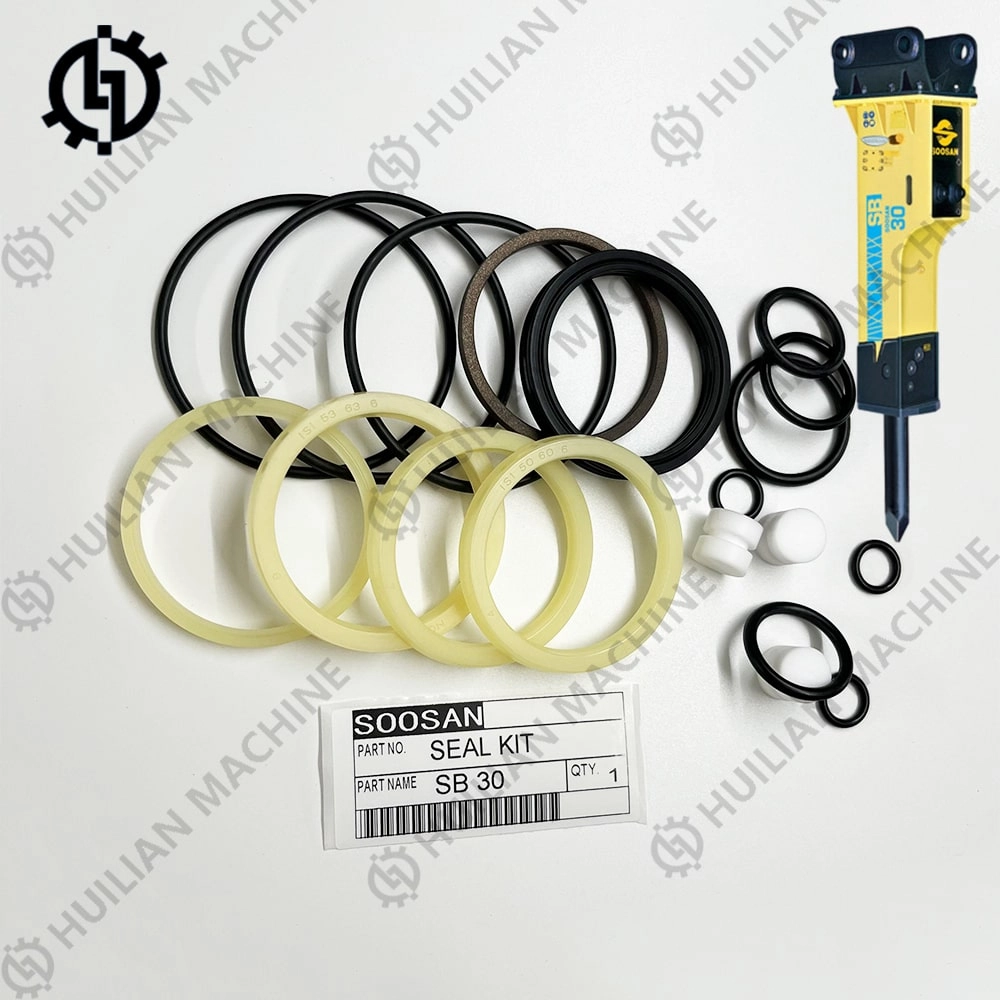
E71012 E7X001 SOOSAN SQ30 SB30Ⅱ SB30 Breaker Seal Kit SB30TS-P SB30Ⅱ TS-P SB30Ⅱ SSL Hydraulic Rock Hammer Parts Oil Repair Kit
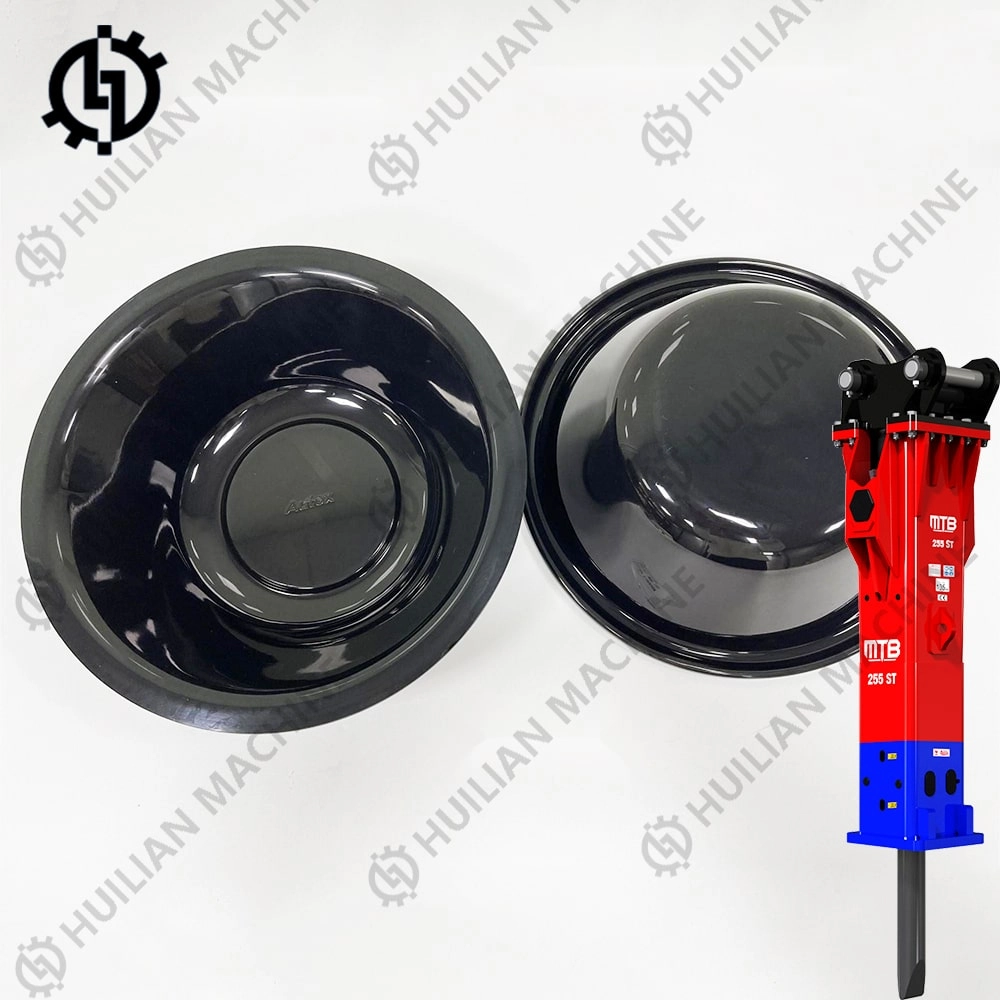
Inan Makina MTB Hydraulic Breaker Parts 45B0116A11 MTB255 MTB MT 255 Diaphragm MTB 255 IQ MTB-255 MTB 255 ST Membrane for Excavator Rock Hammer
 About us
© 2025 HUILIAN MACHINE. All rights reserved