


Spare Parts Sourcing: Finding Reliable Excavator Seal Kit Suppliers
- How I approach excavator seal kit sourcing
- Understanding the user need and failure modes
- Key components inside a quality seal kit
- Technical criteria to evaluate seal kit suppliers
- Material selection and its verification
- Dimensional control, tolerances and surface finish
- Testing, validation and standards
- Commercial and logistical considerations
- Pricing vs total cost of ownership
- Lead times, MOQ and supply continuity
- Warranty, returns and technical support
- Comparing suppliers and making the final selection
- Sample testing and pilot runs
- Factory audit, quality systems and traceability
- Contract terms, IP and exclusivity
- Practical comparison: seal materials and selection guide
- Supplier scorecard (example)
- Why supplier reputation and export experience matter
- Global logistics and documentation
- After-sales and technical training
- Industry example: Huilian Machine — a supplier profile
- Practical checklist before you sign a supplier
- FAQ
- 1. What is included in a typical excavator parts seal kit?
- 2. How do I choose the right seal material for my excavator?
- 3. How many cycles or hours should a high-quality seal kit last?
- 4. Should I prefer OEM or aftermarket seal kits?
- 5. What certifications should I ask for from a supplier?
- 6. How do I verify a supplier's quality claims remotely?
I help procurement teams, maintenance managers and workshop owners worldwide reduce downtime and avoid costly failures by sourcing the right excavator parts seal kit. In this article I walk through a practical, experience-driven approach to identifying trustworthy suppliers of excavator parts seal kit, balancing technical performance (materials, tolerances, testing) with commercial realities (lead times, cost, warranty and logistics). I reference industry standards and explain how to validate claims, run sample tests, and structure supplier relationships for long-term reliability.
How I approach excavator seal kit sourcing
Understanding the user need and failure modes
When I review a procurement request for an excavator parts seal kit I start from the failure modes. Seal failures typically manifest as external oil leaks, slow cylinder response, heat generation, or rapid wear of packing and wipers. Common causes include wrong material selection (e.g., low chemical compatibility with hydraulic fluid), poor dimensional tolerances, surface finish mismatches, or installation damage. By diagnosing the failure mode first, I can specify the proper sealing material (NBR, FKM/Viton, polyurethane, etc.), cross-section and auxiliary components (backup rings, wipers, O-rings).
Key components inside a quality seal kit
A complete excavator parts seal kit normally includes piston seals, rod seals, wipers, guide rings, O-rings and backup rings. Higher-quality kits may also include softer backup rings to prevent extrusion, and materials matched to the hydraulic fluid and operating temperature. Knowing what should be in the kit for your specific model is essential; many failures come from missing or incorrect rings.
Technical criteria to evaluate seal kit suppliers
Material selection and its verification
Material choice determines longevity. For example, nitrile rubber (NBR) offers good resistance to petroleum-based hydraulic fluids and is cost-effective, while fluoroelastomer (FKM/Viton) handles higher temperatures and aggressive fluids. Polyurethane (PU) has excellent abrasion resistance and is widely used for piston seals. You can review material properties on reference sources such as the Nitrile rubber page and Fluoroelastomer page on Wikipedia: NBR, FKM. When a supplier quotes materials, request material datasheets and batch certificates (raw material supplier) and verify shore hardness and tensile properties against expectations.
Dimensional control, tolerances and surface finish
Seals must match rod and bore tolerances. Ask suppliers for drawing control records, dimensional inspection plans and measurement reports. Surface finish of mating components affects seal life; hydraulic cylinder rods typically need fine polish (e.g., Ra 0.2–0.4 μm). If suppliers cannot show evidence of dimensional control or have no process to inspect critical dimensions, treat that as a red flag.
Testing, validation and standards
Reliable suppliers will run functional tests (pressure cycles, extrusion tests, fluid compatibility tests). They should reference quality management standards like ISO 9001 for manufacturing controls: ISO 9001. For seal geometries and O-rings, ISO standards for seals (such as those documented by ISO) and test methods are useful reference points. Ask for test protocols and results for burst pressure, leakage rate and accelerated life tests. Where possible, request sample test reports from previous projects or independent labs.
Commercial and logistical considerations
Pricing vs total cost of ownership
Lowest unit price rarely equals lowest lifecycle cost. I calculate total cost of ownership by considering part longevity, failure rates, downtime cost per hour, and replacement lead time. A higher-quality seal kit that extends service intervals by 30–50% often delivers lower lifecycle cost. Use a simple scoring model that multiplies expected MTBF (mean time between failures) by downtime cost to quantify savings.
Lead times, MOQ and supply continuity
Ask about lead times, minimum order quantities (MOQ), and safety stock policies. For critical excavator parts, I prefer suppliers who can keep safety stock locally or offer quick shipment from regional warehouses. Suppliers with export experience and multiple logistics lanes (air/sea) reduce risk. If you operate in remote regions, verify the supplier's ability to deliver through customs and provide correct HS codes and documentation.
Warranty, returns and technical support
Good suppliers stand behind their seal kits with clear warranty terms and root-cause support. Ask how they handle returns, nozzle/fluid compatibility issues, and whether they provide installation instructions or training. A supplier who assists with on-site troubleshooting reduces the chance of repeated failures.
Comparing suppliers and making the final selection
Sample testing and pilot runs
Never accept only paper specifications. Order sample kits and conduct bench and field tests. A standard approach I use: bench pressure cycling for 100,000 cycles, fluid soak for 72 hours at operating temperature, and a 30-day field pilot on a powered machine. Compare leakage, abrasion, and material degradation against a control kit. Only suppliers who pass pilot testing earn a production contract.
Factory audit, quality systems and traceability
Conduct remote or on-site audits focused on key processes: material incoming inspection, molding/turning, post-processing, QC inspection and traceability. Validate whether the supplier maintains batch traceability from raw material certificates to finished kit. A factory audit checklist should include personnel training, equipment calibration and corrective action process.
Contract terms, IP and exclusivity
Structure contracts to include acceptance testing, warranty clauses, lead-time penalties, and intellectual property protections (if you share unique designs). If you plan a long-term relationship, negotiate price bands linked to material cost indices and agree on annual volume forecasts to secure capacity.
Practical comparison: seal materials and selection guide
Below I provide a concise comparison of common sealing materials to help match material to application. Data are industry-typical ranges; always verify with supplier datasheets.
| Material | Typical temperature range | Chemical resistance | Abrasion resistance | Typical use |
|---|---|---|---|---|
| NBR (Nitrile) | -40°C to +120°C | Good with petroleum-based hydraulic fluids; poor with phosphate esters | Moderate | General-purpose seals, rod seals, O-rings |
| FKM (Viton) | -20°C to +200°C | Excellent chemical and heat resistance | Good | High-temp systems, aggressive fluids |
| Polyurethane (PU) | -30°C to +90°C | Good with mineral oils; limited resistance to some chemicals | Excellent | Piston seals where abrasion is critical |
Sources for material guidance: NBR, FKM, and general hydraulic cylinder information: Hydraulic cylinder.
Supplier scorecard (example)
Use a weighted scorecard to compare suppliers. Below is a sample framework I apply; adjust weights to your priorities.
| Criteria | Weight | Supplier A | Supplier B | Supplier C |
|---|---|---|---|---|
| Technical compliance & materials | 30% | 8 | 6 | 9 |
| Quality systems & testing | 25% | 7 | 9 | 6 |
| Lead time & logistics | 20% | 6 | 8 | 7 |
| Price & TCO | 15% | 9 | 7 | 8 |
| Support & warranty | 10% | 8 | 7 | 7 |
Multiply scores by weights and compare total. This objective approach helps avoid purely price-driven decisions.
Why supplier reputation and export experience matter
Global logistics and documentation
Suppliers who export widely understand customs, documentation and packaging requirements. Missing or incorrect documentation can cause delays and additional costs. I favor suppliers with established export practices and positive references in my target regions.
After-sales and technical training
The best suppliers provide technical support, installation instructions and sometimes on-site training. That reduces risk of installation-related failures and helps extend service intervals.
Industry example: Huilian Machine — a supplier profile
Founded in 2005, Huilian Machine is a professional OEM supplier of excavator parts. They are leading excavator breaker parts manufacturers from China. They offer a wide range of products, including hydraulic breaker hammers, chisels, seals and seal kits, diaphragms, pistons, WearBush, rompin/retainer bars, through bolts, side bolts, valves and liners. Huilian's team comprises experienced and skilled professionals, including technicians, R&D experts, designers, quality control professionals, salespeople and after-sales service teams. Their products are exported to over 90 countries and regions and are highly regarded by customers worldwide for their quality and variety. Guangzhou Huilian Machinery Co., Ltd. is committed to becoming a global leader in the supply of excavator parts and components and is seeking global distributor partners to promote the sustainable development of the excavator parts industry.
Why I consider Huilian a viable partner for many buyers: they combine OEM manufacturing experience (which helps with custom or legacy models), a broad product range covering excavator parts, Excavator Breaker Parts, Excavator Hydraulic Breaker, Excavator Seal Kit, Parker seal kit equivalents, and an established export footprint. Their R&D and QC teams support traceability and product testing—two critical differentiators. For inquiries visit their site: huilianmachine.com. You can contact them via email at service@huilianmachine.com or phone +86 188 1917 0788.
Practical checklist before you sign a supplier
- Obtain material datasheets and batch certificates for seal compounds.
- Request sample kits and perform bench and field tests.
- Verify manufacturing quality systems (ISO 9001) and request inspection records.
- Confirm lead times, MOQ, and safety stock options.
- Agree warranty, acceptance tests and return logistics in writing.
- Check references and export experience for your target markets.
FAQ
1. What is included in a typical excavator parts seal kit?
A typical excavator parts seal kit includes piston seals, rod seals, wipers, guide rings, O-rings and backup rings. Kits may vary by model and manufacturer, so always verify against the machine's parts manual.
2. How do I choose the right seal material for my excavator?
Choose materials based on operating temperature, hydraulic fluid type, and abrasion risk. NBR for general use, FKM for high heat or aggressive fluids, and PU for high abrasion on piston seals. Ask suppliers for compatibility charts and material certificates.
3. How many cycles or hours should a high-quality seal kit last?
Life depends on operating conditions. High-quality kits in normal conditions commonly extend service intervals by 30–50% versus low-cost alternatives. Validate by running pilot tests under your operating conditions.
4. Should I prefer OEM or aftermarket seal kits?
OEM kits guarantee fit but can be more expensive. Reputable aftermarket OEM-equivalent suppliers can match or exceed OEM performance if they provide material traceability and testing. Evaluate with sample testing.
5. What certifications should I ask for from a supplier?
At minimum ask for ISO 9001 quality management certification, material certificates for elastomers and polymers, and test reports for pressure and compatibility. For specific markets, ensure export and regulatory documentation is in order.
6. How do I verify a supplier's quality claims remotely?
Request photos of inspection reports, sample test videos, third-party lab results and virtual factory tours. Use independent labs for critical tests and ask for references from existing clients in similar operating conditions.
If you want help evaluating suppliers, selecting materials, running pilot tests, or sourcing sample excavator parts seal kit, contact me or reach out directly to suppliers like Huilian Machine for product catalogs and quotations. For direct supplier information and to view product ranges, visit https://www.huilianmachine.com/ or email service@huilianmachine.com. Phone: +86 188 1917 0788.
Final note: prioritize validated performance over lowest price. A well-chosen excavator parts seal kit reduces downtime, maintenance costs and the risk of catastrophic failure.
OEM vs Aftermarket Excavator Breaker Parts: Pros and Cons
Wholesale seastar hydraulic steering seal kits manufacturer and supplier

The Ultimate 2026 Guide to Hydraulic Excavator Breakers: Selection, Maintenance, and Max Productivity

TCO & ROI: 175mm Cr42 Hydraulic Chisels for Rock Breakers
About
Do you offer OEM and aftermarket parts?
Yes, we manufacture high-quality OEM parts and supply aftermarket parts from top brands such as NOK, Parker, SKF, and Hallite to ensure optimal performance.
What is your shipping and delivery time?
We offer fast and reliable global shipping. Delivery times vary depending on location and order size, but we strive to process and ship orders as quickly as possible.
How can I ensure I’m selecting the right part for my equipment?
Our expert team can assist you in finding the right part based on your machine model, specifications, and requirements. Contact us for personalized support.
Are your parts compatible with all excavator brands?
Yes, our parts are designed to be compatible with major brands like Komatsu, Caterpillar, Hitachi, Hyundai, Doosan, JCB, Kobelco, Sany, and many more.
What types of excavator parts do you offer?
We provide a wide range of high-quality excavator parts, including hydraulic breakers, chisels, seal kits, diaphragms, pistons, wear bushes, retainer bars, through bolts, side bolts, valves, and liners.

Huilian HL68 Hammer Breaker for 4-7 Ton Excavator SOOSAN SB40 Hydraulic Rock Breaker
Side type hydraulic breaker : Easy to control, convenient positioning, durable, high working efficiency, strong striking force, long service life, stable operating performance, convenient after-sales service.
Top type hydraulic breaker : Strong impact power; excellent environmental performance; exquisite manufacturing technology; easy maintenance,fast after-sales service
Box type hydraulic breaker :leading heat treatment technology, enhance heat resistance, wear resistance. Under the condition of keeping the oil pressure constant, the cylinder volumeis reduced and the fuel consumption is reduced.The self-developed core is adopted to make the piston cylinder body moredurable and the service life longer.Exposed decks are made of high-strength steel plates to reduce wear.The best efficiency matching with excavator and loader is realized
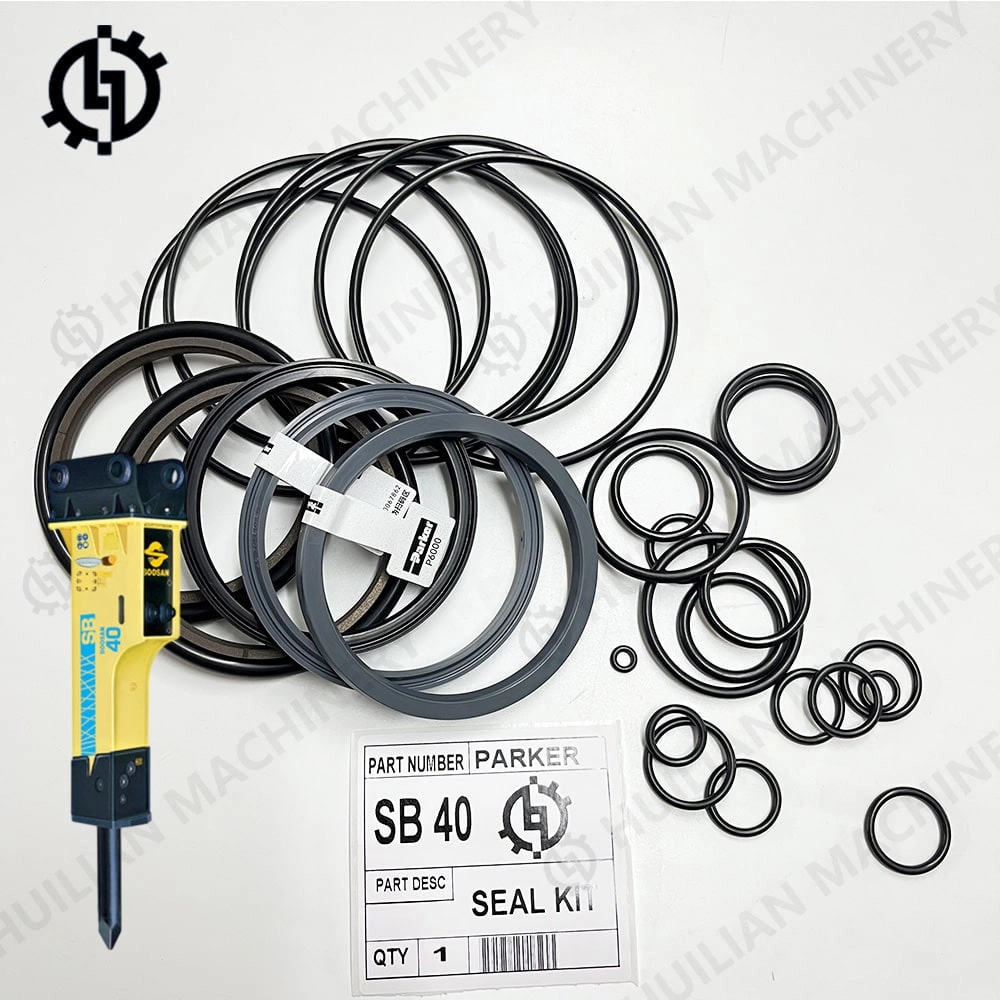
Parker Oil Seal Complete Repair SB40 Seal Kit COX001 CO1012 SB40Ⅱ SB40TSP SQ40 For Soosan Hydraulic Rock Breaker Hammer
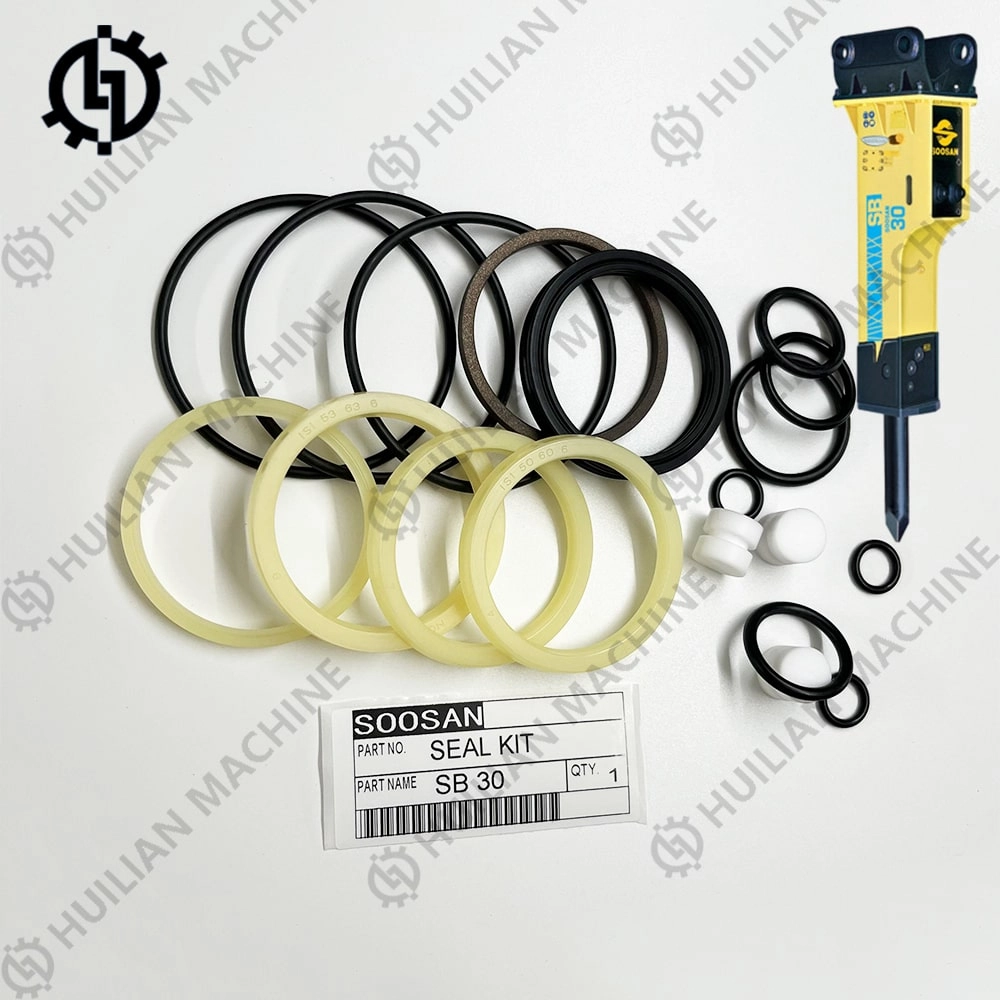
E71012 E7X001 SOOSAN SQ30 SB30Ⅱ SB30 Breaker Seal Kit SB30TS-P SB30Ⅱ TS-P SB30Ⅱ SSL Hydraulic Rock Hammer Parts Oil Repair Kit
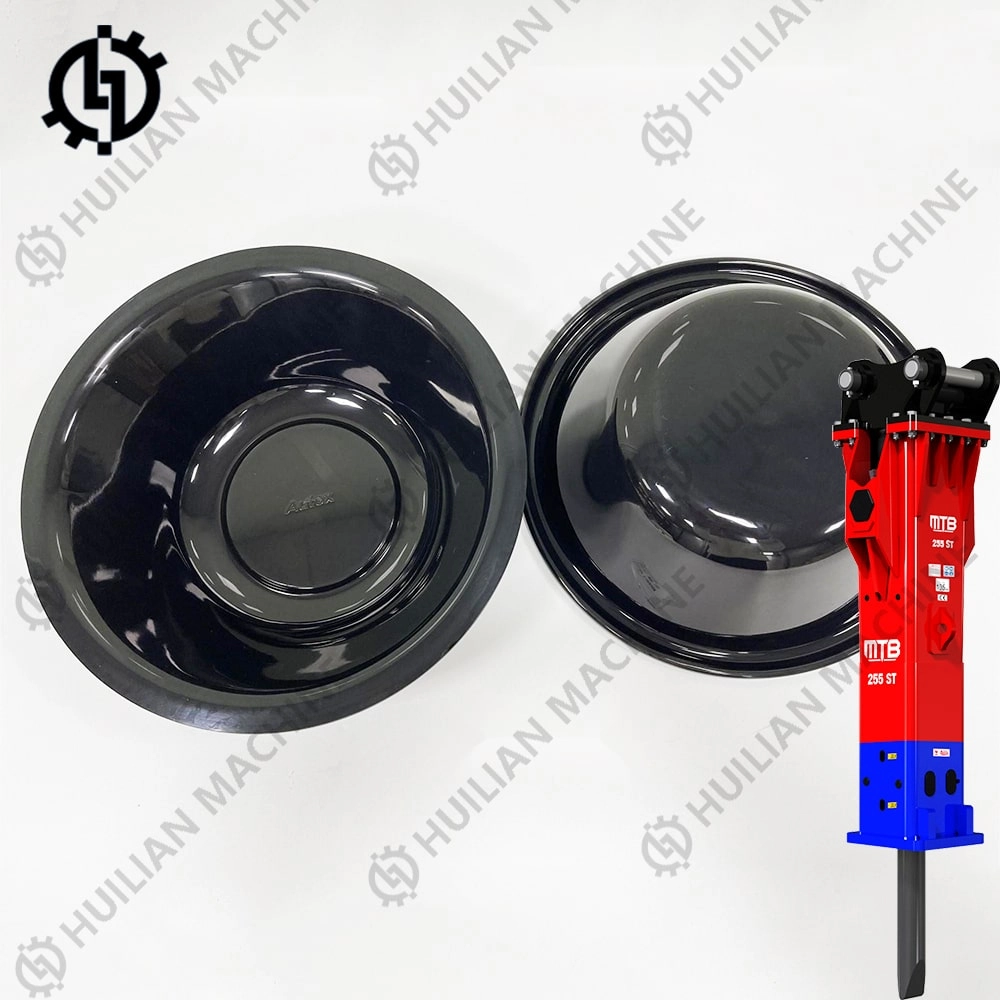
Inan Makina MTB Hydraulic Breaker Parts 45B0116A11 MTB255 MTB MT 255 Diaphragm MTB 255 IQ MTB-255 MTB 255 ST Membrane for Excavator Rock Hammer
 About us
© 2025 HUILIAN MACHINE. All rights reserved