



From Chisel to Seal Kits: How to Double the Lifespan of Your Hydraulic Breaker Parts
- What Are Hydraulic Breakers Parts and Why Do They Fail?
- Key Takeaways: Quick Summary for Extending Part Lifespan
- The Anatomy of a Breaker: Critical Components Explained
- OEM vs. Aftermarket Hydraulic Breaker Parts: A Cost and Lifespan Comparison
- Future-Proofing Your Equipment: Predictive Maintenance Trends for 2026
- Expert Tips and Common Mistakes to Avoid During a Rebuild
- Case Study: Doubling Lifespan with Guangzhou Huilian Machines Co., Ltd's Industry-Leading Solutions
- How often should I replace hydraulic breaker seal kits?
- What causes a hydraulic breaker piston to score or crack?
- Can I rebuild a hydraulic hammer myself?
- How do I know if my breaker's accumulator needs recharging?
- What is the difference between moil, blunt, and chisel tool bits?
- Why is my hydraulic breaker leaking oil down the tool?
- How much does it cost to rebuild a hydraulic breaker?
- What is the best grease for hydraulic breaker bushings?
- Conclusion & Call to Action
When your heavy machinery breaks concrete, the extreme impact forces take a massive toll on every internal component. For construction and demolition contractors, equipment downtime is more than just a nuisance—it is a devastating blow to project profitability. Understanding how to properly maintain and service your equipment is the only way to ensure maximum return on investment and keep your job sites running smoothly.
What Are Hydraulic Breakers Parts and Why Do They Fail?
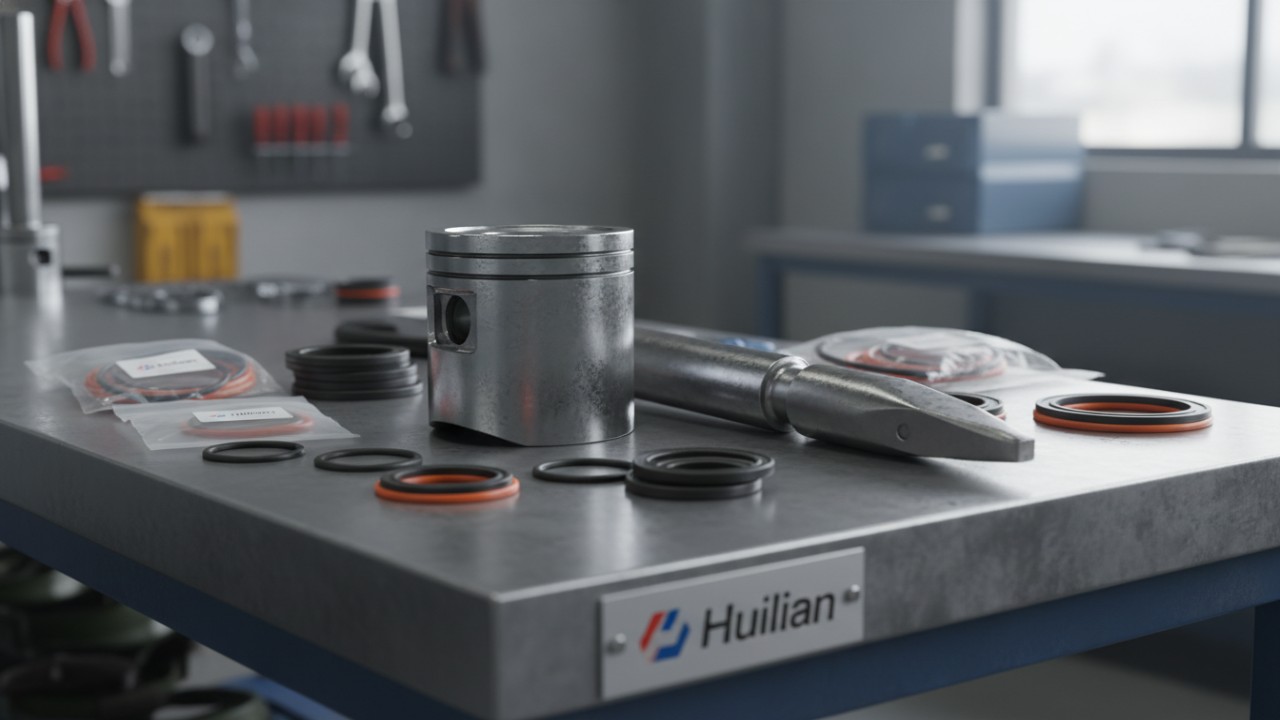
hydraulic breakers parts are the essential internal and external components—such as the piston, chisel, seal kits, and accumulator—that convert hydraulic pressure into mechanical impact force. They typically fail due to fluid contamination, severe impact wear, and improper lubrication.
Understanding how these hydraulic hammer components function and degrade is critical to preventing premature failure. The excavator's hydraulic pump sends pressurized fluid to the breaker's cylinder, which drives the piston up and down. This motion strikes the chisel, transferring kinetic energy into the rock. However, this violent impact cycle generates extreme heat and friction. Over time, external dust and debris bypass worn seals, entering the clean oil.
According to industry data from Machinery Lubrication, over 80% of machine and equipment stoppages are caused by contaminated lubricants. Once abrasive dirt enters the system, it acts like liquid sandpaper, aggressively scratching the piston and cylinder walls. This internal scoring causes a massive loss of striking power and inevitably leads to total system failure.
Key Takeaways: Quick Summary for Extending Part Lifespan
Extending the lifespan of your heavy machinery attachments requires proactive daily inspections, maintaining optimal nitrogen pressure in the accumulator, and utilizing premium excavator breaker seal kits to prevent catastrophic internal damage and protect against costly hydraulic fluid contamination.
To maximize the operational life of your equipment, implement the following daily and weekly routines:
- Inspect High-Wear Components: Check the chisel and front bushings daily for abnormal wear to prevent catastrophic internal misalignment.
- Maintain Nitrogen Levels: Regularly test the accumulator pressure. Proper nitrogen levels ensure optimal energy transfer, absorb shock spikes, and protect the piston from bouncing back too violently.
- Utilize Premium Seals: Replace your seal kits at the recommended intervals. High-quality seals are your first line of defense against fluid contamination, which remains the leading cause of hydraulic failure.
- Lubricate Frequently: Use a high-temperature molybdenum grease every two hours of continuous operation to reduce metal-on-metal friction.
The Anatomy of a Breaker: Critical Components Explained
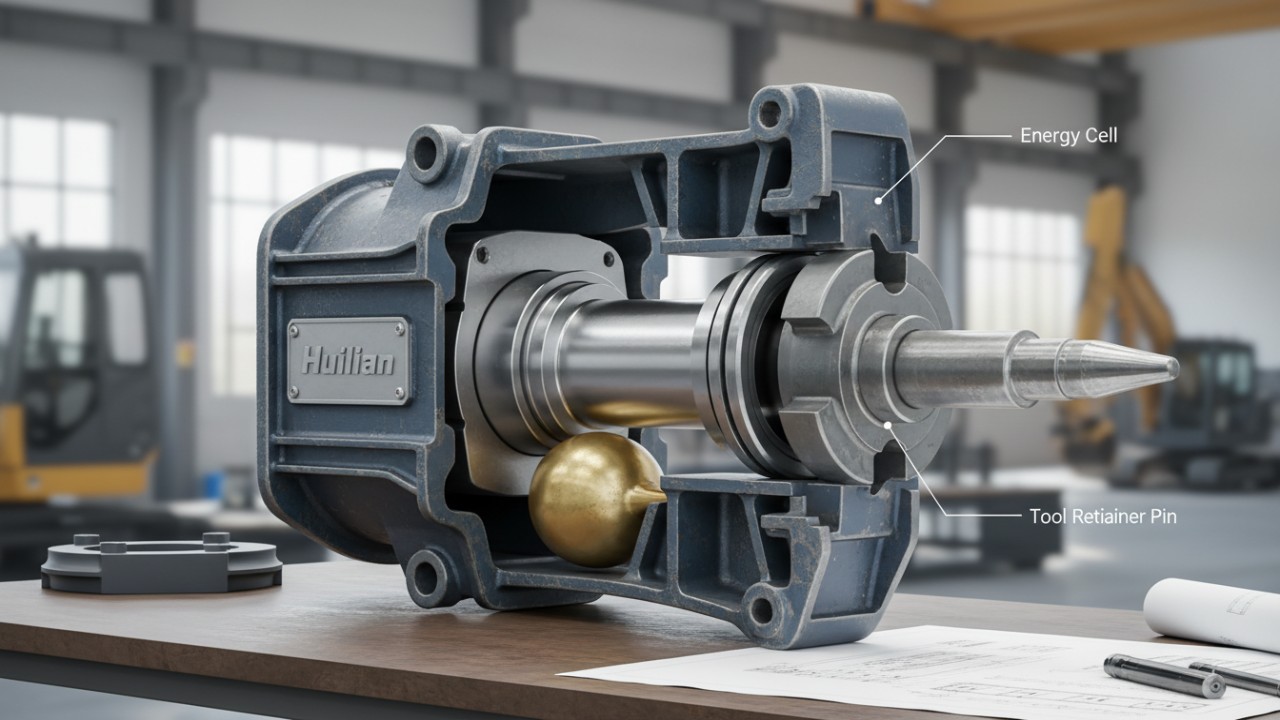
The anatomy of a breaker consists of the energy cell, the front head, and the seal system, which work synergistically to generate massive impact force while keeping the chisel perfectly aligned and internal hydraulic fluids completely protected from debris.
To effectively double the lifespan of your equipment, you must understand the three core sections of the breaker:
- The Energy Cell: This is the heart of the machine. The piston, cylinder, and internal control valves regulate the precise flow of hydraulic oil, creating the high-speed impact cycle. Proper alignment and flawless surface finishes in the energy cell are non-negotiable for peak performance.
- The Front Head: This lower assembly endures the most physical abuse. It includes the tool retainer, thrust ring, and bushings. These components keep the chisel perfectly aligned. If the bushings wear down, the chisel will strike at an angle, transferring destructive side-load forces directly into the delicate piston.
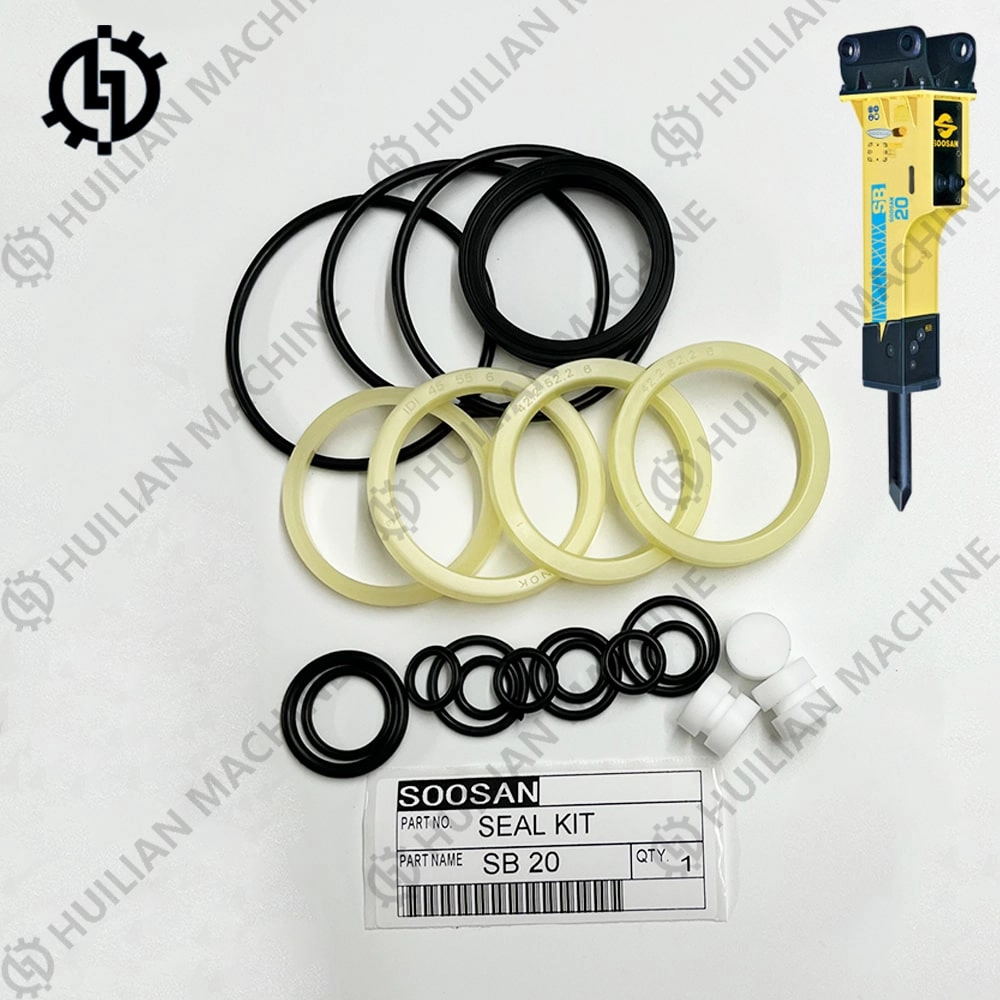
- The Seal System: A network of polyurethane and rubber rings, including dust seals, step seals, and buffer seals. Replacing the dust seal and internal pressure seals at the right intervals is the only way to prevent hydraulic fluid degradation and internal leakage.
OEM vs. Aftermarket Hydraulic Breaker Parts: A Cost and Lifespan Comparison
Choosing between OEM vs aftermarket breaker parts involves weighing initial investment against long-term durability. OEM components offer exact specifications and maximum lifespan, whereas aftermarket alternatives provide lower upfront costs but often carry a risk of variable fitment quality.
Contractors frequently debate the value of OEM versus aftermarket components when planning maintenance budgets. Below is a detailed comparison to help you make an informed decision:
| Feature | OEM Parts | Aftermarket Parts | Impact on Lifespan |
|---|---|---|---|
| Initial Cost | High | Low to Medium | OEM parts require a larger upfront investment but often yield a lower cost-per-hour over time. |
| Fitment Precision | 100% Exact Match | Variable | Imprecise aftermarket fitment can cause side-loading, destroying the piston and reducing lifespan. |
| Expected Lifespan | Maximum | Variable | OEM parts are engineered to withstand the specific impact forces of the exact breaker model. |
| Warranty Coverage | Full Manufacturer | Limited or None | OEM warranties protect against premature component failure, safeguarding your ROI. |
While an aftermarket chisel might save you money today, an imprecise fit could destroy a $5,000 internal component tomorrow. For critical internal parts like pistons and valves, sticking to exact manufacturer specifications is always recommended.
Future-Proofing Your Equipment: Predictive Maintenance Trends for 2026
Future-proofing your equipment involves integrating IoT sensors and AI-driven maintenance logs to monitor hydraulic oil temperature and vibration anomalies in real-time, allowing operators to accurately predict seal kit failure and component wear before severe internal scoring occurs.
The heavy machinery industry is rapidly shifting from reactive repairs to proactive intelligence. Predictive maintenance utilizing machine learning can drastically change how we manage fleets. According to research published on IEEE Xplore, integrating real-time data from vibration, current, and temperature sensors installed on equipment enables smarter scheduling and significantly reduces unexpected downtime.
Key predictive maintenance trends for 2026 include:
- IoT Sensor Integration: Wireless sensors attached to the breaker body monitor hydraulic oil temperatures and vibration spikes, immediately alerting operators to excessive heat before it melts the polyurethane seals.
- Advanced Material Science: The development of advanced metallurgy in modern chisels and through-bolts allows them to flex and absorb extreme shockwaves in demanding demolition environments.
- AI-Driven Analytics: Maintenance management software analyzes historical failure data to predict exactly when a seal kit or bushing will fail, allowing you to schedule a rebuild during off-hours.
Expert Tips and Common Mistakes to Avoid During a Rebuild
To minimize your total hydraulic breaker rebuild cost, always verify exact torque specifications during reassembly and never reuse old retaining pins. Avoiding contaminated hydraulic oil and using the correct viscosity is essential to protect delicate polyurethane seals from degrading.
Attempting a DIY rebuild without a comprehensive hydraulic breaker maintenance guide is a recipe for disaster. Keep these expert tips and common pitfalls in mind:
- Common Mistake: Reusing Stretched Bolts. Reusing old retaining pins or stretched through-bolts during a rebuild severely compromises structural integrity. Under high impact, weakened bolts will snap, causing catastrophic failure.
- Expert Tip: Verify Torque Specifications. Always use a calibrated torque multiplier when tightening tie rods. Uneven stress will warp the cylinder, leading to immediate piston seizure.
- Common Mistake: Ignoring Oil Quality. Using contaminated or incorrect viscosity hydraulic oil degrades polyurethane seals rapidly. Always filter your oil and ensure it matches the operating temperature requirements of your climate.
- Expert Tip: Maintain a Clean Room Environment. Never rebuild a breaker in the dirt. Even microscopic dust particles introduced during reassembly will scratch the piston seals upon startup.
Case Study: Doubling Lifespan with Guangzhou Huilian Machines Co., Ltd's Industry-Leading Solutions
By engineering premium excavator breaker seal kits and high-tensile chisels, Guangzhou Huilian Machines Co., Ltd helps global contractors double equipment lifespan. Our specialized heavy-duty components drastically reduce downtime and significantly extend rebuild intervals for the most demanding demolition projects.
Founded in 2005, Guangzhou Huilian Machines Co., Ltd (brand name Huilian) is a professional OEM supplier and a global leader in excavator breaker parts. With our products exported to over 90 countries, our R&D experts have seen firsthand how extreme environments destroy substandard parts.
Consider the case of a large-scale quarry operator struggling with severe downtime. Due to abrasive dust and extreme heat, their standard aftermarket seals were failing every 400 hours. This led to continuous hydraulic fluid leaks and soaring repair budgets.
By partnering with Huilian, the operator upgraded to our premium Parker seal kits, heavy-duty WearBush components, and high-tensile chisels. Our technicians implemented a proactive maintenance schedule utilizing our proprietary molybdenum grease. The results were immediate: the rebuild interval was extended to over 900 hours—an increase of more than 50%—effectively halving their annual maintenance costs and eliminating unplanned stoppages.
How often should I replace hydraulic breaker seal kits?
Seal kits should typically be replaced every 600 to 1,000 operating hours. This interval can vary greatly depending on operating conditions, hydraulic oil temperature, and the specific demolition application.
What causes a hydraulic breaker piston to score or crack?
Contaminated hydraulic fluid introduces abrasive particles that scratch the piston. Additionally, a lack of proper lubrication or operating the breaker with worn bushings causes the chisel to misalign, striking the piston off-center and causing micro-fractures.
Can I rebuild a hydraulic hammer myself?
While basic maintenance like changing a chisel or greasing is DIY-friendly, internal rebuilds are highly complex. Replacing pistons and seals requires specialized tools, torque multipliers, and a strict clean room environment to prevent immediate contamination.
How do I know if my breaker's accumulator needs recharging?
Symptoms of a low accumulator include significantly reduced impact power and slower firing rates. You may also notice excessive, violent vibration transferring into the excavator arm and hydraulic hoses bouncing erratically.
What is the difference between moil, blunt, and chisel tool bits?
Moil points are designed for general breaking and multi-directional fracturing of standard concrete. Blunt tools are best for secondary breaking of oversized boulders in quarries, while chisels are ideal for trenching or cutting straight lines in asphalt.
Why is my hydraulic breaker leaking oil down the tool?
Oil leaking down the chisel is a clear indicator that the lower seal kit has completely failed. The breaker must be stopped immediately and the seals replaced to prevent dirt from entering the cylinder and causing catastrophic internal damage.
How much does it cost to rebuild a hydraulic breaker?
Costs vary widely depending on the size of the breaker and the extent of the internal damage. A minor preventative seal replacement might cost $1,500, whereas a major overhaul involving a new piston or cylinder can easily exceed $10,000.
What is the best grease for hydraulic breaker bushings?
Always use a high-temperature, molybdenum disulfide (moly) based grease. Standard chassis grease will instantly melt under the extreme friction and heat of a breaker, failing to protect the tool and internal bushings.
Conclusion & Call to Action
Doubling the lifespan of your heavy equipment requires a proactive approach to daily maintenance, selecting high-quality replacement components, and understanding core hydraulic mechanics. By consistently inspecting seals and maintaining correct lubrication, you can drastically reduce downtime and operating costs.
Protecting your investment is about choosing the right partner for your replacement parts and adhering to strict maintenance schedules. Whether you need an internal rebuild or are simply restocking your daily wear parts, quality matters at every level.
Contact Guangzhou Huilian Machines Co., Ltd today at service@huilianmachine.com to discuss your specific needs and let our experts help you find the perfect parts for your excavator.


About
What is your shipping and delivery time?
We offer fast and reliable global shipping. Delivery times vary depending on location and order size, but we strive to process and ship orders as quickly as possible.
Do you offer OEM and aftermarket parts?
Yes, we manufacture high-quality OEM parts and supply aftermarket parts from top brands such as NOK, Parker, SKF, and Hallite to ensure optimal performance.
Are your parts compatible with all excavator brands?
Yes, our parts are designed to be compatible with major brands like Komatsu, Caterpillar, Hitachi, Hyundai, Doosan, JCB, Kobelco, Sany, and many more.
How can I ensure I’m selecting the right part for my equipment?
Our expert team can assist you in finding the right part based on your machine model, specifications, and requirements. Contact us for personalized support.
What types of excavator parts do you offer?
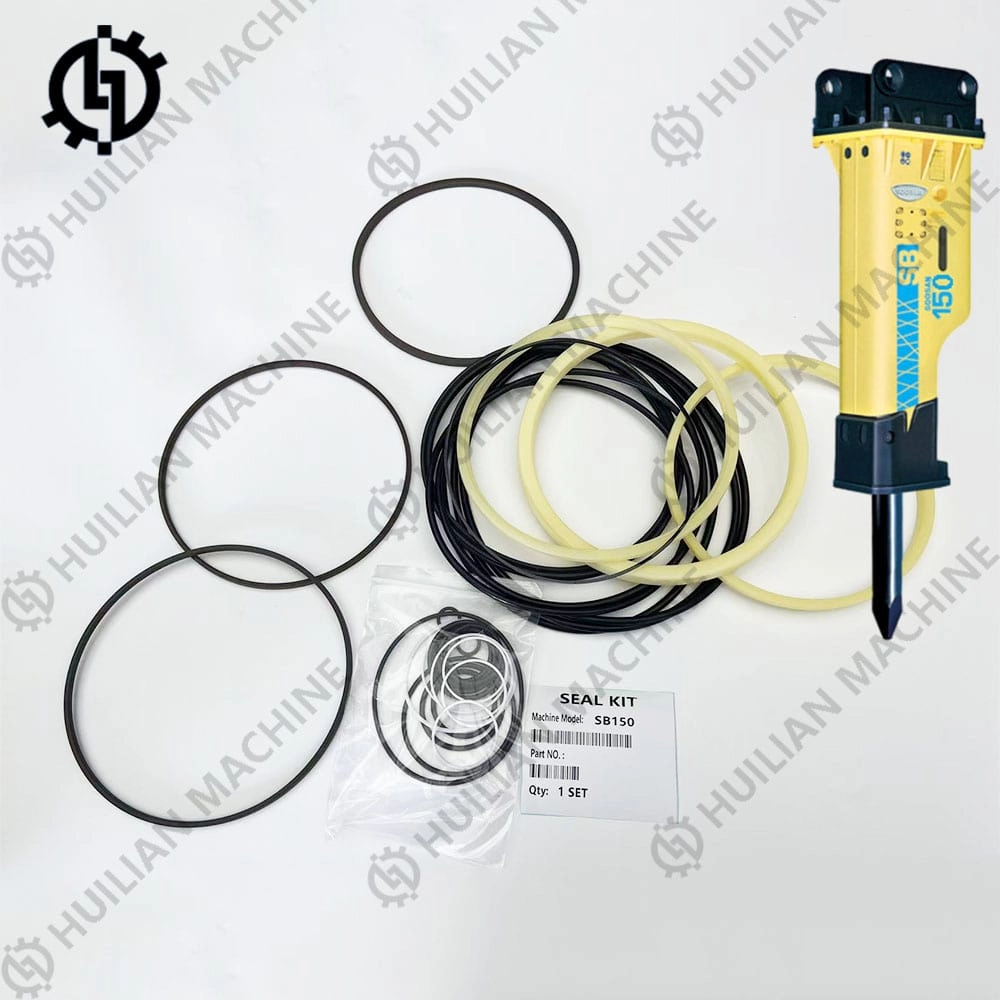
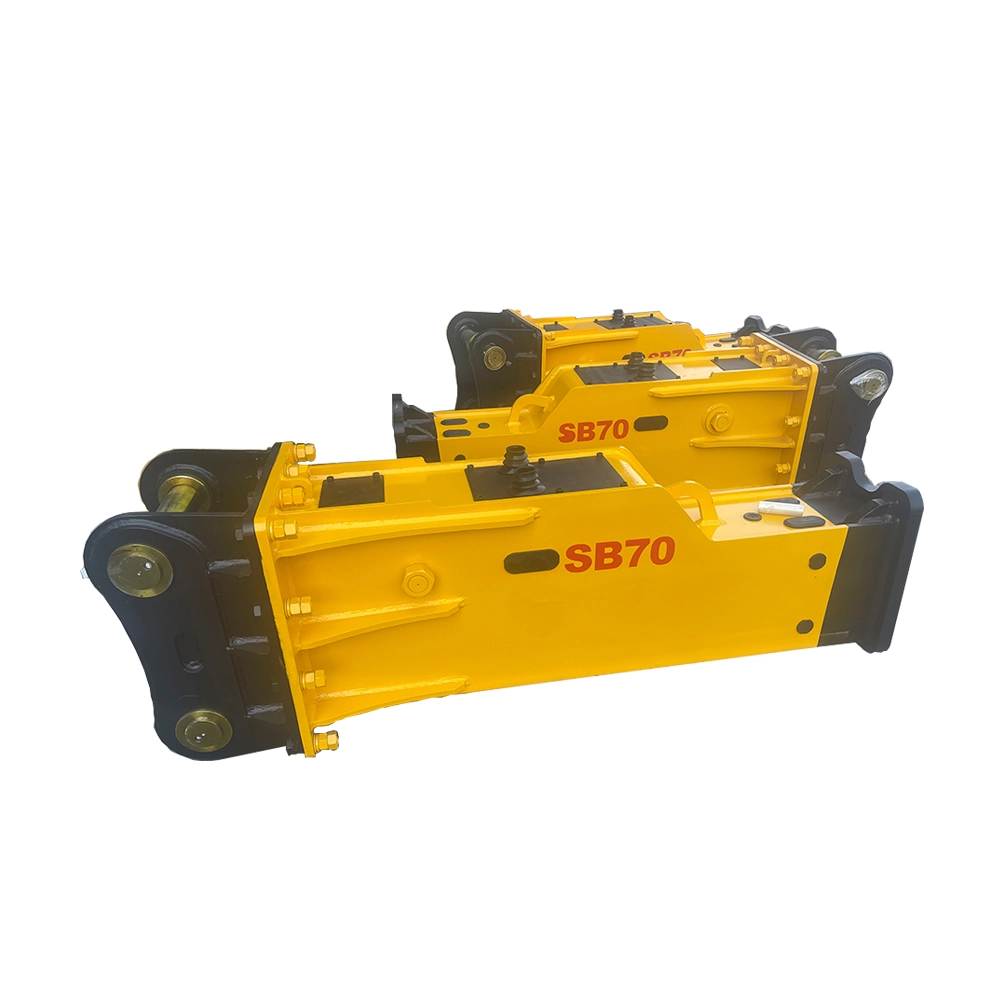
We provide a wide range of high-quality excavator parts, including hydraulic breakers, chisels, seal kits, diaphragms, pistons, wear bushes, retainer bars, through bolts, side bolts, valves, and liners.




Getting started is easy 
Contact with our experts to find the best excavator parts solutions for your needs. Discover how Huilian can enhance your equipment's performance and efficiency.


Get in touch
 About us
© 2025 HUILIAN MACHINE. All rights reserved