



How Breaker Hammer Specs Affect Excavator Performance
- Key breaker hammer specifications that change job outcomes
- Impact energy (Joules or ft·lb) and rock fragmentation
- Blow frequency (blows per minute) and productivity
- Mass, carrier compatibility and dynamic loading
- How specific specs translate to real-world excavator performance
- Productivity (break rate) vs. cycle time
- Fuel consumption and hydraulic demand
- Wear parts and maintenance intervals
- Selecting a breaker: recommended spec ranges and a decision table
- Quick selection rules
- Failure modes, maintenance and lifecycle costs
- Common failure modes tied to poor spec matching
- Maintenance practices that preserve excavator performance
- Lifecycle cost comparison (example)
- Parts, consumables and OEM considerations
- Tool steels, chisels and retainer systems
- Seals, pistons, wearbushes and kits
- Where to get reliable parts and why OEM matters
- Huilian Machine: OEM supplier profile and how we support spec-driven performance
- FAQ — Frequently asked questions
- 1. How do I know if a breaker hammer is compatible with my excavator?
- 2. Is higher impact energy always better for breaking rock?
- 3. How often should I replace seals and wear parts on a breaker?
- 4. Can I fit a larger breaker than recommended to increase productivity?
- 5. What are the most important spare parts to stock for fleet operation?
- 6. Where can I find authoritative technical references about hydraulic breaker design?
Summary for and search: Choosing the right breaker hammer for your excavator depends on matching impact energy, blow frequency, tool geometry and carrier hydraulic capacity to the material and job cycle. Correct spec matching improves productivity, reduces machine wear and lowers operating cost. This guide explains how each breaker hammer spec affects excavator performance, with practical selection rules, a spec comparison table, maintenance implications and links to standards and authoritative references to support decisions.
Key breaker hammer specifications that change job outcomes
Impact energy (Joules or ft·lb) and rock fragmentation
Impact energy (expressed in joules or foot‑pounds) is the energy delivered per blow from the hammer to the tool (chisel). Higher impact energy increases the probability of initiating fracture in hard, competent rock or concrete. However, energy alone is not sufficient — the material, tool tip geometry and operating frequency interact. For background on impact-based demolition tools and typical configurations, see the Hydraulic hammer overview on Wikipedia.
Blow frequency (blows per minute) and productivity
Blow frequency or striking rate (bpm) affects how fast energy is delivered over time. A hammer with moderate energy at high frequency can outperform a low-frequency, high-energy unit on thin or fissured concrete, while the opposite may be true for thick monolithic rock. Optimal combinations depend on rock brittleness and job cycle.
Mass, carrier compatibility and dynamic loading
Breaker hammer mass and mounting geometry transfer dynamic loads into the excavator boom, arm and carrier frame. Oversized hammers can overstress carriers and hydraulic systems. Manufacturers specify recommended carrier weight/tonnage ranges for each breaker model; adhering to these prevents premature fatigue failures in the carrier and hammer. Excavator specifications and hydraulic system guidelines such as ISO 4413 provide authoritative direction on hydraulic system safety and design considerations.
How specific specs translate to real-world excavator performance
Productivity (break rate) vs. cycle time
Productivity is usually measured in volume or mass removed per hour. The effective break rate depends on impact energy x frequency x tool efficacy x operator technique. For many applications, selecting a breaker that delivers consistent blows near the rock's optimum energy-per-blow yields shorter cycle times and less rework.
Fuel consumption and hydraulic demand
Higher energy and higher frequency generally increase hydraulic power demand. That affects excavator engine load and fuel consumption. Matching hammer hydraulic flow and pressure to the excavator pump rating prevents excessive engine lugging or chronically high idling, which raises fuel use and emissions.
Wear parts and maintenance intervals
Higher impact energy and abrasive materials accelerate wear on chisels, wear bushes, pistons, and seals. Specifying the correct tool steel, using lubrication regimes and choosing quality seal kits extend interval between rebuilds. For seal and hydraulic wear part design and industry best practices, see standards and OEM maintenance recommendations.
Selecting a breaker: recommended spec ranges and a decision table
Below is a practical comparison table that aggregates typical manufacturer ranges and recommended excavator classes. Values are representative of common hydraulic breaker families on the market (sources: manufacturer datasheets and product families such as Atlas Copco and Montabert; see Atlas Copco lineup: atlascopco.com, Montabert overview: montabert.com).
| Breaker class | Typical impact energy (J) | Typical frequency (bpm) | Matched excavator weight (t) | Typical applications |
|---|---|---|---|---|
| Micro / Compact | 400 – 1,500 J | 500 – 1,200 bpm | 1 – 6 t | Soft concrete, curb/gutter, utility trenching |
| Light / Medium | 1,500 – 5,000 J | 300 – 900 bpm | 6 – 20 t | Concrete demolition, weathered rock, roadworks |
| Heavy / Large | 5,000 – 20,000+ J | 200 – 600 bpm | 20 – 80+ t | Hard rock, primary demolition, quarrying |
Note: exact models and ranges vary by OEM and intended use. Always cross-check breaker datasheets with the excavator hydraulic flow (L/min) and maximum operating pressure (bar or psi) to ensure compatibility.
Quick selection rules
- Match hydraulic flow and pressure: choose a hammer whose recommended flow/pressure lies within 80–100% of the excavator pump capacity.
- Match carrier weight: use OEM-recommended carrier weight ranges for the hammer model to avoid structural overload.
- Consider material properties: for brittle concrete prefer higher frequency; for tough intact rock prefer higher impact energy.
Failure modes, maintenance and lifecycle costs
Common failure modes tied to poor spec matching
Mis-specified breaker hammers commonly cause: excessive seal failure, piston scoring, chisel breakage, tool retainer deformation, and boom/arm fatigue cracks. These are preventable by observing correct flow/pressure, carrier class, and duty cycle limitations.
Maintenance practices that preserve excavator performance
Key practices: use manufacturer-recommended hydraulic oil and filtration, maintain correct nitrogen charge (where applicable), replace wear bushings and through bolts before they cause tool misalignment, and use OEM or high-quality aftermarket seal kits to avoid leakage and contamination. For seal kit standards and material compatibility, reference OEM guidance and industry best-practices.
Lifecycle cost comparison (example)
The table below summarizes relative operating cost drivers for low-, medium- and high-spec breakers over a 5,000‑hour lifecycle (illustrative example based on aggregated industry data and OEM maintenance intervals):
| Cost driver | Low-spec breaker | Medium-spec breaker | High-spec breaker |
|---|---|---|---|
| Initial unit cost | Low | Medium | High |
| Fuel & hydraulic energy | Low | Medium | High |
| Wear parts & rebuild frequency | Low–Medium | Medium | Medium–High |
| Operator productivity | Low | Medium | High |
| Total 5,000h lifecycle cost (typical) | Lowest for light work | Best balance | Highest initial but best for heavy rock |
Interpretation: choose the lightest, lowest-energy breaker that reliably completes the task to minimize fuel and unit wear; choose higher energy units only for jobs that demand them.
Parts, consumables and OEM considerations
Tool steels, chisels and retainer systems
Chisel geometry (point vs. moil vs. blunt) and tool steel grade determine fragmentation pattern and chipping resistance. High-quality chisels matched to the hammer and material extend life and improve break efficiency.
Seals, pistons, wearbushes and kits
Seal kit integrity is crucial: hydraulic contamination or wrong seal materials cause premature leakage and reduced hammer force. OEM and aftermarket seal kits vary — choose kits with documented material specs for your hydraulic fluid and operating temperature range.
Where to get reliable parts and why OEM matters
Buying from established manufacturers or reputable OEM suppliers reduces risk of mismatches and counterfeit parts. For example, many global breakers are distributed by specialist OEMs with documented test results and quality control programs. For guidance on quality management systems, see ISO 9001.
Huilian Machine: OEM supplier profile and how we support spec-driven performance
Founded in 2005, Huilian Machine is a professional OEM supplier of excavator parts. We are leading excavator breaker parts manufacturers from China. We offer a wide range of products, including hydraulic breaker hammers, chisels, seals and seal kits, diaphragms, pistons, WearBush, rompin/retainer bars, through bolts, side bolts, valves and liners.
Huilian's team comprises experienced and skilled professionals, including technicians, R&D experts, designers, quality control professionals, salespeople and after-sales service teams. Our products are exported to over 90 countries and regions and are highly regarded by customers worldwide for their quality and variety.
Guangzhou Huilian Machinery Co., Ltd. is committed to becoming a global leader in the supply of excavator parts and components and is seeking global distributor partners to promote the sustainable development of the excavator parts industry. Our key product strengths include:
- Comprehensive product range: excavator parts, Excavator Breaker Parts, Excavator Hydraulic Breaker, Excavator Seal Kit, Parker seal kit and related wear components.
- Technical depth: in-house R&D and testing to help match breaker hammer specs to excavator models and job conditions.
- Quality and traceability: QC processes and material test reports to ensure long service life and consistent performance.
Contact Huilian Machine for product inquiries, specification matching and distribution partnership opportunities:
Website: https://www.huilianmachine.com/
Email: service@huilianmachine.com
Phone: +86 188 1917 0788
FAQ — Frequently asked questions
1. How do I know if a breaker hammer is compatible with my excavator?
Check three things: the hammer's recommended carrier weight range, the hydraulic flow (L/min) and operating pressure (bar/psi) required, and the physical mounting interface (piping and bracket). If all three align, the breaker is likely compatible. Consult both the breaker datasheet and your excavator operator manual.
2. Is higher impact energy always better for breaking rock?
Not always. Higher energy helps with hard, intact rock, but for fissured or brittle materials a high-frequency, lower-energy hammer may be faster and cause less tool wear. Match energy and frequency to the rock's fragmentation characteristics.
3. How often should I replace seals and wear parts on a breaker?
Replacement intervals depend on duty cycle and material abrasiveness. For heavy quarry use parts may need inspection every 200–500 hours; for lighter urban demolition intervals are longer. Use leakage, reduced performance and visible wear as triggers, and follow OEM maintenance schedules.
4. Can I fit a larger breaker than recommended to increase productivity?
Fitting an oversized breaker can overload the carrier hydraulics and structure, increasing the risk of boom and arm fatigue and causing hydraulic instability. Productivity gains are often offset by higher maintenance and downtime. Adhere to manufacturer carrier recommendations.
5. What are the most important spare parts to stock for fleet operation?
Common stock items: chisels, retainer/rompin bars, wearbushes, through bolts and side bolts, piston kits, and seal kits (hydraulic seals and diaphragms). Stocking OEM-quality or equivalent parts reduces downtime.
6. Where can I find authoritative technical references about hydraulic breaker design?
Good starting points: the Hydraulic hammer entry on Wikipedia, manufacturer technical datasheets (e.g., Atlas Copco, Montabert) and standards such as ISO 4413 for hydraulic system safety. For rock mechanics context consult the International Society for Rock Mechanics (ISRM).
For tailored advice on matching a breaker hammer to specific excavator models or job types, product sourcing and OEM spare parts, contact Huilian Machine via service@huilianmachine.com or call +86 188 1917 0788.
If you need assistance selecting the right breaker hammer for your excavator or want quotes on Hydraulic Breaker Parts, Excavator Seal Kits or full breaker hammers, visit Huilian Machine or email service@huilianmachine.com today.
References and further reading: Hydraulic breaker overview — Wikipedia; ISO standard for hydraulic system safety — ISO 4413; manufacturer product families: Atlas Copco, Montabert.

How to Evaluate Hydraulic Breaker Seal Kits for Cost & ROI
Hydraulic Hammer & Breaker Sizing Guide
How to Choose Hydraulic Rock Breaker Hammer Spare Parts

Buying Guide: CR42 68mm Tool Chisel Benefits & Specs
About
What is your shipping and delivery time?
We offer fast and reliable global shipping. Delivery times vary depending on location and order size, but we strive to process and ship orders as quickly as possible.
Are your parts compatible with all excavator brands?
Yes, our parts are designed to be compatible with major brands like Komatsu, Caterpillar, Hitachi, Hyundai, Doosan, JCB, Kobelco, Sany, and many more.
How can I ensure I’m selecting the right part for my equipment?
Our expert team can assist you in finding the right part based on your machine model, specifications, and requirements. Contact us for personalized support.
What types of excavator parts do you offer?
We provide a wide range of high-quality excavator parts, including hydraulic breakers, chisels, seal kits, diaphragms, pistons, wear bushes, retainer bars, through bolts, side bolts, valves, and liners.
Do you offer OEM and aftermarket parts?
Yes, we manufacture high-quality OEM parts and supply aftermarket parts from top brands such as NOK, Parker, SKF, and Hallite to ensure optimal performance.

Huilian HL68 Hammer Breaker for 4-7 Ton Excavator SOOSAN SB40 Hydraulic Rock Breaker
Side type hydraulic breaker : Easy to control, convenient positioning, durable, high working efficiency, strong striking force, long service life, stable operating performance, convenient after-sales service.
Top type hydraulic breaker : Strong impact power; excellent environmental performance; exquisite manufacturing technology; easy maintenance,fast after-sales service
Box type hydraulic breaker :leading heat treatment technology, enhance heat resistance, wear resistance. Under the condition of keeping the oil pressure constant, the cylinder volumeis reduced and the fuel consumption is reduced.The self-developed core is adopted to make the piston cylinder body moredurable and the service life longer.Exposed decks are made of high-strength steel plates to reduce wear.The best efficiency matching with excavator and loader is realized
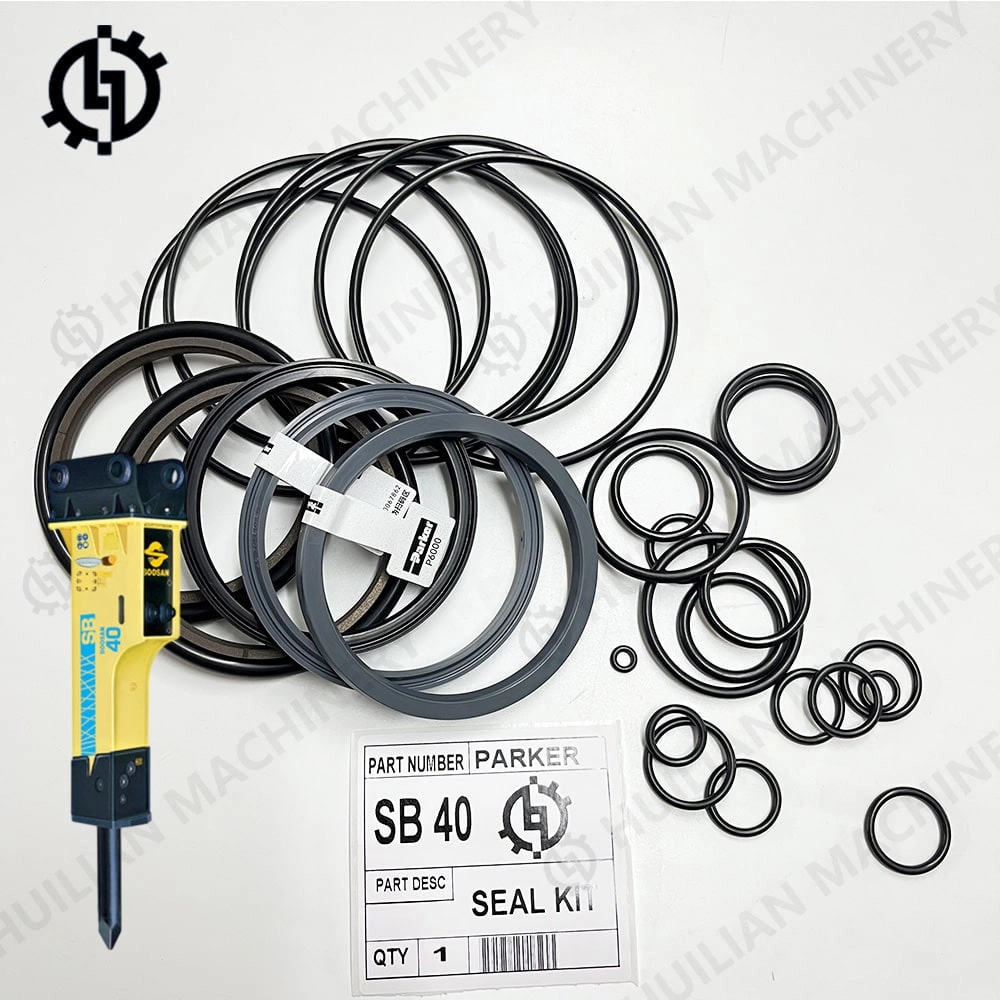
Parker Oil Seal Complete Repair SB40 Seal Kit COX001 CO1012 SB40Ⅱ SB40TSP SQ40 For Soosan Hydraulic Rock Breaker Hammer
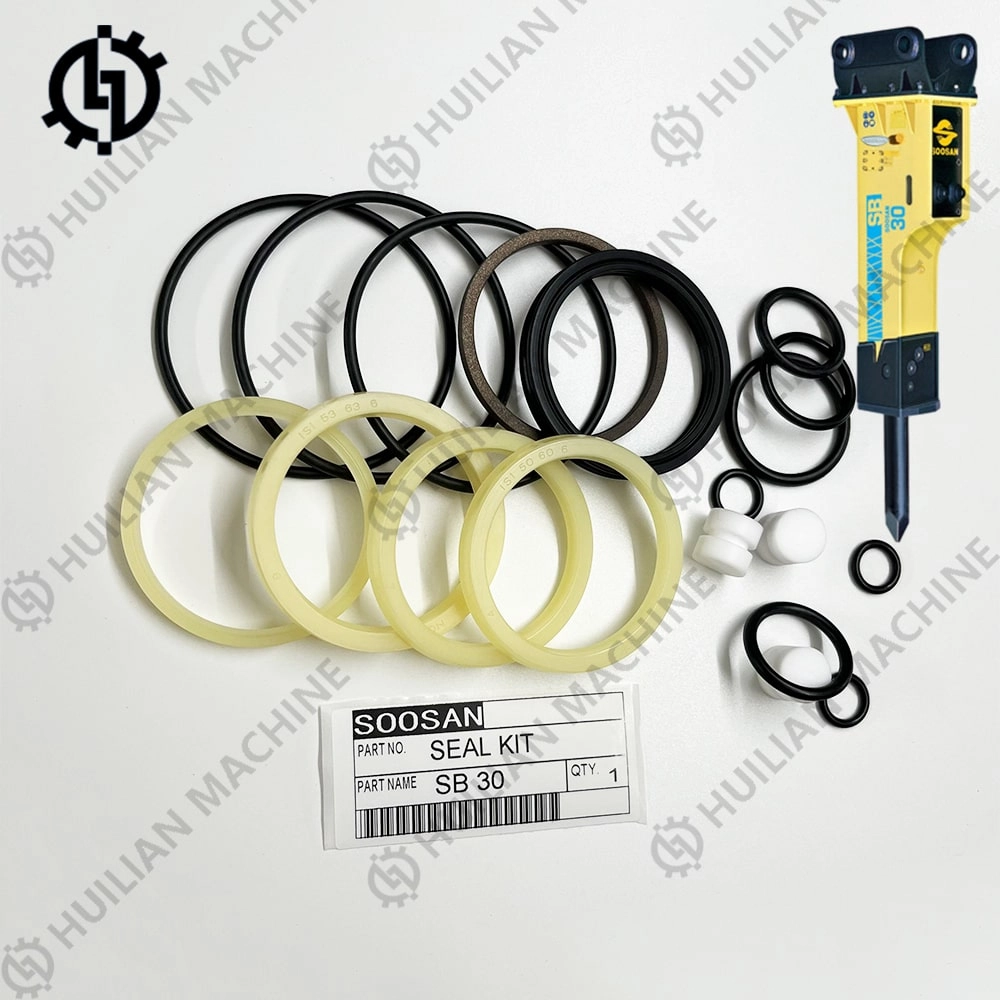
E71012 E7X001 SOOSAN SQ30 SB30Ⅱ SB30 Breaker Seal Kit SB30TS-P SB30Ⅱ TS-P SB30Ⅱ SSL Hydraulic Rock Hammer Parts Oil Repair Kit
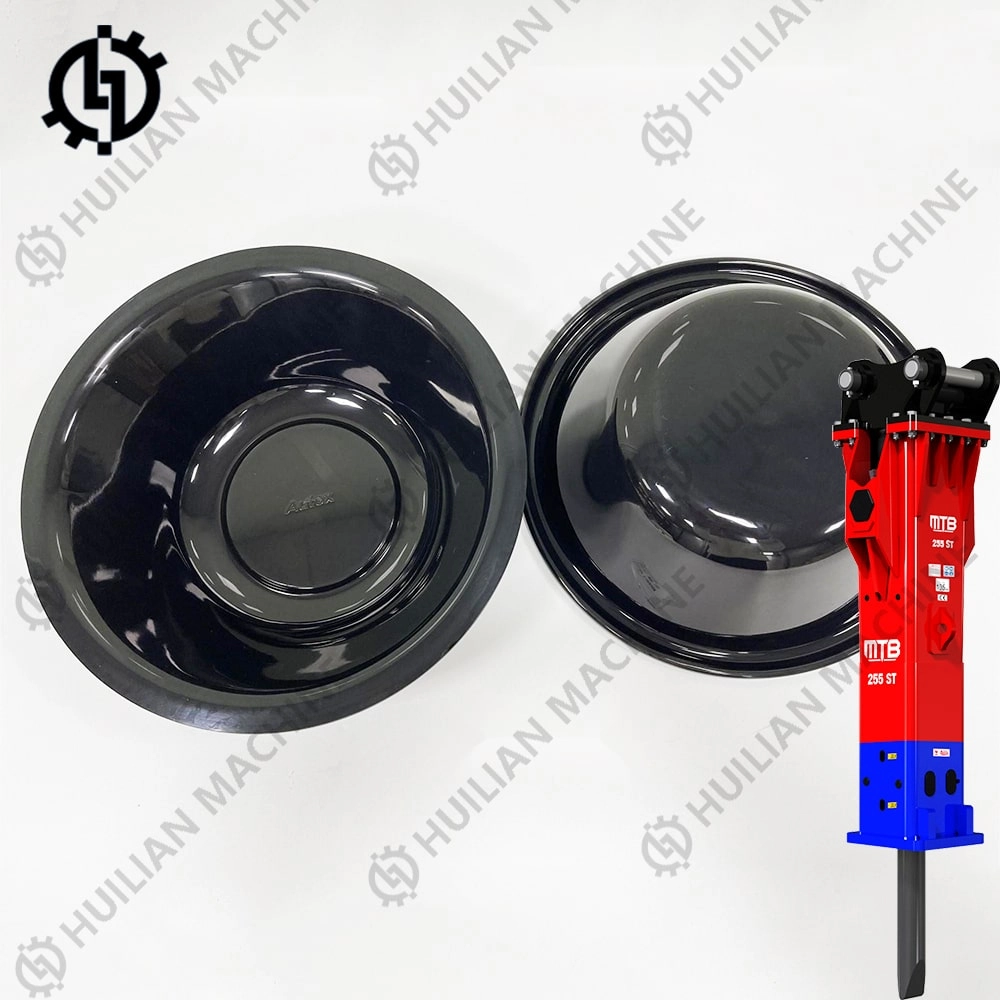
Inan Makina MTB Hydraulic Breaker Parts 45B0116A11 MTB255 MTB MT 255 Diaphragm MTB 255 IQ MTB-255 MTB 255 ST Membrane for Excavator Rock Hammer
 About us
© 2025 HUILIAN MACHINE. All rights reserved