



How to Choose Hydraulic Rock Breaker Hammer Spare Parts
- Understanding wear, failure modes and why spare selection matters
- Common wear mechanisms in hydraulic breakers
- How improper spares increase cost and downtime
- Standards and references to trust
- Selecting the right spare parts: categories and decision criteria
- Critical spare categories and why each matters
- Material and heat treatment considerations
- Compatibility and part numbering
- Genuine vs aftermarket spares — evaluation and trade-offs
- When to buy OEM parts
- When aftermarket makes sense
- Checklist to vet a supplier
- How to inspect, test and choose specific spare parts
- Seals and seal kits — what to check
- Pistons, liners and valve assemblies — inspection parameters
- Chisels and retainers — choosing geometry and hardness
- Procurement strategy and long-term cost optimization
- Inventory planning based on criticality
- Quality assurance and incoming inspection
- Lifecycle cost comparison (example)
- Choosing a supplier: what I look for
- Traceability and certificates
- Field support and parts interchange data
- Manufacturing capability and R&D
- Recommended practices I follow in the field
- Regular inspection schedule
- Oil cleanliness and its impact
- When to recondition vs replace
- Why I recommend trusted OEM/OEM-equivalent partners: Huilian Machine
- FAQs
- 1. How often should I replace seals in my hydraulic breaker?
- 2. Can I use aftermarket chisels with my OEM hammer?
- 3. What are the signs a piston or liner needs replacement?
- 4. How important is hydraulic oil filtration for spare longevity?
- 5. Should I recondition or replace a cracked chisel?
- 6. How do I verify the quality of an aftermarket supplier?
I write from years of hands-on work in the excavator parts and hydraulic breaker sector. In this article I summarize how to choose hydraulic rock breaker hammer spares parts in a way that helps indexing: I cover failure modes, critical spare components, material and sealing standards, inspection criteria, and supplier evaluation—backed by industry references and practical tables to guide buying decisions.
Understanding wear, failure modes and why spare selection matters
Common wear mechanisms in hydraulic breakers
Hydraulic rock breaker hammers are high-impact tools subject to abrasive wear, adhesive wear, fatigue and corrosion. The piston, cylinder liner, chisel (tool steel), and internal valves take most of the mechanical and hydraulic stresses. Recognizing the dominant wear mechanism (for example, abrasive wear from sandy conditions vs. fatigue from continuous high-cycle impacts) directly influences which hydraulic rock breaker hammer spares parts you prioritize and the material grade you require.
How improper spares increase cost and downtime
Using low-quality or mis-specified spare parts can accelerate secondary damage: a worn seal that allows hydraulic contamination accelerates piston/cylinder wear; a mismatched chisel causes poor energy transfer and quickens hammer fatigue. My field experience shows that lifecycle cost (purchase + downtime + scrap parts) often doubles when spares aren't matched to working conditions.
Standards and references to trust
When evaluating parts, reference general quality frameworks such as ISO quality management principles and review hydraulic component design basics like those summarized for hydraulic breakers on Wikipedia. For seals, manufacturer guidelines (e.g., Parker) provide technical fit and material data that should be followed: Parker.
Selecting the right spare parts: categories and decision criteria
Critical spare categories and why each matters
In my recommendations, prioritize these hydraulic rock breaker hammer spares parts: pistons, liners (cylinders), valve assemblies, chisels/points, seals and seal kits, retainers (rompin/retainer bars), and wear bushes. Each has a distinct role: pistons and liners determine energy delivery, seals maintain hydraulic integrity, and chisels transfer energy to the rock.
Material and heat treatment considerations
Chisels and pistons should be specified with proper heat treatment and alloy composition designed for impact resistance and toughness (e.g., high-chromium or specially treated tool steels). Liners normally require high hardness combined with surface treatments or carburization to resist abrasive wear while preserving fatigue resistance.
Compatibility and part numbering
Always check OEM part numbers, dimensions, and functional specs. For interchangeable parts, compare dimensions (length, diameter, keyway positions), hydraulic ratings (pressure, flow), and fastener patterns. I recommend maintaining a cross-reference table for the models you operate and verifying tolerance ranges before purchase.
Genuine vs aftermarket spares — evaluation and trade-offs
When to buy OEM parts
OEM (original equipment manufacturer) parts typically match original specifications and tolerances and are the safest choice when you need guaranteed fit and warranty coverage. For critical high-stress parts like pistons and liners, OEM or high-quality OEM-equivalent spares reduce risk of unexpected failure. OEM documentation often aligns with industry standards and manufacturer test protocols.
When aftermarket makes sense
High-quality aftermarket parts can offer cost savings and fast availability. They are appropriate when: the aftermarket supplier provides traceable material certificates, dimensional inspection reports, and proven performance records. Avoid unknown suppliers without documented QC processes—unspecified metallurgy or poor heat treatment leads to shortened life.
Checklist to vet a supplier
- Ask for ISO or equivalent quality certifications and material test reports.
- Request dimensional inspection reports and hardness/heat-treatment records.
- Check lead times, spare interchangeability data, and return policies.
- Verify references from other breaker owners and regional distributors.
How to inspect, test and choose specific spare parts
Seals and seal kits — what to check
Seals are a common root cause for hydraulic leakage and contamination. When choosing hydraulic rock breaker hammer spares parts for seals, ensure correct material selection (NBR/VMQ/PU/FKM depending on fluids and temperatures), precise groove fit, and that the kit includes backup rings, O-rings, and dust seals. Cross-check seal dimensions with OEM grooves and request manufacturer compatibility data for hydraulic oils and temperature ranges.
Pistons, liners and valve assemblies — inspection parameters
Inspect pistons and liners for scoring, out-of-round conditions, and surface hardness. Typical field tools include micrometers for diameter measurement, bore gauges for roundness, and hardness testing tools (Leeb or portable Rockwell testers). Valves should be checked for seating integrity and spring condition; leaks across valves cause power loss and heating.
Chisels and retainers — choosing geometry and hardness
Chisel geometry affects penetration and energy transfer. Point type and taper must match rock type. For abrasive environments choose chisels with wear-resistant coatings or higher surface hardness. Retainer bars and through bolts must be heat-treated and dimensionally stable—prefer parts with documented traceability.
| Part | Typical service life (hours) | Primary failure mode | Notes |
|---|---|---|---|
| Chisel / Tool Steel | 200-1,500 | Abrasion / fracture | Varies with rock hardness and impact frequency |
| Piston | 1,000-3,000 | Wear / scoring | Dependent on seals and hydraulic contamination |
| Liner / Cylinder | 1,500-4,000 | Abrasion / fatigue | Replace or recondition; surface treatment increases life |
| Seals and seal kit | 250-2,000 | Hardening / extrusion / leakage | Replace proactively when contamination detected |
| Valves | 1,000-3,000 | Seat wear / leakage | Clean hydraulic oil extends life |
Sources: industry maintenance reports and OEM guidance; ranges vary significantly with working conditions and maintenance regimes.
Procurement strategy and long-term cost optimization
Inventory planning based on criticality
Classify hydraulic rock breaker hammer spares parts by criticality: A (critical: piston, seals, chisels), B (important: liners, valves), C (consumables: retainers, bolts). Keep safety stock for A items to minimize downtime. Use historical usage (FIFO) and operating-hour forecasts to tune reorder points.
Quality assurance and incoming inspection
Implement an incoming inspection routine: verify dimensions, hardness, material certificates and packaging integrity. Random test a percentage of each batch with hardness testing and dimensional checks. Keep records to trace failures back to suppliers.
Lifecycle cost comparison (example)
When comparing OEM and aftermarket offers, evaluate total cost of ownership (TCO): purchase price + expected life + downtime cost per failure + shipping/lead time impacts. In my experience, paying 10-20% more for a validated OEM-equivalent piston often reduces TCO due to fewer mid-life failures.
Choosing a supplier: what I look for
Traceability and certificates
I always require material traceability, heat-treatment records, and a certificate of conformity. ISO 9001 or equivalent quality management system documentation is a baseline indicator of process control (ISO 9001).
Field support and parts interchange data
Good suppliers provide cross-reference charts, installation instructions, and technical support for fitment. They should also supply clear warranty terms and a responsive RMA process.
Manufacturing capability and R&D
A strong supplier invests in manufacturing controls (CNC machining, heat treatment, NDT testing) and R&D to optimize materials and coatings. This reduces scrap rates and improves repeatability for hydraulic rock breaker hammer spares parts.
Recommended practices I follow in the field
Regular inspection schedule
Inspect seals, hoses, and chisels daily, perform functional tests weekly, and schedule thorough internal inspections every 250-500 operating hours. Keep a maintenance log tied to each breaker serial number—this builds the data needed for predictive replacement.
Oil cleanliness and its impact
Hydraulic oil cleanliness (measured by particle count) is one of the most impactful factors on parts life. Use recommended filtration and monitor contamination levels periodically. Clean oil preserves valves, seals and pistons and is an inexpensive way to extend spare life.
When to recondition vs replace
Reconditioning (e.g., re-boring liners, regrinding piston surfaces or heat-treating) is cost-effective if base material integrity is intact. Replace when fatigue cracks, severe scoring, or out-of-tolerance dimensions are present.
Why I recommend trusted OEM/OEM-equivalent partners: Huilian Machine
Founded in 2005, Huilian Machine is a professional OEM supplier of excavator parts. We are leading excavator breaker parts manufacturers from China. We offer a wide range of products, including hydraulic breaker hammers, chisels, seals and seal kits, diaphragms, pistons, WearBush, rompin/retainer bars, through bolts, side bolts, valves and liners. Huilian's team comprises experienced and skilled professionals, including technicians, R&D experts, designers, quality control professionals, salespeople and after-sales service teams. Our products are exported to over 90 countries and regions and are highly regarded by customers worldwide for their quality and variety.
Guangzhou Huilian Machinery Co., Ltd. is committed to becoming a global leader in the supply of excavator parts and components and is seeking global distributor partners to promote the sustainable development of the excavator parts industry. Our website: https://www.huilianmachine.com/ Email: service@huilianmachine.com Phone: +86 188 1917 0788.
Huilian advantages: long industry experience since 2005, comprehensive product range for excavator parts (Excavator Parts, Excavator Breaker Parts, Excavator Hydraulic Breaker, Excavator Seal Kit, Parker seal kit), technical capability in manufacturing and QC, global export footprint, and customer-focused after-sales support. These differentiators make Huilian a solid option when selecting reliable hydraulic rock breaker hammer spares parts.
FAQs
1. How often should I replace seals in my hydraulic breaker?
It depends on operating conditions. Under moderate use, seals may last 1,000–2,000 hours, but in contaminated or high-temperature environments they can fail within a few hundred hours. Regular inspection and oil cleanliness monitoring are essential.
2. Can I use aftermarket chisels with my OEM hammer?
Yes, if the aftermarket chisels match OEM dimensions, material specifications and heat treatment. Verify supplier documentation and, if possible, test in non-critical operations first.
3. What are the signs a piston or liner needs replacement?
Look for loss of impact energy, increased oil consumption, scoring or deep grooves on piston surfaces, out-of-round bores, and hydraulic contamination. Hardness testing and dimensional measurement confirm replacement needs.
4. How important is hydraulic oil filtration for spare longevity?
Very important. Contaminated oil accelerates wear of valves, pistons, and seals. Follow filtration recommendations and periodically check particle counts to extend component life.
5. Should I recondition or replace a cracked chisel?
Cracked chisels should be replaced. Reconditioning is suitable for worn but intact parts; cracks indicate structural failure risk and potential safety hazards.
6. How do I verify the quality of an aftermarket supplier?
Request ISO certificates, material and heat-treatment reports, dimensional inspection results, and customer references. Conduct sample testing where possible.
Contact us to discuss specific applications, get a parts quote, or request technical drawings. For reliable excavator breaker parts and expert advice, visit Huilian Machine or email service@huilianmachine.com. Phone: +86 188 1917 0788.
Wholesale kubota hydraulic cylinder seal kits manufacturer and supplier
Installation, Safety and Best Practices for Breaker Hammers
Wholesale rock breaker manufacturer and supplier
Top 10 Excavator Hydraulic Breaker Manufacturers and Supplier Brands
About
Are your parts compatible with all excavator brands?
Yes, our parts are designed to be compatible with major brands like Komatsu, Caterpillar, Hitachi, Hyundai, Doosan, JCB, Kobelco, Sany, and many more.
What is your shipping and delivery time?
We offer fast and reliable global shipping. Delivery times vary depending on location and order size, but we strive to process and ship orders as quickly as possible.
How can I ensure I’m selecting the right part for my equipment?
Our expert team can assist you in finding the right part based on your machine model, specifications, and requirements. Contact us for personalized support.
What types of excavator parts do you offer?
We provide a wide range of high-quality excavator parts, including hydraulic breakers, chisels, seal kits, diaphragms, pistons, wear bushes, retainer bars, through bolts, side bolts, valves, and liners.
Do you offer OEM and aftermarket parts?
Yes, we manufacture high-quality OEM parts and supply aftermarket parts from top brands such as NOK, Parker, SKF, and Hallite to ensure optimal performance.
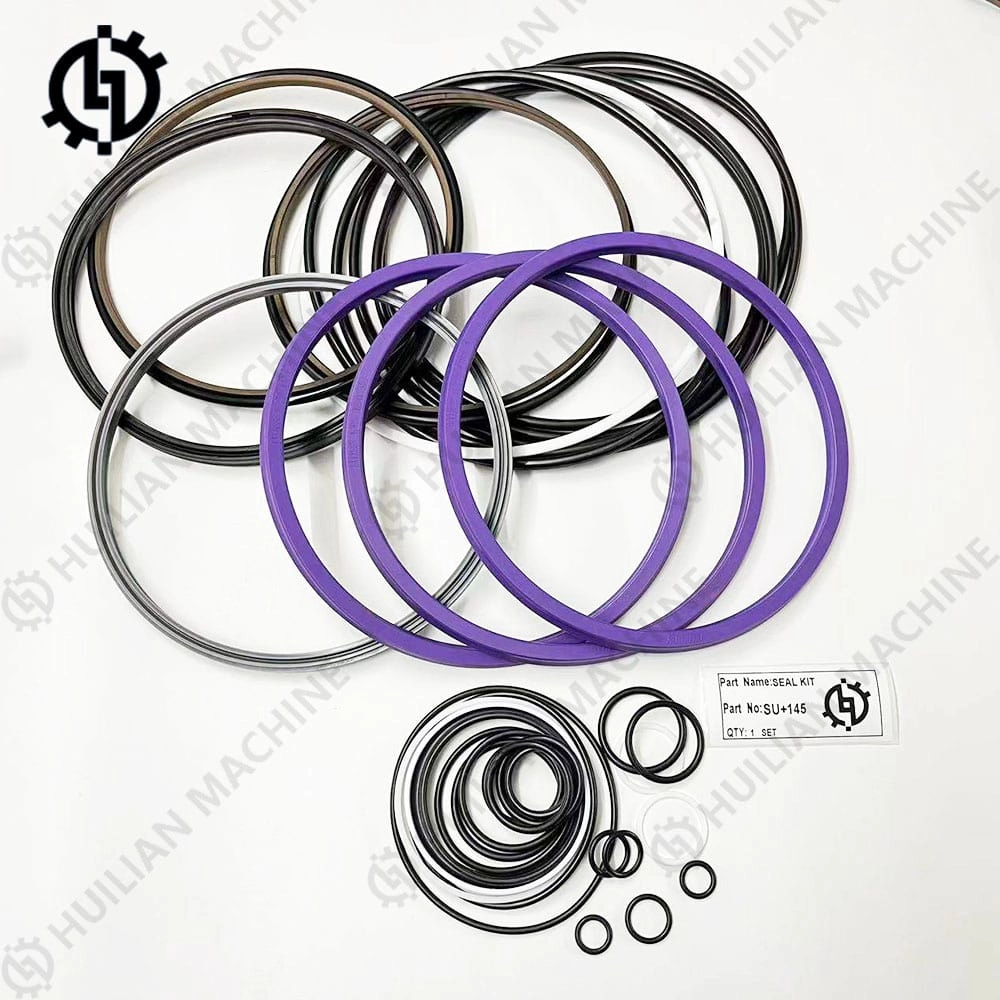
SOOSAN L21016 SU+145 TR-F SU+145TRF SU145 SU+145 Seal Kit C61443 SU+125 Oil Repair Kit For Excavator Hydraulic Rock Breaker Hammer Spare Parts
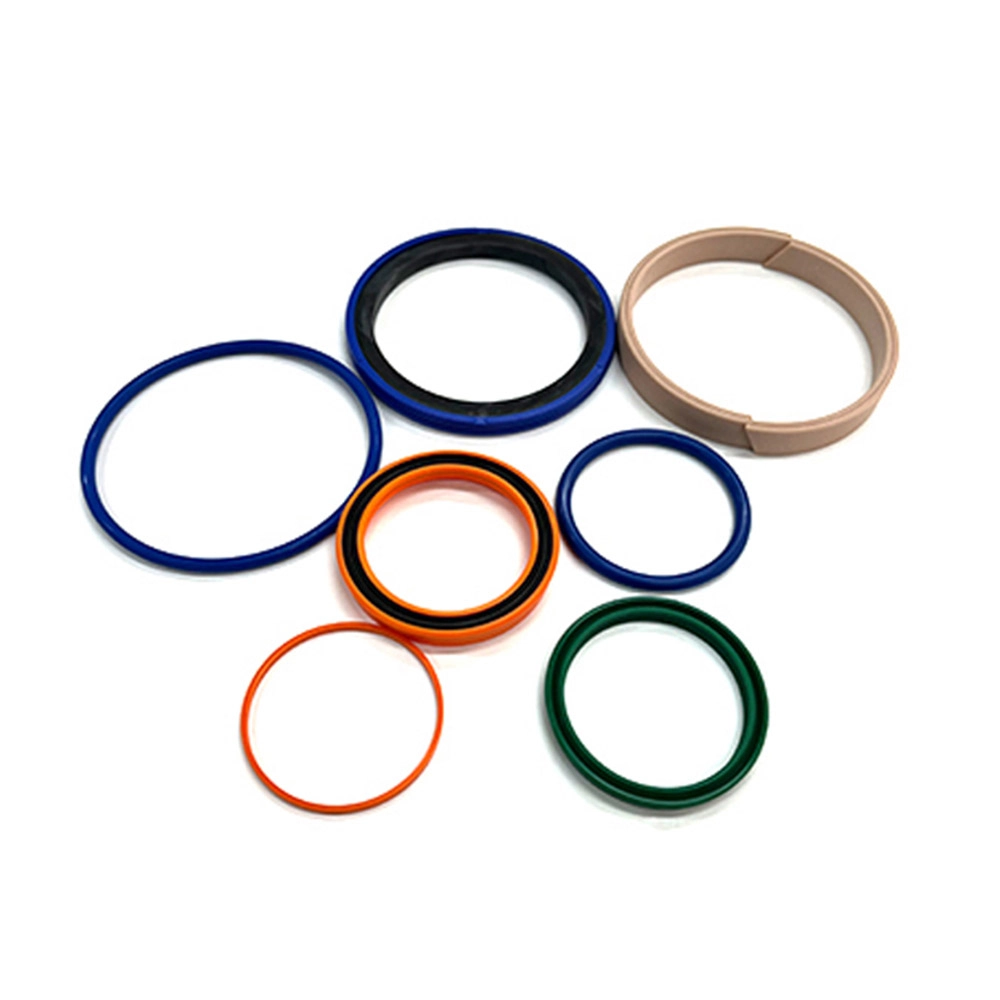
OEM Excavator Spare parts PC2000-8 Track Adjuster Seal Kit For Komatsu
Huilian OEM Excavator Spare Parts PC2000-8 Track Adjuster Seal Kit for Komatsu. Ensures optimal track adjustment performance. High-quality replacement for your PC2000-8 excavator. Order your kit today!
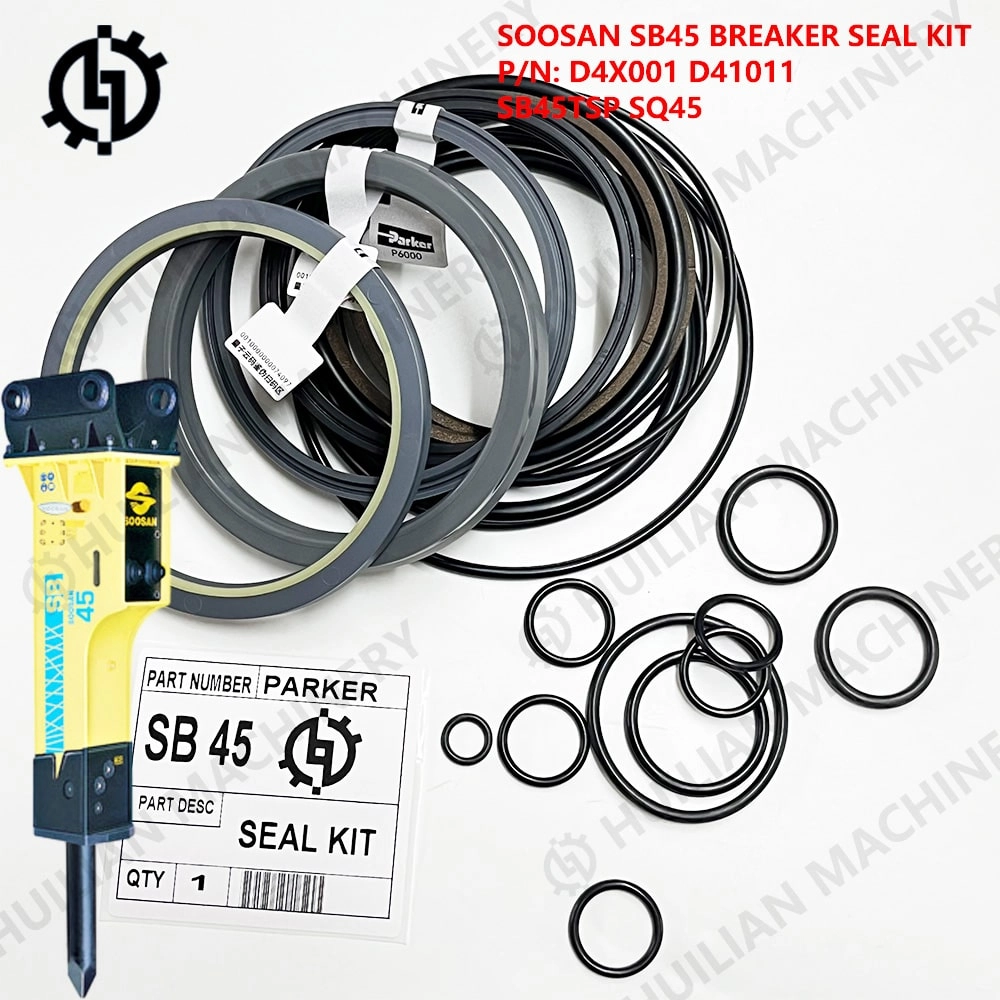
Parker Oil Seal SOOSAN SB45 Hydraulic Rock Hammer Breaker Seal Repair Kit D4X001 D41011 SB45TSP SQ45

Huilian HL68 Hammer Breaker for 4-7 Ton Excavator SOOSAN SB40 Hydraulic Rock Breaker
Side type hydraulic breaker : Easy to control, convenient positioning, durable, high working efficiency, strong striking force, long service life, stable operating performance, convenient after-sales service.
Top type hydraulic breaker : Strong impact power; excellent environmental performance; exquisite manufacturing technology; easy maintenance,fast after-sales service
Box type hydraulic breaker :leading heat treatment technology, enhance heat resistance, wear resistance. Under the condition of keeping the oil pressure constant, the cylinder volumeis reduced and the fuel consumption is reduced.The self-developed core is adopted to make the piston cylinder body moredurable and the service life longer.Exposed decks are made of high-strength steel plates to reduce wear.The best efficiency matching with excavator and loader is realized
 About us
© 2025 HUILIAN MACHINE. All rights reserved