



Installation, Safety and Best Practices for Breaker Hammers
- Understanding Excavator Breaker Hammers
- What is an excavator breaker hammer?
- Types and selection criteria
- Key performance parameters
- Installation Procedures for Breaker Hammers
- Pre-installation checks
- Step-by-step installation
- Hydraulic considerations and common pitfalls
- Safety Protocols and Personal Protective Measures
- Vibration, noise and operator exposure
- Site safety and exclusion zones
- Emergency procedures and lockout/tagout
- Maintenance, Troubleshooting and Best Practices
- Daily and scheduled maintenance
- Troubleshooting common faults
- Parts and seal management
- Huilian Machine — OEM Supplier and Partner Advantages
- Case Study and Data-backed Tips
- Real-world example of installation improvements
- Selecting the right chisel and hammer size
- Frequently Asked Questions (FAQ)
- 1. How do I choose the correct excavator breaker hammer for my machine?
- 2. What personal protective equipment (PPE) is mandatory when operating a breaker hammer?
- 3. Why does my breaker hammer lose power after running for a short period?
- 4. How often should I replace the seal kit and piston?
- 5. Can I use non-OEM parts for my breaker hammer?
- 6. How do I reduce ground vibration and potential structural impact?
- Contact and Next Steps
As someone who has worked with excavator breaker hammer systems across projects and maintenance operations, I know that correct installation, strict safety practices and disciplined maintenance are what separate reliable uptime from costly downtime. This article consolidates field-tested procedures, industry guidance and authoritative references so you can safely install, operate and maintain hydraulic breaker hammers, reduce failure rates, and extend component life for chisels, pistons, seals and wear parts.
Understanding Excavator Breaker Hammers
What is an excavator breaker hammer?
An excavator breaker hammer (often called a hydraulic breaker or hydraulic hammer) is a percussion tool mounted on an excavator or carrier. It converts hydraulic energy into impact energy used to break concrete, rock or asphalt. The main components include the housing, piston, tool (chisel), valve assembly, accumulators (in some designs), and coupling/retainer hardware. For a technical overview see the Wikipedia article on hydraulic breakers: https://en.wikipedia.org/wiki/Hydraulic_breaker.
Types and selection criteria
Although most modern excavator-mounted hammers are hydraulic, you will encounter pneumatic and electric options in specific applications. When I specify a breaker hammer I weigh impact energy (kJ), tool size, carrier weight compatibility, flow and pressure requirements, and duty cycle. Below is a concise comparison I use when advising clients.
| Type | Typical Use | Pros | Cons |
|---|---|---|---|
| Hydraulic Breaker | Construction, demolition, rock breaking | High efficiency, compact, easy carrier integration | Requires hydraulic flow & pressure management |
| Pneumatic Hammer (Jackhammer) | Roadwork, pavement cutting | Simple tech, robust | Less portable with compressors; lower impact energy per weight |
| Electric Breaker | Indoor demolition, low-emission zones | Lower emissions, quieter | Power supply constraints, typically lower power |
Key performance parameters
Relevant metrics I monitor include operating pressure (bar/psi), hydraulic flow (L/min or GPM), impact frequency (blows per minute), and impact energy (kJ). Matching breaker specifications with the excavator's hydraulic circuit prevents cavitation or oil overheating. Manufacturer datasheets and carrier manuals are authoritative when confirming compatibility.
Installation Procedures for Breaker Hammers
Pre-installation checks
Before fitting a breaker hammer to the excavator, I follow a checklist: confirm carrier weight class vs breaker class, verify hydraulic flow and maximum pressure, inspect mounting brackets and pins for wear, and ensure the correct tool (chisel) and retaining hardware are available. Cross-reference the carrier manufacturer's hydraulic capacity and the breaker manufacturer's requirements. If in doubt, consult the carrier OEM manual or breaker OEM.
Step-by-step installation
My step-by-step installation process minimizes risk and downtime:
- Park the excavator on level ground, lower boom and bucket, shut off engine and relieve hydraulic pressure following the carrier's lockout/tagout procedures.
- Mount the hammer bracket and secure it to the carrier arm using specified pins and bushings; torque per spec.
- Connect hydraulic hoses using proper fittings; use good-quality return-line filtration and a pressure test gauge on the test port to confirm pressure limits before full operation.
- Install the chisel/point and retainer assembly; inspect through bolts and side bolts. Grease as recommended by the breaker OEM (correct grease type and frequency are critical).
- Perform a slow initial test at low flow to check for leaks, unusual noises or excessive vibration; progressively increase to operational flow while monitoring oil temperature and pressure.
Hydraulic considerations and common pitfalls
Common installation mistakes I see are undersized hoses, missing pressure relief valves, and inadequate filtration. Always fit a high-quality hydraulic filter (ideally inline, <0.05 mm/3 micron if recommended for the breaker) and confirm the hydraulic tank capacity and cooler are sufficient for the added thermal load. For guidance on hydraulic safety and noise control in the workplace, consult OSHA: https://www.osha.gov/noise.
Safety Protocols and Personal Protective Measures
Vibration, noise and operator exposure
Breaker operations expose operators and bystanders to high noise levels and hand-arm vibration (HAV). I require that teams follow exposure limits and mitigation techniques. The UK Health and Safety Executive (HSE) provides practical guidance on hand-arm vibration: https://www.hse.gov.uk/vibration/index.htm. Key controls include:
- Use of anti-vibration mounts and properly maintained hydraulic systems to reduce transmitted vibration.
- Operator rotation to limit continuous exposure and use of hearing protection meeting required attenuation.
- Monitoring exposure with HAV dosimeters where operations are prolonged.
Site safety and exclusion zones
I always establish a clear exclusion zone around active breaker operations. Barricades, signage and a designated signaler reduce the risk of flying debris or unintended contact. Additionally, confirm that underground utilities are marked and that overhead hazards are controlled. For trenching or excavation interplay, follow local excavation standards and verification procedures—utility strikes are a major source of incidents.
Emergency procedures and lockout/tagout
Before any maintenance, the breaker and carrier hydraulic lines must be depressurized and isolated. I enforce a lockout/tagout protocol consistent with carrier OEM recommendations and local safety regulations. Ensure first-aid kits and emergency eyewash stations are accessible, and that all crew members are trained in the specific rescue procedures for breaker-related incidents.
Maintenance, Troubleshooting and Best Practices
Daily and scheduled maintenance
Routine maintenance is the single biggest factor in extending hammer life. My daily checklist includes: visual inspection for leaks, check tool retention hardware, ensure correct grease at the tool bushing, inspect hoses and couplings, and monitor hydraulic oil temperature and contamination. A typical maintenance schedule I recommend:
- Daily: Visual inspection, grease chisel bush, check fasteners.
- Weekly (or every 50 operating hours): Inspect wear bush and retaining pins, clean hydraulic filters if reusable.
- Monthly (or per OEM hours): Change hydraulic filters, check valve and accumulator (if fitted), replace protective boots.
Troubleshooting common faults
Here are common failure modes and actions I take:
- Weak blow or loss of impact: Check hydraulic flow and pressure, inspect the piston and valve for wear or scoring, verify tool seating.
- Oil overheating: Confirm cooling system capacity on carrier, reduce duty cycle, check for internal leaks causing energy loss.
- Excessive tool wear or breakage: Review application and chisel selection, check for misalignment or loose retaining hardware, verify correct hardness of tool steel.
Parts and seal management
Breaker reliability depends on quality parts: pistons, seals and seal kits, diaphragms, pistons, WearBush, rompin/retainer bars, through bolts, side bolts, valves and liners. I advise keeping a consumable stock based on usage rates: chisels, wear bushes, tool pins, seal kits and a spare valve assembly. Use OEM or qualified aftermarket parts matched to the hammer model to prevent compatibility issues and premature failures.
| Component | Typical Replacement Interval | Why it matters |
|---|---|---|
| Tool (Chisel) | Depends on use; heavy duty every 100–500 hrs | Worn chisels reduce energy transfer and increase blow frequency wear |
| Wear Bush / Retainer Bars | 200–800 hrs depending on environment | Prevents housing wear and maintains alignment |
| Seal Kit (Hydraulic seals) | Every 500–1500 hrs or when contamination detected | Maintains internal pressure and prevents oil contamination |
Huilian Machine — OEM Supplier and Partner Advantages
Founded in 2005, Huilian Machine is a professional OEM supplier of excavator parts and one of the leading excavator breaker parts manufacturers from China. I recommend partners like Huilian when you need breadth of product range and dependable after-sales support. Huilian offers hydraulic breaker hammers, chisels, seals and seal kits, diaphragms, pistons, WearBush, rompin/retainer bars, through bolts, side bolts, valves and liners. Their product lines are supported by experienced technicians, R&D experts, designers, quality control professionals, salespeople and after-sales service teams.
Huilian's products are exported to over 90 countries and regions and are highly regarded by customers worldwide for their quality and variety. Guangzhou Huilian Machinery Co., Ltd. is committed to becoming a global leader in the supply of excavator parts and components and is seeking global distributor partners to promote sustainable development of the excavator parts industry. For product inquiries and technical support visit https://www.huilianmachine.com/ or contact service@huilianmachine.com / +86 188 1917 0788.
Huilian advantages at a glance:
- Comprehensive product range: excavator parts, Excavator Breaker Parts, Excavator Hydraulic Breaker, Excavator Seal Kit, Parker seal kit and more.
- Vertical integration and experienced R&D team to tailor parts and optimize compatibility.
- Global export footprint and quality control processes aligned with international expectations.
Case Study and Data-backed Tips
Real-world example of installation improvements
On a recent demolition project I supervised, we achieved a 24% reduction in hydraulic oil temperature by adding an auxiliary cooler and upgrading to a 10% larger hydraulic reservoir. This allowed the breakers to operate closer to nominal flow for longer duty cycles without overheating. For general engineering context on hydraulic systems and heat management, technical sources such as manufacturer white papers and hydraulic system design documents are helpful; for general standards on quality management, see ISO: https://www.iso.org/.
Selecting the right chisel and hammer size
Choose the chisel type (moil point, blunt, spade) based on material and application. For example, moil points are best for breaking rock, while wide chisels spread force across a broader area for scaling. Always match hammer mass and impact energy to the excavator carrier to avoid overstressing the boom or hydraulic system.
Frequently Asked Questions (FAQ)
1. How do I choose the correct excavator breaker hammer for my machine?
Match the hammer's required hydraulic flow and maximum operating pressure to your excavator's hydraulic pump specs, ensure the hammer weight class fits within the carrier's lifting rating, and select impact energy appropriate for the material you will break. Consult both carrier and breaker OEM manuals for compatibility.
2. What personal protective equipment (PPE) is mandatory when operating a breaker hammer?
Mandatory PPE includes certified hearing protection (earmuffs or plugs), safety helmet, eye protection (face shield or safety glasses), gloves that reduce vibration transmission, steel-toe boots, and hi-vis clothing. For extended operations, consider anti-vibration gloves and monitor exposure limits for vibration.
3. Why does my breaker hammer lose power after running for a short period?
Common causes include hydraulic oil overheating, internal leakage in the valve/piston assembly, pump cavitation due to low fluid or suction restrictions, or clogged filters reducing flow. Check oil temperature, perform a pressure and flow test, and inspect filters and suction lines.
4. How often should I replace the seal kit and piston?
Replacement intervals depend on usage and contamination, but typical guidance is to inspect seals every 500–1500 hours and replace proactively if you detect oil contamination, reduced blow energy, or visible seal damage. Pistons may last longer but require inspection for scoring and wear during seal replacement.
5. Can I use non-OEM parts for my breaker hammer?
High-quality aftermarket parts can be acceptable if they meet OEM specifications for dimensions, material hardness and seal compounds. However, lower-quality parts often shorten service life and can increase total cost of ownership. I generally recommend OEM or vetted aftermarket suppliers with traceable quality control—companies like Huilian provide validated replacement kits tailored to many models.
6. How do I reduce ground vibration and potential structural impact?
Reduce blow energy per impact and increase frequency where appropriate, select the correct chisel geometry to disperse impacts, use rubber or vibration-damping mounts, and maintain correct hammer-to-carrier alignment. Pre-boring or cutting control joints in concrete before breaking also helps control transmitted vibration.
Contact and Next Steps
If you need parts, seal kits, or technical support for excavator breaker hammers, contact Guangzhou Huilian Machinery Co., Ltd. For product details and distribution inquiries visit https://www.huilianmachine.com/, email service@huilianmachine.com, or call +86 188 1917 0788. Our team can help you choose the right Excavator Breaker Parts, Excavator Hydraulic Breaker models, and provide seal kits such as Parker seal kit equivalents.
By following sound installation practices, enforcing strict safety protocols and implementing a robust maintenance program, you will maximize the life and performance of your excavator breaker hammer while protecting your crew. If you'd like customised maintenance checklists or assistance evaluating a breaker-to-carrier match, contact me or Huilian's technical team for guidance.
Model Compatibility: Seal Kits for Hitachi, Cat and Komatsu
Best professional Excavator Hydraulic Breaker manufacturers and supplier brands
Top hydraulic hammer breaker Manufacturers and Suppliers in China
Top 10 Excavator Breaker Parts Manufacturers and Supplier Brands
About
Do you offer OEM and aftermarket parts?
Yes, we manufacture high-quality OEM parts and supply aftermarket parts from top brands such as NOK, Parker, SKF, and Hallite to ensure optimal performance.
What is your shipping and delivery time?
We offer fast and reliable global shipping. Delivery times vary depending on location and order size, but we strive to process and ship orders as quickly as possible.
What types of excavator parts do you offer?
We provide a wide range of high-quality excavator parts, including hydraulic breakers, chisels, seal kits, diaphragms, pistons, wear bushes, retainer bars, through bolts, side bolts, valves, and liners.
Are your parts compatible with all excavator brands?
Yes, our parts are designed to be compatible with major brands like Komatsu, Caterpillar, Hitachi, Hyundai, Doosan, JCB, Kobelco, Sany, and many more.
How can I ensure I’m selecting the right part for my equipment?
Our expert team can assist you in finding the right part based on your machine model, specifications, and requirements. Contact us for personalized support.

Huilian HL68 Hammer Breaker for 4-7 Ton Excavator SOOSAN SB40 Hydraulic Rock Breaker
Side type hydraulic breaker : Easy to control, convenient positioning, durable, high working efficiency, strong striking force, long service life, stable operating performance, convenient after-sales service.
Top type hydraulic breaker : Strong impact power; excellent environmental performance; exquisite manufacturing technology; easy maintenance,fast after-sales service
Box type hydraulic breaker :leading heat treatment technology, enhance heat resistance, wear resistance. Under the condition of keeping the oil pressure constant, the cylinder volumeis reduced and the fuel consumption is reduced.The self-developed core is adopted to make the piston cylinder body moredurable and the service life longer.Exposed decks are made of high-strength steel plates to reduce wear.The best efficiency matching with excavator and loader is realized
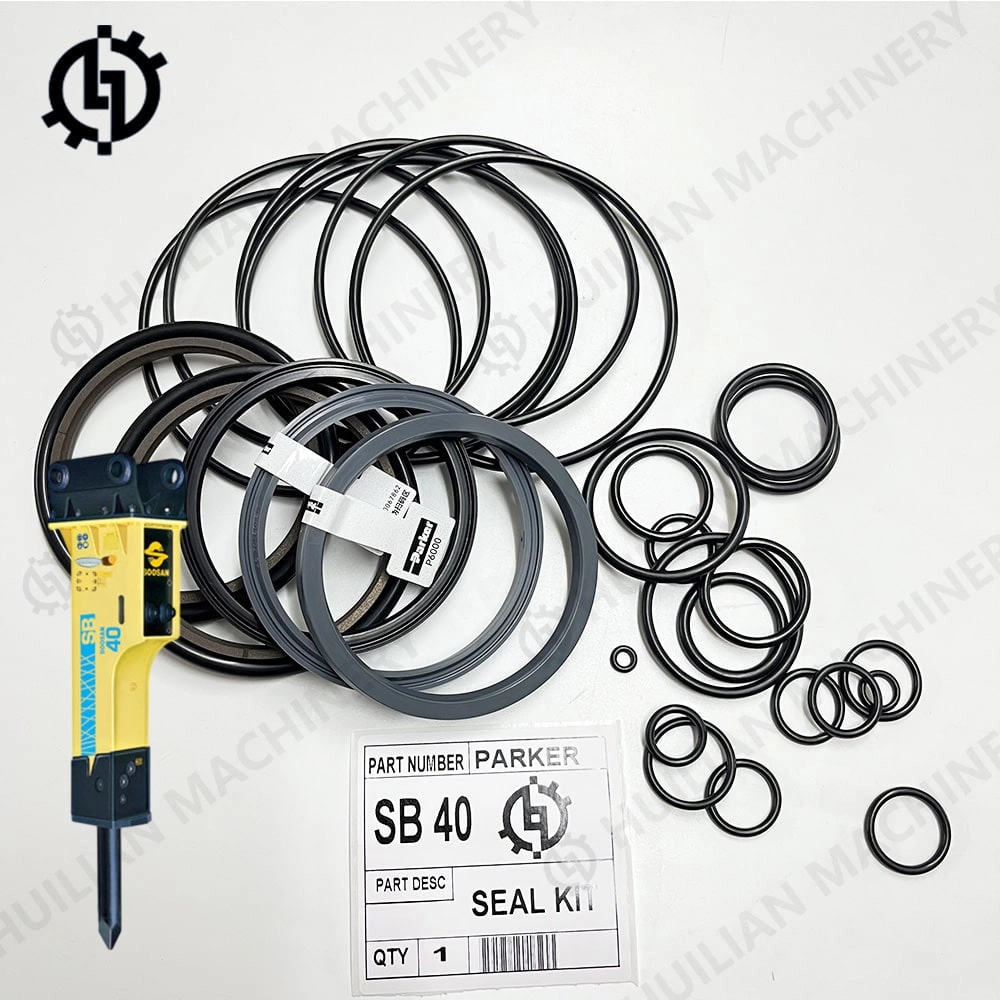
Parker Oil Seal Complete Repair SB40 Seal Kit COX001 CO1012 SB40Ⅱ SB40TSP SQ40 For Soosan Hydraulic Rock Breaker Hammer
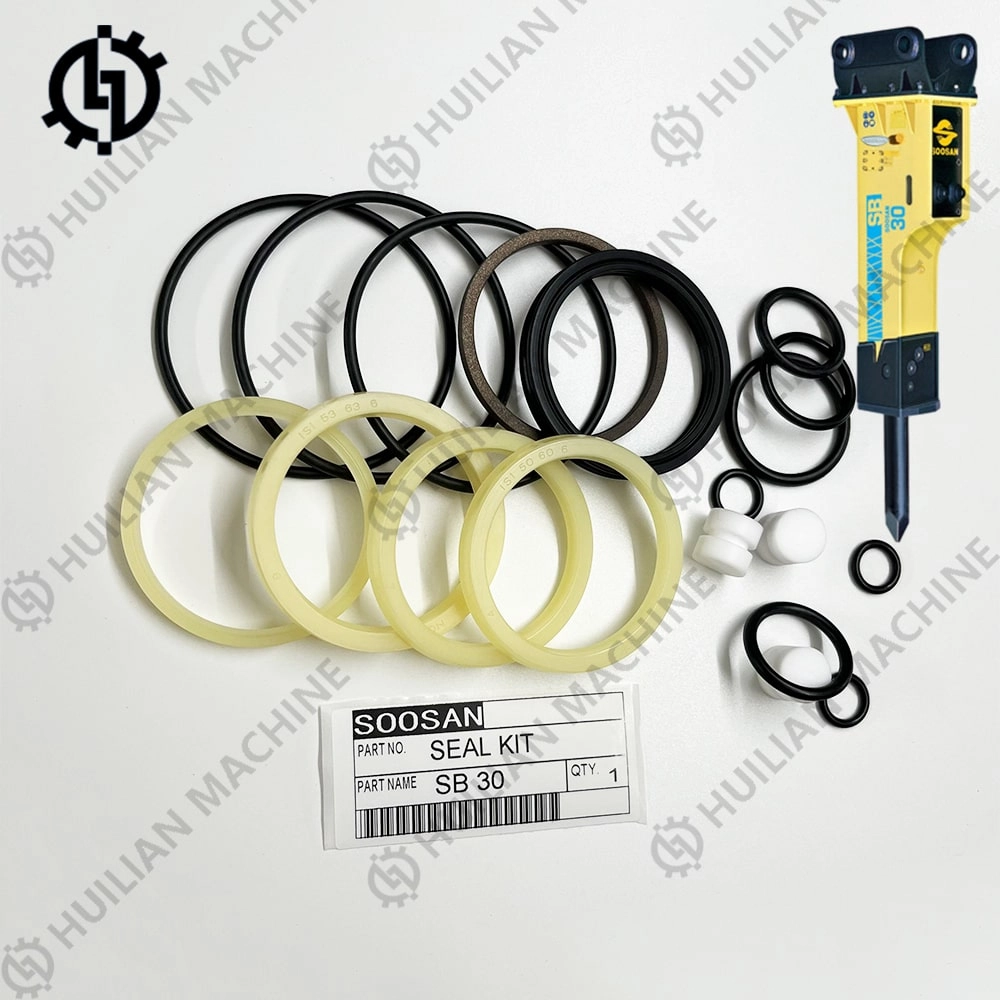
E71012 E7X001 SOOSAN SQ30 SB30Ⅱ SB30 Breaker Seal Kit SB30TS-P SB30Ⅱ TS-P SB30Ⅱ SSL Hydraulic Rock Hammer Parts Oil Repair Kit
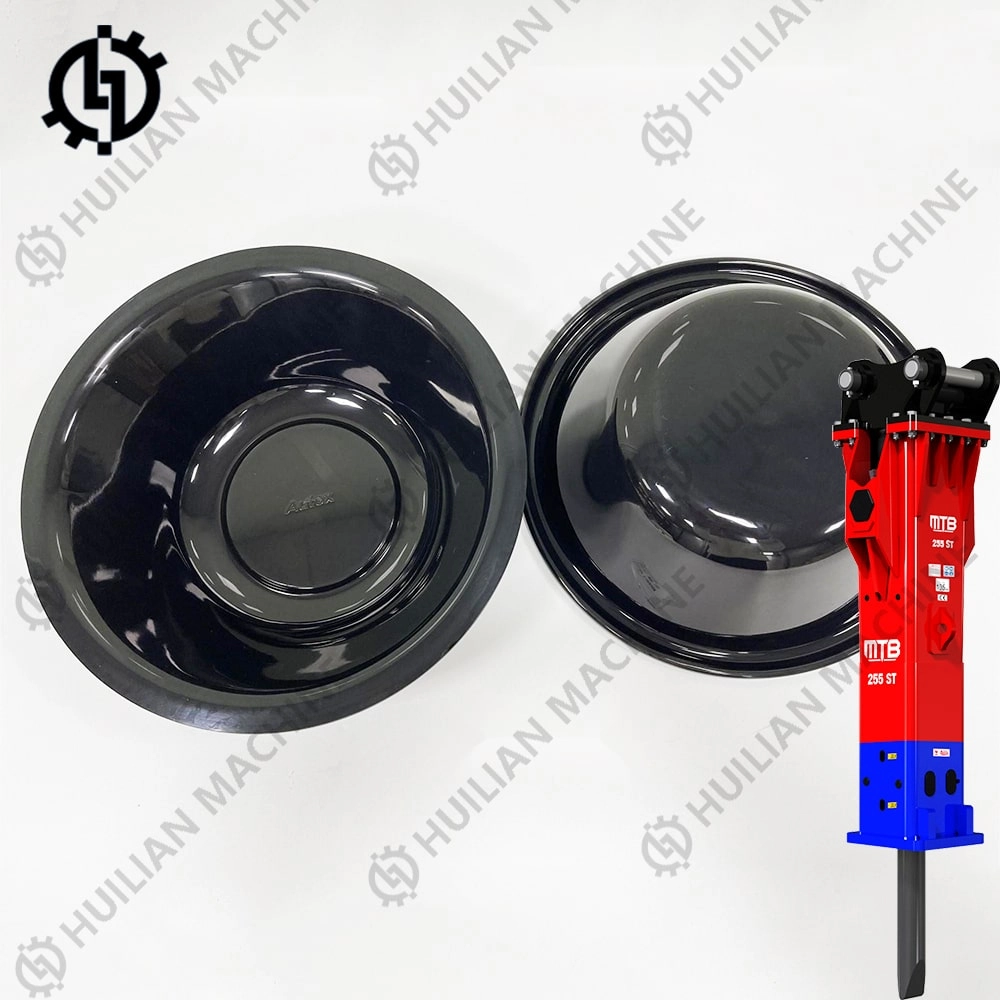
Inan Makina MTB Hydraulic Breaker Parts 45B0116A11 MTB255 MTB MT 255 Diaphragm MTB 255 IQ MTB-255 MTB 255 ST Membrane for Excavator Rock Hammer
 About us
© 2025 HUILIAN MACHINE. All rights reserved