



Common Breaker Hammer Problems and Quick Fixes
- Understanding how your excavator breaker hammer works
- Basic components and energy flow
- Where failures start: hydraulic vs mechanical
- Common wear points to inspect first
- Common problems and quick fixes
- Symptom: Loss of impact power
- Symptom: Hydraulic oil contamination and foaming
- Symptom: Oil leaks at the housing or seals
- Diagnostics and field test procedures
- Quick field tests I use
- When valve problems are suspect
- Deciding between a rebuild and replacement
- Preventive maintenance and parts selection
- Maintenance checklist I recommend
- Selecting parts: why OEM or proven aftermarket matters
- Brands, kits and kits vs individual parts
- Practical troubleshooting table: symptom, likely cause, quick fix
- Company capability and parts sourcing (OEM partner profile)
- Safety, training and recommended references
- Always follow safe procedures
- Document findings and parts replaced
- When to call a specialist
- FAQ
- 1. Why is my breaker hammer losing power even though the excavator engine runs fine?
- 2. How often should I replace the wear bushing and chisel?
- 3. Can I use non-OEM seal kits to save cost?
- 4. What oil contamination level is acceptable for breaker hydraulics?
- 5. My breaker smokes or foams during heavy use—what does that mean?
- 6. How much does a typical rebuild cost compared to replacement?
I work with excavator breaker hammer systems every week and have seen the same patterns of failure across jobsites worldwide. This article summarizes the common causes of downtime for excavator breaker hammers (hydraulic breaker hammers), quick field fixes you can perform safely, and the diagnostic steps that separate a short onsite repair from a full shop rebuild. I also cover contamination control, basic testing, and parts to watch—information that helps indexing because it ties problems, fixes and parts to specific equipment and service intent.
Understanding how your excavator breaker hammer works
Basic components and energy flow
A hydraulic excavator breaker hammer converts hydraulic pressure into a percussive impact. Key components include the tool steel chisel, front bushing/wear bush, piston, cylinder, nitrogen accumulator (in some models), and the breaker’s control valve and hose connections. For a technical overview of hydraulic breakers see the Hydraulic breaker (Wikipedia) entry.
Where failures start: hydraulic vs mechanical
Failures typically fall into two buckets: hydraulic system issues (low flow, contamination, wrong oil, valve faults) and mechanical wear (worn bushings, piston scoring, damaged chisel or retainer bars). Knowing which side a symptom belongs to speeds troubleshooting.
Common wear points to inspect first
I always check the following in order: tool chisel tip, tool bushing (wear bush), retaining/through bolts, side bolts, piston surface, and seal area. Small leaks at seals often indicate deeper wear or contamination that will soon escalate.
Common problems and quick fixes
Symptom: Loss of impact power
Typical causes: low hydraulic pressure/flow, worn piston or chisel, nitrogen loss in gas-assist breakers, or internal valve leakage. Quick fixes I recommend:
- Check excavator hydraulic flow/pressure against breaker requirements. If readings are low, confirm pump output and whether accessory flow is being shared.
- Inspect and replace worn chisel tips and measure piston for scoring. Replace worn parts if visual damage is present.
- If a gas accumulator is present, check gas charge per manufacturer spec (observe safety procedures; wear PPE and use correct charging fixtures).
Symptom: Hydraulic oil contamination and foaming
Contaminated or aerated oil reduces efficiency and accelerates wear. I check for milky oil (water), metallic particles, or frothing. Practical actions:
- Drain and sample oil. If you suspect contamination, run a particle count test and compare to acceptable levels (ISO 4406 contamination code guidance: ISO 4406).
- Change filters and replace hydraulic oil with the correct viscosity specified by the breaker and carrier OEM.
- Inspect suction lines and tank breathers for ingress of air or water; replace damaged components.
Symptom: Oil leaks at the housing or seals
Leaks are often a seal issue, but can be caused by worn bores or scored pistons. Quick diagnostic steps:
- Clean the area and run the breaker briefly to identify the leak source.
- If the leak is at an external seal and the mating surfaces look good, replace the seal kit (use OEM or high-quality kits).
- If the piston or bore shows deep scoring, plan a rebuild—seals alone won't hold.
Diagnostics and field test procedures
Quick field tests I use
Carry a basic test kit: pressure gauge, flow meter (if available), torque wrench, and a particle sampling kit. My typical sequence:
- Static visual inspection for obvious damage and loose mounting bolts.
- Pressure test supply and return while operating the breaker at idle and under load; compare to breaker spec.
- Collect hydraulic oil sample for particle analysis if performance issues persist. For how particle contamination is reported, consult ISO 4406.
When valve problems are suspect
Internal valve wear or spool sticking produces intermittent or weak impacts. If pressure and flow are good but impact is poor or inconsistent, remove and inspect the distribution/control valve. Light scoring can sometimes be cleaned; severe wear requires valve replacement or a rebuild kit.
Deciding between a rebuild and replacement
Use these criteria I follow: if more than 30–40% of wear components (bushings, piston, liner, chisel) require replacement, or if the housing/cylinder is damaged, a rebuild is often more cost-effective than piecemeal fixes. Below is a short comparison to help decide.
| Option | Typical downtime | Relative cost | When to choose |
|---|---|---|---|
| Field quick-fix (seals, chisel, bolts) | Hours | Low | Minor leaks, worn tip, loose bolts |
| Shop rebuild (piston, bushings, valves) | Days | Medium | Multiple wear parts, scoring, valve wear |
| Complete replacement | Days | High | Severe structural damage or end-of-life |
Preventive maintenance and parts selection
Maintenance checklist I recommend
Regular checks reduce 80% of emergency failures. My monthly/weekly checklist includes:
- Daily: Visual check, tighten external bolts, check chisel retention, inspect hoses and couplings.
- Weekly: Check hydraulic oil level and temperature, examine tool and bushing wear, check for unusual vibration or noise.
- Monthly or 250 operating hours: Change hydraulic filters, sample oil for analysis, inspect valve and accumulator charge (if applicable).
Selecting parts: why OEM or proven aftermarket matters
Seals, pistons and wear bushings determine service life. Low-cost, untested parts may save money initially but cause rapid re-wear and downtime. Look for suppliers with traceable material specs, hardness testing for chisels, and dimensional control—ideally backed by an ISO 9001 quality system (ISO 9001).
Brands, kits and kits vs individual parts
Seal kits and full rebuild kits are often the most efficient way to restore performance. Kits reduce the risk of missing critical small parts (snap rings, O-rings, shims) and ensure compatibility. For safety guidance on powered tools and maintenance practices, consult OSHA hand and power tools guidance.
Practical troubleshooting table: symptom, likely cause, quick fix
| Symptom | Likely cause | Quick on-site fix | Parts to inspect/replace |
|---|---|---|---|
| Weak or no impacts | Low hydraulic pressure/flow; valve leak; worn piston | Check pump/flow, inspect hoses, test valve, replace worn piston | Piston, valve, control seals |
| Hydraulic oil leak | Damaged seal, scored bore or piston | Clean area to locate leak, replace seals if surfaces OK; plan rebuild if scoring present | Seal kit, piston, liner |
| Excessive vibration or noise | Loose mounting bolts or worn bushings | Tighten bolts to spec, replace wear bushings, check chisel fit | Through bolts, side bolts, wear bush |
| Overheating hydraulic oil | High system load, blocked cooler, wrong oil viscosity | Reduce duty cycle, clean cooler, replace oil with correct viscosity | Filters, hydraulic oil |
Company capability and parts sourcing (OEM partner profile)
Founded in 2005, Huilian Machine is a professional OEM supplier of excavator parts. We are leading excavator breaker parts manufacturers from China. We offer a wide range of products, including hydraulic breaker hammers, chisels, seals and seal kits, diaphragms, pistons, WearBush, rompin/retainer bars, through bolts, side bolts, valves and liners. Huilian's team comprises experienced and skilled professionals, including technicians, R&D experts, designers, quality control professionals, salespeople and after-sales service teams. Our products are exported to over 90 countries and regions and are highly regarded by customers worldwide for their quality and variety. Guangzhou Huilian Machinery Co., Ltd. is committed to becoming a global leader in the supply of excavator parts and components and is seeking global distributor partners to promote the sustainable development of the excavator parts industry. Our website: https://www.huilianmachine.com/ Email: service@huilianmachine.com Phone: +86 188 1917 0788.
Why consider Huilian when sourcing excavator breaker hammer parts? Based on my experience working with multiple suppliers, Huilian stands out for:
- Comprehensive product range covering most wear and service parts required for hydraulic breaker maintenance (excavator parts, Excavator Breaker Parts, Excavator Hydraulic Breaker, Excavator Seal Kit, Parker seal kit compatibility).
- Ability to supply OEM-standard seal kits, pistons and wear bushings designed to match original dimensions and material hardness.
- Global export experience and after-sales support—important when coordinating rebuilds or warranty claims across borders.
Safety, training and recommended references
Always follow safe procedures
Working on hydraulic breakers involves high pressure and heavy components. Isolate hydraulic pressure before disassembly, follow OEM lifting and gas-charging procedures, and wear appropriate PPE. For high-level safety guidance see OSHA.
Document findings and parts replaced
I recommend keeping a maintenance log per breaker hammer, listing oil analysis results, parts replaced and operating hours. This historical data helps identify systemic issues such as recurring contamination or improper carrier settings.
When to call a specialist
If your diagnostics point to deep cylinder scoring, fractured housing, or complex valve/channel damage, arrange a shop rebuild. A qualified rebuild will include dimensional checks, hardness verification of tool steels, and assembly under controlled tolerances.
FAQ
1. Why is my breaker hammer losing power even though the excavator engine runs fine?
Loss of breaker power while the carrier runs normally usually indicates hydraulic flow or pressure is insufficient to the breaker, or internal leakage in the breaker valve/piston. Check flow/pressure at the breaker, inspect hoses and carrier auxiliary settings, and sample the oil for contamination.
2. How often should I replace the wear bushing and chisel?
Replacement frequency depends on duty cycle and material hardness of the work. As a rule of thumb, inspect daily and replace the chisel tip as soon as blow-by increases or the tip is visibly rounded. Wear bushings often last hundreds to thousands of hours; replace when you see excessive play or hammer-to-tool movement.
3. Can I use non-OEM seal kits to save cost?
High-quality aftermarket seal kits can be cost-effective, but low-quality seals often fail early and damage mating surfaces. Use kits from reputable suppliers with material specs and dimensional tolerances, or consider OEM kits to minimize risk.
4. What oil contamination level is acceptable for breaker hydraulics?
Acceptable contamination is application-specific. Many hydraulic systems target ISO 4406 codes of 18/16/13 or cleaner depending on precision. If in doubt, consult the excavator or breaker OEM specification and perform regular particle counting per ISO 4406.
5. My breaker smokes or foams during heavy use—what does that mean?
Foaming or aeration indicates air ingression—loose fittings, suction leaks, or a cavitating pump. Smoking can be overheated oil from excessive duty cycle, wrong viscosity, or contaminated oil. Reduce duty cycle, inspect connections, and test/replace oil and filters.
6. How much does a typical rebuild cost compared to replacement?
Costs vary by breaker size and region. Roughly, a full rebuild often costs 30–60% of a new unit depending on parts replaced and labor. I recommend obtaining quotes for both options and factoring in downtime and warranty coverage.
If you need parts, rebuild kits, or technical support for excavator breaker hammer systems, contact Huilian Machine for a quote or technical consultation: https://www.huilianmachine.com/, email service@huilianmachine.com, or call +86 188 1917 0788. I can also help you interpret oil analysis results, prioritize parts for a rebuild, or set a preventive maintenance plan tailored to your fleet.
References: Hydraulic breaker overview: https://en.wikipedia.org/wiki/Hydraulic_breaker; Hydraulic contamination standard: ISO 4406; Quality management: ISO 9001; Safety guidance: OSHA hand and power tools.
Preventing Hydraulic Leaks with Quality Seal Kits
Top 6 Types of Excavator Hammer Breaker
Compare top rock hammer hydraulic breaker brands and models
How to Choose the Right Hydraulic Breaker Seal Kit
About
How can I ensure I’m selecting the right part for my equipment?
Our expert team can assist you in finding the right part based on your machine model, specifications, and requirements. Contact us for personalized support.
Are your parts compatible with all excavator brands?
Yes, our parts are designed to be compatible with major brands like Komatsu, Caterpillar, Hitachi, Hyundai, Doosan, JCB, Kobelco, Sany, and many more.
What types of excavator parts do you offer?
We provide a wide range of high-quality excavator parts, including hydraulic breakers, chisels, seal kits, diaphragms, pistons, wear bushes, retainer bars, through bolts, side bolts, valves, and liners.
Do you offer OEM and aftermarket parts?
Yes, we manufacture high-quality OEM parts and supply aftermarket parts from top brands such as NOK, Parker, SKF, and Hallite to ensure optimal performance.
What is your shipping and delivery time?
We offer fast and reliable global shipping. Delivery times vary depending on location and order size, but we strive to process and ship orders as quickly as possible.

Huilian HL68 Hammer Breaker for 4-7 Ton Excavator SOOSAN SB40 Hydraulic Rock Breaker
Side type hydraulic breaker : Easy to control, convenient positioning, durable, high working efficiency, strong striking force, long service life, stable operating performance, convenient after-sales service.
Top type hydraulic breaker : Strong impact power; excellent environmental performance; exquisite manufacturing technology; easy maintenance,fast after-sales service
Box type hydraulic breaker :leading heat treatment technology, enhance heat resistance, wear resistance. Under the condition of keeping the oil pressure constant, the cylinder volumeis reduced and the fuel consumption is reduced.The self-developed core is adopted to make the piston cylinder body moredurable and the service life longer.Exposed decks are made of high-strength steel plates to reduce wear.The best efficiency matching with excavator and loader is realized
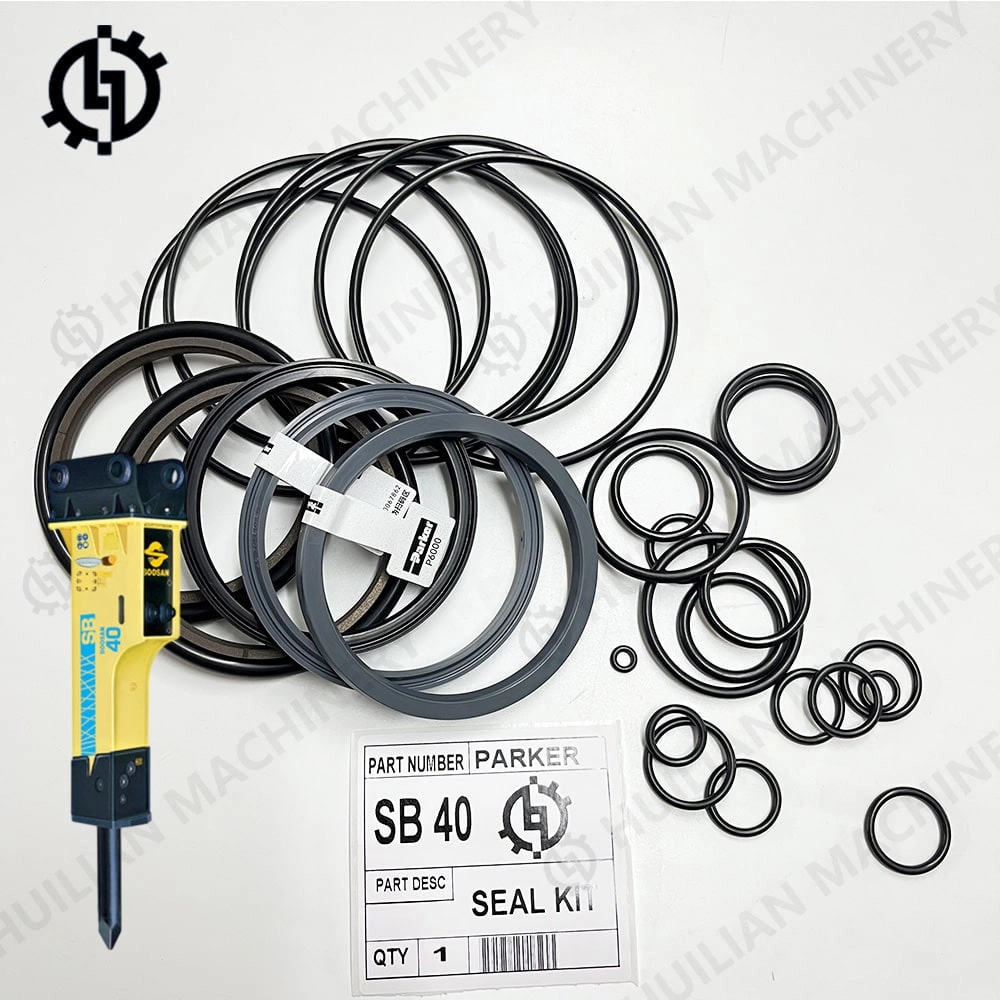
Parker Oil Seal Complete Repair SB40 Seal Kit COX001 CO1012 SB40Ⅱ SB40TSP SQ40 For Soosan Hydraulic Rock Breaker Hammer
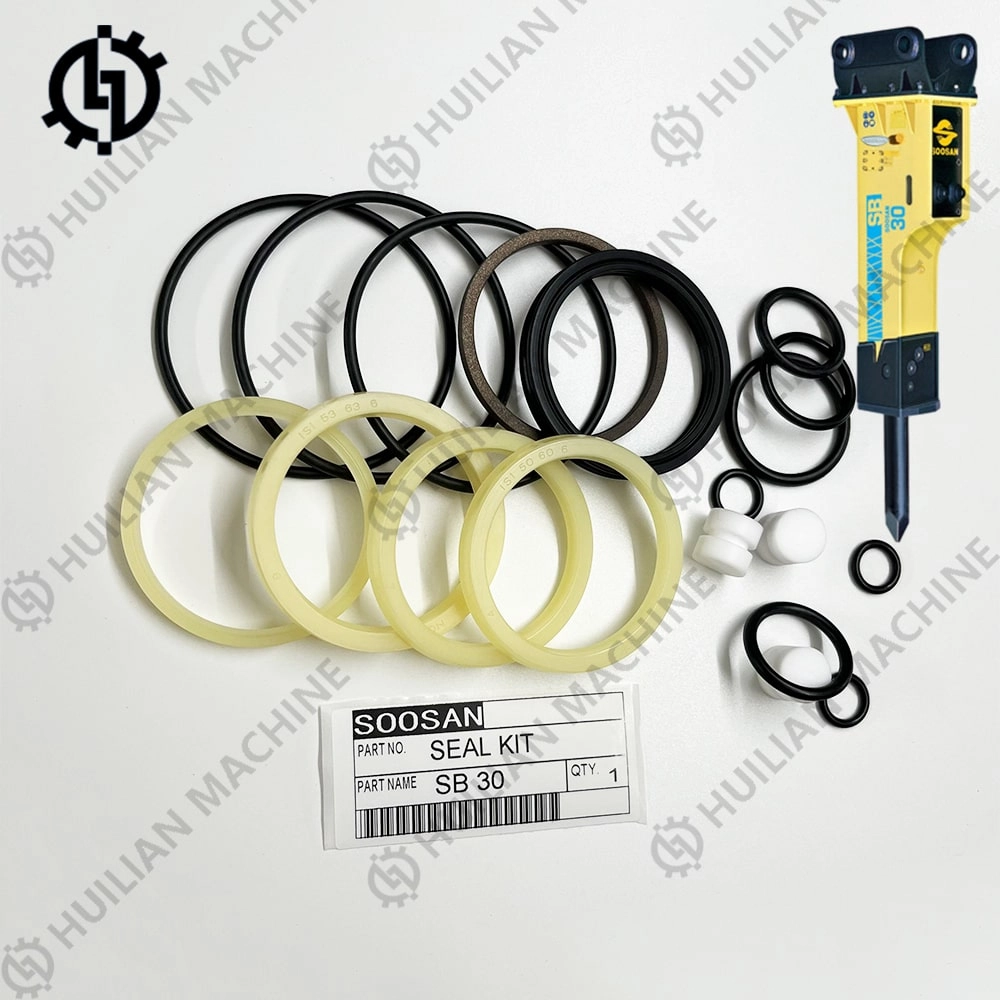
E71012 E7X001 SOOSAN SQ30 SB30Ⅱ SB30 Breaker Seal Kit SB30TS-P SB30Ⅱ TS-P SB30Ⅱ SSL Hydraulic Rock Hammer Parts Oil Repair Kit
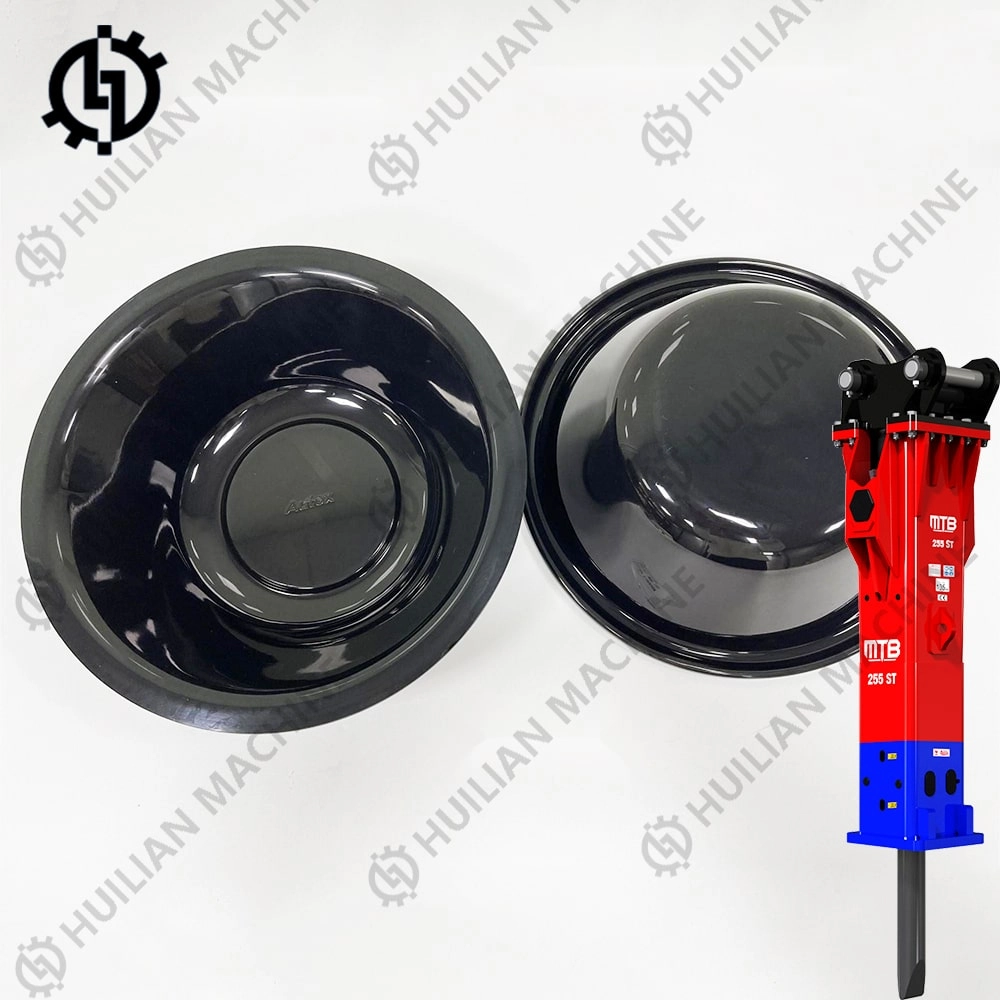
Inan Makina MTB Hydraulic Breaker Parts 45B0116A11 MTB255 MTB MT 255 Diaphragm MTB 255 IQ MTB-255 MTB 255 ST Membrane for Excavator Rock Hammer
 About us
© 2025 HUILIAN MACHINE. All rights reserved