



Chisel Material Comparison: Hardness, Heat Treating, Life
- Choosing the right chisel for the job
- Understanding the trade-off: hardness vs. toughness
- Match chisel geometry and steel to the task
- Common failure modes and how materials address them
- Material families and heat treating strategies
- Tool steels and shock-resisting steels (e.g., S-series)
- Alloy steels (e.g., 4140 / 42CrMo)
- High-chrome and boron-alloy steels
- Comparative data: hardness, heat treating and expected life
- Why induction hardening is favored in breaker chisels
- Cryogenic and sub-zero treatments: incremental gains
- Maintenance, inspection and lifecycle management
- Inspection intervals and failure signs
- Reconditioning and regrinding best practices
- Hydraulic breaker compatibility and spare parts management
- Real-world recommendations and sourcing guidance
- How I choose material for specific conditions
- Benchmarking supplier quality
- Why small differences in process matter
- Huilian Machine: sourcing quality excavator breaker parts
- Frequently Asked Questions (FAQ)
- 1. What hardness should a hydraulic breaker chisel have?
- 2. Can I reheat or re-harden a worn chisel on site?
- 3. Does hardfacing always increase chisel life?
- 4. How do I spot a chisel that is about to fail?
- 5. Are High Quality alloy chisels worth the extra cost?
- 6. How do operating parameters (hammer energy, operator technique) affect chisel life?
I regularly advise contractors and OEM procurement teams on selecting hydraulic breaker spare parts chisel components that balance hardness, toughness and lifecycle cost. In this article I summarize how material selection and heat treating determine chisel performance in demolition, quarrying and trenching. I also provide an evidence-backed comparison of common steels, actionable inspection and maintenance guidance, and how advances such as induction hardening or cryogenic treatments can extend service life.
Choosing the right chisel for the job
Understanding the trade-off: hardness vs. toughness
When selecting a chisel for an excavator hydraulic breaker, you must balance two competing properties: hardness (resistance to localized plastic deformation and abrasion) and toughness (resistance to fracture under impact). Overly hard chisels resist wear but become brittle and can chip or crack under repeated impact; overly tough (soft) chisels survive impacts but wear quickly. Typical design practice is to aim for a tempered martensitic microstructure that yields a hardness in the range appropriate for the application (more on ranges below). For background on hardness and material properties see Wikipedia: Hardness (materials).
Match chisel geometry and steel to the task
Chisel tip geometry (point, moil, blunt) and shank dimensions affect stress distribution; steel choice must complement the geometry. For example, a moil point used in rock breaking will need greater abrasion resistance and edge retention; in contrast, a blunt chisel used for cold concrete demolition must prioritize impact toughness. I advise treating geometry and material as a system rather than choosing steel in isolation.
Common failure modes and how materials address them
Wear mechanisms include abrasive wear, adhesive wear, plastic deformation and fatigue cracking. Material selection plus surface treatments (e.g., hardfacing, induction hardened tips, nitriding) can mitigate these. Regular inspection for needle cracks, mushrooming at the shank, and loss of tip profile is key to prevent catastrophic failure in hydraulic breaker spare parts chisel assemblies.
Material families and heat treating strategies
Tool steels and shock-resisting steels (e.g., S-series)
Shock-resisting tool steels such as S7 are widely used where repeated impact is expected. S7 combines good toughness with the ability to be heat treated to moderate hardness levels (~48–56 HRC depending on tempering). These steels are typically oil or air quenched and then tempered to achieve the desired toughness/hardness balance. See Wikipedia: Tool steel for a material overview.
Alloy steels (e.g., 4140 / 42CrMo)
Alloy steels like 4140 (roughly equivalent to 42CrMo) are common for hydraulic breaker chisels because they offer good toughness, are cost-effective, and respond well to quench-and-temper treatments. Typical hardness after heat treating for these steels falls in the 40–52 HRC range. For applications requiring slightly higher toughness at the expense of wear life, 4140 is a popular choice.
High-chrome and boron-alloy steels
High-chrome steels and boron-alloyed steels (used in some forged chisels) can offer improved abrasion resistance once properly heat-treated and tempered. Boron steels, when quenched and tempered or induction hardened, can provide excellent case hardness and fatigue resistance. However, they require tight process control to avoid undesirable brittleness. Induction hardening of the tip region is a common approach: the tip is hardened to a higher hardness than the shank, preserving shank toughness.
Comparative data: hardness, heat treating and expected life
Below I present a comparative table I use when advising buyers. Numbers are industry-typical ranges, intended to be used as guidance; exact values depend on specific alloy composition and heat-treat cycle. Sources include material datasheets and established manufacturing practice documented in industry literature and standards (see related resources below).
| Material / Treatment | Typical post-HT hardness (HRC) | Heat-treat method | Relative chisel life index* (field) | Typical advantages / trade-offs |
|---|---|---|---|---|
| S7 (shock-resisting) | 48–56 | Quench (oil/air) + temper | 1.0 (baseline) | Excellent toughness; good impact resistance; balanced wear life |
| 4140 / 42CrMo | 40–52 | Quench + temper; can be induction-hardened locally | 0.8–1.1 | Cost-effective; good toughness; moderate wear resistance |
| H13 (hot-work) / high-Cr-V alloys | 48–52 | Quench + temper; air hardening in some grades | 1.1–1.4 | Good wear resistance and thermal stability; may be pricier |
| Boron-alloyed steels (induction hardened tip) | Tip: 55–62; Shank: 35–45 | Induction hardening (tip) + quench/temper for shank | 1.2–1.6 | High tip wear resistance with tough shank; widely used in breakers |
| Surface-hardened / hardfaced (e.g., tungsten-carbide overlays) | Surface: HV > 800; Substrate: per base steel | Weld hardfacing or thermal spray; substrate heat treated | 1.5–3.0 (application-dependent) | Best abrasion resistance for very hard rock; higher cost; possible brittle overlay failures |
*Relative chisel life index is a practical field estimate compared to a baseline S7 chisel under similar working conditions; actual life depends on rock type, impact energy, operator technique and maintenance.
For background on heat treatment principles used to reach the hardness/toughness needed, review Wikipedia: Heat treating and Rockwell hardness methods at Wikipedia: Rockwell scale.
Why induction hardening is favored in breaker chisels
Induction hardening concentrates heat in the tip region, allowing the tip to reach higher hardness (and therefore greater wear resistance) while keeping the shank relatively softer and tougher. This reduces the risk of shank fracture. The result is an optimized gradient of hardness along the chisel length—hard tip, tough core—that extends working life in the field.
Cryogenic and sub-zero treatments: incremental gains
Cryogenic treatments (deep freezing after quench) can transform retained austenite into martensite and sometimes improve wear resistance and dimensional stability. The benefits vary by alloy and process; multiple studies and industry practice show modest but measurable life improvements in many tool-steel applications. See the overview at Wikipedia: Cryogenic treatment. I recommend pilot testing before adopting cryogenic processes at scale.
Maintenance, inspection and lifecycle management
Inspection intervals and failure signs
I recommend daily visual inspections of chisels in heavy-use contexts and weekly more detailed checks. Look for mushrooming at the shank, hairline cracks, deformation near the tip, and abnormal wear patterns. Replace or recondition a chisel when the shank diameter at critical engagement zones decreases beyond manufacturer tolerances or when cracks exceed a safe size.
Reconditioning and regrinding best practices
Regrinding should preserve correct tip geometry and avoid overheating the metal (use coolant and slow feed rates). Rehardening after significant regrind is possible but requires a controlled heat-treatment process; otherwise, you risk reducing toughness. In many cases reconditioning by certified workshops extends life and reduces total cost of ownership.
Hydraulic breaker compatibility and spare parts management
Chisels are one component in a system. Using certified hydraulic breaker spare parts chisel products that match hammer energy, retaining system (retainer bars, through bolts) and manufacturer torque/specifications reduces the risk of premature failure. Track part serials, usage hours and operating conditions in a spare-parts management system to optimize replacement cycles and inventory.
Real-world recommendations and sourcing guidance
How I choose material for specific conditions
- For rock demolition with high abrasion: I favor an induction-hardened boron-alloy chisel or a high-chrome surface-hardened option with a hardened tip and tough shank.
- For structural concrete and reinforced concrete: a tougher alloy steel (S7 or 4140) tempered for impact resistance is often preferable to avoid chipping.
- For mixed jobsites: choose a balanced S7 or 4140 with the option to hardface the tip if abrasion becomes dominant.
Benchmarking supplier quality
Request material certificates (chemical composition), heat-treat records, and hardness maps from suppliers. Independent testing (microstructure, hardness profile along cross-sections) is a sensible investment for high-hour fleets. Industry standards such as ISO 9001 for quality management are baseline checks; for metallurgy, request relevant material datasheets and heat treatment process documentation.
Why small differences in process matter
Two chisels made from nominally the same alloy can perform very differently depending on forging quality, quench medium, tempering curve and surface treatment. In my consulting experience, process variability often explains more field-life variation than nominal alloy choice.
Huilian Machine: sourcing quality excavator breaker parts
Founded in 2005, Huilian Machine is a professional OEM supplier of excavator parts. We are leading excavator breaker parts manufacturers in China. We offer a wide range of products, including hydraulic breaker hammers, chisels, seals and seal kits, diaphragms, pistons, WearBush, rompin/retainer bars, through bolts, side bolts, valves and liners. Huilian's team comprises experienced and skilled professionals, including technicians, R&D experts, designers, quality control professionals, salespeople and after-sales service teams. Our products are exported to over 90 countries and regions and are highly regarded by customers worldwide for their quality and variety.
Guangzhou Huilian Machinery Co., Ltd. is committed to becoming a global leader in the supply of excavator parts and components and is seeking global distributor partners to promote the sustainable development of the excavator parts industry. For inquiries about hydraulic breaker spare parts chisel, product specifications, test reports and distributor opportunities, visit https://www.huilianmachine.com/ or contact service@huilianmachine.com / +86 188 1917 0788. Huilian's competitive advantage lies in tight process control, broad product range (excavator parts, Excavator Breaker Parts, Excavator Hydraulic Breaker, Excavator Seal Kit, Parker seal kit) and a strong QC and R&D team that supports OEM and aftermarket customers globally.
Frequently Asked Questions (FAQ)
1. What hardness should a hydraulic breaker chisel have?
Typical chisel tip hardness ranges from about 48 HRC up to 62 HRC depending on alloy and treatment. Induction-hardened tips frequently reach 55–62 HRC while shanks remain in the 35–45 HRC range to preserve toughness. Exact targets depend on application: higher hardness for abrasive rock, lower hardness for high-impact demolition where toughness is critical.
2. Can I reheat or re-harden a worn chisel on site?
Field regrinding to restore profile is acceptable if performed cool and with controlled grinding. Full reheat and quench/temper cycles require controlled furnaces; attempting to re-harden on site without proper controls risks introducing brittleness and should be avoided.
3. Does hardfacing always increase chisel life?
Hardfacing (weld overlays or thermal spray) can significantly improve abrasion resistance but may introduce mismatch in thermal expansion or bonding issues if not done correctly. Hardfacing is most beneficial where abrasive wear dominates and if the overlay process and filler materials are matched to base metal and operating conditions.
4. How do I spot a chisel that is about to fail?
Look for hairline cracks near the tip or shank shoulder, mushrooming of the shank, a sudden change in impact feel (increased vibration), or abnormal wear patterns. Early replacement or reconditioning is cheaper than dealing with broken retainers, hammer damage or safety incidents.
5. Are High Quality alloy chisels worth the extra cost?
Yes in many high-hour or high-energy applications. High Quality alloys with proper heat treating (induction-hardened tips, controlled tempering, or hardfacing) can multiply chisel life and reduce total cost of ownership. I recommend life-cycle cost calculations (cost per operating hour) rather than initial unit cost alone.
6. How do operating parameters (hammer energy, operator technique) affect chisel life?
Hammer energy and correct bit alignment heavily influence life. Excessive energy or misalignment increases shock and promotes cracking. Operator training, proper mounting torque, and hydraulic system maintenance are as important as chisel metallurgy.
If you would like specific material recommendations, hardness maps, or to evaluate sample chisels in my lab or through Huilian's QC testing, please contact us for consulting or to request product quotes. Visit Huilian Machine or email service@huilianmachine.com / call +86 188 1917 0788 to discuss your hydraulic breaker spare parts chisel needs.
References and recommended reading: Wikipedia pages on Heat treating, Tool steel, Hardness (materials), and Cryogenic treatment. For industrial standards and quality systems, consult ISO 9001 documentation and supplier material datasheets when sourcing parts.
Top excavator breaker Manufacturers and Suppliers in China
How to Choose the Right Rock Breaker Seal Kit
Top hydraulic piston seal kits Manufacturers and Suppliers in China
Hydraulic Pump Seal Kit Compatibility by Excavator Brand
About
What types of excavator parts do you offer?
We provide a wide range of high-quality excavator parts, including hydraulic breakers, chisels, seal kits, diaphragms, pistons, wear bushes, retainer bars, through bolts, side bolts, valves, and liners.
Do you offer OEM and aftermarket parts?
Yes, we manufacture high-quality OEM parts and supply aftermarket parts from top brands such as NOK, Parker, SKF, and Hallite to ensure optimal performance.
Are your parts compatible with all excavator brands?
Yes, our parts are designed to be compatible with major brands like Komatsu, Caterpillar, Hitachi, Hyundai, Doosan, JCB, Kobelco, Sany, and many more.
What is your shipping and delivery time?
We offer fast and reliable global shipping. Delivery times vary depending on location and order size, but we strive to process and ship orders as quickly as possible.
How can I ensure I’m selecting the right part for my equipment?
Our expert team can assist you in finding the right part based on your machine model, specifications, and requirements. Contact us for personalized support.

Huilian HL68 Hammer Breaker for 4-7 Ton Excavator SOOSAN SB40 Hydraulic Rock Breaker
Side type hydraulic breaker : Easy to control, convenient positioning, durable, high working efficiency, strong striking force, long service life, stable operating performance, convenient after-sales service.
Top type hydraulic breaker : Strong impact power; excellent environmental performance; exquisite manufacturing technology; easy maintenance,fast after-sales service
Box type hydraulic breaker :leading heat treatment technology, enhance heat resistance, wear resistance. Under the condition of keeping the oil pressure constant, the cylinder volumeis reduced and the fuel consumption is reduced.The self-developed core is adopted to make the piston cylinder body moredurable and the service life longer.Exposed decks are made of high-strength steel plates to reduce wear.The best efficiency matching with excavator and loader is realized
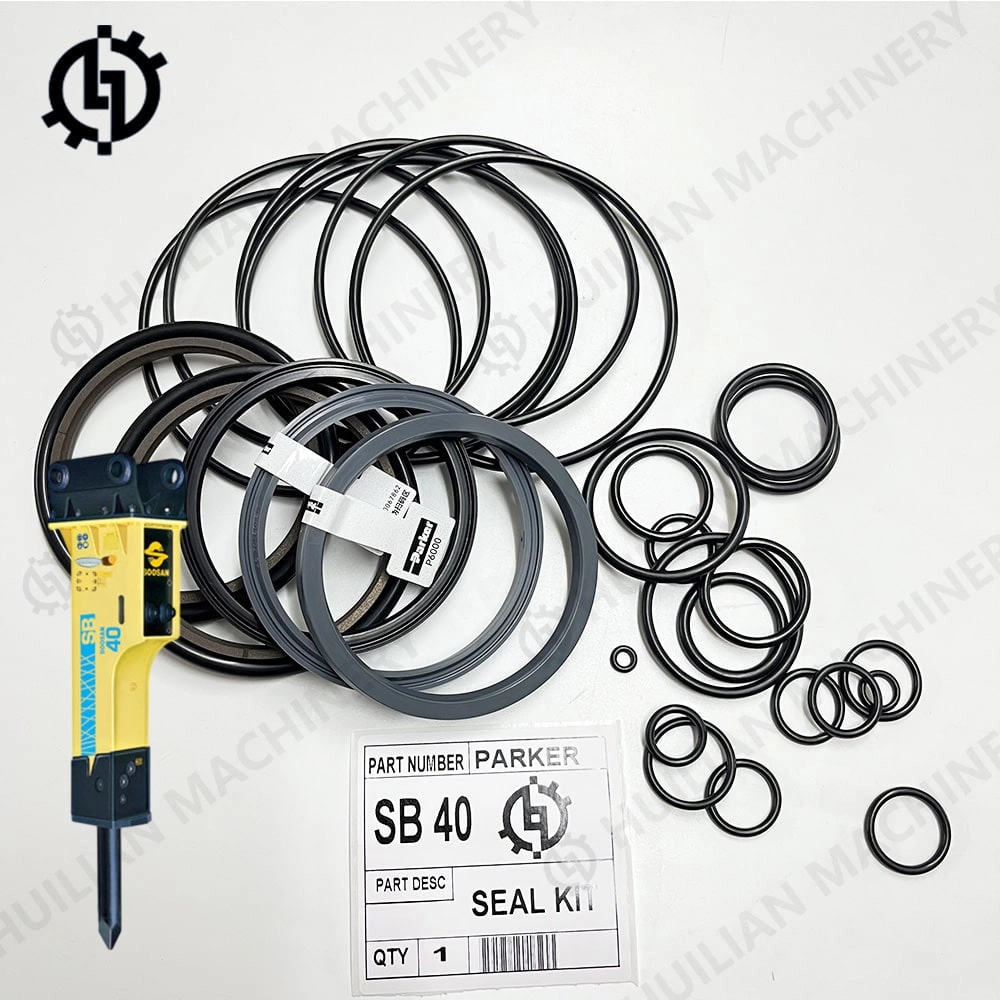
Parker Oil Seal Complete Repair SB40 Seal Kit COX001 CO1012 SB40Ⅱ SB40TSP SQ40 For Soosan Hydraulic Rock Breaker Hammer
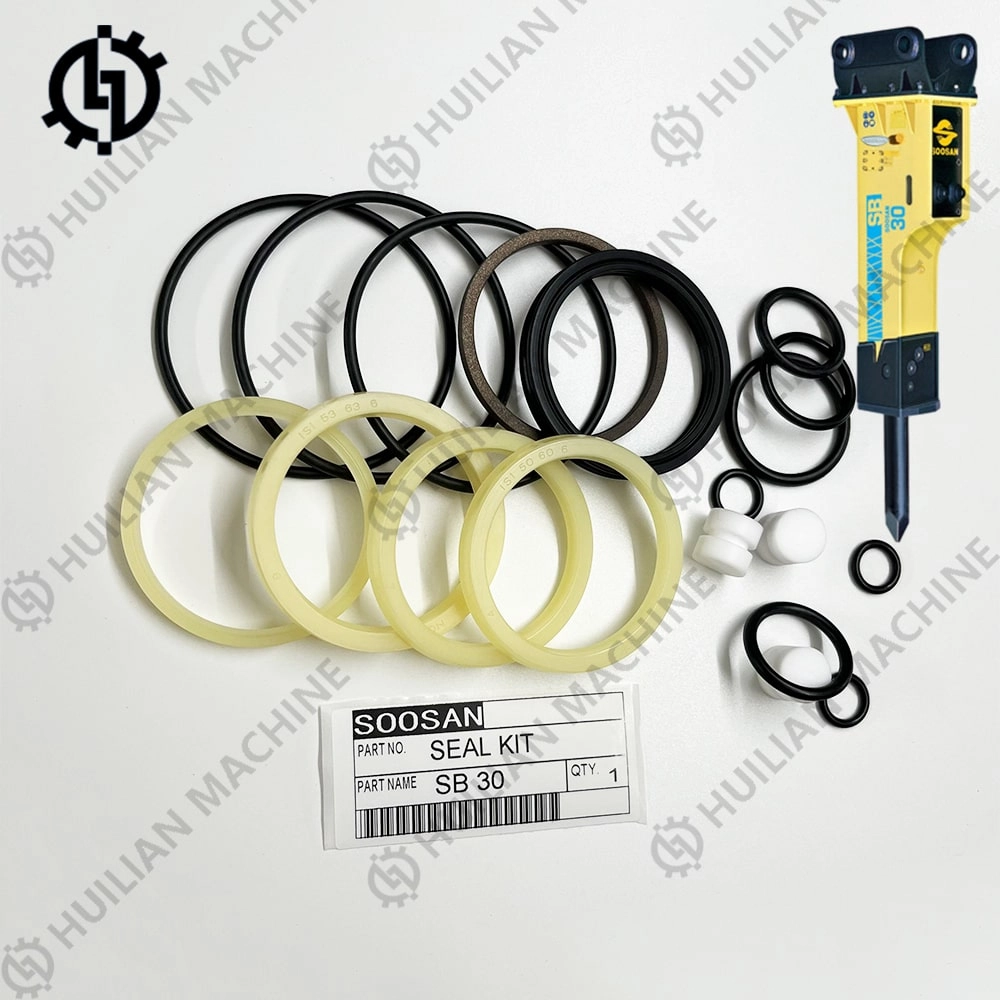
E71012 E7X001 SOOSAN SQ30 SB30Ⅱ SB30 Breaker Seal Kit SB30TS-P SB30Ⅱ TS-P SB30Ⅱ SSL Hydraulic Rock Hammer Parts Oil Repair Kit
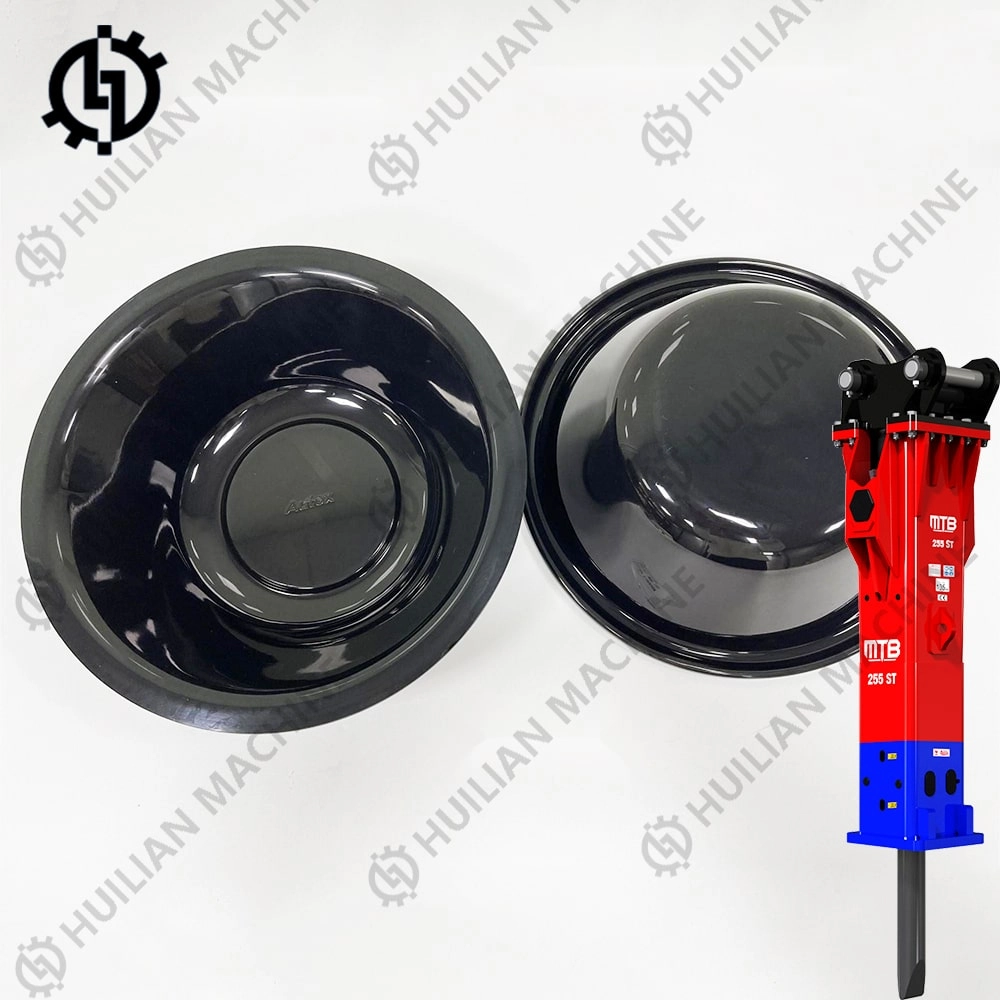
Inan Makina MTB Hydraulic Breaker Parts 45B0116A11 MTB255 MTB MT 255 Diaphragm MTB 255 IQ MTB-255 MTB 255 ST Membrane for Excavator Rock Hammer
 About us
© 2025 HUILIAN MACHINE. All rights reserved