



How to Choose the Right Rock Breaker Seal Kit
- Understanding hydraulic breakers and why seals matter
- What a hydraulic breaker does and basic components
- Why seals are a critical failure point
- Common seal kit components and functions
- Key factors when choosing a rock breaker seal kit
- 1. Correct model compatibility and OEM references
- 2. Seal material and environmental compatibility
- 3. Pressure rating and extrusion resistance
- Installation, inspection and maintenance best practices
- Pre-installation checks and surface preparation
- Correct installation techniques
- Inspection intervals and troubleshooting
- Choosing between OEM, aftermarket and reman kits; supplier evaluation
- OEM vs aftermarket vs remanufactured seal kits
- Supplier selection checklist
- Case study comparison: material upgrade ROI (illustrative)
- Supplier profile and why choose a trusted OEM partner
- About Huilian Machine and product offerings
- Huilian's competitive advantages and technical strengths
- Contact and where to get Huilian seal kits
- Final selection checklist and practical tips
- Concise selection checklist
- Practical tips from field experience
- FAQ
- 1. How often should I replace a rock breaker seal kit?
- 2. Can I mix seal materials in a single kit?
- 3. Are aftermarket seal kits as reliable as OEM kits?
- 4. What causes seals to fail prematurely?
- 5. How do I verify a replacement kit will fit my breaker?
- 6. Does choosing a higher-spec material always pay off?
Choosing the right rock breaker seal kit is more than replacing rubber parts; it requires understanding hydraulic breaker design, seal material properties, OEM tolerances and jobsite conditions. A properly selected and installed seal kit reduces downtime, prevents costly damage to pistons and cylinders, and extends the service life of excavator breaker parts. This article provides a practical, evidence-based approach to select, verify and maintain rock breaker seal kits for hydraulic breakers and excavator breaker parts.
Understanding hydraulic breakers and why seals matter
What a hydraulic breaker does and basic components
Hydraulic breakers (also called rock breakers or hydraulic hammers) convert hydraulic energy from an excavator into percussive impact energy for demolition and rockbreaking. Major internal components include the piston, cylinder/ housing, valve assembly, and the chisel/ tool. Seals and seal kits maintain hydraulic pressure, keep contaminants out, and allow the piston to transfer energy efficiently to the tool. For general background on hydraulic breakers see Hydraulic breaker - Wikipedia.
Why seals are a critical failure point
Seals endure high pressure, repeated impact, abrasion from dust and cement, and exposure to hydraulic fluids and additives. Failures commonly result in oil leakage, pressure loss, reduced impact energy, accelerated wear of pistons and liners, and ly expensive repairs. Replacing only the worn seal elements with a correctly specified rock breaker seal kit is the fastest and most cost-effective way to restore breaker performance.
Common seal kit components and functions
A typical rock breaker seal kit contains piston seals, rod/dust seals, guide rings, O-rings, backup rings, and sometimes valve seals and small fasteners. Each component has a role: piston seals retain hydraulic pressure, rod seals exclude contaminants, guide rings control radial play, and backup rings prevent extrusion under high pressure. Understanding each element helps you match the kit to the breaker model and operating conditions.
Key factors when choosing a rock breaker seal kit
1. Correct model compatibility and OEM references
Always start with model-specific fitment. Breaker housings and piston geometries differ between manufacturers and models; a wrong kit can cause extrusion or insufficient sealing. Use the breaker serial number and OEM part references where possible. Many OEMs and aftermarket suppliers publish cross-reference charts. When in doubt, verify dimensions of rings, diameters, and profiles.
2. Seal material and environmental compatibility
Seal material determines resistance to temperature, hydraulic fluid type, abrasion, and ozone. Below is a practical comparison of common seal materials used in breaker seal kits.
| Material | Typical Temp Range | Strengths | Weaknesses |
|---|---|---|---|
| NBR (Nitrile) | -40 to +120°C | Good oil resistance, cost-effective | Limited heat and ozone resistance |
| HNBR (Hydrogenated NBR) | -40 to +150°C | Better heat/ozone/abrasion resistance vs NBR | Higher cost |
| FKM / Viton | -20 to +200°C | Excellent heat and chemical resistance | Higher cost; stiffness at low temp |
| PTFE (Teflon) | -200 to +260°C | Exceptional chemical and temp resistance; low friction | Requires careful design (backup rings) and may be less forgiving to edge damage |
Sources on material properties: Nitrile and PTFE data pages at Nitrile rubber - Wikipedia and PTFE - Wikipedia. Choose materials based on expected temperature, presence of solvents, and abrasive dust exposure.
3. Pressure rating and extrusion resistance
High blow frequency and high system pressure require seals with backup rings and suitable geometry to prevent extrusion. Verify that the kit's backup rings and O-rings are sized for your breaker’s maximum working pressure. Where available, prefer kits that specify pressure capability or which comply with recognized quality systems such as ISO 9001 for manufacturing controls (ISO 9001).
Installation, inspection and maintenance best practices
Pre-installation checks and surface preparation
Inspect pistons and cylinders for scoring, pitting, or out-of-round conditions before installing a new rock breaker seal kit. Seals will fail quickly against damaged metal. Clean surfaces thoroughly; use lint-free wipes and recommended hydraulic fluid or assembly lubricant. Measure diameters and groove widths — parts that are worn beyond OEM tolerances should be refurbished or replaced.
Correct installation techniques
Follow these practical steps to avoid early failure:
- Use assembly lubricant compatible with seal materials and hydraulic fluid.
- Avoid sharp edges: chamfer groove edges and use protective sleeves on the piston during assembly.
- Install backup rings and seal lips in the correct orientation as specified by the kit instructions.
- Torque fasteners to OEM specifications and bleed the system to remove air pockets.
Inspection intervals and troubleshooting
Establish inspection intervals based on operating hours and working conditions. Typical checkpoints: external oil leaks, decreased impact energy, abnormal noises, and drop in hydraulic pressure. If leakage recurs soon after seal replacement, inspect for housing wear, misalignment, valve damage, or contamination ingress — symptoms indicating root causes beyond seal failure.
Choosing between OEM, aftermarket and reman kits; supplier evaluation
OEM vs aftermarket vs remanufactured seal kits
OEM kits are designed to match original tolerances and typically include part numbers and fitment guarantees. Aftermarket kits can be cost-effective and sometimes offer improved material choices (e.g., HNBR upgrades), but quality varies. Remanufactured breakers often include new seals but verify that internal components were refurbished to acceptable tolerances. Consider total cost of ownership: a cheaper kit that fails early increases downtime and repair costs.
Supplier selection checklist
When evaluating suppliers for rock breaker seal kits, verify:
- Material specifications and traceability.
- Manufacturing quality systems (e.g., ISO certification).
- Availability of cross-reference charts and technical support.
- Global logistics and aftermarket service network.
Case study comparison: material upgrade ROI (illustrative)
The table below illustrates a typical decision: replacing standard NBR piston seals with HNBR on a breaker used in high-temperature, abrasive conditions. While exact numbers depend on fleet and usage, improved seal life often offsets material High Quality through reduced downtime.
| Option | Unit Cost | Expected Seal Life (Relative) | Downtime Risk |
|---|---|---|---|
| Standard NBR kit | Baseline | 1x | Higher in heat/abrasion |
| HNBR upgraded kit | ~1.2x | 1.5–2x | Lower |
| PTFE-insert High Quality kit | ~1.8–2.5x | 2–4x | Lowest |
Source: material property summaries and common aftermarket practices; consult suppliers for validated field data before large-scale adoption.
Supplier profile and why choose a trusted OEM partner
About Huilian Machine and product offerings
Founded in 2005, Huilian Machine is a professional OEM supplier of excavator parts. We are leading excavator breaker parts manufacturers from China. We offer a wide range of products, including hydraulic breaker hammers, chisels, seals and seal kits, diaphragms, pistons, WearBush, rompin/retainer bars, through bolts, side bolts, valves and liners. Huilian's team comprises experienced and skilled professionals, including technicians, R&D experts, designers, quality control professionals, salespeople and after-sales service teams. Our products are exported to over 90 countries and regions and are highly regarded by customers worldwide for their quality and variety.
Huilian's competitive advantages and technical strengths
Huilian emphasizes:
- OEM manufacturing capability with quality control processes to ensure dimensional accuracy and material traceability.
- A broad product range allowing customers to source complete excavator breaker parts and complementary components from one supplier.
- Technical support from experienced R&D and service teams to help with correct seal kit selection and installation advice.
Contact and where to get Huilian seal kits
For product inquiries and technical support, visit Huilian online at https://www.huilianmachine.com/ or contact by email at service@huilianmachine.com. Phone: +86 188 1917 0788. Huilian supplies excavator parts, Excavator Breaker Parts, Excavator Hydraulic Breaker, Excavator Seal Kit, Parker seal kit replacements and other specialty components.
Final selection checklist and practical tips
Concise selection checklist
Before purchasing a rock breaker seal kit, confirm:
- Breaker model and serial number match kit fitment.
- Seal materials match jobsite temperatures, fluid chemistry and abrasive exposure.
- Backup rings/extrusion prevention are included for operating pressure.
- Supplier provides installation instructions and technical support.
- Inspect internal components for wear; replace seals only when mating surfaces are acceptable.
Practical tips from field experience
Experienced service teams recommend:
- Stock critical sizes of seal kits and common wear parts to minimize downtime.
- Record serial numbers and maintenance history to identify recurring root causes.
- Consider material upgrades (e.g., HNBR) for high-heat or abrasive environments.
- Always replace both piston and guide seals together to restore correct clearances.
FAQ
1. How often should I replace a rock breaker seal kit?
Replacement intervals depend on operating hours, impact frequency, and environmental conditions. For breakers in heavy demolition or quarry service, seals may need inspection every few hundred hours. Less intense use extends life. Focus on condition-based maintenance: look for leaks, reduced impact energy, and contamination as triggers for replacement.
2. Can I mix seal materials in a single kit?
Mixing materials is possible and sometimes beneficial (for example, using PTFE piston seals with HNBR rod seals), but ensure material compatibility with hydraulic fluid and temperature range. Ask your supplier for validated combinations to avoid differential thermal expansion or chemical incompatibility.
3. Are aftermarket seal kits as reliable as OEM kits?
Quality varies across aftermarket suppliers. High-quality aftermarket kits from reputable manufacturers can match or exceed OEM performance, especially if they use upgraded materials. Verify supplier certifications, material specs, and user references before purchase.
4. What causes seals to fail prematurely?
Common causes include damaged piston or cylinder surfaces, abrasive contamination, incorrect installation (nicks/cuts), wrong material choice for temperature/chemistry, and extrusion due to insufficient backup support at high pressure.
5. How do I verify a replacement kit will fit my breaker?
Provide the breaker model and serial number to the supplier. If needed, measure piston and groove dimensions and compare to OEM drawings. Reputable suppliers publish cross-reference guides and can confirm fitment; keep photos and part numbers for verification.
6. Does choosing a higher-spec material always pay off?
Not always. Higher-spec materials like PTFE or FKM offer superior resistance but cost more and may require precise groove design and installation care. Evaluate operating conditions and perform a cost-benefit analysis on downtime reduction vs material High Quality.
If you need assistance selecting the correct rock breaker seal kit, verification for a specific breaker model, or to request a quotation, contact Huilian Machine: https://www.huilianmachine.com/, email: service@huilianmachine.com, phone: +86 188 1917 0788. Our team can provide cross-reference support, material recommendations and OEM-grade seal kits to keep your breakers running at peak performance.
Chisel Material Comparison: Hardness, Heat Treating, Life
Wholesale Okada hydraulic breaker manufacturer and supplier in China
Wholesale hydraulic breaker hammer attachment manufacturer and supplier
Top Signs Your Excavator Needs a Seal Kit Replacement
About
How can I ensure I’m selecting the right part for my equipment?
Our expert team can assist you in finding the right part based on your machine model, specifications, and requirements. Contact us for personalized support.
What is your shipping and delivery time?
We offer fast and reliable global shipping. Delivery times vary depending on location and order size, but we strive to process and ship orders as quickly as possible.
Do you offer OEM and aftermarket parts?
Yes, we manufacture high-quality OEM parts and supply aftermarket parts from top brands such as NOK, Parker, SKF, and Hallite to ensure optimal performance.
Are your parts compatible with all excavator brands?
Yes, our parts are designed to be compatible with major brands like Komatsu, Caterpillar, Hitachi, Hyundai, Doosan, JCB, Kobelco, Sany, and many more.
What types of excavator parts do you offer?
We provide a wide range of high-quality excavator parts, including hydraulic breakers, chisels, seal kits, diaphragms, pistons, wear bushes, retainer bars, through bolts, side bolts, valves, and liners.

Huilian HL68 Hammer Breaker for 4-7 Ton Excavator SOOSAN SB40 Hydraulic Rock Breaker
Side type hydraulic breaker : Easy to control, convenient positioning, durable, high working efficiency, strong striking force, long service life, stable operating performance, convenient after-sales service.
Top type hydraulic breaker : Strong impact power; excellent environmental performance; exquisite manufacturing technology; easy maintenance,fast after-sales service
Box type hydraulic breaker :leading heat treatment technology, enhance heat resistance, wear resistance. Under the condition of keeping the oil pressure constant, the cylinder volumeis reduced and the fuel consumption is reduced.The self-developed core is adopted to make the piston cylinder body moredurable and the service life longer.Exposed decks are made of high-strength steel plates to reduce wear.The best efficiency matching with excavator and loader is realized
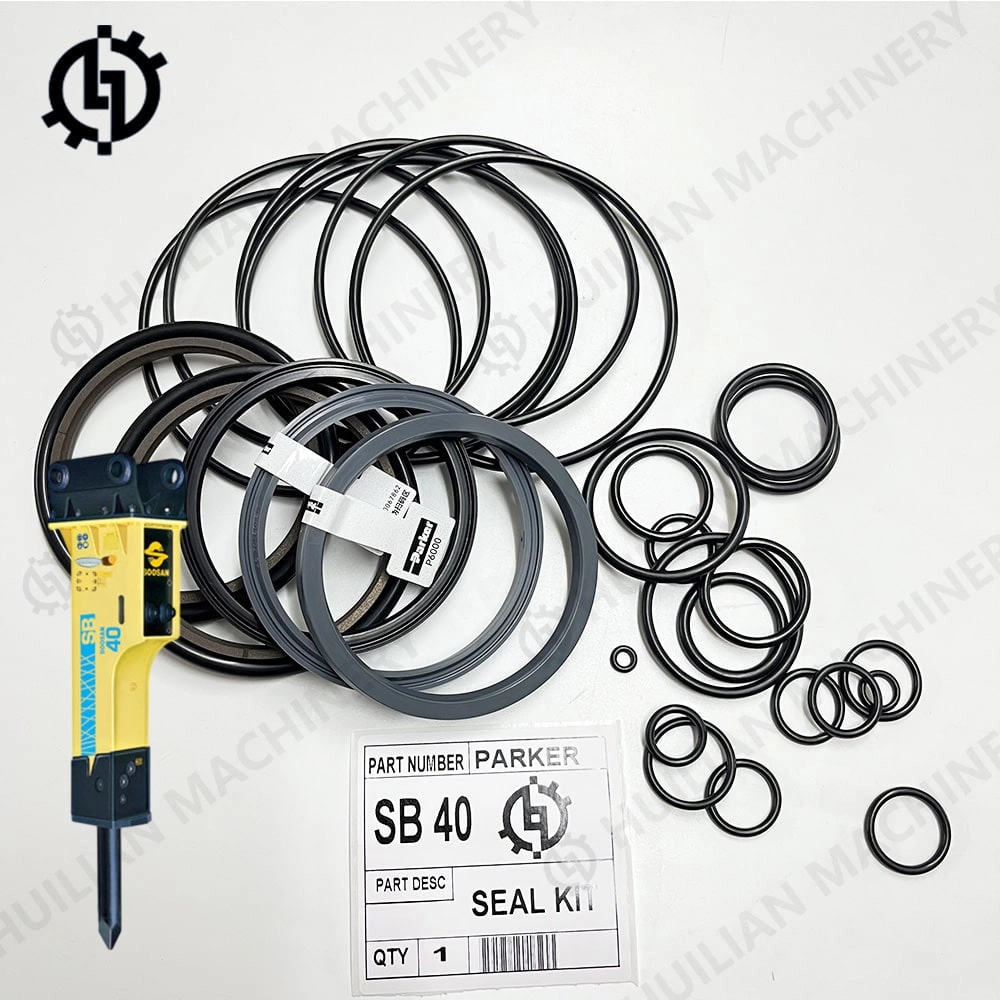
Parker Oil Seal Complete Repair SB40 Seal Kit COX001 CO1012 SB40Ⅱ SB40TSP SQ40 For Soosan Hydraulic Rock Breaker Hammer
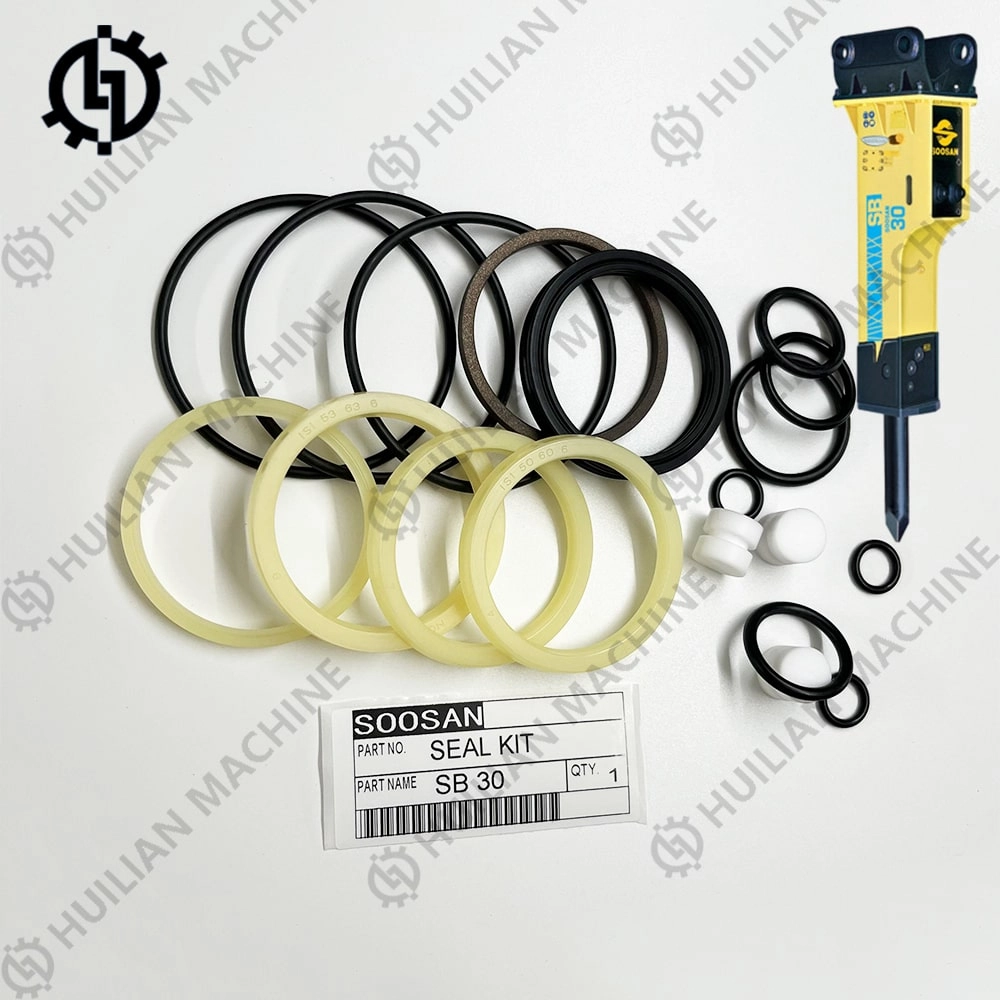
E71012 E7X001 SOOSAN SQ30 SB30Ⅱ SB30 Breaker Seal Kit SB30TS-P SB30Ⅱ TS-P SB30Ⅱ SSL Hydraulic Rock Hammer Parts Oil Repair Kit
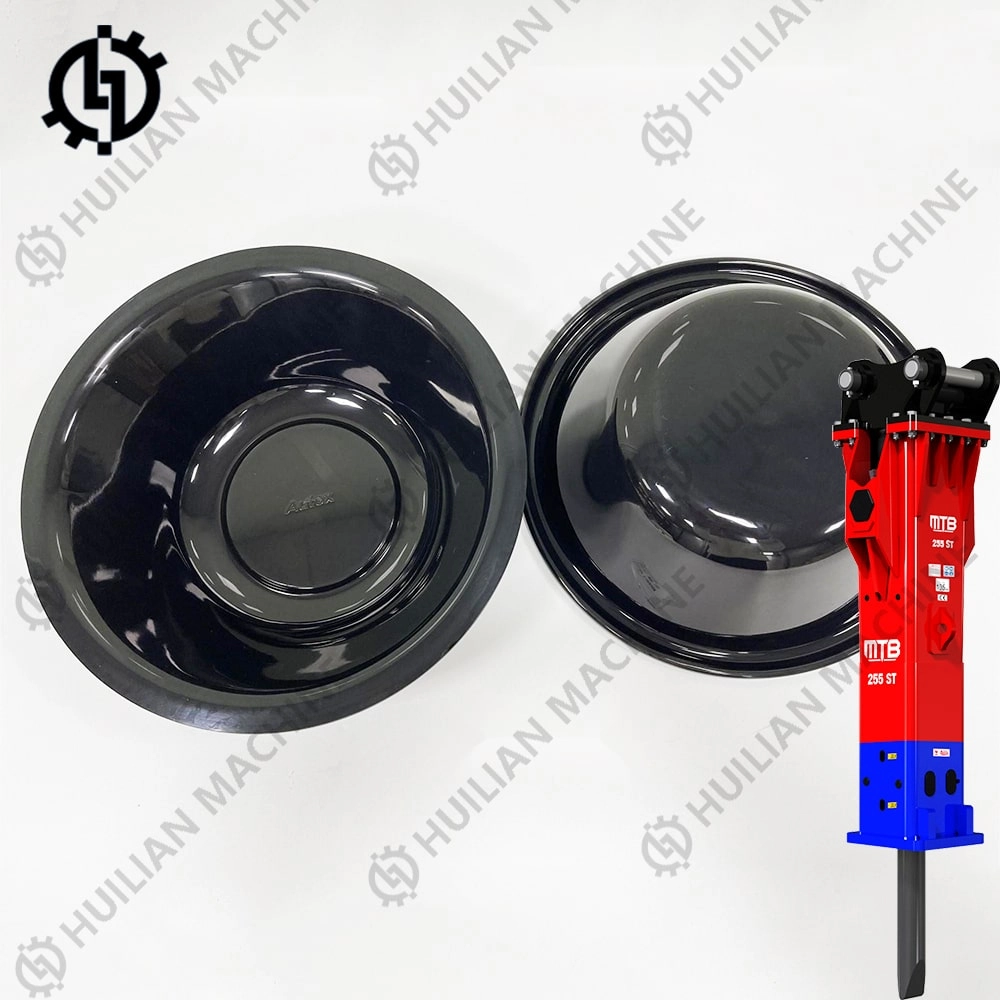
Inan Makina MTB Hydraulic Breaker Parts 45B0116A11 MTB255 MTB MT 255 Diaphragm MTB 255 IQ MTB-255 MTB 255 ST Membrane for Excavator Rock Hammer
 About us
© 2025 HUILIAN MACHINE. All rights reserved