



How to Choose the Right Excavator Hydraulic Breaker Hammer
- Understanding Hydraulic Breaker Types and Applications
- What a hydraulic breaker does and how it attaches to an excavator
- Common applications and tool choices
- Key technical terms to know
- How to Size and Match a Breaker to Your Excavator
- Carrier class and hydraulic capability
- Rule-of-thumb matching and the compatibility table
- Impact energy vs. productivity and carrier limits
- Design Details, Installation, and Maintenance Practices
- Coupling systems and mounting considerations
- Hydraulic integration and control valves
- Routine maintenance checklist
- Cost, Life-Cycle Considerations and Choosing a Supplier
- Initial cost vs. total cost of ownership
- Parts, warranty and global support
- Why OEM selection matters — a practical example
- Huilian Machine — OEM Partner for Excavator Breaker Parts
- Differentiators and technical strengths
- FAQ — Common Questions About Choosing and Using Breakers
- 1. How do I know if my excavator can run a given breaker?
- 2. Can I run a larger breaker on a smaller machine for short jobs?
- 3. What are the most common wear parts I should stock?
- 4. How often should I replace seals and pistons?
- 5. Are there environmental or safety standards I should be aware of?
- 6. How do I choose the right chisel for different materials?
- Final Recommendations and Contact
I help construction and demolition teams select the correct excavator mounted hydraulic breaker hammer by combining field-proven matching criteria, technical selection logic, and practical maintenance strategies. This guide summarizes key parameters you must check—carrier compatibility (weight and hydraulic capacity), impact energy, tool types, installation interfaces, and lifecycle costs—so you avoid mismatches that cause poor productivity, excessive wear, or machine damage. I reference authoritative sources where relevant and provide a workable compatibility table and maintenance checklist you can use on-site.
Understanding Hydraulic Breaker Types and Applications
What a hydraulic breaker does and how it attaches to an excavator
Hydraulic breakers (often called hydraulic hammers) convert hydraulic power from an excavator into percussive impact energy to fracture rock, concrete, and other hard materials. They are typically mounted to the excavator boom and powered by the machine's hydraulic circuit. For a general overview of hydraulic breakers and their history, see the Hydraulic breaker page on Wikipedia (Wikipedia).
Common applications and tool choices
Different jobs demand different breakers and chisels. I categorize applications as: light-duty (pavement removal, shallow trenching), medium-duty (demolition, quarry trimming), and heavy-duty (hard rock, primary demolition). Tool types—point, moil (flat), bush hammer, or spade—affect penetration and fragmentation patterns. Select chisels designed for your material to maximize energy transfer and reduce wear.
Key technical terms to know
When evaluating a breaker, I focus on these parameters: impact energy (per blow), blow rate (bpm), carrier hydraulic flow (L/min or GPM), operating pressure (bar/psi), and tool diameter/length. Understanding these terms helps ensure the excavator mounted hydraulic breaker hammer matches the carrier—mismatches can lead to hydraulic starvation, overheating, or structural damage.
How to Size and Match a Breaker to Your Excavator
Carrier class and hydraulic capability
I always start by documenting the excavator's operating weight, hydraulic pump flow, and maximum system pressure. Excavator performance charts (operator manuals) list continuous hydraulic flow and recommended auxiliary circuits—use those as baseline requirements. For a general reference on excavators, consult the Excavator article on Wikipedia (Wikipedia).
Rule-of-thumb matching and the compatibility table
Below is a practical compatibility table I use when advising customers. These are approximate ranges; always verify with the breaker OEM or excavator manual before purchase.
| Excavator Class (Operating Weight) | Typical Breaker Weight | Typical Hydraulic Flow (L/min) | Typical Operating Pressure (bar) | Primary Applications |
|---|---|---|---|---|
| Mini: 0.8–3 t | 50–200 kg | 10–30 L/min | 100–140 bar | Pavement cuts, small trenching |
| Small: 3–8 t | 200–500 kg | 30–60 L/min | 120–160 bar | Light demolition, roadwork |
| Medium: 8–25 t | 500–1,000 kg | 60–140 L/min | 140–180 bar | General demolition, quarrying |
| Large: 25–50+ t | 1,000–3,000+ kg | 140–300+ L/min | 160–210+ bar | Heavy rock breaking, primary demolition |
Notes: these ranges are approximate and vary by manufacturer and breaker model. When I size a breaker for a specific excavator, I verify the pump continuous flow, relief valve setting, and the auxiliary circuit capacity against the breaker’s stated flow and pressure requirements.
Impact energy vs. productivity and carrier limits
Higher impact energy generally increases breaking efficiency for hard materials, but it also transmits more shock to the carrier and consumes more hydraulic power. I prefer to select the smallest breaker that achieves required productivity to reduce wear and fuel consumption. If you need continuous heavy breaking, scale up both machine and breaker to avoid overheating or shortened component life.
Design Details, Installation, and Maintenance Practices
Coupling systems and mounting considerations
Breakers attach via adapter systems: direct mount, bracket mount, or quick-coupler arrangements. Each carrier brand may require specific bracket geometry or hydraulic plumbing. I always confirm pin centers, bracket plate thickness, and boom swing clearance. Poorly fitted mounts increase stress concentrations and accelerate cracking.
Hydraulic integration and control valves
For best performance I recommend using a properly sized flow-control valve or accumulator system if the excavator hydraulics are marginal. Some breakers benefit from a dedicated hydraulic circuit with relief valve tuned to the breaker’s needs. Improper piping (undersized hoses, excessive bends) will reduce flow and increase heat—leading to inefficiency and possible hammer stall.
Routine maintenance checklist
From my experience, the following preventative actions materially extend hammer life and availability:
- Daily: check tool retention, lubrication (grease), and visible oil leaks.
- Weekly: inspect bushings/wear parts, check nitrogen gaps (if applicable), and verify hydraulic hose condition.
- Monthly: change hydraulic oil/filters as per carrier OEM intervals, torque-check through bolts and mounting bolts.
- Yearly or per hours: full strip, replace seals/pistons/diaphragms as indicated by wear; use OEM seal kits for longevity.
For replacement parts and maintenance best practices, use genuine or OEM-equivalent components. Industry quality management standards such as ISO 9001 help ensure supplier consistency; learn more at the ISO site ISO 9001.
Cost, Life-Cycle Considerations and Choosing a Supplier
Initial cost vs. total cost of ownership
When advising clients, I contrast purchase price with total cost of ownership (TCO): repair frequency, parts availability, downtime, and resale value all matter. A cheaper breaker may drive higher TCO if parts are scarce or the design accelerates carrier wear. Prioritize suppliers with transparent spare-parts policies and global support.
Parts, warranty and global support
Availability of chisels, seal kits, pistons, WearBush and other consumables is crucial. I recommend sourcing from manufacturers that publish parts catalogs and offer global distribution—this reduces downtime on international projects. For parts reliability, look for documented material specifications and testing procedures.
Why OEM selection matters — a practical example
Consider a fleet operating across continents: rapid access to seal kits, through bolts, retainer bars, and valves prevents idle machines. When I consult, I factor in a supplier’s distribution network, testing labs, and R&D capabilities. Suppliers with ISO systems and export experience reduce logistical risk for multi-country deployments.
Huilian Machine — OEM Partner for Excavator Breaker Parts
Founded in 2005, Huilian Machine is a professional OEM supplier of excavator parts. I have worked with many parts suppliers and can attest that a reliable partner makes the difference between reactive repair and planned maintenance. Huilian is among the leading excavator breaker parts manufacturers in China, offering a broad portfolio including hydraulic breaker hammers, chisels, seals and seal kits, diaphragms, pistons, WearBush, rompin/retainer bars, through bolts, side bolts, valves and liners.
Huilian's team comprises experienced and skilled professionals—technicians, R&D experts, designers, quality control professionals, salespeople and after-sales service teams. Their products are exported to over 90 countries and regions and are highly regarded by customers worldwide for quality and variety. Guangzhou Huilian Machinery Co., Ltd. is committed to becoming a global leader in the supply of excavator parts and components and is seeking global distributor partners to promote the sustainable development of the excavator parts industry.
I recommend Huilian when you need dependable supply chains for Excavator Parts, Excavator Breaker Parts, Excavator Hydraulic Breakers, Excavator Seal Kits, and Parker seal kit alternatives. Their product range and aftermarket support reduce downtime and simplify global maintenance planning.
Contact Huilian Machine: https://www.huilianmachine.com/ | Email: service@huilianmachine.com | Phone: +86 188 1917 0788
Differentiators and technical strengths
From my assessment, Huilian’s competitive strengths include: extensive OEM-compatible part lines, experienced R&D for material and heat-treatment selection, standardized seal kits for common breaker platforms, and active export experience which eases cross-border logistics. If you run a rental fleet or operate projects in remote regions, these capabilities materially reduce the risk of prolonged downtime.
FAQ — Common Questions About Choosing and Using Breakers
1. How do I know if my excavator can run a given breaker?
Check the excavator’s auxiliary hydraulic flow (continuous L/min) and maximum system pressure. Match those to the breaker manufacturer’s recommended flow and pressure ranges. Also verify mounting pin centers and bracket compatibility. If in doubt, consult the breaker supplier with your excavator make/model and the breaker model for a formal compatibility check.
2. Can I run a larger breaker on a smaller machine for short jobs?
Short bursts may be possible, but it’s risky. Overloading hydraulics leads to overheating and accelerated wear. Structural shocks can damage the carrier. I only recommend this when the task is truly short and with proper monitoring—otherwise size the breaker to the machine.
3. What are the most common wear parts I should stock?
Stock chisels, seal kits, pistons, WearBush (bushings), retainer bars, through bolts and side bolts. These items are the frequent consumables that reduce downtime when replaced promptly. Using OEM or OEM-equivalent parts reduces the risk of incompatibility.
4. How often should I replace seals and pistons?
Replacement intervals depend on usage and material hardness. For heavy duty work, expect to inspect seals every 500–1,000 hours and replace as needed. I prioritize condition-based replacement: monitor oil contamination, blow-by, and performance loss to time interventions correctly.
5. Are there environmental or safety standards I should be aware of?
Yes. Always follow local regulations for noise, emissions (from the carrier), and safe demolition practices. Manufacturer safety guides and excavator operator manuals provide operating limits. For quality systems, look for suppliers aligned with ISO 9001. For broader safety practices consult national construction safety authorities or OSHA-type guidance where applicable.
6. How do I choose the right chisel for different materials?
Points are best for concentrated penetration in rock; moil/flat chisels are good for concrete and surface removal; bush hammers or scaling picks are better for textured finishes. Match chisel hardness and tip geometry to the material—using the wrong chisel increases tool wear and reduces productivity.
Final Recommendations and Contact
In my experience, choosing the right excavator mounted hydraulic breaker hammer is a balance of matching hydraulic capacity, selecting appropriate impact energy for the material, ensuring mounting compatibility, and planning for parts and maintenance. I advise customers to document excavator specs, define the application duty cycle, and prioritize suppliers with transparent parts availability and global support.
If you need help selecting the correct breaker, spare parts, or maintenance kits, contact Huilian Machine for technical support and product options: https://www.huilianmachine.com/ | Email: service@huilianmachine.com | Phone: +86 188 1917 0788. I recommend requesting the breaker model’s technical datasheet and a list of recommended consumables before purchase so you can plan maintenance and stocking effectively.
References: Hydraulic breaker (Wikipedia) https://en.wikipedia.org/wiki/Hydraulic_breaker; Excavator (Wikipedia) https://en.wikipedia.org/wiki/Excavator; ISO 9001 Quality Management Systems https://www.iso.org/iso-9001-quality-management..

Cost & ROI: Excavator Hydraulic Rock Breaker Hammer HB20G
Wholesale Furukawa hydraulic breaker manufacturer and supplier in China
Wholesale MSB Excavator Breaker Parts manufacturer and supplier
Materials and Design: Choosing Durable Rock Breaker Seal Kits
About
Are your parts compatible with all excavator brands?
Yes, our parts are designed to be compatible with major brands like Komatsu, Caterpillar, Hitachi, Hyundai, Doosan, JCB, Kobelco, Sany, and many more.
How can I ensure I’m selecting the right part for my equipment?
Our expert team can assist you in finding the right part based on your machine model, specifications, and requirements. Contact us for personalized support.
What types of excavator parts do you offer?
We provide a wide range of high-quality excavator parts, including hydraulic breakers, chisels, seal kits, diaphragms, pistons, wear bushes, retainer bars, through bolts, side bolts, valves, and liners.
Do you offer OEM and aftermarket parts?
Yes, we manufacture high-quality OEM parts and supply aftermarket parts from top brands such as NOK, Parker, SKF, and Hallite to ensure optimal performance.
What is your shipping and delivery time?
We offer fast and reliable global shipping. Delivery times vary depending on location and order size, but we strive to process and ship orders as quickly as possible.

Huilian HL68 Hammer Breaker for 4-7 Ton Excavator SOOSAN SB40 Hydraulic Rock Breaker
Side type hydraulic breaker : Easy to control, convenient positioning, durable, high working efficiency, strong striking force, long service life, stable operating performance, convenient after-sales service.
Top type hydraulic breaker : Strong impact power; excellent environmental performance; exquisite manufacturing technology; easy maintenance,fast after-sales service
Box type hydraulic breaker :leading heat treatment technology, enhance heat resistance, wear resistance. Under the condition of keeping the oil pressure constant, the cylinder volumeis reduced and the fuel consumption is reduced.The self-developed core is adopted to make the piston cylinder body moredurable and the service life longer.Exposed decks are made of high-strength steel plates to reduce wear.The best efficiency matching with excavator and loader is realized
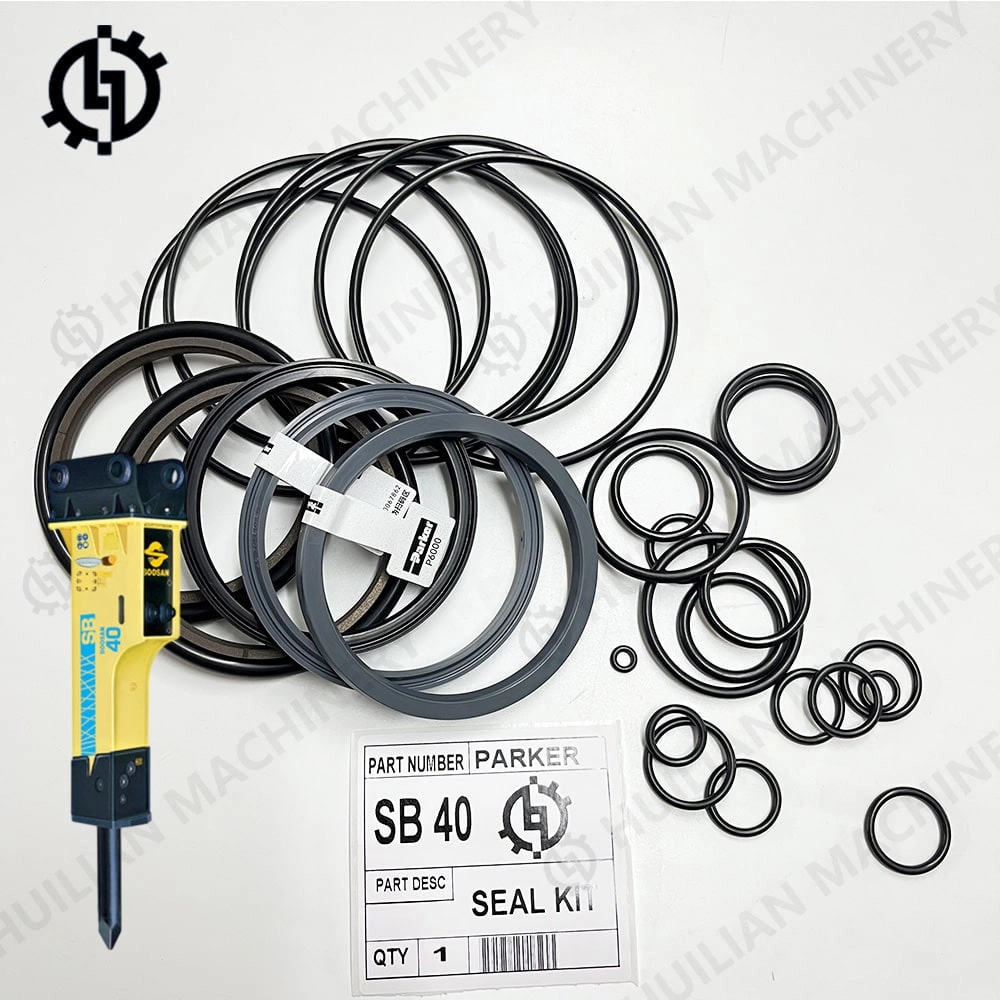
Parker Oil Seal Complete Repair SB40 Seal Kit COX001 CO1012 SB40Ⅱ SB40TSP SQ40 For Soosan Hydraulic Rock Breaker Hammer
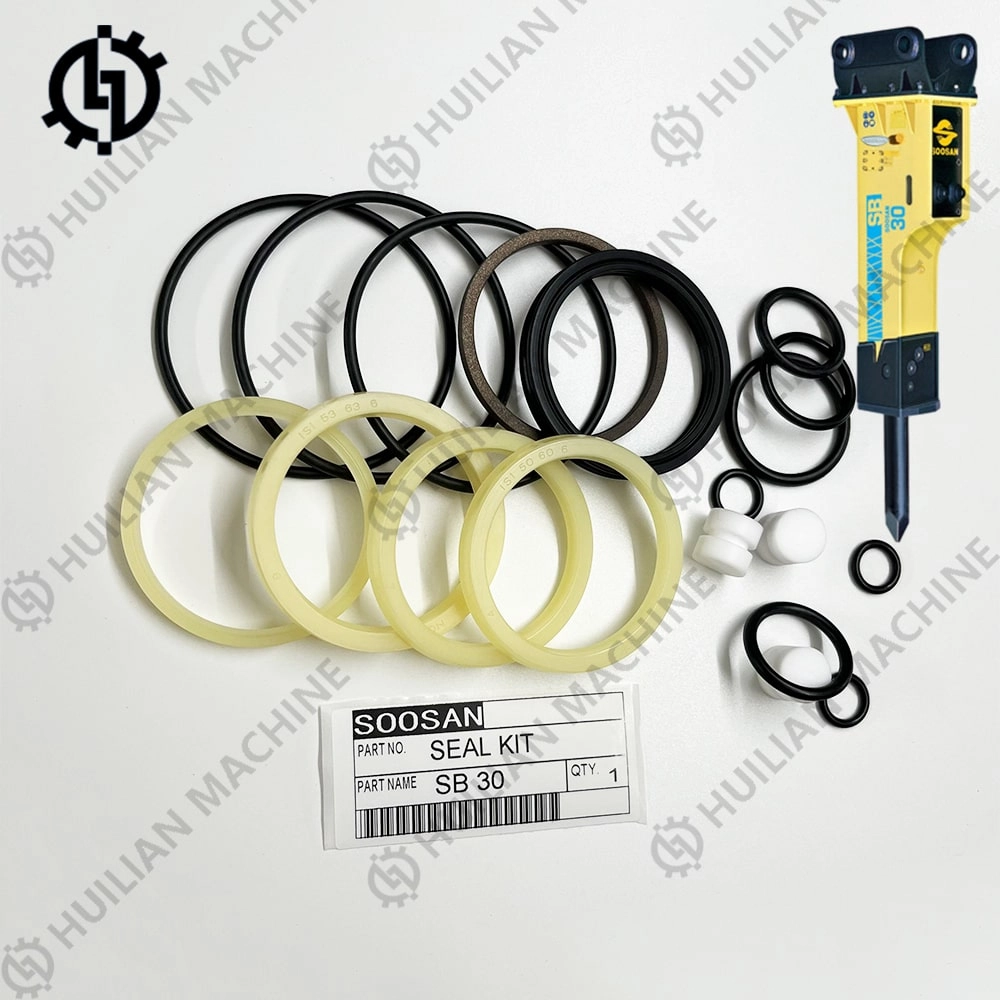
E71012 E7X001 SOOSAN SQ30 SB30Ⅱ SB30 Breaker Seal Kit SB30TS-P SB30Ⅱ TS-P SB30Ⅱ SSL Hydraulic Rock Hammer Parts Oil Repair Kit
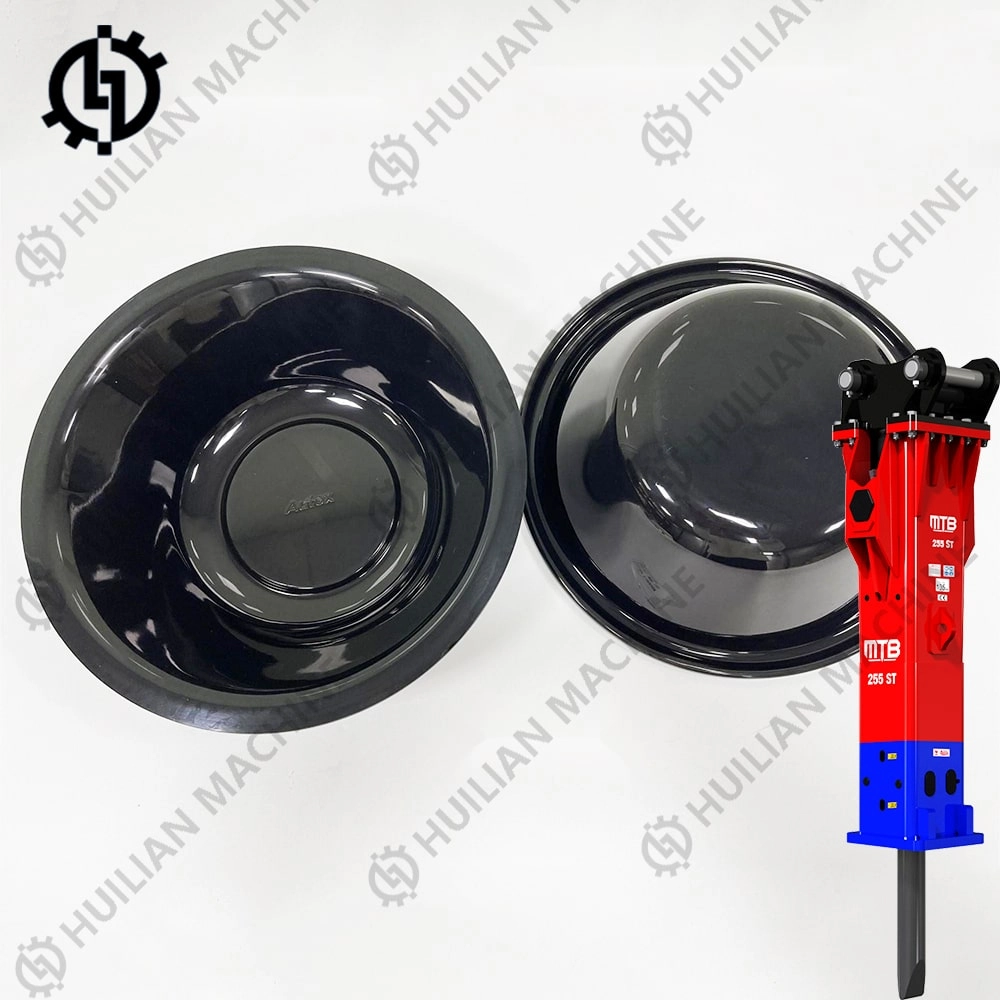
Inan Makina MTB Hydraulic Breaker Parts 45B0116A11 MTB255 MTB MT 255 Diaphragm MTB 255 IQ MTB-255 MTB 255 ST Membrane for Excavator Rock Hammer
 About us
© 2025 HUILIAN MACHINE. All rights reserved