



How to Choose the Right Excavator Mounted Hydraulic Breaker
- Understanding hydraulic breaker fundamentals
- What an excavator mounted hydraulic breaker is and how it works
- Key components and why each matters
- Industry context and standards
- Sizing and compatibility: matching the breaker to the carrier
- Assess the excavator's hydraulic flow, pressure and carrier weight
- Typical sizing ranges by excavator class (industry norms)
- Hydraulic circuit considerations and auxiliary systems
- Performance, tools, maintenance and operational trade-offs
- Impact energy vs blow rate: choosing performance characteristics
- Tool (chisel) geometry and selection
- Maintenance intervals, seals and wear parts
- Buying strategy and supplier evaluation
- Checklist: the decision matrix I use with clients
- OEM vs. aftermarket, and how to evaluate suppliers
- Why parts and service network matter—my recommended metrics
- Case studies & practical examples
- Example 1: A rental fleet minimizing downtime
- Example 2: A contractor switching to higher productivity
- When to involve an OEM or specialized consultant
- Huilian Machine — supplier profile and how we can help
- About Huilian Machine
- Huilian’s advantages and technical strengths
- Contact and partnership
- Frequently Asked Questions (FAQ)
- Q1: How do I know if a breaker is too heavy for my excavator?
- Q2: Can I run a hydraulic breaker on an excavator without a third hydraulic line?
- Q3: What is the most common cause of premature seal failure in breakers?
- Q4: How often should wear parts like bushings and tool retainer pins be inspected?
- Q5: Is it better to choose higher impact energy or higher blow rate?
- Q6: What should I ask a supplier when getting quotes?
As a consultant working with contractors, rental fleets and OEMs in the excavator parts and hydraulic breaker space, I often see wrong-sized breakers causing downtime, premature wear, or even safety incidents. In this guide I explain, in practical terms, how to choose the right excavator mounted hydraulic breaker hammer for your machine and application. I combine machine-matching rules, hydraulic system realities, tool geometry, wear-part considerations, and supplier evaluation criteria so you can make a decision that minimizes cost-per-ton and maximizes uptime.
Understanding hydraulic breaker fundamentals
What an excavator mounted hydraulic breaker is and how it works
A hydraulic breaker (often called a hydraulic hammer) is a percussion attachment for excavators that converts hydraulic power into a high-energy impact to fracture rock, concrete, or asphalt. For a concise technical overview, see the hydraulic breaker entry on Wikipedia (https://en.wikipedia.org/wiki/Hydraulic_breaker).
Key components and why each matters
At the component level, a breaker has: the housing, piston (or striker), tool (chisel/point), hydraulic accumulator or nitrogen chamber (in some designs), valves, and mounting brackets/adapters. Each component affects energy transfer efficiency and maintenance needs. For example, valve integrity and seal condition directly influence blow frequency and impact energy; piston and tool alignment affect effective energy transfer and wear rates.
Industry context and standards
Quality management and manufacturing traceability are important when choosing parts and replacements—look for suppliers that follow recognized quality systems such as ISO 9001 (see ISO). For seal selection and materials guidance, Parker Hannifin's O-Ring handbook remains an authoritative reference (Parker O-Ring Handbook).
Sizing and compatibility: matching the breaker to the carrier
Assess the excavator's hydraulic flow, pressure and carrier weight
The three primary machine-side parameters you must check are: maximum pump flow (L/min), working pressure (bar or psi), and carrier weight (tonnage). These values determine what breaker models can be safely and effectively mounted. Oversizing a breaker for a carrier can overload the excavator hydraulic system, reduce control, and increase boom stress; undersizing leads to low productivity and wasted operating time.
Typical sizing ranges by excavator class (industry norms)
Below is a practical table of typical breaker classes and matching excavator sizes. These ranges are aggregated from manufacturer product lines and industry practice (use them as starting points; always confirm with manufacturer compatibility charts for your exact excavator model):
| Excavator Class (approx.) | Excavator Weight (t) | Breaker Mass (kg) | Typical Flow (L/min) | Working Pressure (bar) | Tool Diameter (mm) |
|---|---|---|---|---|---|
| Mini | 0.8 – 3 | 20 – 60 | 10 – 30 | 80 – 120 | 25 – 45 |
| Small | 3 – 8 | 60 – 150 | 30 – 60 | 100 – 150 | 45 – 70 |
| Medium | 8 – 20 | 150 – 400 | 60 – 120 | 120 – 160 | 60 – 90 |
| Large | 20 – 40 | 400 – 900+ | 120 – 250 | 140 – 180 | 80 – 120 |
| Heavy/Mining | > 40 | > 900 | > 250 | > 160 | > 100 |
Note: these are typical, not exact. Always consult the breaker maker's compatibility guide and the excavator OEM manual before selection. Manufacturer selection guides (e.g., Atlas Copco) provide model-by-model charts that are useful when finalizing the match (Atlas Copco hydraulic breakers).
Hydraulic circuit considerations and auxiliary systems
If your excavator uses multiple hydraulic circuits, confirm whether the breaker must be connected to a dedicated third-line or can operate on the main implement circuit. Also check if the carrier requires an external DCV (directional control valve), relief valve settings, or a flow control valve. Some modern breakers require a minimum steady flow and stable pressure to achieve rated impact energy and blow rate.
Performance, tools, maintenance and operational trade-offs
Impact energy vs blow rate: choosing performance characteristics
Breaker performance is commonly expressed as impact energy (joules or kJ) and blow rate (blows per minute). Higher impact energy fractures larger or harder material more effectively, while a higher blow rate increases productivity on softer material. There's usually a trade-off: at a given hydraulic supply, you can optimize for higher energy (lower blow rate) or higher blow rate (lower energy). Select the balance that matches your application—concrete demolition often benefits from higher blow rate; rock breaking may need higher energy.
Tool (chisel) geometry and selection
Tool shape—point, moil, blunt, or bushing—has a direct effect on fragmentation pattern and wear life. Pointed tools concentrate force for deep penetration in rock, moils (narrow blunt) give more fragmentation in concrete, and widened chisels or spade shapes are used for non-structural chipping. Proper steel grade and heat treatment improve tool life. Use OEM or proven aftermarket chisels matched to breaker model to avoid fitment and wear problems.
Maintenance intervals, seals and wear parts
Planned maintenance is where you can materially impact lifecycle cost. Common wear parts include tool bushings, retaining pins, accumulators (nitrogen pre-charge), seals, and valves. Use high-quality seal kits and replace seals during major service intervals to avoid costly valve damage. For seal material selection and maintenance best practices, refer to Parker's guidance (Parker O-Ring Handbook).
Buying strategy and supplier evaluation
Checklist: the decision matrix I use with clients
When advising clients I always use a concise checklist before purchase. This reduces risk and ensures long-term value:
- Confirm excavator hydraulic flow and recommended breaker model from the breaker maker.
- Match breaker mass to excavator hydraulic and structural lift capacity (carrier stability).
- Choose tool geometry for the dominant application (rock vs. concrete vs. asphalt).
- Check availability and cost of wear parts (tool, bushing, seal kit) and lead times.
- Review warranty terms, spare parts support and service network.
- Ask for field references and documented MTBF/MTTR where possible.
OEM vs. aftermarket, and how to evaluate suppliers
OEM breakers (or OEM-approved attachments) typically ensure fitment and carry predictable warranty and support. Reputable aftermarket manufacturers can offer competitive performance and lower upfront cost, but verify materials, heat treatment, and the supply chain for seals/parts. Key supplier evaluation criteria: demonstrable quality systems (ISO 9001), independent test data (impact energy, durability), global spare-parts availability, and technical support for hydraulic tuning and mounting adapters.
Why parts and service network matter—my recommended metrics
I measure supplier viability by: spare-parts fill rate (>90% desirable), average lead time (days), field service coverage in my region, and available technical documentation (installation, torque settings, hydraulic schematics). These metrics correlate strongly with reduced downtime on site.
Case studies & practical examples
Example 1: A rental fleet minimizing downtime
I once advised a rental company with mixed 8–12 t excavators that were suffering with frequent pin and bushing failures after fitting oversized breakers. We applied a corrective strategy: switch to breakers matched to the flow/pressure of the machines, standardize on a single tool diameter for the fleet, and keep two complete seal kits per machine. The result: 30–40% reduction in unscheduled downtime over 12 months.
Example 2: A contractor switching to higher productivity
For a contractor doing road rehabilitation (asphalt and concrete), moving to a higher blow-rate breaker with lighter tool geometry doubled daily productivity on thin concrete slabs while enabling finer control and lower fuel consumption because machines could work at more efficient hydraulic settings.
When to involve an OEM or specialized consultant
If your application includes heavy-duty rock fragmentation, continuous tunneling, or extreme-duty demolition, involve the excavator OEM and breaker manufacturer early. They can provide validated mounting kits, structural assessments, and hydraulic control recommendations that avoid warranty disputes and safety issues.
Huilian Machine — supplier profile and how we can help
About Huilian Machine
Founded in 2005, Huilian Machine is a professional OEM supplier of excavator parts and one of the leading excavator breaker parts manufacturers in China. We offer a wide range of products, including hydraulic breaker hammers, chisels, seals and seal kits, diaphragms, pistons, WearBush, rompin/retainer bars, through bolts, side bolts, valves and liners. Huilian's team comprises experienced and skilled professionals, including technicians, R&D experts, designers, quality control professionals, salespeople and after-sales service teams. Our products are exported to over 90 countries and regions and are highly regarded by customers worldwide for their quality and variety. Guangzhou Huilian Machinery Co., Ltd. is committed to becoming a global leader in the supply of excavator parts and components and is seeking global distributor partners to promote the sustainable development of the excavator parts industry.
Huilian’s advantages and technical strengths
I recommend Huilian for customers who want: consistent OEM-quality wear parts, rapid response for seal kits and pistons, and an established export track record. Huilian emphasizes manufacturing controls, testing procedures and a comprehensive spare parts catalog—key differentiators for fleets that cannot afford long lead times. Core product categories include excavator parts, Excavator Breaker Parts, Excavator Hydraulic Breaker, Excavator Seal Kit, and Parker seal kit-compatible products. More product details are available on Huilian's official site: https://www.huilianmachine.com/.
Contact and partnership
For inquiries, technical clarifications or to discuss distributorship opportunities, contact Huilian:
- Website: https://www.huilianmachine.com/
- Email: service@huilianmachine.com
- Phone: +86 188 1917 0788
Frequently Asked Questions (FAQ)
Q1: How do I know if a breaker is too heavy for my excavator?
A: Check the excavator’s lift capacity and manufacturer guidelines for boom and stick loading. If the breaker mass plus adapter weight approaches the carrier’s maximum lift at working radii, it’s too heavy. Consult the excavator OEM and breaker supplier to confirm allowable mass and safe working envelope.
Q2: Can I run a hydraulic breaker on an excavator without a third hydraulic line?
A: Some breakers can run from the main implement circuit, but many require a dedicated third-line pump or an accumulator system to meet flow and pressure requirements. Confirm breaker installation instructions and valve configuration with the breaker supplier and your hydraulic technician.
Q3: What is the most common cause of premature seal failure in breakers?
A: Contamination and improper installation. Hydraulic contamination (particles, water) quickly scores valves and seals; incorrect installation or using the wrong seal material for temperature/fluids accelerates failure. Use clean hydraulic oil, proper filtration, and OEM or proven seal kits (reference: Parker O-Ring Handbook) and adhere to scheduled maintenance intervals.
Q4: How often should wear parts like bushings and tool retainer pins be inspected?
A: Inspect daily for visible movement or play in tooling, and perform a thorough inspection at regular service intervals (for many operators this is every 250–500 hours depending on application). Replace bushings and pins when wear exceeds manufacturer limits to prevent damage to the housing or striker.
Q5: Is it better to choose higher impact energy or higher blow rate?
A: It depends on material: for hard rock and larger block fracturing choose higher impact energy; for thin concrete slabs, asphalt or softer rock choose higher blow rate. Often the correct answer is a balanced mid-range model tailored to the majority of your work, not the extremes.
Q6: What should I ask a supplier when getting quotes?
A: Ask for compatibility confirmation with your excavator model, detailed product specs (impact energy, blow rate, tool diameter), warranty terms, spare parts list and pricing, expected lead times, and references from similar customers in your region.
If you’d like personalized assistance to choose the right excavator mounted hydraulic breaker hammer for your fleet, or to source quality wear parts and seal kits, contact me or reach out to Huilian Machine directly via service@huilianmachine.com or +86 188 1917 0788. Visit https://www.huilianmachine.com/ to view product ranges or request a quotation.
References and further reading: Wikipedia — Hydraulic breaker (https://en.wikipedia.org/wiki/Hydraulic_breaker), Wikipedia — Excavator (https://en.wikipedia.org/wiki/Excavator), Parker O-Ring Handbook (https://www.parker.com/literature/Oring/english/OringBook.pdf), Atlas Copco — Hydraulic Breakers (https://www.atlascopco.com/en-us/construction-equipment/products/hydraulic-breakers), ISO (https://www.iso.org/home.).
Wholesale Konan hydraulic breaker manufacturer and supplier in China
The 10 Key Factors in SOOSAN hydraulic breakers That Affect Cost
Excavator Breaker Parts: Complete Parts List and Functions
Top-Quality Seal Materials for Long-Lasting Breaker Performance
About
How can I ensure I’m selecting the right part for my equipment?
Our expert team can assist you in finding the right part based on your machine model, specifications, and requirements. Contact us for personalized support.
Are your parts compatible with all excavator brands?
Yes, our parts are designed to be compatible with major brands like Komatsu, Caterpillar, Hitachi, Hyundai, Doosan, JCB, Kobelco, Sany, and many more.
What is your shipping and delivery time?
We offer fast and reliable global shipping. Delivery times vary depending on location and order size, but we strive to process and ship orders as quickly as possible.
Do you offer OEM and aftermarket parts?
Yes, we manufacture high-quality OEM parts and supply aftermarket parts from top brands such as NOK, Parker, SKF, and Hallite to ensure optimal performance.
What types of excavator parts do you offer?
We provide a wide range of high-quality excavator parts, including hydraulic breakers, chisels, seal kits, diaphragms, pistons, wear bushes, retainer bars, through bolts, side bolts, valves, and liners.

Huilian HL68 Hammer Breaker for 4-7 Ton Excavator SOOSAN SB40 Hydraulic Rock Breaker
Side type hydraulic breaker : Easy to control, convenient positioning, durable, high working efficiency, strong striking force, long service life, stable operating performance, convenient after-sales service.
Top type hydraulic breaker : Strong impact power; excellent environmental performance; exquisite manufacturing technology; easy maintenance,fast after-sales service
Box type hydraulic breaker :leading heat treatment technology, enhance heat resistance, wear resistance. Under the condition of keeping the oil pressure constant, the cylinder volumeis reduced and the fuel consumption is reduced.The self-developed core is adopted to make the piston cylinder body moredurable and the service life longer.Exposed decks are made of high-strength steel plates to reduce wear.The best efficiency matching with excavator and loader is realized
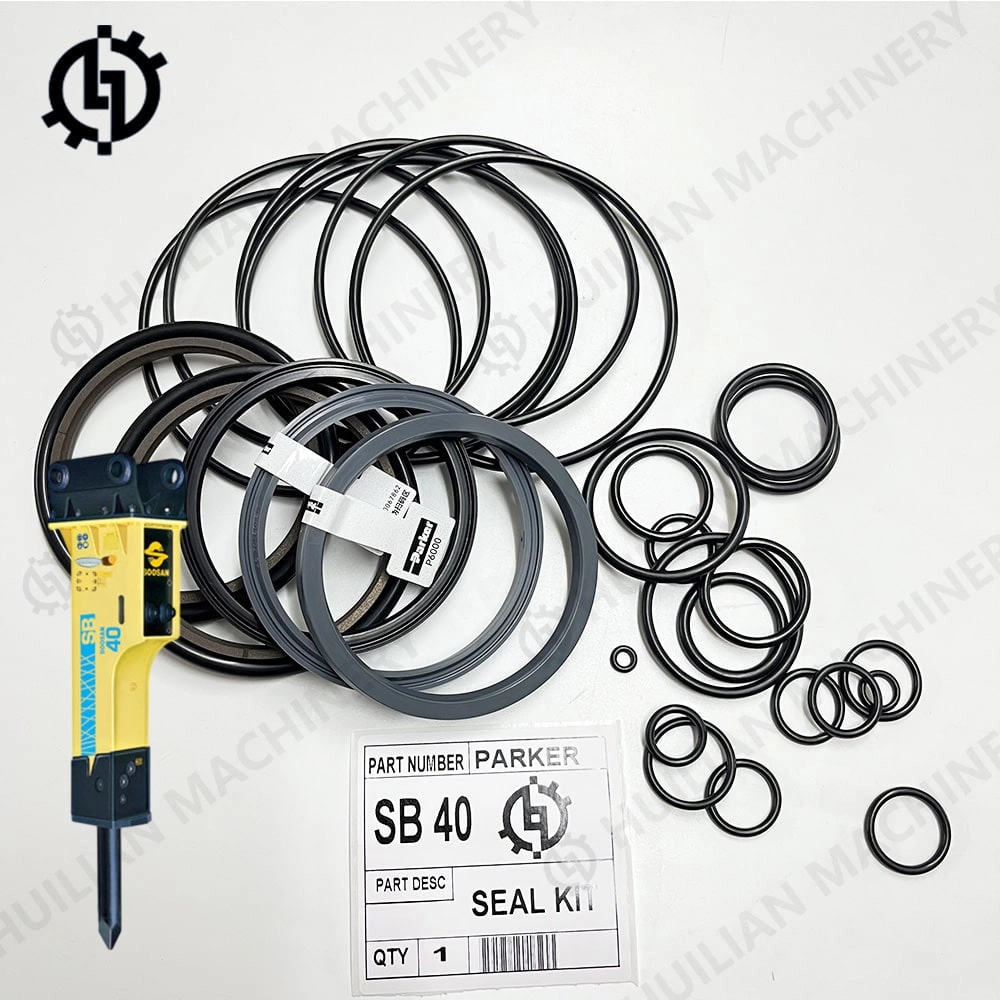
Parker Oil Seal Complete Repair SB40 Seal Kit COX001 CO1012 SB40Ⅱ SB40TSP SQ40 For Soosan Hydraulic Rock Breaker Hammer
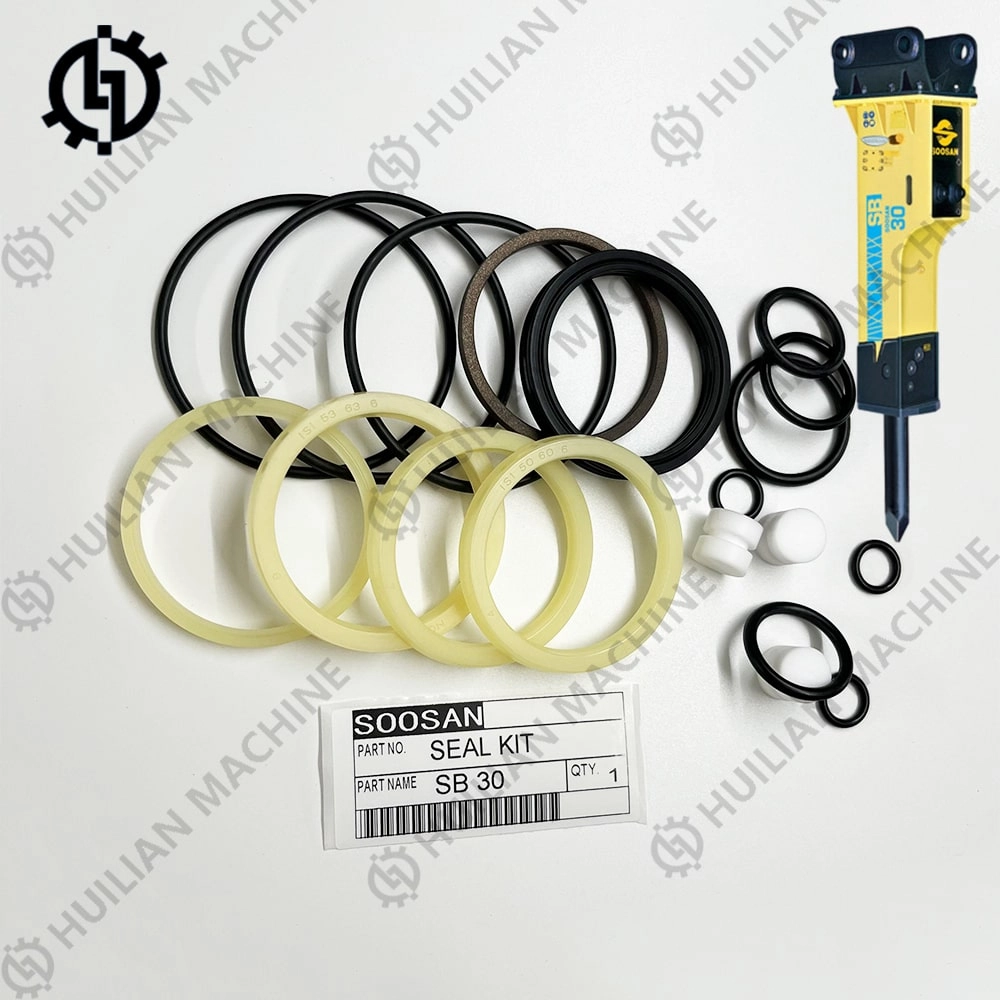
E71012 E7X001 SOOSAN SQ30 SB30Ⅱ SB30 Breaker Seal Kit SB30TS-P SB30Ⅱ TS-P SB30Ⅱ SSL Hydraulic Rock Hammer Parts Oil Repair Kit
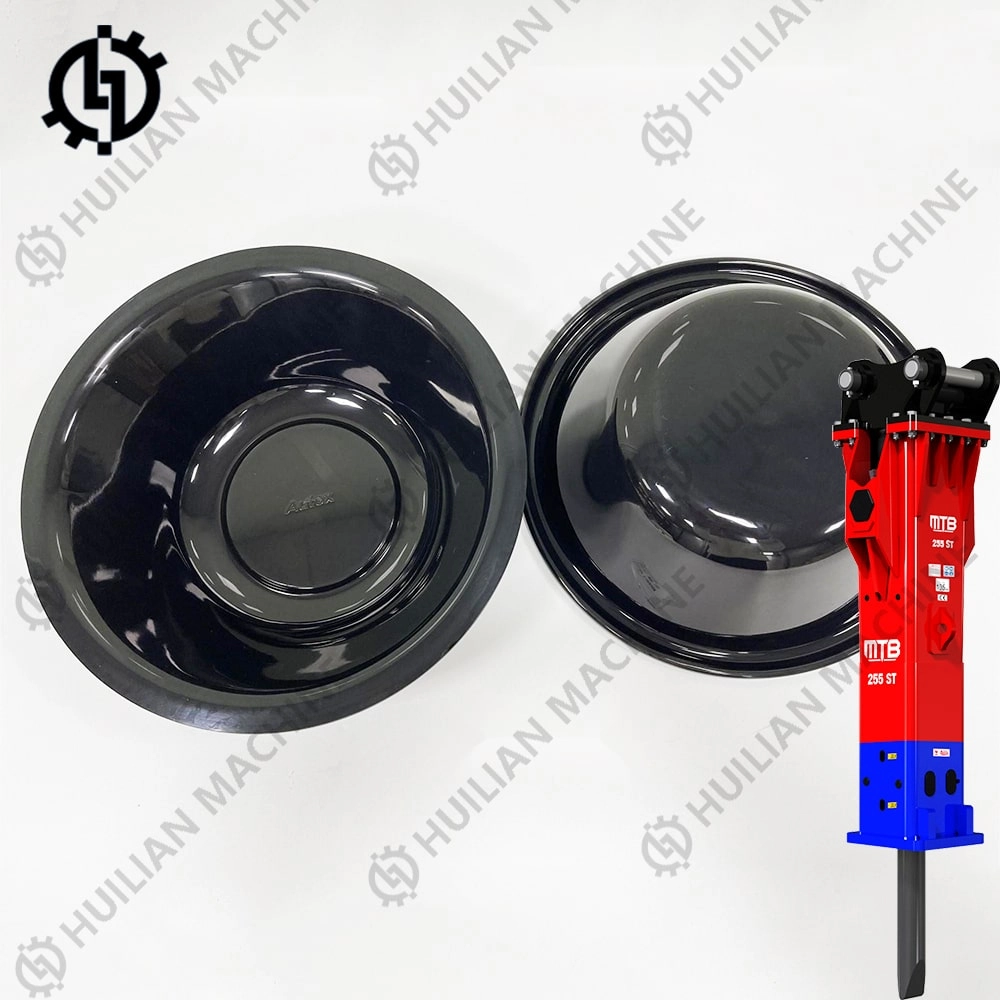
Inan Makina MTB Hydraulic Breaker Parts 45B0116A11 MTB255 MTB MT 255 Diaphragm MTB 255 IQ MTB-255 MTB 255 ST Membrane for Excavator Rock Hammer
 About us
© 2025 HUILIAN MACHINE. All rights reserved