



How to Choose the Right Excavator Rock Breaker for Your Job
- Assessing Job Requirements and Site Conditions
- Define the Material and Break Pattern
- Measure Productivity Targets and Cycle Times
- Account for Site Constraints and Accessibility
- Matching Breaker Specifications to Your Excavator
- Carrier Weight vs Breaker Class
- Hydraulic Flow and Pressure Compatibility
- Mounting and Pin Dimensions
- Hydraulic System Compatibility and Installation
- Flow Control, Accumulators and Valve Requirements
- Hose Routing, Quick Couplers and Safe Connections
- Electrical and Control Integration
- Choosing Consumables, Maintenance Strategy and Evaluating TCO
- Chisel Types, Tool Steel and Wear Parts
- Spare Parts and Seal Kits
- Maintenance Intervals and Predictive Checks
- Performance Comparison and Decision Matrix
- Hydraulic vs Alternative Breakers
- Decision Matrix: How I Rank Selection Factors
- Practical Tips from the Field
- Pre-Job Checks I Never Skip
- Training Operators and Safe Operation
- When to Upgrade or Replace Rather Than Repair
- About Huilian Machine: OEM Parts and Support
- FAQ — Common Questions About Excavator Rock Breaker Selection
- 1. How do I know what size breaker fits my excavator?
- 2. What maintenance items should I keep as spares on site?
- 3. Can I run any breaker on any excavator with an adapter?
- 4. How does blow energy relate to real-world performance?
- 5. Are cheaper breakers worth the savings?
- 6. How do I address noise and vibration limits on urban jobs?
I write as a long-time excavator parts consultant and field engineer focused on hydraulic rock breaking. In this guide I explain, step-by-step, how to choose the right excavator rock breaker for your job — from understanding site geology and carrier hydraulics to selecting impact energy, chisel types and maintenance practices. My goal is to help you reduce downtime, avoid mismatched equipment and get the best productivity per operating hour.
Assessing Job Requirements and Site Conditions
Define the Material and Break Pattern
First, identify the rock or material you must break. Hard igneous rock (e.g., granite) requires higher impact energy and heavy-duty chisels. Sedimentary or weathered rock, concrete or reinforced concrete breaks more easily but may need chisels and holders designed for rebar or mixed debris. I always advise obtaining a geotechnical report when possible; it informs not just breaker selection but also chisel shape (point, moil, or flat) and required percussion frequency.
Measure Productivity Targets and Cycle Times
Productivity (m3/hour or tonnes/hour) drives the choice of breaker class. A high-impact, low-frequency breaker may fracture large boulders quickly, while a high-frequency, lower-energy unit can provide cleaner demolition of concrete. Determine desired cycle times and match them to breaker nominal blow rate and impact energy. Manufacturer datasheets usually list blows per minute (BPM) and blow energy (kJ); use those to estimate break rates under ideal conditions.
Account for Site Constraints and Accessibility
Narrow access, working near utilities, or jobs in urban areas change the selection calculus. For confined zones I prefer compact breaker hammers and chisel guards that reduce rebound and flying debris. Noise and vibration limits (local ordinances) may make a lower-impact, frequency-optimized breaker the better choice.
Matching Breaker Specifications to Your Excavator
Carrier Weight vs Breaker Class
Matching the breaker to carrier weight is non-negotiable. Installing a breaker that is too heavy or too powerful for the excavator chassis risks hydraulic overload, boom stress and accelerated wear. Conversely, an undersized breaker won't deliver required performance and increases cycle time.
| Typical Carrier Weight (t) | Breaker Size / Class | Approx. Blow Energy (kJ) | Typical Applications |
|---|---|---|---|
| 1 - 5 | Light | 200 - 700 | Utility work, small demolition, landscaping |
| 5 - 12 | Medium | 700 - 1,800 | Road repair, medium rock, light quarry |
| 12 - 25 | Heavy | 1,800 - 4,000 | Hard rock, heavy demolition, quarries |
| >25 | Extra Heavy | >4,000 | Primary breaking, large boulders, mining support |
Source: industry manufacturer selection guidelines and engineering practice; see general hydraulic breaker descriptions on Hydraulic breaker — Wikipedia for basic definitions.
Hydraulic Flow and Pressure Compatibility
Check your excavator's hydraulic flow (L/min) and pressure (bar or psi) at the boom/attachment circuit. Breaker manufacturers specify optimum flow and maximum pressure. Using a breaker outside those ranges leads to poor performance and premature failure. For example, a medium class breaker may require 100–200 L/min and operate best within a 140–180 bar pressure band. Cross-check the carrier pump ratings, auxiliary piping and coupler capabilities.
Mounting and Pin Dimensions
Mechanical compatibility includes the correct bracket, pin diameter and range of pin-to-pin distance. Some carriers use quick couplers; ensure the kinematic geometry keeps the breaker in a vertical, stable position during impact. If necessary, order a purpose-built mounting bracket or adapter from the breaker supplier or fabricator to avoid misalignment-induced stress.
Hydraulic System Compatibility and Installation
Flow Control, Accumulators and Valve Requirements
Modern hydraulic breakers require proper control valves and often an accumulator or nitrogen charging system (depending on hammer design) to maintain consistent blow energy. Verify whether your breaker uses the excavator's auxiliary pressure signal or needs an independent control valve. Installations should include flow control, pressure relief and a quality filtration path to protect the breaker valve components and translate into longer seal and piston life.
Hose Routing, Quick Couplers and Safe Connections
Use high-pressure hoses rated above the breaker’s maximum working pressure and route them to avoid abrasion zones. Quick couplers can save time but must be rated for breaker duty. Always fit a downstream pressure relief valve and follow manufacturer torque specs for hydraulic fittings to avoid leaks and potential blowouts.
Electrical and Control Integration
Some breakers have electronic monitoring or require remote controls for sequencing. If your breaker uses sensors for temperature or blow counting, ensure compatibility with the excavator's electrical system and provide proper waterproof connectors and fusing to avoid shorts on wet sites.
Choosing Consumables, Maintenance Strategy and Evaluating TCO
Chisel Types, Tool Steel and Wear Parts
Chisel selection matters: point chisels are best for initial fracturing of hard rock, moil/conical chisels are versatile for general breaking, and flat or spade chisels are better for trenching or shaping. Use high-nickel, heat-treated tool steels for abrasive environments. Replace worn chisels and use proper lubrication (grease cartridge or tool bushings) to prevent damage to the piston and Bush.
Spare Parts and Seal Kits
Availability of spare parts—pistons, seals, diaphragms, wear bushes, retainer bars, through bolts, side bolts, valves and liners—determines downtime. I recommend stocking a basic seal kit and a spare chisel for critical projects. Huilian's product lineup (see below) lists many of these components and standard seal kits adaptable across common breaker models.
Maintenance Intervals and Predictive Checks
Set maintenance intervals based on hours and operating severity. Monitor blow energy and BPM with simple gauges or electronic counters. Regular checks: nitrogen pressure (if applicable), tool bush wear, hydraulic hose condition, and valve leakage rates. Implement a logbook and condition-based replacement to reduce sudden failures and extend component life, which ly lowers total cost of ownership (TCO).
Performance Comparison and Decision Matrix
Hydraulic vs Alternative Breakers
Hydraulic breakers are the standard for excavator attachments due to high power density and easier integration. Below is a compact comparison to guide choices.
| Technology | Advantages | Limitations | Best Use |
|---|---|---|---|
| Hydraulic Breaker (pneumatic/hydraulic) | High impact energy, easy excavator integration, balanced power | Requires matching hydraulic flow/pressure, can be heavy | Most digging and rock-breaking applications |
| Pneumatic/Air Hammer | Simpler valve set, historically used in smaller carriers | Less common on modern excavators, requires air system | Specialized small tools or where hydraulics unavailable |
| Hydraulic Rock Saw / Concrete Cutter | Low vibration, precise cuts | Slow for large rock fracturing | Precision demolition, cutting concrete |
Decision Matrix: How I Rank Selection Factors
When advising clients I typically weigh factors as follows (example weights):
- Carrier compatibility and hydraulic match — 30%
- Material hardness and productivity needs — 25%
- Availability of parts and local support — 20%
- Purchase price vs lifecycle cost — 15%
- Site constraints (noise/vibration) — 10%
This helps prioritize what to compromise on. For instance, if local support and parts availability are poor for a cheaper brand, the lifecycle cost often exceeds initial savings.
Practical Tips from the Field
Pre-Job Checks I Never Skip
I always verify coupling pins and bracket fit, confirm hydraulic flow and pressure under load, grease the tool bushings, check for correct chisel selection, and perform a short no-load test to observe any abnormal vibration or noise. These simple steps prevent many common failures.
Training Operators and Safe Operation
Operator technique affects wear and productivity. Teach operators to keep the chisel perpendicular, avoid continuous contact when the hammer starves for hydraulic flow, and rotate contact points to minimize uneven wear. Follow safety guidelines for noise, flying debris and equipment stability. For general excavator definitions and safety context see Excavator — Wikipedia.
When to Upgrade or Replace Rather Than Repair
If frequent valve or piston failures occur, evaluate whether the breaker is undersized, the hydraulic system supplies inconsistent pressure, or if tool impact cycles exceed design limits. When repair frequency and parts costs approach 40–50% of new-equipment cost over a short period, replacement often makes sense. Upgrading to a better-matched or higher-quality breaker reduces ongoing downtime.
About Huilian Machine: OEM Parts and Support
Founded in 2005, Huilian Machine is a professional OEM supplier of excavator parts. We are leading excavator breaker parts manufacturers in China. We offer a wide range of products, including hydraulic breaker hammers, chisels, seals and seal kits, diaphragms, pistons, WearBush, rompin/retainer bars, through bolts, side bolts, valves and liners. Huilian's team comprises experienced and skilled professionals, including technicians, R&D experts, designers, quality control professionals, salespeople and after-sales service teams.
Our products are exported to over 90 countries and regions and are highly regarded by customers worldwide for their quality and variety. Guangzhou Huilian Machinery Co., Ltd. is committed to becoming a global leader in the supply of excavator parts and components and is seeking global distributor partners to promote the sustainable development of the excavator parts industry. For detailed product lists and certificates, visit https://www.huilianmachine.com/ or contact service@huilianmachine.com / +86 188 1917 0788.
Huilian advantages: established OEM experience since 2005, broad spare parts coverage (Excavator Parts, Excavator Breaker Parts, Excavator Hydraulic Breaker, Excavator Seal Kit, Parker seal kit), quality control and a global export footprint. Our competitive differentiation is the combination of consistent parts interchangeability, reasonable lead times, and a technical team capable of advising on compatibility between breakers and carriers.
FAQ — Common Questions About Excavator Rock Breaker Selection
1. How do I know what size breaker fits my excavator?
Start with your excavator’s operating weight and hydraulic specifications (flow in L/min and operating pressure). Use the carrier weight vs breaker class table above as a guideline and confirm the breaker manufacturer’s recommended carrier range. If in doubt, consult an OEM or parts supplier with your excavator model and serial number.
2. What maintenance items should I keep as spares on site?
Essential spares include a chisel, a seal kit, wear bushes, retainer/rompin bars, through bolts and a spare set of hydraulic hoses. These items reduce downtime for common failures. Keep a grease gun and proper grease on hand for the tool bushings.
3. Can I run any breaker on any excavator with an adapter?
Not safely. Even with a mechanical adapter, mismatched hydraulic flow/pressure, carrier stability and boom stress can cause damage. Always ensure hydraulic compatibility and structural fit; consult engineering guidance before adapting mismatched equipment.
4. How does blow energy relate to real-world performance?
Blow energy (kJ) indicates the energy delivered per blow; higher energy is better for fracturing very hard rock. However, the blow rate (BPM) and operator technique also matter. A balance of adequate energy and appropriate frequency is optimal for each application.
5. Are cheaper breakers worth the savings?
Lower initial cost can be offset by shorter component life, poorer parts availability and higher downtime. Factor in TCO: parts cost, expected life, warranty, and local service support when evaluating price. Huilian’s approach emphasizes parts availability and technical support to reduce long-term costs.
6. How do I address noise and vibration limits on urban jobs?
Choose a breaker tuned for higher frequency/lower individual blow energy, fit vibration dampers if available, and use protective barriers and scheduling to comply with local noise ordinances. Also consult local regulations for permissible working hours and vibration thresholds.
If you need personalized advice for a specific excavator model or jobsite, contact us for a compatibility check, product recommendations and parts availability. Visit Huilian Machine or email service@huilianmachine.com. Phone: +86 188 1917 0788.
References and further reading: Hydraulic breaker basics on Wikipedia; general excavator background on Wikipedia; for hydraulic system standards see ISO 4413 — Hydraulic fluid power.
Top Excavator Breaker Hammers for Heavy-Duty Demolition Projects
Top excavator hydraulic breakers Manufacturers and Suppliers
Top 10 Excavator Hydraulic Breaker Manufacturers and Supplier Brands
Troubleshooting Guide: Noisy or Inefficient Breaker Parts
About
What is your shipping and delivery time?
We offer fast and reliable global shipping. Delivery times vary depending on location and order size, but we strive to process and ship orders as quickly as possible.
Are your parts compatible with all excavator brands?
Yes, our parts are designed to be compatible with major brands like Komatsu, Caterpillar, Hitachi, Hyundai, Doosan, JCB, Kobelco, Sany, and many more.
Do you offer OEM and aftermarket parts?
Yes, we manufacture high-quality OEM parts and supply aftermarket parts from top brands such as NOK, Parker, SKF, and Hallite to ensure optimal performance.
What types of excavator parts do you offer?
We provide a wide range of high-quality excavator parts, including hydraulic breakers, chisels, seal kits, diaphragms, pistons, wear bushes, retainer bars, through bolts, side bolts, valves, and liners.
How can I ensure I’m selecting the right part for my equipment?
Our expert team can assist you in finding the right part based on your machine model, specifications, and requirements. Contact us for personalized support.

Huilian HL68 Hammer Breaker for 4-7 Ton Excavator SOOSAN SB40 Hydraulic Rock Breaker
Side type hydraulic breaker : Easy to control, convenient positioning, durable, high working efficiency, strong striking force, long service life, stable operating performance, convenient after-sales service.
Top type hydraulic breaker : Strong impact power; excellent environmental performance; exquisite manufacturing technology; easy maintenance,fast after-sales service
Box type hydraulic breaker :leading heat treatment technology, enhance heat resistance, wear resistance. Under the condition of keeping the oil pressure constant, the cylinder volumeis reduced and the fuel consumption is reduced.The self-developed core is adopted to make the piston cylinder body moredurable and the service life longer.Exposed decks are made of high-strength steel plates to reduce wear.The best efficiency matching with excavator and loader is realized
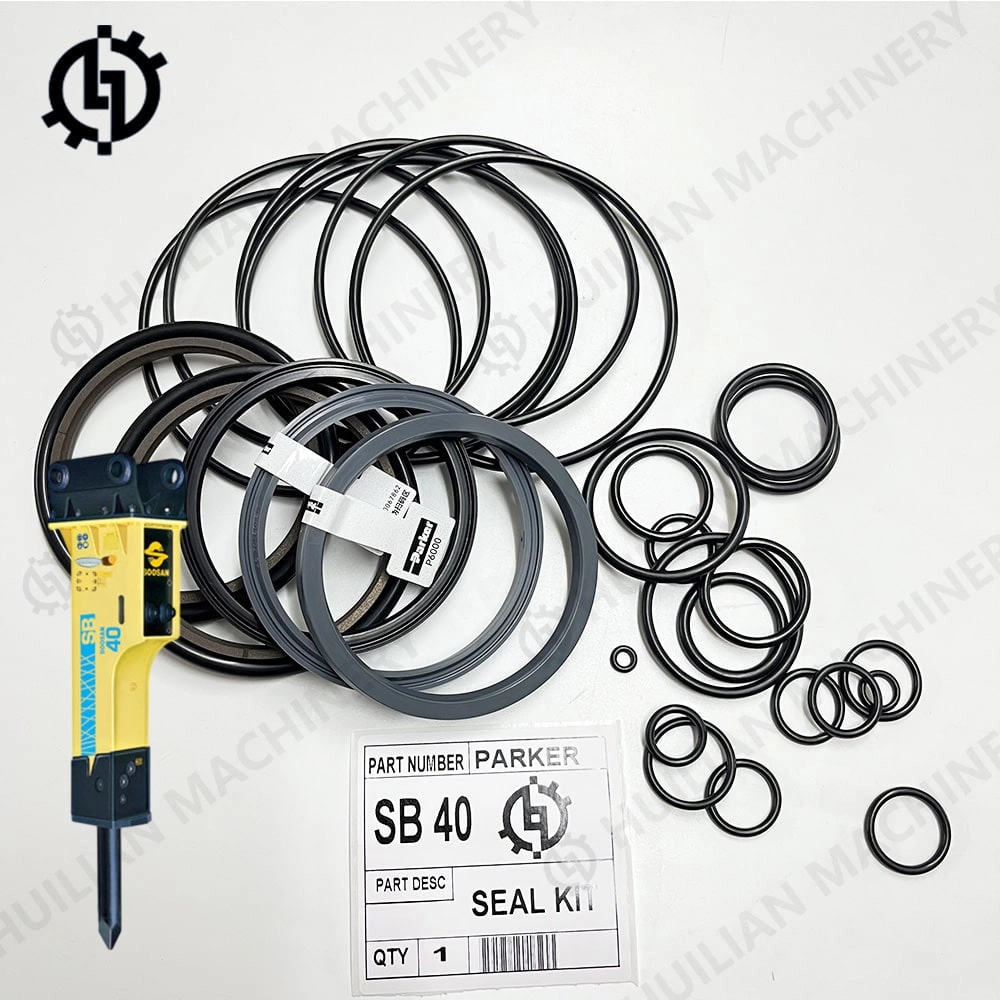
Parker Oil Seal Complete Repair SB40 Seal Kit COX001 CO1012 SB40Ⅱ SB40TSP SQ40 For Soosan Hydraulic Rock Breaker Hammer
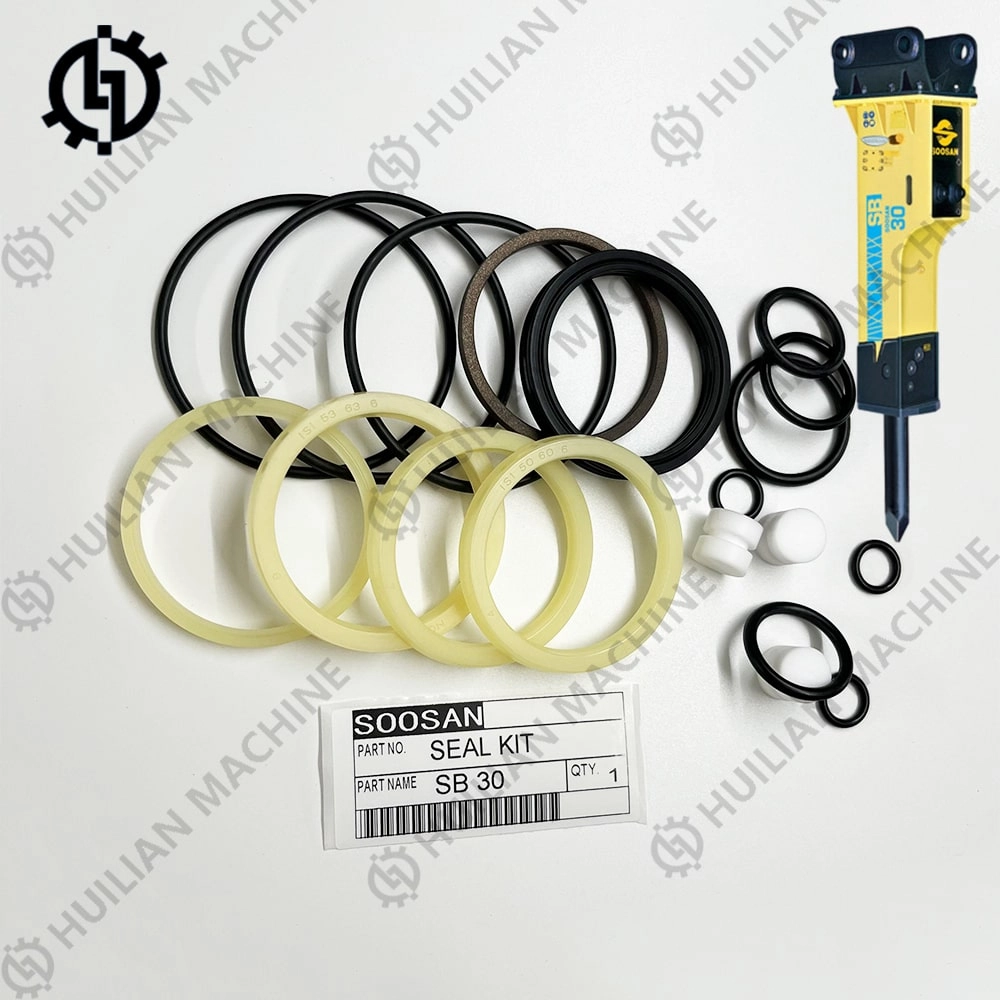
E71012 E7X001 SOOSAN SQ30 SB30Ⅱ SB30 Breaker Seal Kit SB30TS-P SB30Ⅱ TS-P SB30Ⅱ SSL Hydraulic Rock Hammer Parts Oil Repair Kit
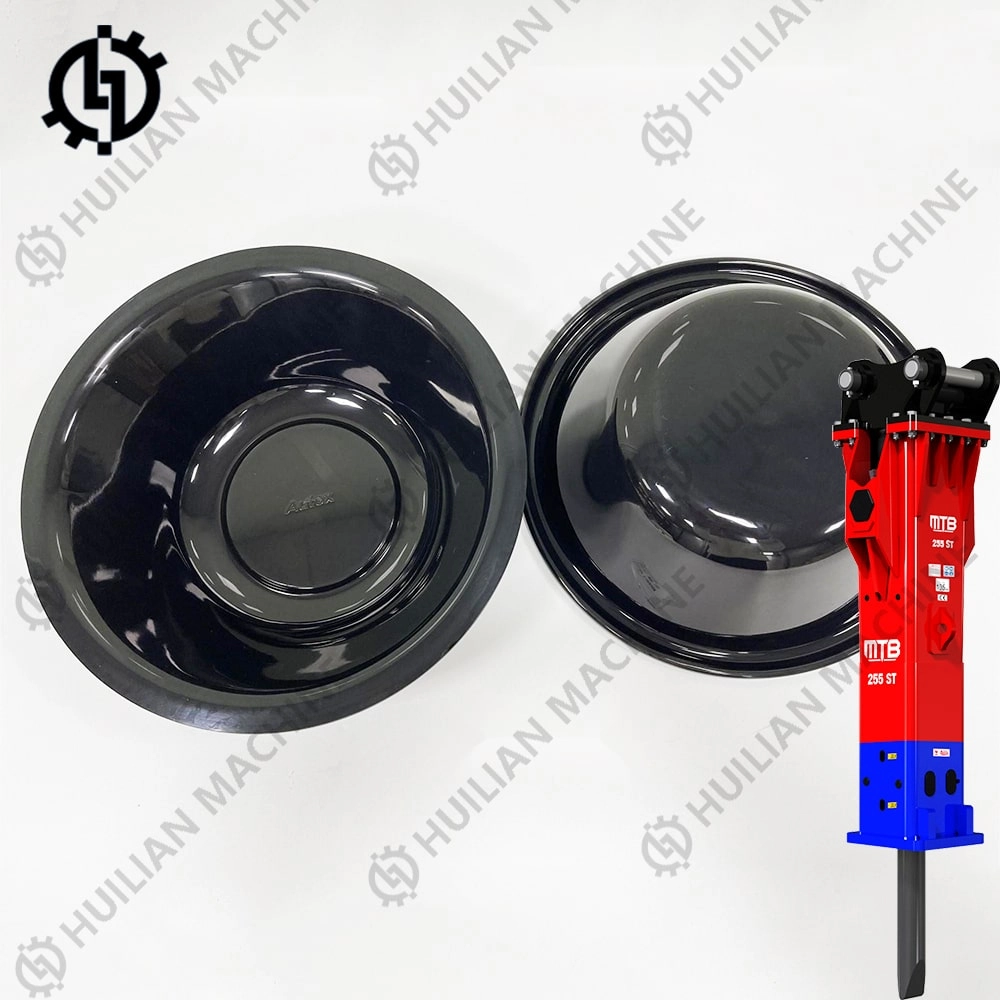
Inan Makina MTB Hydraulic Breaker Parts 45B0116A11 MTB255 MTB MT 255 Diaphragm MTB 255 IQ MTB-255 MTB 255 ST Membrane for Excavator Rock Hammer
 About us
© 2025 HUILIAN MACHINE. All rights reserved