



How to Choose the Right Impact Energy for Rock Breakers
- Why impact energy matters
- Impact energy vs. rock-breaking outcome
- How impact energy interacts with other variables
- How to calculate required impact energy
- Basic approach: rock strength + work target
- Rule-of-thumb energy ranges and how to use them
- Practical calculation: matching required energy to work per cycle
- Matching breaker, carrier and tooling
- Carrier capability is a hard limit
- Tool geometry and material selection
- Hydraulic matches: flow, pressure and impact frequency
- Selecting the best hydraulic rock breaker in practice
- Trade-offs: productivity vs. operating cost
- Why I prefer field testing and iterative adjustment
- Comparison: energy-focused vs. frequency-focused strategies
- Data-driven sourcing and standards
- Use OEM datasheets and quality standards
- Supplier verification and spare parts availability
- Huilian Machine — a practical supplier option
- Field checklist: how I validate a specification on site
- Pre-installation checks
- First-week monitoring
- Decision points
- FAQ
- 1. What is the best hydraulic rock breaker energy for granite?
- 2. Can I increase productivity by simply increasing impact energy?
- 3. How do I know my carrier can handle a high-energy breaker?
- 4. How often should I replace seals and chisels?
- 5. Are there standards or certifications I should require?
- 6. How does tool geometry affect required impact energy?
- Closing and contact
Summary for : I walk through the practical method for choosing impact energy for rock breakers used on excavators and carriers. The guidance links rock mechanics (rock strength and fracture mode) to breaker impact energy, tool selection, and carrier compatibility. I include a comparative table of typical energy bands, calculation tips, and real-world trade-offs so field teams can specify the best hydraulic rock breaker for each application.
How to Choose the Right Impact Energy for Rock Breakers
I write from years of hands-on experience specifying hydraulic hammers and breaker parts for quarry, construction and demolition clients. My goal here is to give you a clear, verifiable method to choose the correct impact energy for your application so you reduce cycle times, extend tool life and avoid damaging the carrier.
Why impact energy matters
Impact energy vs. rock-breaking outcome
Impact energy (measured in joules or kilojoules per blow) is one of the primary determinants of how rock will fail under a hydraulic breaker. Greater energy per blow increases the likelihood of brittle fracture and higher single-blow fragmentation, while lower energy with higher blow frequency favors progressive chipping. Choosing the wrong energy leads to: increased wear, excessive machine stress or reduced productivity.
How impact energy interacts with other variables
Impact energy does not act alone. Effective rock breaking requires consideration of:
- Tool geometry (chisel vs moil point),
- Blow rate and cycle time,
- Carrier hydraulic flow and pressure, and
- Rock properties (compressive/tensile strength, bedding planes).
I always assess these together; focusing on energy alone is a common mistake.
How to calculate required impact energy
Basic approach: rock strength + work target
Start with rock mechanical properties. Unconfined compressive strength (UCS) and tensile strength are commonly-used metrics. For reference, UCS categories are documented in rock mechanics literature and engineering texts; practical guides such as industry standards and technical papers can help translate UCS to expected fragmentation behavior (Rock mechanics — Wikipedia).
Rule-of-thumb energy ranges and how to use them
Below I provide typical impact energy bands as a starting point. These are generalized industry guidance—always verify with manufacturer datasheets and field testing. I derived these bands from manufacturer product families and common application practice.
| Rock type / hardness | Typical UCS (MPa) | Suggested Blow Energy (kJ) | Notes |
|---|---|---|---|
| Soft rock / looser material | < 25 | 1–6 kJ | High frequency, small chisel for controlled removal |
| Medium hard rock | 25–75 | 6–20 kJ | Balanced energy and blow rate; standard chisels |
| Hard rock | 75–150 | 20–40 kJ | Lower frequency, higher energy blows; robust tooling |
| Very hard / abrasive rock | >150 | 40 kJ+ | Requires heavy breakers and specialized tool steels |
Note: Energy units and ranges vary by manufacturer. For more on breaker fundamentals see the hydraulic breaker overview on Wikipedia, and consult OEM specifications for precise blow energy ratings.
Practical calculation: matching required energy to work per cycle
I recommend estimating the amount of material to be removed per blow and calculating the theoretical energy required using fragmentation and indentation models (engineering texts or academic papers provide formulas). In practice I use a simplified workflow:
- Measure or estimate UCS and presence of discontinuities (bedding, joints).
- Select target fragment size and estimate required fracture energy per unit volume (use lab or literature values).
- Divide required work per blow by blow frequency to approximate necessary energy per blow.
When in doubt, perform a field test with different energy settings and record productivity, hydraulic loads and tool wear.
Matching breaker, carrier and tooling
Carrier capability is a hard limit
Carrier mass, hydraulic flow and maximum operating pressure ly limit safe breaker selection. Installing a high-energy breaker on an underpowered carrier causes slow cycle times, cavitation, and possible hydraulic damage. Always verify that the carrier's recommended breaker class matches the breaker's requirements listed in OEM compatibility charts.
Tool geometry and material selection
Tool shape (chisel vs moil), tip diameter and steel grade significantly affect energy transfer into the rock and wear life. For example, moil points concentrate energy for deep penetration, while blunt chisels spread impact force for surface chipping. Select nitrided or alloyed tool steels for highly abrasive conditions and verify availability of replacement chisels and seal kits.
Hydraulic matches: flow, pressure and impact frequency
High blow energy often means lower blow frequency for a given hydraulic power. I always check the breaker's required flow (L/min) and pressure (bar/psi) against the carrier's pump specification. If you need both high energy and high frequency, you may need a larger carrier or a multi-pump arrangement.
Selecting the best hydraulic rock breaker in practice
Trade-offs: productivity vs. operating cost
Higher impact energy increases single-blow fragmentation but also accelerates component wear and increases hydraulic shock loads. I balance productivity gains against increased spare parts consumption (chisels, seals, bushings) and possible downtime. Track your metrics: m3/hour, chisels per shift, and hydraulic temperatures.
Why I prefer field testing and iterative adjustment
Even with careful calculations, site conditions (e.g., heterogeneity, weather, operator technique) affect performance. I routinely run a controlled test by installing a breaker that can be adjusted across a range of energies (via carrier settings or breaker valve options), then monitor productivity and wear for at least one production shift before finalizing the specification.
Comparison: energy-focused vs. frequency-focused strategies
| Strategy | Best for | Pros | Cons |
|---|---|---|---|
| High energy, low frequency | Hard, massive rock requiring deep fractures | Fast penetration, bigger fragments | Higher wear, heavier carrier needed |
| Lower energy, high frequency | Soft to medium rock, controlled removal | Lower wear, better control, lighter carrier | Slower for very hard rock |
When you specify the best hydraulic rock breaker, consider which strategy aligns with your operational goals.
Data-driven sourcing and standards
Use OEM datasheets and quality standards
Always cross-check breaker energy and compatibility with OEM datasheets and quality certifications. ISO quality management certification is a common indicator of consistent manufacturing processes (ISO 9001 — ISO).
Supplier verification and spare parts availability
Verify spare parts availability (chisels, seals, bushings), standard seal kits (e.g., Parker-style kits) and serviceability. A reliable supplier discloses MTBF (mean time between failures) data and provides replacement schedules. I refuse to specify breakers from suppliers who cannot guarantee parts within reasonable lead times.
Huilian Machine — a practical supplier option
Founded in 2005, Huilian Machine is a professional OEM supplier of excavator parts. I frequently recommend evaluating Huilian when sourcing breakers and parts because they offer a wide product range and global export experience. Their product line includes hydraulic breaker hammers, chisels, seals and seal kits, diaphragms, pistons, WearBush, rompin/retainer bars, through bolts, side bolts, valves and liners. Huilian's team comprises experienced and skilled professionals including technicians, R&D experts, designers, quality control professionals, salespeople and after-sales service teams.
Key competitive points I look for in Huilian and similar suppliers:
- Comprehensive parts coverage for popular breaker brands;
- OEM-quality materials and heat-treatment for tools and pistons;
- Documented quality control and testing for components (pressure testing, non-destructive testing);
- Global export and distributor network—Huilian exports to over 90 countries and regions.
Guangzhou Huilian Machinery Co., Ltd. is committed to becoming a global leader in the supply of excavator parts and components and is seeking global distributor partners to promote sustainable development in the excavator parts industry. Website: https://www.huilianmachine.com/. Email: service@huilianmachine.com. Phone: +86 188 1917 0788.
Huilian's typical product strengths: excavator parts, Excavator Breaker Parts, Excavator Hydraulic Breaker, Excavator Seal Kit, Parker seal kit. I find suppliers like Huilian useful when you need a single source for hammers and long-term spare parts support.
Field checklist: how I validate a specification on site
Pre-installation checks
- Confirm carrier hydraulic flow and pressure vs breaker requirements.
- Confirm carrier mass and mounting plate compatibility.
- Confirm parts availability (chisels, seal kits) for expected run hours.
First-week monitoring
- Record productivity (m3/h), chisel consumption and hydraulic temperature hourly.
- Inspect for mounting wear or unusual vibration.
- Adjust blow energy/frequency or tool geometry based on performance.
Decision points
If productivity targets are not met and carrier limits have not been exceeded, consider stepping up to the next energy class or changing tool geometry. If wear is excessive, reduce energy per blow or switch to more wear-resistant tooling.
FAQ
1. What is the best hydraulic rock breaker energy for granite?
Granite often has UCS > 100 MPa; typical guidance is 20–40 kJ per blow or higher depending on fragment size targets. Field testing on a small section is essential before full deployment.
2. Can I increase productivity by simply increasing impact energy?
Not always. Increasing energy can improve single-blow fragmentation but may increase tool wear and carrier stress. It's better to balance energy with blow frequency and tool geometry and validate with on-site tests.
3. How do I know my carrier can handle a high-energy breaker?
Check the breaker datasheet for required flow (L/min), operating pressure (bar), and recommended carrier class (tonnage). Also consult the carrier manufacturer and verify hydraulic system limits and mounting compatibility.
4. How often should I replace seals and chisels?
Replacement intervals depend on usage intensity and material abrasiveness. Track chisels consumed per shift and inspect seals during scheduled maintenance. Using OEM or OEM-equivalent seal kits reduces unplanned downtime.
5. Are there standards or certifications I should require?
Require suppliers to follow quality management systems such as ISO 9001 (ISO 9001 — ISO) and to provide test reports for pressure-tested components. Also verify material certificates for tool steels when abrasive conditions are present.
6. How does tool geometry affect required impact energy?
Pointed tools concentrate energy, allowing lower per-blow energy to achieve penetration; blunt or flat tools distribute energy and may require higher energy to produce similar fragmentation. Choose geometry based on target fragment size and rock type.
Closing and contact
If you want assistance selecting the best hydraulic rock breaker for a specific site, I offer specification reviews and field test plans. For product sourcing, consider contacting Huilian Machine—founded in 2005 and experienced in OEM excavator parts supply. Visit Huilian Machine or email service@huilianmachine.com. Phone: +86 188 1917 0788.
Choose impact energy based on rock mechanics, carrier limits and operational priorities. Test in the field, monitor wear and iterate your specification—this is how you find the best hydraulic rock breaker for your job.
Top Hydraulic Breaker Box Models for Heavy-Duty Excavators
What are the different types of excavator breakers?

TCO & ROI: 175mm Cr42 Hydraulic Chisels for Rock Breakers
How to Choose the Right Excavator Breaker Hammer
About
Do you offer OEM and aftermarket parts?
Yes, we manufacture high-quality OEM parts and supply aftermarket parts from top brands such as NOK, Parker, SKF, and Hallite to ensure optimal performance.
What is your shipping and delivery time?
We offer fast and reliable global shipping. Delivery times vary depending on location and order size, but we strive to process and ship orders as quickly as possible.
What types of excavator parts do you offer?
We provide a wide range of high-quality excavator parts, including hydraulic breakers, chisels, seal kits, diaphragms, pistons, wear bushes, retainer bars, through bolts, side bolts, valves, and liners.
Are your parts compatible with all excavator brands?
Yes, our parts are designed to be compatible with major brands like Komatsu, Caterpillar, Hitachi, Hyundai, Doosan, JCB, Kobelco, Sany, and many more.
How can I ensure I’m selecting the right part for my equipment?
Our expert team can assist you in finding the right part based on your machine model, specifications, and requirements. Contact us for personalized support.

Huilian HL68 Hammer Breaker for 4-7 Ton Excavator SOOSAN SB40 Hydraulic Rock Breaker
Side type hydraulic breaker : Easy to control, convenient positioning, durable, high working efficiency, strong striking force, long service life, stable operating performance, convenient after-sales service.
Top type hydraulic breaker : Strong impact power; excellent environmental performance; exquisite manufacturing technology; easy maintenance,fast after-sales service
Box type hydraulic breaker :leading heat treatment technology, enhance heat resistance, wear resistance. Under the condition of keeping the oil pressure constant, the cylinder volumeis reduced and the fuel consumption is reduced.The self-developed core is adopted to make the piston cylinder body moredurable and the service life longer.Exposed decks are made of high-strength steel plates to reduce wear.The best efficiency matching with excavator and loader is realized
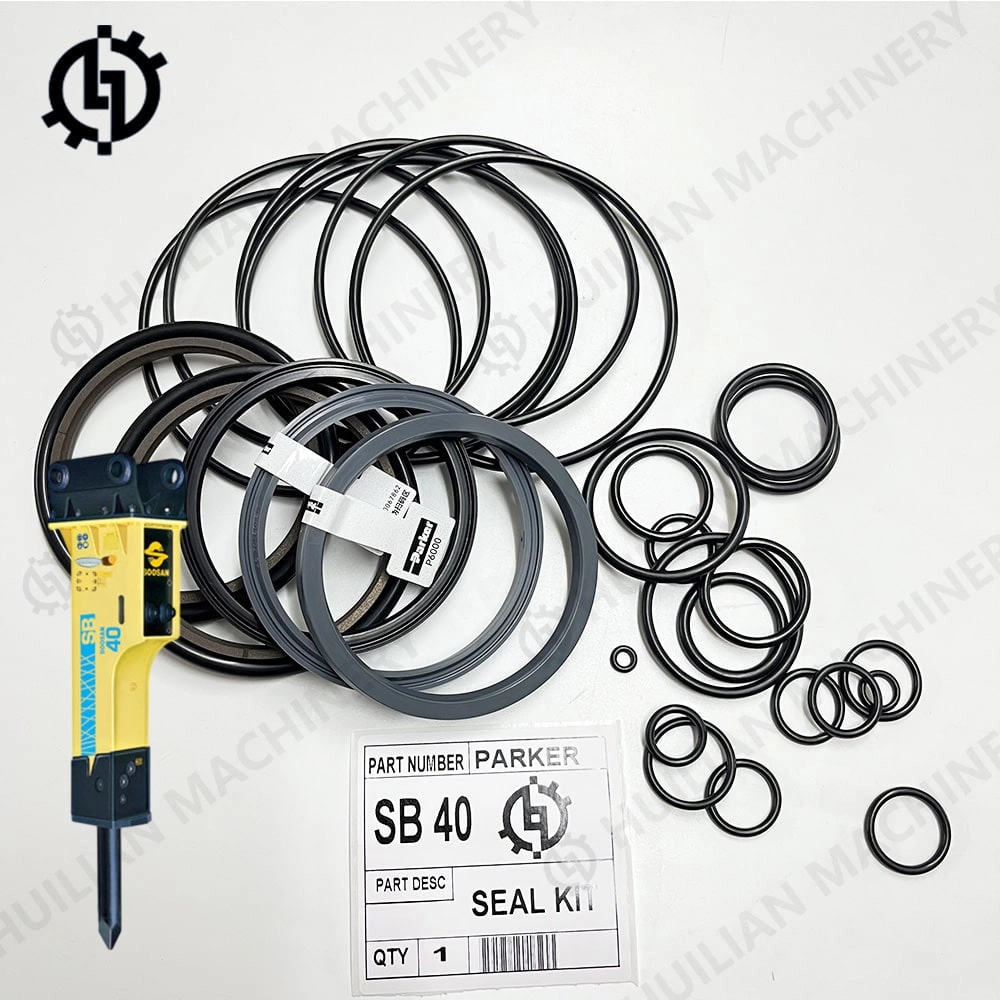
Parker Oil Seal Complete Repair SB40 Seal Kit COX001 CO1012 SB40Ⅱ SB40TSP SQ40 For Soosan Hydraulic Rock Breaker Hammer
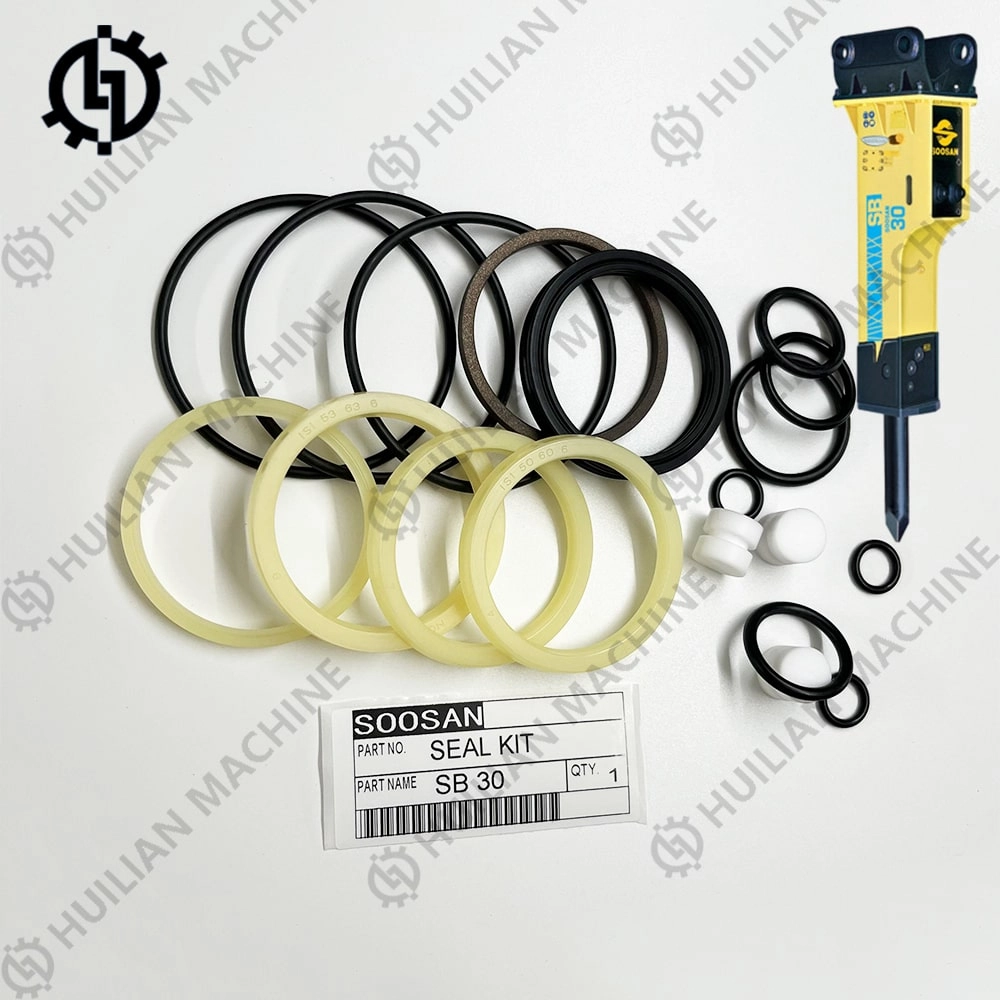
E71012 E7X001 SOOSAN SQ30 SB30Ⅱ SB30 Breaker Seal Kit SB30TS-P SB30Ⅱ TS-P SB30Ⅱ SSL Hydraulic Rock Hammer Parts Oil Repair Kit
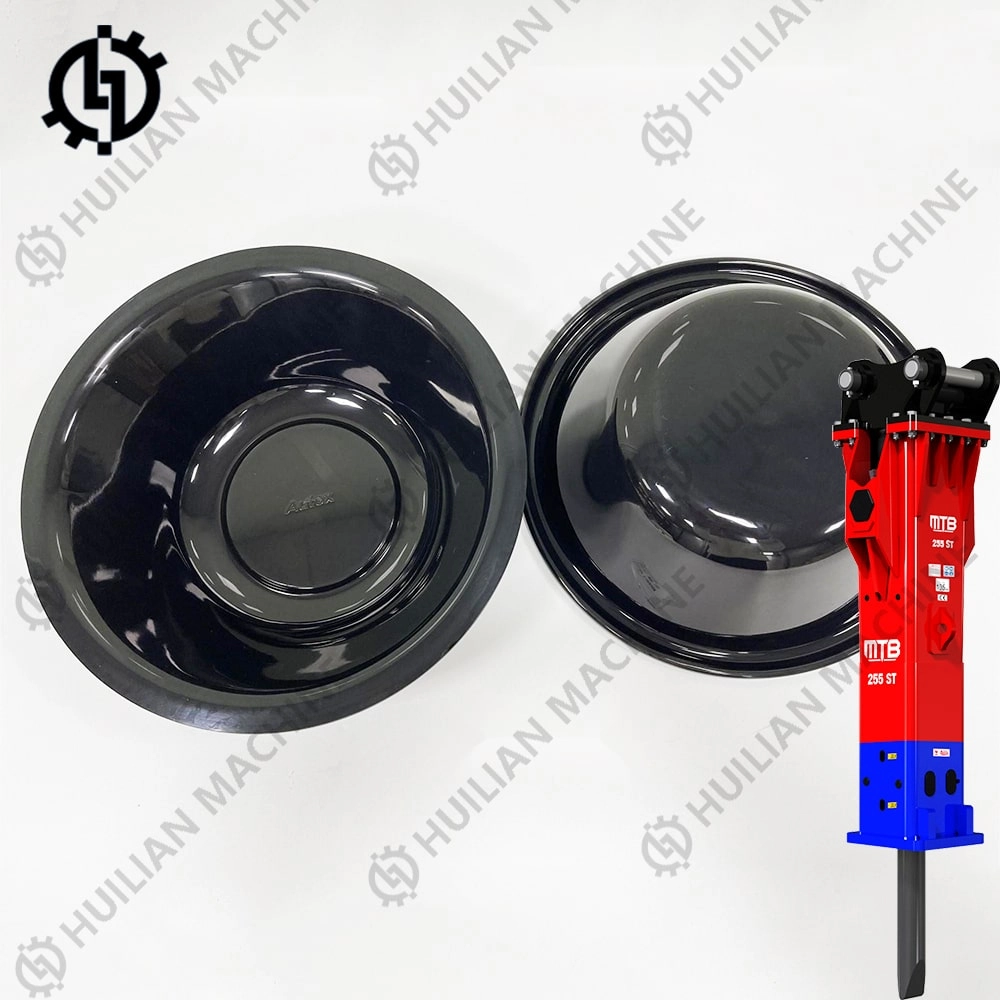
Inan Makina MTB Hydraulic Breaker Parts 45B0116A11 MTB255 MTB MT 255 Diaphragm MTB 255 IQ MTB-255 MTB 255 ST Membrane for Excavator Rock Hammer
 About us
© 2025 HUILIAN MACHINE. All rights reserved