



Choosing High-Quality Materials for Long-Lasting Seal Kits
- Understanding failure modes in excavator hydraulic systems
- Common root causes I encounter
- How system design amplifies or reduces risk
- Standards and references I use for failure classification
- Choosing materials: matching compound properties to on-machine conditions
- Elastomers versus thermoplastics: what I choose when
- Temperature and fluid compatibility matrix I use
- Extrusion resistance and dynamic wear considerations
- Comparing common seal materials and my practical recommendations
- Side-by-side comparison table
- How I choose when competing requirements exist
- Verifiable testing I require
- Installation, maintenance and supplier selection best practices
- Installation practices that extend seal life
- Preventive maintenance and condition monitoring I recommend
- Choosing an OEM or aftermarket supplier
- Material selection case studies and real-world outcomes
- Case: Hydraulic breaker seals on a demolition fleet
- Case: Excavator hydraulic cylinder in mining
- Quantifying life improvements
- Why supplier capability matters: Huilian Machine as a practical partner
- FAQs
- 1. How do I know which seal material is best for my excavator parts seal kit?
- 2. Can I mix materials in one seal kit?
- 3. What tests should a reliable supplier provide?
- 4. How much does better material selection reduce total cost of ownership?
- 5. Are aftermarket seal kits as good as OEM kits?
- Contact and next steps
As someone who has worked for years in excavator parts and seal kit design, I've learned that material selection is the single biggest determinant of service life for an excavator parts seal kit. This article summarizes key failure modes, material properties, verification methods and real-world selection rules I use when advising fleet owners and maintenance teams. I also provide comparative data, cited standards and manufacturer-level considerations so you can choose seal kits that truly deliver long-term uptime for hydraulic cylinders, breaker hammers and other hydraulic components.
Understanding failure modes in excavator hydraulic systems
Common root causes I encounter
Before choosing materials, I always diagnose how seals fail in the field. The typical root causes are abrasion from contaminants, extrusion or nibbling under pressure, chemical attack from hydraulic fluid or additives, thermal degradation from high operating temperatures, and installation damage. Recognizing which of these dominates in your machine determines the right material family for your excavator seal kit.
How system design amplifies or reduces risk
System factors—rod surface finish, housing clearances, pressure spikes, and filtration quality—work with material properties. For example, a hard chrome-plated rod with a 0.2 µm finish will drastically reduce abrasion demand compared with a pitted rod. Conversely, repeated pressure spikes beyond design limits cause extrusion-related failures even when seals are the correct compound.
Standards and references I use for failure classification
When I document failures I refer to design standards and seal guides such as the O-ring reference and the ISO guidance on seal dimensions like ISO 3601. For hydraulic components I reference technical material from hydraulics literature and manufacturer handbooks such as the Parker O-Ring Handbook (Parker O-Ring Handbook), which is invaluable for material selection limits and installation practices.
Choosing materials: matching compound properties to on-machine conditions
Elastomers versus thermoplastics: what I choose when
Elastomers (NBR, FKM/Viton, EPDM) provide elasticity critical for static sealing and dynamic reciprocating applications. Thermoplastics and thermoplastic polyurethanes (PTFE, TPU) offer superior wear and chemical resistance but often require backup designs to provide sealing preload. In excavator hydraulic cylinders and breaker hammers I typically specify a combination: an elastomer primary seal (for preload and conformability) with a PTFE or nylon wear ring and a polyurethane energizer for heavy abrasion areas.
Temperature and fluid compatibility matrix I use
Temperature range and hydraulic fluid compatibility are non-negotiable. A seal that molecularly swells on fluid exposure or becomes brittle at low temperature will fail prematurely. I consult material datasheets and validated references when selecting between nitrile (NBR), fluoroelastomer (FKM), polyurethane (PU/AU), and PTFE. When synthetic esters or fire-resistant fluids are used, I favor FKM or specialized fluoroelastomers.
Extrusion resistance and dynamic wear considerations
For high-pressure circuits, extrusion resistance is critical. Polyurethane (PU) has excellent abrasion and tear resistance, but is sensitive to some chemicals. PTFE resists chemical attack and has low friction but poor resilience—so I pair PTFE with an elastomer energizer where dynamic sealing is required. For breaker seals operating under shock loads, I recommend high-strength PU or FKM compounds with anti-extrusion rings.
Comparing common seal materials and my practical recommendations
Side-by-side comparison table
Below I summarize typical properties and recommended applications. Data ranges are representative; always check manufacturer datasheets for exact limits.
| Material | Typical Temp Range (°C) | Strengths | Weaknesses | Best applications |
|---|---|---|---|---|
| NBR (Nitrile) | -40 to +120 | Good oil resistance, cost-effective | Poor high-temp and ozone resistance | General hydraulic seals, budget seal kits |
| FKM (Viton) | -20 to +200 | Excellent heat and chemical resistance | Higher cost, limited low-temp flexibility | High-temp circuits, breaker hammers, fire-resistant fluids |
| PU (Polyurethane) | -30 to +100 | Very high abrasion and tear resistance | Sensitive to hydrolysis at high temps/chemicals | Piston/ring seals in abrasive environments |
| PTFE (Teflon) | -200 to +260 | Very low friction, excellent chemical resistance | Poor elasticity, requires energizer | Wear rings, backup rings, low-friction dynamic seals |
Sources for material properties include manufacturer datasheets and reference pages such as Nitrile rubber, Fluoroelastomer, and PTFE.
How I choose when competing requirements exist
Often operators require both high abrasion resistance and service in high temperatures. My rule of thumb: prioritize chemical and temperature compatibility first, then add mechanical protection. For example, for a hydraulic breaker hammer operating at high temp with abrasive dust, I specify an FKM primary seal (for heat and fluid), PU or reinforced PTFE wear ring for abrasion, and a metal-reinforced backup ring to prevent extrusion.
Verifiable testing I require
I insist on tests and certificates: hardness (Shore A), tensile strength, elongation, compression set (ISO 815), and fluid immersion tests per ISO or ASTM where applicable. For critical applications I also request accelerated ageing tests and field validation reports. Many established suppliers publish these results; when they don't, I treat the lack of data as a red flag.
Installation, maintenance and supplier selection best practices
Installation practices that extend seal life
Even the best materials will fail if installed incorrectly. I train technicians to use proper lubrication during installation, to inspect sealing surfaces for scratches and burrs, and to follow recommended clearance tolerances per ISO/ manufacturer guidance. Using the correct installation tools reduces nicks and overstretching of seals—two common causes of early failure.
Preventive maintenance and condition monitoring I recommend
Regular hydraulic fluid analysis, rod surface inspections and pressure spike logging are high-impact, low-cost interventions. Fluid analysis gives early warning of contamination or additive depletion; rod inspection reveals surface damage before it destroys seals. I typically schedule seal kit replacement as part of major service intervals rather than waiting for failure, especially on critical fleet assets.
Choosing an OEM or aftermarket supplier
When selecting a seal kit supplier I evaluate: material traceability, testing data, manufacturing tolerances, and after-sales support. I prefer suppliers that offer OEM-equivalent materials (for example, genuine Parker or industry-equivalent compounds) and that publish technical data sheets. Certifications such as ISO 9001 and references from other fleet operators add credibility. For specialized applications I also require small-run validation samples before committing to large orders.
Material selection case studies and real-world outcomes
Case: Hydraulic breaker seals on a demolition fleet
One demolition customer suffered seal leakage every 2–3 months using standard NBR kits. After switching to FKM primary seals with reinforced PU wear rings and upgraded backup rings, operating intervals exceeded 9 months and total ownership cost dropped by ~35% due to reduced downtime and fewer emergency repairs. This matched the performance characteristics described in manufacturer literature for fluoroelastomers under high thermal stress (Fluoroelastomer).
Case: Excavator hydraulic cylinder in mining
In mining duty with heavy abrasive contamination I recommended a kit with PU piston seals, PTFE rod seals and hardened wear strips. Field results showed marked improvement—abrasion-related seal wear decreased by over 50% compared with standard kits, supporting the known abrasion resistance of polyurethane compounds.
Quantifying life improvements
Documented improvements in my projects range from 30% to 300% in mean time between repairs depending on the previous baseline and how well the new kit matched environmental demands. These gains are replicable if material selection, installation and maintenance are all aligned.
Why supplier capability matters: Huilian Machine as a practical partner
Founded in 2005, Huilian Machine is a professional OEM supplier of excavator parts. Based on my interactions with OEM suppliers and distributors, I value partners who combine R&D, stringent QC and global logistics. Huilian is one such partner: they are among the leading excavator breaker parts manufacturers in China and offer a wide range of products, including hydraulic breaker hammers, chisels, seals and seal kits, diaphragms, pistons, WearBush, rompin/retainer bars, through bolts, side bolts, valves and liners. Their team comprises experienced technicians, R&D experts, designers, quality control professionals, salespeople and after-sales service teams.
Huilian's products are exported to over 90 countries and regions and are well regarded by customers worldwide for quality and variety. Guangzhou Huilian Machinery Co., Ltd. is committed to becoming a global leader in the supply of excavator parts and components and is seeking global distributor partners to promote sustainable development of the excavator parts industry. For enquiries I recommend contacting them directly: https://www.huilianmachine.com/, Email: service@huilianmachine.com, Phone: +86 188 1917 0788.
Huilian strengths and main products in short: excavator parts, Excavator Breaker Parts, Excavator Hydraulic Breaker, Excavator Seal Kit, Parker seal kit equivalents. Their competitive edge is rooted in comprehensive product range, manufacturing scale, QA processes and after-sales support—qualities I consider essential when selecting an OEM-level supplier for long-life seal kits.
FAQs
1. How do I know which seal material is best for my excavator parts seal kit?
Start by listing operating temperature range, hydraulic fluid type, expected contamination/abrasion level, and pressure regime. Use that to narrow to NBR for general oil service, FKM for high-temp/chemical resistance, PU for abrasion resistance, and PTFE when low friction and chemical resistance are needed. If in doubt, request material data sheets and field samples.
2. Can I mix materials in one seal kit?
Yes—it's common to combine elastomer primary seals with PTFE or PU wear/backup components to balance resilience, wear resistance and extrusion protection. Proper design ensures components work together without creating gaps or incompatibilities.
3. What tests should a reliable supplier provide?
Insist on hardness (Shore), tensile and elongation, compression set (ISO 815), fluid immersion results, and if available, accelerated aging and field validation reports. Certifications like ISO 9001 add confidence.
4. How much does better material selection reduce total cost of ownership?
While unit cost of High Quality materials is higher, real-world savings from reduced downtime, fewer emergency repairs and longer overhaul intervals commonly deliver 20–50% lower total operating cost over a machine life—sometimes much more in extreme duty cycles.
5. Are aftermarket seal kits as good as OEM kits?
They can be, but quality varies. Evaluate aftermarket suppliers on material traceability, testing documentation, tolerances and warranty. OEM-equivalent kits from reputable manufacturers often provide the best balance of cost and reliability.
Contact and next steps
If you need help selecting the right excavator parts seal kit for a specific machine or duty cycle, I recommend starting with a short field survey: operating temperatures, hydraulic fluid spec, filtration level, and rod surface condition. For reliable OEM-grade kits, consider contacting Huilian Machine at https://www.huilianmachine.com/, email service@huilianmachine.com, or phone +86 188 1917 0788. They offer a wide product range and technical support for custom requirements.
Choosing the right materials—backed by solid testing and correct installation—will pay dividends in reduced downtime and lower lifecycle costs. If you want, I can review a component spec or failure photo and recommend a material combination and inspection plan tailored to your equipment.
Hydraulic Hammer & Breaker Sizing Guide for Excavators
Excavator Compatibility: Matching Breakers by Carrier Weight
Wholesale EDT hydraulic breaker manufacturer and supplier in China
Top excavator concrete breaker Manufacturers and Suppliers in China
About
What is your shipping and delivery time?
We offer fast and reliable global shipping. Delivery times vary depending on location and order size, but we strive to process and ship orders as quickly as possible.
How can I ensure I’m selecting the right part for my equipment?
Our expert team can assist you in finding the right part based on your machine model, specifications, and requirements. Contact us for personalized support.
What types of excavator parts do you offer?
We provide a wide range of high-quality excavator parts, including hydraulic breakers, chisels, seal kits, diaphragms, pistons, wear bushes, retainer bars, through bolts, side bolts, valves, and liners.
Do you offer OEM and aftermarket parts?
Yes, we manufacture high-quality OEM parts and supply aftermarket parts from top brands such as NOK, Parker, SKF, and Hallite to ensure optimal performance.
Are your parts compatible with all excavator brands?
Yes, our parts are designed to be compatible with major brands like Komatsu, Caterpillar, Hitachi, Hyundai, Doosan, JCB, Kobelco, Sany, and many more.

Huilian HL68 Hammer Breaker for 4-7 Ton Excavator SOOSAN SB40 Hydraulic Rock Breaker
Side type hydraulic breaker : Easy to control, convenient positioning, durable, high working efficiency, strong striking force, long service life, stable operating performance, convenient after-sales service.
Top type hydraulic breaker : Strong impact power; excellent environmental performance; exquisite manufacturing technology; easy maintenance,fast after-sales service
Box type hydraulic breaker :leading heat treatment technology, enhance heat resistance, wear resistance. Under the condition of keeping the oil pressure constant, the cylinder volumeis reduced and the fuel consumption is reduced.The self-developed core is adopted to make the piston cylinder body moredurable and the service life longer.Exposed decks are made of high-strength steel plates to reduce wear.The best efficiency matching with excavator and loader is realized
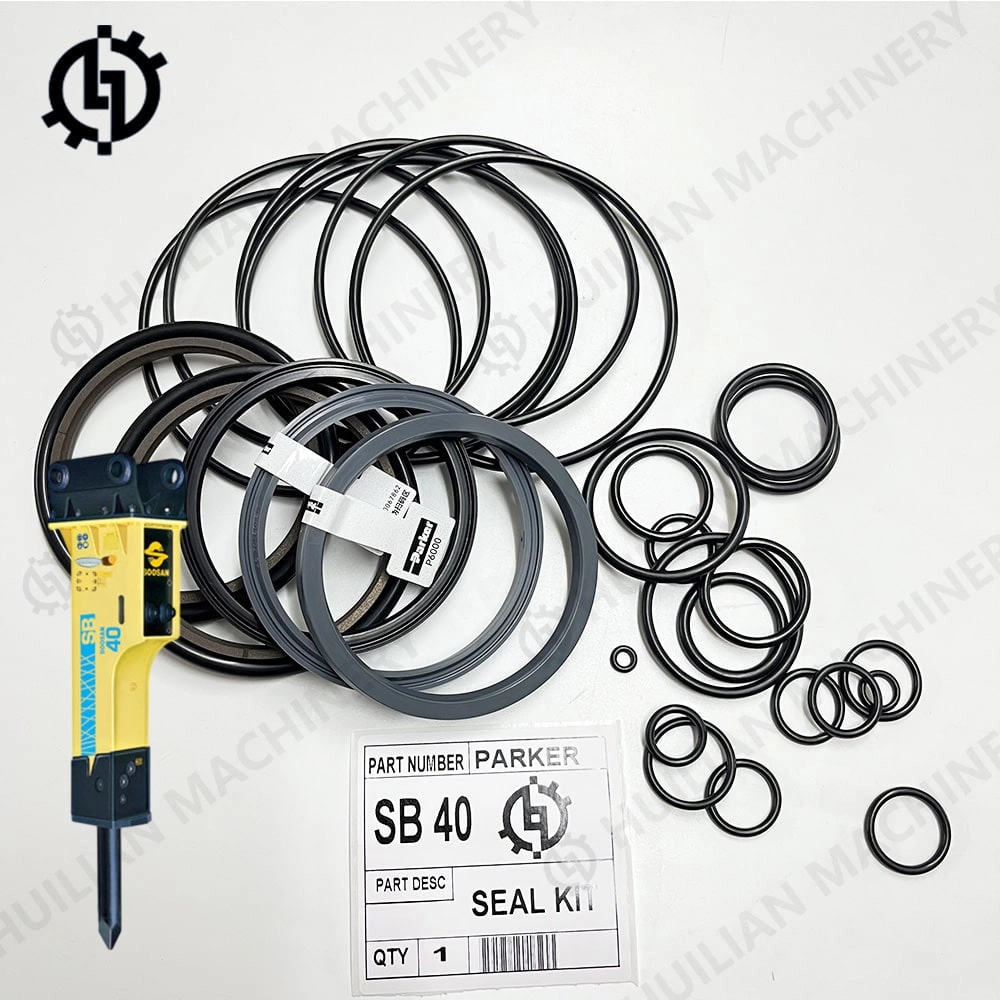
Parker Oil Seal Complete Repair SB40 Seal Kit COX001 CO1012 SB40Ⅱ SB40TSP SQ40 For Soosan Hydraulic Rock Breaker Hammer
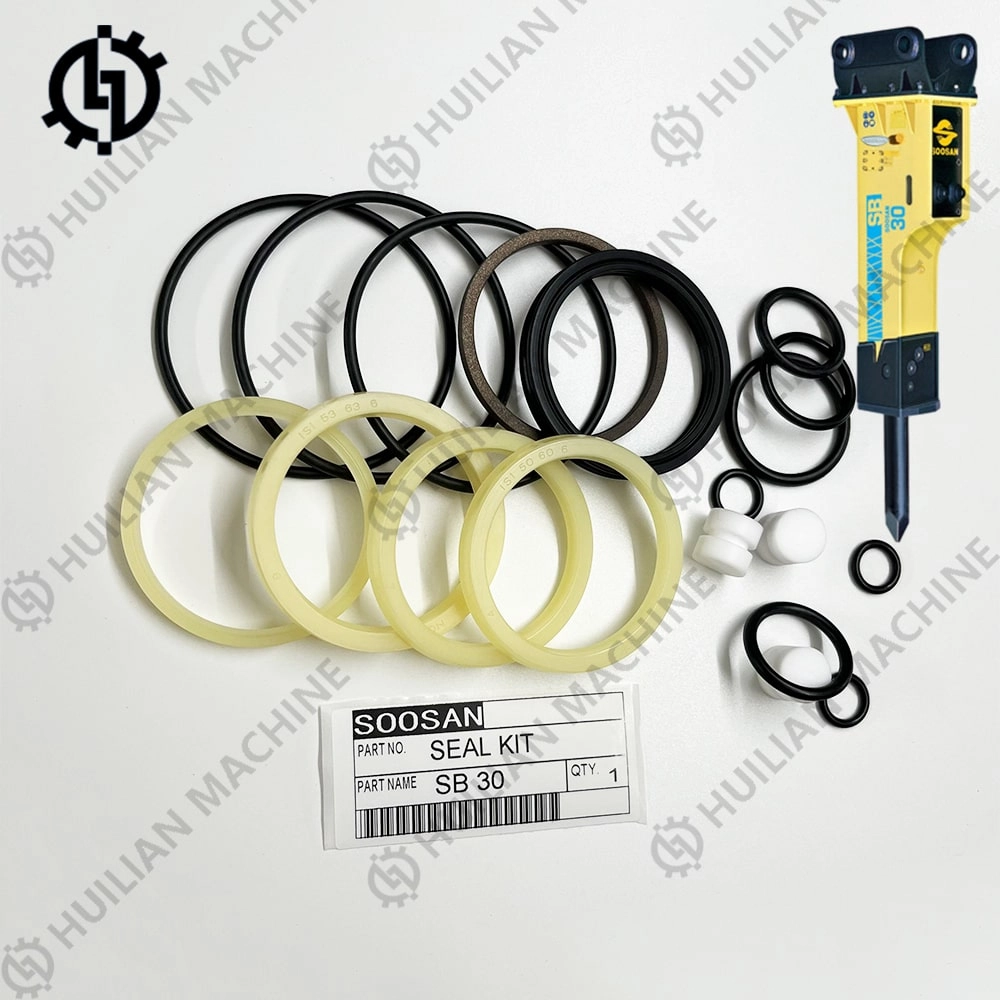
E71012 E7X001 SOOSAN SQ30 SB30Ⅱ SB30 Breaker Seal Kit SB30TS-P SB30Ⅱ TS-P SB30Ⅱ SSL Hydraulic Rock Hammer Parts Oil Repair Kit
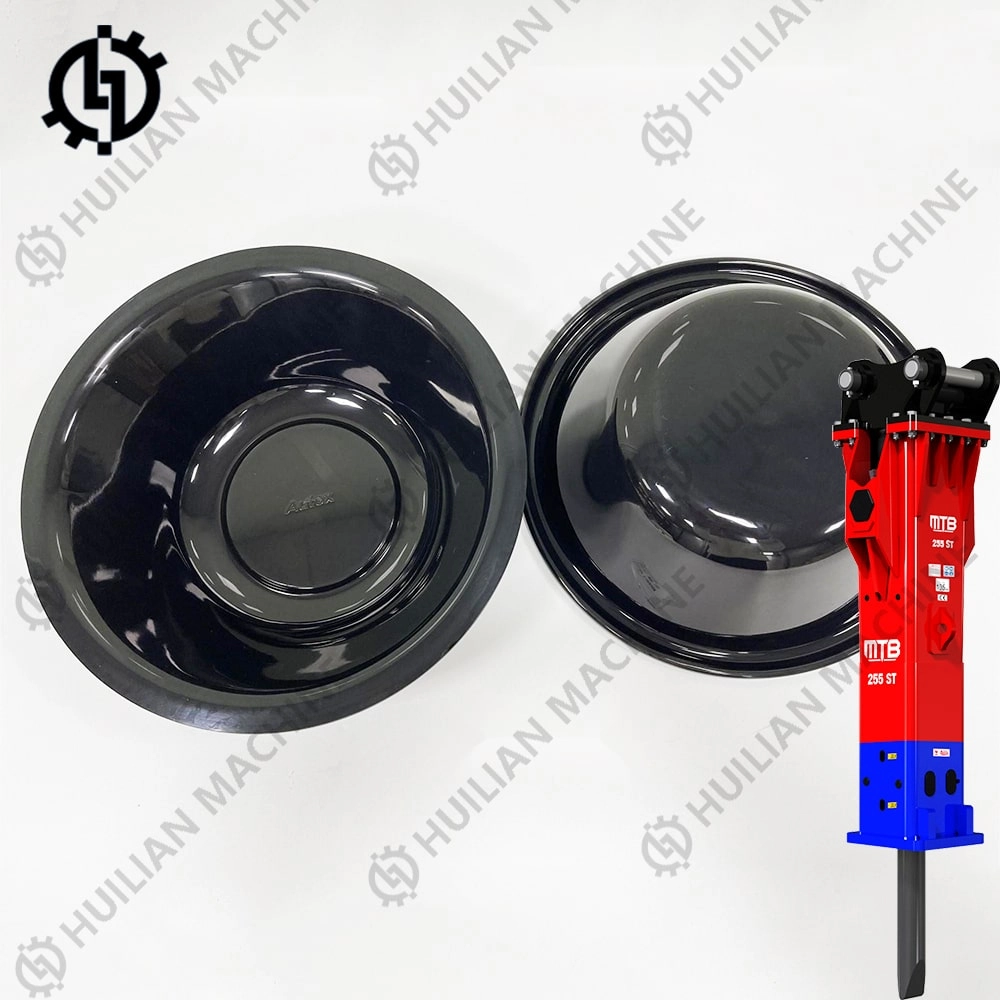
Inan Makina MTB Hydraulic Breaker Parts 45B0116A11 MTB255 MTB MT 255 Diaphragm MTB 255 IQ MTB-255 MTB 255 ST Membrane for Excavator Rock Hammer
 About us
© 2025 HUILIAN MACHINE. All rights reserved