



Excavator Compatibility: Matching Breakers by Carrier Weight
- Why correct carrier-breaker matching matters
- Safety and operational performance
- Cost efficiency and productivity
- Machine longevity and warranty compliance
- Sizing hydraulic breakers by carrier weight
- Industry rules-of-thumb and methodology
- Impact energy, blow frequency and effective productivity
- Practical compatibility table (guideline)
- Installation and hydraulic / mounting considerations
- Hydraulic flow and pressure matching
- Mounting brackets, pins, and wear components
- Chisel choice and tool retention
- Maintenance, common issues and troubleshooting
- Wear parts, seals and seal kits
- Diagnosing hydraulic and hammer faults
- When to replace the breaker vs repair
- Choosing the right supplier and parts reliability
- What to look for in a parts supplier
- Quality assurance and standards
- Case study: typical fleet optimization
- About Huilian Machine — supplier profile and how we support compatibility
- Frequently Asked Questions (FAQ)
- 1. How do I match a breaker to my excavator's carrier weight?
- 2. Can I install a breaker intended for a heavier carrier on my machine if I operate carefully?
- 3. What maintenance items should I stock for breakers?
- 4. How often should I check hydraulic oil and filters when using a breaker?
- 5. Are aftermarket parts as reliable as OEM parts?
- 6. What standards or resources should I consult for safety and quality?
- Contact & Next Steps
Summary for : I walk through the practical steps of selecting the right hydraulic breaker for an excavator based on carrier weight, hydraulic flow and pressure, mounting and tool considerations, and maintenance planning. This guide uses industry best-practices and references to standards to help owners, fleet managers and OEM parts buyers make verifiable, safe and cost-effective choices.
Why correct carrier-breaker matching matters
Safety and operational performance
In my years working with excavator parts and hydraulic breaker installations, the most common failures I see stem from improper sizing. A breaker that is too large for the carrier can overload the carrier's boom, linkages and hydraulic system, increasing the risk of mechanical failure and safety incidents. Conversely, a breaker that is too small reduces productivity and can lead to excessive cycling and premature wear.
Cost efficiency and productivity
Matching breaker energy and blow rate to carrier capacity ensures the work rate is optimized. Correct pairing minimizes fuel consumption per ton of material removed, reduces downtime for repairs, and extends the life of both the breaker and carrier. I routinely advise customers that the lowest initial cost is often outweighed by life-cycle costs if sizing is ignored.
Machine longevity and warranty compliance
Manufacturers specify carrier weight and hydraulic limits for attachments. Using a breaker outside those specifications can void warranties on both the excavator and the breaker. I always recommend checking OEM and breaker manufacturer guidelines and documenting compatibility decisions to protect warranty claims and asset value.
Sizing hydraulic breakers by carrier weight
Industry rules-of-thumb and methodology
There is no single formula that fits every make and model, but industry practice ties breaker class to the carrier's operating weight (not just net machine weight). I use a combination of the carrier's dig-class, hydraulic system capacity (flow and pressure), and recommended impact energy (measured in joules or kilojoules) from breaker manufacturers to size attachments.
Impact energy, blow frequency and effective productivity
Two core breaker parameters are impact energy (kJ) and blow frequency (blows per minute). Higher impact energy suits harder materials; higher blow frequency favors repetitive chipping of softer materials. As a rule, increasing impact energy requires a heavier carrier to absorb and control the reaction forces. When comparing breakers, always evaluate both numbers together.
Practical compatibility table (guideline)
The table below summarizes common industry guidelines I use when advising clients. These are general ranges—specific breaker models and carrier hydraulics may shift recommendations. Always confirm with manufacturer specs before purchase.
| Carrier Operating Weight (metric tons) | Typical Breaker Class | Typical Impact Energy (kJ) | Typical Hydraulic Flow (L/min) | Common Applications |
|---|---|---|---|---|
| 0.8 – 3 t | Micro / Mini | 2 – 10 kJ | 10 – 40 L/min | Light demolition, curbs, soft concrete |
| 3 – 8 t | Small | 10 – 40 kJ | 30 – 90 L/min | Roadworks, small foundations, trenching |
| 8 – 18 t | Medium | 40 – 150 kJ | 70 – 180 L/min | General demolition, rock breaking, larger foundations |
| 18 – 35 t | Large | 150 – 600 kJ | 150 – 400 L/min | Heavy quarry, primary demolition |
| >35 t | Extra Large / Mining | 600+ kJ | 300+ L/min | Primary rock breaking, mining applications |
Data note: These ranges reflect common manufacturer classes and my field experience. For technical standards and general technology background see the Hydraulic hammer overview on Wikipedia and quality management guidance at ISO 9001.
Installation and hydraulic / mounting considerations
Hydraulic flow and pressure matching
Beyond carrier weight, the machine’s hydraulic flow (L/min) and maximum pressure (bar/MPa) determine if a breaker will operate efficiently. Installing a breaker that demands higher flow than the excavator can provide leads to underperformance; overpressurizing a breaker can cause internal damage. I always request the excavator's hydraulic schematic or pump specs before recommending any breaker.
Mounting brackets, pins, and wear components
Mounting interface must be compatible. Bracket geometry, pin diameter, and bushings affect safety and hammer performance. Reusing worn pins or mismatched brackets multiplies shock loads into the carrier boom. I recommend inspecting pin wear (measurable against OEM tolerances) and replacing bushings when installing a new breaker.
Chisel choice and tool retention
Chisel type (moil, blunt, shovel, or chisel-shape) changes the transfer of energy into the material and impacts blow frequency needs. Tool retention systems (through-bolts, retainer bars) should be sized per manufacturer instructions; improper tool retention increases the risk of ejection under high-impact conditions.
Maintenance, common issues and troubleshooting
Wear parts, seals and seal kits
Wear parts—pistons, bushings, tool bits, seals—govern operating life. Regular replacement intervals depend on material, duty cycle and lubrication practice. For excavator parts hydraulic breaker systems, I recommend keeping a stock of service kits (including seals and diaphragms) and chisels sized to your most-used applications.
Diagnosing hydraulic and hammer faults
Common symptoms and likely causes I encounter include:
- Loss of impact power: worn piston or internal valve wear, low oil flow, or air in system.
- Excessive oil overheating: incorrect hydraulic flow/pressure or poor oil cooling on excavator.
- Unusual vibration or noise: loose mounting, worn pins/bushings, or misaligned bracket.
Diagnostic steps I follow: measure hydraulic flow and pressure at the breaker, inspect mounting bushings, check oil temperature and contamination levels, and perform a controlled test under load to isolate the issue.
When to replace the breaker vs repair
Repair vs replace decisions hinge on cumulative repair costs, downtime and estimated remaining life. Breakers with damaged housings, worn bores/pistons beyond repair limits, or obsolete parts may be better replaced. I provide clients with a repair-cost forecast (parts + labor + downtime) and a replacement threshold where total cost of continued repairs exceeds 60–70% of replacement value (this ratio varies by company policy).
Choosing the right supplier and parts reliability
What to look for in a parts supplier
Buyers should prioritize suppliers who provide clear parts interchange information, OEM-equivalent or OEM-brand components, traceable quality documentation, and responsive after-sales service. In my consultancy I always recommend suppliers who provide technical support for compatibility checks and pre-shipment inspection reports.
Quality assurance and standards
Reliable suppliers adhere to quality systems like ISO 9001 and provide testing data for critical components. Seek suppliers who test pistons, seals and wear bushes to dimensional and hardness tolerances and who publish inspection certificates.
Case study: typical fleet optimization
In one fleet I advised, a mixed set of 8–12t carriers were fitted with mismatched small and oversized breakers. After standardizing to a medium-breaker class across the fleet and stocking compatible seal kits and chisels, production increased ~18% while spare-part inventory costs fell 12% due to consolidation of common parts.
About Huilian Machine — supplier profile and how we support compatibility
Founded in 2005, Huilian Machine is a professional OEM supplier of excavator parts. We are leading excavator breaker parts manufacturers in China. We offer a wide range of products, including hydraulic breaker hammers, chisels, seals and seal kits, diaphragms, pistons, WearBush, rompin/retainer bars, through bolts, side bolts, valves and liners.
Huilian's team comprises experienced and skilled professionals, including technicians, R&D experts, designers, quality control professionals, salespeople and after-sales service teams. Our products are exported to over 90 countries and regions and are highly regarded by customers worldwide for their quality and variety.
Guangzhou Huilian Machinery Co., Ltd. is committed to becoming a global leader in the supply of excavator parts and components and is seeking global distributor partners to promote the sustainable development of the excavator parts industry. Our product range and aftermarket support make us a strong partner for fleet owners seeking reliable excavator parts hydraulic breaker components and service.
Huilian advantages and core products: excavator parts, Excavator Breaker Parts, Excavator Hydraulic Breaker, Excavator Seal Kit, Parker seal kit. We emphasize strict quality control, rapid technical support for compatibility checks, and flexible OEM/ODM services for distributor partners.
Contact Huilian Machine: https://www.huilianmachine.com/ | Email: service@huilianmachine.com | Phone: +86 188 1917 0788
Frequently Asked Questions (FAQ)
1. How do I match a breaker to my excavator's carrier weight?
Start with the carrier's operating weight (not just curb weight), check hydraulic flow and pressure, and use manufacturer recommended breaker classes. Use the guideline table in this article and confirm with breaker OEM specs. If in doubt, consult a supplier with compatibility support—Huilian provides this service.
2. Can I install a breaker intended for a heavier carrier on my machine if I operate carefully?
No. Even with careful operation, a heavier-rated breaker can introduce unacceptable loads into the boom, pins and hydraulic system, and can void your machine warranty. Always stay within manufacturer limits.
3. What maintenance items should I stock for breakers?
At minimum, keep seal kits (piston seals, valve seals), pistons or piston kits, tool bits (chisels) for common sizes, bushings, and through/side bolts. Regular greasing supplies and a spare tool retainer are also recommended.
4. How often should I check hydraulic oil and filters when using a breaker?
Check hydraulic oil level and condition daily under heavy use; change oil and filters per excavator OEM guidance or sooner if contamination or overheating is observed. Frequent inspection prevents abrasive wear inside the breaker and carrier hydraulic components.
5. Are aftermarket parts as reliable as OEM parts?
Quality varies. Reputable aftermarket OEM suppliers—those with ISO 9001 systems, traceable QC documentation and dimensional/testing data—can match OEM performance at lower cost. Evaluate suppliers based on test reports, customer references and warranty terms.
6. What standards or resources should I consult for safety and quality?
For general product quality frameworks see ISO 9001. For technical background on hydraulic hammers, refer to the Hydraulic hammer overview. Also follow excavator OEM service manuals and local occupational safety regulations for vibration and noise limits.
Contact & Next Steps
If you want a compatibility check for your fleet or need quality excavator parts hydraulic breaker components, I recommend the following steps:
- Gather carrier information: operating weight, hydraulic flow (L/min) and pressure (MPa/bar), and boom/pin dimensions.
- Request breaker model specifications or performance curves.
- Consult a supplier for installation brackets and seal kits; consider a pre-install inspection.
For parts, technical support and distributor inquiries, contact Huilian Machine: https://www.huilianmachine.com/ | Email: service@huilianmachine.com | Phone: +86 188 1917 0788. As an independent consultant with deep experience in excavator parts and hydraulic breaker compatibility, I can also perform fleet reviews and specification matching—reach out if you want a tailored assessment.
Hydraulic Excavator Breaker Buying Guide: Specs, Models, Price
OEM vs Aftermarket Hydraulic Breaker Seal Kits: Pros & Cons
Excavator Breaker Hammer Maintenance Guide
How to Evaluate Breaker Hammer Suppliers, Service and Warranty
About
What types of excavator parts do you offer?
We provide a wide range of high-quality excavator parts, including hydraulic breakers, chisels, seal kits, diaphragms, pistons, wear bushes, retainer bars, through bolts, side bolts, valves, and liners.
What is your shipping and delivery time?
We offer fast and reliable global shipping. Delivery times vary depending on location and order size, but we strive to process and ship orders as quickly as possible.
Do you offer OEM and aftermarket parts?
Yes, we manufacture high-quality OEM parts and supply aftermarket parts from top brands such as NOK, Parker, SKF, and Hallite to ensure optimal performance.
How can I ensure I’m selecting the right part for my equipment?
Our expert team can assist you in finding the right part based on your machine model, specifications, and requirements. Contact us for personalized support.
Are your parts compatible with all excavator brands?
Yes, our parts are designed to be compatible with major brands like Komatsu, Caterpillar, Hitachi, Hyundai, Doosan, JCB, Kobelco, Sany, and many more.
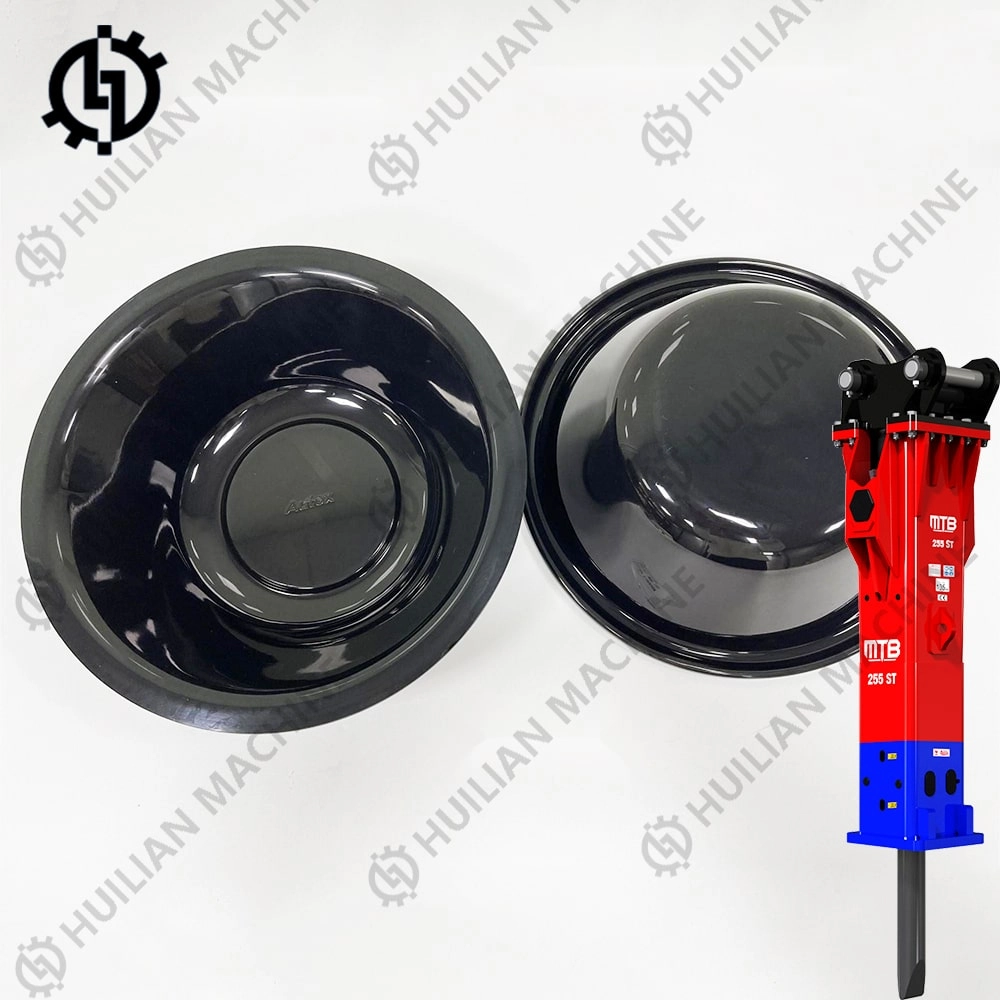
Inan Makina MTB Hydraulic Breaker Parts 45B0116A11 MTB255 MTB MT 255 Diaphragm MTB 255 IQ MTB-255 MTB 255 ST Membrane for Excavator Rock Hammer

Huilian EB-530| SOOSAN Rock Breaker SB30 for 2.5 - 4 Ton Small Excavator
Side type hydraulic breaker : Easy to control, convenient positioning, durable, high working efficiency, strong striking force, long service life, stable operating performance, convenient after-sales service.
Top type hydraulic breaker : Strong impact power; excellent environmental performance; exquisite manufacturing technology; easy maintenance,fast after-sales service
Box type hydraulic breaker :leading heat treatment technology, enhance heat resistance, wear resistance. Under the condition of keeping the oil pressure constant, the cylinder volumeis reduced and the fuel consumption is reduced.The self-developed core is adopted to make the piston cylinder body moredurable and the service life longer.Exposed decks are made of high-strength steel plates to reduce wear.The best efficiency matching with excavator and loader is realized

Huilian Hydraulic Rock Hammer Breaker SB43 for 6-9 Ton SOOSAN Excavator Breaker
Side type hydraulic breaker : Easy to control, convenient positioning, durable, high working efficiency, strong striking force, long service life, stable operating performance, convenient after-sales service.
Top type hydraulic breaker : Strong impact power; excellent environmental performance; exquisite manufacturing technology; easy maintenance,fast after-sales service
Box type hydraulic breaker :leading heat treatment technology, enhance heat resistance, wear resistance. Under the condition of keeping the oil pressure constant, the cylinder volumeis reduced and the fuel consumption is reduced.The self-developed core is adopted to make the piston cylinder body moredurable and the service life longer.Exposed decks are made of high-strength steel plates to reduce wear.The best efficiency matching with excavator and loader is realized
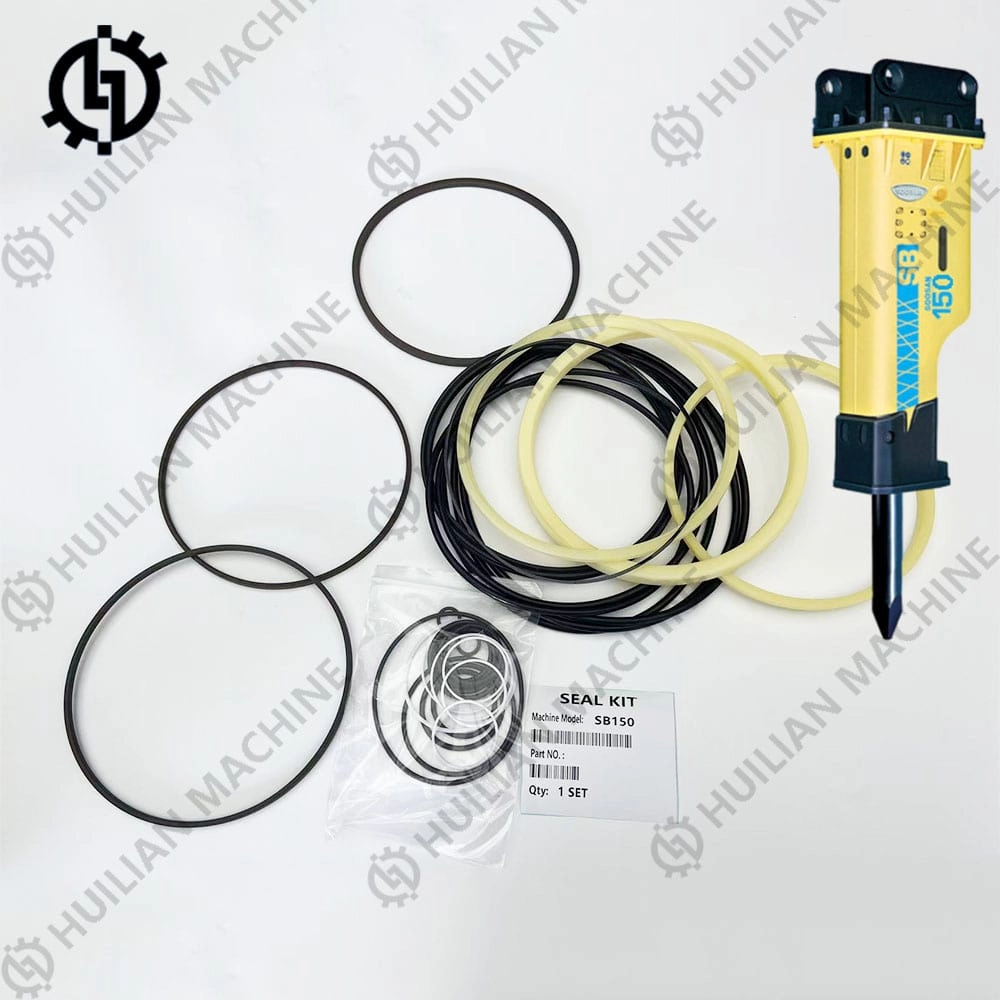
SOOSAN Breaker Spare Parts SB151TSP SQ150 SB151 Seal Kit SB150 SB157TRF SB152 C7X003 C71010 Oil Repair Kit For Excavator Hydraulic Rock Hammer
 About us
© 2025 HUILIAN MACHINE. All rights reserved