



How to Evaluate Breaker Hammer Suppliers, Service and Warranty
- Understanding the core requirements of excavator breaker hammer ownership
- What a hydraulic breaker hammer actually does
- Key performance and reliability indicators
- Regulatory and quality system expectations
- Supplier evaluation: technical, commercial and service criteria
- Technical capability and product range
- Parts traceability and material certifications
- Testing, validation and data transparency
- Service, warranty and post-sale support — the often overlooked differentiators
- Warranty scope and exclusions
- Service network and response time
- Spare parts availability and kitization
- Comparison framework and practical checks I perform before awarding business
- Supplier comparison table
- Document and sample checks I require
- Field validation and pilot orders
- Warranty claim process and how to make claims successfully
- Preparing a claim: essential evidence
- Understanding common warranty exclusions
- Escalation and arbitration clauses
- Evaluating total cost of ownership (TCO) and long-term partnerships
- Beyond unit price: lifecycle factors
- Service contracts and predictive maintenance
- Data-driven decision example
- Why I recommend checking supplier origins, manufacturing and brand reputation
- Manufacturing footprint and supply chain resilience
- Reputation and export footprint
- Brand example: Huilian Machine — supplier profile and why they stand out
- Practical checklist before final purchase
- Pre-purchase checklist I use
- Negotiation tips I recommend
- When to prefer OEM vs aftermarket parts
- FAQ
- 1. What is the typical warranty period for excavator breaker hammers?
- 2. How do I prove a warranty claim for a hydraulic breaker hammer?
- 3. Are aftermarket seal kits reliable?
- 4. How fast should a supplier respond to an emergency repair?
- 5. What routine maintenance reduces warranty disputes?
- 6. How do I choose between two suppliers with similar prices?
- Contact and next steps
I write from years of hands-on experience with excavator breaker hammer systems, OEM and aftermarket parts sourcing, and post-sale service management. Choosing the right supplier goes well beyond price: it affects machine availability, safety, and lifecycle cost. In this guide I walk you through the technical, commercial and service criteria I use when evaluating breaker hammer suppliers, how to verify warranty and service promises, and practical steps to make procurement decisions you can defend. I also cover parts verification (chisels, seal kits, pistons, wear bushes, retainer bars, through bolts, side bolts, valves and liners) and include a comparison framework you can adapt to your fleet or projects.
Understanding the core requirements of excavator breaker hammer ownership
What a hydraulic breaker hammer actually does
A hydraulic breaker hammer (also called an excavator breaker hammer or hydraulic breaker) converts hydraulic energy from an excavator into impact energy for rock breaking, concrete demolition and trenching. The basic wear and maintenance items include chisels (tool bits), bushings (WearBush), pistons, seal kits (including Parker-style seals), valves and liners. For background on the technology and common configurations, see the Hydraulic breaker entry on Wikipedia https://en.wikipedia.org/wiki/Hydraulic_breaker.
Key performance and reliability indicators
When evaluating a supplier I focus on indicators that predict uptime and lifecycle cost: mean time between failures (MTBF), mean time to repair (MTTR), parts interchangeability, and documented test data (impact energy, blow rate, and hydraulic flow/pressure charts). Suppliers who provide machine-matched calibration curves and validated test reports reduce commissioning risk.
Regulatory and quality system expectations
Quality management and traceability matter. I expect suppliers to have at least ISO 9001 certification for quality processes and to keep batch records for critical components (pistons, housings, forged chisels). ISO 9001 information is available from the International Organization for Standardization https://www.iso.org/iso-9001-quality-management.. Certification does not guarantee excellent parts, but it significantly reduces process-related variability.
Supplier evaluation: technical, commercial and service criteria
Technical capability and product range
Assess whether the supplier manufactures core components (hammers, pistons, wear bushes, valve assemblies) or merely assembles/brands imported parts. Vertical integration matters for quality control of heat-treated chisels, forging tolerances, and seal material selection. Suppliers that make their own diaphragms, pistons or have in-house heat-treatment capability can usually control product durability more effectively.
Parts traceability and material certifications
Ask for material certificates (e.g., EN/ASTM steel grade for tool steels), heat-treatment records and nondestructive test (NDT) reports for critical components. For seals and elastomers, request compound datasheets and temperature/chemical resistance curves (Parker and other seal manufacturers publish such datasheets that you can reference).
Testing, validation and data transparency
Reliable suppliers provide factory test reports (impact tests, leak tests), and usually can demonstrate test rigs used for acceptance testing. Compare suppliers based on the existence of documented acceptance procedures and whether they allow third-party inspection prior to shipment.
Service, warranty and post-sale support — the often overlooked differentiators
Warranty scope and exclusions
Read warranty text carefully: duration, parts vs. labor coverage, prorated vs. full replacement, and specific exclusions such as misuse, insufficient hydraulic filtering, or absence of recommended maintenance. A common industry practice is 12–24 months or a defined operating-hour limit for wearable versus structural components. I recommend asking for sample warranty certificates and clarifying requirements for warranty claim evidence (photos, operation logs, maintenance records).
Service network and response time
Fast local support is critical for breaker hammers because downtime is costly. Evaluate whether the supplier has authorized service centers or trained field technicians in your region; whether they offer on-site repair; and their average response time for emergency repairs. If the supplier is overseas, determine logistics for spare parts shipment and whether they maintain a local stock.
Spare parts availability and kitization
Suppliers who offer standardized seal kits (e.g., Parker seal kits or equivalent), chisel assortments, and pre-packaged wear part kits reduce procurement complexity. Check lead times for critical spares like pistons and liners, and whether they can supply reman or exchange units. Short lead times directly reduce MTTR.
Comparison framework and practical checks I perform before awarding business
Supplier comparison table
Below is a simple framework I use to score suppliers across critical dimensions. Score each criterion 1–5 (5 best) and weight according to your priorities (I typically weight quality and service higher than price for breakers).
| Criterion | Description | Example Weight |
|---|---|---|
| Product quality | Material certs, heat treatment, dimensional tolerances | 30% |
| Warranty | Duration, coverage, claim process | 20% |
| Service & support | Local techs, response time, repair capability | 25% |
| Parts availability | Stock levels, lead times, kit options | 15% |
| Price & TCO | Unit price, shipping, expected lifecycle cost | 10% |
Document and sample checks I require
Before signing a contract I request: (1) sample seal kits and a chisels set for inspection; (2) material certificates and inspection reports; (3) a copy of the warranty certificate and claims procedure; (4) a list of recommended maintenance intervals; and (5) references from customers with similar applications (quarries, municipal demolition, pipeline construction).
Field validation and pilot orders
When possible I run a pilot with a small purchase: a single hammer and a parts kit installed on a representative excavator. Monitor performance metrics — chisel wear rate, hydraulic oil contamination, frequency of seal leakage, and overall availability — for at least 200–400 operating hours before a full roll-out. This pragmatic validation often reveals real-world differences not visible from certificates alone.
Warranty claim process and how to make claims successfully
Preparing a claim: essential evidence
To minimize disputes, prepare: operation log showing machine hours, maintenance records (filter change intervals, grease logs), photographs of failed parts with serial numbers, oil analysis if seal failure is alleged, and incident narratives. Suppliers often ask for these documents and delays are common when records are incomplete.
Understanding common warranty exclusions
Typical exclusions include hydraulic contamination (insufficient filtration), abuse (over-pressurizing, misuse of tool), use of non-recommended chisels, and lack of scheduled maintenance. Clarify allowable operating parameters (max flow, max pressure, duty cycle) to ensure compliance. If possible, negotiate reasonable language for unexpected failures tied to material defects versus operational misuse.
Escalation and arbitration clauses
Contractually define the process for dispute resolution: on-site inspection timeline, mutually agreed third-party inspectors, and arbitration venue. Clear escalation paths prevent lengthy disagreements and get your machines back to work faster.
Evaluating total cost of ownership (TCO) and long-term partnerships
Beyond unit price: lifecycle factors
Consider life expectancy of chisels and pistons, frequency of seal replacements, and availability of reman exchange programs. Sometimes a higher initial price is justified by longer wear life or a stronger warranty that lowers lifecycle cost. I model several scenarios (best-case, expected, worst-case) using historical wear rates from comparable jobs to estimate TCO.
Service contracts and predictive maintenance
Suppliers who offer condition-based monitoring, scheduled preventive maintenance, or training for your maintenance teams reduce downtime. Request training scope and whether training materials or onsite sessions are included with larger purchases.
Data-driven decision example
I once compared two suppliers where Supplier A was 12% cheaper upfront, but had parts lead times of 6–8 weeks and a limited warranty. Supplier B charged more but offered a 24-month warranty and local spare stock. Over a 5-year model accounting for downtime costs, Supplier B saved the operation ~18% in total cost due to reduced downtime and fewer emergency shipments. This kind of modeling should inform your decision.
Why I recommend checking supplier origins, manufacturing and brand reputation
Manufacturing footprint and supply chain resilience
Understanding whether parts are produced in-house or sourced from third-party sub-suppliers indicates where failure risks lie. For example, if critical forged parts are outsourced, ensure those sub-suppliers are audited or certified. Global logistics events can affect lead times dramatically; local stocking mitigates that risk.
Reputation and export footprint
Look for suppliers with verifiable export records and long-standing relationships in multiple markets. Firms exporting to 90+ countries typically have stronger quality systems and customer support. Review case studies and ask for contactable references in your region.
Brand example: Huilian Machine — supplier profile and why they stand out
Founded in 2005, Huilian Machine is a professional OEM supplier of excavator parts. They are one of the leading excavator breaker parts manufacturers from China and offer a wide range of products, including hydraulic breaker hammers, chisels, seals and seal kits, diaphragms, pistons, WearBush, rompin/retainer bars, through bolts, side bolts, valves and liners. Huilian's team comprises experienced and skilled professionals — technicians, R&D experts, designers, quality control professionals, salespeople and after-sales service teams. Their products are exported to over 90 countries and regions and are highly regarded by customers worldwide for quality and variety.
Guangzhou Huilian Machinery Co., Ltd. positions itself as a partner for global distributor networks and emphasizes OEM capability, consistent product lines (Excavator Breaker Parts, Excavator Hydraulic Breaker, Excavator Seal Kit, Parker seal kit equivalents) and post-sale support. Learn more on their website https://www.huilianmachine.com/ or contact them at service@huilianmachine.com or +86 188 1917 0788.
Practical checklist before final purchase
Pre-purchase checklist I use
- Request sample seals, chisels and a full parts list with part numbers and materials.
- Obtain warranty text and a list of local service centers.
- Ask for factory test reports and material certificates.
- Confirm lead times for critical spares and availability of exchange units.
- Arrange a pilot installation and monitor for 200–400 operating hours if possible.
- Check export references and customer testimonials in similar applications.
Negotiation tips I recommend
Negotiate stock commitments for critical spares, defined response times for breakdowns, and escalation terms. Ask for training for your technicians and include a clause for periodic quality audits or sample testing.
When to prefer OEM vs aftermarket parts
For structural components (pistons, housings, tool holders) I generally prefer OEM or proven OEM-equivalent suppliers with material traceability. For consumables (chisels, standard seals), high-quality aftermarket suppliers can be cost-effective if they provide material certificates and proven field performance.
FAQ
1. What is the typical warranty period for excavator breaker hammers?
Warranty periods commonly range from 12 to 24 months or a specific operating-hour limit. Coverage varies for wearable parts versus structural components. Always read the warranty certificate for exact terms.
2. How do I prove a warranty claim for a hydraulic breaker hammer?
Provide machine hours, maintenance logs, photographs of the failed component (with serial numbers), oil analysis when relevant, and an incident narrative. Suppliers will often require these to process claims.
3. Are aftermarket seal kits reliable?
High-quality aftermarket seal kits (including Parker-seal equivalents) are reliable if the supplier provides material datasheets and batch traceability. Verify compatibility and request sample kits for testing.
4. How fast should a supplier respond to an emergency repair?
Acceptable response varies by region. For critical assets I expect on-site response within 24–72 hours or rapid shipment of parts with expedited customs handling. Clarify response time in the contract.
5. What routine maintenance reduces warranty disputes?
Follow the supplier’s recommended maintenance: hydraulic oil filtration and sampling, correct greasing intervals, chisel rotation and inspection, and periodic torque checks on through bolts and side bolts. Keep records — they are essential for warranty support.
6. How do I choose between two suppliers with similar prices?
Compare warranty scope, local support, parts lead times, testing documentation and customer references. A supplier with shorter lead times and stronger warranty often yields lower TCO despite a slightly higher price.
Contact and next steps
If you need help evaluating specific suppliers or configuring a pilot test program, I can assist with a supplier audit checklist, test protocol and TCO model. For products and direct supplier contact, consider Guangzhou Huilian Machinery Co., Ltd. — founded in 2005, they manufacture a comprehensive range of excavator parts and breaker components and export globally. Visit https://www.huilianmachine.com/ or email service@huilianmachine.com. Phone: +86 188 1917 0788.
Whether you are buying a single hammer or establishing a long-term supply partnership, use the framework above to turn commercial proposals into predictable performance. Proper due diligence prevents costly surprises and keeps your excavators productive.
How to Choose a Hydraulic Breaker for Your Mini Excavator
OEM vs Aftermarket Rock Breaker Parts: Manufacturer Comparison
Wholesale kubota hydraulic cylinder seal kits manufacturer and supplier

Maintenance, Inspection and OEM vs Aftermarket Parts for SB121
About
What types of excavator parts do you offer?
We provide a wide range of high-quality excavator parts, including hydraulic breakers, chisels, seal kits, diaphragms, pistons, wear bushes, retainer bars, through bolts, side bolts, valves, and liners.
Are your parts compatible with all excavator brands?
Yes, our parts are designed to be compatible with major brands like Komatsu, Caterpillar, Hitachi, Hyundai, Doosan, JCB, Kobelco, Sany, and many more.
What is your shipping and delivery time?
We offer fast and reliable global shipping. Delivery times vary depending on location and order size, but we strive to process and ship orders as quickly as possible.
Do you offer OEM and aftermarket parts?
Yes, we manufacture high-quality OEM parts and supply aftermarket parts from top brands such as NOK, Parker, SKF, and Hallite to ensure optimal performance.
How can I ensure I’m selecting the right part for my equipment?
Our expert team can assist you in finding the right part based on your machine model, specifications, and requirements. Contact us for personalized support.

Huilian HL68 Hammer Breaker for 4-7 Ton Excavator SOOSAN SB40 Hydraulic Rock Breaker
Side type hydraulic breaker : Easy to control, convenient positioning, durable, high working efficiency, strong striking force, long service life, stable operating performance, convenient after-sales service.
Top type hydraulic breaker : Strong impact power; excellent environmental performance; exquisite manufacturing technology; easy maintenance,fast after-sales service
Box type hydraulic breaker :leading heat treatment technology, enhance heat resistance, wear resistance. Under the condition of keeping the oil pressure constant, the cylinder volumeis reduced and the fuel consumption is reduced.The self-developed core is adopted to make the piston cylinder body moredurable and the service life longer.Exposed decks are made of high-strength steel plates to reduce wear.The best efficiency matching with excavator and loader is realized
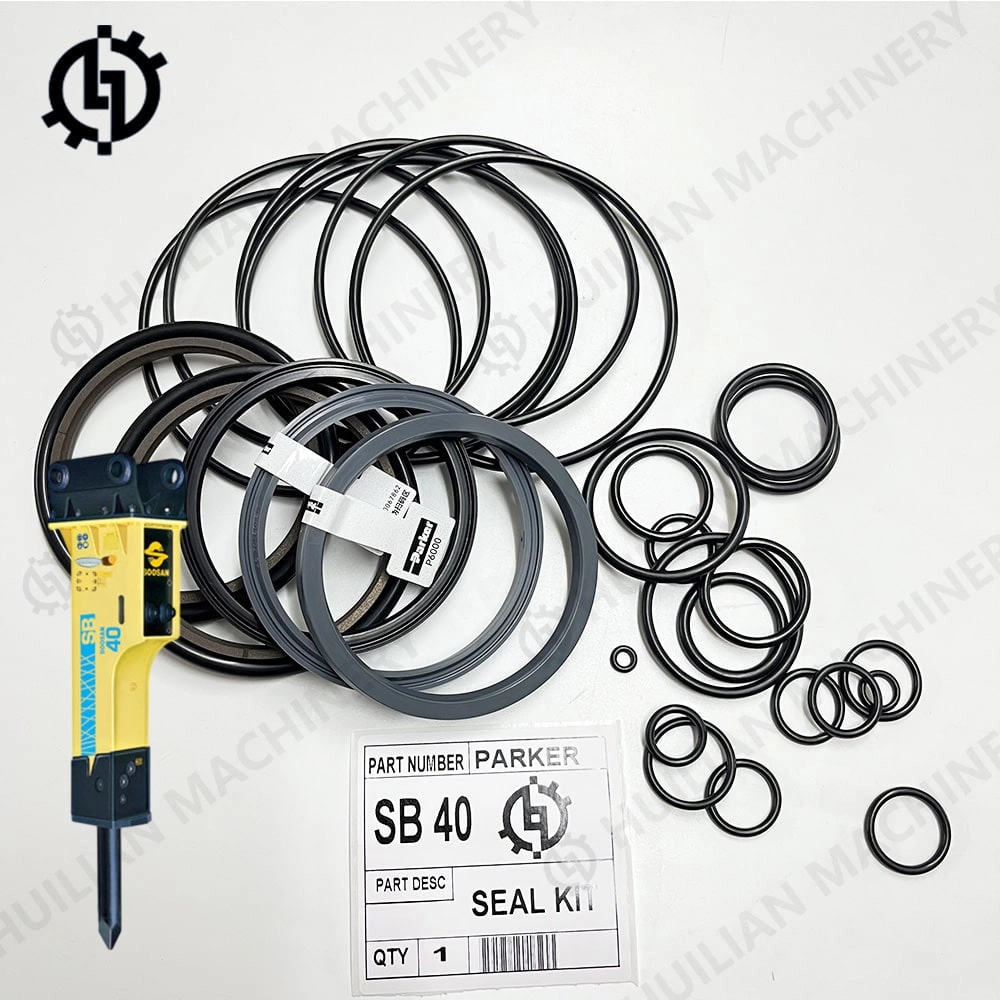
Parker Oil Seal Complete Repair SB40 Seal Kit COX001 CO1012 SB40Ⅱ SB40TSP SQ40 For Soosan Hydraulic Rock Breaker Hammer
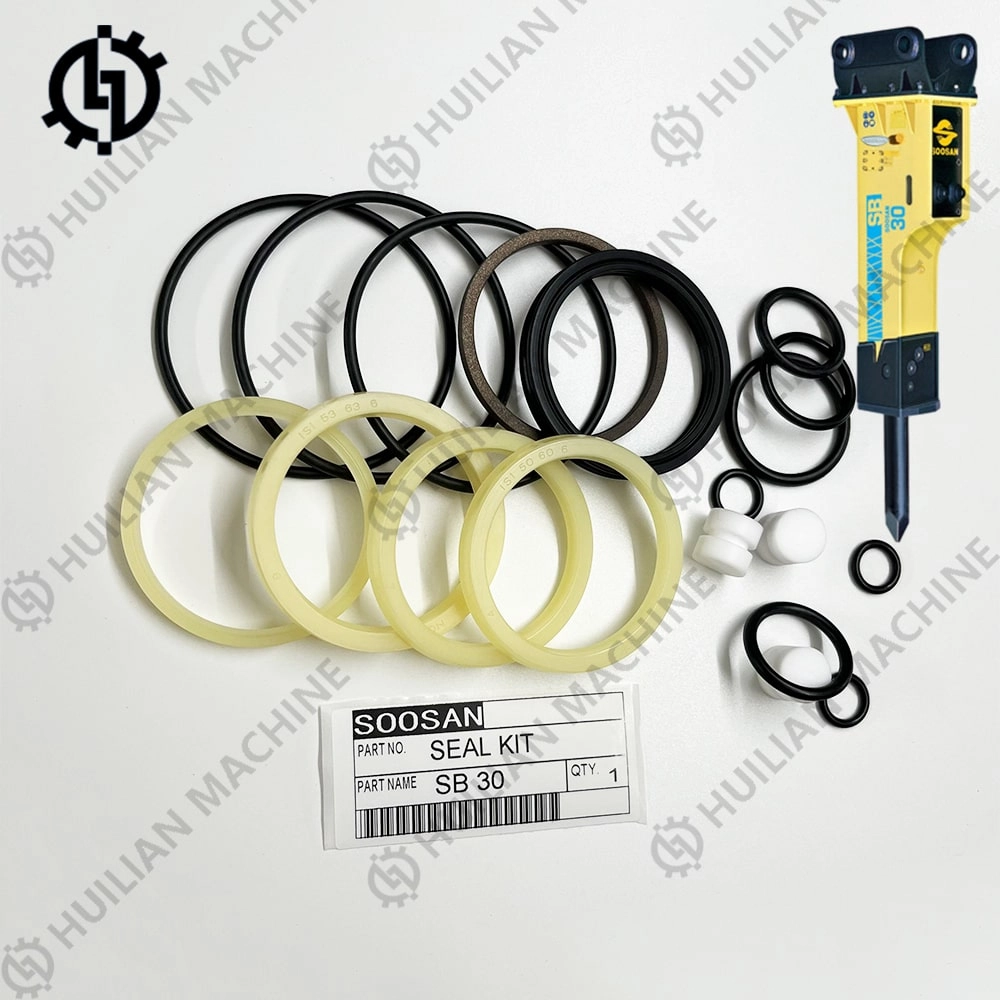
E71012 E7X001 SOOSAN SQ30 SB30Ⅱ SB30 Breaker Seal Kit SB30TS-P SB30Ⅱ TS-P SB30Ⅱ SSL Hydraulic Rock Hammer Parts Oil Repair Kit
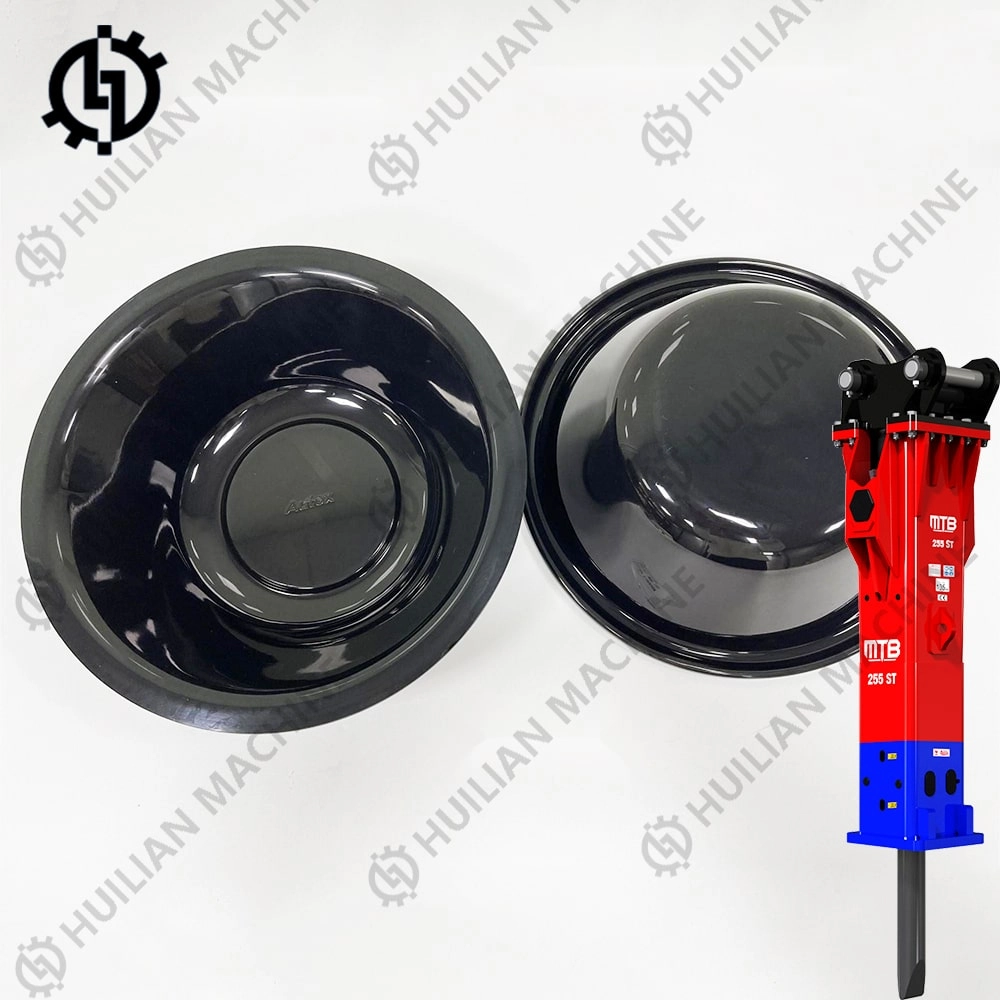
Inan Makina MTB Hydraulic Breaker Parts 45B0116A11 MTB255 MTB MT 255 Diaphragm MTB 255 IQ MTB-255 MTB 255 ST Membrane for Excavator Rock Hammer
 About us
© 2025 HUILIAN MACHINE. All rights reserved