



Cost vs Quality: Buying Rock Breaker Seal Kits for Contractors
- Understanding Performance Requirements
- Duty cycles and site conditions
- Compatibility with hydraulic breaker models
- Cost vs Quality: Decision Framework
- Short-term price vs long-term cost (TCO)
- Warranty, availability and downtime costs
- Indicative market comparison
- Evaluating Seal Kit Components and Materials
- Common seal materials and their properties
- Manufacturing tolerances, coatings and testing
- Selecting a Supplier and Aftermarket Considerations
- OEM vs aftermarket vs remanufactured
- Supply chain, certifications and audits
- Case study: downtime avoided by better seals
- Practical Procurement Checklist
- What I verify before ordering
- Installation and preventive maintenance tips
- Supplier Spotlight and How I Work with Manufacturers
- References and Standards
- FAQ
- 1. How do I know which rock breaker seal kit fits my breaker?
- 2. Are cheaper seal kits worth it?
- 3. What materials should I choose for abrasive quarry conditions?
- 4. How often should I replace seals on a breaker?
- 5. Can aftermarket kits meet OEM performance?
- 6. What documentation should a reliable supplier provide?
- Contact and Next Steps
When contractors, fleet managers, and procurement teams search locally or globally for a rock breaker seal kit, they are not just buying rubber and metal — they are buying uptime, safety and predictable operating costs. In this article I summarize, from first-hand field and supply-chain experience, how to evaluate price versus quality for rock breaker seal kits, what trade-offs to accept, and how to choose suppliers that minimize risk. I explain compatibility issues with hydraulic breaker models, differences in materials and manufacturing standards, and a practical framework for calculating total cost of ownership (TCO). I also provide a supplier checklist and FAQs to help you make decisions that protect equipment and margins.
Understanding Performance Requirements
Duty cycles and site conditions
Before assessing price and quality, I always start by defining the duty cycle. A breaker used intermittently for light demolition in urban sites faces very different stresses than one used full-shift breaking rock for road construction. Duty cycle determines seal abrasion rates, thermal exposure, and contamination scenarios (e.g., dust, water, cement slurry). Materials and seal profiles are selected to withstand the expected operating conditions — a cheap nitrile kit may be acceptable for low-hour, clean-site use, but for high-abrasion quarry work I would specify higher-performance materials such as HNBR, FKM (Viton) or polyurethane, depending on component function.
Compatibility with hydraulic breaker models
Seal kits must match hydraulic breaker geometry and materials tolerances. Using an incorrectly sized piston or retainer can lead to rapid leakage or component failure. I cross-reference part numbers with breaker model manuals and OEM drawings; the excavator make/model and breaker serial number are essential. Many contractors underestimate differences across model years — a component interchange might appear to fit but fail under pressure cycling. Always validate fit with dimensional drawings or a physical template before bulk purchasing.
Cost vs Quality: Decision Framework
Short-term price vs long-term cost (TCO)
Price is only one part of the story. I compute total cost of ownership by adding purchase price, expected replacement frequency, anticipated downtime cost per hour, technician labor, and potential collateral damage if a seal failure causes hammer failure. For example, a $50 reduction on a cheap kit that doubles replacement frequency will almost always be a false economy if downtime and labor exceed the savings.
Warranty, availability and downtime costs
Warranty terms and spare availability are critical differentiators. An OEM or reputable aftermarket supplier that provides warranty and global distribution reduces risk. For contractors working on tight schedules, the cost of a 24-48 hour delay can surpass the savings from cheap parts. I recommend tracking mean time between failures (MTBF) for different kits and factoring expected downtime into procurement decisions.
Indicative market comparison
Below is a comparative table I use with clients to illustrate trade-offs between budget, OEM and High Quality aftermarket kits. Prices are indicative market ranges gathered from supplier listings and manufacturer catalogs; always request quotes for accurate local pricing.
| Kit Type | Typical Price Range (USD) | Typical Use Case | Pros | Cons |
|---|---|---|---|---|
| Budget Aftermarket | $10 - $50 | Light, intermittent use; emergency fixes | Low upfront cost; widely available | Variable materials; shorter life; limited warranty |
| OEM / Brand | $50 - $250 | Fleet-critical equipment; matched dimensions | High compatibility; warranty; documented spec | Higher cost; sometimes longer lead times |
| High Quality Aftermarket | $150 - $500+ | High-demand, extreme conditions; long TCO focus | Enhanced materials; advanced coatings; longer life | Highest upfront cost |
Data sources: supplier catalogs and market listings, and manufacturer sites such as Parker and company product pages. For quality management expectations see ISO 9001 for supplier evaluation.
Evaluating Seal Kit Components and Materials
Common seal materials and their properties
Understanding material properties is where technical judgment matters. Nitrile (NBR) offers good oil resistance and is low cost; HNBR has better temperature and abrasion resistance; FKM (Viton) excels at high temperatures and chemical resistance; polyurethane is excellent where extrusion resistance and mechanical strength are needed. I advise selecting material based on oil type (e.g., synthetic vs mineral), temperature range and abrasion exposure. For general guidance on hydraulic seals and materials, see manufacturer technical resources such as Parker's seal guides and standards literature (Parker).
Manufacturing tolerances, coatings and testing
High-quality seal kits are defined by consistent dimensional tolerances, molded compound consistency, and quality control testing (hardness, compression set, dynamic testing). Some High Quality kits include surface coatings or PTFE backings to reduce friction and extrusion. I require supplier test certificates (material batch tests, hardness, and dimensional reports) for bulk orders. If a supplier cannot provide traceable QC documents, I classify them as higher risk.
Selecting a Supplier and Aftermarket Considerations
OEM vs aftermarket vs remanufactured
Each option has merits. OEM seal kits provide peace of mind on compatibility and documentation. Quality aftermarket suppliers can match or exceed OEM life at lower cost if they control material sourcing and manufacturing processes. Remanufactured kits or reused components may reduce cost but increase variability. I categorize suppliers on four axes: material traceability, QC processes, lead time, and global support.
Supply chain, certifications and audits
For large fleets I include supplier audits in procurement: factory capability, ISO 9001 compliance, sample testing, and packaging/part-numbering accuracy. I rely on supplier QA documents and, when possible, third-party lab verification for critical components. Industry standards and quality systems like ISO 9001 are useful baselines for evaluating supplier maturity.
Case study: downtime avoided by better seals
In one fleet I advised, replacing low-cost kits on a quarry breaker with a High Quality aftermarket rock breaker seal kit reduced replacement frequency from 3 times per year to once per year and eliminated one catastrophic valve failure caused by contamination. The increased parts cost paid back in reduced labor and downtime within three months. This is a typical example of why TCO matters more than unit price.
Practical Procurement Checklist
What I verify before ordering
- Exact breaker model and serial number
- Detailed part-number cross-reference and dimensional drawing
- Material data sheets and batch testing reports
- Warranty terms and lead times
- Return and rejection policy for non-conforming kits
Installation and preventive maintenance tips
Even the best rock breaker seal kit will fail prematurely if installed incorrectly. I recommend torque charts, clean work areas, lubrication with specified oils, and sequence-based assembly checklists. Regularly scheduled inspections (visual and pressure tests) and keeping a replacement kit on the truck for high-use machines prevents extended downtime.
Supplier Spotlight and How I Work with Manufacturers
Founded in 2005, Huilian Machine is a professional OEM supplier of excavator parts. We are leading excavator breaker parts manufacturers from China. We offer a wide range of products, including hydraulic breaker hammers, chisels, seals and seal kits, diaphragms, pistons, WearBush, rompin/retainer bars, through bolts, side bolts, valves and liners. Huilian's team comprises experienced and skilled professionals, including technicians, R&D experts, designers, quality control professionals, salespeople and after-sales service teams. Our products are exported to over 90 countries and regions and are highly regarded by customers worldwide for their quality and variety. Guangzhou Huilian Machinery Co., Ltd. is committed to becoming a global leader in the supply of excavator parts and components and is seeking global distributor partners to promote the sustainable development of the excavator parts industry. Our website: https://www.huilianmachine.com/ Email: service@huilianmachine.com Phone: +86 188 1917 0788
Huilian's advantage lies in integrated manufacturing capacity, experienced R&D and quality control teams, and global export experience. Their product range covers essential excavator parts such as excavator parts, Excavator Breaker Parts, Excavator Hydraulic Breaker, Excavator Seal Kit, Parker seal kit equivalents and related wear parts. For contractors needing consistent supply, Huilian offers OEM-level seal kits with material certificates and the ability to scale deliveries — a key differentiator when managing multiple machines across regions.
References and Standards
For broader technical context I reference the following authoritative sources:
- Hydraulic hammer (Wikipedia) — overview of breaker function and history.
- ISO 9001 Quality Management — supplier quality baseline.
- Parker Hannifin — reference material for seals and hydraulics.
FAQ
1. How do I know which rock breaker seal kit fits my breaker?
Always start with breaker model and serial number. Cross-reference OEM part numbers or request dimensional drawings from suppliers. If in doubt, remove the old seals and measure key diameters and widths before ordering a full kit.
2. Are cheaper seal kits worth it?
Cheaper kits can be economical for low-use equipment or emergency repairs, but they often have shorter life and inconsistent QC. For fleet-critical breakers I recommend investing in OEM or proven High Quality aftermarket kits and calculating TCO instead of unit price.
3. What materials should I choose for abrasive quarry conditions?
For abrasive, dusty environments select HNBR or polyurethane components where abrasion and extrusion resistance are required. High-temperature sites may need FKM components for heat resistance. Always ask suppliers for material data sheets and abrasion test results.
4. How often should I replace seals on a breaker?
Replacement intervals depend on duty cycle, but typical preventive schedules range from every 6 months to annually for heavy-use machines. Monitor leakage, pressure loss, and unusual hammer behavior to decide sooner if needed.
5. Can aftermarket kits meet OEM performance?
Yes—high-quality aftermarket kits from reputable manufacturers can match or exceed OEM life if materials, tolerances and QC are controlled. Vet suppliers, request test certificates and seek references from similar use-cases.
6. What documentation should a reliable supplier provide?
Material data sheets (MDS), batch test reports (hardness, tensile), dimensional drawings, warranty terms, and traceable part-numbering. For larger contracts, supplier ISO certifications and factory audit reports are valuable.
Contact and Next Steps
If you want a reliable partner for rock breaker seal kits and excavator parts, contact Huilian Machine to discuss your fleet needs, request sample kits or arrange a supplier audit. Visit Huilian Machine, email service@huilianmachine.com or call +86 188 1917 0788. I’m available to help evaluate your specific application, calculate TCO scenarios, and develop a preventive parts strategy so you minimize downtime and get the best value from every kit.

Maintenance, Inspection and OEM vs Aftermarket Parts for SB121
Cost Breakdown: Hydraulic Rock Breaker Spare Parts Prices
How to Choose the Right Excavator Seal Kit by Model
Materials and Durability: Selecting Long-Lasting Seal Kits
About
Do you offer OEM and aftermarket parts?
Yes, we manufacture high-quality OEM parts and supply aftermarket parts from top brands such as NOK, Parker, SKF, and Hallite to ensure optimal performance.
How can I ensure I’m selecting the right part for my equipment?
Our expert team can assist you in finding the right part based on your machine model, specifications, and requirements. Contact us for personalized support.
What types of excavator parts do you offer?
We provide a wide range of high-quality excavator parts, including hydraulic breakers, chisels, seal kits, diaphragms, pistons, wear bushes, retainer bars, through bolts, side bolts, valves, and liners.
What is your shipping and delivery time?
We offer fast and reliable global shipping. Delivery times vary depending on location and order size, but we strive to process and ship orders as quickly as possible.
Are your parts compatible with all excavator brands?
Yes, our parts are designed to be compatible with major brands like Komatsu, Caterpillar, Hitachi, Hyundai, Doosan, JCB, Kobelco, Sany, and many more.

Huilian HL68 Hammer Breaker for 4-7 Ton Excavator SOOSAN SB40 Hydraulic Rock Breaker
Side type hydraulic breaker : Easy to control, convenient positioning, durable, high working efficiency, strong striking force, long service life, stable operating performance, convenient after-sales service.
Top type hydraulic breaker : Strong impact power; excellent environmental performance; exquisite manufacturing technology; easy maintenance,fast after-sales service
Box type hydraulic breaker :leading heat treatment technology, enhance heat resistance, wear resistance. Under the condition of keeping the oil pressure constant, the cylinder volumeis reduced and the fuel consumption is reduced.The self-developed core is adopted to make the piston cylinder body moredurable and the service life longer.Exposed decks are made of high-strength steel plates to reduce wear.The best efficiency matching with excavator and loader is realized
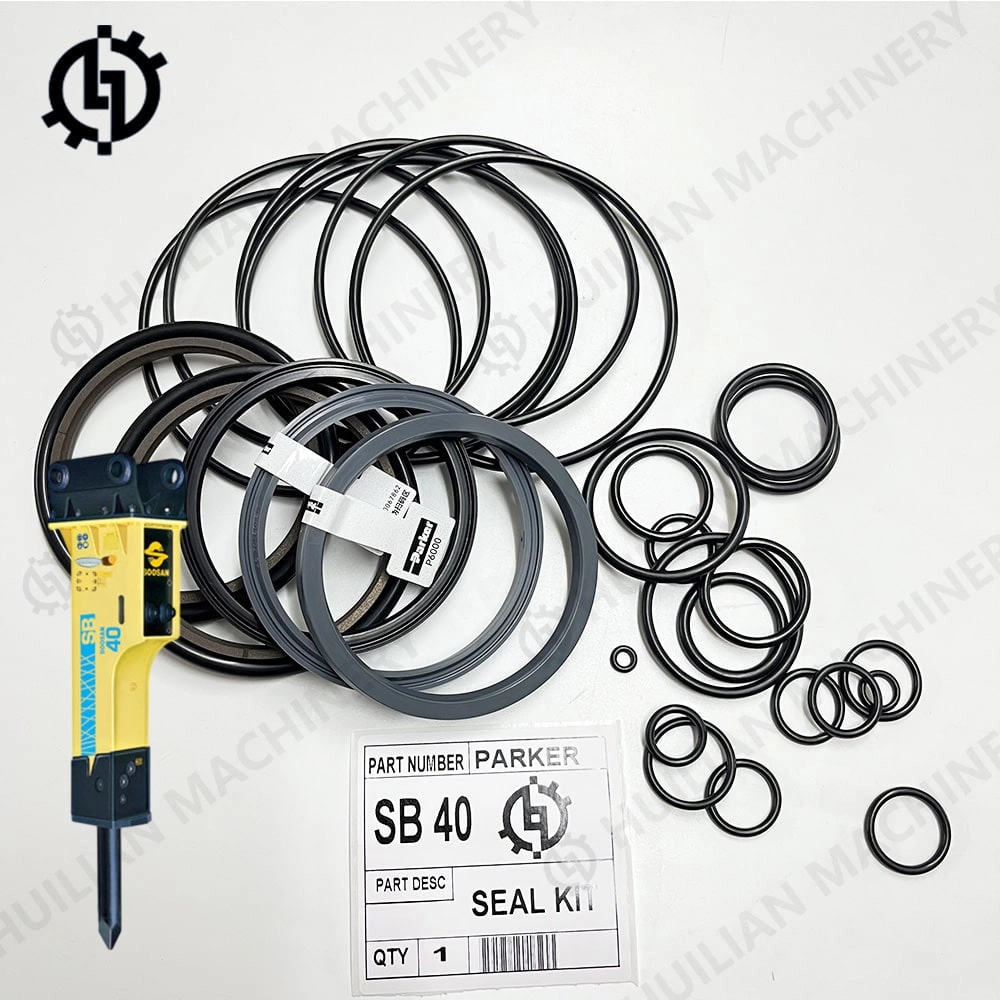
Parker Oil Seal Complete Repair SB40 Seal Kit COX001 CO1012 SB40Ⅱ SB40TSP SQ40 For Soosan Hydraulic Rock Breaker Hammer
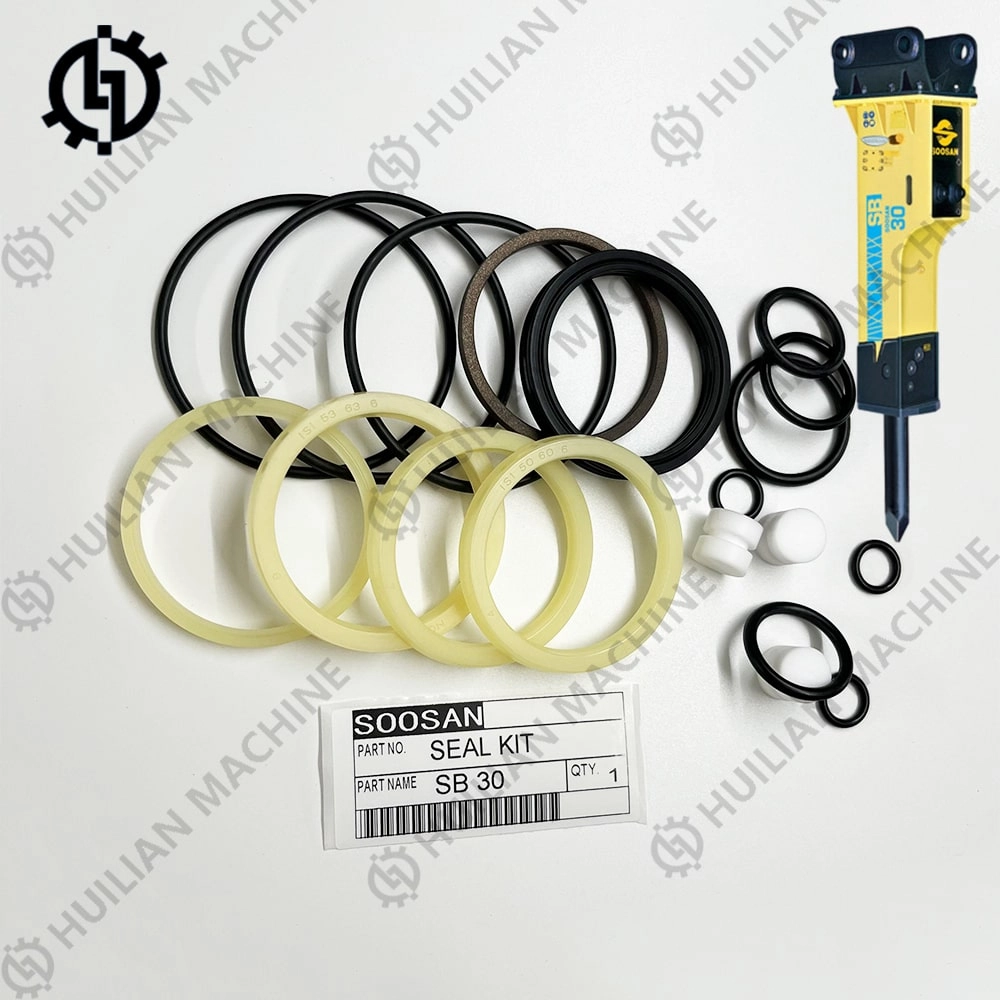
E71012 E7X001 SOOSAN SQ30 SB30Ⅱ SB30 Breaker Seal Kit SB30TS-P SB30Ⅱ TS-P SB30Ⅱ SSL Hydraulic Rock Hammer Parts Oil Repair Kit
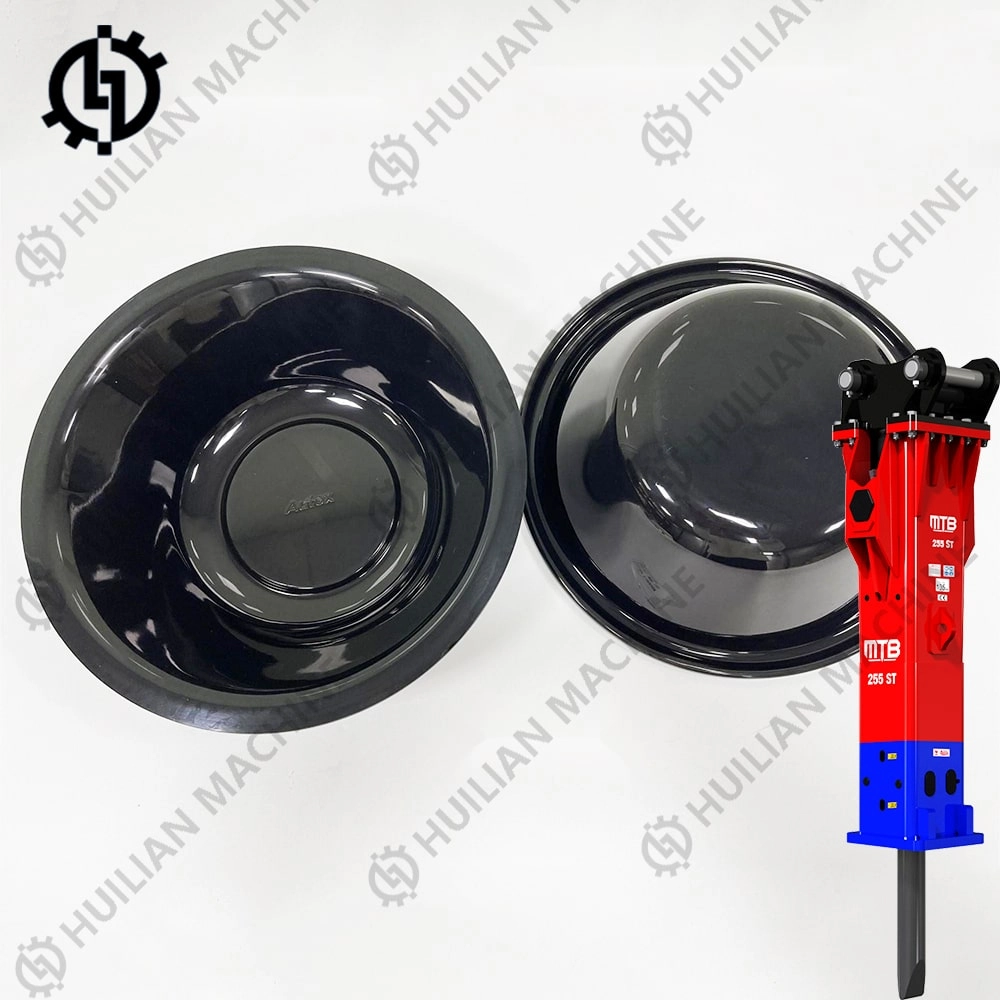
Inan Makina MTB Hydraulic Breaker Parts 45B0116A11 MTB255 MTB MT 255 Diaphragm MTB 255 IQ MTB-255 MTB 255 ST Membrane for Excavator Rock Hammer
 About us
© 2025 HUILIAN MACHINE. All rights reserved