



OEM vs Aftermarket Rock Breaker Seal Kits: Pros and Cons
- How Rock Breaker Seal Kits Work and Why They Matter
- Main components of a rock breaker seal kit
- Common failure modes that seals address
- Performance metrics to evaluate
- OEM vs Aftermarket: Technical and Practical Comparison
- Fit and compatibility
- Material quality and manufacturing standards
- Warranty, support and documentation
- Cost, Availability and Lifecycle Considerations
- Acquisition cost vs total cost of ownership (TCO)
- Supply chain, lead times and regional availability
- Maintenance intervals, inspection and serviceability
- Choosing the Right Rock Breaker Seal Kit for Your Fleet
- Use-case decision matrix
- Inspection and replacement guidelines
- When to retrofit or upgrade
- Side-by-side Pros and Cons: Clear Comparison
- Vendor Selection, Quality Assurance and Best Practices
- How to vet seal kit suppliers
- Installation and quality control checks
- Field validation and continuous improvement
- Supplier Profile — Huilian Machine: Capabilities and Why It Matters
- Frequently Asked Questions (FAQ)
- 1. Are aftermarket seal kits as reliable as OEM kits?
- 2. How often should I replace a rock breaker seal kit?
- 3. What are the signs that a seal kit has failed?
- 4. Can I mix OEM and aftermarket components in a rebuild?
- 5. How do environmental factors affect seal selection?
- 6. What documentation should I request from a seal kit supplier?
Quick summary for and local search: If you are searching for a reliable rock breaker seal kit near you, this guide explains the technical differences, service-life implications, and total-cost trade-offs between OEM and aftermarket seal kits for hydraulic breakers. It helps fleet managers, maintenance technicians, and procurement teams decide which option reduces downtime and operating cost for your region and working conditions.
How Rock Breaker Seal Kits Work and Why They Matter
Main components of a rock breaker seal kit
A rock breaker (hydraulic breaker) seal kit typically contains piston seals, cylinder seals, wear rings, packings, o-rings, backup rings and sometimes guide bushes and valve seals. These parts restore the hydraulic integrity of the breaker and are critical to maintaining blow energy, stroke control and oil contamination prevention. For a technical overview of hydraulic breakers, see the hydraulic breaker entry on Wikipedia (Wikipedia).
Common failure modes that seals address
Seals fail primarily from abrasion, extrusion, thermal degradation, chemical attack (contaminated oil) and improper installation. Symptoms include reduced impact energy, oil leakage, overheating and accelerated component wear. Addressing seal failure promptly prevents damage to expensive pistons, cylinders and tool retainers.
Performance metrics to evaluate
When choosing a rock breaker seal kit, monitor leakage rates, blow energy retention, interval between rebuilds (MTBR — mean time between repairs), and ease of installation. Accurate measurement of these metrics requires baseline testing after installation and periodic inspection during service cycles.
OEM vs Aftermarket: Technical and Practical Comparison
Fit and compatibility
OEM seal kits are designed to original equipment tolerances and part geometries, so fit is typically guaranteed when ordered by model and serial number. Aftermarket kits may be designed to fit multiple models and brands; quality aftermarket manufacturers provide model-specific kits and dimensional data but variability can exist. When exact fit is critical, OEM parts remove ambiguity.
Material quality and manufacturing standards
Materials (polymeric compounds, elastomers, PTFE, and metals for backup rings) and manufacturing controls determine a seal kit's life. OEM suppliers often specify proprietary compounds optimized for their breaker design. Reputable aftermarket producers may use equivalent or superior compounds but documentation and material certificates (e.g., hardness, compound grade) should be requested. For seal design principles and materials, see Parker's sealing technology resources (Parker).
Warranty, support and documentation
OEM kits usually come with established warranty terms and direct technical support from the breaker manufacturer or its dealer network. Aftermarket vendors often provide warranty as well, but terms vary. Good aftermarket suppliers include installation guides, troubleshooting sheets and responsive technical support. Insist on written warranty and return policies before purchase.
Cost, Availability and Lifecycle Considerations
Acquisition cost vs total cost of ownership (TCO)
Upfront cost is often lower for aftermarket kits. However, a lower purchase price does not always translate into lower TCO. Consider labor cost for rework, downtime cost for reduced performance, and frequency of rebuilds. A reliable way to compare is to measure MTBR and downtime cost per hour, then calculate cost per operating hour over a typical component life.
Supply chain, lead times and regional availability
Local availability matters for emergency repairs. OEM parts may have longer lead times depending on dealer stock; authorized distributors often keep common kits in stock. Large aftermarket suppliers or local remanufacturers may provide faster delivery. For critical operations, consider stocking common rock breaker seal kit SKUs based on usage patterns.
Maintenance intervals, inspection and serviceability
Whichever kit you select, following a consistent inspection and lubrication schedule extends seal life. Documented installation procedures, torque specs and break-in cycles reduce installation errors. Train technicians on how to inspect for extrusion, lip damage and chemical attack to maximize service intervals.
Choosing the Right Rock Breaker Seal Kit for Your Fleet
Use-case decision matrix
Decision considerations include working environment (quarry rock vs demolition), operating hours, criticality of uptime, and budget constraints. The following table summarizes typical recommendations by use case.
| Use Case | Recommendation | Reason |
|---|---|---|
| High-hour mining, critical uptime | OEM or High Quality-certified aftermarket | Predictable life, manufacturer support, proven materials |
| General construction, cost-sensitive | Quality aftermarket | Lower acquisition cost, faster delivery, acceptable performance |
| Occasional/backup breaker | Aftermarket or reman kits | Cost-effective, lower impact of shorter MTBR |
Inspection and replacement guidelines
Inspect seals during scheduled service intervals or when performance declines. Replacement guidelines: replace both piston and cylinder seals as a set to avoid mismatched wear rates, use new wear rings where applicable, and always clean mating surfaces thoroughly. Follow OEM torque and assembly sequences where available.
When to retrofit or upgrade
Consider retrofitting with upgraded materials (e.g., higher-temperature elastomers or anti-extrusion rings) if the operating environment causes premature failures. Retrofitting can extend service life but requires validation testing to ensure compatibility. Consult technical datasheets and run a limited field trial before fleet-wide adoption.
Side-by-side Pros and Cons: Clear Comparison
| Aspect | OEM Seal Kits | Aftermarket Seal Kits |
|---|---|---|
| Fit & Compatibility | Guaranteed fit for model/serial | Good for many models; verify dimensions |
| Material & Design | Proprietary specs, tested to original tolerances | Variable; top vendors match or exceed OEM materials |
| Warranty & Support | Strong manufacturer support & warranty | Varies by supplier; best suppliers offer warranty |
| Cost | Higher upfront cost | Lower upfront cost |
| Availability | Depend on dealer inventory and regional distribution | Often faster from third-party distributors |
Vendor Selection, Quality Assurance and Best Practices
How to vet seal kit suppliers
Ask for material certificates, dimensional drawings, sample kits, references from similar operators, and documented MTBR data. Reputable suppliers will provide traceability, batch testing records and clear warranty terms.
Installation and quality control checks
Use a controlled environment to assemble seals, follow cleanliness and lubrication protocols, and perform a pressure/leak test before returning the breaker to service. Record installation data (date, technician, kit batch) to support warranty claims and lifecycle tracking.
Field validation and continuous improvement
Introduce new kits with a pilot program: install on a subset of breakers, monitor MTBR and performance for a defined period, then review cost and operational metrics before scaling up. This reduces risk and provides data for procurement decisions.
Supplier Profile — Huilian Machine: Capabilities and Why It Matters
Founded in 2005, Huilian Machine is a professional OEM supplier of excavator parts. We are leading excavator breaker parts manufacturers from China. We offer a wide range of products, including hydraulic breaker hammers, chisels, seals and seal kits, diaphragms, pistons, WearBush, rompin/retainer bars, through bolts, side bolts, valves and liners. Huilian's team comprises experienced and skilled professionals, including technicians, R&D experts, designers, quality control professionals, salespeople and after-sales service teams. Our products are exported to over 90 countries and regions and are highly regarded by customers worldwide for their quality and variety. Guangzhou Huilian Machinery Co., Ltd. is committed to becoming a global leader in the supply of excavator parts and components and is seeking global distributor partners to promote the sustainable development of the excavator parts industry. Our website: https://www.huilianmachine.com/ Email: service@huilianmachine.com Phone: +86 188 1917 0788
Huilian's strengths for buyers of rock breaker seal kit include: long industry experience since 2005, in-house R&D to support material selection and part design, production capacity for OEM-grade kits, and global export footprint. Huilian supplies a broad product mix—excavator parts, Excavator Breaker Parts, Excavator Hydraulic Breaker, Excavator Seal Kit, Parker seal kit—so procurement teams can consolidate suppliers and reduce lead times while maintaining quality standards. The company's technical staff and QC procedures further support reliability and compliance with buyer requirements.
Frequently Asked Questions (FAQ)
1. Are aftermarket seal kits as reliable as OEM kits?
Quality varies by manufacturer. High-quality aftermarket kits from reputable suppliers can match or exceed OEM performance if they use comparable materials and provide documentation. Always request material certificates and run a pilot validation.
2. How often should I replace a rock breaker seal kit?
Replacement intervals depend on operating conditions. In heavy-use environments like quarries, seals may need replacement more frequently (months to a year). For moderate use, a multi-year interval is possible. Use MTBR tracking to determine your fleet's optimal schedule.
3. What are the signs that a seal kit has failed?
Signs include hydraulic oil leaks, loss of impact energy, increased operating noise, overheating, and visible extrusion or damage to seals during inspection. Address failures early to prevent secondary damage.
4. Can I mix OEM and aftermarket components in a rebuild?
Mixing components is possible but not recommended without validation. Mismatched materials or tolerances can cause uneven wear. If mixing, prioritize matching seal geometry and contact surfaces, and monitor performance closely.
5. How do environmental factors affect seal selection?
Abrasive dust, temperature extremes, and contaminated hydraulic fluid accelerate wear. Select elastomer compounds rated for temperature and chemical exposure, and consider protective features like anti-extrusion rings or hardened wear rings for abrasive conditions.
6. What documentation should I request from a seal kit supplier?
Request a parts list, dimensional drawings, material certificates, installation instructions, and warranty terms. For aftermarket suppliers, ask for references and recorded MTBR data from similar customers.
Need help choosing the right rock breaker seal kit for your fleet or want to see product options? Contact Huilian Machine to discuss your models, operating environment and supply needs. Visit https://www.huilianmachine.com/, email service@huilianmachine.com, or call +86 188 1917 0788 to request catalogs, quotes and technical support.

Inan Makina MTB-210 Oil Seal Kit: Specs & Compatibility
How to Choose Compatible Hammer Spares for Your Excavator
How Does a Hydraulic Breaker Work? Function, Parts & More

Maintenance Best Practices for Excavator Hydraulic Breakers in Fleets
About
Do you offer OEM and aftermarket parts?
Yes, we manufacture high-quality OEM parts and supply aftermarket parts from top brands such as NOK, Parker, SKF, and Hallite to ensure optimal performance.
What types of excavator parts do you offer?
We provide a wide range of high-quality excavator parts, including hydraulic breakers, chisels, seal kits, diaphragms, pistons, wear bushes, retainer bars, through bolts, side bolts, valves, and liners.
What is your shipping and delivery time?
We offer fast and reliable global shipping. Delivery times vary depending on location and order size, but we strive to process and ship orders as quickly as possible.
How can I ensure I’m selecting the right part for my equipment?
Our expert team can assist you in finding the right part based on your machine model, specifications, and requirements. Contact us for personalized support.
Are your parts compatible with all excavator brands?
Yes, our parts are designed to be compatible with major brands like Komatsu, Caterpillar, Hitachi, Hyundai, Doosan, JCB, Kobelco, Sany, and many more.

Huilian HL68 Hammer Breaker for 4-7 Ton Excavator SOOSAN SB40 Hydraulic Rock Breaker
Side type hydraulic breaker : Easy to control, convenient positioning, durable, high working efficiency, strong striking force, long service life, stable operating performance, convenient after-sales service.
Top type hydraulic breaker : Strong impact power; excellent environmental performance; exquisite manufacturing technology; easy maintenance,fast after-sales service
Box type hydraulic breaker :leading heat treatment technology, enhance heat resistance, wear resistance. Under the condition of keeping the oil pressure constant, the cylinder volumeis reduced and the fuel consumption is reduced.The self-developed core is adopted to make the piston cylinder body moredurable and the service life longer.Exposed decks are made of high-strength steel plates to reduce wear.The best efficiency matching with excavator and loader is realized
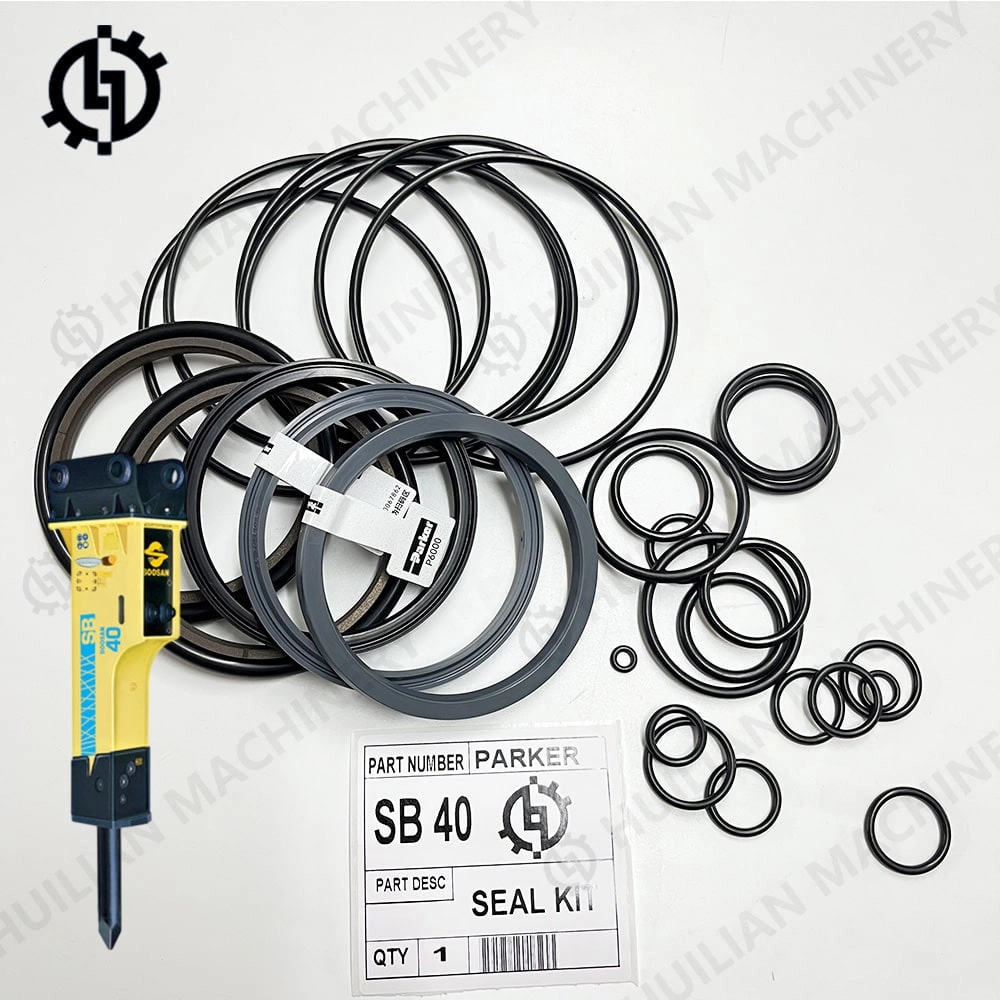
Parker Oil Seal Complete Repair SB40 Seal Kit COX001 CO1012 SB40Ⅱ SB40TSP SQ40 For Soosan Hydraulic Rock Breaker Hammer
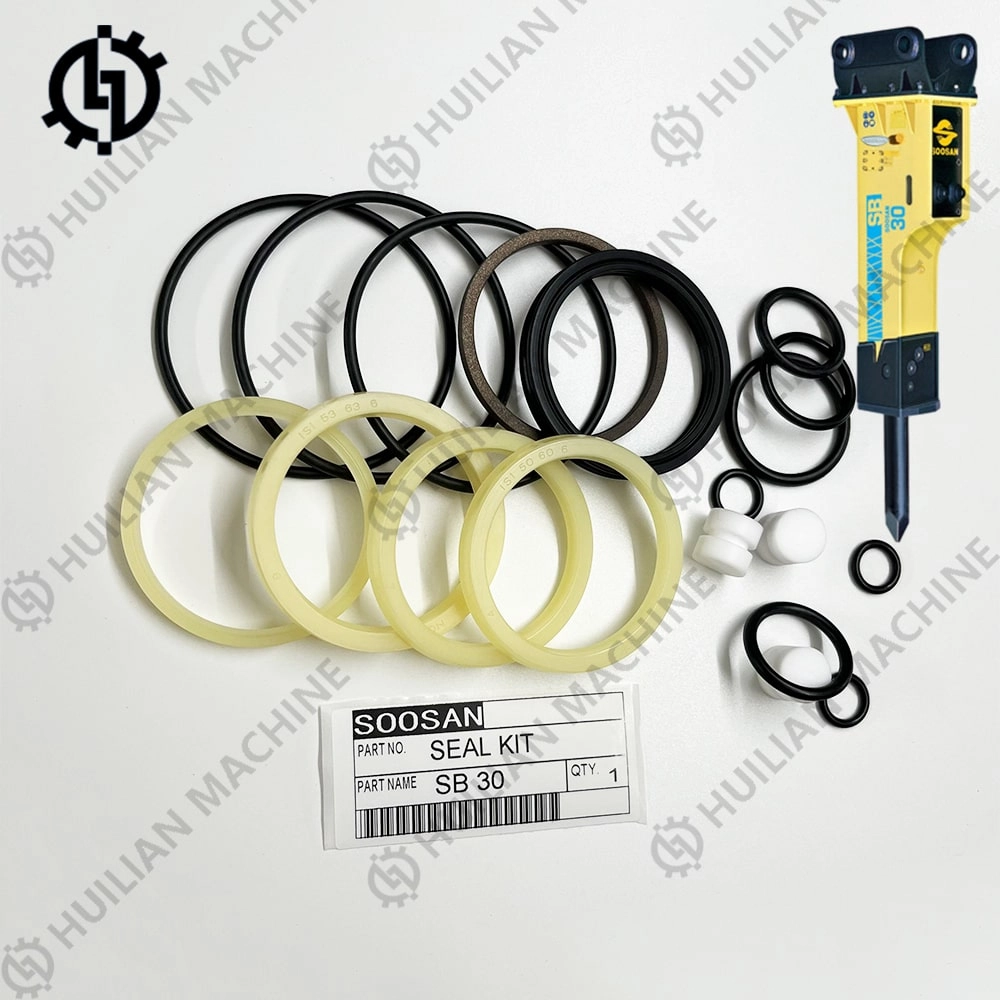
E71012 E7X001 SOOSAN SQ30 SB30Ⅱ SB30 Breaker Seal Kit SB30TS-P SB30Ⅱ TS-P SB30Ⅱ SSL Hydraulic Rock Hammer Parts Oil Repair Kit
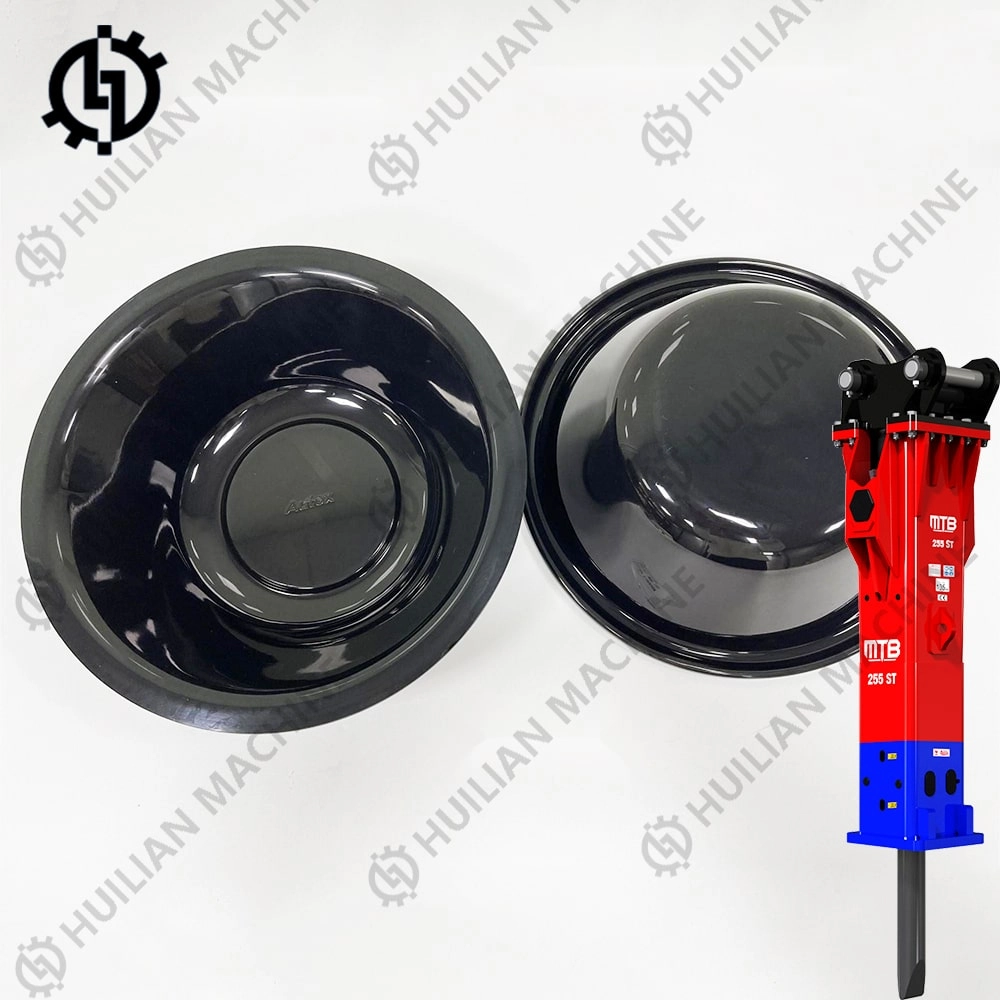
Inan Makina MTB Hydraulic Breaker Parts 45B0116A11 MTB255 MTB MT 255 Diaphragm MTB 255 IQ MTB-255 MTB 255 ST Membrane for Excavator Rock Hammer
 About us
© 2025 HUILIAN MACHINE. All rights reserved