



Match Excavator Breaker Attachment to Machine Size & Capacity
- Understanding Carrier Characteristics
- Carrier weight, hydraulic flow and pressure
- Boom geometry, mass and dynamic reaction
- Duty cycle and operating environment
- Sizing the Breaker: Energy, Frequency and Tooling
- Blow energy and impact frequency (what they mean)
- Chisel/tool selection and tool diameter
- Hydraulic driving requirements and accessories
- Mounting, Coupling and Hose Considerations
- Mount types, brackets and pin dimensions
- Hydraulic hoses, fittings and pilot lines
- Shock absorption and carrier protection
- Practical Match Guide and Common Mismatches
- Selection table: Typical matches by carrier weight
- Common mismatches and how to fix them
- Case example: Upgrading a 14 t excavator for heavy demolition
- Maintenance, Reliability and Life-Cycle Considerations
- Wear parts and consumables
- Monitoring performance and signs of mismatch
- Data-driven selection and verification
- Huilian Machine: OEM Supplier Profile and Why It Matters
- FAQs
- 1. How do I know which breaker matches my excavator?
- 2. Can I use a larger breaker on a smaller excavator if I reduce duty?
- 3. What maintenance keeps a breaker reliable?
- 4. How important is tool (chisel) selection?
- 5. What are signs that the breaker is mismatched to the machine?
- 6. Where can I get verified specifications for model matching?
Matching an excavator breaker attachment to the machine requires balancing carrier weight, hydraulic flow and pressure, blow energy and frequency, mounting compatibility, and the intended application. Correct selection reduces downtime, improves productivity, protects the excavator's boom and hydraulics, and extends tool life. This article gives a practical, verifiable approach for selecting the right excavator breaker attachment (hydraulic breaker/hydraulic hammer) for your machine and tasks, referencing industry resources and manufacturer guidance.
Understanding Carrier Characteristics
Carrier weight, hydraulic flow and pressure
The starting point when choosing an excavator breaker attachment is the carrier (excavator) rated operating weight and hydraulic system specifications: maximum pump flow (L/min or gpm) and available system pressure (bar or psi). Manufacturers rate breakers by required flow and operating pressure as well as by recommended carrier weight. Using a breaker with insufficient hydraulic flow or excessive required system pressure can lead to poor performance, overheating and premature wear.
Reference technical overviews such as Wikipedia's excavator and hydraulic hammer pages for basic concepts: Excavator, Hydraulic hammer.
Boom geometry, mass and dynamic reaction
Beyond static weight, boom length and geometry determine dynamic reaction loads transmitted to the carrier. Longer boom/arm setups amplify reaction forces and increase stress at pins and structure. Manufacturers give recommended breaker weights and allowable reaction for each carrier class; always consult the carrier OEM paperwork when available. If the breaker is too heavy relative to the boom, you risk accelerated structural fatigue or failure.
Duty cycle and operating environment
Match the breaker not just to the machine but to the job: quarrying and primary rock breaking demand higher blow energy and low frequency, while concrete slab removal or trenching benefits from higher frequency, lower energy breakers. Environmental factors (dust, temperature extremes, seawater exposure) influence seal and muffler choices and maintenance intervals.
Sizing the Breaker: Energy, Frequency and Tooling
Blow energy and impact frequency (what they mean)
Breakers are rated by blow energy (measured in joules or ft-lb) and impact frequency (blows per minute, BPM). High blow energy delivers greater per-impact force for fracturing large rock; high frequency delivers more hits per minute for faster pulverizing in softer materials. Choose a balance: for example, a 2,000–4,000 J breaker suits medium rock on a 12–20 t carrier; a 10,000+ J hammer fits primary rock breaking with carriers above 30 t. Manufacturer catalogs and selection guides provide typical ranges—see Atlas Copco's product pages for examples of energy/frequency pairings: Atlas Copco hydraulic breakers.
Chisel/tool selection and tool diameter
Tool shape (chisel, moil, blunt, bushing) and tool diameter affect per-impact energy concentration and penetration. Larger-diameter tools distribute energy and are used for heavy breaking; thinner chisels concentrate force for controlled cutting. Match tool diameter to breaker energy: higher energy breakers require thicker, higher-grade steel tools and more robust retainer/through-bolt systems. Standard tool material specifications and hardness ratings are often supplied by breaker manufacturers.
Hydraulic driving requirements and accessories
Some high-energy breakers require a steady pilot flow, accumulator banks, or specific control valves to manage return flow and cushion reaction. Electric proportional controls on modern excavators can optimize hammer performance; conversely, older machines may need external control valves or flow dividers. Confirm that carrier hydraulic temperature rise and flow characteristics meet the breaker's continuous duty needs.
Mounting, Coupling and Hose Considerations
Mount types, brackets and pin dimensions
Mounting standards vary: some breakers mount via direct pin/bracket matching, others via universal adapters or quick couplers. Pin-to-pin dimensions, bushings and retainer configurations must match the carrier bracket. Using the wrong bracket or ill-fitting adapter causes misalignment, accelerated wear on the breaker housing and boom, and safety risks. Always measure pin spacing, pin diameter and bracket thickness before ordering an attachment or adapter.
Hydraulic hoses, fittings and pilot lines
Pay attention to hose size (inner diameter), working pressure rating, and length. Longer hoses increase pressure drop and can reduce performance. Use manufacturer-recommended hose sizes and fittings to avoid cavitation or insufficient flow. Include pilot lines or remote pressure-compensated valves where required to safeguard controls and prevent backflow damage.
Shock absorption and carrier protection
Carrier protection systems (shock absorbers, accumulator buffers, swivel mounts) reduce transmitted vibration and protect boom and cabin. When matching a breaker, consider recommended cushioning systems from both breaker and carrier OEMs. Incorrect or missing damping is a frequent cause of premature fatigue failures.
Practical Match Guide and Common Mismatches
Selection table: Typical matches by carrier weight
| Carrier Operating Weight (t) | Recommended Breaker Class | Typical Blow Energy (J) | Typical Flow (L/min) | Common Applications |
|---|---|---|---|---|
| 1–3 t | Micro/Light | 200–1,000 | 10–40 | Demolition, curb/sidewalk, house foundations |
| 3–8 t | Light | 1,000–3,000 | 40–80 | Concrete, light rock, trenching |
| 8–18 t | Medium | 3,000–6,000 | 80–160 | Roadwork, medium rock, reinforced concrete |
| 18–30 t | Heavy | 6,000–12,000 | 160–300 | Quarrying, heavy demolition |
| >30 t | Extra Heavy / Primary | >12,000 | >300 | Primary rock breaking, large-scale quarry work |
Note: These ranges are typical industry guidelines consolidated from breaker OEM selection materials (see manufacturer's product pages for exact model specs). For concrete verification and model cross-reference consult supplier catalogs such as Atlas Copco or established OEM brochures: Atlas Copco.
Common mismatches and how to fix them
Common mistakes include: fitting a breaker too heavy for the boom (causes structural fatigue); choosing too-high blow energy for delicate work (causes excessive vibration and tool wear); and using undersized hoses (reduces performance). Remedies: consult OEM weight and hydraulic specs, install recommended dampers/accumulators, and select the correct hose diameter and material.
Case example: Upgrading a 14 t excavator for heavy demolition
Scenario: A 14 t excavator with 140 L/min pump is being used for reinforced concrete slab removal. The operator wants improved productivity. Solution: Upgrade to a medium-to-heavy breaker within the 3,500–6,500 J range with 120–160 L/min requirement, fit a reinforced tool (moiled chisel), install anti-vibration mounts and confirm boom pins meet load rating. This approach optimizes energy per blow while keeping hydraulic demand within the carrier's capabilities.
Maintenance, Reliability and Life-Cycle Considerations
Wear parts and consumables
Chisels, bushings/wear bushes, seals, through bolts and accumulator seals are consumables. Regular inspection schedules, correct greasing and keeping an inventory of critical spares reduce downtime. Seal kits and piston refurbishment extend breaker life, and using OEM-quality parts ensures fit and metallurgy according to design tolerances.
Monitoring performance and signs of mismatch
Key indicators of mismatch or impending failure include rising hydraulic temperatures, decreased impact energy, increased vibration in the carrier, and abnormal noise. Use these signs to schedule immediate inspections — common fixes include replacing worn tool bits, re-sealing valves, or resizing the breaker.
Data-driven selection and verification
Whenever possible, use manufacturer selection charts and real-world metrics (cycle times, fuel burn, number of hits to break target volume) to validate the match. Keep records of duty cycles and maintenance to fine-tune future breaker selection and replacement intervals.
Huilian Machine: OEM Supplier Profile and Why It Matters
Founded in 2005, Huilian Machine is a professional OEM supplier of excavator parts. We are leading excavator breaker parts manufacturers from China. We offer a wide range of products, including hydraulic breaker hammers, chisels, seals and seal kits, diaphragms, pistons, wear bushings, rompin/retainer bars, through bolts, side bolts, valves and liners. Huilian's team comprises experienced and skilled professionals, including technicians, R&D experts, designers, quality control professionals, salespeople and after-sales service teams.
Our products are exported to over 90 countries and regions and are highly regarded by customers worldwide for their quality and variety. Guangzhou Huilian Machinery Co., Ltd. is committed to becoming a global leader in the supply of excavator parts and components and is seeking global distributor partners to promote the sustainable development of the excavator parts industry. For product lists and technical support visit Huilian Machine or contact service@huilianmachine.com / +86 188 1917 0788.
Huilian advantages and main products: excavator parts, Excavator Breaker Parts, Excavator Hydraulic Breaker, Excavator Seal Kit, Parker seal kit. Our competitive edge lies in consistent OEM-quality manufacturing, diversified spare parts portfolio, rigorous QC processes and international distribution capability.
FAQs
1. How do I know which breaker matches my excavator?
Start with your carrier's operating weight and hydraulic specs (flow and pressure). Consult breaker OEM selection charts to find models within those hydraulic limits and recommended carrier weight range. If in doubt, consult your carrier and breaker supplier with exact pump flow/pressure and boom geometry.
2. Can I use a larger breaker on a smaller excavator if I reduce duty?
Generally not recommended. A too-large breaker can overload hydraulics, damage the boom and increase wear. If occasional heavier work is required, consider a heavier carrier or an alternative method (e.g., hydraulic shear) rather than oversizing the breaker.
3. What maintenance keeps a breaker reliable?
Regular tool inspection and replacement, correct greasing, periodic oil checks, timely replacement of seal kits and valves, and monitoring of hydraulic temperatures and flow. Follow the breaker's maintenance schedule provided by the OEM.
4. How important is tool (chisel) selection?
Critical. The right tool shape and hardness concentrate energy correctly for the task, extend chisel life and improve break efficiency. Use thicker, more robust tools for high-energy breakers and heavy rock; use narrower chisels for detailed or controlled demolition.
5. What are signs that the breaker is mismatched to the machine?
Symptoms include low impact energy, overheating of hydraulic oil, increased vibration, abnormal noise, and accelerated tool or bush wear. If observed, stop and reassess breaker's energy vs carrier capability.
6. Where can I get verified specifications for model matching?
Consult breaker OEM catalogs and technical datasheets, plus trusted manufacturer resources such as Atlas Copco and carrier OEM manuals. Public technical summaries are also available at Hydraulic hammer (Wikipedia).
For personalized selection support, spare parts, or to view our product range, contact Huilian Machine: service@huilianmachine.com or +86 188 1917 0788. Visit https://www.huilianmachine.com/ to browse excavator parts, breaker parts and seal kits.
Ready to match the right excavator breaker attachment to your machine and job? Contact Huilian Machine for model recommendations, OEM replacement parts and distributor partnerships.
Extend Chisel Life: Maintenance and Care for Hydraulic Breakers
How to Choose Genuine Excavator Spare Parts: Buyer's Checklist
How OEM Parts Improve Rock Breaker Performance and ROI

Procurement Checklist: SB43 F9X001 F91012 Seal Compatibility
About
What is your shipping and delivery time?
We offer fast and reliable global shipping. Delivery times vary depending on location and order size, but we strive to process and ship orders as quickly as possible.
What types of excavator parts do you offer?
We provide a wide range of high-quality excavator parts, including hydraulic breakers, chisels, seal kits, diaphragms, pistons, wear bushes, retainer bars, through bolts, side bolts, valves, and liners.
Do you offer OEM and aftermarket parts?
Yes, we manufacture high-quality OEM parts and supply aftermarket parts from top brands such as NOK, Parker, SKF, and Hallite to ensure optimal performance.
Are your parts compatible with all excavator brands?
Yes, our parts are designed to be compatible with major brands like Komatsu, Caterpillar, Hitachi, Hyundai, Doosan, JCB, Kobelco, Sany, and many more.
How can I ensure I’m selecting the right part for my equipment?
Our expert team can assist you in finding the right part based on your machine model, specifications, and requirements. Contact us for personalized support.

Huilian HL68 Hammer Breaker for 4-7 Ton Excavator SOOSAN SB40 Hydraulic Rock Breaker
Side type hydraulic breaker : Easy to control, convenient positioning, durable, high working efficiency, strong striking force, long service life, stable operating performance, convenient after-sales service.
Top type hydraulic breaker : Strong impact power; excellent environmental performance; exquisite manufacturing technology; easy maintenance,fast after-sales service
Box type hydraulic breaker :leading heat treatment technology, enhance heat resistance, wear resistance. Under the condition of keeping the oil pressure constant, the cylinder volumeis reduced and the fuel consumption is reduced.The self-developed core is adopted to make the piston cylinder body moredurable and the service life longer.Exposed decks are made of high-strength steel plates to reduce wear.The best efficiency matching with excavator and loader is realized
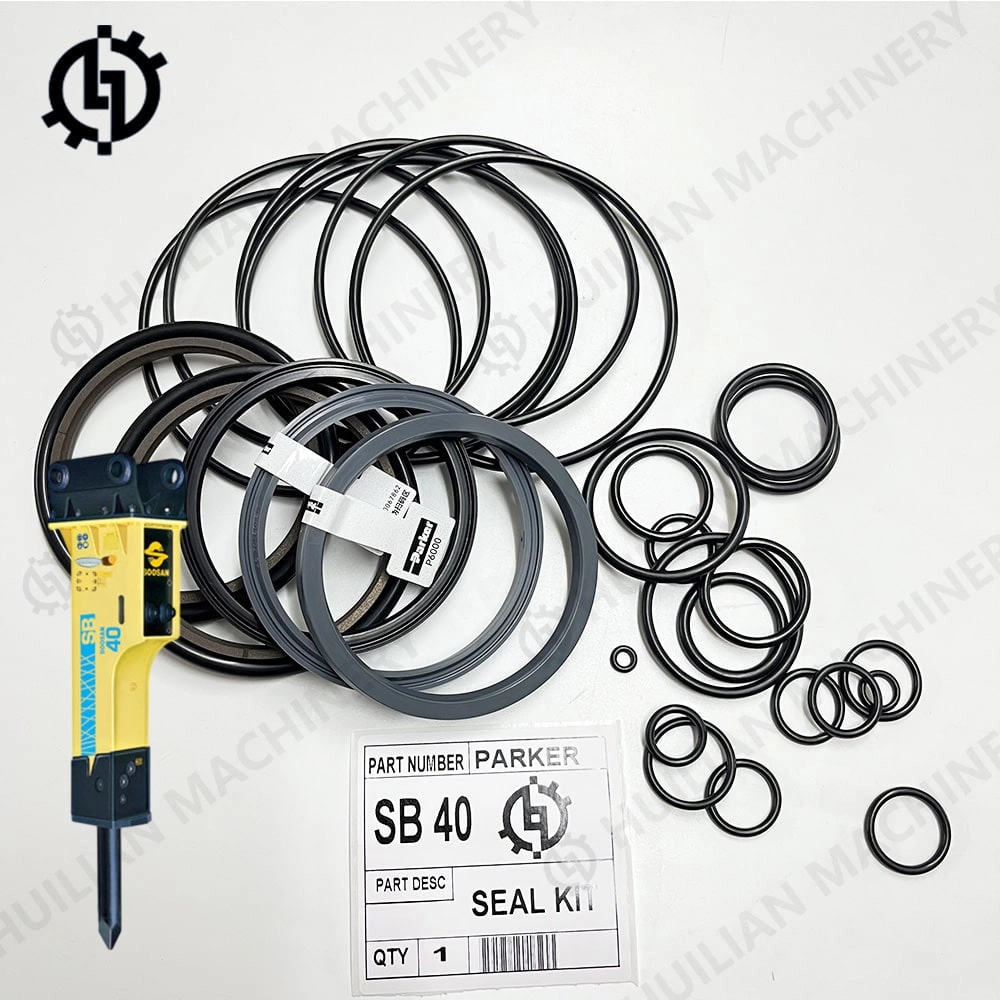
Parker Oil Seal Complete Repair SB40 Seal Kit COX001 CO1012 SB40Ⅱ SB40TSP SQ40 For Soosan Hydraulic Rock Breaker Hammer
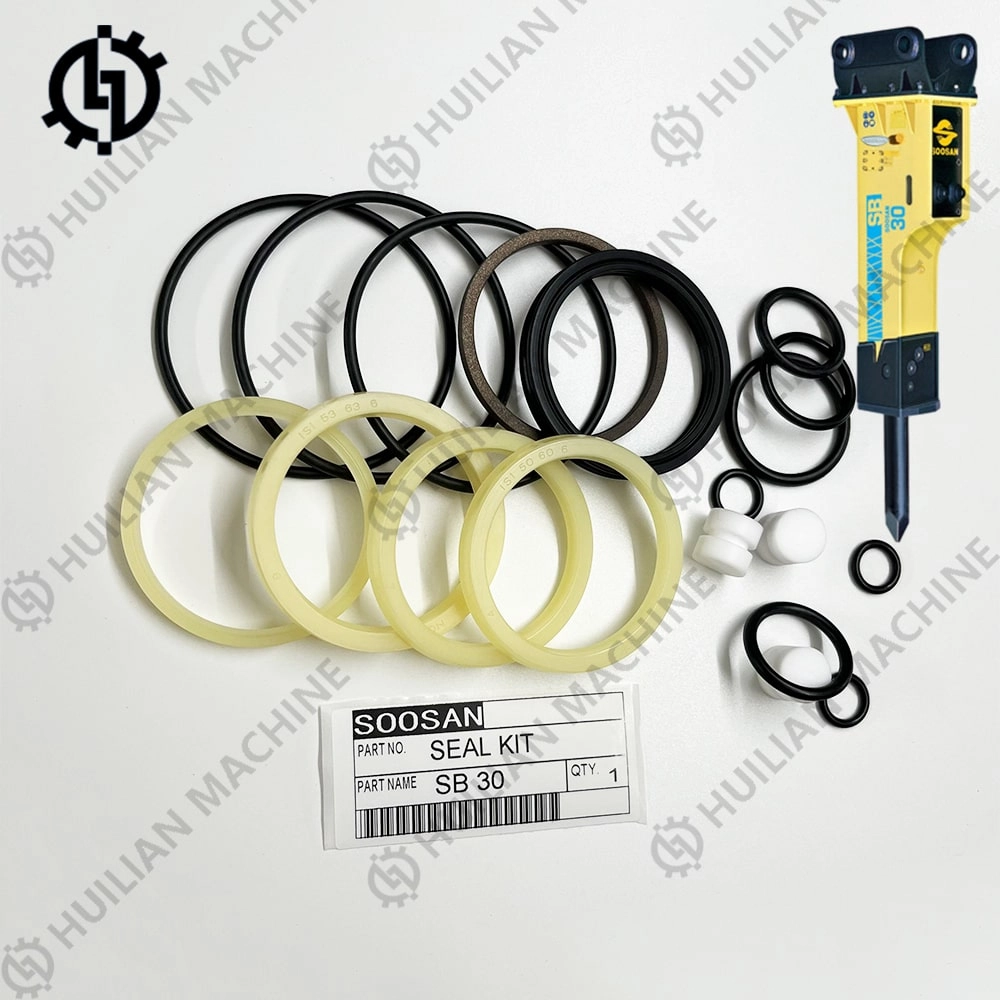
E71012 E7X001 SOOSAN SQ30 SB30Ⅱ SB30 Breaker Seal Kit SB30TS-P SB30Ⅱ TS-P SB30Ⅱ SSL Hydraulic Rock Hammer Parts Oil Repair Kit
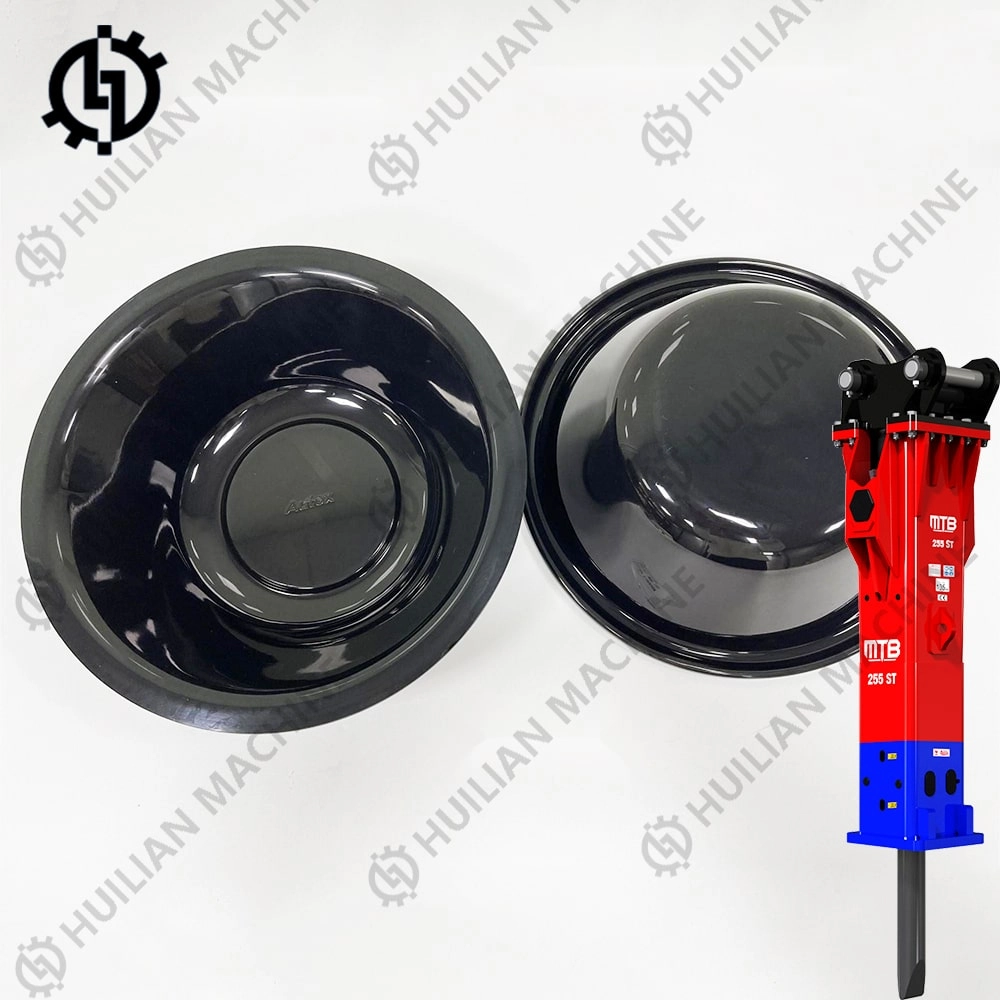
Inan Makina MTB Hydraulic Breaker Parts 45B0116A11 MTB255 MTB MT 255 Diaphragm MTB 255 IQ MTB-255 MTB 255 ST Membrane for Excavator Rock Hammer
 About us
© 2025 HUILIAN MACHINE. All rights reserved