



Common Hydraulic Breaker Problems on Excavators and Fixes
- Why hydraulic breakers fail: root causes and patterns
- Hydraulic system contamination and fluid issues
- Mechanical wear: piston, cylinder, bushings and tool
- Hydraulic circuit and tool mounting problems
- Diagnosing symptoms: systematic inspection and tests
- Symptom: Reduced impact force or slow return
- Symptom: Intermittent operation or loss of rhythm
- Symptom: Excessive noise, vibration, or abnormal heating
- Fixes and step-by-step repairs (practical workflows)
- Fluid, filtration, and contamination control
- Seal and piston repair
- Valve and hydraulic circuit repairs
- Maintenance strategies, parts selection and OEM considerations
- Planned preventive maintenance (what I recommend)
- Choosing replacement parts and seal kits
- When to involve OEM-level service or rebuilders
- Integrating supplier strength: my experience with a leading OEM partner
- Why OEM relationship matters
- What Huilian offers and how I use their products
- Contact and partnership for global supply
- Practical checklists and final recommendations
- Daily and weekly operator checklist
- When to stop work and perform repairs
- Working with a service provider
- FAQ — Common questions about hydraulic breakers for excavators
- Q: What causes a hydraulic breaker to lose impact power?
- Q: Can I use non-OEM seal kits and expect the same life?
- Q: How often should I replace WearBush and chisels?
- Q: Is noisy operation dangerous?
- Q: How should I flush my hydraulic lines safely?
- Q: When is a rebuild preferable to buying new?
As an excavator parts consultant with years of field experience, I know that a hydraulic breaker for excavator is one of the workhorse attachments on construction and demolition sites — but it’s also one of the most downtime-sensitive. This article summarizes the typical problems you’ll encounter with hydraulic breakers, explains how to diagnose them, offers practical fixes and preventative measures, and points to reliable parts and OEM strategies. I reference industry resources where useful so you can verify methods and standards.
Why hydraulic breakers fail: root causes and patterns
Hydraulic system contamination and fluid issues
The most frequent root cause I see is fluid contamination or incorrect hydraulic oil. Contaminants (water, particulates, degraded oil) damage valves, seals, and the breaker’s internal components, causing loss of power, erratic operation, or premature wear. Oil viscosity and cleanliness standards matter: follow your excavator and breaker OEM recommendations and change fluid/filters at the prescribed intervals. For general reference on hydraulic systems and best practices see the Hydraulic breaker overview on Wikipedia (https://en.wikipedia.org/wiki/Hydraulic_breaker).
Mechanical wear: piston, cylinder, bushings and tool
Mechanical wear is cumulative: piston scoring, worn WearBush (bushing), flattened or mushroomed chisels, and damaged retaining bars all reduce energy transfer and create secondary failures. Regular inspections of chisel condition and replacement of WearBush or pistons when tolerances exceed OEM limits prevents more expensive repairs.
Hydraulic circuit and tool mounting problems
Issues such as incorrect mounting brackets, misalignment, loose through bolts or side bolts, and internal valve malfunction cause hammer bounce, poor impact, or loss of flow/pressure. Ensuring the breaker is mounted to the carrier according to the manufacturer’s torque specs and alignment procedures avoids many avoidable failures.
Diagnosing symptoms: systematic inspection and tests
Symptom: Reduced impact force or slow return
Possible causes include low hydraulic pressure, worn piston seals, or internal leakage in the breaker. I start by measuring system pressure and flow at the breaker connection under load using a calibrated pressure gauge and flow clamp. Compare readings to the breaker’s rated flow/pressure in the technical manual. If pressure is adequate but impact is weak, disassemble to inspect piston, valve spool, and seals.
Symptom: Intermittent operation or loss of rhythm
Intermittent striking typically points to control-valve issues, contamination in the hydraulic lines, or a failing nitrogen accumulator (on gas-assisted designs). I verify the carrier’s control signal, check for air entrainment in hydraulic fluid, and perform a systematic flush of the hydraulic lines. If the breaker uses gas charging, check pre-load pressures per OEM specs.
Symptom: Excessive noise, vibration, or abnormal heating
Unusual noise often correlates with mechanical looseness (retainer bar, side bolts) or worn bushings. Excessive heating can indicate continuous slippage (poorly matched flow/pressure) or blocked return lines. I perform visual checks, bolt torque verification, and thermal scanning of hydraulic lines to localize heat sources.
Fixes and step-by-step repairs (practical workflows)
Fluid, filtration, and contamination control
Fix: Replace hydraulic oil with manufacturer-specified grade, change filters, and flush the circuit if contamination is confirmed. When flushing, I isolate the breaker and use a filtration cart to clean the oil until particle counts are within ISO cleanliness codes recommended by the OEM (typical target: ISO 18/16/13 or better depending on the system). For guidance on hydraulic cleanliness standards, consult ISO 4406 and manufacturer manuals.
Seal and piston repair
Fix: Disassemble the breaker following the service manual and replace pistons, seals, and wear rings using OEM or equivalent quality kits. Use proper torque sequences and new through bolts/side bolts where required. I always use a dedicated seal kit (e.g., excavator seal kit or Parker seal kit equivalents) and replace choloroprene/NBR seals appropriate for the oil and temperature range. If you lack the right tools or training, send the breaker to a qualified shop to avoid sealing errors that cause rapid failure.
Valve and hydraulic circuit repairs
Fix: Clean or replace valve spools and sleeves; inspect for scoring and measure clearances against service limits. Reassemble with new O-rings and spool seals, then bench-test the breaker before reinstalling on the carrier. I recommend bench-testing under controlled flow and pressure to confirm rhythm and impact before returning to service.
| Problem | Likely Cause | Practical Fix | Estimated Downtime |
|---|---|---|---|
| Low impact force | Worn piston/seals or low hydraulic pressure | Replace seals/piston; check system pressure and pump | 4–16 hours |
| Irregular striking | Control valve fault or contaminated oil | Flush circuit; repair/replace valve spool | 4–24 hours |
| Excessive vibration | Loose mountings or worn bushings | Tighten bolts; replace WearBush/retainer bars | 2–12 hours |
Maintenance strategies, parts selection and OEM considerations
Planned preventive maintenance (what I recommend)
Preventive maintenance reduces total cost of ownership dramatically. My checklist includes daily visual inspection of the chisel and hoses, weekly torque checks of mounting bolts, monthly hydraulic oil sampling and analysis, and scheduled full-service intervals based on operating hours (e.g., every 500–1000 hours depending on duty cycle). Keep a service log tied to the breaker serial number for trend analysis.
Choosing replacement parts and seal kits
Use engineered parts—genuine or OEM-equivalent—to maintain performance and life. High-wear items I stock and recommend include chisels, pistons, WearBush (bushings), retainer bars (rompin/retainer bars), and seal kits (excavator seal kit or Parker seal kit where compatible). Non-OEM parts can be acceptable if they meet material/heat-treatment specs and dimensional tolerances; always verify compatibility with the breaker model.
When to involve OEM-level service or rebuilders
Some failures (cracked housings, severely scored cylinders, or complex valve block damage) are best handled by OEM service centers or experienced rebuilders. Rebuild shops can correct tolerances, perform heat-treatment or welding repairs, and certify parts. When considering rebuild vs. replacement, calculate life-cycle cost: a full rebuild with quality parts often returns 70–90% of new performance at a fraction of new purchase cost.
Integrating supplier strength: my experience with a leading OEM partner
Why OEM relationship matters
From my consulting experience, working closely with a reliable parts supplier reduces turnaround times and ensures parts quality. Founded in 2005, Huilian Machine is a professional OEM supplier of excavator parts. We are leading excavator breaker parts manufacturers in China and can supply consistent, traceable components for service and rebuilds. Their broad product range and export experience mean faster access to commonly needed items like chisels, pistons, and seal kits.
What Huilian offers and how I use their products
Huilian offers a wide range of products, including hydraulic breaker hammers, chisels, seals and seal kits, diaphragms, pistons, WearBush, rompin/retainer bars, through bolts, side bolts, valves and liners. In my workshop I use their seal kits and WearBush because their parts meet dimensional tolerances and have consistent heat treatment—critical for reliable energy transfer. Huilian's team comprises experienced and skilled professionals, including technicians, R&D experts, designers, quality control professionals, salespeople and after-sales service teams. They export to over 90 countries and are well regarded by customers worldwide for quality and variety.
Contact and partnership for global supply
Guangzhou Huilian Machinery Co., Ltd. is committed to becoming a global leader in the supply of excavator parts and components and is seeking global distributor partners to promote sustainable development of the excavator parts industry. For inquiries and orders, visit their website: https://www.huilianmachine.com/, email service@huilianmachine.com or call +86 188 1917 0788. Their main product strengths include excavator parts, Excavator Breaker Parts, Excavator Hydraulic Breaker, Excavator Seal Kit and Parker seal kit products — all of which I’ve evaluated in service applications and recommend assessing for compatibility with your breaker model.
Practical checklists and final recommendations
Daily and weekly operator checklist
- Daily: Visual check of chisel, hydraulic hoses, and mounting bolts; listen for abnormal sounds.
- Weekly: Torque check of through bolts/side bolts, inspect WearBush, check hydraulic oil level and quick filter checks.
- Monthly: Oil sample and particle count, check accumulator gas pressure if fitted, inspect valve ports for leaks.
When to stop work and perform repairs
If you observe decreased impact energy, continuous overheating, visible fluid leaks, significant chisel deformation or sudden changes in machine behavior, stop operating the breaker. Continuing to operate increases risk of catastrophic failure and higher repair cost.
Working with a service provider
Choose service partners who provide warranty on repairs and who use traceable parts. Request measurement reports post-repair (clearances, pressures, test-cycle counts) so you have documented proof the breaker meets OEM rhythm and impact specs.
FAQ — Common questions about hydraulic breakers for excavators
Q: What causes a hydraulic breaker to lose impact power?
A: Most often low hydraulic pressure, worn piston/seals, or contaminated oil. Measure system pressure/flow and inspect the breaker internals for piston or seal wear.
Q: Can I use non-OEM seal kits and expect the same life?
A: Quality varies. Non-OEM kits that meet OEM material, dimension and hardness specs can perform well; however, inferior kits shorten life and can cause secondary damage. I recommend OEM or verified equivalent suppliers.
Q: How often should I replace WearBush and chisels?
A: Replacement intervals depend on duty cycle and material. Inspect chisels daily for wear and replace when the working diameter or profile is outside the manufacturer limit. WearBush replacement is commonly scheduled during major service (500–1000 hours) or sooner if play is detected.
Q: Is noisy operation dangerous?
A: Excessive noise often indicates mechanical looseness or internal damage. It’s a warning sign — inspect mounting bolts, bushings, and internal components promptly to avoid bigger failures.
Q: How should I flush my hydraulic lines safely?
A: Use an isolated flush procedure with clean oil and a filtration cart until particle counts meet the cleanliness targets. Follow safety protocols—relieve pressure, secure the carrier, and wear PPE. If unsure, have a trained technician perform the flush.
Q: When is a rebuild preferable to buying new?
A: If the housing is sound and internal wear parts (piston, seals, valves) can be replaced to restore performance, a quality rebuild is cost-effective. If the housing or critical dimensions are beyond repair, replacement may be better. Compare rebuild cost vs. new cost and expected remaining life.
If you need assistance diagnosing a breaker, sourcing authentic replacement parts, or arranging a rebuild, contact me or reach out directly to Huilian Machine for parts and distribution inquiries: https://www.huilianmachine.com/, email service@huilianmachine.com or call +86 188 1917 0788. I can help you assess failure modes, recommend the right excavator breaker parts and plan repairs to minimize downtime.
References: Hydraulic breaker overview and general principles: Wikipedia - Hydraulic breaker. Manufacturer product information and specifications (example OEM resources): Komatsu hydraulic breaker information. For hydraulic cleanliness and particle codes see ISO 4406 and related standards.

Bulk Sourcing Tips for Excavator Hydraulic Breaker Purchasers
OEM vs Aftermarket Excavator Parts Hydraulic Breaker Pros
Wholesale Atlas Copco Breaker Parts: Buyer's Guide
Excavator Hydraulic Breaker Cost: A Comprehensive Guide | Huilian
About
Do you offer OEM and aftermarket parts?
Yes, we manufacture high-quality OEM parts and supply aftermarket parts from top brands such as NOK, Parker, SKF, and Hallite to ensure optimal performance.
How can I ensure I’m selecting the right part for my equipment?
Our expert team can assist you in finding the right part based on your machine model, specifications, and requirements. Contact us for personalized support.
Are your parts compatible with all excavator brands?
Yes, our parts are designed to be compatible with major brands like Komatsu, Caterpillar, Hitachi, Hyundai, Doosan, JCB, Kobelco, Sany, and many more.
What types of excavator parts do you offer?
We provide a wide range of high-quality excavator parts, including hydraulic breakers, chisels, seal kits, diaphragms, pistons, wear bushes, retainer bars, through bolts, side bolts, valves, and liners.
What is your shipping and delivery time?
We offer fast and reliable global shipping. Delivery times vary depending on location and order size, but we strive to process and ship orders as quickly as possible.

Huilian HL68 Hammer Breaker for 4-7 Ton Excavator SOOSAN SB40 Hydraulic Rock Breaker
Side type hydraulic breaker : Easy to control, convenient positioning, durable, high working efficiency, strong striking force, long service life, stable operating performance, convenient after-sales service.
Top type hydraulic breaker : Strong impact power; excellent environmental performance; exquisite manufacturing technology; easy maintenance,fast after-sales service
Box type hydraulic breaker :leading heat treatment technology, enhance heat resistance, wear resistance. Under the condition of keeping the oil pressure constant, the cylinder volumeis reduced and the fuel consumption is reduced.The self-developed core is adopted to make the piston cylinder body moredurable and the service life longer.Exposed decks are made of high-strength steel plates to reduce wear.The best efficiency matching with excavator and loader is realized
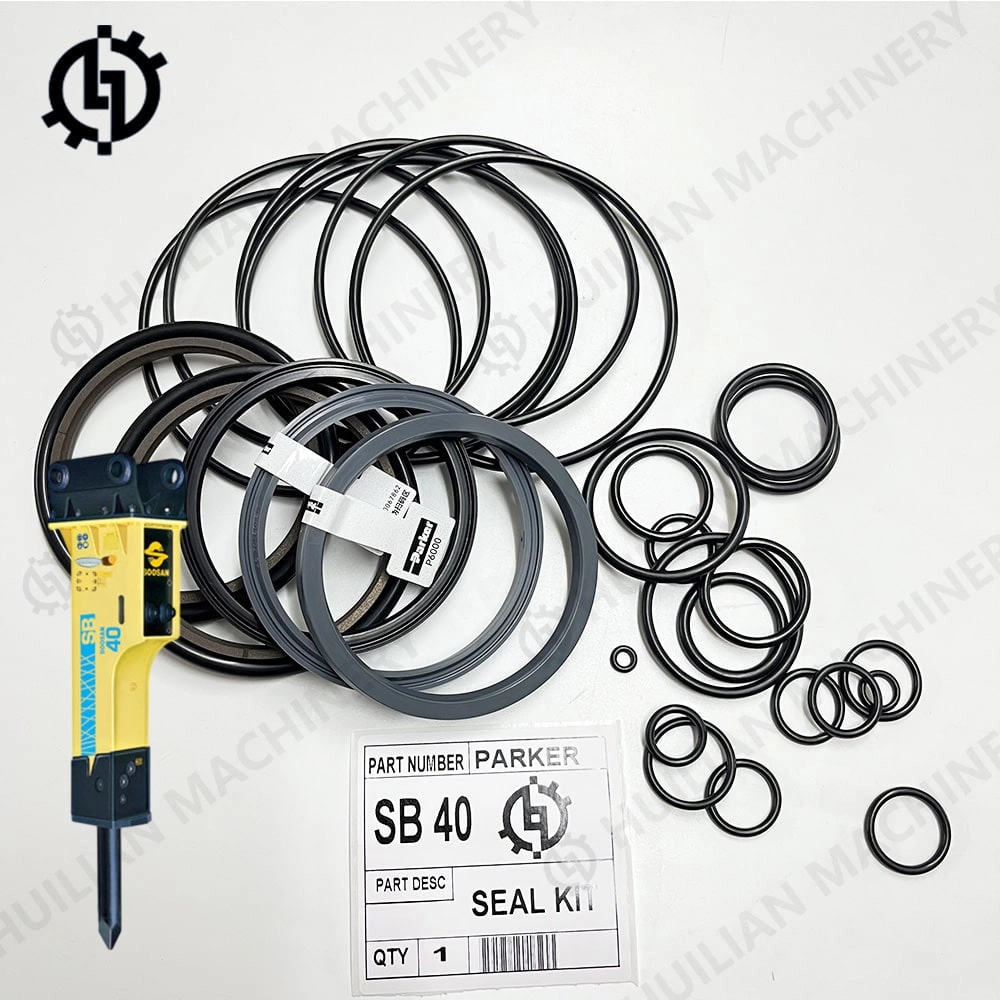
Parker Oil Seal Complete Repair SB40 Seal Kit COX001 CO1012 SB40Ⅱ SB40TSP SQ40 For Soosan Hydraulic Rock Breaker Hammer
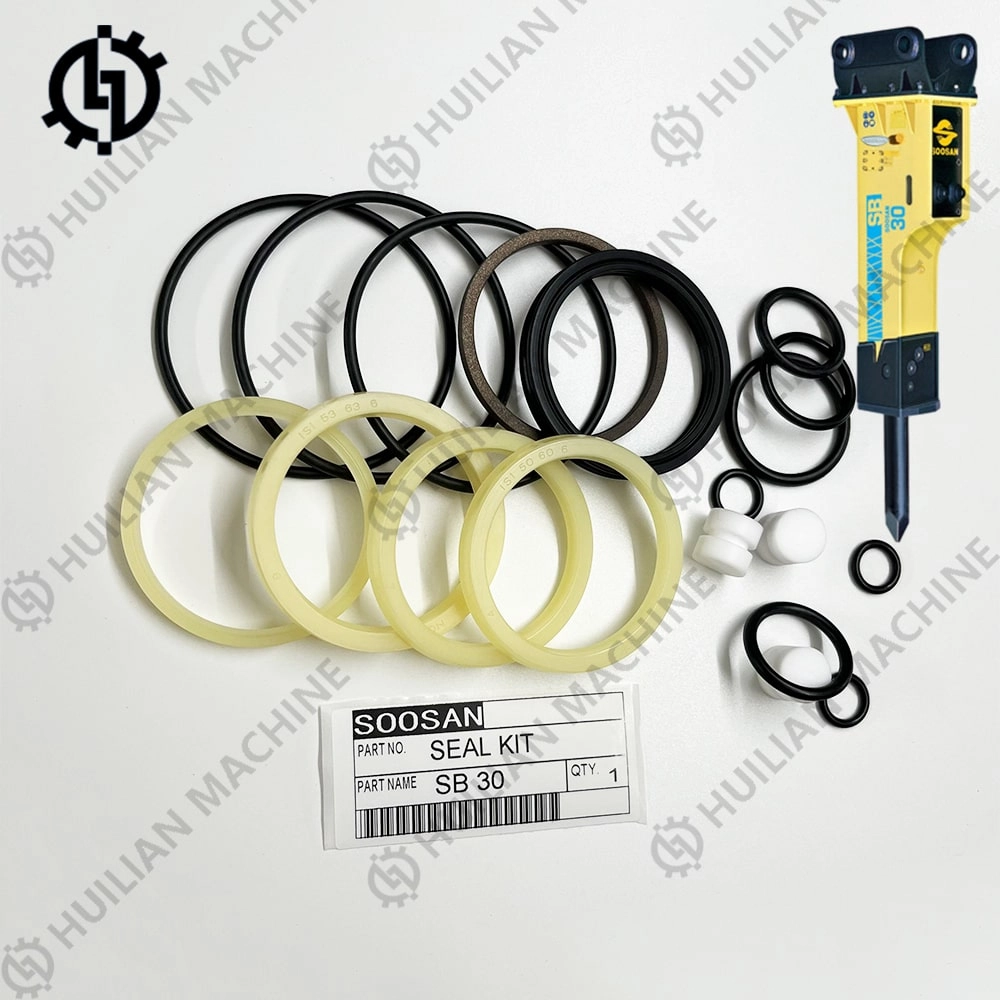
E71012 E7X001 SOOSAN SQ30 SB30Ⅱ SB30 Breaker Seal Kit SB30TS-P SB30Ⅱ TS-P SB30Ⅱ SSL Hydraulic Rock Hammer Parts Oil Repair Kit
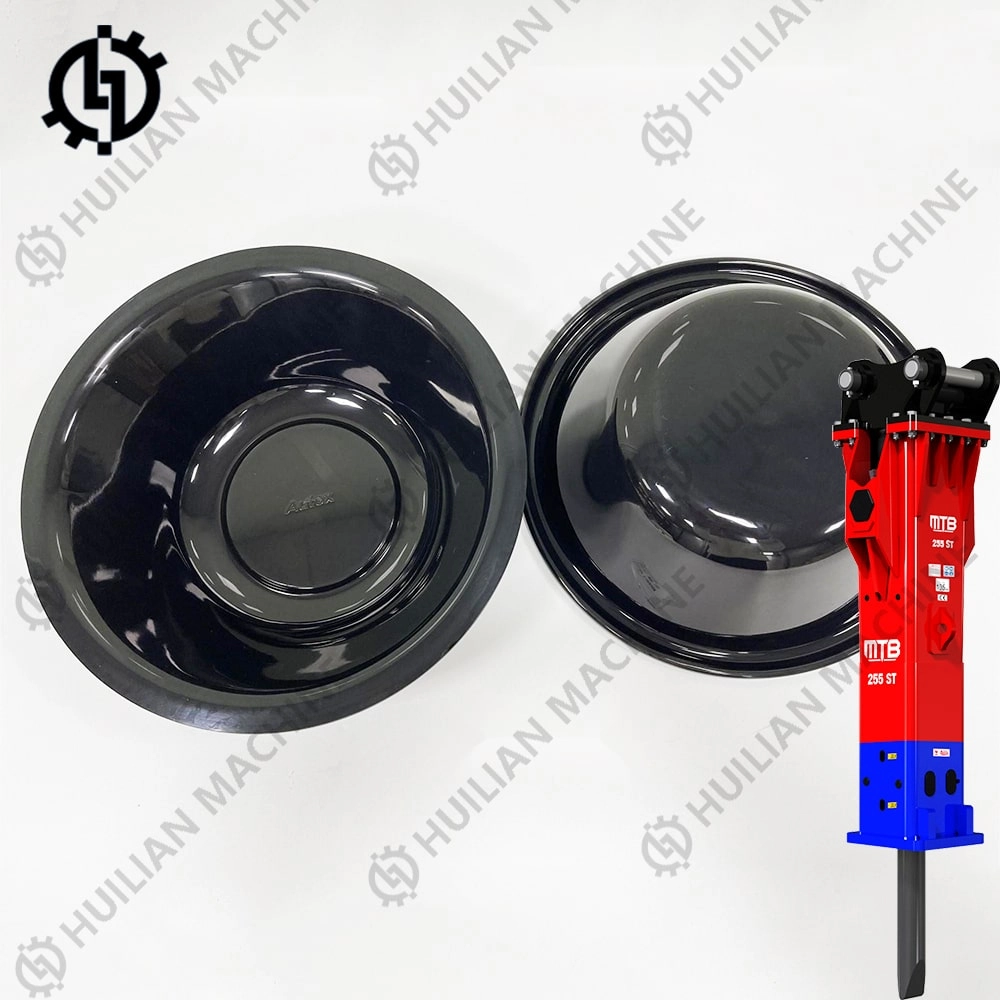
Inan Makina MTB Hydraulic Breaker Parts 45B0116A11 MTB255 MTB MT 255 Diaphragm MTB 255 IQ MTB-255 MTB 255 ST Membrane for Excavator Rock Hammer
 About us
© 2025 HUILIAN MACHINE. All rights reserved