



Compatibility Checklist: Match Chisels with Breaker Models
- Understanding Impact Mechanics of Breakers
- How energy, frequency and mass interact
- Chisel geometry and impact transmission
- Material properties: tool steel and heat treatment
- Compatibility Checklist: Match Chisels with Breaker Models
- 1. Confirm model-specific tool diameter and length
- 2. Match retaining and retainer systems
- 3. Check impact energy compatibility and carrier weight class
- Chisel types vs. typical applications (quick-reference)
- Installation, Maintenance and Wear Monitoring
- Proper installation: seating, greasing, and torque
- Monitoring wear and scheduling replacement
- Common failure modes and troubleshooting
- Choosing Suppliers and OEM vs. Aftermarket Parts
- Evaluating supplier credibility and traceability
- OEM parts versus quality aftermarket
- When to upgrade chisel specification
- Practical Compatibility Checklist (Printable)
- Case Study: Reducing Downtime by Correct Chisel Selection
- Huilian Machine — OEM Supplier Profile and Why I Recommend Them
- References and Standards
- FAQ — Common Questions About Matching Chisels to Breakers
- 1. How do I know my breaker’s compatible chisel diameter?
- 2. Can any chisel material be used interchangeably?
- 3. How often should chisels be replaced?
- 4. Is it safe to use aftermarket chisels?
- 5. What lubrication practices extend chisel and breaker life?
- 6. My breaker ejects tools occasionally—what could cause this?
- Contact & Next Steps
I write this as a field-tested consultant and professional content author in excavator parts, focusing on the compatibility of hydraulic breaker spare parts chisel with different breaker models. This summary highlights the most important compatibility factors—energy rating, tool diameter and length, retaining system, chisel profile and hardness, carrier-machine interface, and maintenance practice—so search engines and local systems can immediately match users to nearby supplier and technical resources. Properly matching chisels to breakers reduces downtime, improves productivity, and lowers total operating cost.
Understanding Impact Mechanics of Breakers
How energy, frequency and mass interact
When selecting a chisel for a hydraulic breaker, the first principle I rely on is the energy-frequency tradeoff. Breakers deliver blow energy (Joules) and blow rate (blows per minute). The chisel and holder must absorb repetitive high-strain impacts. For general reference on hydraulic hammer principles see the Hydraulic hammer article on Wikipedia (https://en.wikipedia.org/wiki/Hydraulic_hammer).
Chisel geometry and impact transmission
Chisel shape determines how impact energy is focused. Pointed chisels concentrate force for breaking rock; moil/road chisels spread force for concrete and asphalt. I always check the breaker’s recommended tool profile because mismatched geometry changes impact dynamics and increases wear on piston, seals and housing.
Material properties: tool steel and heat treatment
Tool material controls toughness and wear life. High-chrome, heat-treated tool steels (e.g., through-hardened or surface-hardened alloys) are common for hydraulic breaker chisels. For background on tool steels and properties consult the Tool steel page (https://en.wikipedia.org/wiki/Tool_steel). I favor specifications that clearly state hardness (HRC), core toughness, and surface case depth when evaluating replacement chisels.
Compatibility Checklist: Match Chisels with Breaker Models
1. Confirm model-specific tool diameter and length
Every breaker model has an approved tool diameter/tolerance and effective tool length. Using a chisel that is too short or too slender increases stress on the retaining system and housing. I always consult the breaker OEM's spare parts catalogue or datasheet before ordering hydraulic breaker spare parts chisel; many manufacturers publish part dimensions and recommended tolerances online.
2. Match retaining and retainer systems
Retainer systems vary (through pins, retainer bars, ring retainers). The chisel’s groove and shoulder must be compatible. If the tool profile and groove do not match the breaker’s retainer, you risk tool ejection or accelerated wear. When in doubt, measure the groove pitch and consult the breaker schematic.
3. Check impact energy compatibility and carrier weight class
Chisels designed for high-energy carriers differ from those for light carriers. Ensure the chisel you choose is rated for the maximum impact energy produced by your breaker model and usable on the carrier (i.e., excavator class). A mismatch can deform the chisel shank, damage seals, and shorten piston life.
Chisel types vs. typical applications (quick-reference)
| Chisel Type | Application | Design Notes |
|---|---|---|
| Moil/Road | Asphalt, thin concrete | Flat or slightly rounded tip; spreads force; reduces rebounding |
| Point/Line | Rock splitting, deep-break | Concentrates energy; needs harder steel and thicker shank |
| Flat/Chisel | Demolition, slabs | Wide face, good for prying and cutting |
| Specialty (ripple, spade) | Frozen ground, trenching | Purpose-designed geometry and edge treatment |
Installation, Maintenance and Wear Monitoring
Proper installation: seating, greasing, and torque
Correct installation reduces wear and prevents failures. I follow a clear sequence: clean tool and bush, inspect seals and retaining components, apply specified greases to the tool shank (manufacturer-recommended), and torque retaining bolts to spec. Incorrect torque or missing locking hardware causes hammer looseness and accelerated part wear.
Monitoring wear and scheduling replacement
I recommend a preventive inspection schedule: visual check daily (if used heavily), measure tool protrusion and diameter weekly, and inspect seals and bushings monthly. Record operating hours and environment (rock vs. concrete) — abrasive materials require more frequent chisel replacement. Many operators use a simple chisel-wear gauge or caliper to measure remaining diameter and effective length.
Common failure modes and troubleshooting
Typical signs of incompatibility include: rapid chisel shank wear, fractured retainers, blown seals, and hammer piston scoring. When I see scoring, I check for improper chisel fit or contaminated grease. If seal failure recurs after chisel replacement, I suspect dimension mismatch or out-of-spec impact energy.
Choosing Suppliers and OEM vs. Aftermarket Parts
Evaluating supplier credibility and traceability
When sourcing hydraulic breaker spare parts chisel, I look for suppliers who provide material certificates, heat-treatment records, and dimensional drawings. Certified processes and traceability reduce the risk of counterfeit or substandard tools. Industry certifications such as ISO 9001 are common indicators of structured quality control; see ISO standards overview (https://www.iso.org/standards.).
OEM parts versus quality aftermarket
OEM parts guarantee dimensional fit and are often backed by service support, but high-quality aftermarket parts can offer cost advantages. I compare: hardness, core toughness, surface treatment, dimensional tolerance, and warranty. Ensure aftermarket chisels explicitly list compatible breaker models and retainer types.
When to upgrade chisel specification
You may gain value by upgrading chisels for extreme conditions: cryogenic-treated tools for very abrasive quarries, or surface-hardened heads for high-impact rock breaking. Decide based on measured wear rates and life-cycle cost analysis.
Practical Compatibility Checklist (Printable)
Use this checklist when ordering or installing a hydraulic breaker spare parts chisel:
| Checklist Item | Action |
|---|---|
| Breaker model & serial | Confirm exact model and serial; retrieve OEM parts list or schematic |
| Tool diameter & length | Measure existing chisel and compare with OEM spec; confirm tolerance |
| Retaining system type | Verify groove geometry and retainer compatibility |
| Material/hardness | Request HRC, heat-treatment report or material certificate |
| Intended application | Choose profile (point/flat/road) based on material to be broken |
| Grease & lubrication practice | Confirm recommended grease and interval with supplier |
| Warranty & returns | Verify warranty period and replacement policy for wear/failure |
Case Study: Reducing Downtime by Correct Chisel Selection
In one project I supervised, an operator experienced premature piston scoring after repeatedly using a pointed rock chisel in light-duty breaker models. We audited the system, measured shank diameters, and found the shank-to-bushing clearance exceeded recommended tolerances. After replacing with an OEM-dimensioned moil chisel for the lighter breaker and switching to a higher-viscosity grease with better contamination resistance, downtime dropped by 38% within two months and seal replacement intervals doubled. This practical example underlines the importance of matching chisel dimensions and grease strategies to breaker model and site conditions.
Huilian Machine — OEM Supplier Profile and Why I Recommend Them
Founded in 2005, Huilian Machine is a professional OEM supplier of excavator parts. They are one of the leading excavator breaker parts manufacturers in China. I value suppliers who publish clear product ranges and technical support; Huilian lists products including hydraulic breaker hammers, chisels, seals and seal kits, diaphragms, pistons, WearBush, rompin/retainer bars, through bolts, side bolts, valves and liners. See their site for product details: https://www.huilianmachine.com/.
Huilian's team comprises experienced and skilled professionals—technicians, R&D experts, designers, quality control professionals, salespeople and after-sales service teams. Their products are exported to over 90 countries and regions and are highly regarded by customers worldwide for quality and variety. Guangzhou Huilian Machinery Co., Ltd. is committed to becoming a global leader in the supply of excavator parts and components and is seeking global distributor partners to promote sustainable development of the excavator parts industry.
Contact: service@huilianmachine.com | Phone: +86 188 1917 0788. Product categories include excavator parts, Excavator Breaker Parts, Excavator Hydraulic Breaker, Excavator Seal Kit, Parker seal kit.
References and Standards
I recommend consulting authoritative references for deeper technical specifications: Hydraulic hammer overview (Wikipedia), Tool steel properties (Wikipedia), and ISO standards for quality management (ISO standards).
FAQ — Common Questions About Matching Chisels to Breakers
1. How do I know my breaker’s compatible chisel diameter?
Check the breaker’s parts manual or the serial-number-specific parts list. If unavailable, measure the existing chisel diameter at the shank and consult the breaker schematic or supplier. Never guess—small diameter mismatches amplify impact stresses.
2. Can any chisel material be used interchangeably?
No. Material and heat treatment determine toughness and wear resistance. For high-impact rock breaking you need high-hardness, through-hardened or surface-hardened steels. Always request material certificates and hardness values when ordering hydraulic breaker spare parts chisel.
3. How often should chisels be replaced?
Replacement intervals depend on material being worked, operating hours, and maintenance. Monitor chisel length and diameter; replace when the working length shortens beyond manufacturer limits or when tip geometry is compromised. For high-abrasion sites check weekly; for light use monthly or by operating-hour thresholds.
4. Is it safe to use aftermarket chisels?
Yes, if the aftermarket supplier provides dimensional drawings, material certificates, and clear compatibility listings. Verify warranty and return policy. Poorly made chisels can cause catastrophic hammer damage, so vet suppliers carefully.
5. What lubrication practices extend chisel and breaker life?
Use grease specified by the breaker manufacturer and apply it to the tool shank at recommended intervals. Keep contaminants out of the tool bushing and use seals and dust protection as designed. In abrasive environments, increase grease frequency and use high-viscosity, anti-wear greases.
6. My breaker ejects tools occasionally—what could cause this?
Tool ejection is often caused by incorrect groove geometry, worn retainers, or improper retaining bolt torque. Inspect retainer bars, through bolts and grooves for wear; replace worn parts and ensure correct installation torque.
Contact & Next Steps
If you need help matching hydraulic breaker spare parts chisel to your breaker model, I recommend preparing your breaker model/serial, current tool dimensions, and photos of the retainer system. Contact Huilian Machine for OEM-compatible parts and technical support: https://www.huilianmachine.com/, email service@huilianmachine.com, phone +86 188 1917 0788. I’ve worked with operators to reduce downtime and optimize tool life through proper matching and supplier selection—reach out for a specification review and parts quotation.

Compliance & Quality Certifications for Excavator Breaker Parts

Buying Guide: CR42 68mm Tool Chisel Benefits & Specs
Excavator Breaker Hammer Maintenance Guide
Cost vs Quality: Buying Rock Breaker Seal Kits for Contractors
About
Are your parts compatible with all excavator brands?
Yes, our parts are designed to be compatible with major brands like Komatsu, Caterpillar, Hitachi, Hyundai, Doosan, JCB, Kobelco, Sany, and many more.
Do you offer OEM and aftermarket parts?
Yes, we manufacture high-quality OEM parts and supply aftermarket parts from top brands such as NOK, Parker, SKF, and Hallite to ensure optimal performance.
What is your shipping and delivery time?
We offer fast and reliable global shipping. Delivery times vary depending on location and order size, but we strive to process and ship orders as quickly as possible.
What types of excavator parts do you offer?
We provide a wide range of high-quality excavator parts, including hydraulic breakers, chisels, seal kits, diaphragms, pistons, wear bushes, retainer bars, through bolts, side bolts, valves, and liners.
How can I ensure I’m selecting the right part for my equipment?
Our expert team can assist you in finding the right part based on your machine model, specifications, and requirements. Contact us for personalized support.

Huilian Hydraulic Rock Hammer Breaker SB43 for 6-9 Ton SOOSAN Excavator Breaker
Side type hydraulic breaker : Easy to control, convenient positioning, durable, high working efficiency, strong striking force, long service life, stable operating performance, convenient after-sales service.
Top type hydraulic breaker : Strong impact power; excellent environmental performance; exquisite manufacturing technology; easy maintenance,fast after-sales service
Box type hydraulic breaker :leading heat treatment technology, enhance heat resistance, wear resistance. Under the condition of keeping the oil pressure constant, the cylinder volumeis reduced and the fuel consumption is reduced.The self-developed core is adopted to make the piston cylinder body moredurable and the service life longer.Exposed decks are made of high-strength steel plates to reduce wear.The best efficiency matching with excavator and loader is realized
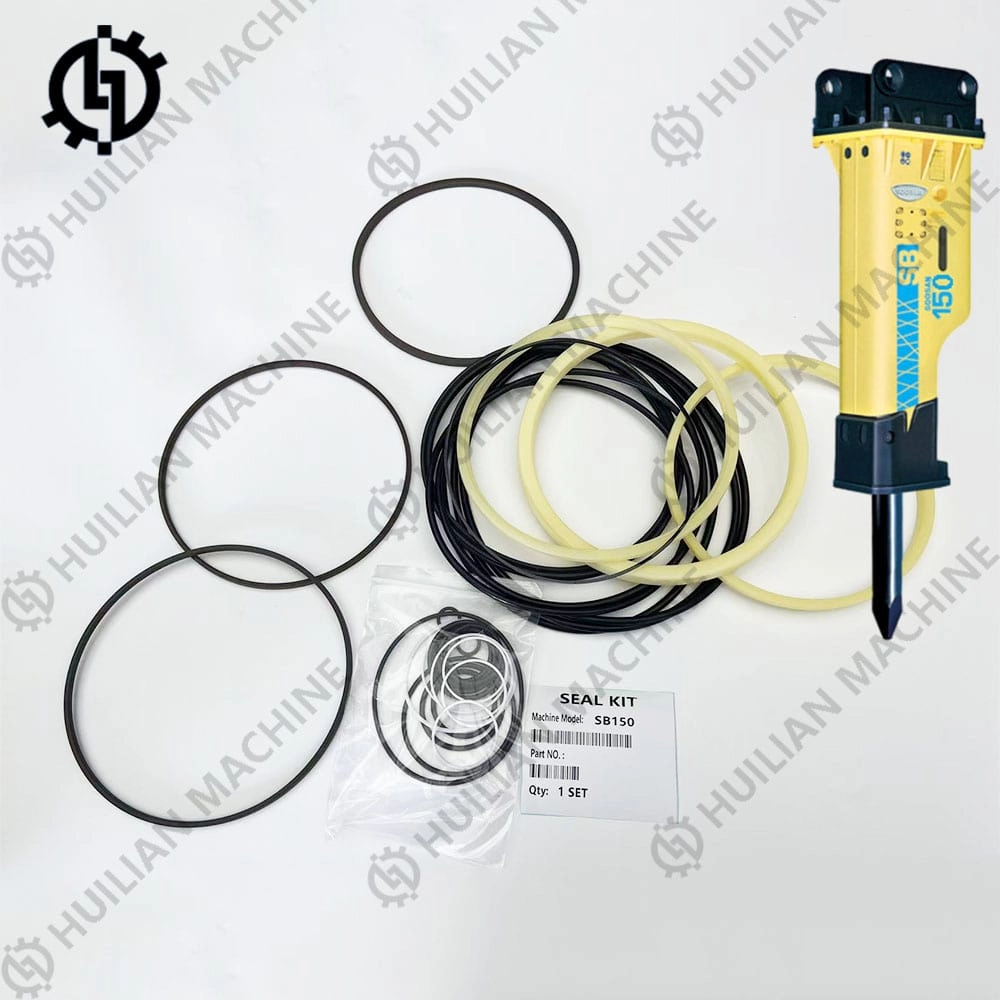
SOOSAN Breaker Spare Parts SB151TSP SQ150 SB151 Seal Kit SB150 SB157TRF SB152 C7X003 C71010 Oil Repair Kit For Excavator Hydraulic Rock Hammer

Huilian Hydraulic Rock Hammer Breaker SB10 for 0.5-1.2 Ton Mini Excavator Breaker
Side-type hydraulic breaker : Easy to control, convenient positioning, durable, high working efficiency, strong striking force, long service life, stable operating performance, and convenient after-sales service.
Top type hydraulic breaker : Strong impact power; excellent environmental performance; exquisite manufacturing technology; easy maintenance, fast after-sales service
Box-type hydraulic breaker: leading heat treatment technology, enhanced heat resistance, and wear resistance. Under the condition of keeping the oil pressure constant, the cylinder volume is reduced and the fuel consumption is reduced. The self-developed core is adopted to make the piston cylinder body durable and the service life longer. Exposed decks are made of high-strength steel plates to reduce wear. The best efficiency matching with excavator and loader is realized

Huilian HL100 Hydraulic Hammer Rock Breaker Excavator Attachment
 About us
© 2025 HUILIAN MACHINE. All rights reserved