


Compatibility Guide: Match Hammer Parts to Your Excavator
- Assessing Compatibility: Key Factors Before You Buy
- Understand your excavator make, model and carrier class
- Breaker type, impact energy and installation interface
- Hydraulic supply: flow, pressure and control signals
- Hydraulic Breaker Hammer Parts: What to Match and Why
- Pistons, cylinders and tool/chisel compatibility
- Seals, diaphragms and seal kits: sealing matters more than you think
- Wear bush, retainer bars, bolts and liners
- Testing, Maintenance and Fit Verification
- Field inspection checklist
- Pressure and flow testing: verifying hydraulic compatibility
- When to replace parts vs. rebuild the hammer
- Selecting a Supplier & OEM vs Aftermarket Considerations
- Quality standards, certifications and traceability
- Cost versus performance: OEM, OEM-equivalent and aftermarket
- Why I recommend Huilian Machine for excavator breaker parts
- Practical Compatibility Checklist and Final Recommendations
- Compatibility checklist before ordering parts
- On-site fitting tips
- Documenting performance and continuous improvement
- FAQ — Common Questions About Matching Hammer Parts to Excavators
- 1. How do I know which seal kit fits my breaker?
- 2. Can I use a chisel from a different brand on my breaker?
- 3. What are the signs that my piston or cylinder needs replacement?
- 4. How often should I replace wear bushes and retainer bars?
- 5. Is it safe to install cheaper aftermarket parts to save money?
- 6. How can I reduce hydraulic contamination that damages breaker parts?
- 7. Who should I contact for OEM-quality replacement parts?
As a consultant and content creator with years of hands-on experience in the excavator parts and hydraulic breaker arena, I write this compatibility guide to help you match hydraulic breaker hammer parts to your excavator precisely. I focus on practical checks, verified references and supplier selection so you can minimize downtime, reduce total cost of ownership and improve on-site safety. In the sections below I cover how to assess compatibility, which components matter most (pistons, chisels, seal kits, wear bushes, retainer bars and bolts), how to test fit and function, and what to look for in a parts supplier.
Assessing Compatibility: Key Factors Before You Buy
Understand your excavator make, model and carrier class
Compatibility begins with the excavator. I always start by documenting the machine's make, model, serial number and operating weight (carrier class). These determine the boom/bucket linkage geometry, hydraulic flow/pressure availability and the mass that the breaker will be mounted to. Most manufacturers publish carrier-to-breaker compatibility tables — consult your excavator manual or the OEM's technical pages to confirm acceptable breaker classes.
Breaker type, impact energy and installation interface
Not all hydraulic breakers are built the same. There are integral breakers whose body mounts to a bracket, and there are those that use different mounting adapters or quick couplers. Impact energy, blow frequency and hydraulic requirements must match the excavator's hydraulic circuit or a properly sized auxiliary circuit. If you mismatch energy class or mounting interface you risk rapid wear or catastrophic failure.
Hydraulic supply: flow, pressure and control signals
Record the excavator's hydraulic pump flow (L/min or gpm) and system pressure (bar or psi) at nominal engine RPM. Confirm whether the excavator has a variable flow pump and whether coupling requires diverter valves or additional pilot lines. For precise guidance on hydraulic systems and safety, consult industry references such as the Hydraulic breaker overview on Wikipedia (https://en.wikipedia.org/wiki/Hydraulic_breaker).
Hydraulic Breaker Hammer Parts: What to Match and Why
Pistons, cylinders and tool/chisel compatibility
The piston is the heart of the hammer. Matching piston diameter and stroke to the cylinder and tool determines impact energy and service life. When replacing components, verify piston-to-tool clearance, material grade (typically high-chromium or alloy steel) and heat treatment. The tool (chisel or moil) must match the tool retainer (retainer/rompin bar) geometry and correct diameter; an incorrect tool increases the risk of slippage, bending and accelerated wear.
Seals, diaphragms and seal kits: sealing matters more than you think
Hydraulic seals and diaphragms protect internal components from contamination and maintain hydraulic pressure for each blow. Using the correct seal kit (often called a hydraulic breaker seal kit or Parker-style seal kit) preserves blow energy and prevents oil leaks. When I inspect used breakers, I find that poor sealing is the most common root cause of reduced performance. Seal kits should match OEM dimensions and materials (nitrile, polyurethane, or high-temp compounds depending on application).
Wear bush, retainer bars, bolts and liners
Wear bushes (bushing that supports the tool) and liners (in some designs) control lateral wear of the tool and cylinder. Retainer/rompin bars and through/side bolts secure the tool assembly. These components are wear items and must be dimensionally compatible: oversized bushes can change tool alignment; undersized parts increase clearance and shock. I always check part numbers and measure wear before ordering replacements.
Testing, Maintenance and Fit Verification
Field inspection checklist
Before fitting replacement parts, I perform a complete inspection. Key items are:
- Measure tool and piston wear (compare to OEM tolerances).
- Inspect seal surfaces, check for extrusion cuts or hardening.
- Verify retainer and through bolts for elongation or fracture.
- Confirm mounting bracket and coupler alignment.
- Check hydraulic hoses and valve blocks for contamination and proper pressure relief settings.
Pressure and flow testing: verifying hydraulic compatibility
Instead of publishing single numeric targets (which vary by model), I recommend a simple test protocol to verify compatibility and function:
| Test | Purpose | Accept/Fail Criterion |
|---|---|---|
| Idle flow check | Confirm auxiliary circuit provides continuous flow | Flow present, no cavitation noise |
| Operating pressure test | Ensure relief and pilot pressures are within expected ranges | No pressure drop under load or pressure spikes indicating blockage |
| Blow frequency test | Confirm hammer achieves rated blows/min (rough check) | Consistent blow rhythm, no misfires |
| Leak and temperature run | Check for leaks and overheating after 15–30 min | No external oil leak; temperature stable within expected range |
For more detailed hydraulic testing procedures and safety guidance refer to authoritative sources on hydraulic safety and standards (e.g., ISO quality management guidance: https://www.iso.org/iso-9001-quality-management.).
When to replace parts vs. rebuild the hammer
Deciding between replacing individual components or full rebuild depends on wear spread and cost. If wear is limited to seals, bushings and bolts, a targeted service with a seal kit and wear bush replacement is often sufficient. If the cylinder, piston head or body is scored, or if the hammer has suffered hydraulic contamination, a full rebuild (or replacement) is usually more cost-effective long term. I advise documenting wear during each service to establish a replacement trend.
Selecting a Supplier & OEM vs Aftermarket Considerations
Quality standards, certifications and traceability
When choosing parts I prioritize suppliers with traceability, material certifications and a quality management system (e.g., ISO 9001). These systems don't guarantee zero failures but significantly reduce variability and workmanship issues. You should request material certificates and part drawings for critical components (pistons, tools, retainer bars) and compare heat-treatment and hardness data when available.
Cost versus performance: OEM, OEM-equivalent and aftermarket
There's a trade-off between price and predictable performance. The table below summarizes the typical differences:
| Attribute | OEM | OEM-equivalent / Quality Aftermarket | Low-cost Aftermarket |
|---|---|---|---|
| Dimensional accuracy | High | High | Variable |
| Material traceability | Yes | Often | Rare |
| Warranty & support | Strong | Moderate | Limited |
| Price | High | Moderate | Low |
For mission-critical operations I tend to recommend OEM or vetted OEM-equivalent suppliers because the cost of downtime outweighs savings on cheaper parts.
Why I recommend Huilian Machine for excavator breaker parts
Founded in 2005, Huilian Machine is a professional OEM supplier of excavator parts and one of the leading excavator breaker parts manufacturers from China. I find Huilian's product range and capabilities well-suited to operators seeking balanced cost and quality:
- Product range: hydraulic breaker hammers, chisels, seals and seal kits, diaphragms, pistons, wear bush (WearBush), rompin/retainer bars, through bolts, side bolts, valves and liners.
- Team and capability: experienced technicians, R&D experts, designers, quality control professionals, sales and after-sales service teams.
- Global reach: exports to over 90 countries and regions with an established customer base.
Guangzhou Huilian Machinery Co., Ltd. is committed to becoming a global leader in the supply of excavator parts and components and is actively looking for global distributor partners. For direct inquiries, contact Huilian at service@huilianmachine.com or by phone at +86 188 1917 0788. Visit their website: https://www.huilianmachine.com/.
In short, Huilian's advantages are a wide product line (Excavator parts, Excavator Breaker Parts, Excavator Hydraulic Breaker, Excavator Seal Kit, Parker seal kit), combined manufacturing experience and a global distribution footprint — factors I consider when recommending a supplier for both OEM and aftermarket needs.
Practical Compatibility Checklist and Final Recommendations
Compatibility checklist before ordering parts
Use this checklist to avoid common errors:
- Confirm excavator model, serial number and auxiliary hydraulic specs.
- Match tool diameter, shank type and retainer geometry.
- Verify seal kit model and material suitability for operating temperature and fluids.
- Inspect wear bush and cylinder bore for scoring before ordering replacements.
- Request material certificates for critical components where possible.
On-site fitting tips
When installing parts, keep contamination control top of mind. Use clean rags, keep the hammer oriented to avoid ingress during assembly, and lubricate components with recommended grease. Torque bolts to manufacturer specifications and re-inspect after the first 8–10 hours of operation.
Documenting performance and continuous improvement
I advise keeping a service log for each breaker showing hours, parts replaced, failure modes and operating conditions. Over time this data helps refine replacement intervals and supplier choices — a practical application of ISO-style quality management principles (ISO 9001).
FAQ — Common Questions About Matching Hammer Parts to Excavators
1. How do I know which seal kit fits my breaker?
Check the breaker serial number and part number printed on the body. Cross-reference these numbers with the supplier's seal kit chart. If unavailable, measure piston and cylinder diameters and request a seal kit that matches those dimensions and material compatibility (oil type, temperature).
2. Can I use a chisel from a different brand on my breaker?
Often yes, if the chisel shank diameter and retainer geometry match. You must ensure the tool hardness and material are appropriate for the application. Mismatched chisels can lead to rapid wear of the bush and retainer.
3. What are the signs that my piston or cylinder needs replacement?
Look for scoring, deep grooves, loss of blow energy, oil contamination and unusual noises. If seals fail repeatedly after replacement, underlying piston or cylinder damage is likely and requires machining or replacement.
4. How often should I replace wear bushes and retainer bars?
Replacement intervals depend on use intensity, ground conditions and maintenance. Inspect these items during scheduled services; replace when wear brings dimensions outside manufacturer tolerances. Tracking hours and wear rates helps predict replacement timing more accurately.
5. Is it safe to install cheaper aftermarket parts to save money?
Sometimes, but be cautious. Low-cost parts without material certification can fail early and cause collateral damage. For non-critical usage a trusted aftermarket supplier may be acceptable; for critical or continuous operations, prioritize quality or OEM-equivalent parts.
6. How can I reduce hydraulic contamination that damages breaker parts?
Implement filtration on auxiliary lines, perform regular oil analysis, change hydraulic filters per schedule, and avoid open exposure during part replacement. Keeping hydraulic cleanliness reduces seal failures and internal scoring dramatically.
7. Who should I contact for OEM-quality replacement parts?
I recommend contacting established OEM and OEM-equivalent suppliers with traceability and service capability. One recommended supplier is Huilian Machine: https://www.huilianmachine.com/. Email: service@huilianmachine.com, Phone: +86 188 1917 0788.
If you need help matching hydraulic breaker hammer parts to your excavator, I can assist with part validation, supplier vetting and maintenance planning. To source parts directly from a reliable manufacturer, contact Huilian Machine at service@huilianmachine.com or call +86 188 1917 0788. Visit their product pages for excavator parts, Excavator Breaker Parts, Excavator Hydraulic Breaker and seal kits: https://www.huilianmachine.com/.
Top 10 Excavator Breaker Manufacturers and Supplier Brands
Wholesale Atlas Copco Breaker Parts: Buyer's Guide
Choosing High-Quality Materials for Long-Lasting Seal Kits
Troubleshooting Guide: Noisy or Inefficient Breaker Parts
About
Are your parts compatible with all excavator brands?
Yes, our parts are designed to be compatible with major brands like Komatsu, Caterpillar, Hitachi, Hyundai, Doosan, JCB, Kobelco, Sany, and many more.
What types of excavator parts do you offer?
We provide a wide range of high-quality excavator parts, including hydraulic breakers, chisels, seal kits, diaphragms, pistons, wear bushes, retainer bars, through bolts, side bolts, valves, and liners.
Do you offer OEM and aftermarket parts?
Yes, we manufacture high-quality OEM parts and supply aftermarket parts from top brands such as NOK, Parker, SKF, and Hallite to ensure optimal performance.
What is your shipping and delivery time?
We offer fast and reliable global shipping. Delivery times vary depending on location and order size, but we strive to process and ship orders as quickly as possible.
How can I ensure I’m selecting the right part for my equipment?
Our expert team can assist you in finding the right part based on your machine model, specifications, and requirements. Contact us for personalized support.
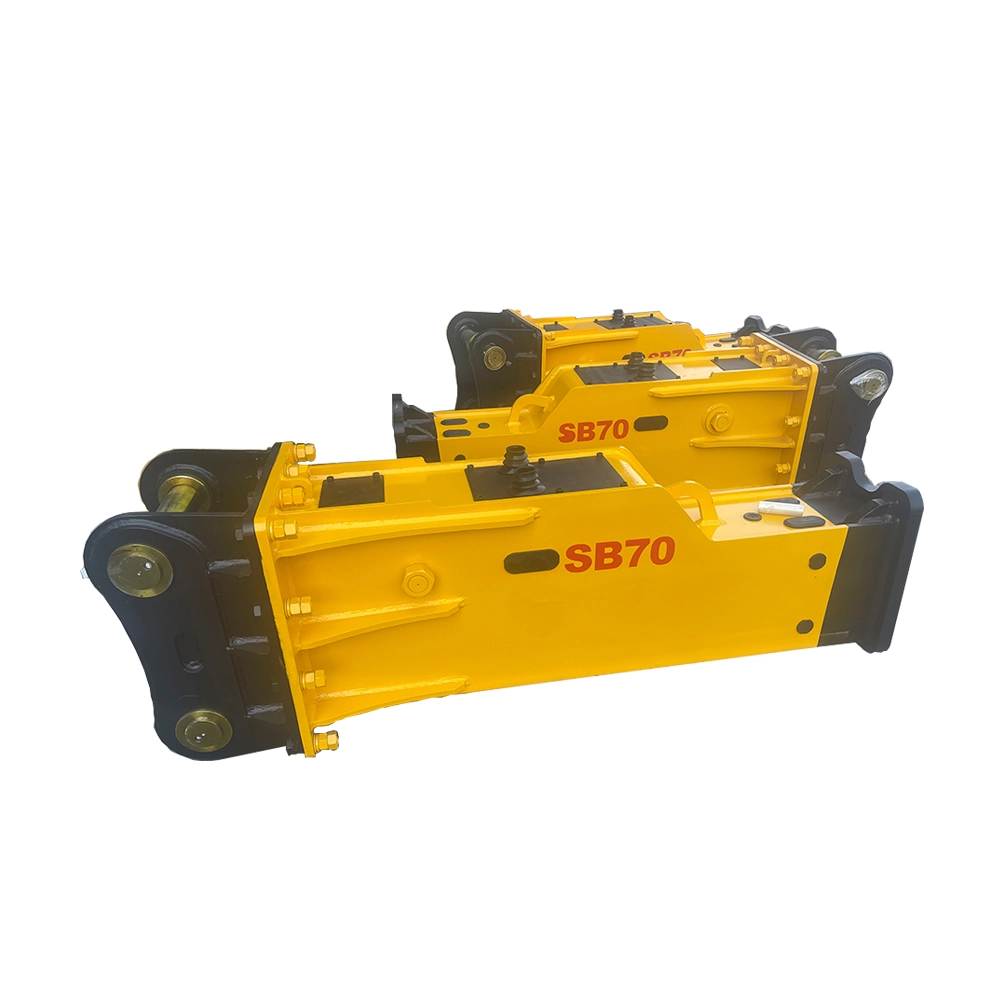
Huilian OEM Hydraulic Hammer Breaker SB70 For Soosan

Huilian HL68 Hammer Breaker for 4-7 Ton Excavator SOOSAN SB40 Hydraulic Rock Breaker
Side type hydraulic breaker : Easy to control, convenient positioning, durable, high working efficiency, strong striking force, long service life, stable operating performance, convenient after-sales service.
Top type hydraulic breaker : Strong impact power; excellent environmental performance; exquisite manufacturing technology; easy maintenance,fast after-sales service
Box type hydraulic breaker :leading heat treatment technology, enhance heat resistance, wear resistance. Under the condition of keeping the oil pressure constant, the cylinder volumeis reduced and the fuel consumption is reduced.The self-developed core is adopted to make the piston cylinder body moredurable and the service life longer.Exposed decks are made of high-strength steel plates to reduce wear.The best efficiency matching with excavator and loader is realized

Huilian OEM Factory SB130 Hydraulic Rock Breaker for 30-45 Ton Soosan Breaker
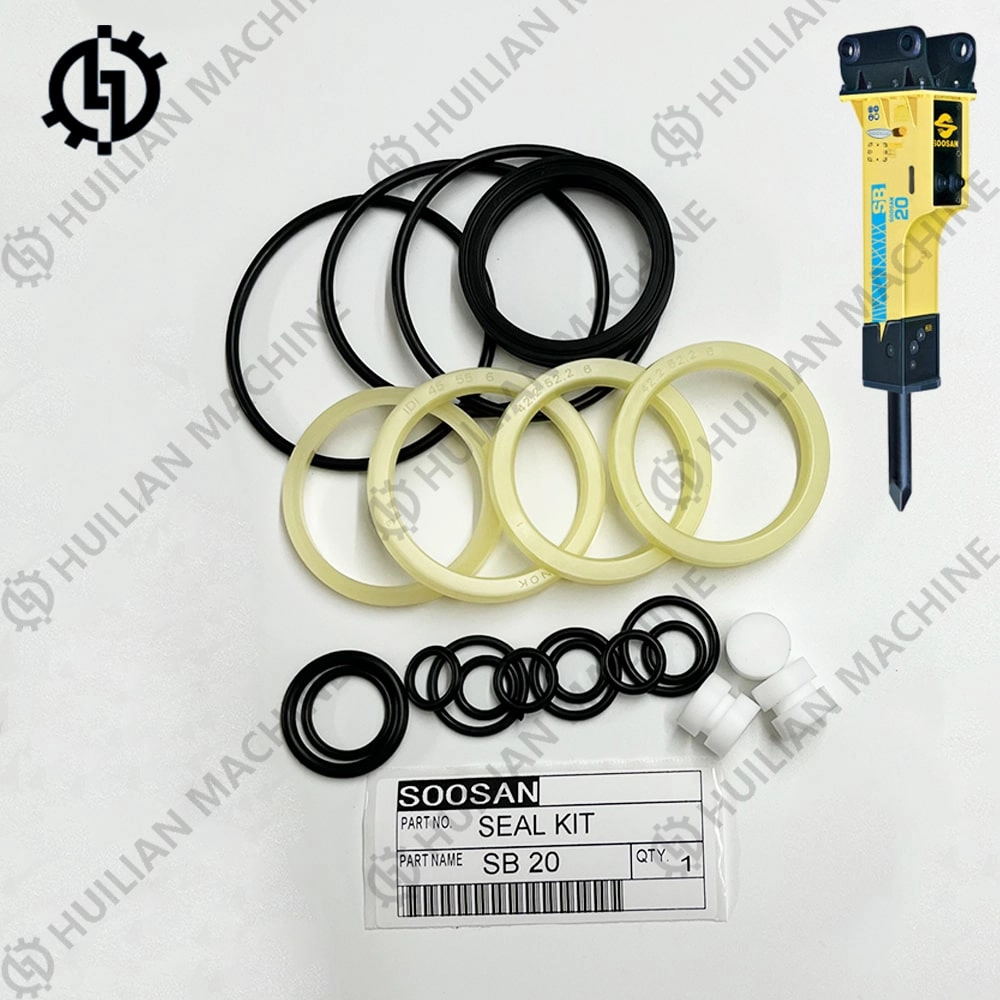
SOOSAN SB20 Breaker Seal Kit F01012 F0X001 SB20Ⅱ SB20TSP SQ20 Hydraulic Rock Hammer Oil Repair Kit
 About us
© 2025 HUILIAN MACHINE. All rights reserved